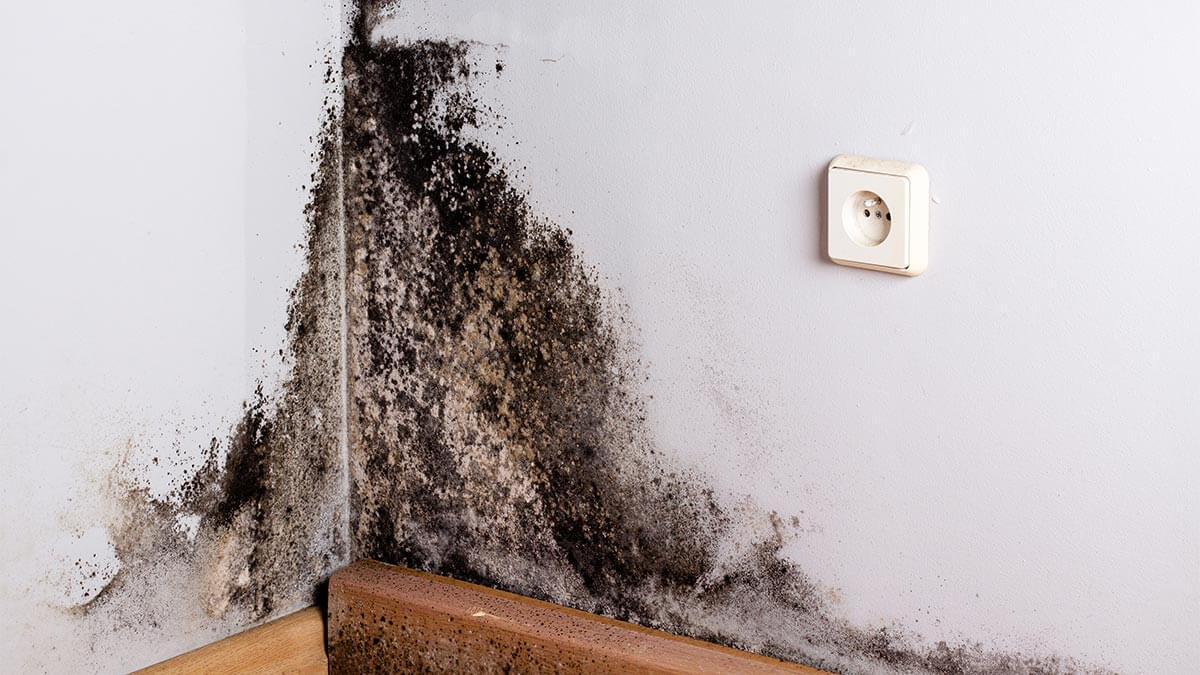
Yes, you can sell a house with black mold, but disclosure is required in nearly every state, and value reductions of 10% to 37% are common depending on how severe the contamination is. No federal law and no state law prohibits the sale of a mold-affected property, but sellers who skip written disclosure face lawsuits, contract rescission, and financial damages.
Black mold, specifically Stachybotrys chartarum, produces mycotoxins linked to respiratory illness. That health dimension is what pushes mold into the “material defect” category in most state disclosure statutes, and why lenders often require a clearance certificate before approving a loan on an affected home.
This guide covers how mold disclosure works by state, how appraisers calculate the value hit, what professional remediation costs at each severity level, and a side-by-side comparison of your three selling paths so you can calculate which one protects the most equity.
Mold Found? Cash Buyers Don't Walk Get competing offers from buyers who accept disclosed mold conditions as-is
No repairs required, no appraisal contingency, no obligation
Sell a House with Black Mold
- Can You Sell a House with Black Mold?
- Does a Realtor Have to Disclose Mold When Selling?
- Does Mold Affect Home Appraisals?
- Can a House with Black Mold Be Saved?
- How Much Does Black Mold Remediation Cost?
- Your Three Options When Selling with Mold
- Should I Buy a House with Black Mold?
- Seller Mistakes That Lead to Mold Liability
- Selling a Mold-Affected Home in Your State
- Selling a Mold-Affected Home in Your State
- Conclusion
- Frequently Asked Questions
Can You Sell a House with Black Mold?
Selling a house with black mold is legal in all 50 states. No federal or state law prohibits the transaction. What the law does require in most states is written disclosure, and what the market does in response is price the contamination into the offer.
Sellers typically face three paths forward:
- Remediate before listing, costs $2,000 to $10,000 or more depending on scope; recovers full market value if remediation passes clearance testing.
- Offer a buyer credit or price reduction, seller avoids the upfront remediation bill but must price deeply enough to cover the buyer’s cost plus a risk buffer.
- Sell as-is to a cash buyer, fastest close (7 to 30 days); no remediation cost; offer reflects the mold discount but eliminates financing-fall-through risk.
What Makes Black Mold Different from Other Mold
Stachybotrys chartarum is the species most people call “black mold.” It grows on cellulose-rich materials (drywall, wood framing, insulation) in persistently wet conditions and produces mycotoxins associated with allergic reactions, asthma attacks, and respiratory illness. Per EPA residential mold cleanup guidelines, it is treated as a higher-risk category than most common household molds.
Many molds appear black in color but are not Stachybotrys chartarum. Visual inspection alone cannot confirm the species. A professional mold inspection using air sampling or surface swabs is the only way to document species and extent for disclosure purposes.
The Three Paths for Selling with Black Mold
The path that fits your situation depends on three variables: how extensive the contamination is, how much equity you have to absorb a price cut, and how quickly you need to close. The sections below walk through each variable in detail. The decision matrix in H2-6 translates those variables into a direct comparison of expected net proceeds.
Does a Realtor Have to Disclose Mold When Selling?
Yes, a real estate agent generally must disclose known mold to buyers because mold is a material defect affecting health, safety, and value. Both the seller and the agent carry disclosure duties in most states. An agent who knowingly conceals mold risks license discipline and personal liability, not just the seller.
No Federal Mold Disclosure Law, But States Do Require It
No federal statute specifically mandates mold disclosure in residential real estate. What does exist is a network of state seller disclosure laws that classify mold as a material defect, meaning any condition that would affect a reasonable buyer’s decision to purchase or the price they would pay.
Mold disclosure when selling a house is not optional in most jurisdictions. Sellers must disclose both current mold presence and remediation history in many states. The disclosure form typically asks about “past or present” mold conditions, so a remediation completed years ago still needs to be reported if the seller knows about it.
States with Named Mold Disclosure Requirements
California, Texas, Florida, Pennsylvania, and Virginia all have named legal or contractual duties requiring sellers and agents to disclose known mold. California’s requirement is codified directly: California mold disclosure statute Health and Safety Code § 26140 requires disclosure when mold exceeds permissible exposure limits or poses a health threat to occupants.
Texas and Florida require disclosure under general material defect statutes. Pennsylvania case law and the standard sales agreement both treat mold as a disclosable condition. Virginia’s residential property disclosure act covers mold as a known material defect.
What “Material Defect” Means for Mold Sellers
A material defect is any condition that meaningfully affects a property’s value, habitability, or safety. Courts and state regulators consistently classify mold as a material defect because it does all three. Seller disclosure forms in most states include a mold-specific question or a general health-and-safety question that covers it.
Failing to disclose known mold, even in an as-is home sale, exposes sellers to claims of misrepresentation and fraud. The legal remedies buyers can pursue include remediation cost reimbursement, diminished-value damages, contract rescission, and in some cases punitive damages. According to legal consequences of failing to disclose mold, courts have ordered sellers to pay damages well beyond the original remediation cost when disclosure was willfully omitted.
Does Mold Affect Home Appraisals?
Yes, mold negatively affects home appraisals, typically reducing value by 10% to 37% depending on contamination severity and local buyer market conditions. Appraisers flag visible mold, water stains, musty odors, and damaged materials as condition deficiencies that require adjustment to the property’s estimated value.
How Appraisers Flag Mold
During a standard walk-through, appraisers inspect for visible mold growth, evidence of prior water intrusion, staining on walls or ceilings, and musty odors. Any of these observations can trigger a condition comment on the appraisal report. If the appraiser notes active or apparent mold, lenders typically require a certified inspection and remediation before the appraisal is finalized.
A mold inspection conducted by an IICRC certified professional provides the documentation appraisers and lenders need to assess severity. Without that documentation, an appraiser must apply a broader discount to account for unknown extent.
The Value-Reduction Range: 10% to 37%
The wide range in reported value impact reflects real differences in contamination severity. According to appraisal impact of mold on home value, research published in the Appraisal Journal cites a 10% to 30% reduction. Separate studies cited by Claude place the range at 20% to 37% for moderate to severe contamination.
The discrepancy is not a data error. It reflects two distinct contamination types:
| Severity Tier | Scope | Value Impact | Typical Remediation Cost | Appraisal Outcome |
|---|---|---|---|---|
| Surface (non-structural) | Tile, caulk, paint, under 10 sq ft | 10% to 15% | $500 to $1,500 | Condition note; may clear with DIY + clearance test |
| Moderate | Drywall, insulation, 10 to 100 sq ft | 15% to 25% | $2,000 to $6,000 | Subject to remediation; loan stalls until clearance |
| Structural | Framing, subfloor, HVAC, over 100 sq ft | 25% to 37% | $10,000 to $30,000+ | Subject to remediation; FHA/conventional loan likely rejected without clearance certificate |
Based on Appraisal Journal research and Sacramento Appraisal Blog analysis. Verify current figures before transacting.
When Lenders Require Remediation Before Closing
FHA mold requirements and most conventional loan standards require properties to meet minimum health and safety standards. Visible black mold or documented evidence of water intrusion triggers a “subject to remediation” condition on the appraisal. The loan cannot close until the seller provides a clearance certificate from an IICRC certified contractor.
This is the most common way mold kills a financed transaction mid-contract. The buyer qualifies, the home goes under contract, the appraiser visits, and the appraisal comes back conditioned. The seller then faces a choice: remediate quickly, negotiate a price cut the lender accepts, or watch the deal fall apart. Cash buyers skip the lender appraisal entirely, which removes this pressure point from the equation.
Can a House with Black Mold Be Saved?
Yes, most homes with black mold can be saved through professional remediation and permanent repair of the moisture source. The key word is “permanent”, remediation without source repair results in recurrence, typically within weeks to months.
EPA’s 10-Square-Foot Rule for DIY Cleanup
The EPA residential mold cleanup guidelines draw a clear line at 10 square feet. Homeowners can clean mold areas smaller than 10 sq ft following EPA protocols, using proper protective equipment and antifungal cleaners. Areas larger than 10 sq ft require professional intervention. Stachybotrys chartarum in particular warrants professional assessment at any size because it grows on structural materials and requires containment protocols that most homeowners cannot safely execute.
When Professional Remediation Is Required
Professional remediation is required when:
- The affected area exceeds 10 square feet
- Mold has penetrated drywall, wood framing, insulation, or subfloor materials
- HVAC systems are involved (mold in ductwork spreads contamination throughout the home)
- The moisture source has not been identified and permanently repaired
- The seller needs a clearance certificate for lender appraisal or buyer disclosure purposes
Look for contractors credentialed as IICRC Applied Microbial Remediation Technicians (AMRT) or Applied Microbial Remediation Specialists (AMRS). IICRC certified professionals follow the industry-standard S520 protocol for mold remediation and can issue the documentation lenders and future buyers require.
Factors That Determine Whether the Home Can Be Saved
Five factors determine the feasibility and cost of saving a mold-affected home:
- Extent of contamination, square footage and number of rooms affected
- Materials involved, cleanable surfaces (tile, glass, metal) vs. replaceable structural materials (drywall, framing, insulation)
- Time since first growth, longer exposure compounds structural damage
- Whether the moisture source is identifiable and fixable, a repairable roof leak differs from chronic high humidity with no single source
- HVAC involvement, contaminated ductwork requires specialized cleaning or replacement and significantly increases cost
How Much Does Black Mold Remediation Cost?
Black mold remediation typically costs $2,000 to $6,000 for moderate contamination and $10,000 or more for structural infestations. The final mold remediation cost depends on scope, materials affected, and whether HVAC systems are involved.
Cost by Remediation Scope
| Remediation Scope | Cost Range | Timeline | Clearance Test Included? |
|---|---|---|---|
| Small surface (under 10 sq ft, non-structural) | $500 to $1,500 | 1 to 2 days | Sometimes; ask explicitly |
| Moderate (10 to 100 sq ft, drywall/insulation) | $2,000 to $6,000 | 3 to 7 days | Standard with certified contractor |
| Extensive/structural (over 100 sq ft, framing, HVAC) | $10,000 to $30,000+ | 1 to 4 weeks | Required; may need third-party air sampling |
| Post-remediation clearance test only | $200 to $600 | 1 to 2 days | This IS the test |
Based on typical mold remediation cost ranges from Angi, 2025. Verify current labor rates before contracting.
What’s Included in a Professional Remediation
A complete professional remediation includes: containment (plastic sheeting, negative air pressure), removal of contaminated materials (drywall, insulation, flooring as needed), HEPA vacuuming and antifungal treatment, and post-remediation clearance testing using air or surface sampling. The clearance certificate documents that mold levels returned to normal indoor background levels after work was completed.
Ask for the contractor’s IICRC certification number before signing any contract. Verbal assurances from an uncertified contractor do not satisfy lender requirements or provide meaningful seller protection against future liability claims.
ROI: Does Remediation Before Listing Pay Off?
On a $300,000 home, a 20% value reduction costs $60,000 in lost equity. Spending $6,000 on moderate remediation to recover that $60,000 produces a clear positive return, if the remediation fully resolves the issue and passes clearance testing.
The ROI calculation breaks down in two scenarios: first, when contamination is severe enough that full remediation costs $20,000 to $30,000, the margin narrows significantly; second, when the moisture source cannot be permanently repaired (chronic site drainage, building envelope failures), remediation may not hold through the inspection period. In those cases, an as-is cash sale often nets more than a remediated listing that re-molds before closing.
Your Three Options When Selling with Mold
Because mold reduces appraised value by 10% to 37% and can stall financed deals at the appraisal stage, the path you choose directly controls how much you net and how long the sale takes. Selling a house with mold does not have one right answer. It has three options, each suited to a different seller situation.
Option 1: Remediate Before Listing
Remediate before listing if you have moderate to severe contamination, enough equity to absorb the upfront cost, and 2 to 8 additional weeks before you need to close. This path recovers full list-price potential and eliminates financing complications. Requirements: fix the moisture source first, hire an IICRC certified contractor, obtain a clearance certificate, and disclose the remediation history on your seller disclosure form.
Upfront cost: $2,000 to $30,000 depending on scope. Timeline addition: 2 to 8 weeks. Expected outcome: full market value, broadest buyer pool, no lender complications.
Option 2: Offer a Buyer Credit or Price Reduction
A buyer credit or price reduction lets you avoid the upfront remediation bill while keeping the home on the market for financed buyers. The credit must be large enough to cover the buyer’s estimated remediation cost plus a risk buffer for unknowns. A common formula: contractor bid + 20% contingency.
The critical limitation: lenders may still require remediation before closing even when a buyer credit is offered. The credit is a financial arrangement between seller and buyer, it does not satisfy the lender’s minimum property standards. Confirm with the buyer’s lender before structuring a deal this way.
Option 3: Sell As-Is to a Cash Buyer
Selling as-is to a cash buyer is the fastest path and the lowest-friction path when remediation is not feasible or when timeline is the priority. Cash buyers do not require a lender appraisal, so the “subject to remediation” condition that kills financed deals does not apply. Close timelines run 7 to 30 days.
The trade-off is a lower offer. Cash buyers price in the remediation cost, a risk premium, and their margin. On a $300,000 home with moderate contamination, expect offers in the $240,000 to $265,000 range, a real discount, but one that avoids months of remediation, an extended listing period, and the risk of a financed buyer walking at inspection.
For a broader look at the as-is path, see fast options for selling a house in poor condition, which covers how condition-impaired sales work across multiple defect types.
Decision Matrix: Which Path Fits Your Situation
| Option | Upfront Cost | Timeline to List | Expected Net Proceeds | Financing Complications |
|---|---|---|---|---|
| Remediate before listing | $2,000 to $30,000 | Add 2 to 8 weeks | Full market value | None after clearance |
| Buyer credit/price reduction | $0 upfront | List now | Below market (credit + risk buffer) | Lender may still require remediation |
| Sell as-is to cash buyer | $0 | List immediately; close in 7 to 30 days | 10% to 25% below market | None, no lender appraisal required |
Seller situations: tight timeline (Option 3), maximum net proceeds with adequate equity (Option 1), mild mold with a cooperative lender pre-confirmed (Option 2).
Should I Buy a House with Black Mold?
Buying a house with black mold can make financial sense when the price reduction exceeds the remediation cost plus a risk buffer, full remediation documentation is on file, and no structural compromise is present.
Health Risks of Black Mold Exposure
Stachybotrys chartarum produces mycotoxins linked to allergic reactions, asthma attacks, and respiratory illness. According to CDC guidance on mold-related health risks, immunocompromised individuals, children, and the elderly face the highest risk from prolonged exposure. Black mold health risks are not a deal-breaker if remediation is fully documented and a clearance certificate is on file, but they are a legitimate reason to budget conservatively for the remediation scope.
Financial Risk: What You’re Really Buying
Mold feeds on drywall, wood framing, and insulation. Untreated contamination compounds over time, what costs $3,000 to remediate today may cost $15,000 in 18 months if framing involvement grows. A home appraisal that reflects a 15% mold discount today could reflect a 30% discount after the next inspection cycle if the moisture source is not repaired.
Use the cost table in H2-5 as your negotiation anchor. If the seller is offering a $5,000 credit on a home with moderate contamination that will realistically cost $6,000 to $8,000 to remediate, the math does not work in your favor. Require a contractor bid before finalizing offer terms.
When Buying a Mold-Affected House Makes Sense
Buying makes sense when these four conditions are present:
- The price reduction exceeds the contractor’s remediation bid plus a 20% contingency buffer
- A clearance certificate from an IICRC certified contractor is already on file (seller remediated)
- No structural materials (framing, subfloor) are involved
- The moisture source has been permanently repaired and documented
If any of these conditions is absent, negotiate harder or walk away. A subject to remediation appraisal condition on your loan is a signal that the lender’s review found the same concerns.
Seller Mistakes That Lead to Mold Liability
Assuming “As-Is” Eliminates Disclosure Duty
An as-is home sale does not waive the seller’s obligation to disclose known mold in writing. “As-is” describes the physical condition the seller delivers. It does not change disclosure law. A seller who knows about mold and lists as-is must still include that information on the state’s written disclosure form. Omitting it creates the same legal exposure as omitting it from a standard sale, lawsuit, rescission, and damages.
This is the most common misconception in mold-affected property sales. The water damage disclosure requirement and the general material defect disclosure requirement both survive the as-is designation.
Skipping Documentation After Remediation
A remediation contractor’s verbal assurance is not sufficient protection. Without a written contractor invoice and a post-remediation clearance certificate, you have no documentation that remediation occurred at all. During a buyer’s inspection, an inspector who finds prior mold markers (staining, replaced drywall, sealant over damaged surfaces) will flag it as a prior mold event. If you cannot produce documentation, you look like you concealed it, even if you paid for legitimate remediation.
Keep: the original inspection report, the contractor’s scope of work, the invoice, the clearance certificate with air sampling results, and proof that the moisture source was repaired.
Fixing Mold Without Fixing the Moisture Source
Remediating mold without permanently repairing the moisture source is the fastest way to face a post-closing lawsuit. Mold requires organic material and moisture. Remove the mold; leave the moisture condition; wait four to eight weeks. The mold returns, often in a broader area because the disturbance during remediation spread spores.
A buyer who detects recurrent mold post-closing and can show the moisture source was never repaired has a strong misrepresentation claim. Fix the roof leak, plumbing failure, HVAC condensation issue, or site drainage problem before beginning mold remediation, not after.
How to Sell a House With Mold
Selling a Mold-Affected Home in Your State
Mold disclosure requirements, remediation norms, and buyer market conditions vary significantly by state. States like selling a distressed home in New York have strict disclosure norms and active cash buyer markets. High-humidity states like selling a distressed home in Louisiana and selling a distressed home in Michigan see mold as an especially common condition-sale issue. Select your state below for local guidance.
Selling a Mold-Affected Home in Your State
Mold disclosure requirements, remediation norms, and buyer market conditions vary by state. Select your state below for local guidance on selling a distressed or condition-impaired home.
Conclusion
Selling a house with black mold comes down to three variables: how severe the contamination is, how much equity you can afford to trade for speed, and whether your buyer pool includes financed buyers who will face lender remediation requirements. Sellers with surface mold and adequate equity should remediate, get the clearance certificate, and list at full market value. Sellers with structural contamination or a tight timeline are often better served by an as-is cash sale that closes in 7 to 30 days without a lender appraisal condition stalling the deal.
Whatever path you choose, written mold disclosure is non-negotiable. Document everything, including the moisture source repair, and keep your clearance certificate on file long after closing.
Mold Found? Cash Buyers Don't Walk Get competing offers from buyers who accept disclosed mold conditions as-is
No repairs required, no appraisal contingency, no obligation
Frequently Asked Questions
Yes, selling a house with black mold is legal in all 50 states. No federal or state law prohibits the sale. The legal right to sell does not eliminate the disclosure obligation, most states classify mold as a material defect requiring written disclosure. The sale price and buyer pool will be affected, but the transaction itself is not prohibited.
Do you have to disclose mold when selling a house? Yes, in nearly every state you are legally required to disclose known mold as a material defect when selling. While no federal mold-specific disclosure law exists, state seller disclosure statutes treat mold as a material defect affecting health, safety, and value. California (Health and Safety Code § 26140), Texas, Florida, Pennsylvania, and Virginia all impose named disclosure duties on sellers and agents. Failing to disclose exposes sellers to lawsuits and contract rescission.
Does mold affect home appraisals?, Yes, mold negatively affects home appraisals, typically reducing value by 10% to 37% depending on severity. Appraisers flag visible mold, water stains, musty odors, and damaged materials as condition deficiencies. Severe or structural contamination sits toward the 30% to 37% end of the range; surface mold on non-structural materials sits at 10% to 15%. Lenders often issue subject to remediation appraisals that prevent loan closing until a clearance certificate is provided.
Can a house with black mold be saved?, Yes, most homes with black mold can be saved through professional remediation and moisture-source repair. The EPA recommends professional intervention for mold areas larger than 10 square feet. Success depends on identifying and permanently fixing the moisture source, remediation without this step results in recurrence.
How much does black mold remediation cost?, Black mold remediation typically costs $2,000 to $6,000 for moderate contamination and $10,000 or more for structural infestations. Small surface areas under 10 sq ft cost $500 to $1,500 for professional treatment. Structural contamination affecting framing, subfloor, or HVAC can reach $10,000 to $30,000. A post-remediation clearance test adds $200 to $600 and is essential for both lender approval and seller liability protection.
Does a realtor have to disclose if a house has mold?, Yes, a real estate agent generally must disclose known mold to buyers because it is a material defect affecting value and safety. Both sellers and their agents carry disclosure duties in most states. In California, Texas, Florida, Pennsylvania, and Virginia, the agent’s contractual and ethical obligations require disclosure of known material defects. An agent who knowingly conceals mold can face license discipline and personal liability.
Can you sell a house with mold as-is?, Yes, you can sell a house with mold in as-is condition, but you must still disclose the mold in writing before closing. An as-is designation means the seller will not remediate or make repairs. It does not eliminate the disclosure obligation. Financed buyers may face lender-required remediation before their loan closes; cash buyers typically do not have this constraint.
Will a mortgage lender approve a loan on a home with black mold?, Most mortgage lenders will not approve a loan on a home with visible black mold without a remediation clearance certificate. FHA mold requirements and most conventional loan standards require homes to meet minimum property standards. Visible mold typically triggers a subject to remediation appraisal condition, stalling the loan until a clearance certificate is provided.
What happens if you don’t disclose mold when selling a house?, Failing to disclose known mold can result in a lawsuit, contract rescission, and financial damages paid to the buyer. Buyers who discover undisclosed mold after closing can sue for misrepresentation or fraud. Courts can award remediation costs, diminished property value, and in some cases punitive damages. Real estate agents also face license discipline for defects they knew about and concealed.
Does selling as-is mean you don’t have to disclose mold?, No, selling as-is does not waive the seller’s legal obligation to disclose known mold in writing. “As-is” describes the physical condition the seller will deliver; it does not change disclosure law. A seller who knows about mold and sells as-is must still include that information on the written disclosure form, omitting it creates the same legal exposure as in any standard sale.
How do I know if my house has black mold?, Black mold (Stachybotrys chartarum) typically appears as dark green or black patches in areas with persistent moisture, often with a musty odor. Common locations include bathroom grout, under sinks, around HVAC vents, in basements, and inside walls near plumbing leaks. Visual inspection alone cannot confirm the species, a professional mold inspection using air or surface sampling is required to identify Stachybotrys chartarum specifically and document extent for seller disclosure.
Can black mold come back after remediation?, Yes, black mold can return after remediation if the underlying moisture source is not permanently repaired. Mold requires organic material and moisture to grow. Professional remediation removes existing mold, but if the roof leak, pipe, or humidity condition is not corrected, regrowth typically occurs within weeks to months. A clearance certificate confirms mold is gone at the time of testing, it does not guarantee the mold will not return if moisture issues persist.
What is the difference between black mold and regular mold?, Black mold specifically refers to Stachybotrys chartarum, a species that produces mycotoxins and requires persistent moisture to grow, unlike most common household molds. Many molds appear black in color but are not Stachybotrys chartarum. The species distinction matters for health risk and remediation approach: Stachybotrys grows on cellulose-rich materials (drywall, wood) in chronically wet areas and produces compounds associated with respiratory illness.
Does prior mold remediation have to be disclosed when selling?, Yes, most states require sellers to disclose prior mold remediation, not just current mold presence. Disclosure forms in most states ask about “past or present” mold history. A seller who had mold remediated years ago without obtaining a clearance certificate is still legally exposed if the buyer discovers evidence of past contamination post-closing. Proper documentation, contractor invoice plus clearance certificate, is the seller’s protection.

Reilly Dzurick is a licensed real estate agent with over six years of experience and a member of the iBuyer.com Market Insights Team, covering national trends in home selling and the evolving iBuyer landscape. Her firsthand experience working with buyers and sellers gives her a practical perspective on how these platforms impact real homeowners. She holds a degree in Public Relations, Advertising, and Applied Communication.