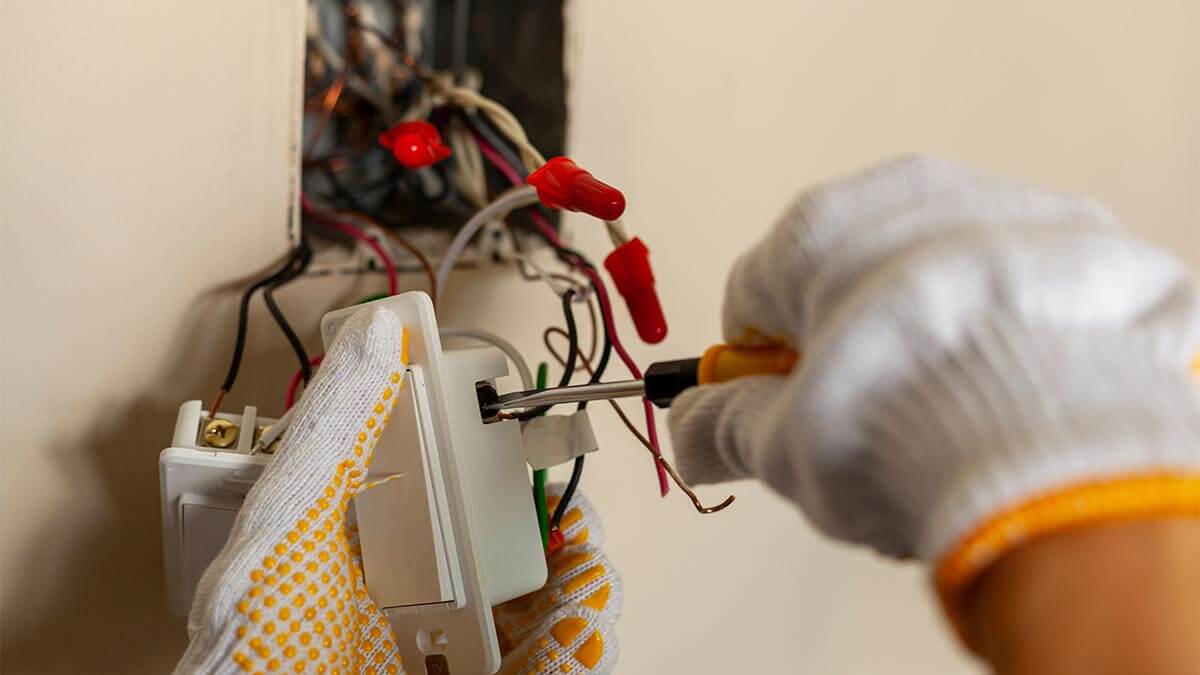
Yes, you can sell a house with knob and tube wiring, but the wiring affects your financing, insurance, and final sale price in ways that routinely kill deals before closing. Knob and tube (K&T) wiring is found in homes built primarily between the 1880s and 1930s and lacks a grounding wire, making it a flagged electrical hazard for modern inspectors and insurers. Rewiring a home with K&T typically costs $8,000 to $30,000 or more, which means buyers using financed offers will price that repair into every offer they make.
When you decide to sell house with knob and tube wiring, the two biggest obstacles work in sequence: many insurance companies refuse to write policies for homes with active K&T, and without insurance, a lender will not fund a mortgage. That two-step rejection eliminates most financed buyers before they reach closing.
This guide covers what K&T wiring is, whether it is legal to sell with it, how it affects financing and insurance, your three main seller options, rewiring costs, and what to realistically expect at inspection.
Table of contents
- What is knob and tube wiring?
- Is it legal to sell a house with knob and tube wiring?
- How knob and tube wiring affects financing
- How knob and tube wiring affects home insurance
- Disclosure requirements for knob and tube wiring
- Your three options for selling with K&T wiring
- How much does it cost to rewire a house?
- How hard is it to sell with knob and tube wiring?
- Conclusion
- Frequently Asked Questions
Skip the Rewire. Sell As-Is. Cash buyers on iBuyer.com purchase homes with knob and tube wiring without requiring repairs.
No repairs required, no financing fallout, no agent commissions.
What is knob and tube wiring?
Knob and tube wiring is an early electrical system that uses ceramic knobs to anchor wires and ceramic tubes to route them through wood framing. It was the standard wiring method in U.S. homes from roughly the 1880s through the 1930s, and remnants still appear in many older homes today.
When was knob and tube wiring used?
K&T wiring was installed in most American homes built before World War II. Some homes were wired with it as late as the 1950s in rural areas. If your home was built before 1950 and has never been fully rewired, a home inspector will almost certainly find at least some K&T wiring during a pre-sale inspection.
Why is K&T wiring a safety concern?
K&T wiring presents three specific safety problems that concern modern inspectors and insurers.
First, it has no grounding wire. Modern wiring uses a three-wire system (hot, neutral, ground) that protects against electrical shock and equipment damage. K&T uses only two wires, leaving circuits unprotected.
Second, the original rubber and cloth insulation degrades over time. Aged insulation becomes brittle, cracks, and can expose live conductors, creating significant fire risk.
Third, K&T systems were not designed for modern electrical loads. Homes today consume far more electricity than homes in 1920, and overloaded K&T circuits are a known electrical hazard.
According to electrical fire statistics from the National Fire Protection Association (NFPA), electrical failures cause approximately 46,700 home fires per year in the U.S. Aging wiring is a leading contributing factor. Verify the current NFPA figure before publishing, as the organization updates it annually.
Is it legal to sell a house with knob and tube wiring?
Selling a house with knob and tube wiring is not illegal in most U.S. states, provided the system is in safe condition and you disclose its presence. This section directly addresses the common search question: is it illegal to sell a house with knob and tube wiring? The short answer is no, but there are conditions that matter.
The grandfathering rule explained
Most U.S. state electrical codes grandfather existing K&T installations. That means a home wired with K&T before modern code took effect does not need to be immediately upgraded simply because you are selling. The system was legal when installed, and as long as it has not been modified and remains in reasonably safe condition, the sale can proceed legally in most jurisdictions.
The legal framework changes if the K&T system has been altered. Homeowners who added circuits to an existing K&T system, buried K&T in insulation (which traps heat and dramatically increases fire risk), or made amateur modifications may have created a code violation that grandfathering does not cover.
Some states also require a licensed electrician‘s inspection or city electrical inspector sign-off before a property can close. For a parallel look at how another hazardous material gets grandfathered under similar rules, see selling with asbestos siding.
When K&T wiring does make a sale illegal
The question of whether is it illegal to sell a house with knob and tube wiring comes up most often when the K&T system has visibly deteriorated or been improperly modified. Cracked or broken porcelain knobs or tubes, sagging wires, brittle sheathing, or exposed live conductors can trigger local code enforcement action and halt a sale.
Is it illegal to sell a house with knob and tube wiring does not have one universal answer because enforcement varies by jurisdiction. In most states, the sale is legal with proper disclosure and a system in fair condition. In some local jurisdictions with stricter electrical codes, an active K&T system in poor condition can trigger a stop-sale order until repairs are made. If you know about a defect and fail to include it on your seller disclosure form, you have created legal liability regardless of whether the underlying K&T was grandfathered.
How knob and tube wiring affects financing
Financing is where the practical reality of knob and tube wiring diverges sharply from the theoretical rules written in loan program guidelines. Understanding this gap prevents sellers from being blindsided after a buyer’s offer has been accepted.
If your K&T wiring has deteriorated to the point where the home may not meet minimum electrical standards, the situation can escalate quickly. For context on the most severe scenario, see selling a house without electricity.
FHA and VA loans
FHA loan requirements state that a home must meet minimum property standards (MPS). K&T wiring is not automatically disqualifying under FHA rules. The loan program technically permits K&T as long as it “functions properly, is safe, in good condition, and is not a hazard.” VA loan guidelines follow the same framework.
The problem is enforcement in practice. A licensed home inspector performing an FHA or VA appraisal inspection will flag K&T as an electrical hazard in virtually all cases. Once flagged, the lender’s underwriter issues a repair condition requiring the K&T to be repaired or removed before loan funds are released. Knob and tube wiring FHA loan files almost always result in either an escrow holdback requirement or a full removal condition before close.
This is the core contradiction you encounter when researching this topic: loan program guidelines say K&T is permitted with caveats, while mortgage industry practitioners report that knob and tube wiring FHA loan files rarely close without a repair condition being triggered.
Conventional loans (Fannie Mae and Freddie Mac)
Per Fannie Mae property condition guidelines, Fannie Mae and Freddie Mac permit K&T wiring if it “functions properly, is safe, in good condition, and is not a hazard.” Conventional loans carry slightly more flexibility because the appraisal process is less prescriptive than FHA or VA inspections.
That said, a conventional appraisal that notes active K&T as a hazard will still trigger a repair condition. Sellers who can provide a clean inspection report from a licensed electrician certifying the system is unmodified and in safe condition have the best chance of keeping a conventional loan on track. This is the narrow exception, not the standard outcome.
USDA loans
USDA loans require homes to meet minimum property standards similar to FHA guidelines. Active K&T wiring is frequently disqualifying under USDA requirements. If your buyer is using a USDA loan, expect the same practical barrier as FHA: inspection flagging, a repair condition from the underwriter, and likely a requirement for full or partial rewiring before close.
| Loan Type | Permits K&T? | Condition Required | Practical Outcome |
|---|---|---|---|
| FHA | Technically yes | Safe, unmodified, no hazard | Inspector flags K&T routinely; repair condition before close in most cases |
| VA | Technically yes | Safe, unmodified, no hazard | Same as FHA; rare to close without repair |
| Conventional | Yes, with conditions | Licensed electrician clean bill of health | More flexibility; repair condition if appraiser flags a hazard |
| USDA | Rarely | Must meet minimum property standards | Active K&T often disqualifying |
Based on Fannie Mae Selling Guide and FHA/VA minimum property standards, 2026. Verify current guidelines with your lender before transacting.
How knob and tube wiring affects home insurance
Knob and tube wiring insurance is one of the hardest barriers to overcome when selling a home with K&T. The insurance problem and the financing problem are linked directly: no homeowners insurance means no mortgage, which eliminates most financed buyers from your pool before you even get to negotiate.
Why insurers refuse K&T policies
Many modern insurance companies refuse to write homeowners insurance policies for homes with active K&T wiring. According to insurer attitudes toward older wiring systems from the Insurance Information Institute (III), wiring type is one of the primary factors insurers use to assess home fire risk, and older wiring systems drive up both premiums and declination rates significantly.
The specific objections insurers cite include the absence of a grounding wire, degraded insulation that poses an elevated fire risk, and the overload potential of older circuits serving modern electrical demand. Knob and tube wiring insurance policies from standard carriers are becoming increasingly rare.
Specialty non-standard insurers and surplus lines carriers do offer coverage for K&T homes, but these policies typically cost 25% to 50% more than standard policies and may require a licensed electrician’s inspection report certifying the system is intact and unmodified. Verify current pricing ranges with a licensed insurance professional, as these figures shift with the market.
What to do if your buyer can’t get coverage
If your buyer cannot secure knob and tube wiring insurance through a standard carrier, you have a few practical options. First, help them identify surplus lines insurers who write K&T policies in your state. Second, some insurers offer a 30-to-60-day grace period post-close to replace K&T wiring, but these policies are getting harder to find. Do not assume this path is available without direct carrier confirmation.
Third, an escrow holdback arrangement may give some conditional insurers enough confidence to issue a temporary policy, since repair funds are committed. This outcome is lender- and insurer-specific, so confirm with both parties before structuring a deal around it. If none of these paths works, your practical buyer pool narrows to cash buyers who do not require insurance approval to fund their purchase.
Disclosure requirements for knob and tube wiring
Sellers are legally required to disclose K&T wiring on the property disclosure form in every state that uses one. Failing to disclose a known material defect creates post-close legal exposure that can cost far more than a rewire. This disclosure scenario is similar to how other aging systems require disclosure due to their effect on safety and insurability. For a comparable situation, see selling with galvanized pipes.
What to put in your disclosure form
Your disclosure form should note: (1) the presence of K&T wiring, (2) the approximate age and extent of the K&T system if known, (3) any known modifications or repairs made to the system, and (4) any prior inspection findings related to the electrical system.
Per federal property disclosure requirements from the U.S. Department of Housing and Urban Development (HUD), sellers must disclose all known material defects that could affect the buyer’s decision to purchase. K&T wiring qualifies as a material defect in virtually every jurisdiction because it directly affects the property’s insurability and safety profile. Some local jurisdictions additionally require sign-off from a city electrical inspector before the sale can close. Confirm your municipality’s specific requirements with a licensed real estate attorney.
What happens if you don’t disclose
Failing to disclose K&T wiring when you knew it was present opens you to a post-close lawsuit from the buyer for nondisclosure of a material defect. Buyers who discover undisclosed K&T wiring after closing may seek damages covering the full electrical rewire cost, legal fees, and in some cases consequential damages. K&T is readily identifiable by any competent home inspector, and buyers who suspect nondisclosure can use inspection records to establish a timeline.
The safest approach is full, written disclosure before the buyer commits to an offer. Disclosure does not prevent you from selling. It shifts the negotiation to price, credits, and closing terms rather than legal liability.
Your three options for selling with K&T wiring
When you sell house with knob and tube wiring, you have three practical paths. Each carries a different cost profile, buyer pool impact, and risk level. The Google AI Overview identifies these three options as the core framework for sellers, and the choice you make determines nearly every other variable in the transaction.
Option 1: Sell as-is with full disclosure
Best for: Sellers who cannot afford to rewire before listing, sellers in markets with active cash buyers, or sellers who need to close quickly. Risk: Significantly reduced buyer pool; price reduction equal to or exceeding full rewire cost. Impact on buyer pool: Most financed buyer options eliminated; cash buyers and investors remain.
You can proceed with an as-is home sale with K&T wiring present, but you must disclose it and price the home to reflect the buyer’s cost to rewire. If rewiring costs $15,000 to $25,000, expect buyers to reduce their offer by at least that amount and often more, because they are also pricing in the inconvenience and uncertainty of managing a post-close renovation.
For the full framework of pricing and negotiating a property in poor condition, including buyer targeting and offer evaluation strategy, see selling a house in poor condition.
Option 2: Negotiate an escrow holdback
Best for: Sellers who want to retain a financed buyer but cannot rewire before closing. Risk: Complex to execute; insurance barrier persists independently; lender must approve the structure. Impact on buyer pool: Keeps some financed buyers if the lender and insurer both cooperate.
An escrow holdback is an arrangement where a portion of sale proceeds is placed with a neutral third party (typically the title company) at closing to fund the post-close rewire. The buyer proceeds to close, and the contractor draws from the escrow account once the work is complete.
The escrow amount should equal the licensed electrician‘s written estimate plus a 10% to 15% contingency buffer. Lenders require funds to be held by a neutral third party. A related approach per seller credit strategy for K&T homes from Scott Kompa is to list at close to market value, disclose the K&T wiring upfront, and offer a seller credit at closing rather than holding funds in escrow.
One critical point: an escrow holdback does not automatically solve the buyer’s insurance problem. The buyer still needs an active homeowners insurance policy before the lender will fund the loan. Some conditional insurers will issue a temporary policy when escrow funds are committed, but this is not universal. Confirm with the buyer’s insurer and lender before accepting any offer structured around a holdback.
Option 3: Rewire before listing
Best for: Sellers in competitive markets where the rewire cost can be recovered through a higher sale price. Risk: Upfront cost of $8,000 to $30,000 or more; requires time and property access. Impact on buyer pool: Full buyer pool restored; FHA, VA, conventional, and USDA buyers all eligible.
Hiring a licensed electrician to update the home to modern electrical standards before listing is the most effective way to eliminate buyer objections, open the buyer pool, and ensure the home qualifies for every financing type. In competitive markets, sellers who rewire before listing frequently recover the cost through a higher sale price and competitive bidding.
The rewire requires a permit and must be performed by a licensed electrician in virtually all U.S. jurisdictions. Budget for inspections, drywall repair (wiring runs through walls), and a final electrical sign-off before listing. The entire process typically takes one to three weeks depending on home size and contractor availability.
How much does it cost to rewire a house?
The electrical rewire cost for a home with K&T wiring typically runs $8,000 to $30,000 or more, depending on home size, accessibility, and regional labor rates. Use this range as a planning benchmark and verify it against local contractor quotes before committing to any listing strategy.
Rewiring cost by home size
Per knob and tube rewiring cost breakdown from myplumber.com, rewiring costs vary significantly by home size and wiring accessibility. The per-square-foot estimate runs approximately $3 to $8 per sq ft before permits and incidental repairs. Verify these figures against current HomeAdvisor and Angi data before publishing, as labor costs shift annually.
| Home Size | Estimated Rewiring Cost | Typical Timeline |
|---|---|---|
| Under 1,500 sq ft | $8,000 to $15,000 | 3 to 5 days |
| 1,500 to 2,500 sq ft | $15,000 to $25,000 | 5 to 8 days |
| 2,500+ sq ft | $25,000 to $30,000+ | 7 to 14 days |
Based on myplumber.com data, 2026. Verify current rates with local licensed electricians before transacting.
All rewiring work requires a permit in virtually every U.S. jurisdiction. A licensed electrician must perform the work, pull the permit, and pass final inspection before the work is considered complete. Factor permit costs (typically $100 to $500 depending on jurisdiction) and any drywall repair into your total budget.
Is rewiring worth it before selling?
In most cases, yes, if the local market is competitive and if financed buyers significantly outnumber cash buyers in your price range. The math is direct: a $12,000 rewire on a 1,500 sq ft home that opens the property to FHA, VA, and conventional buyers can return more than its cost through competitive bidding. A buyer who knows they are the only viable offer will negotiate aggressively. A seller with a rewired home can hold price.
In slower markets or at lower price points where the as-is home sale path attracts investors at reasonable prices, the ROI on rewiring is less certain. Get at least three licensed electrician estimates and compare them against actual as-is offer prices before deciding.
How hard is it to sell with knob and tube wiring?
Selling with knob and tube wiring is genuinely difficult for one primary reason: K&T simultaneously blocks insurance and financing, which eliminates most conventional buyers before negotiation even begins. It is not impossible, but the challenges are structural, not cosmetic.
The buyer pool impact
The combination of insurance refusal and financing barriers shrinks the viable buyer pool to (1) cash buyers, (2) investors and house flippers, and (3) a narrow group of financed buyers who can find specialty K&T insurance coverage and a lender willing to proceed with an escrow holdback. In many markets, that third group is very small.
For sellers whose wiring has deteriorated to the point that it may fail inspection entirely and trigger enforcement action, see how to sell a condemned house for context on the most severe scenario.
The practical barriers when you sell house with knob and tube wiring include:
- Insurance companies refuse standard policies, eliminating buyers who need a mortgage.
- FHA and VA buyers face near-certain repair conditions from underwriters after a home inspector flags K&T.
- The knob and tube wiring FHA loan approval path is blocked in most cases until a repair condition is satisfied.
- Buyers who do proceed demand price reductions equal to the full electrical rewire cost plus a risk premium.
- Some jurisdictions require city electrical inspector sign-off, adding a timeline delay after the buyer’s inspection.
What to expect at inspection
A pre-listing inspection is the most valuable tool you have as a seller with K&T wiring. It tells you exactly what a buyer’s home inspector will document, gives you time to address the most hazardous conditions before listing, and lets you price accurately rather than reactively.
Expect the inspector to document: the presence of K&T wiring throughout the home, any exposed or insulation-buried sections, the absence of a grounding wire on all K&T circuits, and any connections between K&T and modern wiring that do not meet current code.
Per loan program requirements for K&T wiring from Lamacchia Realty, K&T in good condition with no insulation covering it and no modifications is significantly easier to sell than K&T that has been buried, modified, or partially replaced. The inspection report’s language matters: a report that reads “K&T present, appears original and unmodified” reads very differently to a lender than one that reads “K&T present with amateur modifications and exposed conductors.”
A pre-listing electrical inspection guidance checklist from HomeLight recommends addressing the most visible safety issues (exposed wires, overloaded circuits, missing junction box covers) before listing even if you do not rewire fully. This reduces the severity of the inspection report and improves your negotiating position with financed buyers.
Conclusion
Knob and tube wiring is a solvable problem, but it requires a clear-eyed plan before you list. If you have time and budget, rewiring before listing opens your buyer pool and typically recovers its cost in competitive markets. If you are selling as-is, price the K&T wiring in from day one rather than negotiating it away after inspection. An escrow holdback is a viable middle path, but only if your buyer’s lender and insurer both agree in writing before you accept the offer. The worst outcome is a deal that falls apart at the financing stage after weeks of negotiation.
Knob and tube wiring eliminates most financed buyers before they reach closing. Cash buyers are a different calculation entirely: they do not need insurance approval before funding, do not carry inspection contingencies that pause the deal, and do not require you to rewire before closing. Through iBuyer.com, you can request competing cash offers from multiple vetted buyers who purchase homes in as-is condition, including homes with aging electrical systems. Compare offers side by side and choose the close timeline that works for you, typically 7 to 30 days.
Skip the Rewire. Sell As-Is. Cash buyers on iBuyer.com purchase homes with knob and tube wiring without requiring repairs.
No repairs required, no financing fallout, no agent commissions.
Frequently Asked Questions
Yes, you can sell a house with knob and tube wiring, but the wiring affects financing, insurance, and your final sale price. Disclosure is required in all states that use a property disclosure form. Buyers using FHA, VA, or conventional loans may face complications getting insurance or lender approval. Your three main paths are selling as-is at a reduced price, offering an escrow holdback, or rewiring before listing.
No, selling a house with knob and tube wiring is not illegal in most U.S. states, as long as you disclose it. Existing K&T installations are typically grandfathered under state electrical codes if they remain unmodified and in safe condition. Selling with faulty K&T (frayed wires, broken porcelain, exposed conductors) can trigger local code enforcement. Disclosure failure creates post-close legal exposure regardless of the system’s condition.
Yes, sellers are legally required to disclose knob and tube wiring on the property disclosure form in all states that use one. K&T wiring qualifies as a material defect in virtually every jurisdiction because it affects insurability and safety. Some local jurisdictions additionally require sign-off from a city electrical inspector before the sale can close. Omitting a known material defect exposes the seller to legal action after closing.
Selling with knob and tube wiring is challenging but not impossible; the main barriers are insurance refusal, lender requirements, and buyer hesitation. Many insurance companies refuse to write policies for homes with active K&T, and without insurance, buyers using a mortgage cannot close. Buyers who do proceed typically negotiate price reductions equal to or exceeding the full rewire cost. Cash buyers and investors present the most straightforward path.
FHA and VA loans technically permit K&T wiring in good condition, but inspectors routinely flag it as a hazard, triggering a repair condition before closing. Fannie Mae and Freddie Mac use the same standard: the wiring must be “functioning properly, safe, in good condition, and not a hazard.” In practice, licensed home inspectors flag K&T in the vast majority of cases, and the lender’s underwriter then requires repair or removal before funds are released. The knob and tube wiring FHA loan challenge is real: USDA loans follow the same minimum property standards and present identical barriers.
Many homeowners insurance companies refuse to write policies for homes with active knob and tube wiring due to elevated fire risk. Insurers that do offer coverage for K&T homes typically charge significantly higher premiums and may require a licensed electrician’s inspection certifying the system is intact and unmodified. Some insurers offer a 30-to-60-day grace period post-close to replace K&T, but these policies are increasingly difficult to find. Without insurance, a mortgage lender will not fund the loan.
An escrow holdback is an arrangement where a portion of sale proceeds is held by a neutral third party to fund the post-close rewire. The escrow amount is typically set at the licensed electrician’s written estimate plus a 10% to 15% contingency buffer, held by the title company and released to the contractor upon completion. An escrow holdback does not automatically solve the buyer’s insurance problem. The buyer still needs an active policy before close, which some insurers will not issue even with escrow funds committed.
Rewiring a house with knob and tube wiring typically costs $8,000 to $30,000 or more, depending on the home’s size and accessibility. Smaller homes under 1,500 sq ft generally run $8,000 to $15,000. Homes between 1,500 and 2,500 sq ft typically cost $15,000 to $25,000. Larger or multi-story homes can exceed $30,000. All rewiring requires a licensed electrician and permits in virtually every jurisdiction. Costs vary by region, so verify current estimates against local contractor quotes before listing.
When a home inspector finds knob and tube wiring, they will flag it as an electrical hazard in the inspection report. The buyer receives the report and can use it to renegotiate price, request repairs, or walk away within their inspection contingency period. In some jurisdictions, the inspector’s flag triggers a required city electrical inspector review before the sale can close. Sellers who complete a pre-listing inspection before listing can anticipate this finding and set a price that reflects it.
Yes, you can sell a house with knob and tube wiring as-is, but you must disclose it and price the home accordingly. When you sell house with knob and tube wiring as-is, the transaction typically attracts cash buyers, investors, and house flippers who factor the rewire cost into their offer. Financed buyers are much harder to retain. The as-is price reduction should reflect at minimum the full rewire estimate, often $15,000 to $25,000 or more, plus a risk premium for the buyer taking on the work.
Knob and tube wiring typically reduces home value by the full cost of rewiring, often $8,000 to $30,000, plus any buyer risk premium. In competitive markets, sellers who rewire before listing frequently recover the cost through a higher sale price and larger buyer pool. In slower markets, the price reduction demanded may exceed the rewire cost because buyers discount for perceived uncertainty. A licensed electrician’s estimate is the most reliable benchmark for pricing the home accurately.
A house typically fails to sell because of overpricing, poor condition, or barriers that prevent buyers from securing financing or insurance. Knob and tube wiring is one specific condition that blocks both financing and insurance simultaneously, which is among the hardest obstacles to overcome without direct action. Beyond wiring, common barriers include structural defects, severe water damage, title issues, and unrealistic pricing relative to comparable sales.
January is broadly regarded as the hardest month to sell a house in the U.S., with the lowest buyer activity and longest average days on market. ATTOM data shows October sales averaging only about an 8.8% seller premium, the lowest of any month annually, making October another difficult listing period. For homes with knob and tube wiring, timing matters less than the underlying condition: K&T barriers are financing- and insurance-driven and persist year-round regardless of season.

Reilly Dzurick is a licensed real estate agent with over six years of experience and a member of the iBuyer.com Market Insights Team, covering national trends in home selling and the evolving iBuyer landscape. Her firsthand experience working with buyers and sellers gives her a practical perspective on how these platforms impact real homeowners. She holds a degree in Public Relations, Advertising, and Applied Communication.