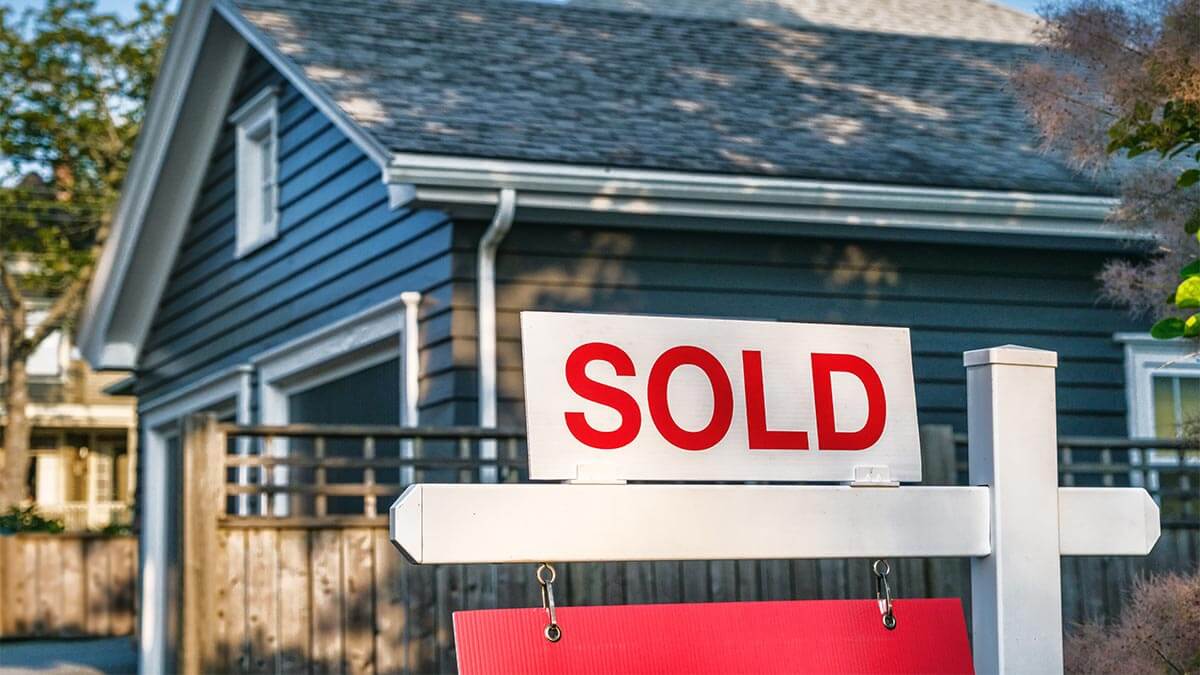
The fastest way to sell a house is to request a direct cash offer from an iBuyer or a real estate investor. This path closes in as little as 7 to 14 days with no showings, repairs, or lender delays. The tradeoff is price: cash buyers typically pay 10% to 30% below fair market value, so it works best when speed and certainty matter more than maximum proceeds.
Your timeline, home condition, and equity cushion together decide which of three paths fits your situation. This guide covers how fast each method closes, a comparison table to match your circumstances to the right option, how to run an aggressive open-market listing, when January makes selling hardest, the full cost of a $300,000 agent-assisted sale, and the mistakes that add weeks to any closing.
Get Competing Cash Offers Today Skip the single-buyer lowball — compare vetted buyers and close in days
No repairs, no agent fees, no obligation.
Fastest Ways to Sell
- How fast can you sell a house?
- The 3 fastest ways to sell a house
- Selling to an iBuyer or cash buyer
- Listing your home as-is with an agent
- What is the hardest month to sell a house?
- How much does a realtor cost on a $300,000 sale?
- Mistakes that slow down your home sale
- Get Competing Cash Offers Today
- Frequently Asked Questions
How fast can you sell a house?
The answer depends on which method you choose. A direct cash offer closes in 7 to 14 days. A full-market listing with a financed buyer runs 47 to 90 days from list to close. According to average days on market in 2026 data from NAR, the national median time from listing to contract is about 16 days. That covers only the listing period. Mortgage underwriting adds another 30 to 45 days after the contract is signed.
In the fastest local markets, homes go under contract in 5 to 6 days per market speed benchmarks from Redfin Research. Even there, financed closings still take 30 to 45 days after contract. Sellers who want to skip that window need an all-cash transaction.
Cash offer or iBuyer: 7, 14 days
A direct cash offer for house from an iBuyer or real estate investor is the fastest close available. You submit your property details online, get an offer within 24 to 48 hours, and pick a closing date. That date is typically 7 to 14 days from acceptance. There is no underwriting, no inspection contingency, and no financing risk.
This path also skips listing prep, open houses, and the escrow wait that financed deals require. For sellers with a hard move deadline, a cash offer is the only method that reliably closes in under 30 days.
As-is MLS listing: 14, 45 days
An as-is home sale through a local agent lists the property on MLS without requiring repairs. It targets cash buyers and investors who can move quickly. Offers typically arrive within 14 to 30 days in a normal market, followed by a 15 to 30-day cash closing. Total time runs roughly 30 to 60 days.
Accepting a financed offer on an as-is listing brings back the 30 to 45-day underwriting window. If speed is a priority, state clearly in the listing that you prefer cash buyers.
Traditional financed sale: 45, 90 days
A traditional full-market listing with a financed buyer takes 47 to 90 days from list date to close. The listing period averages 16 days before a contract is signed. Underwriting then adds 30 to 45 days. Per mortgage closing timelines from Chase, that underwriting window can stretch further in high-volume lending environments.
This path yields the highest sale price, but it requires preparation and showings. It also carries financing risk. If the buyer’s loan falls through during escrow, the process starts over.
The 3 fastest ways to sell a house
The three paths below cover most sellers. Each trades speed against price differently. Your move deadline, home condition, and equity cushion determine which is right. The quickest way to sell a house is an all-cash transaction. The highest-net path is a well-prepared open-market listing.
Option 1: iBuyer or cash home buyer
A cash home buyer or iBuyer buys your home directly and closes in 7 to 14 days. You skip repairs, staging, showings, and lender timelines. The cost is a below-market offer, typically 10% to 30% under fair market value. This is the fastest way to sell a house when certainty and speed matter more than maximum proceeds.
Option 2: As-is listing with a local agent
You list the home as-is on the MLS, state that no repairs will be made, and price to reflect condition. Your agent targets cash buyers and investors browsing MLS. This path takes 30 to 60 days and carries a real estate agent commission of 2% to 3% on the listing side. It does expose the property to a wider buyer pool than a single direct offer.
Option 3: Aggressive open-market listing
You prepare the home, set your listing price at or slightly below fair market value, and list on a Thursday to get the most first-weekend showings. This approach can produce an accepted offer within 7 to 14 days on market and a full close in 30 to 45 days. It preserves full market proceeds when done correctly, but it requires prep time and carries financing contingency risk.
The table below compares all five positions on the speed-price spectrum. Per Bankrate’s sale timeline data, the 7 to 14-day cash close versus the 30 to 45-day financed close is the most consistent finding across major data sources.
| Sale Method | Avg. Timeline to Close | Best For | Price Trade-off |
|---|---|---|---|
| iBuyer / cash buyer (single offer) | 7, 14 days | Sellers who need certainty above all else | 10, 30% below market value |
| Multiple competing cash offers (marketplace) | 7, 21 days | Sellers who want cash speed + better price | 5, 15% below market value |
| As-is listing with an agent | 30, 60 days | Sellers with a home in poor condition | Agent commission (2, 3%) + price reduction for condition |
| Aggressive open-market listing | 30, 45 days | Sellers who want maximum proceeds with 30+ days | None, but requires prep, showings, financing risk |
| Traditional full-market listing | 47, 90 days | Sellers without time pressure | None (highest proceeds potential) |
Based on NAR and Bankrate data, 2026. Verify current timelines before transacting.
Selling to an iBuyer or cash buyer
Selling to a cash home buyer is the fastest path to close. Knowing how the process works helps you compare offers and avoid accepting a weak first bid when a stronger one is available. If you need to sell your house fast, this section walks through the mechanics from submission to close.
How the process works: submit, receive, close
You submit your property details online, address, size, condition, and any known issues. The iBuyer or investor runs an automated valuation and sends back a cash offer, usually within 24 to 48 hours. You review the offer, choose a closing date, and sign the purchase agreement. No open house, no MLS listing, and no financing contingency.
The full sequence from submission to cash in hand runs 7 to 14 days for most transactions. Title companies that specialize in cash deals can compress this to 7 to 10 business days once all documents are signed.
What price to expect from a cash offer
Cash buyers and investors typically pay 10% to 30% below the home’s fair market value. The exact discount depends on local market conditions, the home’s condition, and the buyer’s cost model. In a strong seller’s market, the discount can narrow toward the lower end. In a slow market or on a home with significant deferred maintenance, expect offers closer to 30%.
One factor that partially offsets the discount: you skip the real estate agent commission, typically 5% to 6%. You also avoid repair costs a traditional buyer would require. On a $300,000 home, saving $15,000 to $18,000 in commissions and $5,000 to $15,000 in repairs narrows the net difference meaningfully.
Single offer vs. competing offers
Sellers who request competing cash offers can reduce the price discount by 5 to 15 percentage points compared to accepting a single company’s first offer. A marketplace model sends the same property to multiple vetted buyers who each submit a bid. This preserves the same 7 to 30-day closing timeline while adding the price competition that a one-buyer approach skips.
For a curated list of vetted cash home buyer companies operating nationally, the cornerstone resource covers fees, offer ranges, and timelines side by side. To see how individual cash buyers compare on verified reviews before you commit, that page gives you a real-world benchmark for one nationally operating company.
Listing your home as-is with an agent
An as-is home sale is not a distressed sale by default. It means you disclose the home’s condition and state you will not make repairs as a condition of closing. Buyers can still inspect. They simply accept what the inspection finds.
What ‘as-is’ means for buyers and sellers
“As-is” is a designation in the listing agreement and purchase contract. You disclose known defects, and buyers accept the property without asking you to fix anything. You still must disclose known material defects. An as-is designation does not protect you from a failure-to-disclose claim. Consult a real estate attorney in your state for specific disclosure rules before you list.
How an agent prices an as-is home
Your agent runs a comparative market analysis and adjusts for condition. The adjustment reflects what a buyer will spend to bring the home up to standard. According to NAR, as-is homes typically sell at a 5% to 15% discount versus comparable renovated homes. The goal is to set the listing price where cash buyers and investors see value rather than risk.
Pricing too high on an as-is listing stretches days on market. It also signals unrealistic expectations to buyers. Pricing accurately from the start attracts multiple cash offers within 14 to 30 days in most markets.
Who should choose the as-is listing path
This path works best for sellers who need more than 30 days and want to beat the price a single iBuyer would offer, but who cannot or do not want to fund repairs. It fits homes with deferred maintenance but a sound structure, since investors and flippers can price those costs in efficiently.
For sellers who want to sell house without repairs on the tightest timeline, the direct cash offer is the cleaner option. Sellers who can wait 30 to 60 days often net more through the as-is MLS path than through a single direct offer.
How to List Your House Aggressively for a Fast Sale
If speed is your priority, the goal is to generate the maximum number of qualified buyers during your first weekend on the market. These five strategies help create urgency, increase showings, and improve your chances of receiving strong offers quickly.
-
Step 1: Price at or Below Fair Market Value from Day One.
Set your listing price at or slightly below what comparable homes have recently sold for. According to Zillow Research, homes that reduce their asking price after two weeks on the market typically take longer to sell. Pricing correctly from the start is one of the most effective ways to encourage multiple offers and shorten your time on market.
-
Step 2: Invest in Professional Photography and 3D Tours.
Most buyers begin their home search online, making professional photography essential. High-quality photos and a 3D virtual tour help your listing stand out, attract more qualified buyers, and reach out-of-town purchasers who cannot visit in person.
-
Step 3: Stage and Declutter Before the First Showing.
Remove personal items, excess furniture, and unnecessary clutter to make rooms appear larger and more inviting. A clean, staged home helps buyers visualize themselves living in the property and can increase buyer interest during the critical first weekend.
-
Step 4: List on a Thursday for Maximum Weekend Traffic.
Listing on Thursday gives buyers time to discover your property before the weekend, when showing activity is typically highest. Strong weekend traffic can create competition and improve your negotiating position.
-
Step 5: Set a 48- to 72-Hour Offer Review Deadline.
Announcing a deadline for reviewing offers encourages buyers to act quickly and submit their strongest terms. A competitive offer window often improves both price and closing flexibility.
These three methods cover most sellers’ situations. The remaining question is timing: does the calendar affect how fast any of them work?
What is the hardest month to sell a house?
January is the hardest month to sell a house in most U.S. markets. Buyer activity is lowest, showings are fewest, and average days on market are longest. Post-holiday finances, winter weather, and reduced urgency all suppress demand in December and January.
The nuance: “hardest month” can mean two different things. If you count fewest active buyers, January wins consistently. If you measure lowest seller premium, October and November are often weaker. Per best and worst months to sell from The Close, December and January are the least profitable months for sellers. May and June consistently produce the highest premiums above list price.
Why January is consistently the slowest month
January buyer traffic runs 20% to 40% below the spring peak in most U.S. markets. Buyers who paused over the holidays return gradually through February. Tax season uncertainty and reduced job-relocation activity add to the slowdown. The January 2026 national average days on market hit its seasonal peak, consistent with multi-year patterns tracked by NAR and Redfin.
Sellers who must list in January should price aggressively and invest heavily in online presentation. January buyers browse online before committing to showings. Professional photography and an accurate listing price are the most effective tools available.
Best months to list: May and June
May and June produce the highest seller premiums and the fastest accepted-offer timelines in most U.S. markets. Family buyers motivated to close before the school year ends drive competition during this window. Inventory is higher than in winter but typically gets absorbed faster than it is added.
Listings added on Thursdays in late April through June get the most weekend showing traffic. If you can choose your list date, target the first or second Thursday of May for the widest active buyer pool.
How to sell fast regardless of season
A cash offer closes in 7 to 14 days in any season, because it bypasses the open market entirely. In a slow January market, a cash offer removes the seasonal variable from your timeline. For sellers using a MLS listing in winter, pricing 3% to 5% below comparable recent sales compensates for reduced buyer traffic and can still attract competing offers.
For sellers in Florida, where seasonal buyer patterns differ from northern markets, how Florida cash buyers work gives a local view on cash offer timelines and competitive dynamics in that state.
How much does a realtor cost on a $300,000 sale?
On a $300,000 home, total real estate commissions typically run $15,000 to $18,000. That amount splits roughly evenly between the listing agent and the buyer’s agent. It is also the single largest transaction cost that a direct cash sale removes.
Total commission: 5, 6% on $300,000
The standard real estate agent commission ranges from 5% to 6% of the sale price. Per how real estate commissions work from NerdWallet, the 2026 average sits at about 5.7% per Clever Real Estate survey data. On a $300,000 sale at 5.7%, total commission equals $17,100. This cost applies whether the home sells in 7 days or 90 days.
How the commission splits between agents
The total commission divides between the listing agent and the buyer’s agent, typically near 50/50. At 6%, each side earns $9,000 before the broker takes a cut. The listing agent average in 2026 is about 2.88% ($8,640 on $300,000) and the buyer’s agent average is about 2.82% ($8,460). Under a common 70/30 broker arrangement, the individual listing agent takes home about $6,300 after the brokerage cut on a $300,000 sale at 6%. Splits vary by brokerage and should not be treated as a universal rule.
What sellers actually net after fees
Commission is not the only seller-side cost. Transfer taxes (which vary by state), title fees, prorated property taxes, and any seller concessions add to the total. On a $300,000 home, total seller closing costs typically run $18,000 to $24,000 including the 6% commission.
Compare that to a cash sale at a 15% discount: the home sells for $255,000 with no commission, putting net proceeds near $252,000 to $254,000. A $300,000 full-market sale netting $276,000 to $282,000 after costs still outperforms that scenario. The break-even depends on the actual cash offer, the home’s condition, and what a traditional listing would require in repairs and prep costs.
Mistakes that slow down your home sale
Avoiding these errors matters as much as choosing the right method. Each one below adds days or weeks to the closing timeline.
-
Overpricing on day one. Homes that cut their listing price after 14 days spend on average twice as long under contract before closing, per Zillow Research. A price cut also signals motivated-seller status to buyers, who respond with lower offers rather than higher ones.
-
Refusing to declutter or stage. Buyers need to picture living in the home. Personal items, extra furniture, and visual clutter break that process. Unstaged homes take longer to sell and attract lower initial offers than staged homes at the same listing price. Home staging is a direct investment in reducing days on market.
-
Skipping professional photography. More than 95% of buyers start their search online. Smartphone photos in poor lighting hurt your listing when buyers compare dozens of homes before booking a single showing. Professional photography is the minimum standard for any seller focused on how to sell a house fast.
-
Accepting a financed offer when timeline is the priority. A financed buyer adds 30 to 45 days of underwriting to your closing. If your deadline is 30 days or fewer, a financed offer makes that deadline functionally impossible. Ask for proof of funds before accepting any offer when speed is the goal.
-
Not vetting a cash buyer before accepting. An unvetted buyer who cannot produce proof of funds can fall through post-contract. That costs you 2 to 4 weeks while you relist. For a practical example of vetting a regional buyer, see Texas cash buyer reviews before accepting any offer from an unfamiliar company.
-
Listing on Monday instead of Thursday. Homes added to MLS on Mondays miss the Thursday-to-Sunday peak showing window. You lose the first weekend’s buyer traffic with no offsetting advantage.
-
Failing to disclose known defects on an as-is sale. As-is does not mean no disclosure. Hiding known defects can trigger renegotiation or contract cancellation post-inspection, adding 2 to 4 weeks and potential legal liability. Disclose everything and price accordingly from the start.
Get Competing Cash Offers Today
Selling fast does not mean accepting the first number you receive. iBuyer.com lets you submit your property details once and receive competing cash offers from multiple vetted buyers. You get the same 7 to 30-day closing window as a single iBuyer, with the price competition that one-company offers skip entirely. You keep the speed, reduce the discount, and pay no agent commission. Enter your address to see what competing buyers will pay for your home.
Get Competing Cash Offers Today Skip the single-buyer lowball — compare vetted buyers and close in days
No repairs, no agent fees, no obligation.
Frequently Asked Questions
The fastest way to sell a house is to request a direct cash offer from an iBuyer or real estate investor, which can close in 7 to 14 days. This method skips lender underwriting, inspections, and showings entirely. The tradeoff is price: cash buyers typically pay 10% to 30% below fair market value. Sellers who need speed and have enough equity to absorb that discount are the best fit.
The quickest way to sell a house is a cash sale to an iBuyer or investor, which can close in as few as 7 days once the offer is accepted and title work is clear. In fast markets like Cincinnati and Kansas City, homes listed on MLS can go under contract in 5 to 6 days, but financed closings still take 30 to 45 days. The 7-day close is only possible through an all-cash transaction with no financing contingency.
On a $300,000 home, total real estate commission typically runs $15,000 to $18,000 (5% to 6%), split between the listing agent and the buyer’s agent. Each agent receives $7,500 to $9,000 before the broker takes a cut. After a common 70/30 broker split, the individual listing agent may take home about $6,300 on a $300,000 sale at 6%. The 2026 average total commission is about 5.7% per Clever Real Estate data.
January is the hardest month to sell a house in most U.S. markets, with the lowest buyer activity, fewest showings, and longest average days on market. December and January both see depressed buyer traffic due to post-holiday finances and winter weather. On a seller-premium basis, October and November are often weaker than January. “Fewest buyers” and “lowest sale premium” are not always the same month.
The three fastest ways to sell a house are: (1) accept a cash offer from an iBuyer or investor for a 7 to 14-day close, (2) list as-is with a local agent for a 30 to 60-day close, and (3) list aggressively on the open market for a 30 to 45-day close. A cash offer closes fastest but costs 10% to 30% below market. An as-is listing avoids repair costs. An aggressive open-market listing preserves full market value with preparation and timing.
Yes, iBuyers and cash investors typically pay 10% to 30% below market value in exchange for a fast, certain close with no repairs or showings required. Sellers who request competing offers from multiple cash buyers can reduce that discount compared to accepting a single company’s first offer. Factoring in saved agent commissions (5% to 6%) and avoided repair costs narrows the net gap further.
Yes, you can list a house as-is on the MLS and close in 30 to 60 days by pricing to reflect the home’s condition and targeting cash buyers. An experienced agent prices the as-is home to attract investors and cash buyers browsing MLS, bypassing expensive repairs. You still pay agent commissions of 2% to 3% on the listing side, and the price must account for buyers taking on deferred maintenance.
May and June are the best months to sell a house in most U.S. markets, producing the highest seller premiums and the shortest average days on market. Late April through early June is the peak window when family buyers want to close before the school year ends. Listings added on Thursdays during this window get the most weekend showings.
To sell fast without repairs, request a direct cash offer from an iBuyer or investor, or list the home as-is on the MLS priced to reflect its current condition. iBuyers buy homes in any condition and close in 7 to 14 days without requiring repairs or inspections. An as-is MLS listing takes 30 to 60 days but can yield a higher price than a single iBuyer offer.
An iBuyer is a technology-enabled company that makes direct cash offers on homes, closes in days rather than months, and resells the property on the open market. iBuyers return offers within 24 to 48 hours based on an automated valuation of your property details. The process skips showings, negotiations, and lender delays. Sellers can access multiple competing iBuyer and cash-buyer offers through a marketplace platform to improve the final price.
If your primary goal is to sell fast with certainty, a cash buyer closes in 7 to 14 days. If your goal is maximizing proceeds, an agent-assisted listing typically yields 10% to 30% more. The right choice depends on your timeline pressure, equity cushion, and home condition. Sellers with enough equity to absorb a 10% to 20% discount and a hard move deadline are strong candidates for cash offers.
After accepting a cash offer, closing typically takes 7 to 21 days. After accepting a financed offer, closing takes 30 to 45 days for mortgage underwriting. The 30 to 45-day financed window is set by lender requirements, not seller behavior. Cash buyers skip underwriting entirely, compressing the post-acceptance period to title search, document prep, and fund transfer.
To sell quickly, you need a property deed, recent mortgage statement, seller’s disclosure form, and a signed purchase agreement. Cash sales cut out lender paperwork, but they do not cut out all paperwork. You still need a title search, title insurance, and a closing disclosure. A title company experienced with cash transactions can shave 3 to 5 days off the closing timeline.
A cash home buyer is typically a local investor or “we buy houses” company. An iBuyer is a technology-enabled national company that uses automated valuations to make instant offers. Both pay cash and close faster than financed buyers, but iBuyers operate at scale with more predictable pricing and timelines. Local cash investors may offer more flexibility on terms but vary more in offer quality and reliability.

Reilly Dzurick is a licensed real estate agent with over six years of experience and a member of the iBuyer.com Market Insights Team, covering national trends in home selling and the evolving iBuyer landscape. Her firsthand experience working with buyers and sellers gives her a practical perspective on how these platforms impact real homeowners. She holds a degree in Public Relations, Advertising, and Applied Communication.