This article is for informational purposes only and does not constitute tax or legal advice. Consult a licensed tax professional or real estate attorney before making decisions about gift tax obligations or mortgage financing.
A down payment on a house in Florida typically ranges from 3% to 20% of the purchase price, depending on the loan program you use. The median down payment Florida buyers actually put down is closer to $22,000 to $27,000, far below the 20% figure most first-time buyers assume they need.
Florida’s median home price sits in the $378,000 to $400,000 range, depending on the month and data source. At $400,000, a 3% conventional down payment is $12,000, while reaching 20% requires $80,000 in cash before closing costs. Whether you qualify for state or county assistance programs changes that number significantly.
This guide covers how much you need by loan type, exact dollar amounts for homes priced from $300,000 through $500,000, every major Florida down payment assistance program including Hometown Heroes, how gift money works under IRS rules, what to budget for closing costs, and how to plan your savings timeline.
Table of contents
- What is the down payment on a house in Florida?
- Down payment by loan type in Florida
- How much is the down payment on a $300K or $400K home?
- Florida down payment assistance programs in 2026
- Explore Florida Homebuying by City
- Can you use gift money for a down payment in Florida?
- Closing costs to budget alongside your down payment
- How to save for a down payment in Florida
- Turning Home Equity Into Your Down Payment
- Frequently Asked Questions
Selling First to Fund Your Down Payment? Get competing cash offers in days, close in 7-30 days, skip the listing.
No commissions, no repairs, no open houses.
What is the down payment on a house in Florida?
The down payment on a house in Florida is the upfront cash payment you make toward the purchase price at closing. Florida buyers put down an average of about 13% across all loan types, though that figure blends first-time buyers with repeat buyers who apply equity from a prior home sale. For a buyer starting from scratch, the realistic benchmark is lower.
The median home price Florida buyers transact at runs approximately $378,000 to $400,000. At $400,000, a 3% down payment is $12,000. The same home at 20% down requires $80,000 in cash before any closing costs are factored in.
The 20% myth: what most buyers actually pay
You do not need a 20% down payment to buy a home in Florida. The 20% threshold eliminates private mortgage insurance (PMI) on conventional loans, but it is not a universal lending requirement. In practice, the median down payment Florida buyers bring to closing runs between $22,000 and $27,000, well below what 20% demands on a $400,000 home.
PMI is the main cost of going below 20% on a conventional loan. Per how PMI works and when it cancels, lenders must cancel PMI automatically when your equity reaches 22%, and you can request removal at 20%. The monthly PMI cost is real but often smaller than the opportunity cost of waiting years to accumulate a 20% stack in savings.
First-time vs. repeat buyers in Florida
Data shows a wide gap between first-time homebuyer Florida buyers and repeat buyers when it comes to down payments. According to NAR data on Florida buyer down payment medians, the median down payment for first-time homebuyer Florida transactions is 8%, the highest median for that group since 1997. Repeat buyers put down a median of 19%, typically rolling equity from a prior sale into the new purchase.
The gap between 8% and 19% explains why the overall average across all Florida buyers lands near 13%. If you are buying your first home, 8% is the realistic market benchmark.
Down payment by loan type in Florida
The minimum down payment Florida buyers must bring to closing depends entirely on the loan program they use. The table below shows the minimum percentage and the dollar equivalent on a $400,000 home for each major loan type available in Florida.
| Loan Type | Minimum Down % | Dollar Amount on $400K Home |
|---|---|---|
| Conventional (first-time buyer) | 3% | $12,000 |
| Conventional (standard) | 5% | $20,000 |
| FHA | 3.5% | $14,000 |
| VA | 0% | $0 |
| USDA | 0% | $0 |
| Jumbo | 10% to 20% | $40,000 to $80,000 |
Based on loan program minimums as of 2026. Verify current program rules with your lender before applying.
Conventional loans: 3% minimum down
A conventional loan down payment starts at 3% for first-time buyers and 5% for most repeat buyers. These loans are not backed by a federal agency, so lenders set their own credit standards, typically requiring a 620 minimum score. Buyers who put down less than 20% on a conventional loan pay private mortgage insurance until their loan-to-value ratio drops to 80%.
PMI rates typically add $50 to $200 per month on a $400,000 loan, depending on your credit score and lender. You can request removal when equity reaches 20%, or lenders must cancel it automatically at 22%.
FHA loans: 3.5% down payment
An FHA loan Florida buyers can access requires a minimum 3.5% down payment for borrowers with a credit score of 580 or above. Borrowers with scores between 500 and 579 must put down 10%. FHA loans are popular in Florida because they allow lower credit scores than conventional products while still providing access to competitive interest rates.
FHA loans carry a mortgage insurance premium (MIP) that lasts for the life of the loan if you put down less than 10%. That is a meaningful structural difference from PMI on conventional loans, which cancels once you reach 20% equity.
VA loans: zero down for veterans
The VA loan no down payment benefit is available to eligible active-duty service members, veterans, and surviving spouses. VA loans require no down payment and no PMI. Most borrowers pay a one-time funding fee ranging from 1.25% to 3.3% of the loan amount, depending on service history and whether it is a first or subsequent use. That fee can be rolled into the loan balance rather than paid out of pocket at closing.
VA loan eligibility requires a Certificate of Eligibility from the Department of Veterans Affairs. Florida buyers who qualify should exhaust the VA option before evaluating other loan types.
USDA loans: zero down in rural areas
USDA loan Florida buyers can use this program for $0 down on homes in USDA-designated rural and suburban areas. The program has household income limits set at 115% of the area median income. Eligible properties must meet USDA location criteria, which can include suburban communities located outside major metro cores.
USDA loans carry an annual guarantee fee and an upfront guarantee fee. Both can be financed into the loan balance rather than paid out of pocket at closing.
Jumbo loans: 10% to 20% required
A jumbo loan Florida buyers use for higher-priced properties typically requires 10% to 20% down. Jumbo loans apply when the financed amount exceeds the conforming loan limit set annually by the FHFA. On a $700,000 purchase, a 10% requirement means $70,000 upfront. Jumbo lenders also require higher credit scores, usually 700 or above, and stricter debt-to-income ratios than conforming programs allow.
How much is the down payment on a $300K or $400K home?
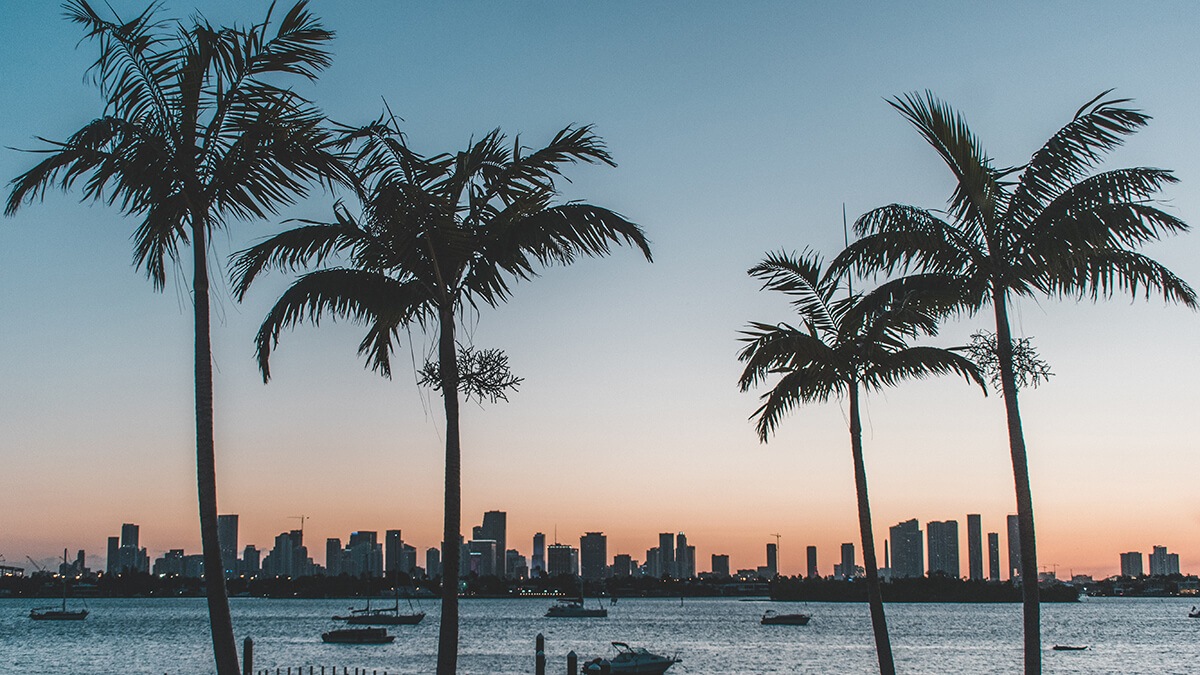
Converting percentages to real dollars makes the numbers concrete. Miami housing market data for 2026 shows why the $400,000 to $500,000 price range is relevant for buyers across South Florida’s most active markets.
Down payment on a $300,000 home
| Loan Type | Down % | Dollar Amount |
|---|---|---|
| Conventional (first-time, 3%) | 3% | $9,000 |
| FHA (3.5%) | 3.5% | $10,500 |
| VA | 0% | $0 |
| USDA | 0% | $0 |
| Conventional (20%, no PMI) | 20% | $60,000 |
VA and USDA require eligibility confirmation. All figures reflect standard program minimums as of 2026.
Down payment on a $400,000 home
| Loan Type | Down % | Dollar Amount |
|---|---|---|
| Conventional (first-time, 3%) | 3% | $12,000 |
| FHA (3.5%) | 3.5% | $14,000 |
| VA | 0% | $0 |
| USDA | 0% | $0 |
| Conventional (20%, no PMI) | 20% | $80,000 |
The $400,000 price point reflects the approximate median home price Florida buyers face in 2026 based on current market data.
Down payment on a $500,000 home
| Loan Type | Down % | Dollar Amount |
|---|---|---|
| Conventional (3%) | 3% | $15,000 |
| FHA (3.5%) | 3.5% | $17,500 |
| VA | 0% | $0 |
| USDA | 0% | $0 |
| Conventional (20%, no PMI) | 20% | $100,000 |
At $500,000, buyers often need a jumbo loan if the financed amount exceeds the current FHFA conforming loan limit. Verify the 2026 limit before applying.
Florida down payment assistance programs in 2026
Florida down payment assistance programs reduce the cash you need upfront by layering a second mortgage or grant on top of your first loan. These programs are generally available to income-qualified first-time homebuyer Florida buyers across most counties. The table below summarizes the major state and county programs for 2026.
| Program | Max Benefit | Who Qualifies | Structure |
|---|---|---|---|
| Hometown Heroes | $35,000 | Full-time FL workers, first-time buyer, <150% county AMI | Deferred second mortgage, 0% interest |
| FL Assist | 3% to 5% of loan amount | Florida Housing first mortgage borrowers | Deferred second mortgage, 0% interest |
| Miami-Dade DPA | $35,000 | First-time buyers, income limits | Interest-free loan |
| Orange County DPA | $70,000 / $40,000 / $10,000 | Very low / low / moderate income | Tiered by income level |
Based on program terms published by the Florida Housing Finance Corporation and county housing agencies as of 2026. Verify current funding status and income limits before applying.
Hometown Heroes: up to $35,000
The Hometown Heroes program Florida provides up to $35,000 in down payment and closing cost assistance through the Florida Housing Finance Corporation. The benefit equals up to 5% of your first mortgage loan amount, capped at $35,000. It is structured as a deferred second mortgage at 0% interest with no monthly payment required.
This is a second mortgage, not a grant. Repayment is due when you sell the home, refinance, transfer the title, or stop occupying the property as your primary residence.
To qualify for the Hometown Heroes program, you must:
- Be a first-time homebuyer (no primary residence ownership in the past three years)
- Work full-time for a Florida-based employer
- Earn less than 150% of the county’s area median income (AMI)
- Use a qualifying first mortgage product
Confirm current funding availability and eligible first mortgage products at Florida Housing Finance Corporation programs. The program has experienced funding pauses in prior years; verify it is actively accepting applications before relying on it.
Florida Housing FL Assist program
The FL Assist second mortgage is another product administered by the Florida Housing Finance Corporation. It provides 3%, 4%, or 5% of the total loan amount (not the purchase price) as a deferred second mortgage for down payment and closing cost assistance. The loan carries 0% interest and requires no monthly payments.
FL Assist is available to first-time homebuyer Florida borrowers who use a qualifying Florida Housing first mortgage product. Unlike a forgivable second mortgage, the full FL Assist balance is due when you sell, refinance, or pay off the first mortgage.
Florida Housing also offers up to $10,000 in deferred assistance that functions as a down payment assistance grant equivalent, covering a portion of closing costs Florida buyers face at the table. See Florida First-Time Buyers Foundation program details for additional structure information on how program funds are applied at closing.
County programs: Miami-Dade and Orange County
County-level Florida down payment assistance can stack on top of state programs, giving qualified buyers access to larger combined benefit amounts.
Miami-Dade County offers an interest-free loan of up to $35,000 to qualifying first-time buyers through the Miami-Dade down payment assistance program. Income and purchase price limits apply.
Orange County uses a tiered structure based on income level, per Orange County buyer assistance tiers:
- $70,000 for eligible very low-income buyers
- $40,000 for low-income buyers
- $10,000 for moderate-income buyers
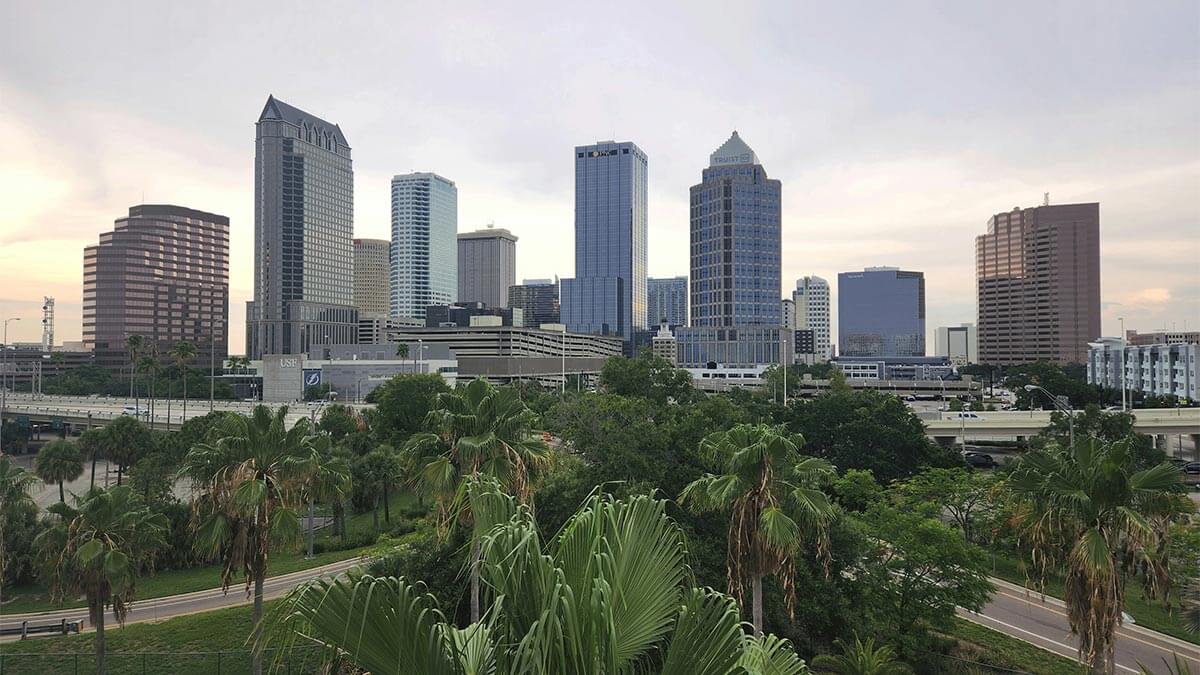
For all other Florida counties, the county-level homeownership assistance in Florida directory at HUD lists contacts for all 67 counties. Tampa market data for 2026 helps Tampa-area buyers understand current prices before selecting a program track. Orlando market data for 2026 provides the same context for Orange County buyers weighing the tiered income structure.
Explore Florida Homebuying by City
Market conditions, prices, and buyer landscape vary significantly across Florida’s major metros. Select your city below.
Can you use gift money for a down payment in Florida?
Yes, gift funds toward a down payment are allowed on all major loan types in Florida. There is no federal cap on the dollar amount a family member may gift toward a primary residence purchase. Lenders do require documentation, and the IRS has reporting rules for gifts above a certain threshold.
IRS gift tax rules for 2026
The 2026 annual gift tax exclusion is $19,000 per recipient (verify this figure at irs.gov before publishing, as it adjusts annually for inflation). Gifts above that amount require the donor to file IRS gift tax rules and Form 709 filing. Filing IRS Form 709 does not automatically trigger a tax bill. It draws against the donor’s lifetime estate and gift tax exemption, which was $13.99 million in 2025 (verify the 2026 inflation-adjusted figure before publishing).
The filing obligation belongs to the donor, not the recipient. As a home buyer, you owe no federal tax on gift funds received toward your purchase.
A gift of $200,000 from a parent is legal. Your parent would file Form 709 for the amount above the annual exclusion, but actual gift tax is only owed if their total cumulative lifetime gifts exceed the lifetime exemption. Most families will not approach that threshold.
What lenders require in a gift letter
Lenders require a signed gift letter for any gift funds down payment. The letter must confirm the funds are a gift and not a loan, and must include:
- The donor’s full name and relationship to the buyer
- The dollar amount of the gift
- The subject property address
- A statement that no repayment is required
- The donor’s signature
For conventional loan down payment purposes, 100% of the down payment may be gifted on a primary residence, provided the donor is an acceptable party (family member, domestic partner, or fiancé). FHA loan Florida rules allow the same, with an identical gift letter requirement. In both cases, lenders verify the transfer using bank statements showing the funds moving into your account.
Closing costs to budget alongside your down payment
Your closing costs Florida buyers pay are separate from the down payment and must be budgeted as a distinct line item. Many first-time buyers forget closing costs and arrive at the table short.
Buyer closing costs on a $400,000 home
Closing costs on a $400,000 home in Florida typically run $8,000 to $20,000, representing 2% to 5% of the purchase price. Florida’s average closing cost rate is approximately 2.32% of the sale price, which equals about $9,280 on a $400,000 purchase, based on industry survey data citing realtor.com analysis. That rate sits above the national average, partly because of Florida’s documentary stamp tax and title insurance conventions.
Common itemized costs include:
- Documentary stamp taxes
- Title insurance (owner’s and lender’s policies)
- Appraisal fee
- Lender origination fees
- Recording fees
- Prepaid items (property taxes, homeowner’s insurance, prepaid interest)
Miami-Dade buyers typically see closing costs in the $12,000 to $16,000 range on a $400,000 purchase. Broward and Palm Beach County buyers generally land in the $11,000 to $15,000 range.
Total cash needed at closing in Florida
The table below combines the minimum down payment with estimated closing costs to show the full upfront cash requirement at three Florida price points.
| Home Price | Loan Type | Down Payment | Est. Closing Costs (2.32%) | Total Cash at Closing |
|---|---|---|---|---|
| $300,000 | Conventional 3% | $9,000 | $6,960 | $15,960 |
| $300,000 | FHA 3.5% | $10,500 | $6,960 | $17,460 |
| $400,000 | Conventional 3% | $12,000 | $9,280 | $21,280 |
| $400,000 | FHA 3.5% | $14,000 | $9,280 | $23,280 |
| $500,000 | Conventional 3% | $15,000 | $11,600 | $26,600 |
| $500,000 | FHA 3.5% | $17,500 | $11,600 | $29,100 |
Closing cost estimates use Florida’s average rate of 2.32%. Actual costs vary by county, lender, and transaction. Assistance programs may offset a portion of closing costs.
Florida Housing’s assistance programs, including the FL Assist second mortgage and the Hometown Heroes deferred loan, can cover both down payment and closing cost line items, reducing the total cash you need to bring to the table.
How to save for a down payment in Florida
Saving toward a down payment in Florida takes longer than most buyers expect. Rising home prices reduce the real impact of every dollar you set aside each month.
Down payment savings timeline for Florida
Consider a buyer targeting a $400,000 home and the minimum down payment Florida buyers can qualify for:
- 3% target ($12,000): Saving $400 per month reaches the goal in 30 months (2.5 years)
- 5% target ($20,000): Saving $400 per month reaches the goal in 50 months (just over 4 years)
- 20% target ($80,000): Saving $800 per month reaches the goal in 100 months (about 8.3 years)
Research cited in Florida housing analyses found that the typical Florida household needs approximately 17 years to save 10% of a purchase price without any assistance. That estimate accounts for rent increases, wage growth that lags home price appreciation, and the general cost of living across the state.
Buyers deciding between purchasing an existing home and building new should review the cost to build in Florida to compare both upfront costs and timeline implications before committing to either path.
Assistance programs vs. saving longer
Pairing a state or county assistance program with a low-down first mortgage is almost always faster than waiting to reach a higher down payment threshold. The opportunity cost of waiting works against you: a $400,000 home appreciating 3% per year costs $12,000 more for every year you delay, which erodes the value of an extra year of saving for most Florida buyers.
Layering the Hometown Heroes program or FL Assist second mortgage onto a 3% to 3.5% first mortgage lets you close now rather than saving toward 20% over eight or more years. Buyers who qualify for VA or USDA financing can skip the down payment hurdle entirely and direct savings toward reserves and closing costs instead.
Turning Home Equity Into Your Down Payment
If you already own a home, the down payment for your next Florida purchase may already exist in your current property’s equity. Through iBuyer.com, you submit your home once and receive competing cash offers from multiple vetted buyers, with no listing, no agent commission, and no repair requirements. Once you accept an offer, you choose your close date, typically 7 to 30 days out. That timeline lets you arrive at your Florida purchase with a real, verified equity figure in hand, not a hopeful estimate tied to a pending sale.
Turn Your Home Equity Into a Down Payment Fast Compare cash offers from vetted buyers before you commit to your Florida purchase.
Pick your close date, skip the agent, keep more equity.
Know Your Local Market Before You List
Pull the last 12 months of real sales and buyer activity for your neighborhood.
Get My Market ReportFrequently Asked Questions
A down payment on a house in Florida ranges from 3% to 20% of the purchase price, depending on which loan type you use. Most buyers do not put down 20%. The median down payment in Florida runs between $22,000 and $27,000. First-time buyers put down a median of 8% while repeat buyers typically put down 19%.
The minimum down payment Florida buyers need is 0% for VA and USDA loans, 3% for conventional loans, and 3.5% for FHA loans. Active-duty military and veterans can access VA loans with $0 down. Buyers in designated rural or suburban areas may qualify for USDA loans. First-time conventional buyers can put down as little as 3% but will pay private mortgage insurance until they reach 20% equity.
The $35,000 program is the Hometown Heroes program Florida offers through the Florida Housing Finance Corporation, providing up to $35,000 as a 0% interest deferred second mortgage. Eligibility requires being a first-time homebuyer who works full-time for a Florida employer and earns less than 150% of the county’s area median income. The loan carries no monthly payment and is repaid when you sell, refinance, or stop occupying the home as your primary residence.
Closing costs on a $400,000 home in Florida typically range from $8,000 to $20,000, representing 2% to 5% of the purchase price. Florida’s average closing cost rate is approximately 2.32%, which equals about $9,280 on a $400,000 purchase. Costs include documentary stamp taxes, title insurance, appraisal fees, lender fees, recording fees, and prepaid items. Budget for closing costs and your down payment as completely separate line items.
Yes, your mother can legally gift $200,000 for a Florida home down payment, as no federal cap exists on gift amounts toward a primary residence. The 2026 annual gift tax exclusion is $19,000 per recipient; gifts above that amount require your mother to file IRS Form 709. Filing does not automatically trigger gift tax; it draws against the donor’s lifetime exemption. Your lender will require a signed gift letter confirming the funds are a gift, not a loan.
The down payment on a $300,000 house in Florida ranges from $0 to $60,000, depending on the loan type you qualify for. Conventional loans allow 3% down ($9,000), FHA loans require 3.5% ($10,500), and VA and USDA loans allow $0 for eligible buyers. The 20% conventional benchmark equals $60,000. Most first-time buyers using conventional or FHA financing pay between $9,000 and $10,500 upfront.
No, you do not need a 20% down payment to buy a house in Florida; most buyers put down far less. The 20% threshold eliminates private mortgage insurance on conventional loans but is not a lending requirement. First-time buyers in Florida put down a median of 8%, and FHA loans allow 3.5% down. Going below 20% on a conventional loan adds PMI to your monthly payment until you reach 20% equity.
Yes, eligible buyers can purchase a Florida home with no down payment using VA or USDA loan programs. VA loans are available to active-duty service members, veterans, and surviving spouses; they require a funding fee but no down payment. USDA loans apply to homes in USDA-designated rural and suburban areas with income limits. If you do not qualify for either, down payment assistance programs can reduce but do not eliminate your upfront costs.
FL Assist provides 3%, 4%, or 5% of the loan amount as a 0% interest deferred second mortgage for down payment and closing costs, with no monthly payments. It must be paired with a qualifying Florida Housing Finance Corporation first mortgage product. Unlike a down payment assistance grant, FL Assist must be repaid when you sell, refinance, or pay off the first mortgage.
The down payment on a $500,000 Florida home ranges from $0 (VA or USDA) to $100,000 at 20%, with a conventional 3% equaling $15,000 and an FHA 3.5% equaling $17,500. At $500,000, buyers may need a jumbo loan if the financed amount exceeds the current FHFA conforming loan limit. Jumbo lenders typically require 10% to 20% down, meaning $50,000 to $100,000 for a $500,000 property.
A credit score of 580 qualifies for the 3.5% minimum down payment on an FHA loan in Florida; scores between 500 and 579 require 10% down. FHA loans are popular in Florida because they allow lower credit scores than conventional loans while still offering competitive interest rates. Borrowers with scores below 500 do not qualify for FHA financing and would need to improve credit or pursue alternative loan types first.
Yes, Florida veterans can use the VA loan with $0 down and the Hometown Heroes program Florida offers up to $35,000 in assistance, depending on eligibility. The VA loan eliminates the down payment entirely for eligible veterans and active-duty service members. Hometown Heroes can layer additional closing cost coverage on top of other first mortgage products. Veterans must confirm income eligibility (under 150% of county AMI) for Hometown Heroes before applying.
Reaching a 3% down payment on a $400,000 Florida home takes roughly 30 months saving $400 per month; getting to 20% at that same rate takes over eight years. Research cited in Florida housing analyses found the typical Florida household needs approximately 17 years to save 10% without assistance. Down payment assistance programs like FL Assist and Hometown Heroes are designed to shorten that timeline for income-qualified buyers.
The average down payment in Florida in 2026 is roughly 8% for first-time buyers and 13% to 19% across all buyers, translating to about $22,000 to $27,000 at the median. First-time buyer data from the National Association of Realtors (2023 profile via Florida Realtors) shows 8% as the median, a historic high since 1997. Repeat buyers push the overall average higher, typically putting down 19%.

Reilly Dzurick is a licensed real estate agent with over six years of experience and a member of the iBuyer.com Market Insights Team, covering national trends in home selling and the evolving iBuyer landscape. Her firsthand experience working with buyers and sellers gives her a practical perspective on how these platforms impact real homeowners. She holds a degree in Public Relations, Advertising, and Applied Communication.