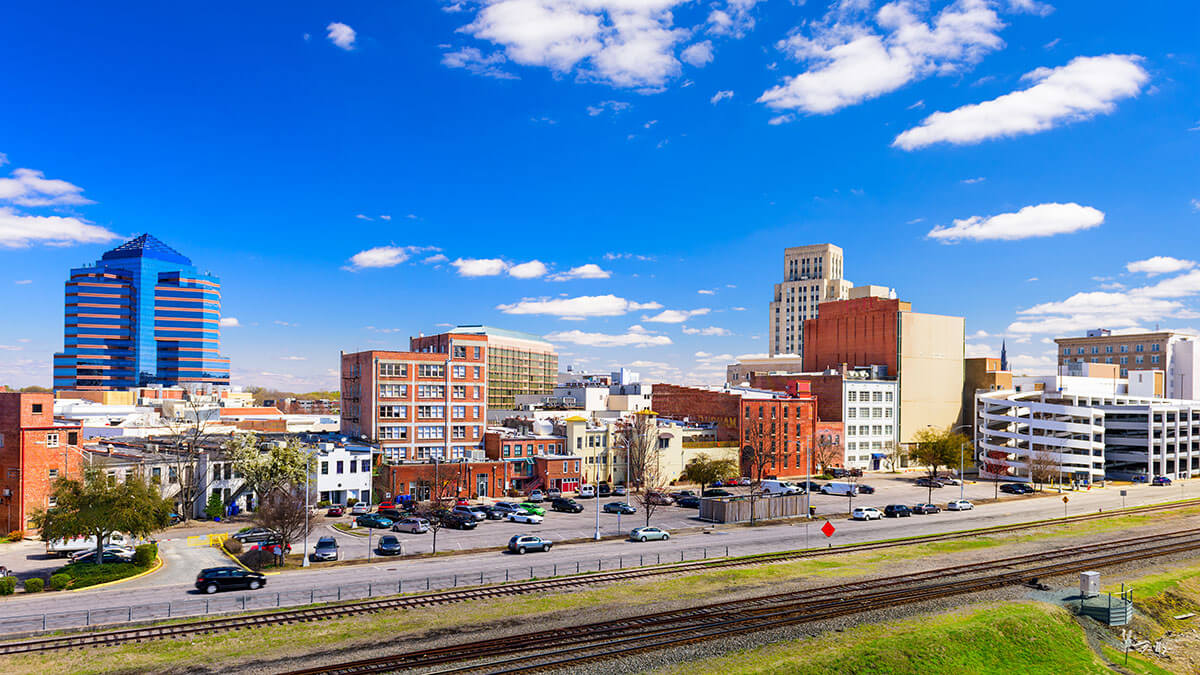
The best neighborhood in Durham, NC depends on your lifestyle. Trinity Park leads for walkability and historic character, Hope Valley is the top choice for luxury estates and golf course living, and Woodcroft draws families to southwest Durham with trail networks and strong schools. Across the city, median home prices range from roughly $280,000 in north Durham to more than $1.8 million in Hope Valley, and Walk Scores span from 80 near Duke’s East Campus to the low 20s in outlying residential zones.
Durham sits at the center of the Research Triangle alongside Raleigh and Chapel Hill, anchored by Duke University, Duke Health, and Research Triangle Park. The result is a wide spread of Durham NC neighborhoods that differ significantly by price, character, and safety. Durham cost of living varies sharply by zip code, and understanding those differences before you start touring saves weeks of wasted effort.
This Durham neighborhood guide covers the best neighborhoods in Durham NC by lifestyle segment, the safest neighborhoods in Durham NC with specific crime index numbers, the wealthiest enclaves, the most walkable corridors, the top picks for families, and the best options for young professionals. It is designed to help you match your budget and priorities to a specific area in a single pass.
Table of contents
- Best Durham neighborhoods at a glance
- Best part of Durham, NC to live in
- Safest neighborhoods in Durham, NC
- Richest neighborhood in Durham, NC
- Most walkable neighborhood in Durham
- Best Durham neighborhoods for families
- Best Durham neighborhoods for young professionals
- Found Your Durham Neighborhood?
- Frequently Asked Questions
Found Your Durham Neighborhood? Sell your current home with competing cash offers and close in 7–30 days.
No commissions, no repairs, no waiting.
Best Durham neighborhoods at a glance
The comparison table below maps eight Durham NC neighborhoods across six dimensions. It is the fastest way to match your lifestyle, budget, and safety priorities to a specific area before you start touring homes.
How to read this table
2026 Median Price reflects current listing data from 2026 Durham, NC median home prices on Redfin. Walk Score runs from 0 (car-dependent) to 100 (walker’s paradise). Safety Grade comes from CrimeGrade.org, where A+ means safer than 98% of Durham neighborhoods and C means near the city average. Walk Scores marked with “~” are approximations that require pre-publish verification at walkscore.com.
Neighborhood comparison: price, walkability, safety, vibe
| Neighborhood | Best For | 2026 Median Price | Walk Score | Safety Grade | Vibe |
|---|---|---|---|---|---|
| Trinity Park | Walkability, historic homes | $400K to $1M+ | ~78 | B+ | Tree-lined streets, Craftsman bungalows |
| Hope Valley | Luxury, golf, prestige | $1.5M to $1.8M | ~22 | A | Grand estates, private country club |
| Duke East Campus area | Maximum walkability | $450K to $900K | 80 | A- | Historic architecture, green spaces |
| Walltown | Affordability, walkability | $250K to $400K | 76 | B | Close-knit, diverse, artsy |
| Woodcroft | Families, master-planned | $300K to $500K | ~38 | A- | Trails, parks, suburban |
| Northgate Park | Young families, city access | $280K to $450K | ~55 | B+ | Suburban feel near city center |
| Downtown Durham | Urban living, arts scene | $300K to $600K | ~75 | C+ | Lofts, nightlife, revitalized core |
| Duke Forest | Privacy, large lots | $600K to $1M+ | ~32 | A | Wooded, serene, faculty enclave |
2026 median prices from Redfin’s Durham housing market page. Walk Scores for Duke East Campus (80) and Walltown (76) confirmed via ApartmentGuide; scores marked “~” require pre-publish verification. Safety grades from CrimeGrade.org. Verify all figures before transacting.
For a comparable lifestyle-segmented breakdown of a neighboring Triangle city, see the Raleigh NC neighborhood guide.
Best part of Durham, NC to live in
The best part of Durham, NC to live in depends on your priorities, but Trinity Park consistently tops rankings for walkability, historic character, and access to both Duke University and downtown Durham. This Durham neighborhood guide organizes the city’s top areas by lifestyle fit so you can identify your best match before visiting.
Trinity Park: historic charm near Duke
Trinity Park Durham sits adjacent to Duke’s East Campus, surrounded by early 20th-century homes in Craftsman and Colonial Revival styles. Prices run from the $400,000s to well above $1 million, depending on size and condition. The neighborhood is walkable to the Durham Performing Arts Center, the 9th Street dining and retail corridor, and several independent coffee shops and restaurants. Duke’s guide to Durham neighborhoods lists Trinity Park as one of the most frequently chosen areas by graduate students and faculty relocating to the city.
Watts-Hillandale: between downtown and Duke
Watts-Hillandale sits midway between downtown Durham and Duke’s West Campus, offering single-family homes with a strong residential feel and immediate access to Eno River parks. Prices typically run from $350,000 to $700,000. Buyers who want proximity to both Duke and downtown without paying peak Trinity Park prices often land here, and the neighborhood’s park access appeals to those who want outdoor space alongside city convenience.
Downtown Durham: urban revival
Downtown Durham has transformed since 2010, with historic factory buildings converted into loft condominiums around the American Tobacco District. The area offers walkable access to restaurants, live music venues, the Durham Bulls Athletic Park, and galleries. Condos and townhomes typically run from $300,000 to $600,000. Crime rates are closer to the city average compared to southwest Durham, which is a tradeoff buyers should weigh carefully before committing.
Old North Durham: young professionals and nightlife
Old North Durham is one of the most popular Durham NC neighborhoods for younger buyers. It mixes renovated historic properties with community events and fast access to the city’s nightlife corridor. Entry prices are accessible relative to Trinity Park, and the area has seen steady appreciation as urban walkability has become a primary buying priority across the city.
If you are comparing Durham against other Sun Belt metros, the Tucson neighborhood guide applies the same lifestyle-matching framework to a different western market.
Safest neighborhoods in Durham, NC
The safest neighborhoods in Durham, NC are concentrated in southwest Durham and near Duke’s East Campus, where crime indices run as low as 10, meaning those areas are safer than 98% of all Durham neighborhoods. The city’s overall Durham crime rate runs above the national average, making neighborhood-level data essential before you commit to a specific block.
Southwest Durham: the safest zone overall
Southwest Durham consistently ranks as the lowest-crime zone in the city. Data from Durham neighborhood crime grades on CrimeGrade.org shows that Hope Valley, Woodcroft, Treyburn, and Southpoint all fall within this corridor and report lower rates of both violent and property crime than east and southeast Durham. The zone also combines excellent schools, trail networks, and proximity to shopping, which explains why it draws the highest concentration of family buyers in Durham NC real estate.
Duke East Campus area: lowest crime index in the city
The Duke East Campus area carries a crime index of 17 on CrimeGrade.org’s scale, placing it safer than 91% of Durham neighborhoods. The combination of an active university presence, well-lit pedestrian corridors, and consistent foot traffic throughout the day keeps crime figures low relative to other urban zones in the city.
Grande Park and Oakhaven: top-ranked by crime index
Grande Park holds a crime index of 10, making it safer than 98% of Durham neighborhoods according to CrimeGrade.org. Oakhaven also ranks in the top four safest areas by crime index in the city. Both neighborhoods sit in southwest Durham and share the corridor’s broader safety advantages that make the area a top answer when buyers ask about the safest neighborhoods in Durham NC.
Hope Valley and Treyburn: low violent crime rates
Hope Valley Durham and Treyburn both carry historically low violent crime rates. Hope Valley operates an active community watch structure, and its private character limits cut-through traffic. Treyburn, a master-planned community in north Durham, has maintained low property and violent crime figures across multiple reporting years. Woodcroft is also consistently cited for safety in this zone by relocation sources covering southwest Durham.
Richest neighborhood in Durham, NC
Hope Valley is the richest neighborhood in Durham, NC, with median home prices between $1.5 million and $1.8 million and estates centered on the private Hope Valley Country Club. The neighborhood dates to the early 20th century and has held Durham’s most prestigious residential address for nearly a century.
Hope Valley: Durham’s most expensive enclave
Hope Valley’s defining features are large lots, mature tree canopy, rolling topography, and the private golf course that anchors the community’s social life. Homes are primarily custom-built estates with formal architectural styles. According to Durham neighborhood wealth and income data from NeighborhoodScout, Hope Valley ranks among the highest-income corridors in the entire Durham-Chapel Hill metro area.
Hills of Rosemont: gated, $2M to $5M estates
Hills of Rosemont is one of the few gated communities in the Triangle region. Homes typically range from $2 million to $5 million on large private lots, making it the highest-priced enclave in Durham by most measures. The gated format limits inventory to a narrow pool of high-end properties and keeps available listings extremely tight year over year.
Other affluent neighborhoods: Forest Hills, Morehead Hill
Forest Hills and Morehead Hill are among Durham’s wealthiest historic neighborhoods, known for high household incomes and renovated early 20th-century homes. Colvard Farms, in southwest Durham, occupies the luxury new-construction tier at elevated price points. The Duke Forest neighborhood draws high-income buyers, particularly Duke faculty and medical professionals, with wooded lots on the west side of campus that offer strong privacy from adjacent retail corridors.
Most walkable neighborhood in Durham
Duke University-East Campus is Durham’s most walkable neighborhood, with a Walk Score of 80, according to Durham walkability scores by neighborhood from ApartmentGuide. From the East Campus area, residents can reach the Nasher Museum of Art, Sarah P. Duke Gardens, coffee shops along 9th Street, and a full-service grocery without a car.
Duke University-East Campus: Walk Score 80
The East Campus zone combines green space, cultural institutions, and a dense retail and dining corridor in a compact geography. Parking is limited and expensive, so residents who live here benefit from treating the neighborhood as genuinely walkable rather than a drive-in destination. Transit connections to downtown Durham and West Campus run on regular intervals throughout the day.
Walltown: Walk Score 76
Walltown sits just north of East Campus and scores a 76 on the Walk Score scale. One of Durham’s historically significant African American communities, Walltown has seen renewed investment in recent years. Grocery access, independent restaurants, and neighborhood retail are all reachable on foot from most blocks in the neighborhood.
Burch Avenue: Walk Score 70
Burch Avenue scores a 70 on the Walk Score scale, anchored by the Durham Co-op Market and several independent coffee shops and dining options. It is one of the closest residential areas to the south side of East Campus and consistently ranks for daily-errand accessibility in Durham walkability comparisons.
Trinity Park and 9th Street: highly walkable for daily
The 9th Street corridor running through Trinity Park and into the East Campus area is one of Durham’s most walkable stretches for everyday life. Residents can reach restaurants, bookstores, a pharmacy, a natural grocery, and multiple coffee shops on foot. Walk Scores in this zone run near 78, putting it just below the East Campus peak but well ahead of most of the city.
Best Durham neighborhoods for families
The best Durham neighborhoods for families in 2026 are concentrated in southwest and south Durham, where Woodcroft, Southpoint, and Hope Valley Farms combine trail networks, good schools, and lower crime rates. These are consistently the most searched family-friendly neighborhoods Durham buyers find through relocation platforms and school-quality databases.
Woodcroft: master-planned with trails and parks
Woodcroft Durham is a master-planned community in southwest Durham with an extensive internal trail system, multiple neighborhood parks, and accessible retail within the development. Home prices range from roughly $300,000 to $500,000, making it one of the more accessible entry points in southwest Durham relative to the median home price Durham buyers encounter in Hope Valley or Duke Forest. Schools in the Woodcroft zone draw consistently positive ratings, according to 2026 best places to live in Durham County on Niche.com.
Northgate Park: suburban feel close to downtown
Northgate Park is built around its namesake city park in north Durham. It draws young families and professionals who want a suburban residential character without a long commute to downtown Durham or Research Triangle Park. The park itself serves as a community gathering hub, and the neighborhood’s proximity to Durham’s city center keeps commute distances manageable for buyers who work in the urban core.
Southpoint: safest area, near shopping and good schools
Southpoint is consistently listed among the safest neighborhoods in Durham NC, combining low crime rates with proximity to The Streets at Southpoint shopping center and access to well-regarded schools. The combination of safety, retail convenience, and school quality makes it a top result for families relocating to southwest Durham from out of state. It sits close to I-40 for commutes toward Research Triangle Park or Chapel Hill.
Hope Valley Farms: family-friendly, south Durham
Hope Valley Farms occupies south Durham and offers a quieter suburban environment with strong neighborhood cohesion. It sits outside the denser Hope Valley enclave but shares the southwest Durham safety advantage. Prices here are more accessible than Hope Valley proper, making it a practical alternative for families who want the area’s character without the luxury price point.
Best Durham neighborhoods for young professionals
Old North Durham, downtown Durham, and Brightleaf at the Park are the top choices for young professionals who prioritize walkability, arts access, and nightlife. These neighborhoods sit in the most actively developing parts of the city and have seen the strongest appreciation in Durham NC real estate over the past several years.
Durham’s job market makes it a competitive entry market for young buyers. Duke University, Duke Health, and Research Triangle Park collectively employ tens of thousands of workers in healthcare, technology, and research. Buyers tracking broader economic conditions may also want to review mortgage trends in downturns before locking a loan structure. For outdoor access and transit context across these areas, Durham’s outdoor and transit options from WRAL covers commute distances and park access by neighborhood.
Old North Durham: nightlife and community events
Old North Durham offers a strong arts-and-nightlife culture anchored by renovated historic homes, local bars and restaurants, and a regular calendar of community events. Entry prices are lower than Trinity Park, and the neighborhood has attracted a significant concentration of young professionals who value urban proximity over suburban space.
Brightleaf at the Park: walkable to American Tobacco
Brightleaf at the Park sits within walking distance of the American Tobacco District, the Durham Bulls Athletic Park, and the growing concentration of restaurants and entertainment venues in the downtown core. It appeals to buyers who want recently renovated construction with direct pedestrian access to downtown Durham’s amenities.
Downtown Durham: loft living and arts scene
Downtown Durham’s converted warehouse lofts and condominiums draw buyers who want urban density, arts access, and a short commute to downtown jobs. The American Tobacco District, the Durham Armory, and the 21c Museum Hotel are all within walking distance from most downtown addresses.
Watts-Hillandale: residential feel with city access
Watts-Hillandale gives young professionals a residential neighborhood character, larger lots than downtown, and fast access to both Duke’s West Campus and central Durham. It is a common choice for professionals at Duke Health or Research Triangle Park companies who want to avoid downtown density while staying close to the city’s core amenities.
Found Your Durham Neighborhood?
You have picked your Durham neighborhood. The next step is selling your current home on a timeline that actually lines up. iBuyer.com connects you with multiple vetted cash buyers so you can compare offers and choose a closing date between 7 and 30 days out. No agent commission, no repair demands, and no waiting to see if a financed offer falls through. Get your competing cash offers and move on your schedule.
Ready to Move to Durham? Compare multiple cash offers on your current home before you buy.
Competing offers, your closing date, no obligations.
Frequently Asked Questions
The best neighborhood in Durham, NC depends on your lifestyle: Trinity Park for walkability, Hope Valley for luxury, and Woodcroft for families. Trinity Park offers early 20th-century homes, Walk Scores near 78, and proximity to Duke’s East Campus and the 9th Street corridor. Hope Valley suits buyers who want grand estates and country club living. Woodcroft is a master-planned community in southwest Durham with trail networks and schools that consistently attract families.
Grande Park is Durham’s safest neighborhood, with a crime index of 10, placing it safer than 98% of all Durham neighborhoods. Duke East Campus also ranks very high, with a crime index of 17 (safer than 91% of neighborhoods), per CrimeGrade.org. Southwest Durham overall, including Hope Valley, Woodcroft, and Treyburn, shows consistently lower violent and property crime rates than east and southeast Durham.
Hope Valley is Durham’s richest neighborhood, with median home prices between $1.5 million and $1.8 million, centered on the Hope Valley Country Club. Hills of Rosemont, one of the Triangle’s few gated communities, has homes ranging from $2 million to $5 million. Other wealthy enclaves include Forest Hills, Morehead Hill, and Colvard Farms in southwest Durham.
Duke University-East Campus is Durham’s most walkable neighborhood, with a Walk Score of 80, according to ApartmentGuide. Walkable amenities include Sarah P. Duke Gardens, the Nasher Museum of Art, and coffee shops along 9th Street. Walltown (Walk Score 76) and Burch Avenue (Walk Score 70) are the next most walkable, with strong access to grocery stores and independent retail.
Durham, NC is a strong place to live, offering Research Triangle jobs, walkable historic neighborhoods, and lower costs than Raleigh or Chapel Hill. The city’s economy is anchored by Duke University, Duke Health, and Research Triangle Park. Niche.com ranks Durham County neighborhoods highly for outdoor access and community diversity.
The best Durham neighborhoods for families in 2026 are Woodcroft, Southpoint, Northgate Park, and Hope Valley Farms, all in southwest or south Durham. Woodcroft offers a master-planned trail network and accessible amenities. Southpoint combines safety, good schools, and proximity to The Streets at Southpoint. Hope Valley Farms provides a quieter suburban environment with strong neighborhood cohesion.
Old North Durham, downtown Durham, and Brightleaf at the Park are the top choices for young professionals who want walkability and nightlife access. Old North Durham has a strong arts-and-nightlife culture with renovated historic homes. Downtown Durham features converted loft buildings, the American Tobacco District, and the Durham Bulls Athletic Park. Watts-Hillandale offers a residential feel with quick access to Duke and downtown.
Durham, NC home prices in 2026 range from roughly $280,000 in more affordable north Durham neighborhoods to over $1.8 million in Hope Valley. Trinity Park homes run from the $400,000s to above $1 million. Woodcroft and Northgate Park offer more entry-level pricing, and current figures should be verified against Redfin’s Durham housing market page before transacting.
Hope Valley is worth the price for buyers who prioritize large lots, low crime, prestige, and the Hope Valley Country Club golf course. The tradeoff is low walkability compared to Trinity Park or Watts-Hillandale, as Hope Valley is designed around car travel. Buyers who want both luxury and walkability may find the Duke Forest neighborhood or outer Trinity Park a better balance.
Trinity Park sits closer to Duke’s East Campus with higher Walk Scores, while Watts-Hillandale offers more park access and a quieter residential character. Both are historic neighborhoods with early 20th-century architecture. Trinity Park tends to attract buyers who prioritize walkability and downtown proximity, while Watts-Hillandale draws those who want more outdoor space with less urban density.
Cleveland-Holloway, Walltown, and the area around Golden Belt are frequently cited as Durham’s up-and-coming neighborhoods heading into 2026. These areas share proximity to downtown Durham, existing historic housing stock, and ongoing renovation activity. They typically offer lower entry prices than Trinity Park or Watts-Hillandale with similar walkability potential.
Yes, parts of east and southeast Durham have higher crime rates than the city average, making neighborhood-level research essential before purchasing. CrimeGrade.org’s neighborhood crime index is the most granular publicly available tool for comparing Durham crime data by block. The southwest side of the city, including Hope Valley, Woodcroft, and Southpoint, consistently shows the lowest crime rates in the Durham neighborhood guide data.

Reilly Dzurick is a licensed real estate agent with over six years of experience and a member of the iBuyer.com Market Insights Team, covering national trends in home selling and the evolving iBuyer landscape. Her firsthand experience working with buyers and sellers gives her a practical perspective on how these platforms impact real homeowners. She holds a degree in Public Relations, Advertising, and Applied Communication.