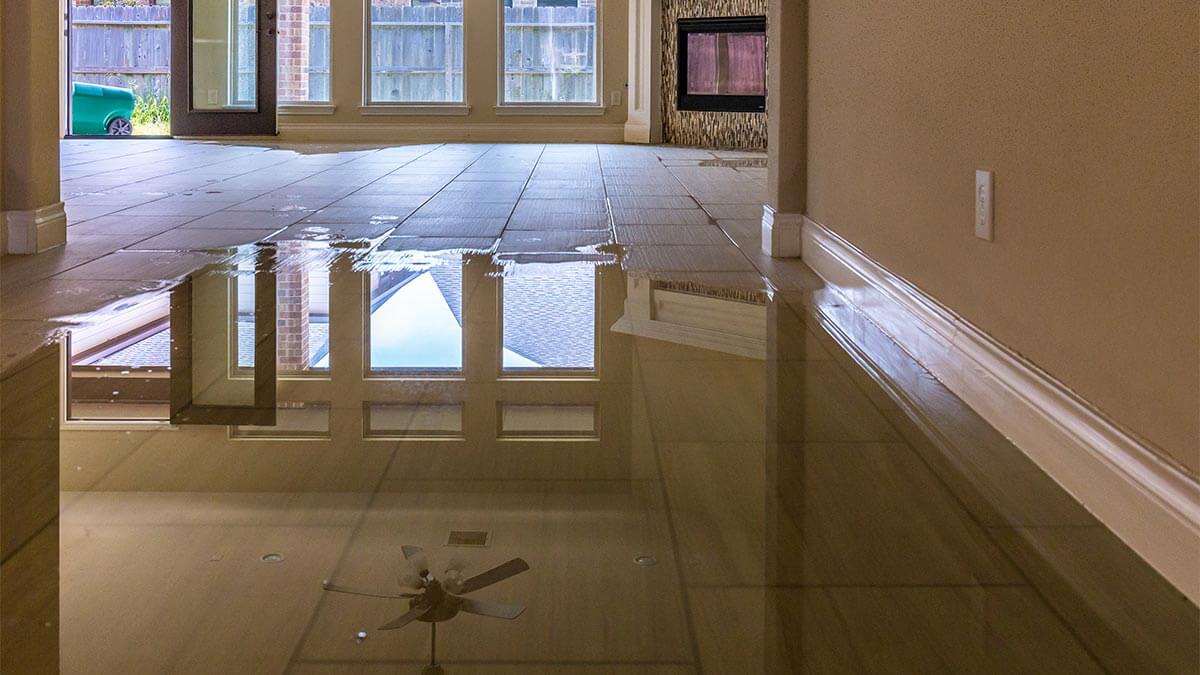
In most states, sellers are legally required to disclose known water damage to buyers, including damage that has already been repaired. Does water damage need to be disclosed even after it’s been fixed? Yes, because the history of a water event is itself a material defect that buyers have a legal right to know about before closing.
Water-damaged homes typically lose 10% to 30% of their value, and sellers who conceal known damage risk fraud claims, rescission, and repair-cost lawsuits. Per First Street Foundation research, 29 states have some type of flood disclosure requirement tied to residential property sales, while 21 states have none.
This guide covers water damage disclosure requirements by state, what specific damage categories must appear on your form, how severity affects your sale price, and how to fill out your disclosure correctly to limit your legal exposure after closing.
Table of contents
- Do You Have to Disclose Water Damage When Selling?
- What Water Damage Must You Disclose?
- State-by-State Water Damage Disclosure Requirements
- Water Damage Disclosure in Your State
- How Water Damage Affects Home Value
- How to Fill Out a Water Damage Disclosure Form
- Selling a Water-Damaged House Without Making Repairs
- What Sellers Get Wrong About Water Damage Disclosure
- Frequently Asked Questions
Disclosed Water Damage? Cash Buyers Still Close Skip the inspection contingency cycle — get competing cash offers on your home as-is.
No repairs required, no financing fallout, no obligations.
Do You Have to Disclose Water Damage When Selling?
Does water damage need to be disclosed when selling your home? Yes. In every U.S. state, sellers must disclose known water damage because it qualifies as a material defect affecting property value. Water damage disclosure requirements cover both current and historical damage. Here are five things every seller needs to understand about seller disclosure water damage obligations:
-
The general rule applies in all 50 states. All states require sellers to disclose known material defects. Water damage that a reasonable buyer would consider important qualifies as material, regardless of how old the damage is or whether it was repaired.
-
No federal law addresses flood history specifically. The only federally mandated residential disclosure is the lead-based paint disclosure rule under Title X. Water and flood damage fall entirely under state law. Per First Street Foundation data, 29 states have some type of flood disclosure requirement while 21 states have none.
-
State forms name specific water-related questions. California requires a Transfer Disclosure Statement under Civil Code §1102, which includes a dedicated section on water intrusion. Texas uses TREC Form OP-H, which asks six distinct questions about drainage issues, prior water or fire damage, and significant repairs. Florida requires sellers to disclose knowledge of flooding that has materially damaged the property.
-
Caveat emptor states still apply fraud doctrine to water damage. Arkansas, Georgia, North Dakota, and Wyoming follow caveat emptor principles, but those principles do not exempt sellers from disclosing known material defects. A seller in these states who conceals known water damage faces the same fraud exposure as any seller in a mandatory-disclosure state.
-
Non-disclosure creates serious legal risk. Buyers who discover undisclosed water damage after closing can pursue rescission of the sale, reimbursement of repair costs, and fraud damages. Statutes of limitations on real estate fraud commonly run three to six years.
What counts as a “material defect” in water damage
A defect is material if a reasonable buyer would consider it important when deciding whether to purchase the property or at what price. Courts have consistently found that water intrusion, basement flooding, foundation water damage, and any flooding event causing structural harm all qualify under this standard. A seller’s belief that the damage was minor or fully fixed does not change the legal analysis.
The buyer-beware states myth, corrected
Caveat emptor does not mean sellers can hide water damage. In Arkansas, Georgia, North Dakota, and Wyoming, buyers are expected to conduct their own inspections rather than rely on seller representations. But a seller who knows about active or past water damage and omits it deliberately faces the same fraud exposure as any seller in a mandatory-disclosure state. The doctrine limits a seller’s duty to proactively inspect for unknown problems. It does not limit their duty to disclose what they already know.
What happens if you don’t disclose
Buyers who discover undisclosed water damage after closing typically have three options: demanding the seller pay repair costs, negotiating a post-closing price reduction, or suing for fraud or misrepresentation. Courts can order rescission, which unwinds the entire transaction and requires the seller to return the purchase price. A buyer’s insurance carrier can also request a CLUE report showing a prior water-related claim the seller failed to mention, which significantly strengthens the fraud case.
What Water Damage Must You Disclose?
Seller disclosure water damage obligations on most property disclosure statements fall into four categories. State forms typically ask about each one separately, so knowing the breakdown before you fill out your form helps you disclose completely and accurately.
-
Current active water damage. Disclose any active leak, standing water, or ongoing water intrusion in the roof, foundation, basement, or crawl space. Example language for your form: “Active roof leak at northwest corner of master bedroom ceiling as of [date]. Cause: missing shingle. Repair scheduled with [contractor] for [date].” For one of the most underreported categories, the crawl space water guide covers what to document and disclose specifically.
-
Previously repaired water damage. Even fully remediated water damage remains a material fact in most states. According to NC Realtors guidance, repaired damage is often still required disclosure in North Carolina. Texas guidance warns sellers not to omit known defects simply because they were fixed. Example language: “Water intrusion in basement, March 2022. Cause: sump pump failure. Repaired by ABC Waterproofing, April 5, 2022. Remediation certificate available.”
-
Mold resulting from water intrusion. Mold disclosure is a separate legal obligation from the underlying water event. If water damage caused mold growth, disclose both the original event and the mold remediation separately on your state form. Example language: “Mold identified in crawl space, June 2023, following foundation water damage. Professional remediation completed July 10, 2023. Clearance certificate available.”
-
Insurance claims filed for water damage. A filed insurance claim appears in the home’s CLUE report (Comprehensive Loss Underwriting Exchange), which is accessible to buyers’ insurance carriers. Omitting a filed claim does not conceal it from them. Insurance claim disclosure on your state form should include the date, cause, payout amount, and how repairs were completed. Example language: “Homeowner’s insurance claim filed February 2021 for burst pipe. Payout: $18,400. Repairs completed by XYZ Plumbing, March 2021.”
State-by-State Water Damage Disclosure Requirements
Water damage disclosure requirements differ by state in three key ways: whether a written form is mandatory, whether the form includes flood disclosure questions, and whether the state follows caveat emptor. Per First Street Foundation’s flood disclosure tracker, 29 states have some type of flood disclosure requirement tied to residential property sales. Understanding your state’s specific rules before listing limits your post-closing legal exposure.
States with mandatory written disclosure forms
The table below covers eight representative states. This is not a complete list. Consult a licensed real estate attorney in your state before listing.
| State | Disclosure Form | Water Damage Required? | Statute / Source |
|---|---|---|---|
| California | Transfer Disclosure Statement (TDS) | Yes: water intrusion, flooding, roof leaks | Civil Code §1102 |
| Texas | TREC Form OP-H | Yes: drainage issues, prior water/fire damage, significant repairs | TREC Seller’s Disclosure Notice |
| Florida | No standard form (Johnson v. Davis rule) | Yes: known flooding that damaged property | Florida statute |
| Indiana | Indiana Disclosure Form | Yes: water intrusion questions required | Indiana Code §32-21-5 |
| Pennsylvania | Property Disclosure Statement | Yes: known moisture and material defects | 49 Pa. Code §35.284a |
| Oregon | Oregon Residential Real Property Disclosure | Yes: known material defects in writing | Oregon Revised Statutes §105.465 |
| Illinois | Residential Real Property Disclosure Act | Yes: required even on as-is sales | 765 ILCS 77 |
| Georgia | No mandatory form (caveat emptor state) | No form required; fraud doctrine still applies | Material defect fraud doctrine |
Based on state statutes and trade association guidance as of 2026. Verify current requirements with a licensed real estate attorney before listing.
States with flood-specific disclosure requirements
Florida’s flood disclosure requirements use the Johnson v. Davis standard, requiring sellers to disclose knowledge of facts that materially affect the property’s value and are not readily observable. California’s TDS form asks about water intrusion from any source, including rain, drainage, ground water, and plumbing failures. TREC Form OP-H in Texas asks whether the property has had water damage, drainage problems, or required significant repairs. States in flood-prone regions have expanded their flood disclosure requirements following major weather events in recent years, particularly along Gulf Coast and Atlantic Coast markets.
Caveat emptor states: what sellers still owe
Sellers in caveat emptor states such as Georgia, Arkansas, North Dakota, and Wyoming are not required to complete a standard property disclosure statement in most transactions. However, seller disclosure water damage obligations under material defect fraud doctrine remain active. A seller in a caveat emptor state who knows about foundation water damage, basement flooding, or a filed insurance claim and conceals it faces the same fraud exposure as any seller in a mandatory-disclosure state. Buyers in these states rely more heavily on the home inspection contingency and independent due diligence to surface problems before closing.
How Water Damage Affects Home Value
How water damage affects home value depends primarily on severity, remediation quality, and whether the seller can provide documentation. According to value loss research from 247revive.com, homes with any documented water damage history sell for roughly 3% less on average, but that figure climbs sharply for unremediated or structural damage.
Value loss by damage severity
The table below shows how water damage affects home value across four severity tiers, based on industry data from restoration and real estate professionals. Individual outcomes vary by market, buyer type, and remediation quality.
| Damage Category | Description | Typical Value Reduction | Remediation Effect |
|---|---|---|---|
| Minor | Ceiling stain, small pipe leak, isolated surface damage | 5% to 10% | Professional repair with documentation recovers most of the loss |
| Moderate | Damp basement, mold presence, repeated or recurring leaks | 10% to 20% | Full professional remediation with documentation recovers 50% to 70% of the loss |
| Major | Foundation water damage, structural leaks, persistent water intrusion | 30% or more | Requires engineering documentation and certified remediation to limit further loss |
| Flood-related | Storm flooding, sewer backup, high-water-table intrusion | 15% to 50% or more | Elevation certificate and FEMA records help; loss may be lasting in designated flood zones |
Based on industry data from restoration and real estate professionals, 2026. Individual results vary. Verify with a licensed appraiser for your specific property.
Impact on appraisals and financing
Active water intrusion or visible mold will typically cause a financed transaction to stall or require repairs before closing. VA loan appraisals are particularly strict: homes with water intrusion or damp basements commonly fail VA minimum property requirements. Conventional and FHA lenders also flag active moisture issues as conditions the seller must resolve before the loan funds. This means disclosed but unrepaired water damage often causes financed buyers to exit through the inspection contingency, even when the seller disclosed everything correctly from the start.
Untreated water damage raises insurability concerns on top of the appraisal problem. Many carriers exclude mold-related damage from standard homeowner policies, making the home difficult to insure for an incoming buyer. A buyer who cannot obtain insurance cannot close on a conventional or government-backed loan.
Remediated vs. unremediated: the price gap
Professionally remediated and fully documented water damage recovers most of its value impact. Undocumented repairs give buyers no evidence the problem was actually resolved. Appraisers treat undocumented repairs as unverified when making comparable adjustments. The gap between a home with complete remediation documentation (receipts, contractor certifications, clearance tests) and one with no documentation is substantial. Getting your documentation together before listing is the single most effective way to limit value loss from disclosed water damage.
Water damage that has progressed to structural wood decay creates compounding value issues beyond the water damage itself. See selling with dry rot for how that secondary consequence is handled separately when pricing a sale.
How to Fill Out a Water Damage Disclosure Form
Sellers frequently need guidance on how to write their water damage disclosure accurately, not just whether to disclose. Specific, documented descriptions reduce your legal exposure far more than vague ones. Here are the four steps to completing your form correctly:
Step 1: Identify and document all water events
Walk the entire property and check every location where water damage has occurred, is occurring, or has been repaired: roof, attic, ceilings, walls, basement, crawl space, and foundation. Gather any photos, repair invoices, or remediation records you already have on file. If you are uncertain about the current extent of damage, consult a qualified contractor before listing, not after.
Step 2: Classify each event by type
Assign each water event to one of the four categories described earlier: active damage, repaired damage, mold-related, or insurance claim. California’s TDS has a dedicated water intrusion section under Civil Code §1102. Texas TREC Form OP-H asks six distinct water-related questions, so sorting your events before you sit down with the form saves time and reduces errors. For sewer backup events specifically, see sewer problem disclosures for how that category is treated separately on most disclosure forms.
Step 3: Write specific descriptions
Vague language like “some water damage, repaired” creates more legal exposure than specific language does. A seller who writes “Water intrusion at northwest basement wall, March 2023, caused by failed exterior drain tile. Repaired by Waterproof Solutions LLC, April 2023, permit #2023-8841. Documentation available” carries far less post-closing fraud risk than one who writes “basement had some water issues.” Use exact dates, locations, causes, contractor names, and permit numbers wherever available.
Step 4: Attach supporting documentation
Attach repair receipts, remediation certificates, permit sign-offs, and any CLUE report history to the disclosure form wherever your state form allows attachments. Documentation converts your good-faith disclosure into evidence that the buyer received full notice before closing. This is the seller’s most effective defense against a post-closing fraud claim.
Selling a Water-Damaged House Without Making Repairs
As-is water damage disclosure means the seller discloses known damage in full but does not agree to repair it before closing. “As-is” waives the seller’s obligation to fix problems. It does not waive the obligation to disclose what the seller knows.
As-Is Water Damage Disclosure: What It Covers
Selling a home as-is does not eliminate disclosure obligations in any state. Illinois law requires sellers to disclose known defects even on as-is sales, per O’Flaherty Law’s Illinois as-is disclosure analysis. An as-is clause tells buyers they are accepting the property in its current condition and that the seller will not make repairs. It does not protect sellers from fraud claims if known water damage was concealed.
As-is water damage disclosure still requires the same four categories described above: active damage, repaired damage, mold history, and insurance claims. The difference is that buyers accept the condition they read about when they make an offer. Sellers weighing whether to repair before listing or sell with disclosed damage can review poor condition home sales for a full comparison of their options.
Why Financed Buyers Often Exit After Water Damage Disclosure
Financed buyers typically include a home inspection contingency in their purchase contracts. When disclosed water damage surfaces in the inspection period, many financed buyers use that contingency to renegotiate the price or exit the transaction entirely. This is most common when damage involves the foundation, basement, or roof, where lender appraisal requirements are strictest. Sellers with disclosed water damage often watch deals fall through during the inspection window, even when the damage was fully disclosed from the start.
Cash Buyers and Disclosed Water Damage
Cash buyer water damage transactions work differently. Cash buyers are not subject to lender appraisals or minimum property condition requirements, so they do not exit via financing contingency when disclosed damage appears in due diligence. This makes cash buyers a more reliable path to closing for sellers with significant disclosed damage. Sellers dealing with damage severe enough to trigger code violations can also review selling a condemned house for what options exist when damage reaches that level.
What Sellers Get Wrong About Water Damage Disclosure
Even sellers who intend to disclose fully make avoidable mistakes on their disclosure forms. Here are the four most common, along with what to say instead:
1. “It was fully repaired” (without documentation)
Stating that damage was repaired without providing documentation is not the same as disclosing it completely. Buyers and appraisers treat undocumented repairs as unverifiable. Courts in post-closing fraud cases have found that an undocumented “repair” is indistinguishable from concealment. Provide remediation documentation so the repair can be independently confirmed.
2. “It only happened once”
A single flooding event that caused structural damage qualifies as a material defect regardless of frequency. One basement flooding event that cracked a foundation wall or generated mold is as disclosable as a recurring leak. Frequency is not the legal test. The test is whether a reasonable buyer would consider the event important.
3. “The inspector will find it anyway”
Relying on the buyer’s home inspector to surface water damage does not eliminate your disclosure obligation. Disclosure and inspection are parallel obligations, not sequential ones. If a seller knows about damage but does not disclose it, and the inspector misses it or the buyer waives inspection, the seller carries full fraud exposure.
4. “It’s not material”
Sellers do not get to determine materiality on their own. “Material” means a reasonable buyer would consider the information important when deciding to purchase or at what price. That standard is applied by courts. If you know about it and it involves water, treat it as material and disclose it.
Per homelight.com’s non-disclosure litigation guide, buyers who discovered undisclosed water damage have pursued successful legal action years after closing. Specificity in your disclosure is your legal protection, not minimization.
This article is not legal advice. If you have questions about your specific disclosure obligations, consult a licensed real estate attorney in your state.
If you have already disclosed water damage and financed buyers are exiting at the inspection or financing contingency stage, a cash offer removes that cycle. iBuyer.com connects you with vetted cash buyers who purchase homes in their current condition, with no repair contingencies and no lender appraisals that flag disclosed damage as a deal-killer. You get competing offers, choose the one that fits your timeline, and close in as few as 7 days. The disclosure is already done. The rest can be straightforward.
Water Damage Won't Stop a Cash Sale Vetted cash buyers close on disclosed damage without lender appraisal conditions.
Compare offers, pick your timeline, close in as few as 7 days.
Frequently Asked Questions
Yes. In every U.S. state, sellers must disclose known water damage because it qualifies as a material defect affecting property value. There is no federal flood-disclosure mandate, but material defect doctrine applies in all 50 states. Sellers who knowingly conceal water damage face fraud claims, rescission, and repair-cost damages even in caveat emptor states.
Yes. Fully repaired water damage must still be disclosed in most states because the history of the damage is itself a material fact. NC Realtors guidance states that repaired damage is often still required disclosure in North Carolina. Texas guidance warns sellers not to omit known defects simply because they were fixed. Disclosing repaired damage protects you from later fraud claims if repair evidence surfaces after closing.
Yes. Water damage reduces home value by 5% to 30% or more depending on severity, remediation quality, and documentation. Minor damage such as a ceiling stain typically reduces value 5% to 10%. Moderate issues like a damp basement or mold reduce value 10% to 20%. Major structural damage or flooding can reduce value 30% or more, with flood-damaged homes in high-risk zones seeing reductions of 30% to 50%.
Sellers who fail to disclose known water damage can face buyer lawsuits for rescission, repair costs, and fraud damages. Buyers who discover undisclosed damage after closing typically pursue one of three remedies: demanding the seller pay for repairs, negotiating a post-closing price reduction, or filing suit for fraud or misrepresentation. Statutes of limitations on real estate fraud commonly run three to six years.
No. As-is water damage disclosure obligations remain in every state. Selling as-is waives the seller’s obligation to repair but does not eliminate the duty to disclose known defects. Illinois law explicitly requires disclosure of known defects on as-is sales. An as-is clause protects sellers from repair demands, not from fraud claims for knowingly concealed damage.
Yes. Basement moisture and dampness are material defects that must be disclosed in virtually every U.S. state. State forms in California, Texas, Indiana, and Pennsylvania all include specific questions about water intrusion, basement moisture, and drainage problems. States without mandatory forms still require disclosure of all known material defects.
Yes. A filed insurance claim is accessible through the home’s CLUE report and must be disclosed on most state forms. Include the date, cause, claim amount, and how repairs were resolved in your disclosure language. Attempting to omit a filed claim does not hide it from buyers’ insurance carriers and creates fraud exposure when it surfaces.
Water damage reduces a home’s sale price by roughly 3% on average for documented minor damage, rising to 15% to 30% or more for serious or unremediated damage. Flood-damaged homes in high-risk zones can see reductions of 30% to 50% compared to comparable undamaged properties. Professionally remediated and documented damage recovers most of the loss; undocumented repairs do not.
A complete water damage disclosure names the cause, the affected area, dates of occurrence, repairs performed, who performed them, and any mold remediation completed. Include contractor names, permit numbers if repairs were permitted, and attach remediation certificates and repair receipts where the state form allows. Vague disclosures create more legal exposure than specific ones.
No state fully exempts sellers from disclosing known water damage. Even caveat emptor states including Arkansas, Georgia, North Dakota, and Wyoming apply material defect fraud doctrine to sellers who knowingly conceal water damage. The difference is that these states do not require sellers to proactively inspect for problems, but they must disclose what they already know.
Write the specific date of flooding, the source (storm, plumbing failure, sewer backup), the area affected, and the repairs or remediation completed with contractor names and permit numbers. Texas TREC Form OP-H asks six separate water-related questions. California’s TDS has a dedicated water intrusion section. Exact dates and documentation references reduce ambiguity and limit post-closing fraud exposure.
Yes. Cash buyers are not subject to lender appraisal requirements that can block financing due to water damage conditions, so they can close on properties that financed buyers cannot. Conventional, FHA, and VA loans each have minimum property condition standards that active water damage or mold can violate, causing financed buyers to exit via inspection contingency. Cash buyers bypass the appraisal step entirely.
Do not say the damage was “fully repaired” without documentation, or that it “only happened once” as a reason not to disclose it fully. Both statements invite fraud claims if buyers later find evidence that contradicts them. Say instead: “Water intrusion occurred on [date], caused by [source], repaired by [contractor] on [date]. Documentation available.” Specificity is the seller’s legal protection, not minimization.

Reilly Dzurick is a licensed real estate agent with over six years of experience and a member of the iBuyer.com Market Insights Team, covering national trends in home selling and the evolving iBuyer landscape. Her firsthand experience working with buyers and sellers gives her a practical perspective on how these platforms impact real homeowners. She holds a degree in Public Relations, Advertising, and Applied Communication.