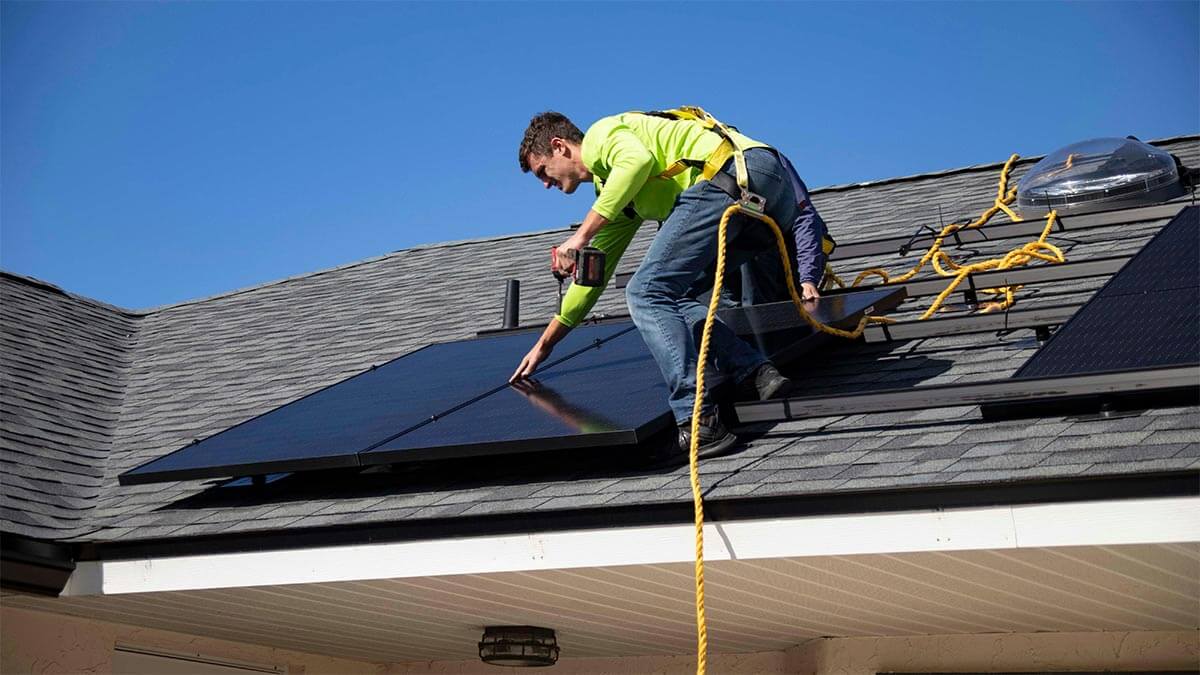
Selling a house with solar panels can create serious problems if the system is leased or financed rather than fully owned, including complex contract transfers, property liens, and buyer mortgage qualification hurdles. According to the NAR 2025 agent survey on solar home sales, 48% of real estate agents report that solar panels complicated a transaction, and in nearly every case, the complication traced back to a leased or financed system, not one that was owned outright.
The five core problems sellers run into are:
- Lease or PPA contract transfer, the buyer must qualify separately with the solar company, a process that can take 2 to 6 weeks and fail without warning
- UCC-1 fixture filing and property lien, financed systems attach a security interest to the home’s title; mortgage lenders require that lien cleared before closing, typically at a cost of $5,000 to $35,000 in remaining loan balance
- Buyer mortgage denial, a solar lease payment counted in the buyer’s debt-to-income ratio can push them over lender limits, collapsing the deal after offer acceptance
- Roof condition and panel removal costs, panels bolted to aging roofs create buyer hesitation; removal and reinstallation runs $3,000 to $10,000 before any roof repair costs
- Appraisal shortfalls, appraisers routinely ignore leased systems entirely, and even owned systems are under-credited when an appraiser lacks solar-specific training
As of mid-2024, approximately 36% of residential solar installations were leased or under a power purchase agreement, up from 22% three years prior (Ohm Analytics; verify current figure via SEIA at publish). That share means roughly one in three solar-equipped homes enters the market with the contract-transfer and lien complications described above. This guide covers how ownership type determines your specific risk, what each closing scenario actually costs and how long it takes, how solar panels affect your appraisal and sale price, and the steps to take before you list.
Solar Panels
- Is It Hard to Sell a House With Solar Panels?
- Owned vs. Leased Solar: How Ownership Changes Everything
- Leased Panels and Contract Transfer Problems
- Solar Loan Liens and Title Delays
- How Solar Leases Affect Buyer Mortgage Approval
- Roof Condition, Removal Costs, and Aging Equipment
- Does Solar Add Value? The Appraisal Problem
- Who Pays for Solar Panels When You Sell?
- Can You Remove Solar Panels Before Selling?
- Why Are Homeowners Getting Rid of Solar Panels?
- How to Prepare Your Solar Home for Sale
- Frequently Asked Questions
Solar Lease Stalling Your Sale? Cash buyers skip DTI checks — no mortgage denials from your solar payment.
No listings, no financing contingencies, no surprises.
Is It Hard to Sell a House With Solar Panels?
It depends on whether you own or lease the system. Owned solar rarely complicates a sale and typically adds value. Leased or financed solar introduces contract transfers, credit checks, and mortgage qualification problems that push 48% of agents to report complications.
When owned solar makes selling easier
Owned solar panels transfer with the home as a fixture, the same way a built-in appliance does. There is no contract for the buyer to inherit, no credit check from a solar company, and no lien to clear from title.
The value case for owned systems is strong. Zillow’s research puts the national average premium at 4.1% for homes with a solar energy system. A separate 2025 market study cited by Berkeley Lab researchers found premiums up to 6.9% in high-adoption markets such as California, Arizona, and Texas, adding approximately $20,000 to $30,000 to sale price. The gap between 4.1% and 6.9% is not a contradiction; it reflects market-adoption maturity. Buyers in markets with high electricity costs and widespread solar familiarity bid more aggressively for owned systems than buyers in markets where solar is less common.
Homes with owned systems also sell up to 20% faster in high-adoption markets, according to the same 2025 research. Including a mention of the solar energy system in the MLS listing description correlates with a 0.52% additional price lift per Zillow’s data. These are the conditions where solar is a genuine selling advantage.
When leased solar makes selling harder
A solar lease means the solar company, not you, owns the panels on your roof. The buyer cannot simply take possession of the equipment; they must apply to take over your contract, pass a separate credit check, and agree to inherit whatever payment terms remain.
If the buyer’s debt-to-income ratio is already near lender limits, the monthly solar lease payment, typically $50 to $200 per month, can push them over the threshold and trigger a mortgage denial. Buyers who understand this risk sometimes walk away before applying. Those who don’t understand it discover the problem at the worst possible moment: during underwriting, weeks after offer acceptance.
For home value specifically on owned systems, the data consistently shows a 3 to 5% premium in mainstream markets, with higher premiums in premium solar markets. Leased systems receive zero appraised value, and some appraisers flag the lease obligation as a liability that slightly reduces value.
Owned vs. Leased Solar: How Ownership Changes Everything
Your ownership type is the single variable that determines whether your solar system helps or hurts the sale. The three scenarios, owned outright, solar loan with a remaining balance, and lease or PPA, produce entirely different closing mechanics.
Owned outright: the clean scenario
If you paid cash for the system or finished paying off a solar loan, the panels convey to the buyer as a fixture with no additional steps. You provide the installation contract and warranty documents, the buyer’s appraiser credits the system value, and closing proceeds normally.
Solar loan: liens and payoff math
A solar loan almost always carries a UCC-1 fixture filing recorded against your property. That filing is a lien. Your title company will find it in a standard title search, and the closing cannot proceed until it is resolved. Selling home with solar loan balance means the payoff typically comes out of your sale proceeds at closing, similar to paying off a second mortgage.
Lease or PPA: the transfer gauntlet
A lease or power purchase agreement requires the buyer to formally apply with the solar company, pass a credit check, and execute a contract transfer. The solar company sets its own approval criteria, independent of the mortgage lender’s. A buyer can qualify for their mortgage but fail the solar company’s check, or vice versa.
| Factor | Owned Outright | Solar Loan (Balance Remaining) | Lease or PPA |
|---|---|---|---|
| Who owns panels | Seller (transfers free and clear) | Seller, subject to lien | Solar company |
| Closing impact | Panels convey as fixture; no extra step | Seller pays off loan at closing or buyer assumes (rare) | Buyer must qualify with solar company and agree to take over payments |
| Value to buyer | Full market premium (4 to 7% in strong markets) | Full premium minus payoff cost | Zero or negative; appraiser ignores leased systems |
| Buyer qualification | Standard mortgage only | Standard mortgage plus lien clearance | Standard mortgage plus separate solar credit check |
| Typical closing delay | None | 1 to 3 weeks for lien release | 2 to 6 weeks for contract transfer approval |
| Estimated cost to clear title | $0 | Remaining loan balance ($5,000 to $35,000 typical) | Lease buyout: $10,000 to $30,000-plus depending on remaining term |
Based on industry data and residential solar leasing market share from SEIA. Verify current rates before transacting.
According to SEIA’s Solar Market Insight, approximately 36% of residential solar installations as of mid-2024 were leased or under a PPA. That means more than one in three solar homes carries the transfer complexity described in the lease/PPA column above.
Leased Panels and Contract Transfer Problems
Leased solar panels home sale complications follow a predictable sequence, and knowing that sequence before you list is the only way to avoid a closing collapse.
What buyers actually inherit with a lease
When a buyer agrees to take over your solar lease, they are not buying the panels. They are agreeing to make monthly payments to the solar company for the remainder of your contract term. A lease signed 10 years ago with a 20-year term leaves the buyer with 10 years of payments. Monthly payments typically range from $50 to $200 depending on system size.
The buyer cannot renegotiate the payment amount. The rate was set when you signed, and the transfer simply substitutes one obligor for another. Buyers who do the math sometimes discover the lease payments exceed what they would pay for electricity without the system, particularly if utility rates have dropped or the panels have degraded.
Solar panel transfer problems also include notice requirements built into the original contract. Many leases require 30 to 60 days advance notice to initiate a transfer. If you wait until after offer acceptance to contact the solar company, you may add 6 to 8 weeks to closing with no guarantee the buyer qualifies.
If you are selling a distressed property in North Carolina, a high-growth solar market with significant residential leasing activity, the transfer timeline compounds the challenges already covered in our guide to selling a distressed home in North Carolina.
PPAs: monthly payment transfers
A power purchase agreement differs from a lease in one structural way: instead of paying a fixed monthly amount, the buyer pays per kilowatt-hour generated. The solar company still owns the equipment, and transfer mechanics are essentially identical. The buyer must apply, qualify, and execute the transfer before closing.
PPA terms run 20 to 25 years. For consumer rights language to look for in transfer clauses, the FTC’s guidance on solar lease contracts identifies the key obligations you can negotiate at the time of original signing, and what is and is not transferable.
When the buyer fails the solar credit check
If the solar company rejects the buyer’s credit application, the transaction stalls. The seller’s options at that point are narrow: pay the buyout out of pocket (typically $10,000 to $30,000-plus), negotiate a price reduction that compensates the buyer for the buyout, or find a new buyer. There is no mechanism to force the solar company to approve the transfer.
Solar Loan Liens and Title Delays
A solar loan creates a fixture filing on your property that functions as a lien. If you have an active solar loan, this section describes exactly what happens to your closing.
What a UCC-1 fixture filing means for your title
A UCC-1 filing (Uniform Commercial Code Article 9) is the legal mechanism solar lenders use to attach a security interest to the installed system as a real property fixture. The lender records this filing with the state, and it attaches to your property address. When a title company runs a title search, the UCC-1 appears as an encumbrance on the property.
Selling home with solar loan balance means the UCC-1 must be resolved before closing. The title company will flag it; the closing agent will not fund until it is cleared.
Illinois sellers navigating solar loan liens face the same title-clearance complexity covered in our guide to selling a distressed home in Illinois, where lien resolution timelines frequently determine closing dates.
How mortgage lenders respond to solar liens
Fannie Mae guidelines on solar-financed properties require that solar liens be either fully paid off or formally subordinated before a conventional mortgage will fund on the property. Freddie Mac follows the same standard. FHA loans carry additional requirements: the solar loan cannot be included in the home’s appraised value unless the buyer formally assumes it.
These are hard requirements, not lender discretion. An underwriter who discovers an unresolved UCC-1 on title will condition the loan on lien clearance. There is no workaround.
Getting a lien release before closing
After you pay off the solar loan, the lender is required to issue a lien release. In practice, this takes 1 to 3 weeks after payoff is confirmed in writing. The title company needs the recorded release document, not just a payoff confirmation, before it can issue a clear title policy.
Sellers who wait until the week before closing to initiate a payoff often discover the lien release arrives after the scheduled closing date. Order the payoff statement as soon as you accept an offer, and ask the lender in writing for an estimated release timeline.
How Solar Leases Affect Buyer Mortgage Approval
This is the mechanism behind the most disruptive solar complication in the market: a buyer passes their own mortgage qualification, accepts your terms, and then gets denied because the solar payment tipped their debt-to-income ratio over the lender’s limit.
Debt-to-income ratio and solar lease payments
The debt-to-income ratio (DTI) is the percentage of a buyer’s gross monthly income consumed by all monthly debt obligations, including the proposed mortgage payment. Conventional lenders cap DTI at 43 to 45% under Fannie Mae guidelines; FHA permits up to 50% in some cases.
When a buyer assumes a solar lease, the monthly payment is counted as a recurring debt obligation. A $150/month solar payment on a buyer earning $5,000/month adds 3 percentage points to their DTI. The explanation of how debt-to-income ratio affects mortgage approval, this is the same calculation applied to car loans and student loans.
A buyer already at 41% DTI who takes on a $150 solar lease hits 44%. That is over the limit for many conventional loan products. The lender denies the loan. The deal collapses.
When the solar payment kills the mortgage
The solar company’s credit check is independent of the mortgage lender’s. A buyer can pass both, fail one, or fail both. A buyer who passes the solar company’s check but fails the mortgage underwriter because of the DTI impact has no options: the solar payment amount is fixed in the contract you signed years ago. The buyer cannot negotiate it down.
This is the specific scenario where a cash buyer eliminates the risk entirely. Cash buyers have no mortgage qualification, no DTI calculation, and no underwriting contingency for the solar payment to interfere with.
Roof Condition, Removal Costs, and Aging Equipment
Even when a solar system is owned outright, the physical condition of the roof and the age of the equipment create negotiating leverage for buyers, and sometimes genuine liability for sellers.
The roof problem buyers see
Buyers who are not solar-familiar often see roof penetrations and worry. A properly installed system with flashed mounts is watertight. An improperly installed system, or one installed on a roof that is now at the end of its serviceable life, is a legitimate concern.
If the roof needs replacement before reinstallation, the buyer faces: the roofing cost ($8,000 to $20,000 for a typical asphalt shingle roof) plus the solar panel removal cost and reinstallation ($3,000 to $10,000 depending on system size). That is $11,000 to $30,000 in deferred costs buyers will discount from their offer. Whether pre-sale upgrades change buyer perception is a calculation worth considering, similar to the analysis our window replacement guide applies to another common exterior upgrade decision.
What solar panel removal actually costs
Removing a standard residential solar array (typically 20 to 30 panels) runs $3,000 to $10,000, per solar panel removal cost estimates from Angi. That range reflects system size, roof pitch, and local labor rates. Sealing and inspecting the roof penetrations after removal adds $500 to $2,000. Reinstallation, if the seller wants to transfer the system to a new property, roughly doubles the removal cost.
If the seller removes panels without a reinstallation plan, the equipment must be stored or sold separately. Buyers who were planning to use the system’s energy savings as part of their purchase justification will require a price adjustment to compensate.
Older systems: efficiency loss and warranty gaps
Solar panels degrade at approximately 0.5% efficiency per year, per solar panel performance and lifespan standards from the U.S. Department of Energy. A 15-year-old system operates at roughly 92.5% of its original capacity. That is not catastrophic, but it affects the income-approach appraisal value.
The more pressing issue on aging systems is the inverter. Standard solar panel warranty terms are 25 years for panels, but inverters carry only 10 to 12 years. A 12-year-old system likely needs inverter replacement soon. Buyers who commission a solar system inspection during due diligence will find this, and a failing inverter replacement costs $2,000 to $4,000. That becomes a negotiating point or a required repair.
Does Solar Add Value? The Appraisal Problem
The solar home appraisal problem is real, and it is distinct from the financing-type complications covered above. Even sellers with fully owned, well-documented systems sometimes receive appraisals that undercount or entirely ignore solar value.
What owned solar is worth in different markets
Two figures appear in the research and they are not contradictory. Zillow’s national dataset finds a 4.1% average sale price premium for homes with solar energy systems. A 2025 market study finds premiums up to 6.9% in high-adoption markets. Solar home value premium research consistently finds a 3 to 5% premium in mainstream markets, with the higher end in California, Arizona, and Texas.
The gap reflects market-adoption maturity. In markets where buyers are solar-familiar, compete for solar homes, and understand the energy savings calculus, the premium is higher. In markets where solar is less common and buyers default to unfamiliarity hesitation, the premium is lower. National averages blend both.
Why appraisers often miss the value
The most accurate appraisal method for solar is the income approach: capitalize the present value of expected energy savings over the system’s remaining useful life. This method requires an appraiser trained in solar valuation. Not all appraisers are. Many default to the sales-comparison approach, which requires comparable sales with solar systems, and in thin markets, those comps may not exist.
The result is an appraisal that ignores solar panel value entirely, or assigns a nominal amount that does not reflect actual market premium. This produces an appraisal gap: the agreed sale price reflects solar value, but the appraisal does not, and the buyer’s lender will only fund to the appraised value.
To give your appraiser the best chance of crediting full value: provide 12 to 24 months of utility production records, the remaining warranty documentation, and any published comparable sales data from your agent.
Leased systems: zero appraisal credit
Appraisers do not credit leased systems with any added value. From the appraiser’s perspective, the buyer is not acquiring an asset, they are acquiring a monthly payment obligation. Some appraisers flag the lease as a liability that marginally reduces value below what a comparable home without solar would appraise for.
Who Pays for Solar Panels When You Sell?
Who pays for solar panels when you sell depends entirely on how the system was financed. The answer divides cleanly into three scenarios.
Owned outright: The panels are a fixture. The buyer pays for them implicitly through the home sale price. No additional payment changes hands at closing; the system conveys with the property.
Solar loan: The seller is responsible for the remaining balance. The payoff comes from sale proceeds at closing, the same way a second mortgage is satisfied. The solar lender then issues a lien release. If the remaining balance exceeds what the sale price supports after the primary mortgage payoff, the seller must cover the shortfall out of pocket.
Lease or PPA: The buyer assumes the monthly payment obligation going forward. The seller is not responsible for future payments after the transfer is complete. However, many lease agreements contain recourse language: if the buyer defaults on payments after the transfer, the solar company may pursue the original contract signatory. Sellers should review their lease terms for this clause before closing.
If the buyer refuses to assume the lease, the seller’s options are: pay the buyout (typically $10,000 to $30,000-plus), reduce the price by the equivalent amount, or walk away from the deal.
Can You Remove Solar Panels Before Selling?
You can remove solar panels before selling if you own them outright, but removing leased or financed panels without the solar company’s written consent violates the contract and can trigger significant liability.
Removing owned panels: your right, but at a cost
Owned panels are a fixture under real estate law in most states. If you want to exclude them from the sale, you need to disclose the exclusion explicitly in the listing and in the purchase contract. Buyers who toured the home with panels visible can argue misrepresentation if they later discover the panels were removed without disclosure.
Removal without reinstallation costs approximately $1,500 to $3,000 for a standard residential array. Sealing the roof penetrations adds $500 to $2,000. After removal, buyers lose the value premium the solar energy system would have generated, and your asking price needs to reflect that.
Removing leased panels: the legal issue
The solar company owns the equipment. Removing leased panels without authorization is considered conversion of the company’s property under most lease agreements. You can face breach-of-contract claims and liability for the full replacement cost of the equipment. Some lease agreements also impose an early-termination fee separate from the buyout cost.
The only legitimate path to removing leased panels is to pay the early-termination fee or buyout, get written consent from the solar company, and have their authorized personnel handle the removal.
Why most sellers leave owned panels in place
The math almost always favors keeping owned panels for the sale. The 4 to 7% value premium exceeds the $1,500 to $3,000 removal cost in virtually every market. The roof penetration repair is a cost that serves no one. And removing a system that was visible during showings creates disclosure exposure.
The cases where removal makes sense are narrow: the roof needs full replacement anyway and reinstallation cost is prohibitive, or the system is so old and degraded that buyer hesitation about maintenance costs outweighs the value premium.
Why Are Homeowners Getting Rid of Solar Panels?
Homeowners remove solar panels for four primary reasons, and selling is only one of them.
Roof replacement forces temporary removal
Roof replacement is the most common trigger. Panels must come off for any major roofing work, and not every homeowner reinstalls them. The additional cost of panel removal, roof work, and reinstallation runs $3,000 to $6,000 beyond the roofing job itself. Homeowners with systems more than 15 years old sometimes use the roof replacement as a natural exit point, particularly if inverter replacement is also imminent.
Underperformance and disappointment
Tree growth that was not present at installation can shade panels that previously operated at full capacity. Microinverter degradation on older string systems reduces output without visible symptoms. Some homeowners discover their actual production has fallen well below the projected figures from their original sales pitch. When ongoing monitoring costs and inverter maintenance exceed energy savings, removal becomes financially rational.
Lease complications at sale
Some sellers decide that removing the leased panels simplifies the transaction. This requires solar company approval and typically triggers an early-termination fee. In practice, most solar companies resist removal because the equipment retains value to them on the installed home. Removal as a simplification strategy is less common than sellers expect, partly because the solar company controls the process.
HOA conflicts also appear: communities that approved panels at installation sometimes face buyer resistance in heavily deed-restricted neighborhoods, prompting some sellers to remove panels to avoid buyer questions during showings.
How to Prepare Your Solar Home for Sale
How to Sell a House With Solar Panels
-
Identify Your Solar System Ownership Type
Review your original solar agreement to determine whether the system is owned outright, financed with a solar loan, or covered by a lease or power purchase agreement (PPA). The ownership structure affects how the system is transferred to the buyer and whether any liens or approvals are required before closing.
-
Check for Liens or Financing Obligations
Ask your title company to identify any UCC-1 filings or other liens related to the solar system. If financing is still outstanding, contact the lender to obtain the payoff amount and confirm the process and timeline for releasing the lien before closing.
-
Contact the Solar Company
If the system is leased or subject to a PPA, notify the solar provider as soon as you decide to sell. Request the transfer requirements, buyer qualification process, and any forms or notice periods needed to complete the transfer without delaying the transaction.
-
Gather the Required Documentation
Collect the installation contract, warranties, maintenance records, recent energy production reports, loan or lease statements, and any net metering documentation. Having these documents available can help answer buyer questions and streamline the closing process.
-
Schedule a Solar System Inspection
Consider having the solar panels, inverter, mounting hardware, and related components inspected before listing the home. Identifying and repairing any issues in advance can reduce the likelihood of buyer repair requests or price negotiations later in the transaction.
-
Disclose the Solar System to Buyers
Provide complete and accurate information about the solar system in your property disclosures, including its ownership type, age, financing or lease obligations, and any transfer requirements. Disclosure requirements vary by state, so consult your real estate professional or attorney if you have questions about your obligations.
-
Price the Home Appropriately
Consider the solar system’s age, condition, ownership status, energy production, and remaining warranties when determining your asking price. An owned system may add value for some buyers, while a leased system may require additional pricing considerations depending on the remaining contract terms.
For sellers whose solar lease complexity makes the traditional listing process difficult, the same fast options available to sellers in poor condition situations apply here: cash buyers, as-is offers, and paths that do not depend on a financed buyer clearing every qualification hurdle.
If you have a leased solar system, you know the risk: a buyer qualifies for their mortgage, signs the purchase agreement, and then gets denied because the solar payment pushed their debt-to-income ratio over the lender’s limit. That is a deal collapse with no warning. Cash buyers do not have a DTI ratio to worry about, there is no mortgage to approve. Through iBuyer.com, you can compare offers from multiple vetted cash buyers who close in 7 to 30 days, without the financing contingencies that leased solar can trigger.
Solar Lease Stalling Your Sale? Cash buyers skip DTI checks — no mortgage denials from your solar payment.
No listings, no financing contingencies, no surprises.
Frequently Asked Questions
It depends on ownership: owned solar rarely complicates a sale, while leased or financed systems frequently delay closings and deter buyers. The 48% of agents who report difficulty in the NAR 2025 survey are almost entirely dealing with leased or PPA systems, not owned ones. Owned solar with clear title transfers like any other fixture.
The seller pays off any remaining solar loan at closing; the buyer assumes lease or PPA payments; owned systems transfer with the home at no extra cost. For solar loans, the payoff comes from sale proceeds, similar to satisfying a second mortgage. For leases, the buyer takes over monthly payments only after passing the solar company’s credit check.
You can remove owned panels before selling, but leased panels cannot be removed without the solar company’s written consent, and doing so may trigger contract penalties. Removing owned panels reduces sale price, voids remaining equipment warranty, and requires roof penetration repairs costing $500 to $2,000. Most real estate attorneys advise leaving owned panels in place and pricing them into the sale.
The most common reasons homeowners remove solar panels are roof replacement requirements, underperformance, and lease complications when selling. Roof work is the top trigger: panels must come down for any major repair, and some homeowners choose not to reinstall aging systems. A failing inverter replacement ($2,000 to $4,000) on a 12-plus-year system sometimes makes removal the financially rational path.
Owned solar panels add roughly 4 to 7% to sale price in strong markets; leased systems add zero appraised value. Zillow’s research finds a 4.1% national average premium. Berkeley Lab and a 2025 market study cite premiums up to 6.9% in high-adoption markets. Leased systems are excluded from appraisal value because the buyer is acquiring an obligation, not an asset.
A UCC-1 fixture filing is a lien a solar lender places on your property to secure the financed panels, and it must be cleared before your home can close. Solar loan companies record this filing with the state, attaching their security interest to the installed system as a real property fixture. Fannie Mae and Freddie Mac require the lien to be fully satisfied before a conventional mortgage will fund; resolution typically takes 1 to 3 weeks after payoff.
Yes, if a buyer must assume a solar lease, the monthly payment counts in their debt-to-income ratio and can push them over lender limits. A $150 per month solar lease obligation adds 3 percentage points to DTI on a $5,000 per month income. Most conventional lenders cap DTI at 43 to 45%, so a buyer already near the limit can be disqualified by the solar payment alone.
Solar lease transfers typically take 2 to 6 weeks, depending on the solar company’s processing speed and the buyer’s credit approval timeline. Many lease agreements require 30 to 60 days’ advance notice to initiate the transfer. Sellers should contact their solar company as soon as the listing goes active, not after an offer is accepted.
You need the original installation contract, warranty documents, 12 months of production records, and the current loan or lease statement showing the remaining balance. The title company will need a UCC-1 lien search result for any financed systems. For lease or PPA systems, the transfer authorization form from the solar company is required before closing can proceed.
If the buyer refuses the lease, you must either pay the early-termination buyout yourself, reduce the sale price to offset it, or lose the buyer entirely. Solar lease buyout costs typically range from $10,000 to $30,000-plus depending on the remaining contract term. Some sellers negotiate to split the buyout cost with the buyer as a closing credit; if no agreement is reached, the deal collapses and the seller relists with the same problem for the next buyer.
Yes, leased solar panels are a material fact in most states and must be disclosed; failure to disclose has led to post-closing lawsuits. Leased solar creates a financial obligation that transfers with the property. Buyers who discover the lease after closing can argue misrepresentation or failure to disclose. Even for owned systems, the installation contract and remaining manufacturer warranty should be included in the seller’s disclosure package.
Yes, but the remaining solar loan balance must be paid off at or before closing, typically from your sale proceeds, to clear the UCC-1 lien. The solar loan balance reduces your net proceeds, similar to a second mortgage payoff. Transferring the solar loan to the buyer is uncommon, few buyers want to assume a solar loan alongside a primary mortgage, and lenders rarely permit it without significant additional documentation.
A PPA (Power Purchase Agreement) lets a solar company install panels on your home at no upfront cost; you buy the electricity they produce at a set per-kilowatt-hour rate. Unlike a lease where you pay a fixed monthly amount, a PPA charges based on actual output. From a home-sale perspective, PPAs and leases carry nearly identical transfer complications: the buyer must qualify with the solar company and agree to the existing payment terms for the remaining contract term of 20 to 25 years.
Net metering is a utility credit system that pays you for excess solar energy sent to the grid; it transfers with the home when you sell. Net metering credits are attached to the utility account at the property address, not to the individual owner. When a buyer takes ownership and establishes their own utility account, they inherit the net metering arrangement, subject to whatever the local utility’s current program terms permit.

Reilly Dzurick is a licensed real estate agent with over six years of experience and a member of the iBuyer.com Market Insights Team, covering national trends in home selling and the evolving iBuyer landscape. Her firsthand experience working with buyers and sellers gives her a practical perspective on how these platforms impact real homeowners. She holds a degree in Public Relations, Advertising, and Applied Communication.