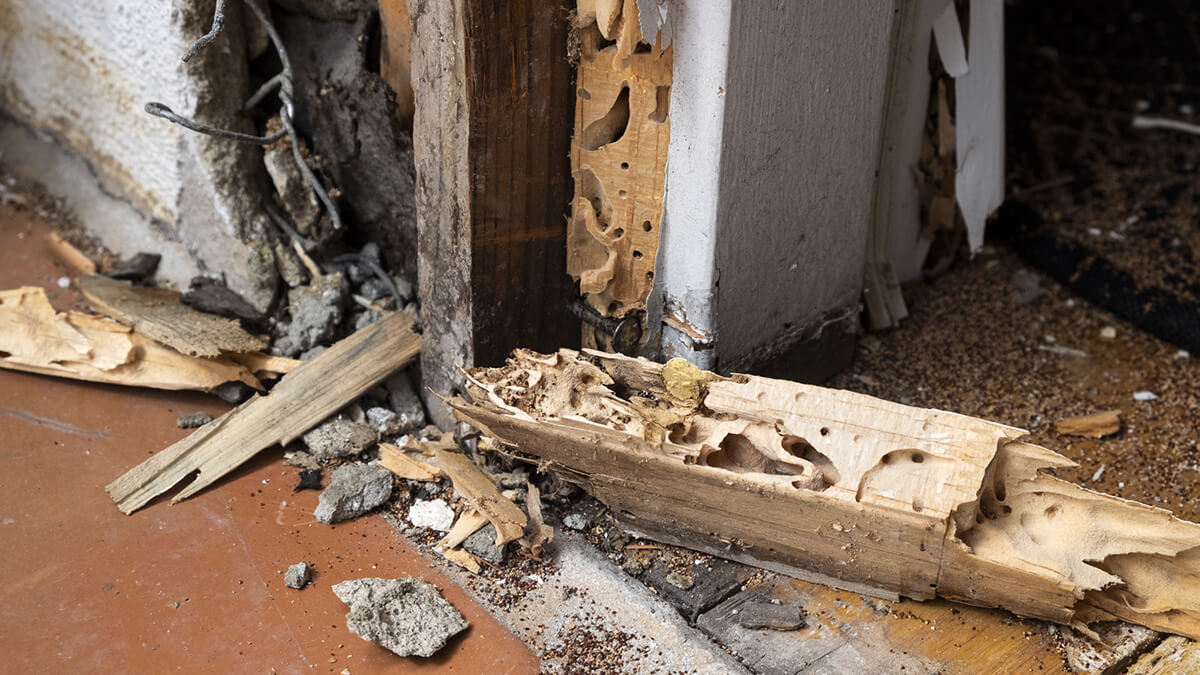
You can sell a house with termites in all 50 states, but active termite damage typically reduces home value by 20% to 25% when left unrepaired. According to the National Pest Management Association, termites cause an estimated $5 billion in annual damage to U.S. homes each year, making treatment documentation and full disclosure the two factors that determine how much you net in any termite damage home sale.
Five steps every seller with termite damage must take before closing:
- Order a licensed WDI inspection to document current infestation status in writing.
- Fill out your seller disclosure to cover all known termite activity and prior treatments.
- Choose whether to repair before listing or sell house with termite damage as-is to a cash buyer.
- Price the home to reflect current treatment costs and any remaining structural damage.
- Provide a transferable termite warranty when treatment is complete, to give financed buyers’ lenders the documentation they need.
This guide covers how hard it is to sell with termite history, how much termites decrease home value, termite disclosure requirements by state, 2026 treatment costs, whether to repair or list as-is, open-market pricing strategy, the cash buyer path, and what not to fix before closing.
Table of contents
- Is it hard to sell a house that has had termites?
- How much do termites decrease home value?
- Termite disclosure requirements when selling
- How much does termite treatment cost in 2026?
- Should you repair termite damage before selling?
- Selling on the open market with termite damage
- How to sell a termite-damaged home to a cash buyer
- What not to fix when you have termite damage
- Conclusion
- Common questions about selling a house with termites
Instant Valuation, Confidential Deals with a Certified iBuyer.com Specialist.
Sell Smart, Sell Fast, Get Sold. No Obligations.
Is it hard to sell a house that has had termites?
The difficulty of selling a house with termite history depends on four variables: whether the infestation is active, how severe the structural damage is, what financing type the buyer uses, and how complete the treatment documentation is. Here is what sellers face at each stage:
- Active, undisclosed infestations end deals. A buyer whose home inspection contingency reveals an undisclosed active infestation can cancel the contract and, in most states, pursue the seller for failure to disclose a material defect.
- Active, disclosed infestations shrink the buyer pool. Homes with an unrepaired active infestation sell for 20% to 25% below comparable properties, and only cash buyers remain viable. FHA and VA loans require WDI clearance before closing, eliminating a large share of first-time buyers.
- Treated infestations with documented repairs carry 3% to 5% residual stigma. A clean current WDI inspection and completed repair records bring the discount down sharply.
- Government loan programs have a hard stop. Any property with active wood-destroying insect activity must be treated and cleared before an FHA or VA loan funds. This requirement cuts out a significant share of buyers until treatment is complete.
- Transferable termite warranties offset buyer hesitation. A warranty from a licensed pest company, typically $100 to $300 per year, gives buyers documented proof of ongoing protection and can partially offset residual price discounts.
What makes termite damage a deal-breaker for financed buyers
Buyers using FHA or VA mortgages face a hard lender requirement: a WDI inspection report showing no active infestation. An active infestation triggers a mandatory treatment and re-inspection cycle, adding weeks to the timeline. Conventional lenders do not uniformly require WDI inspections, but many add one as a condition when inspection findings suggest wood-destroying organism activity. FHA loan termite requirements mean an active infestation blocks closing even when both parties want the deal to proceed. Per HUD guidelines, active wood-destroying insect activity must be treated before a government-backed loan funds, regardless of the seller’s disclosure.
How termite history affects appraisals and inspections
Appraisers note active or past termite damage when it involves structural damage. A treated infestation with no structural impact typically draws no value adjustment. But when joists, subfloor sections, or sill plates are visibly compromised, appraisers reduce the estimated value, which can cause a loan to fall short of the contract price. Homes with documented treatment history and a clean current WDI inspection generally sustain a 3% to 5% residual discount compared to comparable homes with no termite history.
How much do termites decrease home value?
Termites decrease home value by 20% to 25% when an active infestation is present and unrepaired, but the impact narrows significantly once treatment is complete and documented. Annual termite damage statistics from the NPMA show termites cost U.S. homeowners $5 billion per year in damage and control costs, making proper remediation documentation essential to protecting your sale proceeds.
Do termites decrease home value even after a full remediation? Yes, but only by 3% to 5% when repairs are documented and a current WDI clearance is available. Structural wood decay from other sources creates similar appraisal and financing obstacles; see the guide on dry rot home sales for a comparison of how lenders treat adjacent wood-degradation findings.
Active vs. treated infestations: the difference in dollars
The table below maps six infestation scenarios to their estimated value impact on a $300,000 home.
| Infestation Scenario | Estimated Value Impact | Net Impact on $300K Home | Key Factor |
|---|---|---|---|
| Active, untreated, undisclosed | Deal voided + legal liability | N/A | Disclosure required in most states |
| Active, disclosed, untreated | -20% to -25% | -$60,000 to -$75,000 | Only cash buyers viable; no FHA/VA |
| Active, treated, structural damage unrepaired | -15% to -20% | -$45,000 to -$60,000 | Lenders flag open structural damage |
| Active, treated, fully repaired, documented | -3% to -5% | -$9,000 to -$15,000 | WDI clearance report available |
| Past infestation (5+ years), fully treated and repaired | 0% to -3% | $0 to -$9,000 | Proof of treatment and repairs required |
| Past infestation, no active signs, proof of treatment available | Minimal to none | Less than $5,000 typical | Documentation is the controlling factor |
Based on NPMA industry data and multi-source research, 2026. Verify impact with a licensed appraiser before pricing.
Residual value stigma after full remediation
Even after full treatment and repair, homes with a termite history carry a residual discount of 3% to 5% compared to homes with no pest history. On a $300,000 home, that is $9,000 to $15,000.
Here is the net-proceeds math no AI-cited competitor page provides: a $300,000 home with an active, unrepaired infestation realistically sells for $225,000 to $240,000, if it sells on the open market at all. Spending $2,500 on full fumigation plus $5,000 on minor structural repairs ($7,500 total) positions the same home to close at $285,000 to $291,000. That is a net gain of $37,500 to $56,000 over the unrepaired scenario after subtracting the repair investment. For moderate damage, the numbers strongly favor treating and repairing before listing.
Termite disclosure requirements when selling
In most U.S. states, sellers are legally required to disclose any known termite damage or active infestation as a material defect in the property sale. Failing to disclose a known active infestation can constitute fraud and expose you to post-sale lawsuits even after the buyer has taken possession. Termite disclosure requirements vary by state in scope, required forms, and whether as-is designations provide any exception.
Moisture conditions that attract subterranean termites often coincide with other disclosable structural problems. If your home has had crawl space water intrusion, see the guide on crawl space water disclosure to understand how multiple structural issues interact in your seller disclosure obligation.
What counts as a material defect in most states
A material defect is any physical condition that would affect a reasonable buyer’s decision to purchase or the price they would pay. Active termite infestations and significant structural damage from past infestations nearly always meet this standard. Concealing a known active infestation is treated the same as concealing foundation cracks or roof defects under most state statutes. The same material defect framework that governs termite disclosure covers other pest-related issues; see how bed bug disclosure operates under the same legal standard in most states.
States with specific termite disclosure laws
The table below covers five high-volume termite states. Consult a local real estate attorney or your state’s real estate commission for current forms and jurisdiction-specific requirements.
| State | Disclosure Required? | What Must Be Disclosed | Standard Form Used | As-Is Exception? |
|---|---|---|---|---|
| California | Yes | Known active infestations, past damage, prior treatments | CA Residential Purchase Agreement + TDS | No |
| Florida | Yes | Active infestations, past problems, prior treatments, moisture damage | FL Seller’s Property Disclosure | No, even in as-is sales |
| Texas | Yes | Known termite damage and treatment history | TREC Seller’s Disclosure Notice | No |
| New York | Yes | Known material defects including pest damage | NY Property Condition Disclosure Statement | Buyer may receive credit instead |
| Georgia | Yes | Known structural and pest-related defects | GAR Seller’s Property Disclosure Statement | No |
Sources: State real estate commission guidelines, 2026. Verify current form requirements with a licensed agent in your state.
Florida’s rule is worth highlighting: state law requires sellers to disclose known termite damage even in as-is sales. You must disclose current active infestations, past termite problems, prior treatments, and any resulting moisture damage, regardless of whether you intend to make any repairs before closing.
FHA and VA loan requirements for termite inspection
Per FHA and VA termite inspection requirements from HUD, any property with active wood-destroying insect activity must be treated and cleared before a government-backed loan funds. VA loans require a wood-destroying insect report for every transaction in most states. FHA loans require one whenever the appraiser identifies evidence of infestation or when the lender determines one is necessary based on local custom or property condition. Structural damage identified in the WDI report must be repaired before a VA loan closes. A seller counting on an FHA or VA buyer cannot simply disclose and move forward without completing treatment first.
How much does termite treatment cost in 2026?
Termite treatment cost in 2026 ranges from a few hundred dollars for targeted chemical spot application to $50,000 or more when extensive structural repairs are required. These figures are the direct inputs to the repair-vs-as-is decision framework in the next section.
Chemical and spot treatment costs
According to termite treatment cost ranges from HomeGo, chemical treatment runs $3 to $16 per linear foot of treated area. Electro-gun or microwave treatments, which target drywood termites in localized areas, cost up to $1,150 per treatment session. EPA-registered termite treatment methods include liquid termiticide barriers for subterranean termites, which typically require trenching around the foundation perimeter. Spot chemical treatments are effective for localized drywood termite activity but are not sufficient when subterranean termites have spread through multiple foundation contact points. A chemical barrier treatment for a typical single-story home runs $1,500 to $3,000.
Full fumigation (tenting) costs
Full fumigation, or tenting, is the standard response to a widespread drywood termite infestation. Tenting a 1,500-square-foot home costs approximately $1,200 to $2,500, depending on structure type and fumigant used. Larger or multi-story homes run $2,500 to $4,000. Residents must vacate for 2 to 3 days. For sellers with an active listing, this timeline is manageable but must be communicated to buyers in advance.
Wood repair costs after treatment
Average structural repair costs after termite damage from Angi break into three tiers based on severity:
- Minor damage (single joist or sill plate replacement): $500 to $3,000
- Moderate damage (multiple joists or subfloor sections): $3,000 to $10,000
- Extensive damage (load-bearing members, full floor systems): $10,000 to $50,000+
Structural damage from subterranean termites concentrates in sill plates, floor joists, and crawl space framing. Drywood termites tend to damage wall studs, attic framing, and window frames instead, making the repair scope more predictable in many cases.
With those treatment figures in hand, the next question is whether the repair cost pencils out against the value you recover at closing.
Should you repair termite damage before selling?
The right path depends on the dollar relationship between treatment cost, repair cost, and the value discount the damage creates. For moderate damage on a mid-range home, repair before listing typically nets more. For severe structural damage, selling as-is with termite damage to a cash buyer often nets more after all costs and carrying time are included.
When repair before listing makes financial sense
The decision table below maps damage levels to recommended paths for a $300,000 home.
| Damage Level | Est. Treatment + Repair Cost | Value Recovery at $300K | Recommended Path | Notes |
|---|---|---|---|---|
| Active, no structural damage | $1,500 to $3,000 | Recovers $45,000 to $60,000 discount | Repair and list | ROI is 15:1 or better |
| Minor structural damage (1 to 3 members) | $3,000 to $6,000 | Recovers $40,000 to $55,000 discount | Repair and list | Strongly positive ROI |
| Moderate structural damage | $8,000 to $15,000 | Recovers $30,000 to $45,000 discount | Repair, then compare to cash path | Run both scenarios |
| Extensive structural damage | $20,000 to $50,000+ | Diminishing return at higher costs | Selling as-is likely better | Breakeven threshold in range |
| Load-bearing members affected | $40,000+ | Minimal additional recovery | Sell as-is with termite damage | Cash buyer path nets more in most cases |
Based on 2026 treatment and repair cost data from HomeGo and Angi. Verify with local contractor bids for your specific property.
When selling as-is is the better option
Selling as-is with termite damage makes financial sense when total treatment and repair costs exceed roughly 12% to 15% of the home’s current market value. On a $300,000 home, that breakeven threshold is $36,000 to $45,000. Once repair costs approach that range, the net proceeds from a direct termite damage home sale to a cash buyer can match or exceed the repair-and-list path, especially when you account for the time cost of a 60 to 120-day repair timeline and the risk of contractor overruns.
On a $300,000 home with $40,000 in structural repair needs: after repair, the home might realistically price at $289,000 (3% residual discount). Net proceeds after repairs and 5.5% agent commission work out to roughly $231,000. A direct as-is cash sale at $220,000 to $235,000 with no agent commission, no repair spend, and 3 to 4 fewer months of carrying costs can come within $5,000 to $15,000 of that figure.
The net-proceeds math you need to run
Use this two-path comparison to evaluate your situation:
Path A (repair and list): Current market value, minus 3% to 5% residual discount, minus treatment and repair cost, minus agent commission of 5% to 6%, equals net proceeds.
Path B (sell as-is to cash buyer): Current market value, minus 15% to 25% as-is discount based on damage severity, minus any negotiated concessions, with zero agent commission on a direct sale, equals net proceeds.
When repair cost exceeds 15% of home value, Path B typically comes within $10,000 to $15,000 of Path A and closes in days rather than months. That timing difference matters when monthly carrying costs run $1,500 to $3,000.
Selling on the open market with termite damage
Selling on the open market with disclosed termite damage is possible, but it requires a pricing strategy aligned with the actual damage status, not with what you need to net.
Getting a pre-listing termite inspection
A pre-listing WDI inspection, typically costing $50 to $150, establishes the infestation status before buyers begin their own due diligence. Per what a wood-destroying insect inspection covers from ASHI, a qualified inspector examines accessible structural members, foundation contacts, and visible framing for signs of any wood destroying organism, including subterranean termites, drywood termites, and wood-boring beetles. Getting this inspection done before listing gives you documentation to include with the disclosure and reduces the chance of a deal collapsing during a home inspection contingency review.
Pricing strategy with disclosed termite history
Price according to the documented damage status:
- Fully repaired and documented: 5% to 10% below comparable homes, to account for residual stigma and buyer negotiation room.
- Partially repaired: 10% to 15% below comps; specify in the listing what has been treated and what has not.
- Active infestation, disclosed, unrepaired: 15% to 20% below comps; expect interest primarily from cash buyers and investors.
Disclosing upfront in the listing itself, rather than waiting for the buyer’s inspection, narrows the initial buyer pool but substantially reduces the deal-fall-through rate. Buyers who engage with a fully disclosed listing have already accepted the condition in principle before making an offer.
Using a transferable warranty to reassure buyers
A transferable termite warranty from a licensed pest control company, passed to the buyer at closing, proves treatment occurred and provides ongoing protection going forward. Most major pest companies offer transferable termite warranties for $100 to $300 per year. The warranty does not eliminate the residual 3% to 5% discount, but it gives financed buyers’ lenders an additional comfort document and reduces the risk of a price renegotiation after the buyer’s own WDI inspection.
How to sell a termite-damaged home to a cash buyer
Cash buyers skip the lender-required WDI inspection that stops conventional, FHA, and VA-financed deals, which means a disclosed termite problem rarely causes a cash sale to fall through. If you need to sell house with termite damage quickly and without completing a full repair process, the cash buyer path is the most reliable route to closing.
Why cash buyers don’t walk on termite disclosures
Cash buyers evaluate properties based on structural integrity and their own repair cost estimate, not on lender guidelines. A disclosed active infestation means a lower offer, not a cancelled contract. Experienced buyers who specialize in the termite damage home sale market price in treatment and structural repair costs before submitting an offer. Because they skip the lender WDI clearance requirement, they also skip the weeks of delay that financed buyers face when a home inspection contingency surfaces active termite activity.
For sellers weighing this path alongside other distressed-home options, see the guide on selling a house in poor condition, which covers the full range of as-is conditions that cash buyers and iBuyers regularly price and close on.
What to expect from a cash offer on damaged property
Expect a cash offer on a termite-damaged home to reflect a 15% to 25% discount from current market value, based on structural damage severity and the buyer’s repair cost estimate. On a $300,000 home with moderate damage, that means an offer range of $225,000 to $255,000. While lower than a repaired retail sale, the as-is home sale to a cash buyer eliminates:
- Agent commission (5% to 6%), saving $15,000 to $18,000 on a $300,000 transaction
- Repair costs ($7,500 to $50,000 depending on damage level)
- Carrying costs during a repair-and-list timeline (typically 60 to 120 days)
- The risk of a deal collapse after a home inspection contingency triggers a mid-contract renegotiation
Requesting multiple competing cash offers lets you compare the discount each buyer applies and choose the one that nets most at closing. iBuyer.com’s marketplace connects sellers with experienced buyers who routinely close on homes with disclosed termite conditions, without requiring repairs first.
What not to fix when you have termite damage
When selling a house with termite damage, skip cosmetic upgrades and spend only on fixes that resolve an active infestation or satisfy lender requirements. Cosmetic repairs that cover active or undisclosed damage without disclosure constitute fraud in most states.
Must address before closing:
- Active infestation: treatment by a licensed pest company is required before any FHA or VA-financed buyer can close, per FHA loan termite requirements and VA lender guidelines
- Load-bearing structural damage: required by lenders and, in most jurisdictions, by local building code before any sale can close
- WDI issues identified as repair conditions in the purchase contract: these are binding obligations you must fulfill in writing
- Any structural damage the appraiser flags as a condition for loan approval
Skip entirely:
- Fresh interior paint and new carpet: costs $3,000 to $8,000 and recovers nothing in a distressed-home sale
- Kitchen and bathroom remodels: major renovations recoup less than 50% of cost when the home carries a disclosed structural condition
- Landscaping and exterior staging: adds no value when the WDI inspection report is the primary buyer concern
- Cosmetic wood staining or surface finishing on treated and sealed framing members: if structural integrity is confirmed and treatment is documented, the cosmetic appearance of treated wood does not affect appraised value
Every dollar goes toward treatment and structural remediation. Nothing else, unless a buyer or lender requires it in the signed contract. Sellers who want to sell house with termite damage without spending on unnecessary cosmetic work often find that a direct cash offer sidesteps the issue entirely, because cash buyers perform their own repair assessment rather than relying on a lender checklist.
Conclusion
Selling a house with termites is legal in every state, and the financial outcome depends on three decisions: whether to repair before listing, how completely you document the damage and treatment history, and which buyer type you target. For moderate termite damage, treating and listing typically produces the best net outcome. For extensive structural damage, selling as-is with termite damage to a cash buyer closes faster and often nets within a realistic margin of the repair path.
If your buyer pool is narrowing as financed buyers drop out over lender WDI requirements, iBuyer.com’s marketplace connects you with cash buyers who close on disclosed termite conditions without requiring repairs first. You can request competing offers from multiple buyers, compare the discounts each one applies, and choose the path that puts the most in your pocket at closing. Use the net-proceeds framework in this guide with your actual contractor bids and local market comps before committing to either direction.
Compare Cash Offers from Top Home Buyers. Delivered by Your Local iBuyer Certified Specialist.
One Expert, Multiple Offers, No Obligation.
Common questions about selling a house with termites
Yes, you can sell a house with termites in all 50 states, but disclosure of known damage is legally required in most states. Sale terms depend on whether the infestation is active or historical, what financing type the buyer uses, and whether repairs are complete. FHA and VA loans require WDI clearance before closing; cash buyers face no lender WDI requirement.
Selling a house with termite history is possible but harder, as active or unrepaired damage typically reduces the buyer pool and cuts sale price by 20% to 25%. Difficulty drops significantly once treatment is complete, repairs are documented, and a transferable termite warranty is offered. Cash buyers generally accept termite history without deal-canceling contingencies.
Active, unrepaired termite infestations decrease home value by 20% to 25%, while fully treated and repaired infestations typically leave a 3% to 5% residual discount. Documentation is the key variable: a clean WDI inspection report and completed repair records substantially reduce the price impact.
In most U.S. states, sellers and their agents are legally required to disclose any known termite damage or active infestation as a material defect. Failure to disclose a known active infestation can constitute fraud and expose the seller to post-sale liability. Florida requires disclosure even in as-is sales.
Selling a house with known termite damage you did not disclose can result in a post-sale lawsuit, contract rescission, or damages awarded to the buyer. In most states, concealing a known active infestation meets the legal standard for fraudulent misrepresentation or material non-disclosure.
You cannot close an FHA loan on a home with an active termite infestation without first completing treatment and passing a re-inspection. FHA loan termite requirements mandate a WDI clearance report showing no active wood-destroying insect activity before the lender funds the purchase.
A WDI inspection is a formal examination by a licensed inspector for wood destroying organism activity, including subterranean termites, drywood termites, and wood-boring beetles. VA loans require one for every transaction; FHA lenders order one when the appraiser sees evidence of infestation. Sellers benefit from a pre-listing WDI inspection to document the home’s current status.
Full fumigation for a 1,500-square-foot home costs $1,200 to $2,500; chemical spot treatments run $3 to $16 per linear foot. Structural wood repairs after treatment range from $500 to $3,000 for minor damage and $10,000 to $50,000 or more for extensive damage to load-bearing members.
Yes, termite disclosure requirements apply in as-is sales in most states, including Florida and California. An as-is designation means the buyer accepts the property in its current condition, but it does not release you from the obligation to disclose known material defects. Selling as-is with termite damage without disclosure is fraud in most jurisdictions.
Subterranean termites enter through soil contact and damage sill plates and floor joists, while drywood termites infest wall studs and attic framing above ground. Both types require seller disclosure; drywood termite damage is often more localized and may respond to targeted spot treatment rather than full fumigation.
Yes, selling as-is with termite damage is a legal option in all states, but seller disclosure of known damage is still required. An as-is sale typically attracts cash buyers and investors who factor in treatment and repair costs. Expect an offer 15% to 25% below market value depending on damage severity.
Price a fully repaired home with termite history 5% to 10% below comparable properties to account for residual stigma. Price a home with disclosed but unrepaired active infestation 15% to 20% below comps. Get a current WDI inspection report and licensed contractor repair estimates before finalizing the list price.

Reilly Dzurick is a licensed real estate agent with over six years of experience and a member of the iBuyer.com Market Insights Team, covering national trends in home selling and the evolving iBuyer landscape. Her firsthand experience working with buyers and sellers gives her a practical perspective on how these platforms impact real homeowners. She holds a degree in Public Relations, Advertising, and Applied Communication.