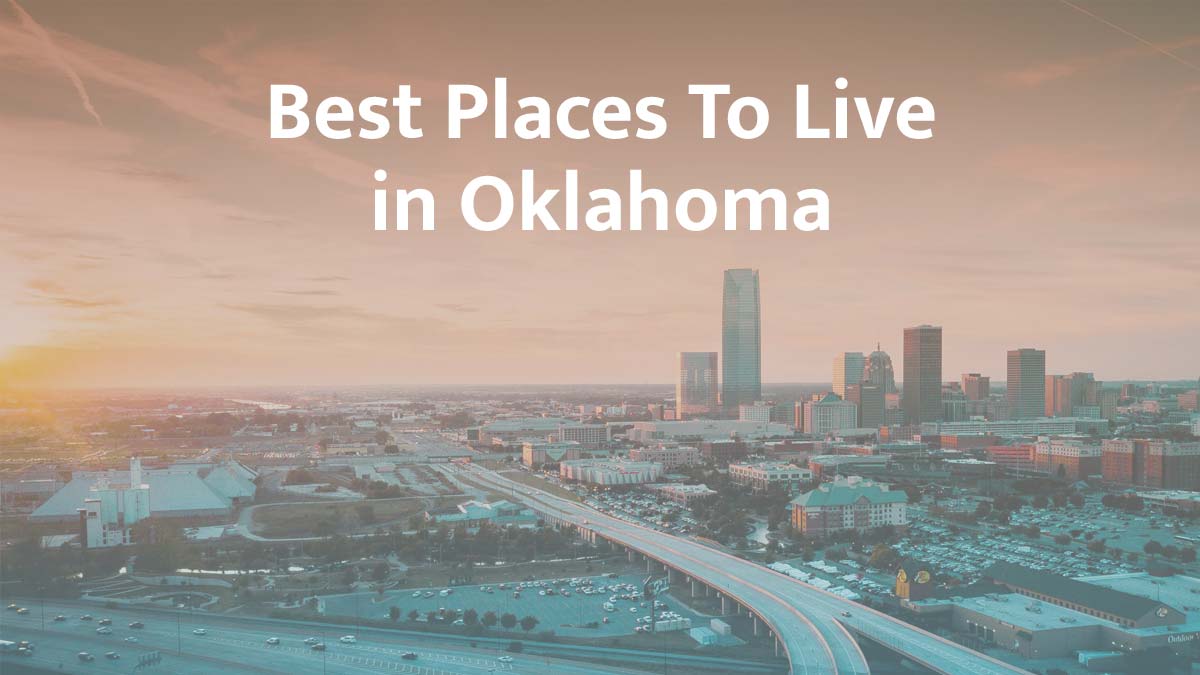
The best places to live in Oklahoma in 2026 include Oklahoma City, Edmond, Norman, Tulsa, Broken Arrow, Jenks, Stillwater, Owasso, Bixby, and Moore.
Oklahoma City is our best overall choice for careers, urban amenities, and housing value, while Tulsa combines similar affordability with a stronger arts and remote-work identity. Moore stands out for lower-cost suburban living, while Bixby, Jenks, Owasso, and Edmond carry much larger suburban housing premiums.
Median listing prices among our top 10 range from approximately $258,625 in Moore to $497,000 in Bixby, compared with a statewide median of about $299,000.
Buyers should also plan beyond the purchase price. Oklahoma closing costs typically run about 2% to 5% of the purchase price for buyers, depending on financing, title charges, prepaid expenses, insurance, and negotiated credits.
Key Takeaways
- Oklahoma City is our best overall choice for careers, amenities, and housing value.
- Tulsa provides similar housing costs with strong culture, architecture, and remote-work appeal.
- Moore has the lowest median listing price among our top 10 at approximately $258,625.
- Edmond, Jenks, Owasso, and Bixby are considerably more expensive than Oklahoma City or Tulsa.
- Oklahoma remains relatively affordable statewide, with a median listing price of about $299,000.
- Oklahoma’s labor market has softened in 2026, with statewide unemployment reaching 4.3% in July.
Instant Valuation, Confidential Deals with a Certified iBuyer.com Specialist.
Sell Smart, Sell Fast, Get Sold. No Obligations.
Best Places to Live in OK
- Key Takeaways
- Why Oklahoma Is One of the Best States to Live In
- Oklahoma Housing Market in 2026
- Key Factors to Consider Before Moving to Oklahoma
- Oklahoma City vs. Tulsa
- 10 Best Places to Live in Oklahoma
- 1. Oklahoma City: Best Overall for Careers and Urban Value
- 2. Edmond: Best for Premium Oklahoma City Suburban Living
- 3. Norman: Best for University Life and Oklahoma City Access
- 4. Tulsa: Best for Culture, Remote Work, and Urban Value
- 5. Broken Arrow: Best for Balanced Tulsa-Area Suburban Living
- 6. Jenks: Best for Premium Tulsa-Area Suburban Living
- 7. Stillwater: Best for Small-City and College-Town Living
- 8. Owasso: Best for North Tulsa Suburban Living
- 9. Bixby: Best for Newer Homes and High-Growth Suburban Living
- 10. Moore: Best for Affordable Oklahoma City Suburban Living
- Cost of Living in Oklahoma: What to Expect
- Best Places to Live in Oklahoma by Lifestyle
- Pros and Cons of Living in Oklahoma
- How to Choose the Best Place to Live in Oklahoma
- Final Thoughts on the Best Places to Live in Oklahoma
- Frequently Asked Questions
Why Oklahoma Is One of the Best States to Live In
Oklahoma’s biggest relocation advantage is straightforward: housing remains relatively affordable while the state’s two largest metros provide diversified economies and substantial urban amenities.
Oklahoma City supports employment in government, healthcare, aerospace, energy, logistics, and professional services. Tulsa has strong energy, healthcare, finance, aerospace, manufacturing, and business-service sectors.
University communities such as Norman and Stillwater add education, research, healthcare, college sports, and younger populations.
Oklahoma has also continued to grow. The U.S. Census Bureau estimates that the state had approximately 4,123,288 residents in July 2025, about 4.1% above the April 2020 estimates base.
The lifestyle varies considerably. Buyers can choose large-city living in Oklahoma City or Tulsa, college-town environments in Norman and Stillwater, or suburban communities surrounding either metro.
The tradeoffs include severe storms, hail, tornado exposure, hot summers, heavy car dependence, and a relatively high combined state and local sales-tax burden.
Oklahoma Housing Market in 2026
Oklahoma remains affordable compared with many U.S. housing markets, but buyers have more time and more choices than during tighter recent years.
Current Oklahoma housing market data shows:
- Median listing price: $299,000
- Median sold price: $264,995
- Median rent: $1,279 per month
- Median days on market: 60 days
- Active listings: 37,322
- Active inventory: up 3.84% year over year
- Median listing price: down 0.35% year over year
- Median sold price: up 1.92% year over year
- Days on market: up 18.37% year over year
- Sale-to-list ratio: approximately 99%
The statewide market is currently considered balanced, meaning neither buyers nor sellers have overwhelming leverage.
One of the most useful 2026 observations is that Oklahoma City and Tulsa themselves are cheaper at the median listing level than several nearby suburbs.
That gives buyers an important choice: pay a premium for a particular suburban environment or remain closer to the center of the metro while potentially spending less on the home itself.
Key Factors to Consider Before Moving to Oklahoma
Housing Costs
Among our top 10:
| City | Median Listing Price |
|---|---|
| Moore | $258,625 |
| Oklahoma City | $268,400 |
| Tulsa | $274,950 |
| Stillwater | $319,769 |
| Norman | $353,278 |
| Broken Arrow | $362,503 |
| Edmond | $418,750 |
| Owasso | $449,925 |
| Jenks | $459,150 |
| Bixby | $497,000 |
The surprising takeaway is that suburban living does not automatically mean lower costs.
Bixby’s current median listing price is more than $220,000 higher than Tulsa’s, while Edmond costs roughly $150,000 more than Oklahoma City.
Job Market
Oklahoma’s seasonally adjusted unemployment rate was 4.3% in July 2026, according to the Oklahoma Employment Security Commission.
That is up from 3.3% one year earlier and slightly above the national rate of 4.1%.
The statewide labor market has therefore softened, but local opportunities still vary considerably.
Oklahoma City offers the state’s broadest employment base, while Tulsa supports another diversified regional economy.
Norman and Stillwater benefit from their universities, healthcare, and education sectors, while suburban communities rely heavily on access to jobs in the surrounding Oklahoma City or Tulsa metro.
Taxes
Oklahoma’s individual income-tax rates range from 0.50% to 4.50%.
Current Oklahoma tax data also shows:
- Top individual income-tax rate: 4.50%
- Corporate income-tax rate: 4.00%
- State sales tax: 4.50%
- Effective property-tax rate on owner-occupied housing: approximately 0.79%
- No estate tax
- No inheritance tax
The average combined state and local sales-tax rate is around 9%, which is relatively high even though property taxes and housing costs are comparatively moderate.
Severe Weather and Insurance
Weather should be part of the home-buying decision in Oklahoma.
Buyers should investigate:
- Roof age and hail damage
- Tornado and severe-thunderstorm exposure
- High-wind damage
- Storm shelter or safe-room access
- Homeowners-insurance premiums
- Wind and hail deductibles
- Drainage
- Foundation movement
- Expansive soils
- HVAC condition
- Summer cooling costs
A standard home inspection in Oklahoma typically costs around $350 to $600, with larger, older, rural, or more complex properties potentially costing $700 or more.
Oklahoma City vs. Tulsa
Oklahoma’s two largest cities are surprisingly close in housing cost, so the decision often comes down to career and lifestyle.
| Factor | Oklahoma City | Tulsa |
|---|---|---|
| Median listing price | $268,400 | $274,950 |
| Best for | Careers + urban value | Culture + remote work |
| Economy | Government, healthcare, aerospace, energy | Energy, healthcare, finance, manufacturing |
| Lifestyle | Larger metro, sports, entertainment | Arts, architecture, historic neighborhoods |
| Remote work | Good | Strong Tulsa Remote identity |
| Main tradeoff | Sprawl and commuting | Smaller overall metro |
Choose Oklahoma City if you want the state’s broadest job market, professional sports, airport connectivity, and larger metro amenities.
Choose Tulsa if you prefer historic neighborhoods, architecture, arts, parks, a smaller urban scale, and the city’s established remote-worker ecosystem.
From a housing standpoint, the difference is small enough that price alone should not decide between them.
10 Best Places to Live in Oklahoma
| City | Best For | Median Listing Price | Cost Level | Job Market | Lifestyle |
|---|---|---|---|---|---|
| Oklahoma City | Best overall | $268,400 | Low | Diverse metro | Urban |
| Edmond | Premium OKC suburb | $418,750 | Higher | OKC access | Suburban |
| Norman | University + OKC access | $353,278 | Moderate | Education + regional | College city |
| Tulsa | Culture + remote work | $274,950 | Low | Diverse metro | Urban/creative |
| Broken Arrow | Tulsa suburban balance | $362,503 | Moderate | Tulsa access | Suburban |
| Jenks | Premium Tulsa suburb | $459,150 | Higher | Tulsa access | Upscale suburban |
| Stillwater | College-town living | $319,769 | Moderate | Education + healthcare | Small city |
| Owasso | North Tulsa suburb | $449,925 | Higher | Tulsa access | Suburban |
| Bixby | Newer homes + growth | $497,000 | Premium | Tulsa access | Growth suburb |
| Moore | Affordable OKC suburb | $258,625 | Low | OKC access | Suburban |
1. Oklahoma City: Best Overall for Careers and Urban Value
Best for: Careers, city amenities, and affordable homeownership
Oklahoma City offers the strongest overall combination of employment, housing value, and city amenities in the state.
Government, healthcare, aerospace and defense, energy, logistics, professional services, and other industries create a broad employment base. Residents also have professional sports, restaurants, entertainment districts, museums, parks, and Will Rogers World Airport.
The current median listing price is approximately $268,400, while median rent is about $1,209 per month.
That puts Oklahoma City below Oklahoma’s statewide median and well below several nearby suburbs.
The main tradeoff is sprawl. Most households rely heavily on cars, and commute times depend significantly on where you live relative to work.
For buyers who want a major metro without paying major-metro housing prices, Oklahoma City remains our strongest overall recommendation.
2. Edmond: Best for Premium Oklahoma City Suburban Living
Best for: Higher-budget buyers seeking Oklahoma City suburban access
Edmond sits immediately north of Oklahoma City and provides convenient access to the broader metro economy.
Residents have established and newer residential areas, restaurants, shopping, parks, healthcare, and professional services.
The current median listing price is approximately $418,750, with median rent around $1,595 per month.
That is roughly $150,000 higher than Oklahoma City’s citywide median listing price.
Edmond should therefore be viewed as a premium Oklahoma City suburb, not an affordability option.
Buyers should compare commute, home size, lot size, property taxes, and neighborhood amenities to determine whether the suburban premium is worthwhile.
3. Norman: Best for University Life and Oklahoma City Access
Best for: University amenities, college-town culture, and metro access
Norman is home to the University of Oklahoma, which plays a major role in the city’s employment and lifestyle.
Education, research, healthcare, college sports, restaurants, and cultural events create an environment distinct from the rest of the Oklahoma City metro.
The current median listing price is approximately $353,278, with median rent around $1,260 per month.
Norman costs more than Oklahoma City itself at the median listing level, but it remains below premium suburbs such as Edmond.
Its location also allows residents to access Oklahoma City employment while maintaining a more independent college-town identity.
4. Tulsa: Best for Culture, Remote Work, and Urban Value
Best for: Remote workers, arts, architecture, and affordable urban living
Tulsa combines relatively low housing prices with a distinctive cultural identity.
The economy includes energy, healthcare, finance, aerospace, manufacturing, professional services, and other regional industries.
The city is also known for Art Deco architecture, historic neighborhoods, museums, live music, Gathering Place, and the Tulsa Remote program.
The current median listing price is approximately $274,950, with median rent around $1,387 per month.
That makes Tulsa almost identical to Oklahoma City from a home-price perspective.
For buyers prioritizing city amenities without a major housing premium, Tulsa remains one of Oklahoma’s strongest alternatives.
5. Broken Arrow: Best for Balanced Tulsa-Area Suburban Living
Best for: Suburban living without the largest Tulsa-area premium
Broken Arrow offers a middle ground between Tulsa itself and the more expensive suburbs of Jenks, Owasso, and Bixby.
The city provides Tulsa employment access, suburban housing, parks, healthcare, retail, and the restaurants and events around the Rose District.
The current median listing price is approximately $362,503, with median rent around $1,775 per month.
Housing therefore costs noticeably more than in Tulsa, but the premium remains lower than in several competing suburbs.
Broken Arrow works best for buyers who want a suburban environment while keeping housing costs below the highest-priced Tulsa suburbs.
6. Jenks: Best for Premium Tulsa-Area Suburban Living
Best for: Higher-budget households seeking Tulsa access
Jenks has become one of the most prominent suburbs in the Tulsa metro.
Residents have access to Tulsa employment, Riverwalk Crossing, restaurants, shopping, parks, and continued residential development.
The current median listing price is approximately $459,150, with median rent around $2,168 per month.
That means Jenks costs roughly $184,000 more than Tulsa itself at the median listing level.
The suburban premium is the main tradeoff.
Buyers should choose Jenks for the specific lifestyle and housing they want rather than assuming suburban living will reduce costs.
7. Stillwater: Best for Small-City and College-Town Living
Best for: Oklahoma State University, smaller-city life, and college culture
Stillwater is centered around Oklahoma State University and offers a very different lifestyle from Oklahoma City or Tulsa.
Education, research, healthcare, restaurants, sports, and university-related employment support the local economy.
The current median listing price is approximately $319,769.
Median asking rent, however, is relatively high at around $1,800 per month, partly reflecting the university-driven rental market.
Stillwater works best for people whose careers, education, or lifestyle connect them to Oklahoma State University or who prefer a smaller city.
8. Owasso: Best for North Tulsa Suburban Living
Best for: Buyers wanting suburban living north of Tulsa
Owasso provides access to Tulsa employment while offering a suburban environment, newer residential development, healthcare, shopping, services, and proximity to the airport area.
The current median listing price is approximately $449,925, with median rent around $1,900 per month.
That puts Owasso firmly among the more expensive communities in our top 10.
A buyer can currently purchase at a substantially lower citywide median in Tulsa itself, so Owasso’s appeal depends on whether its specific location, housing stock, and suburban lifestyle justify the additional cost.
9. Bixby: Best for Newer Homes and High-Growth Suburban Living
Best for: Newer housing, larger suburban developments, and Tulsa access
Bixby is the most expensive housing market among our current top 10.
The city has experienced substantial residential development, with newer homes and larger properties available in many areas.
Tulsa remains accessible for employment, shopping, healthcare, and entertainment.
The current median listing price is approximately $497,000, with median rent around $2,300 per month.
That is more than $220,000 above Tulsa’s median listing price.
Bixby therefore makes the most sense for buyers specifically seeking newer suburban housing and who have the budget to accept the premium.
10. Moore: Best for Affordable Oklahoma City Suburban Living
Best for: Lower-cost suburban living with Oklahoma City access
Moore has the lowest median listing price among our top 10 at approximately $258,625.
Its location along I-35 provides straightforward access to Oklahoma City employment, shopping, healthcare, and services while maintaining a suburban housing environment.
That makes Moore one of the strongest affordability choices for buyers who do not necessarily want to live within Oklahoma City itself.
Severe-weather preparedness deserves attention when evaluating a property.
Buyers should review roof condition, storm shelter access, homeowners insurance, wind and hail deductibles, drainage, and any prior storm-related repairs.
For price-conscious Oklahoma City commuters, Moore offers one of the strongest combinations of location and housing cost.
Cost of Living in Oklahoma: What to Expect
Oklahoma remains relatively affordable, but the top 10 divide into clear housing tiers.
Lower-Cost Markets
- Moore: $258,625
- Oklahoma City: $268,400
- Tulsa: $274,950
Moderate Markets
- Stillwater: $319,769
- Norman: $353,278
- Broken Arrow: $362,503
Higher-Cost Suburbs
- Edmond: $418,750
- Owasso: $449,925
- Jenks: $459,150
- Bixby: $497,000
The statewide median listing price is approximately $299,000.
One of the clearest relocation lessons is that Oklahoma City and Tulsa themselves are cheaper than many of their suburbs.
Insurance and maintenance can also affect total ownership costs. Roof condition, hail exposure, storm damage, foundation issues, HVAC systems, and storm shelters can add expenses even when the purchase price is low.
Financed buyers should budget for valuation expenses as well. A standard home appraisal in Oklahoma generally costs about $400 to $700, while rural acreage, multi-unit properties, or more complex homes can cost more.
Buyers seeking even lower prices can also investigate regional markets such as Lawton, Enid, Muskogee, and Ponca City, although employment opportunities and amenities differ from Oklahoma’s two major metros.
Best Places to Live in Oklahoma by Lifestyle
| Priority | Best Options |
|---|---|
| Best overall | Oklahoma City |
| Urban value | Oklahoma City, Tulsa |
| Remote workers | Tulsa |
| College-town living | Norman, Stillwater |
| Affordable suburb | Moore |
| Premium OKC suburb | Edmond |
| Balanced Tulsa suburb | Broken Arrow |
| Premium Tulsa suburb | Jenks |
| North Tulsa suburban living | Owasso |
| Newer homes + growth | Bixby |
| Lower-cost alternatives | Lawton, Enid, Muskogee, Ponca City |
| Young professionals | Oklahoma City, Tulsa, Norman |
Oklahoma City and Tulsa provide the broadest job markets, while the surrounding suburbs generally trade lower urban density for higher home prices.
Norman and Stillwater make more sense for households connected to university environments.
Pros and Cons of Living in Oklahoma
Pros
- Relatively low housing prices
- Affordable major cities
- Low effective property taxes
- Population growth since 2020
- Diverse Oklahoma City and Tulsa economies
- College-town options
- Remote-work opportunities
- Large suburban housing supply
- More home for the money than many coastal markets
Cons
- Tornadoes and severe thunderstorms
- Hail and wind damage
- High combined sales taxes
- Heavy car dependence
- Hot summers
- Softer labor market in 2026
- Significant suburban housing premiums
- Insurance costs can vary substantially
- Foundation and expansive-soil concerns in some properties
How to Choose the Best Place to Live in Oklahoma
Start with housing budget. Homeowners prioritizing convenience or speed can compare cash home buyers in Oklahoma or options to sell a house fast in Oklahoma before deciding on a traditional listing.
For the lowest median listing prices among our top 10, look at Moore, Oklahoma City, and Tulsa.
Stillwater, Norman, and Broken Arrow occupy the middle range.
Edmond, Owasso, Jenks, and Bixby require larger budgets and should be chosen because the specific suburban environment fits your priorities, not because suburbs are automatically cheaper.
Career fit comes next.
Oklahoma City is strongest for government, healthcare, aerospace, energy, logistics, and professional services.
Tulsa offers energy, healthcare, finance, aerospace, manufacturing, and a strong remote-work ecosystem.
Norman and Stillwater are logical choices for university, healthcare, research, and education-related careers.
Then consider transportation and total ownership costs.
Most Oklahoma households rely heavily on cars, so commute distance and highway access can affect both time and monthly expenses.
A lower-priced property is also not necessarily cheaper to own if it needs a new roof, foundation repairs, HVAC replacement, or expensive storm-related insurance coverage.
If you’re selling an existing property before moving, April through June is generally the strongest period according to iBuyer’s guide to the best time to sell a house in Oklahoma.
The complete Oklahoma home-selling process covers pricing, disclosures, marketing, negotiations, inspections, and closing.
Sellers should also calculate their net proceeds carefully. Oklahoma seller closing costs generally run around 6% to 9% of the sale price once agent compensation and other seller costs are included.
Final Thoughts on the Best Places to Live in Oklahoma
The best place to live in Oklahoma depends on housing budget, career, preferred city size, and whether you want urban or suburban living.
Oklahoma City is our best overall choice because it combines the state’s broadest job market with a median listing price below the statewide figure. Tulsa provides similar housing affordability with stronger arts, architecture, and remote-work appeal.
For suburban buyers, Moore offers the strongest affordability story, while Broken Arrow provides a middle-ground Tulsa option. Edmond, Owasso, Jenks, and Bixby require larger budgets and should be viewed as premium suburban markets.
Norman and Stillwater stand out for university-centered living.
Oklahoma remains one of the more attainable states for homeownership in 2026, but the best decision should account for employment, commute, insurance, severe weather, taxes, property condition, and total ownership costs, not purchase price alone.
Compare Cash Offers from Top Home Buyers. Delivered by Your Local iBuyer Certified Specialist.
One Expert, Multiple Offers, No Obligation.
Know Your Local Market Before You List
Pull the last 12 months of real sales and buyer activity for your neighborhood.
Get My Market ReportFrequently Asked Questions
Oklahoma City is our best overall choice because it combines the state’s broadest employment market with restaurants, sports, healthcare, entertainment, airport access, and a median listing price of approximately $268,400.
Moore has the lowest median listing price among our top 10 at approximately $258,625. Oklahoma City and Tulsa are also relatively affordable, with median listing prices around $268,400 and $274,950.
Yes. Oklahoma City combines relatively low housing costs with employment in healthcare, government, aerospace, energy, logistics, and professional services. Its main tradeoffs are urban sprawl, car dependence, summer heat, and severe-weather exposure.
Tulsa can be a strong choice for buyers seeking affordable urban housing, arts, architecture, parks, remote-work opportunities, and employment in energy, healthcare, finance, aerospace, and manufacturing.
Edmond, Norman, Broken Arrow, Jenks, Moore, and other Oklahoma communities may appeal to families depending on budget, commute, parks, healthcare, services, and the specific schools important to the household. Buyers should compare school boundaries directly rather than rely on broad citywide rankings.
Oklahoma City and Tulsa provide the largest employment markets, restaurants, entertainment, and urban amenities. Norman can also appeal to younger professionals who prefer a university environment with access to the Oklahoma City metro.
Oklahoma City, Tulsa, Stillwater, and lower-cost regional communities may appeal to retirees depending on healthcare access, housing budget, preferred city size, and proximity to family. Severe weather, transportation, and insurance should also factor into the decision.
Yes, particularly for housing. Oklahoma’s statewide median listing price is approximately $299,000, and Oklahoma City and Tulsa both currently have citywide median listing prices below $275,000. Premium suburbs can cost considerably more.
Oklahoma City is stronger for buyers prioritizing a larger job market and major-metro amenities, while Tulsa stands out for arts, architecture, historic neighborhoods, parks, and remote-work appeal. Their current median listing prices are very similar.
Oklahoma has a top individual income-tax rate of 4.50% and a relatively low effective property-tax rate of about 0.79%. However, combined state and local sales taxes average around 9%, so the state is not low-tax in every category.
Oklahoma can be worth considering for its affordable housing, growing population, major-city job markets, university communities, and suburban housing options. Severe weather, car dependence, sales taxes, insurance, summer heat, and the softer 2026 labor market should also factor into the decision.

Reilly Dzurick is a licensed real estate agent with over six years of experience and a member of the iBuyer.com Market Insights Team, covering national trends in home selling and the evolving iBuyer landscape. Her firsthand experience working with buyers and sellers gives her a practical perspective on how these platforms impact real homeowners. She holds a degree in Public Relations, Advertising, and Applied Communication.