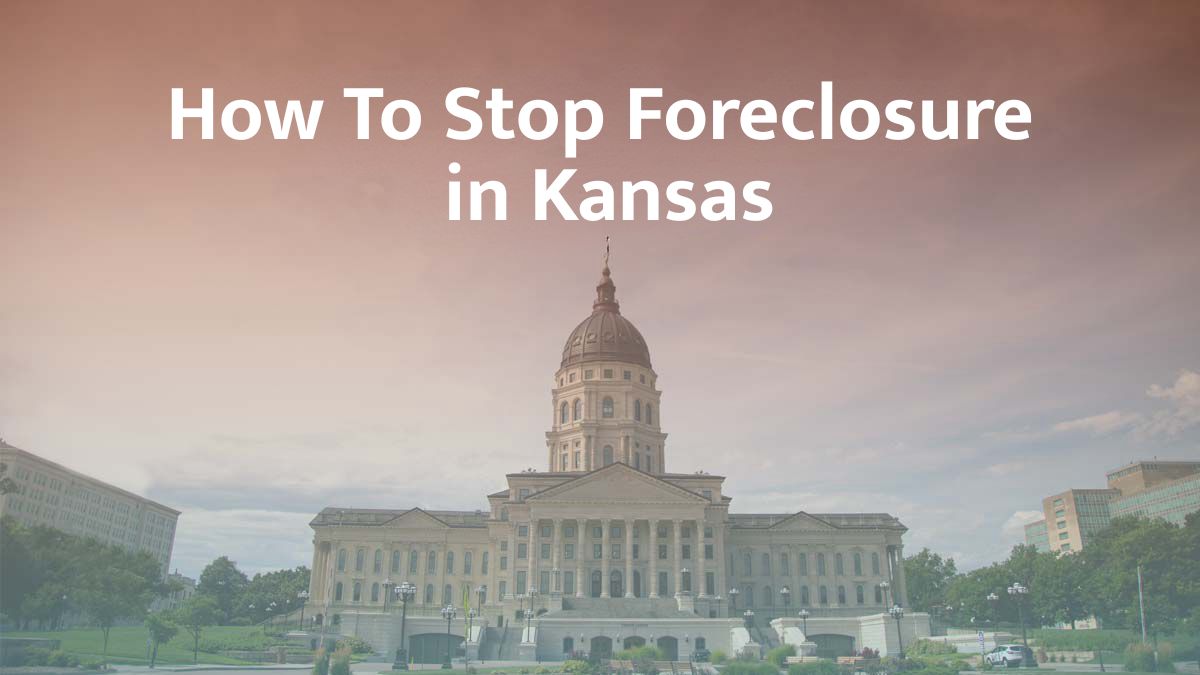
Kansas homeowners can stop foreclosure through loan reinstatement, forbearance, loan modification, Chapter 13 bankruptcy, selling the home, or legal action when the lender has made errors. The option that works best depends on how far behind you are and whether you want to keep the home.
Foreclosure in Kansas generally takes longer than in many nonjudicial states because it is a judicial foreclosure state. Lenders must file a lawsuit and obtain a court order before selling the property. While this process often gives homeowners additional time to explore alternatives, acting early remains important because options become more limited as the case progresses.
This guide explains how the Kansas foreclosure process works, what your options are at each stage, and what resources are available to help.
Note: This article is for informational purposes only. It is not legal advice. If you are facing foreclosure, consult a qualified attorney or HUD-approved housing counselor for guidance specific to your situation.
Quick Answer
You can stop foreclosure in Kansas by: contacting your mortgage servicer, applying for forbearance, requesting a repayment plan, reinstating the loan, applying for a loan modification, refinancing, filing Chapter 13 bankruptcy, selling the home before the sheriff’s sale, pursuing a short sale, negotiating a deed in lieu of foreclosure, challenging lender errors in court, or working with a HUD-approved housing counselor. The sooner you act, the more of these options remain available.
Instant Valuation, Confidential Deals with a Certified iBuyer.com Specialist.
Sell Smart, Sell Fast, Get Sold. No Obligations.
How to Stop Foreclosure
- Quick Answer
- Key Takeaways
- How Foreclosure Works in Kansas
- Kansas Foreclosure Timeline
- Kansas Foreclosure Timeline at a Glance
- 12 Ways to Stop Foreclosure in Kansas
- Which Option Fits Your Situation?
- Kansas Foreclosure Assistance Programs
- What Happens If You Cannot Stop Foreclosure?
- When Is It Too Late to Stop Foreclosure in Kansas?
- Common Foreclosure Scams in Kansas
- How to Prevent Foreclosure in the Future
- Need to Sell Your Kansas Home Fast?
- Frequently Asked Questions
Key Takeaways
- Kansas is a judicial foreclosure state. Lenders generally must file a lawsuit before foreclosing.
- Homeowners receive notice of the foreclosure lawsuit and have an opportunity to respond in court.
- Federal mortgage servicing rules generally prohibit most lenders from starting foreclosure until a borrower is more than 120 days delinquent.
- Foreclosure sales are typically conducted by the county sheriff after a court judgment.
- Kansas law may provide a redemption period after the foreclosure sale in certain cases.
- Chapter 13 bankruptcy may stop a foreclosure sale through the automatic stay.
- HUD-approved housing counselors provide free or low-cost assistance.
- After the foreclosure sale and expiration of applicable redemption rights, options become very limited.
How Foreclosure Works in Kansas
Foreclosure is the legal process a lender uses to take back a property after the homeowner stops making mortgage payments. If the debt is not resolved, the lender sells the home through a court-supervised foreclosure process to recover what is owed.
Judicial Foreclosure in Kansas
Kansas primarily uses judicial foreclosure. This means the lender must file a lawsuit, serve the homeowner with legal papers, and obtain a foreclosure judgment before the property can be sold.
Homeowners generally have the opportunity to respond to the lawsuit, raise defenses, negotiate with the lender, pursue loss mitigation options, or seek other alternatives before the foreclosure sale occurs.
Because court involvement is required, Kansas foreclosures often take longer than foreclosures in nonjudicial states. However, homeowners should not ignore foreclosure papers or court deadlines. Failing to respond can result in a default judgment and eventual foreclosure sale.
Kansas Foreclosure Timeline
Foreclosure does not happen overnight. It moves through several stages. Understanding which stage you are in helps you know which options are still available.
Stage 1: Missed Payments (Days 1 to 90)
Missing one payment does not start foreclosure. Most lenders charge a late fee after the grace period expires. After 30 days, the missed payment is typically reported to credit bureaus. After 60 to 90 days, collection activity often increases.
This is the best time to act. Options available at this stage include forbearance, repayment plans, loan modification, and payment deferral. Most lenders are still willing to discuss alternatives to foreclosure.
Stage 2: Pre-Foreclosure and Default
If payments remain unpaid, the lender may send notices regarding the default and begin preparing for foreclosure. Federal mortgage servicing rules generally prevent most lenders from starting foreclosure until a borrower is more than 120 days delinquent.
Use this time to contact your lender, submit loss mitigation applications, or speak with a housing counselor.
Stage 3: Foreclosure Lawsuit Filed
If the default is not resolved, the lender files a foreclosure lawsuit and serves the homeowner with legal papers. Homeowners have the opportunity to respond, raise defenses, and participate in the court process.
Many homeowners believe foreclosure is inevitable at this stage. It is not. Foreclosure can still be stopped through reinstatement, bankruptcy, loan modification, selling the home, or legal action.
Stage 4: Foreclosure Judgment and Sheriff’s Sale
If the lender obtains a foreclosure judgment, the court may authorize a sheriff’s sale of the property. The property is sold at a public auction conducted by the county sheriff.
Even at this stage, reinstatement, bankruptcy filing, a negotiated settlement, or sale of the property may sometimes stop the foreclosure process.
Stage 5: Redemption Period and Possession
Kansas law may provide homeowners with a redemption period after the foreclosure sale, depending on the circumstances of the case. During this period, eligible homeowners may be able to redeem the property by meeting statutory requirements.
After the redemption period expires and ownership transfers, the new owner may seek possession of the property.
Kansas Foreclosure Timeline at a Glance
| Stage | Typical Timing | Can Foreclosure Be Stopped? |
| Missed payment | Day 1 to 30 | Yes |
| Serious delinquency | Day 30 to 90 | Yes |
| Federal 120-day restriction period | Before day 120 | Usually yes |
| Foreclosure lawsuit filed | After default continues | Yes |
| Court proceedings | Several months or longer | Yes |
| Foreclosure judgment entered | Before sale | Usually yes |
| Sheriff’s sale scheduled | Before sale date | Sometimes |
| Redemption period (if applicable) | After sale | Limited options |
| After redemption period expires | Ownership transfers | Very limited |
12 Ways to Stop Foreclosure in Kansas
The right option depends on how far behind you are, whether a foreclosure lawsuit has been filed, whether you have equity, and whether you want to keep the home.
1. Contact Your Mortgage Servicer Immediately
Call your lender as soon as you know you may miss a payment. Many homeowners wait because they feel embarrassed or assume the lender will not help. Lenders generally prefer a workout over foreclosure because foreclosure costs them time and money.
Before you call, gather: mortgage statements, pay stubs, bank statements, tax returns, a monthly budget, and a short hardship letter explaining your situation. Ask specifically about forbearance, repayment plans, loan modification, payment deferral, and reinstatement.
Keep notes from every call. Write down the date, the name of the person you spoke with, and any deadlines they give you.
Best for: Any homeowner at any stage, especially before a foreclosure lawsuit is filed.
2. Apply for Mortgage Forbearance
Forbearance temporarily pauses or reduces your mortgage payments during a financial hardship. It does not erase what you owe, but it buys time while you recover.
Forbearance may be available after job loss, reduced income, medical expenses, natural disasters, or other temporary setbacks. Before agreeing, ask exactly how the missed payments will be repaid. Some plans add them to future payments. Others defer them to the end of the loan.
Best for: Temporary hardship when income is expected to recover.
3. Request a Repayment Plan
A repayment plan lets you catch up on missed payments over time while continuing your regular monthly payment. For example, if you are $6,000 behind, the lender may add $500 per month to your regular payment for 12 months.
This only works if your hardship has ended and you can now afford the regular payment plus an additional amount each month.
Best for: Borrowers who are behind but now have stable income again.
4. Reinstate the Loan
Loan reinstatement means paying everything you owe to bring the loan current in one payment. This includes missed payments, late fees, legal costs, court costs, and other charges. Once paid, the foreclosure may stop and the loan returns to current status.
Sources of reinstatement funds include savings, tax refunds, help from family, insurance proceeds, sale of other assets, or retirement funds (understand the tax consequences before withdrawing).
Best for: Homeowners who can access enough money to bring the loan current quickly.
5. Apply for a Loan Modification
A loan modification permanently changes the terms of your mortgage to make the payment more affordable. Unlike refinancing, you keep the existing loan but change how it works.
A modification might lower your interest rate, extend the loan term, add missed payments to the end of the loan, or reduce the monthly payment. Many lenders, including those servicing FHA, VA, USDA, Fannie Mae, and Freddie Mac loans, have modification programs. For homeowners struggling to keep up with mortgage payments, a loan modification may help prevent foreclosure by making the loan more manageable and allowing them to remain in their homes.
Best for: Homeowners with a long-term change in income who want to keep the home.
6. Refinance the Mortgage
Refinancing replaces your current mortgage with a new loan. This may lower your payment, extend the term, or give you funds to catch up on missed payments. It is much easier to do before serious delinquency begins.
Once a foreclosure lawsuit has progressed, qualifying for refinancing becomes very difficult. This option works best for homeowners who still have good credit, have equity in the home, and whose hardship has ended.
Best for: Homeowners who still qualify for a new loan and whose hardship has resolved.
7. File Chapter 13 Bankruptcy
Filing Chapter 13 bankruptcy triggers an automatic stay, which is a court order that immediately pauses foreclosure and other collection activity. The foreclosure cannot proceed while the stay is in effect.
Chapter 13 lets you propose a 3-to-5-year repayment plan that catches up on missed mortgage payments while keeping the home. Chapter 7 bankruptcy also triggers a stay but does not include a structured plan to save the home.
Bankruptcy has serious credit and legal consequences. Talk to a qualified bankruptcy attorney before filing.
Best for: Homeowners with income who need time to catch up and are facing an impending sheriff’s sale.
8. Sell the Home Before Foreclosure
If keeping the home is no longer realistic, selling before the sheriff’s sale may protect your equity and reduce credit damage. A traditional listing can take weeks or months. A cash buyer can often close quickly, which may matter if a sale date is approaching.
Selling before foreclosure lets you: pay off the mortgage, keep any remaining equity, avoid a completed foreclosure on your record, and control when and how you move.
Best for: Homeowners with equity who cannot afford the mortgage.
9. Pursue a Short Sale
A short sale happens when the lender allows the home to sell for less than the remaining mortgage balance. This requires lender approval and full documentation of your financial hardship.
Ask the lender upfront whether they will waive the remaining deficiency balance after the sale. Not all lenders agree to this, and the answer affects your financial exposure after closing.
Best for: Homeowners with little or no equity whose home is worth less than the loan balance.
10. Negotiate a Deed in Lieu of Foreclosure
A deed in lieu lets you voluntarily transfer ownership of the home to the lender instead of completing the foreclosure process. This avoids the public sale and may resolve the debt more quickly.
Drawbacks: you lose the home, there may be tax consequences, the lender may not accept it, and junior liens can complicate approval.
Best for: Homeowners who cannot keep or sell the property and want to avoid a completed foreclosure.
11. Challenge the Foreclosure in Court
Because Kansas is a judicial foreclosure state, homeowners have the opportunity to raise defenses and challenge foreclosure proceedings in court. Legal challenges may be possible if the lender made procedural errors, used incorrect accounting, misapplied payments, failed to comply with mortgage requirements, committed fraud, or violated federal mortgage servicing rules.
Depending on the circumstances, the court may delay proceedings, require additional documentation, or deny foreclosure until legal issues are resolved.
Best for: Homeowners who have evidence the lender made serious procedural or legal errors.
12. Work With a HUD-Approved Housing Counselor
HUD-approved housing counselors provide free or low-cost help with budgeting, loss mitigation applications, loan modification paperwork, and communication with your servicer. They can also help you spot scams.
Call HUD’s housing counseling hotline at 800-569-4287 or visit HUD.gov to find a certified counselor near you.
Best for: Any homeowner who needs professional guidance and wants to avoid making mistakes alone.
Which Option Fits Your Situation?
| Your Situation | Best Options | Likelihood of Success* |
| 60 days behind on payments | Forbearance, repayment plan, loan modification | Generally favorable |
| Foreclosure lawsuit filed | Reinstatement, loan modification, housing counselor, legal assistance | Often favorable if action is taken promptly |
| Sheriff’s sale approaching | Chapter 13 bankruptcy, reinstatement, home sale, legal review | Depends on timing and finances |
| Sale scheduled within days | Chapter 13 bankruptcy, reinstatement, emergency legal action | More challenging |
| Little or no equity | Short sale, deed in lieu, loan modification | Depends on lender approval |
| Temporary medical hardship | Forbearance, payment deferral, repayment plan | Generally favorable |
| Long-term income reduction | Loan modification, home sale, downsizing | Depends on affordability and lender programs |
*Results vary based on the homeowner’s financial circumstances, the lender’s policies, and the stage of the foreclosure process.
Kansas Foreclosure Assistance Programs
You do not have to handle this alone. Several organizations provide free or low-cost help to Kansas homeowners facing foreclosure.
HUD-Approved Housing Counselors
Certified counselors help you understand your options, prepare documents, and communicate with your lender. Services are free or low-cost. Call 800-569-4287 or visit HUD.gov.
Legal Aid Organizations in Kansas
If you need legal help and have limited income, these organizations may assist with foreclosure lawsuits, lender errors, and consumer protection issues:
- Kansas Legal Services
- Washburn Law Clinic
- University of Kansas Legal Aid Clinic
- Kansas Bar Association Lawyer Referral Service
Eligibility requirements vary by income, household size, and case type.
Federal Resources
The Consumer Financial Protection Bureau (CFPB) explains your rights as a borrower and lets you file complaints about mortgage servicers. If your loan is backed by Fannie Mae, Freddie Mac, FHA, VA, or USDA, special assistance programs may be available. Ask your servicer who owns or guarantees your loan.
What Happens If You Cannot Stop Foreclosure?
If foreclosure cannot be stopped, the consequences are serious but not permanent. Many homeowners recover and buy again.
Credit Score Impact
Foreclosure causes significant credit damage. Studies from FICO show it can lower your score by 85 to 160 points depending on your starting score, with higher scores typically seeing larger drops. The damage often starts before the sheriff’s sale because missed mortgage payments are reported to credit bureaus each month.
A foreclosure stays on your credit report for seven years from the date of the first missed payment that led to it. The impact lessens over time if you make future payments on time and build positive credit history.
Deficiency Judgments
A deficiency happens when the foreclosure sale price is less than what you owe. For example: mortgage balance $300,000, sale price $250,000, a possible deficiency of $50,000.
Kansas may allow lenders to pursue a deficiency judgment if the foreclosure sale proceeds do not satisfy the debt. If you receive notice of a deficiency claim, consult an attorney promptly.
Tax Consequences
In some situations, debt forgiven by a lender may be treated as taxable income under federal tax law. Exceptions may apply depending on insolvency, bankruptcy, or other circumstances. Tax laws change, so consult a tax professional about your specific situation before and after foreclosure.
Future Homeownership
Foreclosure does not permanently prevent you from buying another home. Most loan programs require a waiting period after foreclosure before you can qualify again. The length varies by loan type and circumstances. Many Kansas homeowners qualify again after rebuilding their credit and completing the required waiting period.
When Is It Too Late to Stop Foreclosure in Kansas?
For most homeowners, it is not too late until the sheriff’s sale has occurred and any applicable redemption period has expired. However, options become more limited as the foreclosure process moves forward.
| Stage of Foreclosure | What Is Still Possible |
| Before foreclosure lawsuit is filed | Loan modification, repayment plan, reinstatement, forbearance, bankruptcy, sale, short sale |
| After lawsuit is filed | Loan modification, reinstatement, legal defenses, bankruptcy, sale |
| After foreclosure judgment | Reinstatement, Chapter 13 bankruptcy, home sale, legal action in some cases |
| Before sheriff’s sale | Chapter 13 bankruptcy, home sale, legal action |
| During redemption period (if applicable) | Redemption rights and limited legal options |
| After redemption period expires | Very limited; possible wrongful foreclosure claims in cases of serious legal errors |
Because Kansas is a judicial foreclosure state, homeowners often have more time to pursue loss mitigation options than borrowers in nonjudicial foreclosure states. However, waiting until the last minute can significantly reduce the choices available.
Common Foreclosure Scams in Kansas
Homeowners facing foreclosure are frequently targeted by scammers. Knowing the warning signs can protect you.
Common scams include: foreclosure rescue companies, fake loan modification services, equity-stripping schemes, title transfer scams, and lease-back arrangements that promise you can buy the home back later.
Red Flags to Watch For:
- Large upfront fees before any service is provided
- Guaranteed promises to stop foreclosure
- Pressure to sign documents immediately
- Instructions to stop contacting your lender
- Requests to transfer ownership of your home
- Blank or confusing documents
No company can guarantee foreclosure will be stopped. No legitimate counselor will tell you to stop talking to your lender.
Report suspected scams to the Kansas Attorney General’s Consumer Protection Division, the CFPB, the FTC, or local law enforcement.
How to Prevent Foreclosure in the Future
Avoiding foreclosure starts before payments are missed.
- Build an emergency fund covering 3 to 6 months of expenses
- Contact your lender before missing any payment
- Review your mortgage statement every month
- Track changes to your escrow, property taxes, and insurance
- Avoid taking on excessive consumer debt
- Keep your homeowners insurance current
- Seek help the moment your income changes
Warning Signs You May Be Headed for Trouble: Relying on credit cards for basic expenses, Missing any mortgage payment, Receiving letters or court documents from your lender, Struggling to afford housing costs alongside other bills, Falling behind on property taxes or insurance payments
Need to Sell Your Kansas Home Fast?
If you have equity and need to move quickly, iBuyer.com connects Kansas homeowners with cash buyers who can close in days without commissions or open houses. Get a free cash offer in 24 to 48 hours and know exactly what you would net before committing to anything.
Compare Cash Offers from Top Home Buyers. Delivered by Your Local iBuyer Certified Specialist.
One Expert, Multiple Offers, No Obligation.
Know Your Local Market Before You List
Pull the last 12 months of real sales and buyer activity for your neighborhood.
Get My Market ReportFrequently Asked Questions
Kansas foreclosures often take several months or longer because lenders must go through the court system. The exact timeline depends on court schedules, whether the homeowner contests the case, and whether redemption rights apply after the sale.
Possibly. Loan reinstatement, filing Chapter 13 bankruptcy, or obtaining emergency court relief may stop the sale even at the last moment. These options are more expensive and stressful than acting earlier, and success is not guaranteed. Contact an attorney immediately if the sale is imminent.
Yes, temporarily. Filing bankruptcy triggers an automatic stay that pauses foreclosure proceedings. Chapter 13 is generally more useful for homeowners who want to keep the home because it includes a structured repayment plan for catching up on missed payments. Chapter 7 creates a stay but does not offer a long-term repayment path.
Possibly, in some cases. Kansas law may provide a redemption period after the foreclosure sale during which eligible homeowners can redeem the property by satisfying statutory requirements. Once redemption rights expire, options become very limited.
Loan reinstatement is often the fastest. If you can pay all past-due payments, late fees, legal fees, court costs, and foreclosure-related charges, the lender may stop the foreclosure and return the loan to current status. Chapter 13 bankruptcy can also stop foreclosure quickly through the automatic stay.
Foreclosure can lower your credit score by 85 to 160 points depending on your starting credit profile. Scores that start higher often see larger drops. The damage begins accumulating with each missed payment before the foreclosure sale. A completed foreclosure stays on your credit report for seven years.
Yes. If the foreclosure sale price is less than what you owe, the lender may pursue a deficiency judgment for the remaining balance. Consult an attorney if you receive notice of a deficiency claim.
Kansas is a judicial foreclosure state. Lenders generally must file a lawsuit, obtain a foreclosure judgment, and follow court-supervised procedures before selling the property.
The case continues and your deadlines pass. The court may enter a default judgment against you. Ignoring court papers does not stop foreclosure. It only reduces the time available to negotiate with the lender, apply for assistance, raise defenses, or prepare a sale.
Yes. HUD-approved housing counselors provide free or low-cost help with foreclosure prevention. Call 800-569-4287 to find one near you. Legal aid organizations in Kansas may also assist qualifying homeowners at no cost.
Federal mortgage servicing rules generally prohibit lenders from initiating foreclosure until a borrower is more than 120 days delinquent, which is roughly 3 to 4 missed payments. However, timelines vary by loan type and servicer.
If you have equity and cannot afford the mortgage, selling before foreclosure is often the better financial choice. You may preserve your remaining equity, avoid a completed foreclosure on your credit record, and maintain control over the timing of your move. A cash buyer can be especially helpful if a sheriff’s sale is approaching.

Reilly Dzurick is a licensed real estate agent with over six years of experience and a member of the iBuyer.com Market Insights Team, covering national trends in home selling and the evolving iBuyer landscape. Her firsthand experience working with buyers and sellers gives her a practical perspective on how these platforms impact real homeowners. She holds a degree in Public Relations, Advertising, and Applied Communication.