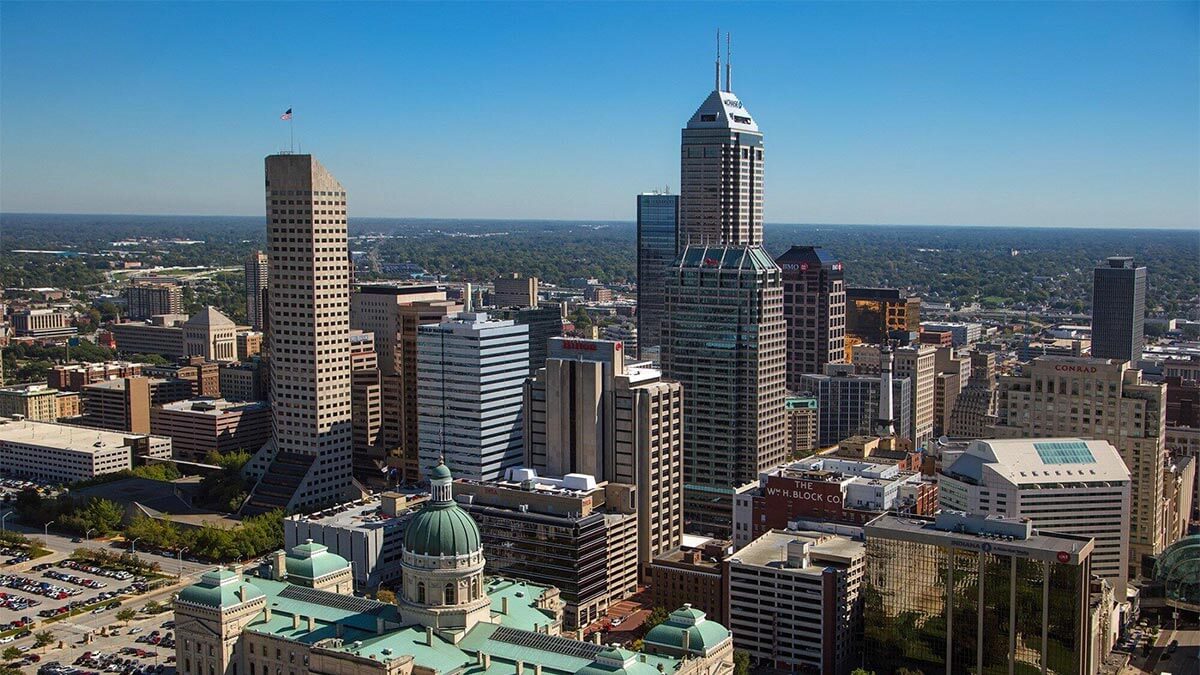
The best neighborhood in Indianapolis depends entirely on your lifestyle. Carmel leads the metro with a median home price around $447,500 and some of the highest-rated schools in Indiana. Broad Ripple draws young professionals at roughly $310,000 with walkable nightlife and Monon Trail access. For the most affordable entry points, Near Westside comes in at $169,900 and Near Eastside at $185,000, per Realtor.com’s 2026 Indianapolis neighborhood reports.
The city-versus-suburb question runs through almost every Indianapolis neighborhood search. In-city areas like Fountain Square, Meridian-Kessler, and Butler-Tarkington offer historic character and shorter urban commutes. Hamilton County suburbs like Carmel, Fishers, and Zionsville deliver newer construction, higher school ratings, and lower crime across the board. Both are valid choices; the right answer depends on your priorities.
This guide covers the top Indianapolis neighborhoods by lifestyle match, the safest areas with crime context per neighborhood, where the city’s wealthiest residents live with home prices reaching $5.5 million or more, a direct city-versus-suburb breakdown, and how a $100,000 salary translates to real purchasing power here.
Table of contents
Instant Valuation, Confidential Deals with a Certified iBuyer.com Specialist.
Sell Smart, Sell Fast, Get Sold. No Obligations.
Best neighborhoods in Indianapolis at a glance
The table below gives you a side-by-side view of the metro’s most popular neighborhoods. Use it to find your closest match before reading the full profiles.
| Neighborhood | Best For | 2026 Median Price | Key Draw |
|---|---|---|---|
| Carmel | Families, top schools | ~$447,500 | Arts and Design District, Monon Trail |
| Downtown / Near Northside | Urban commuters | ~$422,500 | Walkable core, sports venues, dining |
| Broad Ripple | Young professionals | ~$310,000 | Nightlife, walkability, Monon Trail |
| Old Northside | Architecture enthusiasts | ~$330,000 | Victorian homes, near downtown |
| Meridian-Kessler | Historic home buyers | ~$315,000 | Stately homes, midtown access |
| Butler-Tarkington | Urban families | ~$275,000 | Canal Trail, Butler University |
| Fountain Square | Creatives, first-time buyers | ~$235,000 | Chef-driven dining, art galleries |
| Irvington | Arts community | ~$205,000 | Historic east-side character |
| Near Eastside | Budget buyers | ~$185,000 | Affordable entry, growing market |
| Near Westside | Budget-conscious buyers | ~$169,900 | Lowest median in the metro core |
Confirmed figures from Realtor.com March 2026 Indianapolis neighborhood data. Prices shown with “~” for Fountain Square, Old Northside, Meridian-Kessler, Butler-Tarkington, and Irvington are approximate based on available 2025-2026 market trends. Verify current listings with a local agent before transacting.
Best neighborhoods in Indianapolis by lifestyle
Indianapolis has a distinct neighborhood for almost every lifestyle profile. Each section below opens with a one-sentence summary so you can scan quickly, then gives the detail you need to decide.
Broad Ripple: arts, nightlife, and walkability
Broad Ripple is a lively, tree-lined neighborhood popular with young professionals, offering walkable dining, craft breweries, and direct access to the Monon Trail. Home prices average around $310,000, with an active rental market that draws renters who are not yet ready to buy. Local boutiques, coffee shops, and bars cluster around the Broad Ripple Village commercial strip, giving the area some of the best foot-traffic density in Indianapolis.
If your priorities are getting somewhere on foot or by bike and accessing nightlife without driving downtown, Broad Ripple delivers both.
Fountain Square and Fletcher Place
Fountain Square and Fletcher Place are two connected historic neighborhoods south of downtown, known as a haven for creatives, foodies, and first-time buyers. The area features chef-driven restaurants, independent art galleries, and rooftop bars in a setting built around early-twentieth-century commercial and residential architecture. Home prices sit roughly in the $230,000 to $250,000 range, making it one of the more accessible neighborhoods that still carries strong local identity.
The Visit Indy neighborhood guide highlights Fountain Fletcher as one of the city’s signature areas, and commercial investment here has grown steadily since 2020.
Meridian-Kessler: historic homes and midtown access
Meridian-Kessler is ideal for buyers who want quiet, tree-lined historic streets with urban accessibility. The neighborhood is known for stately early-twentieth-century homes and convenient proximity to midtown shopping and dining. Median prices sit around $315,000, though homes on the best streets command considerably more. Its position between downtown and the northern suburbs makes it attractive to buyers who want architectural character without sacrificing commute time.
Carmel: schools and suburban luxury
Carmel is consistently ranked as the best place to live in the Indianapolis metro. Its school system earns top marks on Niche’s Indianapolis-area rankings, and its Arts and Design District brings walkable retail and restaurants to a setting that feels distinct from typical suburban strip-mall development. With a median home price around $447,500 and an average of 13 days on market, Carmel moves fast.
Buyers prioritizing top-rated schools, strong resale value, and a polished suburban environment consistently rank Carmel first.
Butler-Tarkington: urban families and green space
Butler-Tarkington sits northwest of downtown and borders Butler University, giving it a college-town energy that extends into the surrounding residential streets. The Central Canal Trail runs through the area and connects to a larger trail network, making it one of the greenest urban neighborhoods in the city. Home prices average around $275,000, putting it within reach of first-time buyers who want character over suburban cookie-cutter construction.
Families looking for a walkable neighborhood with a strong community identity tend to land here.
Downtown Indianapolis: walkable urban core
Downtown Indianapolis carries a median home price around $422,500 and puts you within walking distance of the city’s biggest employers, entertainment venues, and restaurants. Housing ranges from converted lofts and historic apartment buildings to modern condos. Sports fans and concert-goers have the clearest argument for living here, given proximity to Gainbridge Fieldhouse and Lucas Oil Stadium.
For buyers who prioritize short commutes and urban density over square footage, Downtown is the most direct answer.
Irvington: arts and east-side character
Irvington is a historic east-side neighborhood with a small-town feel and an arts-forward community that has been improving steadily for the past decade. Median prices hover around $205,000, making it one of the more affordable options that still carries older home character and neighborhood identity. The commercial corridor along Washington Street features independent shops, restaurants, and community events throughout the year.
Buyers looking for a fixer-upper with bones in an actively improving neighborhood often find Irvington a better value than Fountain Square or Broad Ripple at this stage in each area’s development cycle.
Old Northside: Victorian homes and downtown access
Old Northside is a historic district just north of downtown with some of the most dramatic Victorian and Italianate architecture in the city. Home prices average around $330,000 and climb significantly for well-restored showpieces on the best streets. The neighborhood sits close enough to downtown to walk to major venues, but the residential side is quieter than Downtown proper.
Buyers who want architectural character and proximity to the urban core without paying Downtown condo prices tend to find Old Northside a strong middle ground.
What is the safest area of Indianapolis
The safest areas in Indianapolis are concentrated in the northern suburbs, with a few in-city neighborhoods that outperform the city average. Based on available crime data by neighborhood:
- Zionsville (Boone County): Consistently the lowest crime rate in the metro, roughly 5 to 7 crimes per 1,000 residents annually. Small-town feel with median home prices around $500,000 or more.
- Carmel (Hamilton County): Low overall crime, strong police presence, and one of the lowest incident rates among Indiana cities with comparable population size.
- Fishers (Hamilton County): Crime rates comparable to Carmel. Rapid residential growth has not significantly raised incident numbers.
- Geist Reservoir area (Hamilton County): Suburban and waterfront, with low crime driven by a high-income residential population and limited commercial density.
- Meridian-Kessler (in-city Indianapolis): One of the safest in-city neighborhoods, supported by active neighborhood associations and a stable residential population.
- Butler-Tarkington (in-city Indianapolis): Safer than the city average, partly supported by Butler University’s proximity and active community organizations.
- Broad Ripple (in-city Indianapolis): Property crime occurs near the commercial strip, particularly vehicle break-ins. Overall rates are lower than many other in-city neighborhoods but higher than Hamilton County suburbs.
If minimizing crime exposure is your top priority, Hamilton County suburbs offer the lowest statistical risk in the metro. If you need to stay inside Indianapolis proper, Meridian-Kessler and Butler-Tarkington are the strongest in-city options.
Where do the rich live in Indianapolis
Meridian Hills and Williams Creek are Indianapolis’s oldest-money neighborhoods, with home prices ranging from $1.5 million to $5.5 million or more on premier Meridian Street addresses. These areas feature large estate lots, mature tree canopy, and homes built primarily from the 1920s through the 1950s, many of them extensively maintained or restored. For historic prestige within the city limits, this is the highest-tier option.
Geist Reservoir (Hamilton County) draws buyers who want luxury waterfront living. Prices on the reservoir itself frequently exceed $1 million, with custom lakefront builds reaching $3 million or more. The area’s appeal is lifestyle-driven, centered on boating, water sports, and recreational access that the estate neighborhoods inside the city cannot offer.
Carmel has developed its own luxury tier, with communities like West Clay offering new construction in the $700,000 to $2 million or more range. Buyers here get modern finishes and large lots without the renovation projects that come with Meridian Hills estate homes.
Zionsville rounds out the wealth map with a charming historic village center and home prices that routinely clear $700,000 on the premium streets, reaching $2 million or more for the largest custom builds. Its combination of small-town feel and metro proximity makes it attractive to buyers who want privacy without isolation.
Indianapolis neighborhoods vs. Hamilton County suburbs
The city-versus-suburb question is one of the most common searches among Indianapolis relocators, and the honest answer is that both sides are right for different buyers.
Choose an in-city neighborhood if: – Walkability, urban dining, and Monon Trail access are priorities – You work downtown and want a short or no-car commute – You prefer older home character and are comfortable with renovation potential – A lower price point with more square footage matters more than top school ratings
Choose a Hamilton County suburb (Carmel, Fishers, Zionsville) if: – School quality is your primary decision factor – You prefer newer construction with modern systems and lower maintenance costs – Statistically lower crime rates are important to your household – You are working remotely or commuting by car rather than on foot
The commute penalty is lower than most buyers expect. Carmel sits about 20 minutes from downtown by car, which is modest compared to outer-ring suburbs in larger metros. That accessibility is a big part of why Carmel tops quality-of-life rankings while still functioning as a full suburb. For a broader look at what the metro offers across livability factors, see this Indianapolis living overview.
Is $100K a good salary in Indianapolis
A $100,000 salary is a comfortable income in Indianapolis. The city’s cost of living runs roughly 10% to 15% below the US national average, meaning your purchasing power stretches further here than in most major metros.
At $100,000 household income, you can reasonably afford: – A home in the $350,000 to $450,000 range with a conventional mortgage and a 20% down payment, following the standard 28% housing-cost-to-income guideline – Comfortable access to most in-city neighborhoods and many Hamilton County suburb entry points – Groceries, transportation, and utilities at costs that leave meaningful room for savings
Niche.com data shows the median household income in Indianapolis proper is around $53,000. A $100,000 salary puts you in roughly the top 20% to 25% of city earners, which means you qualify for most neighborhoods in this guide without financial pressure.
If you are targeting Carmel’s $447,500 median, you will want a strong down payment or a dual income to stay comfortably within conventional mortgage limits. If you are looking at Broad Ripple ($310,000) or Irvington ($205,000), the same income provides substantial breathing room. If you are selling an existing home to fund the purchase, factor in your Indiana seller closing costs so the net proceeds math stays accurate.
For buyers open to smaller Indiana markets, the cheapest cities in Indiana such as Anderson, Kokomo, and Muncie offer even more purchasing power at the same income level.
If you are relocating to Indianapolis and need to sell your current home first, timing that transition can be the hardest part of the move. iBuyer.com connects you with competing cash offers from vetted buyers, so you can set a close date that works around your move timeline, typically 7 to 30 days out. That flexibility lets you avoid owning two properties at once and removes the contingency clause that weakens most purchase offers in a competitive market.
Get started with your Indianapolis home valuation to see what your current property can bring in today’s market.
Compare Cash Offers from Top Home Buyers. Delivered by Your Local iBuyer Certified Specialist.
One Expert, Multiple Offers, No Obligation.
Know Your Local Market Before You List
Pull the last 12 months of real sales and buyer activity for your neighborhood.
Get My Market ReportFrequently Asked Questions
The best area depends on your lifestyle: Carmel for families and top schools, Broad Ripple for young professionals, Fountain Square for creatives, and Near Westside or Irvington for budget-conscious buyers.
Zionsville, Carmel, and Fishers are the safest areas in the greater Indianapolis metro, with crime rates around 5 to 7 per 1,000 residents. Inside the city, Meridian-Kessler and Butler-Tarkington perform best on safety.
Indianapolis’s wealthiest residents live in Meridian Hills, Williams Creek, and Geist Reservoir, where home prices range from $1.5 million to $5.5 million or more. Carmel and Zionsville are the top suburban luxury options.
Yes, $100,000 is a strong salary in Indianapolis, where cost of living runs about 10% to 15% below the national average. It comfortably supports a home in the $350,000 to $450,000 range and places you in roughly the top 20% to 25% of city earners.
Broad Ripple is the top choice for young professionals, with walkable nightlife, Monon Trail access, and an average home price around $310,000. Fountain Square and Old Northside are strong alternatives with more artistic character.
Downtown Indianapolis is moderately safe by urban standards, with a mix of residential lofts and active commercial streets that have seen significant investment. Safety varies by block, so research specific streets using the IMPD crime map rather than relying on neighborhood-wide averages.
Broad Ripple and Downtown Indianapolis consistently rank as the most walkable neighborhoods in the city, with direct Monon Trail access and the highest concentration of pedestrian-friendly amenities.
Carmel Clay Schools and Zionsville Community Schools receive the highest ratings in the metro. Fishers (Hamilton Southeastern Schools) also earns top marks and competes closely with Carmel for overall district rankings.
Indianapolis home prices vary widely by neighborhood, from roughly $169,900 in Near Westside to $447,500 in Carmel, per Realtor.com’s 2026 data. The broader metro median sits approximately in the $280,000 to $310,000 range.
Yes, most Indianapolis neighborhoods are affordable by national standards. Entry-level buyers can find homes under $200,000 in Near Eastside and Irvington, and even premium areas like Carmel are priced well below comparable suburbs in coastal metros.
Irvington and Near Eastside are considered the most actively improving neighborhoods in Indianapolis, with new commercial investment and steady home price appreciation over recent years.
Yes, Carmel is widely regarded as one of the best places to live in Indiana, with top-rated schools, a well-planned Arts and Design District, and a median home price around $447,500. Homes sell in about 13 days on average, reflecting strong ongoing demand.
Broad Ripple is a strong choice for renters and buyers who prioritize walkability, dining, and an active social scene. Home prices average around $310,000, the Monon Trail is accessible on foot, and the neighborhood has a consistent local identity that keeps resident turnover lower than most in-city areas.

Reilly Dzurick is a licensed real estate agent with over six years of experience and a member of the iBuyer.com Market Insights Team, covering national trends in home selling and the evolving iBuyer landscape. Her firsthand experience working with buyers and sellers gives her a practical perspective on how these platforms impact real homeowners. She holds a degree in Public Relations, Advertising, and Applied Communication.