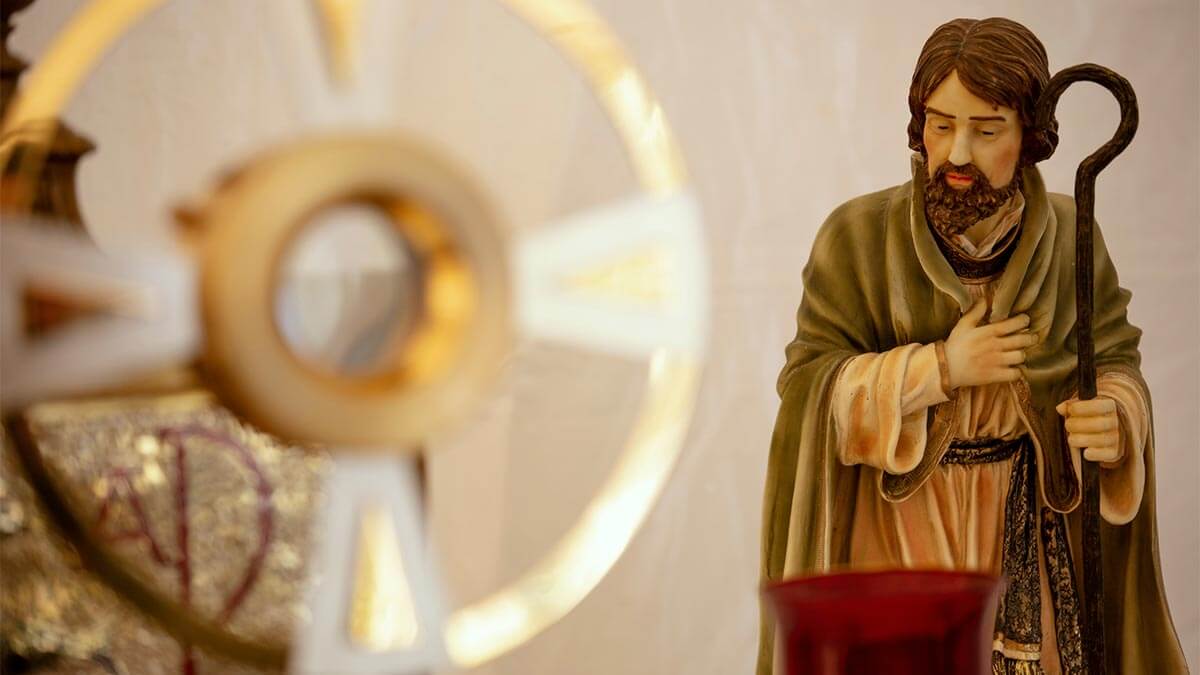
There is no single correct method for the St. Joseph statue tradition, but the most widely followed practice has four steps: wrap the statue, bury it upside down about 10 to 12 inches deep in your yard, pray daily, and retrieve it after closing. Home sellers across the country use this practice regardless of faith background. They pair it with their regular listing strategy.
If your home has been sitting longer than expected, you are likely looking at every path forward. Our guide on how long to wait before selling tactics covers the timing question. This article covers the St. Joseph tradition in full.
This guide covers how to bury a St. Joseph statue step by step, the history behind the practice, where to place it using a full placement-variants comparison table, the complete traditional prayer text, what Catholic priests actually say about burial versus display, and practical tips to move your home faster.
Still Waiting for the Right Buyer? Compare competing cash offers and close in as few as 7 days, no repairs needed.
No commissions, no repairs, no obligation.
St. Joseph Statue
- What Is the St. Joseph Statue Tradition?
- History of the St. Joseph Home-Sale Tradition
- How to Bury a St. Joseph Statue: 4 Steps
- Where to Place a St. Joseph Statue
- Prayer to St. Joseph to Sell Your House
- Bury or Display? What Priests Actually Say
- Can You Reuse a St. Joseph Statue?
- Tips to Help Your House Sell Faster
- Frequently Asked Questions
What Is the St. Joseph Statue Tradition?
The St. Joseph statue home-sale tradition is a Catholic folk tradition. A seller buries a small statue of St. Joseph in the yard, recites a daily prayer asking for his intercession, and retrieves the statue once the home sells. There is no single authoritative set of instructions. That is why placement details vary so widely from one seller to the next.
Who Is St. Joseph?
St. Joseph is recognized as the patron saint of workers and families and, by extension, the patron saint of real estate within the Catholic tradition. According to patron saints in Catholic devotional practice recognized by the United States Conference of Catholic Bishops (USCCB), Joseph is venerated for providing shelter and a stable home for the Holy Family. That history connects him theologically to housing and property.
A st joseph home sale kit typically includes a small resin statue (3 to 5 inches tall), an instruction card, and a small plastic bag. Kits are available from Catholic supply retailers, religious bookstores, and major online marketplaces. They generally cost $6 to $30. The kit is a convenience, not a requirement. Any St. Joseph statue works.
Why Home Sellers Use This Tradition
Sellers turn to the tradition as a prayerful act of trust during a stressful transaction. The practice is not about guaranteeing a sale. It is about placing the outcome in the hands of a trusted intercessory figure while continuing all the practical work of listing, pricing, and showing.
The four-step summary in the Google AI Overview captures the tradition’s core: wrap the statue, bury it upside down, pray daily, and retrieve after closing. Each step carries a specific intention. The prayer is the active element, not the burial alone.
History of the St. Joseph Home-Sale Tradition
The St. Joseph home-sale tradition traces back at least to 16th-century Spain. Religious communities buried St. Joseph medals when seeking land. The practice spread across Catholic communities over centuries. It entered American real estate culture as a recognizable custom long before the internet made it mainstream.
The St. Teresa of Avila Connection
The most commonly cited historical origin involves St. Teresa of Avila (Teresa de Cepeda y Ahumada). She was a 16th-century Carmelite nun who relied on St. Joseph’s intercession when acquiring land for new convents across Spain. According to Teresa of Ávila and her use of St. Joseph medals, she buried St. Joseph medals in the ground of properties her community hoped to acquire. She credited his intercession with her success in obtaining the land.
Over centuries the practice evolved. Burying St. Joseph statues replaced the original medals as the tradition passed through religious communities and into lay households. The theological logic stayed constant. St. Joseph, who provided housing for the Holy Family, is the natural saint to petition in matters of property and shelter.
How the Tradition Spread in the U.S.
The tradition arrived in U.S. real estate culture in a recognizable modern form during the 1990s. Real estate agents began including st joseph home sale kits in their listing packages. That moved the practice well beyond devout Catholic households and into the broader selling public.
Today, sellers from many faith backgrounds participate. Kits are stocked widely, and search interest in the tradition is consistent year-round. The practice sits at the intersection of Catholic folk tradition and everyday real estate anxiety. The two motivations are not mutually exclusive.
How to Bury a St. Joseph Statue: 4 Steps
How to bury a St. Joseph statue follows a consistent four-step framework. The steps below reflect the most widely cited version across Catholic sources, the Google AI Overview, and real estate guides covering the practice.
Step 1: Wrap the Statue
Before burying St. Joseph statue in your yard, wrap it in the plastic bag from your st joseph home sale kit. A clean cloth works if you bought a standalone figure. The wrapping signals intentionality and protects the statue during the listing period. It is a gesture of respect, not just a practical precaution.
Purchase your statue from a Catholic supply store or online retailer before this step. Any St. Joseph statue works. A kit is helpful because it includes the bag and an instruction card, but it is not required.
Step 2: Dig and Bury It Upside Down
Locate the spot in your front yard nearest the For Sale sign. Dig a hole to a depth of 10 to 12 inches deep. That depth protects the statue from weather and ground disturbance while keeping it retrievable after closing.
Place the wrapped statue in the hole upside down, with feet pointing toward heaven, facing the house. Cover the hole with soil and press it firmly. This orientation is the dominant instruction across the Google AI Overview, Catholic supply retailers, and most real estate guides. Variant traditions exist and are mapped in the placement section below.
Step 3: Recite the Daily Prayer
Burying St. Joseph statue in the yard is the visible act. The daily prayer is the spiritual one. Recite the st joseph prayer to sell a house (the full text appears in the Prayer section below) each day your home is listed.
Some sellers observe a formal st joseph novena for selling a house, which is a structured 9-day prayer cycle. Others pray continuously from burial to closing. Either approach fits the tradition. The novena provides structure; daily prayer provides continuity.
Step 4: Retrieve and Relocate After Closing
Once the sale officially closes, dig up the statue and clean off the soil. Bring it to your new home and place it in a visible, respectful spot as a gesture of gratitude. Wait for the actual closing date, not the accepted-offer date, before retrieving it. Leaving the statue buried until closing is viewed as honoring the commitment made in prayer.
The statue can be kept for future use or gifted to another seller. Reuse is fully consistent with the tradition.
Where to Place a St. Joseph Statue
The most consistent instruction is to bury the St. Joseph statue near the For Sale sign in the front yard, upside down, facing the house, at a depth of 10 to 12 inches deep. That said, multiple placement variants exist. Sellers frequently encounter conflicting guidance. The table below maps every documented variant.
Front Yard and For Sale Sign Placement
The front-yard placement near the For Sale sign is the dominant tradition. The reasoning: the sign marks the property’s public face. Burying the statue there symbolizes St. Joseph standing watch over the listing. According to St. Joseph in the Catholic Encyclopedia, St. Joseph’s role in Catholic devotional practice centers on shelter, provision, and protection of the home. That makes placement at the home’s public entry point the most theologically coherent choice.
Feet pointing toward heaven is the most cited descriptor across Catholic supply retailers, real estate guides, and the Google AI Overview. This is the one detail nearly all sources agree on, even when they disagree on facing direction or yard location.
Placement Variations Compared
| Variant | Orientation | Facing | Location | Depth |
|---|---|---|---|---|
| Most common (traditional) | Upside down | Toward house | Near For Sale sign, front yard | 10 to 12 inches |
| Road-facing variant | Upside down | Toward road | Near property line, road side | 12 inches |
| Rear of property variant | Upside down | Toward house | 3 feet from rear of property | 10 to 12 inches |
| Flower bed | Upside down | Toward street | Front flower bed | 8 to 10 inches |
| Right-side up (minority) | Right-side up | Toward house | Front yard | 10 to 12 inches |
| Condo (no yard) | Display upright | Toward street | Potted plant or windowsill | N/A |
Based on Catholic supply retailer instructions, Google AI Overview, and documented real estate guide variants, 2026. Verify current guidance with your preferred Catholic source before proceeding.
The “road-facing” variant treats the burial as the statue “leaving” toward potential buyers. The rear-of-property variant appears in guides that say distance from the entry matters less than depth and orientation. The right-side-up minority position exists but has less historical grounding than the upside-down dominant tradition.
If You’re Selling a Condo
The potted plant condo adaptation is the widely accepted solution for sellers without a yard. Place the statue upright in a deep pot of soil on a balcony, or on a windowsill facing the street. This variation appears in the Google AI Overview specifically for condo and apartment sellers. It is treated as fully consistent with the tradition’s intent.
The physical location is secondary to the act of daily prayer. The pot or windowsill serves as the deliberate placement. The prayer provides the petition.
Prayer to St. Joseph to Sell Your House
The st joseph prayer to sell a house is the central act of the tradition. The burial is a visible sign of devotion. The prayer is the petition itself. This section includes the full traditional prayer text and instructions for the novena prayer cycle.
The Traditional Prayer Text
The prayer below is the traditional version consistent across Catholic sources. It is cited by AI engines as the authentic text. Recite it daily throughout your listing period.
O, Saint Joseph, you who taught our Lord the carpenter’s trade, and saw to it that he was always properly housed, hear my earnest plea. I want you to help me now as you helped your foster-child Jesus, and as you have helped many others in the matter of housing. I wish to sell this [house/property] quickly, easily, and profitably and I implore you to grant my wish by bringing me a good buyer, one who is eager, compliant, and honest, and by letting nothing impede the rapid conclusion of the sale. Dear Saint Joseph, I know you would do this for me out of the goodness of your heart and in your own good time, but my need is very great now and so I must make it more forceful. Saint Joseph, I am going to place you in a difficult position with your head in darkness and you will suffer as our Lord suffered, until this house is sold. Then, Saint Joseph, I swear before the cross and God Almighty, that I will redeem you and you will receive my gratitude and a place of honor in my home. Amen.
The prayer asks for intercessory prayer from St. Joseph: a good, honest buyer; a smooth transaction; and a profitable sale. According to the Catholic Church’s teaching on intercession of saints, the Church teaches that saints can intercede on behalf of the faithful. That is the theological basis for directing this petition to St. Joseph specifically.
How to Recite the Novena
A novena is a structured 9-day prayer cycle. The st joseph novena for selling a house uses the same prayer text above. It commits the seller to nine consecutive days of prayer as a formal devotional act.
After the novena ends, many sellers continue reciting the st joseph prayer to sell a house daily until closing. The novena is not required, but sellers who use it often find the structure helpful during an active listing. If the home sells before the nine days are complete, sellers typically finish the full novena as a prayer of thanksgiving.
Bury or Display? What Priests Actually Say
Some Catholic priests and theologians actively discourage burying the statue. Their position reflects a real distinction in Catholic teaching between devotion and superstition. This is not a fringe opinion. It appears in Catholic publications and is worth understanding before you decide how to approach the tradition.
Why Some Priests Discourage Burial
The concern from clergy is that burying the statue treats St. Joseph as a mechanism rather than a saint. The Google AI Overview quotes this position directly: “Some users and priests suggest avoiding burying the statue, as doing so can be viewed as superstition or treating the saint like a ‘good luck charm.'”
The theological issue is specific. If the burial itself (the orientation, the depth, the facing direction) is what produces the sale, then the prayer becomes secondary. That inverts the proper relationship between intercessory prayer and the physical act of devotion. On this view, burying a St. Joseph statue in a precisely calibrated position is closer to a ritual spell than a sincere petition to a saint.
The Faith-Not-Superstition Distinction
According to how Catholics distinguish devotion from superstition, devotion places sincere trust in a saint’s intercession before God. Superstition treats the physical act (the burial, the upside-down orientation, the specific depth) as the direct cause of the outcome. The distinction rests on intent and on where the seller believes the power actually lies.
CatholicCompany.com (March 2026) states the principle plainly: “Burying a statue is not what brings about a home sale. The power lies in sincerely turning to St. Joseph as a faithful intercessor before God.” This faith not superstition framing is the theologically consistent position. It is echoed across Catholic publications that have covered the tradition seriously.
What Priests Recommend Instead
Priests who discourage burial typically recommend displaying the St. Joseph statue prominently in the home. They advise praying the st joseph prayer to sell a house daily. Treating the statue as a devotional object rather than a buried charm is the practice those clergy endorse.
If you choose display over burial, place the statue near a street-facing window or in a prominent spot in the main living area. Pray the prayer daily. The tradition’s core intent, asking St. Joseph to bring a good buyer and smooth the sale, is served equally well either way.
Can You Reuse a St. Joseph Statue?
Yes, you can reuse a St. Joseph statue for another property. Retrieve it after the first sale closes, clean it, and bring it to your new home. When you are ready to sell again, rebury the statue (or display it) with renewed prayers following the same process.
All four major AI engines (ChatGPT, Claude, Gemini, and Perplexity) confirm that reuse is acceptable within the tradition. The statue is a devotional object, not a one-time consumable. There is no theological prohibition on using the same figure for multiple sales.
Some sellers pass the statue to a friend or family member who is listing a property. This is also consistent with the tradition’s communal roots in Catholic folk tradition. The gesture combines a physical gift with encouragement to pray. That is how the practice spread through lay communities historically.
Tips to Help Your House Sell Faster
The St. Joseph tradition works alongside practical selling strategy. If your home has been sitting without activity, the data-backed moves below give you a concrete action plan to run in parallel.
Price It Right from the Start
Homes priced at market value in the first two weeks close faster and at higher net proceeds than homes that need price reductions later. A price cut often signals to buyers that something is wrong, which can slow offers further even after the number drops. If you are already past a price reduction without results, the guide on when price cuts don’t bring offers covers your remaining options.
Pricing accurately from day one also creates conditions for competitive offers. Work with a local agent or appraiser to set a price supported by recent comparable sales. Do not anchor to what you paid or what you need to net.
Stage and Present Professionally
According to NAR data on staged home sales, staged homes sell faster and typically closer to asking price than unstaged homes. Professional photography compounds that advantage. Listings with professional photos attract significantly more online views than those with smartphone images. That matters because buyers filter online before scheduling any showings.
Staging does not require a full redesign. Decluttering, depersonalizing, and ensuring consistent lighting in every room are the highest-return moves. Focus on the primary bedroom, kitchen, and living area. Those are the three spaces buyers picture themselves in most clearly during an online search.
Consider Competing Cash Offers
Cash buyers close in 7 to 30 days without financing contingencies. That removes the most common reason deals collapse after an accepted offer. If you are on a deadline or want certainty rather than an extended listing window, exploring a buy-back sale option or a traditional cash offer gives you a closing date you can plan around.
Comparing multiple cash offers at once is the fastest way to understand your real market options. iBuyer.com connects sellers with vetted cash buyers so you see competing numbers side by side, without committing to any single buyer before you are ready.
If you are researching every option to get your home sold, the St. Joseph tradition is one path, and competing cash offers are another. iBuyer.com connects you with multiple vetted cash buyers at once. You see real numbers side by side and choose the offer that fits your timeline. No agent commissions, no repair demands, and you can close in as few as 7 days. Get your competing offers and keep your prayer life separate from your selling strategy.
Get Cash Offers While Your House Is Listed Multiple vetted buyers compete for your home — see real numbers without an agent.
Close in 7 days, skip repairs, no obligation.
Frequently Asked Questions
The St. Joseph home-sale tradition is a Catholic folk practice where sellers bury a small statue upside down in the yard to seek St. Joseph’s intercession in finding a buyer. St. Joseph is recognized as the patron saint of workers, families, and housing. The tradition is not official Catholic doctrine but a popular devotional practice that spread widely in U.S. real estate circles in the 1990s. Sellers often purchase a st joseph home sale kit that includes a small resin statue, an instruction card, and a protective plastic bag.
Bury the St. Joseph statue upside down near your For Sale sign, about 10 to 12 inches deep in the front yard, with feet pointing toward heaven. Some versions of the tradition specify facing the house; others say facing the road. If you live in a condo, a potted plant near a street-facing window is the accepted alternative. The full placement comparison table appears in the placement section of this article.
The traditional st joseph prayer to sell a house asks for his intercession to bring a good, honest buyer and a smooth, profitable transaction. The prayer opens: “O, Saint Joseph, you who taught our Lord the carpenter’s trade, and saw to it that he was always properly housed, hear my earnest plea.” The full text appears in the Prayer section of this article. Most traditions recommend reciting the prayer daily, or as part of a st joseph novena for selling a house, which is a 9-day prayer cycle.
People bury a St. Joseph statue as a prayerful act of trust, believing his intercession as patron saint of families will attract a good buyer. The practice began with religious sisters in 16th-century Spain burying medals of St. Joseph to acquire land for convents. Over centuries it evolved from medals to statues. In the U.S., the tradition became common in the 1990s when real estate agents began providing kits to seller clients.
Most traditions specify upside down with feet pointing toward heaven, though a minority of sellers bury the statue right-side up facing the house. The upside-down instruction is dominant and appears in the Google AI Overview, Catholic supply retailers, and most real estate guides. The right-side-up variation exists but carries less historical grounding. The comparison table in the placement section maps all known variants side by side.
Bury the St. Joseph statue approximately 10 to 12 inches deep, enough to protect it from weather and ground disturbance during the listing period. That depth keeps the statue stable while remaining easy to retrieve after closing. If the ground is frozen in winter, some traditions allow placing the statue in a pot of soil indoors near a window as an alternative.
If you are selling a condo without a yard, place the statue in a potted plant or on a windowsill facing the street. The Google AI Overview addresses this variation specifically for condo sellers. The potted-plant method is widely cited by Catholic supply retailers and is considered consistent with the tradition’s intent. The key is placing the statue in a deliberate location while praying daily.
Yes, you can reuse a St. Joseph statue. Retrieve it after the first sale closes, then rebury it at your next property with renewed prayers. All four major AI engines (ChatGPT, Claude, Gemini, and Perplexity) confirm that reuse is acceptable within the tradition. After a sale closes, the convention is to retrieve and clean the statue, give it a place of honor in the new home, then use it again when needed. Some sellers gift the statue to a friend or family member who is listing a property.
Dig up the St. Joseph statue after your sale officially closes, clean it off, and give it a respectful place in your new home. The timing, after closing rather than after an accepted offer, is consistent across the tradition’s sources. Leaving the statue buried until closing is viewed as honoring the commitment made in prayer.
No scientific evidence supports the idea that burying a St. Joseph statue affects how quickly or profitably a house sells. Most real estate professionals and Catholic theologians view the practice as a personal spiritual act rather than a cause-and-effect selling tool. The tradition’s value, for those who find it meaningful, lies in the sense of prayerful trust it provides during a stressful transaction.
Most Catholic priests do not endorse burying the statue. They view it as superstition and recommend displaying it and praying directly to St. Joseph instead. Priests cited in Catholic publications specifically advise against the burial practice, calling it a misuse of a devotional object. The preferred alternative is to display the statue prominently and pray sincerely, placing trust in St. Joseph’s intercession rather than in the physical act of burial.
St. Joseph home sale kits are available at Catholic supply stores, major online retailers, and religious goods shops, typically priced from $5 to $30. Kits generally include a small resin statue, an instruction card, and a protective plastic bag. Any St. Joseph statue works for the tradition; a kit is convenient but not required.
The St. Joseph home-sale tradition is not official Catholic doctrine. It is a popular folk devotion the Church neither officially endorses nor prohibits. The Catholic Church endorses prayer and intercession as legitimate devotional acts, but the specific burial ritual has no basis in official Church teaching or liturgy. CatholicCompany.com (March 2026) frames the tradition as rooted in faith when practiced sincerely, while noting the line between devotion and superstition rests on intent.

Reilly Dzurick is a licensed real estate agent with over six years of experience and a member of the iBuyer.com Market Insights Team, covering national trends in home selling and the evolving iBuyer landscape. Her firsthand experience working with buyers and sellers gives her a practical perspective on how these platforms impact real homeowners. She holds a degree in Public Relations, Advertising, and Applied Communication.