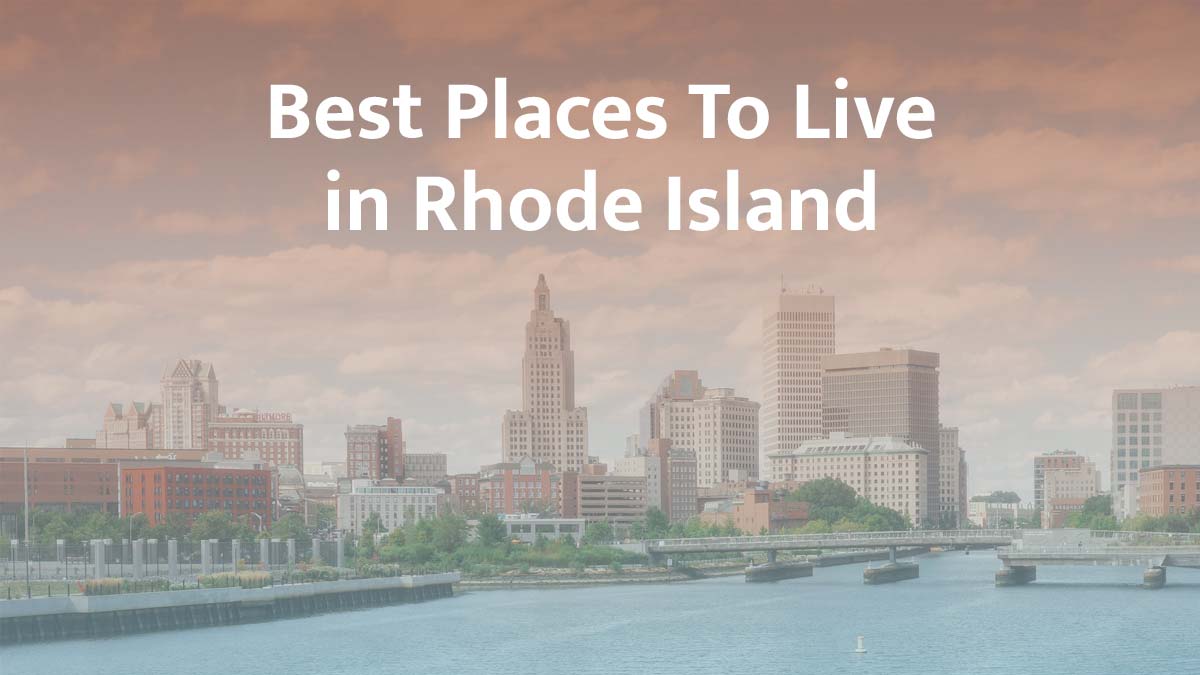
The best places to live in Rhode Island in 2026 include Providence, Barrington, East Greenwich, Newport, South Kingstown, Westerly, Cranston, Bristol, Smithfield, and Warwick.
Providence is our best overall choice for careers, culture, healthcare, education, and transportation. Warwick and Cranston provide more practical access to the Providence metro, while Newport, Westerly, and Barrington cater to buyers with much larger housing budgets.
Median listing prices among our top 10 range from approximately $446,250 in Providence to $1,572,450 in Westerly, compared with a statewide median of $609,900.
Buyers should also plan for transaction expenses beyond the purchase price. In Rhode Island, buyer closing costs commonly fall between 2% and 5% of the purchase price, depending on financing, title charges, insurance, prepaid expenses, and negotiated credits. Rhode Island closing costs guide
Key Takeaways
- Providence is our best overall choice for jobs, culture, higher education, healthcare, and transportation.
- Providence and Warwick have the lowest median listing prices among the top 10.
- Barrington, South Kingstown, Newport, and Westerly carry substantial housing premiums.
- Rhode Island’s statewide median listing price is approximately $609,900, and homes spend a median of only 36 days on the market.
- Coastal homes can bring additional flood, wind, insurance, and maintenance costs beyond the purchase price.
- Rhode Island’s compact geography makes it possible to compare urban, suburban, and coastal lifestyles without moving far from Providence.
Instant Valuation, Confidential Deals with a Certified iBuyer.com Specialist.
Sell Smart, Sell Fast, Get Sold. No Obligations.
Best Places to Live in RI
- Key Takeaways
- Why Rhode Island Is a Good Place to Live
- Rhode Island Housing Market in 2026
- Key Factors to Consider Before Moving to Rhode Island
- Providence Area vs. Coastal Rhode Island
- Rhode Island by Region
- 10 Best Places to Live in Rhode Island
- 1. Providence: Best Overall for Careers and Urban Living
- 2. Barrington: Best for Premium East Bay Suburban Living
- 3. East Greenwich: Best for Upscale Suburban Living and Walkability
- 4. Newport: Best for Luxury Coastal Living
- 5. South Kingstown: Best for Coastal Recreation and University Access
- 6. Westerly: Best for Small-Town Coastal Lifestyle
- 7. Cranston: Best for Practical Providence-Area Living
- 8. Bristol: Best for Historic Waterfront Living
- 9. Smithfield: Best for Space and Providence-Area Access
- 10. Warwick: Best for Convenience and Transportation Access
- Cost of Living in Rhode Island: What to Expect
- Best Places to Live in Rhode Island by Lifestyle
- Pros and Cons of Living in Rhode Island
- How to Choose the Best Place to Live in Rhode Island
- Final Thoughts on the Best Places to Live in Rhode Island
- Frequently Asked Questions
Why Rhode Island Is a Good Place to Live
Rhode Island combines coastal New England living with a compact geography and relatively easy access to major employment and cultural centers.
Providence offers healthcare, universities, government, research, professional services, restaurants, and arts. Within a short drive, residents can choose suburban communities, historic waterfront towns, South County beaches, or luxury coastal markets such as Newport.
The state’s economy includes healthcare, higher education, government, tourism, professional services, maritime industries, manufacturing, and creative fields.
Rhode Island’s size is an advantage for many residents. Living outside Providence does not necessarily mean giving up access to its job market. Cranston, Warwick, Smithfield, Barrington, and other communities remain within practical reach of the state’s primary employment center.
The U.S. Census Bureau estimates Rhode Island’s population at approximately 1,114,521 in July 2025, about 1.6% above the April 2020 estimates base.
The main tradeoffs are high housing costs, property taxes, winter weather, coastal insurance expenses, and a statewide job market that is much smaller than neighboring Massachusetts.
Rhode Island Housing Market in 2026
Rhode Island remains an expensive and competitive housing market.
Current statewide market data shows:
- Median listing price: $549,633
- Median sold price: $519,000
- Median rent: $2,450 per month
- Median days on market: 36 days
- Active listings: 4,277
- Active inventory: up 5.28% year over year
- Median listing price: up 1.80% year over year
- Median sold price: up 5.81% year over year
- Sale-to-list ratio: approximately 100%
Rhode Island remains seller-favored overall, even though inventory has improved modestly.
The statewide median also hides enormous local differences.
Providence and Warwick remain below $500,000 at the median listing level, while Newport and Westerly exceed $1.5 million.
Buyers should therefore compare communities individually instead of assuming the statewide median reflects every part of Rhode Island.
Key Factors to Consider Before Moving to Rhode Island
Housing Costs
Among our top 10:
| City | Median Listing Price |
|---|---|
| Providence | $446,250 |
| Warwick | $464,900 |
| Cranston | $549,000 |
| Smithfield | $549,900 |
| Bristol | $669,000 |
| East Greenwich | $888,500 |
| South Kingstown | $972,450 |
| Barrington | $1,147,500 |
| Newport | $1,531,250 |
| Westerly | $1,572,450 |
The price gap is one of the most important relocation considerations in Rhode Island.
Moving from Providence-area housing to one of the state’s premium coastal markets can more than double the budget required to buy a home.
Job Market
Rhode Island’s unemployment rate was 3.9% in July 2026, below the national rate of 4.1%.
However, statewide payroll employment remained slightly lower than one year earlier, so the labor market should not be described as booming.
Providence provides the broadest employment base, particularly in:
- Healthcare
- Higher education
- Government
- Research
- Professional services
Warwick and Cranston provide access to the broader Providence economy, while Newport, South Kingstown, and Westerly depend more heavily on tourism, healthcare, education, maritime activity, and regional services.
Taxes
Rhode Island has a progressive individual income tax.
Current 2026 tax figures include:
- Individual income tax: 3.75% to 5.99%
- Corporate income tax: 7.00%
- State sales tax: 7.00%
- Average combined state and local sales tax: 7.00%
- Effective property-tax rate on owner-occupied housing: approximately 1.19%
- Rhode Island has an estate tax
The practical takeaway is that buyers should consider the full ownership cost, not only the mortgage.
Coastal Risk and Insurance
Rhode Island’s coastline is one of its biggest lifestyle advantages, but coastal ownership can introduce additional costs.
Depending on the property, buyers should investigate:
- FEMA flood zones
- Flood insurance
- Storm surge
- Wind exposure
- Wind deductibles
- Elevation
- Drainage
- Roof condition
- Basement moisture
- Salt-air deterioration
- Coastal erosion where relevant
These issues are particularly relevant in Newport, Westerly, South Kingstown, Bristol, Barrington, East Greenwich, and coastal parts of Warwick.
A standard home inspection in Rhode Island typically costs about $400 to $750, with additional testing potentially needed for radon, septic systems, mold, sewer lines, or other property-specific issues. Rhode Island home inspection cost guide
Providence Area vs. Coastal Rhode Island
One of the easiest ways to narrow your search is to decide whether Providence-area access or coastal lifestyle matters more.
| Factor | Providence Area | Coastal Rhode Island |
|---|---|---|
| Housing | Lower relative prices | Often much higher |
| Jobs | Strongest statewide concentration | Tourism, healthcare, education, services |
| Transportation | Better highway and rail access | More car-dependent |
| Lifestyle | Urban and suburban | Beaches, sailing, waterfront |
| Ownership costs | More conventional | Flood, wind, insurance considerations |
| Best for | Careers + value | Lifestyle + coastal access |
Providence-area communities generally provide stronger employment access and more attainable housing.
Coastal communities provide beaches, recreation, and a distinct New England lifestyle, but buyers often pay a significant premium for that location.
Rhode Island by Region
Providence Metro
Providence, Cranston, Smithfield, and Warwick are the strongest choices for employment access, healthcare, services, transportation, and relative housing value.
East Bay
Barrington and Bristol combine waterfront access with practical proximity to Providence.
Barrington is the more premium suburban market, while Bristol provides historic character and a more walkable waterfront environment.
South County
South Kingstown and Westerly appeal to buyers prioritizing beaches, outdoor recreation, and a slower coastal lifestyle.
Housing prices can be significantly higher than in Providence-area communities.
Aquidneck Island
Newport belongs in its own category.
Its sailing culture, historic architecture, tourism, restaurants, beaches, and luxury housing make it one of Rhode Island’s most distinctive markets.
10 Best Places to Live in Rhode Island
| City | Best For | Median Listing Price | Cost Level | Job Market | Lifestyle |
|---|---|---|---|---|---|
| Providence | Best overall | $446,250 | Relative value | Broadest | Urban |
| Barrington | Premium East Bay suburb | $1,147,500 | Premium | Providence access | Suburban/coastal |
| East Greenwich | Upscale + walkable | $888,500 | High | Providence access | Small town |
| Newport | Luxury coastal living | $1,531,250 | Premium | Tourism + services | Coastal |
| South Kingstown | Coast + university | $972,450 | High | Education + healthcare | Coastal |
| Westerly | Coastal small town | $1,572,450* | Premium | Tourism + regional | Coastal |
| Cranston | Practical metro living | $549,000 | Moderate | Providence access | Urban/suburban |
| Bristol | Historic waterfront | $669,000 | Higher | Regional + education | Waterfront |
| Smithfield | Space + metro access | $549,900 | Moderate | Providence access | Suburban |
| Warwick | Transportation + value | $464,900 | Relative value | Metro access | Suburban/coastal |
*Westerly’s current asking-price median is elevated by the active listing mix, including premium coastal properties.
1. Providence: Best Overall for Careers and Urban Living
Best for: Careers, young professionals, culture, healthcare, and education
Providence is our best overall Rhode Island choice because it provides the state’s strongest combination of employment and urban amenities.
Healthcare, higher education, government, research, professional services, and creative industries support the local economy. Brown University and Rhode Island School of Design also contribute to the city’s academic and cultural identity.
Residents have access to restaurants, arts, historic neighborhoods, walkable districts, and rail connections toward Boston.
The current median listing price is approximately $446,250, making Providence the lowest-priced market among our top 10.
That is particularly notable because Providence is Rhode Island’s capital and largest employment center.
Neighborhood and property conditions vary substantially, so buyers should compare specific areas rather than rely only on a citywide median.
2. Barrington: Best for Premium East Bay Suburban Living
Best for: Higher-budget buyers seeking an East Bay residential environment
Barrington offers a quieter suburban setting with waterfront proximity while remaining close enough to Providence for commuting.
Residents have access to parks, local services, residential neighborhoods, and the broader East Bay lifestyle.
The current median listing price is approximately $1,147,500.
That is more than $700,000 above Providence’s current median listing price.
Barrington should therefore be viewed as a premium housing market rather than a conventional affordability choice.
Buyers should compare the housing premium against commute needs, property taxes, home size, waterfront exposure, and alternatives in nearby East Bay communities.
3. East Greenwich: Best for Upscale Suburban Living and Walkability
Best for: Restaurants, walkability, and upscale suburban living
East Greenwich combines a smaller-town environment with convenient access to Providence and central Rhode Island.
Its Main Street provides restaurants, shops, and a more walkable commercial district than many suburban communities.
Greenwich Bay and nearby coastal areas add recreational appeal.
The current median listing price is approximately $888,500.
That places East Greenwich well above the statewide median and firmly in the higher-cost category.
Its appeal comes from location and lifestyle rather than affordability.
For buyers who want suburban living without giving up a walkable town center, East Greenwich is one of Rhode Island’s strongest options.
4. Newport: Best for Luxury Coastal Living
Best for: Sailing, historic architecture, waterfront living, and luxury housing
Newport is one of Rhode Island’s most recognizable communities.
The city combines sailing, beaches, historic architecture, restaurants, tourism, arts, waterfront recreation, and second-home demand.
Tourism, hospitality, maritime industries, healthcare, and services support the local economy.
The current median listing price is approximately $1,531,250.
That places Newport firmly in the luxury market.
Buyers also need to consider costs that may not be obvious from the asking price, including coastal insurance, flood exposure, wind risk, parking, and maintenance on older homes.
For households with the budget, Newport offers one of New England’s most distinctive coastal lifestyles.
5. South Kingstown: Best for Coastal Recreation and University Access
Best for: Beaches, outdoor recreation, higher education, and South County living
South Kingstown combines access to Rhode Island’s coastline with the employment and cultural influence of the University of Rhode Island.
Healthcare, education, regional services, beaches, and outdoor recreation support the area’s appeal.
The current median listing price is approximately $972,450.
That puts South Kingstown close to the $1 million mark and well above Rhode Island’s statewide median.
Buyers should therefore choose South Kingstown for the coastal and university lifestyle rather than assuming South County provides affordable housing.
Property-specific flood exposure and insurance should also be evaluated carefully in coastal areas.
6. Westerly: Best for Small-Town Coastal Lifestyle
Best for: Beaches, downtown living, and coastal recreation
Westerly combines a traditional downtown with beaches, tourism, restaurants, and access to some of Rhode Island’s most desirable coastal neighborhoods.
Watch Hill significantly influences the upper end of the housing market.
The current median asking price is approximately $1,572,450, while the median sold price is much lower at around $655,000.
That distinction matters.
The current listing median reflects the homes available for sale, including expensive coastal inventory, rather than meaning that every Westerly neighborhood requires a $1.5 million budget.
Buyers should compare individual areas carefully.
For people prioritizing beach access and a smaller coastal community, Westerly remains one of Rhode Island’s strongest lifestyle options.
7. Cranston: Best for Practical Providence-Area Living
Best for: Providence access, housing variety, and suburban-city convenience
Cranston is one of the strongest practical choices for buyers who want access to Providence without living directly in the city.
Residents have established residential neighborhoods, shopping, healthcare, restaurants, services, and connections to the broader metro.
The current median listing price is approximately $549,000, below Rhode Island’s statewide median.
That makes Cranston relatively attainable compared with Barrington, East Greenwich, Newport, or South Kingstown.
It is still not cheap nationally, so the correct framing is relative value within Rhode Island.
For buyers seeking a balance between Providence access and suburban living, Cranston deserves serious consideration.
8. Bristol: Best for Historic Waterfront Living
Best for: Waterfront access, historic character, and walkability
Bristol combines a historic downtown with a strong waterfront identity.
Roger Williams University contributes to the local economy and community, while restaurants, shops, the harbor, and the East Bay Bike Path add to the lifestyle.
The current median listing price is approximately $669,000.
That is above the statewide median but considerably below Newport or Westerly.
Housing prices vary by neighborhood and property type, with historic and waterfront homes often commanding much larger premiums.
Bristol works best for buyers who value historic character and waterfront living but do not necessarily need Newport’s luxury-market environment.
9. Smithfield: Best for Space and Providence-Area Access
Best for: More open space with access to the Providence employment market
Smithfield provides a quieter suburban and semi-rural alternative within reach of Providence.
Bryant University is a major local institution, while healthcare, education, professional services, and regional employers contribute to the local economy.
The current median listing price is approximately $549,900.
That puts Smithfield just below Rhode Island’s statewide median and almost exactly in line with Cranston.
The choice between the two is largely about lifestyle.
Cranston offers a denser suburban-city environment, while Smithfield provides more open space and a quieter setting.
10. Warwick: Best for Convenience and Transportation Access
Best for: Airport access, commuting, shopping, and regional convenience
Warwick is one of Rhode Island’s most practical locations.
Rhode Island T.F. Green International Airport, I-95, rail access, Providence proximity, shopping, healthcare, services, and coastal neighborhoods make it especially convenient for commuters and frequent travelers.
The current median listing price is approximately $464,900, making Warwick the second-lowest-priced market among our top 10 after Providence.
That puts it roughly $145,000 below Rhode Island’s statewide median listing price.
For households prioritizing transportation, employment access, and relative housing value, Warwick is one of the strongest choices in the state.
Cost of Living in Rhode Island: What to Expect
Rhode Island housing falls into several clear price tiers.
Relative-Value Markets
- Providence: $446,250
- Warwick: $464,900
- Cranston: $549,000
- Smithfield: $549,900
Higher-Cost Markets
- Bristol: $669,000
- East Greenwich: $888,500
- South Kingstown: $972,450
Premium and Luxury Markets
- Barrington: $1,147,500
- Newport: $1,531,250
- Westerly: $1,572,450 current asking median
The statewide median listing price is approximately $609,900.
Housing is only part of the cost.
Rhode Island homeowners also need to consider property taxes, homeowners insurance, heating, maintenance, transportation, and flood insurance where relevant.
Older or coastal homes may require more ongoing maintenance than the purchase price initially suggests.
Financed buyers should also budget for valuation costs. A typical conventional Rhode Island home appraisal is commonly around $450 to $750, with waterfront, historic, multifamily, or unusual homes potentially costing more. Rhode Island home appraisal cost guide
Best Places to Live in Rhode Island by Lifestyle
| Priority | Best Options |
|---|---|
| Best overall | Providence |
| Relative value | Providence, Warwick, Cranston |
| Providence-area suburban living | Cranston, Smithfield |
| Premium East Bay | Barrington |
| Historic waterfront | Bristol |
| Upscale walkable suburb | East Greenwich |
| Luxury coastal living | Newport |
| South County lifestyle | South Kingstown, Westerly |
| Young professionals | Providence, Cranston |
| Retirement | Newport, South Kingstown, Westerly depending budget |
| Transportation access | Warwick |
There is no single city that works for everyone.
Providence is strongest for employment and urban amenities, while Newport is a completely different lifestyle decision centered on coastal living and a luxury housing market.
Pros and Cons of Living in Rhode Island
Pros
- Coastal access
- Compact geography
- Strong healthcare and higher-education sectors
- Providence cultural amenities
- Easy access to Boston and broader New England
- Historic towns
- Beaches and sailing
- Urban, suburban, and coastal lifestyle options
- Relatively short distances between communities
Cons
- High housing costs
- Property taxes
- Rhode Island estate tax
- Flood and storm exposure
- Expensive premium coastal markets
- Smaller statewide job market
- Winter weather
- High rents in several communities
- Older housing stock in some areas
- Additional insurance costs for certain coastal properties
How to Choose the Best Place to Live in Rhode Island
Start with your housing budget. Homeowners prioritizing convenience or speed can compare traditional listings with cash-buyer options. Cash home buyers in Rhode Island
For lower median listing prices among our top 10, begin with Providence, Warwick, Cranston, and Smithfield.
Buyers with larger budgets can consider Bristol, East Greenwich, and South Kingstown.
Barrington, Newport, and premium Westerly properties operate in a completely different price category.
Career needs should come next.
Providence provides the state’s broadest employment market, particularly in healthcare, education, government, research, and professional services.
Cranston, Warwick, Smithfield, and Barrington provide relatively practical access to Providence-area employment.
If coastal lifestyle matters more, decide how much of a premium you are willing to pay.
Waterfront and near-coastal homes can bring beaches, sailing, and recreation, but buyers should review flood zones, insurance premiums, wind exposure, drainage, and maintenance costs.
If you’re selling an existing Rhode Island property before moving, late spring and early summer are generally among the strongest periods to list. Best time to sell a house in Rhode Island
The full process includes preparation, pricing, marketing, disclosures, inspections, negotiation, and closing. Selling a house in Rhode Island guide
Sellers should also calculate their expected net proceeds. Rhode Island seller closing costs commonly reach about 6% to 10% of the sale price once agent compensation and other expenses are included. Rhode Island seller closing costs
Final Thoughts on the Best Places to Live in Rhode Island
The best place to live in Rhode Island depends on housing budget, career, transportation needs, and how much you value coastal access.
Providence is our best overall choice and also has the lowest median listing price among the top 10. Warwick and Cranston provide practical alternatives for buyers who want Providence-area access without living directly in the capital.
Barrington and East Greenwich serve higher-budget suburban buyers, while Bristol stands out for historic waterfront living.
For coastal lifestyles, South Kingstown, Westerly, and Newport offer beaches and recreation but require substantially larger housing budgets and careful consideration of insurance and flood exposure.
Rhode Island’s biggest advantage is its compact geography. Buyers can compare very different urban, suburban, and coastal lifestyles within relatively short distances, but the right decision should account for housing, employment, taxes, transportation, insurance, and total ownership costs.
Frequently Asked Questions
Providence is our best overall choice because it combines Rhode Island’s broadest employment market with healthcare, higher education, restaurants, culture, transportation, and a median listing price of approximately $446,250.
Providence has the lowest median listing price among our top 10 at approximately $446,250, followed by Warwick at about $464,900. Both should be considered relative-value options within Rhode Island rather than inexpensive housing markets nationally.
Yes. Providence offers employment in healthcare, education, government, research, and professional services along with restaurants, arts, universities, historic neighborhoods, and rail access toward Boston.
Barrington, East Greenwich, Cranston, Smithfield, Warwick, and other Rhode Island communities may appeal to families depending on housing budget, commute, parks, healthcare, services, and the specific schools important to the household. Buyers should compare school boundaries directly rather than rely on broad citywide rankings.
Providence offers the state’s strongest combination of jobs, restaurants, universities, arts, and transportation for young professionals. Cranston can provide a more suburban alternative with practical Providence access.
Newport, Westerly, South Kingstown, Bristol, and parts of Barrington offer strong coastal lifestyles. Buyers should compare housing prices, flood exposure, insurance costs, and proximity to employment before choosing among them.
Newport, South Kingstown, Westerly, Bristol, and other coastal communities can appeal to retirees depending on housing budget, healthcare access, preferred pace of life, and proximity to beaches and recreation.
Rhode Island is relatively expensive, particularly for housing. The statewide median listing price is approximately $609,900, while several premium coastal and suburban markets approach or exceed $1 million.
Providence is generally better for careers, universities, transportation, urban amenities, and relative housing value. Newport is better for buyers prioritizing sailing, beaches, historic architecture, and luxury coastal living. Newport’s housing costs are substantially higher.
Rhode Island has individual income-tax rates from 3.75% to 5.99%, a 7% sales tax, and an effective property-tax rate of about 1.19% in the tax profile used for this guide. Rhode Island also has an estate tax.
Rhode Island can be worth considering for its coastal access, compact geography, Providence employment market, universities, historic towns, and broader New England location. Housing costs, property taxes, insurance, flood exposure, winter weather, and local employment should also factor into the decision.

Reilly Dzurick is a licensed real estate agent with over six years of experience and a member of the iBuyer.com Market Insights Team, covering national trends in home selling and the evolving iBuyer landscape. Her firsthand experience working with buyers and sellers gives her a practical perspective on how these platforms impact real homeowners. She holds a degree in Public Relations, Advertising, and Applied Communication.