The best places to live in Washington State in 2026 include Seattle, Bellevue, Spokane, Vancouver, Olympia, Bellingham, Tacoma, Richland, Redmond, and Sammamish.
Seattle is our best overall choice for careers, culture, transit, and urban amenities. Bellevue and Redmond stand out for high-paying technology careers, while Spokane offers the strongest large-city value among the places on this list.
Housing costs vary enormously. Median listing prices range from approximately $449,950 in Spokane to $1,698,400 in Sammamish, compared with a statewide median of about $649,950.
Key Takeaways
- Seattle is our best overall choice for careers, culture, transit, and city amenities.
- Bellevue, Redmond, and Sammamish are premium Eastside markets with median listing prices above $1 million.
- Spokane offers the lowest median listing price among our top 10.
- Tacoma, Vancouver, and Richland provide lower-cost alternatives to Seattle and the Eastside.
- Washington’s active housing inventory is up 12.73% year over year, giving buyers more options in 2026.
- Washington does not impose a traditional individual income tax on wages, but sales taxes are relatively high and certain capital gains can be taxed.
Instant Valuation, Confidential Deals with a Certified iBuyer.com Specialist.
Sell Smart, Sell Fast, Get Sold. No Obligations.
Best Places to Live
- Key Takeaways
- Why Washington Is One of the Best States to Live In
- Key Factors to Consider Before Moving to Washington
- Western vs. Eastern Washington
- 10 Best Places to Live in Washington State
- 1. Seattle: Best Overall for Careers and Urban Living
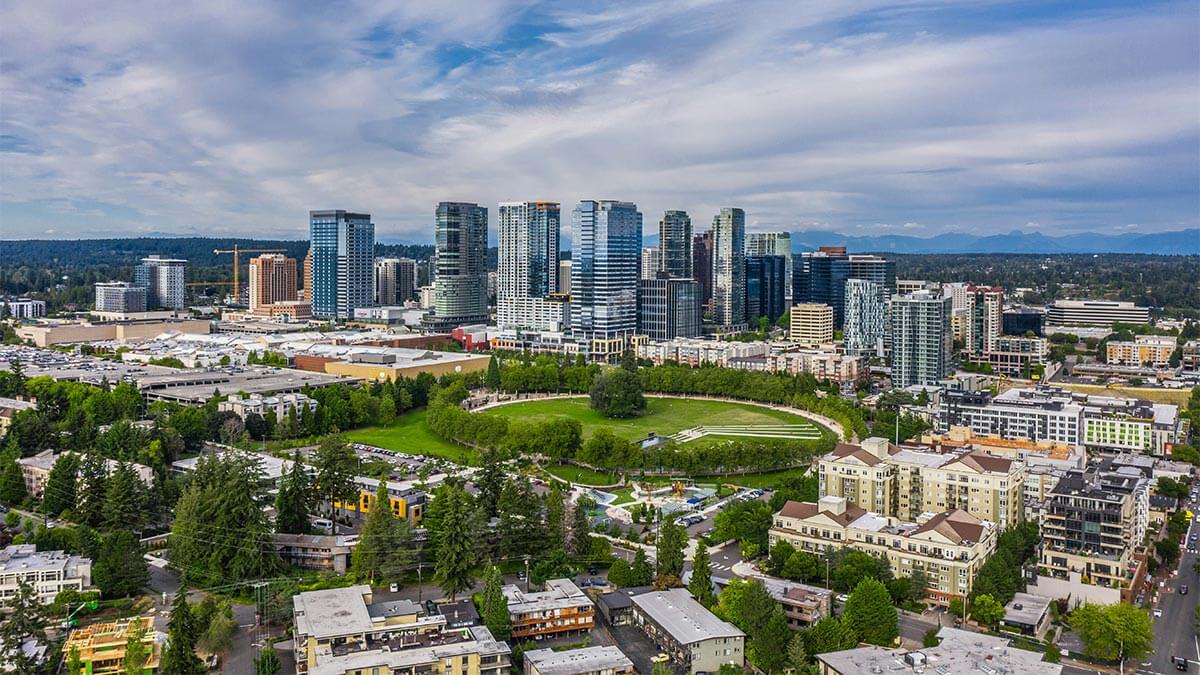
- 2. Bellevue: Best for High-Earning Professionals and Premium Eastside Living
- 3. Spokane: Best for Affordability and Balanced City Living
- 4. Vancouver: Best for Portland Access and Southwest Washington Living
- 5. Olympia: Best for Government Careers and Smaller-City Stability
- 6. Bellingham: Best for Outdoor and College-Town Lifestyle
- 7. Tacoma: Best for Puget Sound Value
- 8. Richland: Best for STEM Careers and Sunshine
- 9. Redmond: Best for Tech Professionals
- 10. Sammamish: Best for High-Budget Eastside Suburban Living
- Cost of Living in Washington State: What to Expect
- Best Places to Live in Washington by Lifestyle
- Pros and Cons of Living in Washington State
- How to Choose the Best Place to Live in Washington
- Final Thoughts on the Best Places to Live in Washington State
- Frequently Asked Questions
Why Washington Is One of the Best States to Live In
Washington offers one of the West Coast’s most diverse combinations of employment, outdoor recreation, urban living, and regional lifestyles.
The Seattle metro is a major center for technology, healthcare, aerospace, professional services, finance, and corporate employment. Bellevue and Redmond add major Eastside technology and business hubs, while Tacoma, Olympia, Spokane, and Richland support strong regional economies of their own.
Washington also offers substantial lifestyle variety. Residents can choose between Puget Sound cities, Eastside suburbs, college towns, Columbia River communities, Eastern Washington cities, and smaller mountain or coastal markets.
Outdoor recreation is another major advantage. Hiking, skiing, boating, fishing, mountain biking, lakes, national parks, the Cascade Mountains, Puget Sound, and the Columbia River are accessible from many parts of the state.
Washington’s population reached approximately 8,001,020 in July 2025, up about 3.8% from the 2020 estimates base, according to the U.S. Census Bureau.
The biggest tradeoffs are housing costs, high sales taxes, congestion around major employment centers, gray winters in Western Washington, and wildfire or smoke exposure in parts of Eastern Washington.
Key Factors to Consider Before Moving to Washington
Housing Costs
Washington remains expensive at the statewide level.
Current Washington housing market data shows:
- Median listing price: $649,950
- Median sold price: $613,637
- Median rent: $2,120 per month
- Median days on market: 50 days
- Active listings: 55,253
- Active inventory: up 12.73% year over year
Washington’s statewide market is currently more balanced than during tighter recent years.
That gives buyers more inventory and slightly more negotiating room.
The local differences are substantial:
- Spokane: $449,950
- Richland: $544,200
- Tacoma: $549,488
- Vancouver: $561,950
- Olympia: $607,495
- Bellingham: $677,225
- Seattle: $749,975
- Redmond: $1,292,000
- Bellevue: $1,585,749
- Sammamish: $1,698,400
Buyers should therefore compare local markets rather than assume all of Western Washington or all of Eastern Washington has one price level.
Transaction expenses matter too. Typical buyer closing costs in Washington generally range from about 2% to 5% of the purchase price, depending on financing, taxes, insurance, escrow, and negotiated credits.
Job Market
Washington’s unemployment rate was 5.0% in July 2026, according to the Washington Employment Security Department.
The statewide number is useful context, but local job markets differ considerably.
Seattle, Bellevue, and Redmond are strongest for technology, healthcare, professional services, aerospace-related employment, and corporate careers.
Tacoma benefits from healthcare, logistics, port activity, and regional services.
Olympia is anchored by state government and healthcare.
Spokane has a diversified regional economy built around healthcare, education, manufacturing, and services.
Richland stands out for research, engineering, energy, and Hanford-related employment.
Taxes
Washington’s tax structure is often misunderstood.
The state does not impose a traditional individual income tax on wages or salaries, but that does not mean residents pay low taxes overall.
Current Washington tax data shows:
- State sales tax: 6.50%
- Average combined state and local sales tax: approximately 9.51%
- Effective property-tax rate: about 0.75%
- Certain long-term capital gains can be subject to Washington’s capital gains excise tax
- Washington has an estate tax
For Vancouver residents, tax treatment can become more complicated if they physically work in Oregon.
Climate
Washington’s climate depends heavily on which side of the Cascades you live on.
Western Washington tends to have:
- Wetter winters
- Mild temperatures
- Cooler summers
- More cloud cover
Eastern Washington tends to have:
- More sunshine
- Hotter summers
- Colder winters
- Greater wildfire and smoke exposure
Climate risk also varies by location. Buyers should consider earthquake, landslide, wildfire, flooding, smoke, heat, and snow exposure when comparing properties.
A professional home inspection in Washington typically costs around $400 to $700 for a standard single-family home, with larger or more complex properties costing more.
Western vs. Eastern Washington
The choice between Western and Eastern Washington can matter as much as the choice between individual cities.
| Factor | Western Washington | Eastern Washington |
|---|---|---|
| Housing | Generally higher | Generally lower |
| Jobs | Larger metro economies | Regional industries |
| Climate | Wetter and milder | Drier with hotter summers |
| Transit | Better around Seattle | More car-dependent |
| Lifestyle | Puget Sound + Cascades | Rivers + open land |
| Main risks | Earthquake, landslide, flooding | Wildfire, smoke, heat |
Western Washington provides the state’s largest employment markets and more transit options but also carries the highest housing costs.
Eastern Washington offers more sunshine and generally lower home prices, but households rely more heavily on cars and may face hotter summers, colder winters, and wildfire smoke.
10 Best Places to Live in Washington State
| City | Best For | Median Listing Price | Cost Level | Job Market | Lifestyle |
|---|---|---|---|---|---|
| Seattle | Best overall | $749,975 | High | Diverse metro economy | Urban |
| Bellevue | Premium careers | $1,585,749 | Premium | Tech + corporate | Urban-suburban |
| Spokane | Affordability | $449,950 | Moderate | Healthcare + education | Regional city |
| Vancouver | Portland access | $561,950 | Moderate | Portland metro + services | Southwest WA |
| Olympia | Government careers | $607,495 | Moderate/high | Government + healthcare | Smaller city |
| Bellingham | Outdoors + college | $677,225 | High | Education + healthcare | College/outdoor |
| Tacoma | Puget Sound value | $549,488 | Moderate | Healthcare + logistics | Urban |
| Richland | STEM careers | $544,200 | Moderate | Research + energy | Eastern WA |
| Redmond | Technology | $1,292,000 | Premium | Technology | Eastside |
| Sammamish | Premium suburb | $1,698,400 | Luxury | Eastside access | Suburban |
Prices are approximate 2026 median listing prices. Listing prices represent asking prices rather than completed sale prices.
1. Seattle: Best Overall for Careers and Urban Living
Best for: Careers, young professionals, culture, transit, and city amenities
Seattle is our best overall choice because it offers Washington’s broadest combination of employment and urban amenities.
Technology, healthcare, aerospace-related employment, finance, professional services, and corporate employers support the local economy.
Residents also have restaurants, sports, museums, music, public transportation, parks, waterfront access, and Seattle-Tacoma International Airport.
The current median listing price is approximately $749,975, while median asking rent is around $2,500 per month.
Seattle remains expensive, but it is currently much cheaper at the median listing level than Bellevue, Redmond, or Sammamish.
The main tradeoffs are housing costs and commuting.
For buyers who value career opportunities and urban amenities more than suburban space, Seattle remains the strongest overall choice.
2. Bellevue: Best for High-Earning Professionals and Premium Eastside Living
Best for: Technology, corporate careers, and premium urban-suburban living
Bellevue is one of Washington’s strongest employment centers outside Seattle.
Technology companies, corporate offices, professional services, and Eastside employers support a high-income local economy.
Residents also have restaurants, shopping, parks, and convenient access to Seattle and Redmond.
The current median listing price is approximately $1,585,749, while median asking rent is around $2,950 per month.
That makes Bellevue one of the most expensive markets in the state.
Its appeal comes from employment and location, not affordability.
Bellevue works best for high-earning households that specifically want Eastside access and can comfortably support the housing premium.
3. Spokane: Best for Affordability and Balanced City Living
Best for: Buyers seeking a larger city at a lower price
Spokane provides one of Washington’s strongest combinations of city amenities and relative affordability.
Healthcare, education, manufacturing, business services, and regional employers support the local economy.
The city also offers restaurants, parks, outdoor recreation, and access to lakes and mountains.
The current median listing price is approximately $449,950, while median asking rent is around $1,350 per month.
That gives Spokane the lowest median listing price among our top 10.
Its main tradeoff is employment scale.
Spokane cannot match Seattle’s technology and corporate economy, but for buyers whose careers fit the regional market, it offers significantly more housing for the money.
4. Vancouver: Best for Portland Access and Southwest Washington Living
Best for: Buyers who want Portland metro access while living in Washington
Vancouver sits across the Columbia River from Portland and provides access to employment and amenities on both sides of the state line.
Healthcare, professional services, retail, construction, and regional employment support the local economy.
Residents also benefit from Columbia River recreation and access to Southwest Washington outdoor areas.
The current median listing price is approximately $561,950, while median asking rent is around $1,800 per month.
Washington does not tax wages through a traditional individual income tax, but buyers should not assume that automatically eliminates income-tax obligations. People physically working in Oregon may still owe Oregon income tax.
The main tradeoffs are cross-state commuting, traffic, and tax complexity.
5. Olympia: Best for Government Careers and Smaller-City Stability
Best for: Government employees, healthcare workers, and smaller-city living
Olympia is Washington’s capital and has a local economy heavily influenced by state government.
Healthcare, education, professional services, and regional employers add to the employment base.
The city also offers Puget Sound access, parks, restaurants, and a smaller-scale environment than Seattle or Tacoma.
The current median listing price is approximately $607,495, with median asking rent around $2,250 per month.
Olympia costs less than Seattle or the Eastside but is not a low-cost housing market.
Its strongest appeal is employment stability and a smaller-city lifestyle within Western Washington.
6. Bellingham: Best for Outdoor and College-Town Lifestyle
Best for: University life, outdoor recreation, and lifestyle-focused buyers
Bellingham combines a college-town environment with unusually strong access to outdoor recreation.
Western Washington University is a major presence, while healthcare, education, tourism, professional services, and regional employers support the economy.
Residents have access to Puget Sound, Mount Baker, hiking, skiing, biking, and relatively easy travel to Vancouver, British Columbia.
The current median listing price is approximately $677,225, with median asking rent around $1,745 per month.
Housing is the main drawback.
Bellingham sits above Washington’s statewide median listing price despite having a much smaller employment base than Seattle.
It works best for buyers who prioritize lifestyle and outdoor access over maximizing housing value.
7. Tacoma: Best for Puget Sound Value
Best for: Buyers seeking Puget Sound access below Seattle and Eastside prices
Tacoma provides one of the stronger relative-value options in Western Washington.
Healthcare, port activity, logistics, government, regional services, and education support the local economy.
The city also offers museums, restaurants, arts, waterfront areas, and access to Seattle and the broader Puget Sound region.
The current median listing price is approximately $549,488, while median asking rent is around $1,800 per month.
That makes Tacoma substantially less expensive than Seattle, Bellevue, Redmond, or Sammamish.
It is still expensive compared with many U.S. cities, so it should be considered relative Puget Sound value, not cheap housing.
8. Richland: Best for STEM Careers and Sunshine
Best for: Research, engineering, energy, and Eastern Washington living
Richland offers a different employment profile from most of the cities on this list.
Pacific Northwest National Laboratory and Hanford-related activity support jobs in research, engineering, science, energy, and technology.
Healthcare and other Tri-Cities employers add to the regional economy.
The current median listing price is approximately $544,200.
Richland also provides more sunshine than Western Washington, access to the Columbia River, and a generally drier climate.
The main tradeoffs are hotter summers, more car dependence, and a smaller metropolitan environment.
For professionals in science, engineering, energy, or research, Richland is one of Washington’s strongest specialized career markets.
9. Redmond: Best for Tech Professionals
Best for: Technology careers
Redmond is one of Washington’s most important technology centers.
Microsoft is a major employer, while the broader Eastside economy includes additional technology, software, professional-services, and corporate jobs.
The city also has trails, parks, downtown development, and improving regional transit connections.
The current median listing price is approximately $1,292,000, while median asking rent is around $2,570 per month.
Housing is the major tradeoff.
Redmond makes the most sense for higher-income households whose careers benefit directly from Eastside technology employment.
For buyers outside the tech sector, the housing premium can be difficult to justify compared with other Washington markets.
10. Sammamish: Best for High-Budget Eastside Suburban Living
Best for: Higher-budget households seeking an Eastside suburban environment
Sammamish offers a residential environment with parks, larger homes, outdoor recreation, and access to employment throughout the Eastside.
The current median listing price is approximately $1,698,400, while median asking rent is around $2,850 per month.
That makes Sammamish the most expensive housing market among our top 10.
Its value comes from its suburban location and Eastside access rather than affordability.
Buyers should compare commute requirements, home size, transportation, and total ownership costs carefully before deciding whether the premium fits their priorities.
Cost of Living in Washington State: What to Expect
Housing creates the largest difference between Washington communities.
| Place | Approx. Median Listing Price |
|---|---|
| Sammamish | $1,698,400 |
| Bellevue | $1,585,749 |
| Redmond | $1,292,000 |
| Seattle | $749,975 |
| Bellingham | $677,225 |
| Olympia | $607,495 |
| Vancouver | $561,950 |
| Tacoma | $549,488 |
| Richland | $544,200 |
| Spokane | $449,950 |
Washington’s statewide median listing price is approximately $649,950.
The contrast is enormous. Sammamish’s median listing price is more than $1.2 million higher than Spokane’s.
Taxes also affect affordability.
Washington does not tax wages through a traditional individual income tax, but high state and local sales taxes increase everyday spending.
Transportation costs are another major variable.
Seattle-area households may pay for parking, tolls, transit, and long commutes, while Eastern Washington households generally rely more heavily on cars.
Utilities also vary by climate. Western Washington households may focus more on heating, moisture, and winter conditions, while Eastern Washington residents may face higher summer cooling needs and wildfire-smoke considerations.
Financed buyers should also budget for valuation. A home appraisal in Washington is typically required by lenders and varies with property type, location, and complexity.
Best Places to Live in Washington by Lifestyle
| Priority | Best Options |
|---|---|
| Best overall | Seattle |
| Tech careers | Bellevue, Redmond |
| More affordable large-city living | Spokane |
| Puget Sound relative value | Tacoma |
| Portland access | Vancouver |
| Government careers | Olympia |
| Outdoor + college lifestyle | Bellingham |
| STEM + sunshine | Richland |
| Premium suburban living | Sammamish |
| Young professionals | Seattle, Bellevue, Spokane |
| Lower-cost alternatives | Spokane, Kennewick, Yakima |
| Retirement | Olympia, Richland, Spokane |
Seattle is the strongest choice for buyers who prioritize career opportunities and urban amenities.
Higher-income technology workers may prefer Bellevue or Redmond, while households seeking more space and relative affordability should compare Spokane, Tacoma, Vancouver, and Richland.
Kennewick and Yakima also deserve consideration for buyers seeking lower-cost alternatives outside the main top 10.
Pros and Cons of Living in Washington State
Pros
- Major technology industry
- Strong healthcare and aerospace sectors
- Extensive outdoor recreation
- No traditional individual income tax on wages
- Growing population
- Large and diverse regional economies
- Mountains, coastline, lakes, rivers, and Puget Sound
- Eastern Washington provides lower prices than premium Eastside markets
- Strong STEM and research employment in several regions
Cons
- High statewide housing costs
- Extremely expensive Eastside markets
- High sales taxes
- Seattle-area traffic and commuting
- Gray Western Washington winters
- Wildfire and smoke risk east of the Cascades
- Earthquake and landslide exposure in some areas
- Large regional cost differences
- Softer statewide labor-market conditions in 2026
How to Choose the Best Place to Live in Washington
Start with your housing budget. Before deciding whether to sell, estimate transaction expenses. Washington seller closing costs typically include commissions, title and escrow charges, REET, prorated taxes, and other negotiated costs.
Higher-budget buyers can consider Sammamish, Bellevue, and Redmond.
Seattle and Bellingham remain expensive but sit below the Eastside premium markets.
Olympia, Vancouver, Tacoma, and Richland occupy a more moderate range within this top 10, while Spokane offers the lowest median listing price.
Next, match the city to your career.
Seattle is strongest for technology, healthcare, aerospace, finance, and professional services.
Bellevue and Redmond are particularly strong for technology and corporate employment.
Olympia makes sense for government careers, while Tacoma is strong in healthcare and logistics.
Richland stands out for research, energy, engineering, and science.
Spokane combines healthcare, education, manufacturing, and regional services.
Then decide whether Western or Eastern Washington fits your lifestyle.
Western Washington provides stronger metro employment, Puget Sound access, and better transit, but also higher housing prices and wetter winters.
Eastern Washington generally offers more sunshine and lower housing prices but more car dependence, hotter summers, and greater wildfire-smoke exposure.
If you’re moving from a Washington property you already own, late spring through early summer is generally the best time to sell a house in Washington.
Homeowners prioritizing speed can also compare cash home buyers in Washington.
Final Thoughts on the Best Places to Live in Washington State
The best place to live in Washington depends on housing budget, career, preferred climate, and whether Western or Eastern Washington better fits your lifestyle.
Seattle is our best overall choice for careers and urban amenities, while Bellevue and Redmond are strong premium options for technology professionals. Sammamish provides high-budget Eastside suburban living at the highest median listing price in our top 10.
For lower housing costs, Spokane is the clearest large-city value choice. Tacoma and Vancouver provide relative Western Washington value, while Richland combines STEM employment with a sunnier Eastern Washington climate.
Olympia stands out for government careers, and Bellingham works best for buyers prioritizing outdoor recreation and a college-town lifestyle.
Washington offers exceptional economic and lifestyle diversity, but its housing markets vary dramatically. Compare home prices, employment, taxes, climate, transportation, and regional risks before choosing where to move.
Compare Cash Offers from Top Home Buyers. Delivered by Your Local iBuyer Certified Specialist.
One Expert, Multiple Offers, No Obligation.
Know Your Local Market Before You List
Pull the last 12 months of real sales and buyer activity for your neighborhood.
Get My Market ReportFrequently Asked Questions
Seattle is our best overall choice because it combines Washington’s broadest employment market with restaurants, transit, culture, sports, healthcare, and major urban amenities. The current median listing price is approximately $749,975.
Spokane has the lowest median listing price among our top 10 at approximately $449,950. It also offers healthcare, education, regional employment, city amenities, and lower housing costs than Western Washington’s major markets.
Yes. Seattle offers strong employment in technology, healthcare, aerospace-related industries, professional services, and finance, along with restaurants, culture, sports, transit, and waterfront access. Housing and commuting costs are the main tradeoffs.
Bellevue can be a strong choice for high-income professionals seeking Eastside technology and corporate employment. The main drawback is housing, with a current median listing price of approximately $1,585,749.
Sammamish, Bellevue, Redmond, Olympia, Vancouver, and other Washington communities are worth considering depending on housing budget, employment, commute, parks, healthcare, services, and the specific schools important to the household.
Seattle offers the broadest combination of jobs, entertainment, restaurants, and transit. Bellevue and Redmond are especially attractive for technology professionals, while Spokane provides a lower-cost alternative with a diversified regional economy.
Olympia, Richland, and Spokane can be practical retirement choices depending on budget and preferred climate. Olympia offers Western Washington amenities, Richland provides more sunshine, and Spokane combines healthcare access with lower housing costs than the Seattle area.
Washington is relatively expensive overall, with a statewide median listing price of approximately $649,950. Costs vary significantly, however, from around $449,950 in Spokane to nearly $1.7 million in Sammamish.
Spokane, Tacoma, Vancouver, and Richland all have lower median listing prices than Seattle. Spokane offers the lowest price among our top 10, while Tacoma provides relative Puget Sound value and Vancouver offers Portland metro access.
Washington does not impose a traditional individual income tax on wages or salaries. However, residents face relatively high state and local sales taxes, and certain long-term capital gains can be subject to Washington’s capital gains excise tax.
It can be if Washington’s technology and healthcare economy, outdoor recreation, regional diversity, and lifestyle fit your priorities. Housing costs, taxes, commute, climate, wildfire exposure, and local job opportunities should all factor into the decision.

Reilly Dzurick is a licensed real estate agent with over six years of experience and a member of the iBuyer.com Market Insights Team, covering national trends in home selling and the evolving iBuyer landscape. Her firsthand experience working with buyers and sellers gives her a practical perspective on how these platforms impact real homeowners. She holds a degree in Public Relations, Advertising, and Applied Communication.