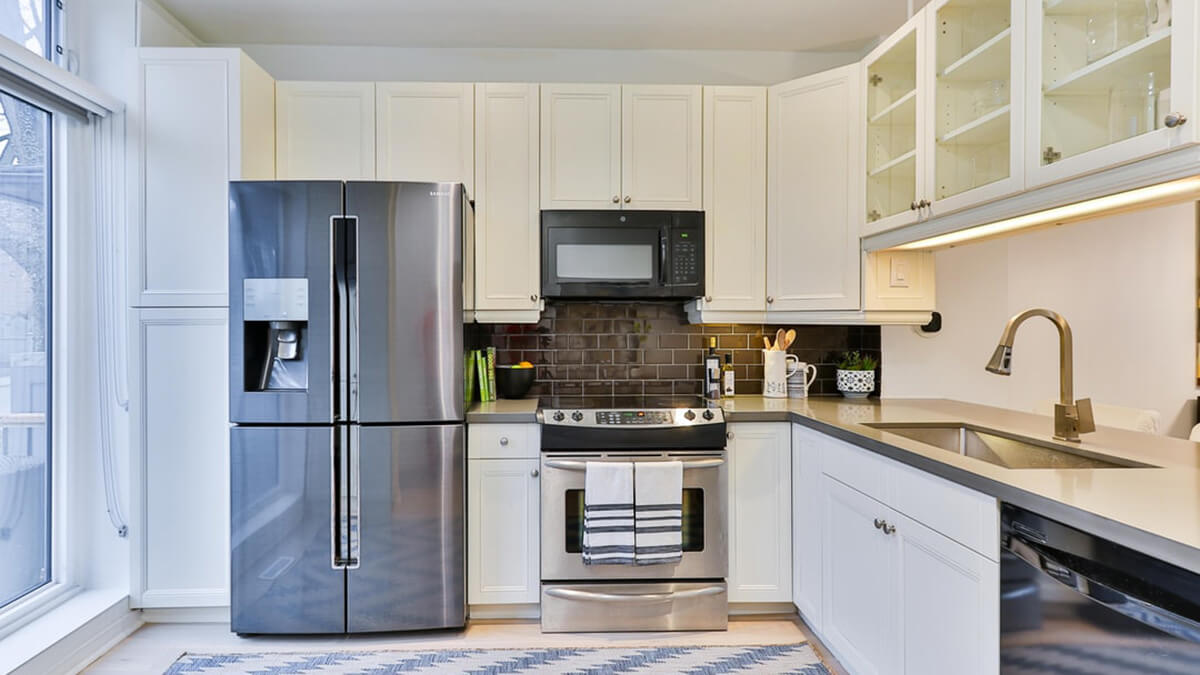
New appliances do not raise a home’s appraised value by a large margin, but they reliably increase what buyers offer and how quickly those offers arrive. Industry experts estimate that updated kitchen appliances lift a home’s perceived value by 3% to 7%, translating to $12,000 to $28,000 on a $400,000 home. Sellers typically recoup 60% to 80% of appliance cost at closing, and highly energy-efficient models can push that figure close to 100%.
The gap between appraised value and market value is the distinction most sellers miss. Formal appraisers weigh location, square footage, and comparable sales far above appliance condition. Buyers respond to what they see on a walkthrough. Those are two different calculations, and understanding both determines whether a pre-listing upgrade is worth the investment.
This guide covers the appraised-value vs. market-value distinction, how much value specific appliances add at different home price points, which appliances deliver the strongest ROI, the 50/50 replacement rule for sellers deciding whether to repair or replace, and what factors actually devalue a house most.
Table of contents
Instant Valuation, Confidential Deals with a Certified iBuyer.com Specialist.
Sell Smart, Sell Fast, Get Sold. No Obligations.
Do new appliances increase home value?
New appliances increase market value more than appraised value. That distinction is the starting point for any pre-listing upgrade decision.
Appraised value vs. market value: the key distinction
Appraised value is the number a licensed appraiser assigns based on square footage, location, condition, and recent comparable sales. Appraisers do note appliance condition, but the adjustment they make is modest compared to structural improvements. A brand-new range does not move the needle the way an added bathroom or finished basement does.
Market value is what a willing buyer offers on listing day. Buyers respond emotionally and practically to what they see in a kitchen. According to Consumer Reports kitchen data, making changes such as new appliances, flooring, or countertops can increase a kitchen’s perceived value by 3% to 7%.
| Impact Area | Effect on the Transaction |
|---|---|
| Formal appraisal | Minimal; appraisers weight location, square footage, and comparable sales far above appliance condition |
| Buyer offers and speed of sale | Meaningful; updated appliances signal move-in readiness and trigger the halo effect in buyer perception |
Based on Consumer Reports and NAR data. Verify appraised-value adjustments with a licensed appraiser before committing to upgrades.
On a $250,000 home, a 3% to 7% increase equals $7,500 to $17,500 in perceived value. On a $400,000 home, the same percentages translate to $12,000 to $28,000. These figures reflect buyer behavior and offer prices, not what an appraiser records.
The halo effect: what buyers assume
The halo effect is the psychological shortcut buyers use when they see new, matching appliances in a kitchen. It operates through three mechanisms:
- Maintenance inference. Buyers assume that if the appliances are current, the rest of the home has been well-maintained. The inference is not always accurate, but it shapes offers.
- Move-in readiness. Buyers already stretched by closing costs and moving expenses are relieved to skip replacing a refrigerator or range on day one. That relief has real dollar value.
- Faster sales. Homes with updated kitchens tend to sell faster than comparable homes with older finishes. More than 80% of buyers rank the kitchen as their top priority, per NAR research. Reviewing local days-on-market data helps you gauge how much that speed advantage translates to negotiating leverage in your specific market.
How much value do new appliances add?
The value new appliances add depends on your home’s price point and the appliance tier you choose. The table below applies the 3% to 7% industry consensus range to five common price points.
Dollar-amount impact at different home price points
| Home Price | 3% Boost | 7% Boost |
|---|---|---|
| $200,000 | $6,000 | $14,000 |
| $300,000 | $9,000 | $21,000 |
| $400,000 | $12,000 | $28,000 |
| $500,000 | $15,000 | $35,000 |
| $600,000 | $18,000 | $42,000 |
Estimated perceived value increase based on the 3% to 7% industry consensus range. These figures reflect buyer behavior and offer prices, not formal appraised value. Actual results vary by market, home condition, and appliance selection.
A full appliance package covering a refrigerator, range, and dishwasher typically costs $2,000 to $10,000 or more. Homes with new appliances command an average 2.2% price premium in closed transaction data, per Zillow research on sale prices. That 2.2% figure is narrower than the 3% to 7% perceived range, but it reflects what buyers actually paid rather than estimated sentiment.
ROI range: 60% to 100% of appliance cost
Return on investment varies by appliance tier:
- Standard appliances ($500 to $1,500 per unit): Sellers typically recoup 60% to 80% of cost. A $3,000 standard package returns roughly $1,800 to $2,400 in additional sale price.
- Mid-range energy-efficient models: ROI climbs toward 80% to 90%. Minor kitchen renovations that include new appliances return approximately 82% on average, per NAR’s remodeling impact report.
- Premium Energy Star certified models: ROI can approach 100% in markets where eco-conscious buyers compete for limited inventory.
When energy-efficient models reach near-100% ROI
Premium Energy Star appliances earn the highest returns when two conditions are met: the neighborhood’s price bracket supports the upgrade cost, and the buyer pool includes purchasers who factor utility savings into their offers. In entry-level markets, this premium is harder to capture because buyers focus primarily on total purchase price rather than monthly operating costs.
Which appliances add the most value when selling?
The refrigerator and range carry the most buyer weight because they are the visual focal points of any kitchen. The table below compares buyer impact, typical cost, and expected ROI across five appliance categories.
| Appliance | Buyer Impact | Typical Cost Range | Expected ROI |
|---|---|---|---|
| Refrigerator | High | $800 to $2,500 | 70% to 90% |
| Range / Oven | High | $700 to $2,000 | 65% to 85% |
| Dishwasher | Medium-High | $400 to $1,200 | 60% to 80% |
| Washer / Dryer | Medium | $600 to $1,800 (pair) | 50% to 70% |
| Microwave / Disposal | Low-Medium | $150 to $500 | 40% to 60% |
Cost and ROI figures are industry consensus estimates. Results vary by market, home price point, and brand selection. Confirm with a local agent before purchasing.
Refrigerator and range: the visual anchors
The refrigerator and range are the two appliances buyers interact with directly during a showing. They open the fridge door, check the burner layout, and take note of whether finishes match. According to Zillow price data, homes with updated kitchens earn measurable sale price premiums in transaction data, driven largely by the condition of these two appliances.
Stainless steel is the finish buyers expect at entry-to-mid-level price points. Sellers who choose stainless for both the refrigerator and range make the lowest-risk appliance investment for broad buyer appeal.
Dishwasher: the move-in-ready signal
A new dishwasher tells buyers they do not need to budget for one after close. That move-in-ready signal matters most to first-time buyers already stretched by closing costs and moving expenses. At $400 to $800 installed, a new dishwasher is typically the lowest-cost kitchen upgrade with the most outsized perception effect.
Washer and dryer: secondary value drivers
Washers and dryers add value when they are in a dedicated laundry room and when the pair matches visually. In-unit laundry is a strong differentiator in markets where many competing listings lack it. ROI is lower than kitchen appliances because buyers spend less time evaluating the laundry area during a brief showing.
Finish and color: why stainless steel still dominates
Stainless steel remains the expected finish across most U.S. markets. Matching finishes across all visible kitchen appliances reinforce the halo effect. A stainless refrigerator paired with a black range sends a mixed signal: buyers notice the inconsistency and discount the kitchen’s overall quality in their offer calculation.
High-end vs. standard appliances: ROI compared
Not every kitchen benefits equally from a premium upgrade. The return depends on the neighborhood’s price bracket and the buyer profile most likely to make an offer.
| Feature | Standard ($500 to $1,500/unit) | High-End ($2,000 to $5,000+/unit) |
|---|---|---|
| Expected ROI | 60% to 80% | 70% to 100% (in qualifying markets) |
| Best-fit home price range | $150,000 to $450,000 | $500,000 and above |
| Buyer appeal level | Broad; applies to most buyer segments | Targeted; eco-conscious and luxury buyers |
| Over-improvement risk | Low | High in entry-level and mid-range markets |
Estimates based on industry consensus. Verify with a local agent and review comparable sales before investing in high-end models.
When luxury appliances make sense
Luxury appliances, including professional-grade ranges, built-in refrigerators, and models with Energy Star certifications, make financial sense when two conditions are met. First, the home’s price point and neighborhood comps support a high sale price. Second, the buyer pool actively searches for premium finishes and assigns value to lower utility costs.
In competitive luxury markets, premium Energy Star models can approach 100% ROI because eco-conscious buyers assign direct value to energy savings. Smart and Wi-Fi-enabled appliances earn additional premiums in higher-priced markets where tech-forward buyers compete for limited inventory.
When standard appliances are the smarter bet
For homes priced under $450,000, standard stainless appliances in good condition deliver the best cost-to-return ratio. A $3,000 standard appliance package in an entry-level home is more likely to recoup 70% to 80% than a $12,000 luxury package that outpaces the neighborhood’s comparable sales. Ultra-luxury appliances in an entry-level home can also make the property harder to sell if the resulting price moves above what comparable homes in the area support.
The neighborhood ceiling test
Before committing to any appliance upgrade, review recent comparable sales within a half-mile. If the highest-priced comps do not feature premium kitchens, installing one will not push your sale price above those comps. Appraisers use the same comps to set value ceilings. Upgrades should match the neighborhood’s price bracket, not exceed it.
What is the 50/50 rule for appliances?
The 50/50 rule is a repair-or-replace decision framework. Replace an appliance when it has passed more than 50% of its expected lifespan AND the repair cost exceeds 50% of the price of a comparable new unit. Both conditions must be true.
One clarification: the term “50% rule” also appears in real estate investing, where it describes an estimate that half of gross rental income covers operating expenses. That is a separate and unrelated concept. The 50/50 rule here applies to individual appliance repair decisions.
The two conditions that trigger replacement
According to appliance lifespan benchmarks, both conditions must apply before replacement is the right call:
- Age condition: The appliance has passed more than 50% of its expected lifespan.
- Cost condition: The repair quote exceeds 50% of the price of a comparable new unit.
| Appliance | Typical Lifespan |
|---|---|
| Refrigerator | 10 to 15 years |
| Range / Oven | 10 to 15 years |
| Dishwasher | 7 to 12 years |
| Washer / Dryer | 10 to 13 years |
| Microwave | 7 to 10 years |
Based on industry benchmark data. Individual lifespans vary by brand, usage, and maintenance history.
Dollar-amount example: A dishwasher is 7 years into a 10-year expected lifespan (70% through its life). A repair quote comes in at $400, and a comparable new unit costs $700. The repair cost is 57% of the new unit price. Both conditions are met: replace it before listing.
Applying the rule before you list
Running the 50/50 test on each major appliance before listing is a practical pre-listing step. If both conditions are met, replacing is smarter than repairing because a new unit adds buyer appeal while a repaired older appliance still reads as aged during a showing. If only one condition applies, repairing is usually the better financial decision.
For a broader set of home sale prep tips, including how to allocate pre-listing budget across appliances, cosmetic fixes, and deferred maintenance, a structured checklist helps you spend where the return is highest.
What devalues a house the most?
New appliances add marginal value; structural and mechanical problems subtract meaningful value. Knowing both sides of the equation helps you allocate pre-listing dollars in the right order.
Structural and mechanical failures: the deal-killers
The problems that most consistently devalue a home are the ones buyers cannot ignore and lenders may refuse to finance:
- Foundation issues. Cracks, settling, or water intrusion can reduce a home’s value by 10% to 15% and may disqualify the property from conventional financing altogether.
- Roof age and damage. A roof near or past its useful life signals immediate replacement cost to every buyer. Most factor the full replacement price ($8,000 to $25,000 depending on size and material) directly into their offer.
- Outdated electrical systems. Knob-and-tube or aluminum wiring can disqualify a home from certain loan products and raise homeowner’s insurance costs for the buyer.
- HVAC system age. A furnace or air conditioning unit within five years of end-of-life becomes a negotiation point in nearly every transaction.
- Water damage and mold. Evidence of past or active moisture intrusion triggers immediate buyer concern, inspection demands, and sometimes deal termination.
None of these problems are offset by a new refrigerator. Sellers who address structural issues before cosmetic upgrades protect far more of their final sale price.
Deferred maintenance vs. cosmetic issues
Deferred maintenance, including peeling paint, broken gutters, and cracked caulking, signals to buyers that the home has not been cared for. That signal compounds: if the gutters are failing, buyers assume the roof may be failing too. Cosmetic issues like dated tile or worn carpet reduce appeal but rarely trigger the same anxiety response.
Sellers evaluating where to put pre-listing dollars should address deferred maintenance before appliance upgrades. Functioning gutters and fresh exterior caulk cost far less than a new appliance package and remove the red-flag inferences buyers make during a walkthrough.
Sell without making any upgrades
If the appliance upgrade calculation feels uncertain, there is a direct alternative. Sellers who receive competing cash offers through iBuyer.com close on their home as-is, with no pre-listing improvements required. The $2,000 to $10,000 a new appliance package costs stays in your pocket, and you avoid the 60% to 80% recoupment gamble entirely. Compare cash home buyers to find which companies serve your market and what offer timelines look like before deciding how much to invest before listing.
Compare Cash Offers from Top Home Buyers. Delivered by Your Local iBuyer Certified Specialist.
One Expert, Multiple Offers, No Obligation.
Know Your Local Market Before You List
Pull the last 12 months of real sales and buyer activity for your neighborhood.
Get My Market ReportFrequently Asked Questions
New appliances can boost perceived home value by 3% to 7%, and sellers typically recoup 60% to 80% of cost, though formal appraisals rarely reflect the full gain. The impact is strongest on buyer offers and days on market rather than the appraiser’s report.
Replace an appliance when it exceeds 50% of its expected lifespan and the repair cost tops 50% of a comparable new unit’s price. Both conditions must be true before replacement is the financially sound call.
The refrigerator and range add the most value because they are the visual focal points buyers evaluate first in any kitchen showing. Matching stainless finishes across both amplify the halo effect.
On a $300,000 home, updated appliances may add $9,000 to $21,000 in perceived buyer value. On a $500,000 home, the same 3% to 7% range equals $15,000 to $35,000.
New appliances have a minimal effect on formal appraisals; appraisers weigh location, square footage, and comparable sales far more heavily than appliance condition. The bigger effect is on buyer willingness to offer and speed of sale.
Standard appliances typically return 60% to 80% of their cost in added sale price. Premium Energy Star models can approach 100% ROI in markets where eco-conscious buyers compete for limited inventory.
High-end appliances improve perceived value in luxury markets but are hard to recoup in entry-to-mid-range homes where they push the price above comparable sales. The neighborhood ceiling test is the key check before investing.
Replace appliances that fail the 50/50 test or look visibly dated; in other cases, thorough cleaning and minor repairs typically produce the same buyer impression at a fraction of the cost.
Stainless steel is the finish buyers expect in most U.S. markets, and matching stainless appliances across the kitchen reinforce the halo effect and signal that the home is well-maintained.
Foundation problems, roof damage, and outdated electrical or HVAC systems devalue a house most by creating financing barriers and signaling large immediate costs to buyers. None of these problems are offset by new appliances.
A minor kitchen remodel with updated appliances, a bathroom refresh, curb appeal improvements, and deferred maintenance repairs typically deliver the strongest cumulative return toward a $50,000 value gain. The combination works because each element removes a different buyer objection.
Kitchen renovations, structural improvements, and square footage additions increase home value most consistently. Minor kitchen remodels return roughly 82% ROI on average per NAR data, making the kitchen the highest-return interior investment for most sellers.
A new refrigerator adds buyer appeal and contributes to the halo effect, but its standalone impact on formal appraised value is small. Pairing it with a matching range and dishwasher amplifies the combined perception effect meaningfully.

Reilly Dzurick is a licensed real estate agent with over six years of experience and a member of the iBuyer.com Market Insights Team, covering national trends in home selling and the evolving iBuyer landscape. Her firsthand experience working with buyers and sellers gives her a practical perspective on how these platforms impact real homeowners. She holds a degree in Public Relations, Advertising, and Applied Communication.