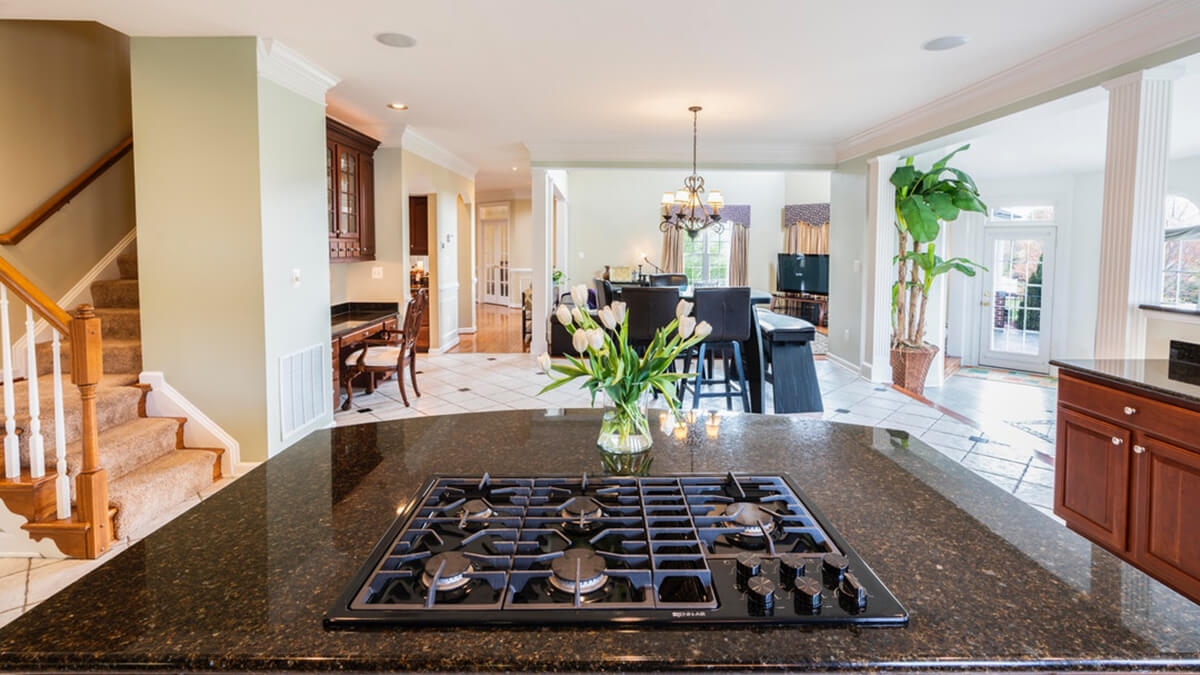
To prepare your house for sale, follow six core steps in order: schedule a pre-listing inspection, declutter and depersonalize, deep clean, make high-ROI minor repairs, boost curb appeal, and stage for professional photography. Most homes need 4 to 6 weeks to complete this process. Homes that skip or rush these steps typically spend more days on market and net less after price reductions and seller concessions eat into the final proceeds.
On a $300,000 home, preparation costs run $1,000 to $10,000, and agent commissions add another $15,000 to $18,000 on top. Knowing which steps pay for themselves and which are money sinks determines how much you actually walk away with.
This guide covers how to prepare your home for sale with a complete home selling checklist organized by timeline, when to start, the declutter-depersonalize-deep clean sequence, high-ROI repairs and which to skip, curb appeal upgrades, home staging tips, pre-listing inspections, home value improvements, agent commission costs, the 3-3-3 buyer rule, showings and open houses, and whether an as-is sale might net you more after all costs.
Want to skip the prep work entirely? Get competing cash offers with no repairs, no staging, and no agent commissions.
No repairs required, no commissions, close in 7-30 days.
Prepare Your House for Sale
- Your complete home preparation checklist
- How early should you start preparing your home?
- Declutter, depersonalize, and deep clean
- Minor repairs that are worth making before you list
- How to boost your curb appeal before listing
- How to stage your home to sell
- Should you get a pre-listing home inspection?
- How to increase home value before listing
- What does it cost to sell with a real estate agent?
- What is the 3-3-3 rule for home buying?
- How to prepare for showings and open houses
- Selling as-is vs. prepping your home to list
- Frequently Asked Questions
Your complete home preparation checklist
Knowing how to prepare your house for sale comes down to working through the right tasks in the right order. The most common mistake sellers make is spending money on the wrong things first. A structured home selling checklist prevents that by sequencing tasks from most time-sensitive to most visual.
Here are the six steps to prepare your home for sale, in the order that produces the best results:
- Schedule a pre-listing home inspection so you know what you’re dealing with before buyers do
- Declutter and depersonalize every room to help buyers picture themselves in the space
- Deep clean the entire home, including floors, windows, baseboards, and inside appliances
- Make high-ROI minor repairs: fresh neutral paint, hardware updates, drywall patching, fixture replacements
- Boost curb appeal with landscaping, power washing, and a freshly painted front door
- Stage key rooms and hire a professional photographer before your listing goes live
Realtor.com’s 12-step home selling checklist breaks these categories down further with property-type guidance.
How to Prepare Your House for Sale
- steps title: Schedule a pre-listing home inspection description: Book an inspection 6-8 weeks before your target listing date. A standard inspection costs $300-$500 and identifies structural, mechanical, electrical, and plumbing issues before buyers find them during their own due diligence. – title: Declutter every room and remove personal items description: Remove 30-50% of furniture and personal belongings from each room. Items moved to storage during the listing period reduce visual clutter and make rooms read as larger in listing photos and during showings. – title: Deep clean the entire home description: Focus on grout lines, baseboards, windows, inside appliances, ceiling fans, and HVAC vents. A professional cleaning service ($200-$400) handles the initial deep clean efficiently; maintain the result yourself through the listing period. – title: Make high-ROI minor repairs description: Fresh neutral interior paint ($1,000-$3,500), cabinet hardware replacement ($100-$300), drywall patching ($50-$150 per hole), leaky faucet repairs ($100-$250), and fixture replacements ($50-$200 each) are the highest-return repairs available. – title: Boost curb appeal description: Power wash the exterior and driveway ($100-$350), repaint the front door ($50-$200), add fresh mulch to flower beds ($100-$300), and trim all landscaping. These changes cost $300-$500 combined and signal active maintenance. – title: Stage key rooms for listing photography description: Focus staging on the living room and primary bedroom. Remove excess furniture, clear all countertops, maximize natural light, and add one focal-point element per main room. – title: Hire a professional photographer description: Schedule photography 1-2 days before your listing goes live. Listing photos are the first thing most buyers see, and professional photography pays for itself in buyer interest and showing volume. – title: Prepare a day-of showing checklist and vacate during showings description: Turn on all lights, open all window coverings, set thermostat to 68-70°F, remove pets and pet items, and leave the home. Buyers speak more candidly and spend more time when the seller is not present.
What to do 6-8 weeks before listing
This window is for tasks that require contractor availability, inspection results, or lead time for materials. Starting here prevents the rushed decisions that show up in listing photos and buyer walkthroughs.
Tasks for this window: – Complete the pre-listing inspection – Interview and select a real estate agent – Research comparable sold homes to anchor your pricing expectations – Begin decluttering, starting with items you’ll move into storage – Order paint, hardware, and any materials with potential shipping delays – Contact contractors for any mid-size repairs
What to do 2-4 weeks before listing
This is the execution window. Most of the visible work happens here. By the end of this period, the home should be in showing condition with only final staging and photography remaining.
Tasks for this window: – Complete all minor repairs (paint, hardware, drywall patching, caulking) – Deep clean the entire home, starting with a professional service pass – Finish decluttering and depersonalizing every room – Refresh landscaping and power wash the exterior – Complete any professional staging consultation
What to do 1 week before listing
The final week is for photography, final staging adjustments, and logistics. This is not the time for new repairs or cosmetic changes.
Tasks for this window: – Schedule professional photography at least 1-2 days before going live – Complete final staging touches in the living room and primary bedroom – Confirm lockbox and showing setup with your agent – Deep clean again after all work is finished – Review your listing description draft with your agent
How early should you start preparing your home?
Most homes need a minimum of 4 to 6 weeks of preparation before the listing goes live. That window is enough time to complete an inspection, work through minor repairs, deep clean, stage, and schedule professional photography without cutting corners.
The 4-to-6-week minimum timeline
Zillow’s month-by-month prep timeline recommends starting no later than 6 weeks out for most homes in move-in-ready condition. The 4-to-6-week window assumes no major deferred maintenance, no structural issues, and no contractor-level repairs needed.
Timing your preparation to align with strong market demand also matters. The best time to list in most U.S. markets falls between March and May, when buyer activity and sale prices tend to peak. That linked guide covers Austin specifically, but the seasonal principle transfers to most markets.
The 4-week minimum breaks down like this:
- Weeks 1-2: Inspection results in hand, repair planning complete, decluttering underway
- Weeks 2-3: Repairs finished, deep clean complete, staging in progress
- Weeks 3-4: Photography complete, listing description finalized, lockbox set up
When to start 8-12 weeks out
Homes with deferred maintenance, older mechanical systems, or extensive cosmetic needs require more runway. If the inspection reveals HVAC, plumbing, or electrical issues, contractor availability alone can add 2-4 weeks to your timeline. Homes built before 1980 should budget 8-12 weeks to account for the higher probability of issues requiring professional remediation before listing.
Declutter, depersonalize, and deep clean
Pre-sale home preparation starts with three steps that cost very little but deliver the highest visual return of anything you can do before listing. According to HomeLight’s Top Agent Insights Q3 2025, decluttering is the most commonly skipped step by sellers nationwide, despite producing some of the strongest buyer perception improvements available.
Room-by-room decluttering priorities
Declutter means removing everything that doesn’t need to be present for the home to function. Closets should be 30-50% empty to signal abundant storage. Every room should read as spacious and intentional rather than full and personal.
Room-by-room priorities:
- Kitchen: clear all countertops, remove small appliances, reduce pantry items so shelves aren’t crammed
- Living room: remove at least two pieces of furniture beyond what feels comfortable; pare bookshelves to 50% capacity
- Bedrooms: clear nightstands and dressers of personal items; remove any extra furniture that reduces visible floor space
- Garage: organize or remove tools and stored items so at least one car fits with clear space around it
- Basement and attic: reduce stored items so these spaces read as usable, not overwhelming
What depersonalizing actually means (and what to remove)
Depersonalize means removing items that make the home feel like yours specifically. Buyers struggle to imagine living in a space that still belongs to someone else visually.
Items to remove before listing:
- All framed family photos on walls and surfaces
- Children’s artwork and school projects on display
- Religious and political items of any kind
- Personal monograms on towels, linens, or wall decor
- Distinctive personal collections (sports memorabilia, figurines, trophies)
- Pet beds, food bowls, and litter boxes before each showing
HomeLight’s top agent staging insights report that professional stagers typically instruct sellers to remove 50-70% of personal decorative items before photography.
Deep cleaning checklist: floors, windows, baseboards
Deep clean goes well beyond a standard weekly clean. Buyers notice the details that regular cleaning misses, and those details form opinions about how well the home has been maintained.
Deep cleaning priority areas:
- Grout lines in tile floors and showers
- Baseboards and crown molding (dust accumulates visibly under strong showing light)
- Interior window glass and window tracks
- Inside the oven, refrigerator, and dishwasher filter
- Ceiling fans and HVAC vents
- Cabinet interiors, since buyers open them
- Bathroom caulk lines (regrout if graying or discolored)
Hiring a professional cleaning service for the initial deep clean (typically $200-$400 for a standard home) and then maintaining the result yourself through the listing period is the most efficient approach for most sellers.
Minor repairs that are worth making before you list
Pre-sale home preparation for repairs is about eliminating buyer objections and reducing their negotiating leverage, not renovating for its own sake. Not every repair earns back its cost. The goal is identifying which ones do.
High-ROI minor repairs (most under $500 each)
These repairs consistently return more than they cost, either by preventing price reductions or by improving visual quality in ways that influence buyer emotion. According to Angi’s average home repair cost estimates, most of these repairs fall under $500 in materials and under $1,500 with a handyman.
Top high-ROI minor repairs:
- Fresh neutral interior paint: $1,000-$3,500 for a full home; one of the highest-return improvements available before listing
- Cabinet hardware replacement: $100-$300 in materials; transforms kitchen and bathroom appearance at minimal cost
- Drywall hole patching: $50-$150 per hole; buyers register visible holes as deferred maintenance
- Leaky faucet repair: $100-$250; signals the home has been actively maintained
- Broken light fixture replacement: $50-$200 per fixture; burned-out bulbs and damaged fixtures undermine buyer trust
- Caulk refresh in bathrooms and kitchen: $20-$60 in materials; fresh caulk makes tiled areas read as new
What not to fix before selling
Sellers regularly overspend on repairs that buyers don’t value enough to justify the cost. The rule: if a repair costs more than the price reduction a buyer would demand, it’s worth doing. If not, skip it and price accordingly.
Repairs to skip (unless an inspection demands otherwise):
- Full bathroom gut renovation ($15,000-$30,000 for approximately 74% return at resale)
- Major kitchen overhaul ($25,000-$75,000 for approximately 51% return)
- New HVAC system ($5,000-$12,000) unless flagged as non-functional in the inspection
- New roof ($8,000-$15,000) unless inspection or visible condition demands immediate replacement
Cost-vs.-value table for common pre-sale repairs
| Repair Type | Est. Cost | Est. Value Added | Verdict |
|---|---|---|---|
| Fresh neutral interior paint | $1,000-$3,500 | $2,000-$5,000 | Do it |
| Cabinet hardware replacement | $100-$300 | $500-$1,500 | Do it |
| Drywall hole patching | $50-$150/hole | Prevents price negotiation | Do it |
| Leaky faucet repair | $100-$250 | Signals good maintenance | Do it |
| Broken light fixture replacement | $50-$200/fixture | Visual trust signal | Do it |
| New HVAC system | $5,000-$12,000 | Prevents reduction; rarely adds net | Situational |
| Full bathroom gut renovation | $15,000-$30,000 | ~74% ROI average | Skip it |
| Major kitchen overhaul | $25,000-$75,000 | ~51% ROI average | Skip it |
Based on Remodeling Magazine Cost vs. Value 2025 data and industry cost estimates. ROI percentages vary significantly by market. Verify current local estimates before committing to any major repair.
How to boost your curb appeal before listing
Curb appeal is the first impression buyers form before stepping inside. Buyers make initial judgments within 7 to 10 seconds of approaching a home, and that emotional response shapes how they evaluate everything they see inside.
Quick curb appeal wins under $500
These changes cost very little but create disproportionate visual impact:
- Power wash the exterior, driveway, and walkways: $100-$350 professionally, or $50 with a rental machine
- Repaint the front door: $50-$200 DIY; one of the highest-visibility updates a seller can make
- Add fresh mulch to flower beds: $100-$300 depending on square footage
- Trim shrubs, hedges, and lawn edges: $100-$200 if hiring out
- Replace a dated or rusted mailbox: $30-$80 in materials
- Add potted plants or flowers at the entryway: $50-$150
These tasks collectively cost $300-$500 and signal that the home has been consistently maintained.
Higher-investment curb appeal projects with strong ROI
Per Remodeling Magazine’s 2025 Cost vs. Value data, several exterior projects return more than their full cost:
- Garage door replacement: up to 194% ROI on a $4,000-$6,000 investment. This ranks among the highest-return improvements in the entire Cost vs. Value report.
- Steel entry door replacement: up to 216% ROI. A new steel front door ($1,500-$3,000 installed) combines security improvement with a strong first-impression signal.
- Manufactured stone veneer: strong ROI, varies by region. Adding stone accents to the front foundation or lower facade updates the home’s exterior character with relatively modest material cost.
- Full exterior repaint: $3,000-$6,000 for an average home; particularly effective on homes with fading or peeling paint.
How to stage your home to sell
Home staging is the process of arranging furniture, decor, and lighting to maximize a home’s appeal in listing photos and during in-person showings. Staged homes sell for 1% to 5% more than non-staged homes, per the National Association of Realtors, and typically spend fewer days on market.
These home staging tips apply whether you hire a professional stager or handle it yourself.
DIY staging vs. professional staging: what you actually get
Professional staging involves a certified stager who may bring furniture and decor into the home. Costs run $500-$2,500 for a partial stage (key rooms only) and $1,500-$5,000 for a full-home stage. Professional staging makes the most sense for vacant homes, luxury properties, or homes with dated or oversized furniture.
DIY staging produces strong results when you follow the same principles professionals use: remove 30-50% of furniture from each room to improve perceived space, eliminate all personal items, maximize natural light, and create a neutral environment most buyers respond positively to.
Core home staging tips for either approach:
- Remove at least half the furniture from the living room to open the floor plan visually
- Clear all countertops in the kitchen and bathrooms completely
- Add one focal-point element per room: a plant, a piece of art, or fresh flowers
- Replace worn or visually heavy rugs with a simple, neutral option
- Use consistent, neutral bedding in all bedrooms
Which rooms to prioritize for staging
NAR identifies the living room and primary bedroom as the highest-priority rooms for staging investment. These rooms carry the most emotional weight for buyers. Kitchen staging (primarily counter clearing and hardware updates) comes third.
Staging for photos vs. in-person showings
For listing photos: open every window covering, replace all burned-out bulbs with matching color-temperature bulbs, clear all countertops completely, and arrange furniture to create sightlines that make rooms photograph larger. Listing photos are a buyer’s first experience of your home, and that experience directly determines how many showings you receive.
For in-person showings: add sensory details photographs cannot capture. Fresh flowers in the kitchen, a mild diffuser in the hallway, thermostat at 68-70°F, and all interior lights on create an environment that feels welcoming before buyers have formed a conscious opinion.
Should you get a pre-listing home inspection?
A pre-listing home inspection is worth the cost for most sellers. It identifies problems buyers will find anyway, giving you time to fix or disclose them before they become negotiating leverage against your asking price.
What a pre-listing inspection covers
A standard pre-listing inspection costs $300-$500 and covers the structural, mechanical, electrical, and plumbing systems of the home. The inspector evaluates:
- Foundation and structural components
- Roof condition and estimated remaining life
- HVAC system functionality
- Electrical panel and visible wiring
- Plumbing fixtures and supply lines
- Water intrusion indicators
NAR’s pre-sale inspection guidance for sellers lists this as the first step in its seller preparation framework, ahead of cleaning, staging, or any cosmetic work.
How to use the results before listing
Once you have the inspection report, you have three options for each flagged item:
- Fix it before listing (recommended for items that will trigger buyer price reductions or walk-aways)
- Disclose it and price accordingly (acceptable for items that are cost-prohibitive to repair)
- Obtain repair estimates alongside the report so you can respond quickly if buyers negotiate post-offer
Sellers who share the full inspection report with buyers signal transparency and tend to see fewer contingency-based price reductions after the offer stage. Pre-obtained repair estimates strengthen your negotiating position further by showing you’ve already quantified any issue.
How to increase home value before listing
The highest-ROI path to increasing home value before listing combines a minor kitchen remodel, fresh interior paint, targeted curb appeal upgrades, and refinished floors. These improvements combined can add $40,000 to $60,000 in value on a home in the $250,000-$400,000 range.
Here are the five improvements with the strongest documented returns, per Remodeling Magazine’s 2025 Cost vs. Value data:
- Garage door replacement: $4,500-$6,000 cost, up to 194% ROI. Consistently the single highest-return improvement in the Cost vs. Value report.
- Minor kitchen remodel (~200 sq ft: cabinet refronts, countertops, appliances): ~$28,458 cost, ~$32,141 return = 113% ROI. Recoups more than its full cost.
- Steel front door replacement: $1,500-$3,000 cost, up to 216% ROI. First impression and home value improvement in one investment.
- Refinished hardwood floors: $3-$5/sq ft to refinish; $6-$12/sq ft for new installation. Buyers consistently rank flooring quality among the top purchase factors.
- Fresh exterior paint or fiber cement siding: $3,000-$12,000 depending on scope; strong return especially on homes with visibly aging exteriors.
Kitchen updates with the best ROI
A minor kitchen remodel returns an average of 113% of its cost, per Remodeling Magazine. That means spending approximately $28,000 generates approximately $32,000 in sale price. The key is staying genuinely minor: new cabinet fronts, updated countertops, and new appliances within the existing layout, rather than moving walls, adding square footage, or relocating plumbing.
A major kitchen overhaul falls to approximately 51% ROI at $25,000-$75,000 in cost. That translates to roughly 49 cents lost for every dollar spent when selling is the primary motivation.
Bathroom improvements worth the investment
A midrange 5×7 bathroom remodel (new fixtures, tile, vanity, updated lighting) costs around $26,138 and returns roughly 74% at resale, per Remodeling Magazine data. That is a net loss of roughly $6,800 on the improvement.
For most sellers, a cosmetic bathroom refresh (new hardware, fresh caulk, updated mirror and lighting, re-grouted tile) costs $500-$2,500 and delivers nearly equivalent buyer impression for a fraction of the price.
Flooring upgrades buyers notice most
Refinished hardwood floors rank among the top buyer priorities in agent surveys. Refinishing existing hardwood ($3-$5/sq ft) costs far less than new installation and produces a near-new visual result. For homes with carpet over hardwood, revealing and refinishing the hardwood typically adds more perceived value than re-carpeting.
If hardwood is not present, luxury vinyl plank flooring is the best-value option for listing prep: waterproof, durable, priced at $4-$8/sq ft installed, and it photographs well through the entire showing period.
Exterior improvements that pay for themselves
Garage door replacement and steel entry door replacement both return more than their full cost, as outlined in the curb appeal section. Manufactured stone veneer and fiber cement siding additions also post strong returns in most regional markets. These are the exterior improvements worth treating as investments rather than expenses during pre-sale home preparation planning.
What does it cost to sell with a real estate agent?
On a $300,000 home, total agent commission typically runs $15,000 to $18,000, split between the listing agent and the buyer’s agent. That amount comes directly out of your proceeds at closing.
How agent commissions are calculated
The U.S. average total commission rate was 5.7% as of May 2026, according to Clever Real Estate’s 2026 commission rate survey. On a $300,000 sale at 5.7%, total commission is $17,100.
That commission is typically split between agents:
- Listing agent (your agent): approximately 2.88% = $8,640 on a $300,000 sale
- Buyer’s agent: approximately 2.82% = $8,460 on a $300,000 sale
After brokerage splits (typically 20-50% of each agent’s share depending on experience and brokerage model), individual agents net $4,500-$9,000 on a $300,000 sale before taxes and business expenses.
Buyer agent compensation became directly negotiable following changes in August 2024 as part of the NAR settlement. Consult a licensed real estate agent to understand current commission norms in your specific market before negotiating.
Seller net proceeds on a $300,000 sale
Here is how the math works on a $300,000 sale with a fully prepped listing, using midrange estimates:
| Item | Estimated Amount |
|---|---|
| Sale price | $300,000 |
| Agent commission (5.7%) | -$17,100 |
| Pre-sale prep costs (midrange) | -$5,000 |
| Seller-side closing costs (~1-2%) | -$4,500 |
| Estimated net to seller | ~$273,400 |
Excludes mortgage payoff, property taxes owed at closing, and any outstanding liens.
According to Bankrate’s real estate commission breakdown, agent commission is the single largest closing cost most sellers face, often exceeding all other seller-side closing expenses combined.
What is the 3-3-3 rule for home buying?
The 3-3-3 rule, more precisely called the 30/30/3 rule, is a buyer affordability framework, not a seller preparation checklist. Sellers encounter this question because it appears in home-sale searches, but the rule describes what buyers need financially before purchasing, not what sellers need to do before listing.
The 30/30/3 affordability breakdown
The three components, as outlined in the Financial Samurai’s 30/30/3 framework:
- Spend no more than 30% of gross monthly income on total housing costs (mortgage principal, interest, taxes, and insurance)
- Save at least 30% of the home’s value before buying (roughly 20% for a down payment to avoid PMI, plus a 10% cash cushion for closing costs and reserves)
- Keep the purchase price at no more than 3× annual household income
An alternative “3-3-3” variation describes: 3 months of emergency savings, 3 months of mortgage payment reserves, and 3 separate property evaluations before making an offer. This version is more loosely defined than the 30/30/3 framework.
What this means for sellers pricing their home
Understanding the 30/30/3 rule gives you a concrete picture of your likely buyer pool. A buyer following this framework who qualifies for a $300,000 home needs a household income of roughly $100,000 per year (3x income component), a down payment of at least $60,000 (20% of $300,000), and a monthly housing payment below approximately $2,500.
Knowing this profile helps you anticipate:
- Buyers at this price point are likely to include financing contingencies in their offers
- Buyers stretched to the full 30% income threshold have less financial cushion for repair credits or price reductions after inspection
- Pricing at the high end of comparable sales reduces your buyer pool to only the most financially prepared candidates
Pricing your home with your buyer’s actual affordability profile in mind reduces the risk of a contingency fall-through after you’ve accepted an offer.
How to prepare for showings and open houses
Showing preparation follows the same core routine whether you’re hosting a single private showing or an open house. The key variable is consistency: the home should be in showing condition every day it is listed, not just at the first one.
Buyers speak more candidly and spend more time in a home when the seller is not present. Vacating during all showings is the standard recommendation from listing agents.
Day-of showing checklist
Run through this before leaving for every showing:
- Turn on all lights, including closets, basement, and garage
- Open all window coverings to maximize natural light
- Set thermostat to 68-70°F
- Clear all countertops in the kitchen and bathrooms
- Remove all pet items (bowls, beds, toys, litter boxes) and take pets with you
- Eliminate cooking odors and strong artificial scents
- Place fresh flowers or a mild natural diffuser in the main living area
- Make all beds
- Complete a 10-minute walk-through to confirm no personal items are visible
Open house vs. private showing: what changes
For a private showing, the checklist above is sufficient. For an open house, scale up: add fresh flower arrangements in two or three rooms, ensure all outdoor spaces (backyard, patio, garage) are accessible and presentable, and confirm with your agent that all showing materials (property disclosures, feature sheet, lockbox access) are in place and current.
The most important variable in both formats is lighting. Dimly lit homes read as smaller and more dated in person than they appear in listing photos. Every light on, every curtain open is the non-negotiable baseline for any showing format.
Selling as-is vs. prepping your home to list
Selling as-is means listing and selling in the home’s current condition with no repairs, updates, or preparation required from the seller. Sellers who take this path typically net 10% to 15% less than a fully prepped MLS listing, but that headline number doesn’t account for what you spend to reach the prepped listing price.
What “selling as-is” actually means
An as-is sale does not eliminate disclosure requirements. In most states, sellers are still required to disclose known material defects. What it eliminates is the obligation to fix anything before closing. Buyers make offers knowing the property’s current condition, and their inspection period gives them the option to walk away if findings are more serious than expected.
Cash buyers are the most likely purchasers of as-is properties because they price condition into their offer rather than requesting repair credits or price reductions after inspection. For sellers with deferred maintenance or structural issues, understanding as-is sale mechanics clarifies what to expect from that path (the linked guide covers Austin specifically, but the mechanics apply broadly).
For sellers with more extensive property conditions, the distressed home cash sale path often produces a net that compares favorably once repair costs are subtracted from the hypothetical prepped-listing price (Houston-specific context noted).
Net proceeds comparison: prepped listing vs. cash offer
| Selling Path | Time to Close | Prep Cost | Agent Commission | Best For |
|---|---|---|---|---|
| Fully prepped MLS listing | 30-90 days | $1,000-$10,000 | 5-6% of sale price | Sellers who can wait and want maximum gross price |
| Light-prep MLS listing | 30-60 days | $500-$3,000 | 5-6% of sale price | Move-in-ready homes with minor cosmetic issues |
| Cash buyer (as-is) | 7-30 days | $0 | 0% listing commission | Sellers who need speed or face high repair costs |
Figures are estimates based on industry averages. Actual net proceeds depend on local market conditions, home condition, and final negotiated price.
When skipping prep makes financial sense
The math favors skipping preparation when:
- Repair costs to reach listing-ready condition exceed $15,000-$20,000
- The home has structural or mechanical issues requiring significant contractor work
- Your timeline requires closing in under 30 days
- Agent commission plus prep costs would exceed the price premium a prepped sale generates
The true net of a prepped listing is sale price minus prep costs, minus agent commission ($15,000-$18,000 on a $300k home), minus seller-side closing costs. That number is often closer to a competitive cash offer than the gross price gap suggests.
For sellers ready to compare options, iBuyer.com provides cash home buyers to compare side by side without requiring repairs, a listing agent, or a 30-to-60-day traditional sale timeline.
The right path depends on your home’s condition, your timeline, and your true net proceeds after all costs. For most sellers in move-in-ready condition, the high-ROI steps (fresh paint, minor repairs, decluttering, and curb appeal basics) cost under $5,000 and generate returns that justify the effort. Major renovations rarely earn back their full cost. For sellers with deferred maintenance or a tight timeline, the as-is cash sale path frequently nets more once all costs are subtracted from the prepped-listing gross price.
Before you commit to the full preparation checklist, it’s worth running the actual numbers. On a $300,000 home, you’re looking at $1,000 to $10,000 in prep costs plus up to $17,100 in agent commissions, amounts that come directly out of your proceeds. iBuyer.com lets you request competing cash offers from vetted buyers without making a single repair, hiring an agent, or waiting through a 30-to-60-day traditional sale. You can compare what a cash buyer pays against your estimated net from a prepped listing and choose the path that puts more money in your pocket.
Want to skip the prep work entirely? Get competing cash offers with no repairs, no staging, and no agent commissions.
No repairs required, no commissions, close in 7-30 days.
Frequently Asked Questions
Start by decluttering and depersonalizing every room, then deep clean, make minor repairs, and improve curb appeal before scheduling professional listing photos. According to HomeLight’s Top Agent Insights Q3 2025, decluttering is the most commonly skipped step by sellers nationwide despite being the highest-impact action available before listing. After cleanup, shift to minor repairs (fresh paint, hardware, fixtures) and then curb appeal updates. Professional photography is the final step before your listing goes live.
Most homes need 4 to 6 weeks of preparation before listing, covering inspection, cleaning, minor repairs, staging, and professional photography. The 4-to-6-week window assumes the home is in reasonable condition with no major deferred maintenance. Homes with contractor-level repairs needed or significant cosmetic updates should budget 8-12 weeks. Starting early reduces the risk of rushed work appearing in listing photos.
The 3-3-3 rule is a buyer affordability framework, also called the 30/30/3 rule, and it is not a seller preparation checklist. Its three components are: spend no more than 30% of gross income on housing costs, save at least 30% of the home’s value before buying, and keep the purchase price at no more than 3x annual household income. For sellers, this rule helps predict the financial profile of buyers who can realistically qualify for your home.
On a $300,000 home, total agent commission typically runs $15,000 to $18,000 at a 5% to 6% rate, split between listing and buyer’s agents. The U.S. average rate was 5.7% as of May 2026 per Clever Real Estate, putting the total at roughly $17,100. After brokerage splits (20-50% of each agent’s share), individual agents net $4,500-$9,000 before taxes and business expenses. Commission rates are negotiable following the 2024 NAR settlement.
A minor kitchen remodel, fresh interior paint, curb appeal upgrades, and refinished floors are the highest-ROI improvements for adding $40,000 to $60,000 in home value before listing. A minor kitchen remodel (~$28,000 cost) returns roughly $32,000 at resale, a 113% ROI per Remodeling Magazine. Garage door replacement returns up to 194% ROI. Major gut renovations recover only 51-74% of their cost, so prioritize cosmetic updates over structural overhauls.
A pre-listing inspection (typically $300-$500) lets you find and address problems before buyers use them to negotiate your price down. NAR lists a pre-sale inspection as the first step in its seller preparation framework, ahead of cleaning or staging. The report can be shared with buyers as a transparency signal, reducing post-offer price renegotiations. Pair the inspection with repair estimates so you can respond quickly to any offer received.
High-ROI pre-listing repairs include fresh neutral paint ($1,000-$3,500), drywall patching ($50-$150 per hole), cabinet hardware replacement ($100-$300), leaky faucet repair ($100-$250), and broken fixture replacement ($50-$200 each). These minor repairs generate outsize visual impact relative to cost. Major renovations (full kitchen or bathroom overhauls costing $15,000-$75,000) rarely recoup their full cost at resale and are poor investments made purely for selling purposes.
Staged homes sell for 1% to 5% more than non-staged homes and typically spend fewer days on market, per the National Association of Realtors. Professional staging costs $500-$5,000 depending on scope. The living room and primary bedroom deliver the highest ROI on staging investment. DIY home staging (removing 30-50% of furniture, eliminating personal items, maximizing natural light) produces measurable results without professional fees and is the first application of home staging tips most sellers should try.
Preparing a home for sale typically costs $1,000 to $10,000, depending on repair scope, professional staging fees, and deep cleaning services. Basic prep (cleaning, minor repairs, landscaping) runs $1,000-$3,000. Adding professional staging pushes the total to $3,000-$8,000. Homes needing full interior paint, new flooring, and multiple fixture replacements can approach $10,000 or more. These figures exclude agent commission.
Selling as-is typically nets 10% to 15% less than a fully prepped listing but eliminates the time, cost, and stress of repairs and staging. The right choice depends on your actual net: subtract prep costs ($1,000-$10,000) and agent commission ($15,000-$18,000 on a $300k home) from the prepped listing price to get your true net proceeds. For sellers with extensive deferred maintenance, repair costs to reach listing condition may exceed the price premium a prepped sale generates.
Depersonalizing means removing family photos, personal collections, and identifying items so buyers can mentally picture themselves living in the home. Items to remove include all framed family photos, children’s artwork on display, religious or political items, personal monograms, and distinctive collections. Professional stagers typically instruct sellers to remove 50-70% of personal decorative items before listing photography. The goal is a neutral, hotel-like environment.
Garage door replacement (up to 194% ROI) and steel entry door replacement (up to 216% ROI) consistently return the most on curb appeal investment, per Remodeling Magazine’s 2025 data. Lower-cost wins include power washing the exterior ($100-$350), repainting the front door ($50-$200 DIY), and adding fresh mulch to beds ($100-$300). These high-visibility, low-cost updates create the first impression that shapes a buyer’s response before they step inside.
Before listing, gather your mortgage payoff statement, property tax records, HOA documents, appliance warranties, and permits for any recent work. Buyers and their agents frequently request this documentation during the due diligence period. Having these documents ready reduces delays and signals organized ownership. If improvements were made without permits, consult a real estate attorney about disclosure obligations before listing.
Yes, most sellers prepare and show their home while living in it by following a daily reset routine that keeps the staged condition intact between showings. The key is maintaining the staged state every day: making beds each morning, clearing countertops after each use, removing pet items before any showing, and doing a 15-minute reset before same-day showing requests. Sellers who cannot maintain this consistently may benefit from a temporary storage unit to reduce clutter during the listing period.

Reilly Dzurick is a licensed real estate agent with over six years of experience and a member of the iBuyer.com Market Insights Team, covering national trends in home selling and the evolving iBuyer landscape. Her firsthand experience working with buyers and sellers gives her a practical perspective on how these platforms impact real homeowners. She holds a degree in Public Relations, Advertising, and Applied Communication.