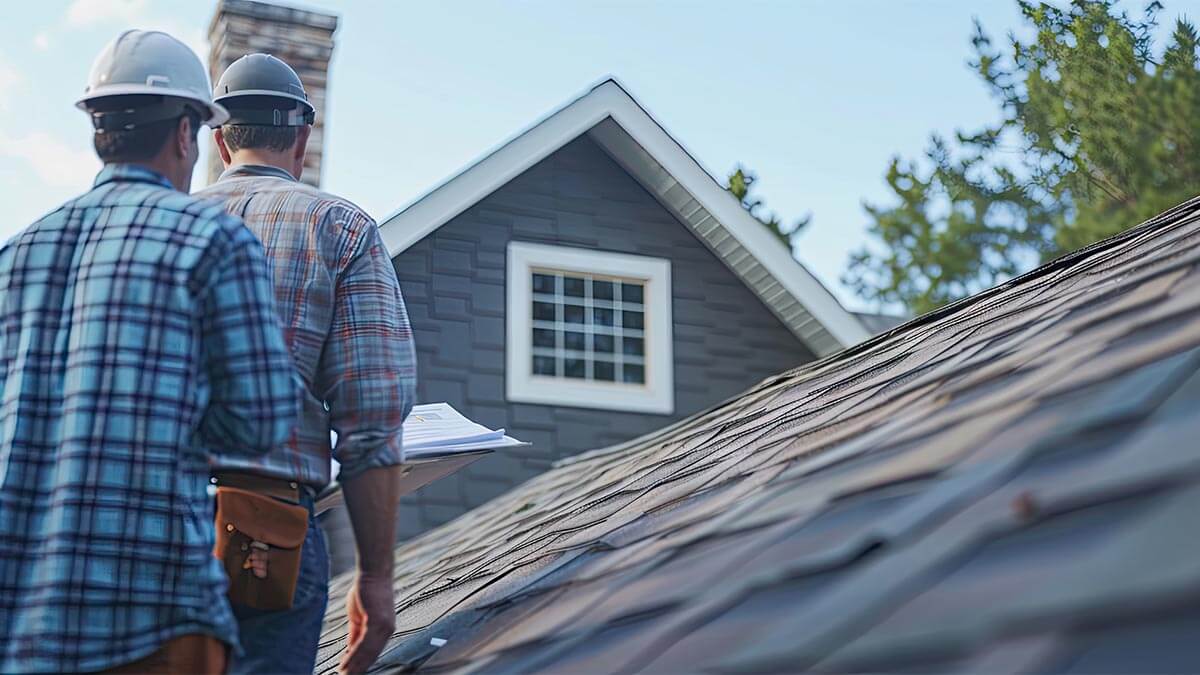
Whether to replace your roof before selling depends on three key factors: the current roof condition, your buyer pool’s lender requirements, and your local market tier. A full replacement costs $5,000 to $30,000 and typically returns only 60% to 70% of that cost in added home value, so the decision is rarely automatic.
Five situations make replacement necessary before you list: (1) the roof has an active leak or structural failure; (2) the roof is 20 or more years old and your market attracts FHA or VA buyers; (3) you are selling in a high-end market where buyers expect a move-in-ready home; (4) your insurer has threatened non-renewal due to roof age; or (5) multiple areas of the roof are failing simultaneously. Outside these triggers, targeted repairs or a buyer credit at closing are usually the smarter financial move.
This guide covers the three decision factors, when replacement is and is not necessary, a four-path comparison table, 2026 cost data by material type, lender and insurance thresholds, what not to fix before selling, and how a bad roof affects your home value and days on market.
Replace Roof
- The three factors that drive this decision
- When replacing the roof before selling is necessary
- When you can skip the roof replacement
- Replace, repair, or offer a buyer credit
- How much does a new roof cost in 2026?
- What lenders and insurers require
- What not to fix before selling your house
- How a bad roof affects your home value
- Can you sell a house without replacing the roof?
- How to decide whether to replace your roof before selling
- Conclusion
- Frequently Asked Questions
Skip the Roof Bill, Still Get Paid Cash buyers compete for your home as-is — no replacement required
No repairs, no agents, no delays. Competing offers in days.
The three factors that drive this decision
Whether to replace your roof before selling is a question with a concrete answer once you know your roof’s condition, your lender environment, and your buyer pool. Sellers who skip this analysis either overspend on a replacement that returns less than it costs or undersell by ignoring a problem that will surface at inspection anyway.
Roof condition: what actually matters
The first question is physical, not financial. Walk the perimeter and check for sagging sections, missing or curling shingles, granule buildup in the gutters, and exposed underlayment. In the attic, look for daylight, soft decking, and water stains on the rafters.
According to asphalt shingle lifespan standards published by the National Roofing Contractors Association (NRCA), standard architectural asphalt shingles last 20 to 30 years under normal conditions. A roof under 15 years old with no structural damage almost never needs full replacement before a sale. A roof at or past 20 years warrants a licensed contractor’s inspection before you make any decision.
Lender and insurance thresholds
Age alone does not determine whether a roof passes a lender appraisal, but it is the most common trigger for a flag. FHA and VA lenders require the roof to have at least two years of remaining useful life. Many homeowner insurers now refuse to issue or renew policies on asphalt shingle roofs over 20 years old, which can stop a financed sale even when the lender approves.
Roof age as a lender appraisal concern is covered in detail in H2-6 below, including the specific HUD and VA policy language appraisers use.
Your buyer pool and market tier
A roof that would sail through a conventional loan appraisal can block an FHA or VA transaction. If comparable sales in your zip code show 30% or more closing with FHA or VA financing, a roof at or near its age threshold is a real transaction risk. In markets where cash buyers and conventional buyers dominate, a buyer credit at closing is usually sufficient. In high-end markets, buyers paying top dollar expect zero major deferred maintenance, and a visibly aging roof cuts into your negotiating position regardless of its functional status.
When replacing the roof before selling is necessary
Replacing the roof before selling is necessary in a specific and limited set of circumstances. Outside those circumstances, repair or credit options preserve more of your equity.
Active leaks, rot, and structural failure
Active leaks, sagging areas, missing or curling shingles, and water rot are deal-killers for buyers and home inspectors alike. A leaking roof left unaddressed compounds the initial damage: moisture intrusion creates mold and rot that add their own cost and their own lender flags on top of the roof problem itself.
If a home inspection flags active water intrusion, most standard real estate contracts give the buyer the right to renegotiate price, request repairs, or cancel and reclaim earnest money. Replacing before you list eliminates this risk entirely.
FHA and VA loan requirements
FHA and VA lenders routinely deny financing on homes with asphalt shingle roofs past 15 to 20 years old or with visible structural damage, per HUD Handbook 4000.1. This is the most specific and most frequently overlooked threshold in the roof-sale decision.
FHA Minimum Property Standards for roofs (HUD Handbook 4000.1) require the appraiser to confirm the roof has at least two years of remaining useful life and shows no worn-through surfaces, active leaks, missing or curled shingles, or damaged flashing. Any flag on these criteria triggers a required repair before the loan can fund.
VA loan roof condition requirements follow a similar standard: the roof must be in serviceable condition, and an appraiser can flag a roof at or past its expected lifespan, which blocks the sale or requires a pre-closing repair escrow.
If your market draws significant FHA or VA buyers and your roof age is 15 years or older, get a written contractor assessment before listing. A documented two-plus years of remaining life from a licensed roofer gives an appraiser a defensible basis to pass the roof even if it is older.
High-end and move-in-ready market expectations
Buyers paying top dollar expect a move-in-ready home with zero major deferred maintenance. In competitive price tiers, a 20-year-old roof is not just a lender concern, it is a buyer psychology concern. An aging roof signals that other maintenance items may have been skipped, which invites lower offers and longer negotiation timelines even from buyers who could close over an inspection flag.
In high-end markets, the replace-before-listing calculation shifts: the 60% to 70% value recovery still applies, but the avoided price reduction and faster sale may make the full replacement net-positive.
When you can skip the roof replacement
Skipping a new roof before selling is the right call in more situations than most sellers expect. The key is matching the actual condition and buyer pool to the right lower-cost option.
Roofs under 15 years old and structurally sound
If the roof is under 15 years old and shows no structural damage, targeted repairs are almost always the right call. No lender or appraiser applies a hard cutoff at 15 years, and a structurally sound roof with minor wear does not trigger FHA or VA flags. Disclose the roof’s age in writing, price it accurately, and spend on targeted repairs only where needed.
Qualifying conditions for this path: – No sagging, soft spots, or visible rot in the decking – No active leaks or interior water staining – Missing shingles are isolated, not widespread – Gutters show normal granule accumulation, not accelerated loss
Targeted repairs for localized damage
If damage is isolated to one section or a small number of shingles, targeted repairs cost far less than a full replacement and return more per dollar when the underlying structure is sound. According to national roof repair cost averages, localized shingle repairs, flashing replacement, and minor leak remediation typically run $500 to $3,000 depending on the extent and pitch.
Targeted repairs will not satisfy an FHA or VA appraisal if the underlying roof system is systemically aged. If the structure is intact but shingle wear is widespread, a repair may pass a visual inspection while still failing the “two years of remaining useful life” standard. Have a licensed contractor document the remaining life in writing if you plan to rely on this path with a financed buyer.
Offering a buyer credit at closing
A buyer credit at closing lets the buyer choose their own contractor after closing while the seller avoids managing a construction project before the move. Credits typically run $3,000 to $10,000 for roof condition issues, depending on the scope of work needed and the negotiating position of both parties.
Credits work best when the roof needs work but is not actively leaking or structurally failed. Some lenders cap the total seller concessions a buyer can receive, so confirm the credit structure with both agents before committing. A credit that exceeds lender caps may need to be restructured as a price reduction instead.
Replace, repair, or offer a buyer credit
The four paths available to sellers with a roof concern each suit a different situation. The table below maps the options to their cost, best-fit scenario, and the key variable to verify before choosing.
| Option | Typical Cost | Best For | Key Consideration |
|---|---|---|---|
| Full replacement | $5,000 to $30,000 | Roof 20-plus yrs old; FHA/VA buyer pool; high-end market | Returns 60 to 70% of cost in home value; takes 1 to 2 weeks |
| Targeted repairs | $500 to $3,000 | Localized damage; structurally sound roof under 15 yrs | Will not satisfy FHA/VA if roof is systemically aged |
| Buyer credit at closing | $3,000 to $10,000 (negotiated) | Motivated seller who wants to avoid a contractor project | Buyer controls contractor selection after closing |
| Sell as-is to cash buyer | $0 seller cost | Roof near end of life; seller needs speed and certainty | Offer reflects roof condition; closes in 7 to 30 days |
Based on NAR Remodeling Impact Report ROI figures, HomeAdvisor national cost data, and iBuyer.com cash-offer platform data, 2026. Verify current rates before transacting.
The cash buyer row is the option most sellers do not consider until they have already spent weeks managing contractor bids. When a roof is at end of life and the seller needs speed or certainty, selling as-is to a vetted cash buyer eliminates the replacement cost entirely. The offer reflects the roof’s condition, but the seller avoids the 60-cent-on-the-dollar value recovery math and the contractor timeline risk.
Roof replacement ROI is the central financial variable in this decision. A $15,000 replacement that adds $9,000 to $10,500 in value means the seller is spending $5,000 to $6,000 net with no guarantee the buyer’s offer rises by exactly that amount. Comparing a full-replacement scenario against a credit or cash-offer scenario with real numbers is the only way to know which path nets more.
How much does a new roof cost in 2026?
A new roof before selling is a significant line item in your transaction math. Understanding what drives cost variation prevents both overpaying a contractor and underestimating what a buyer will expect you to spend.
According to national roof replacement cost data , total replacement costs range from $5,000 to $30,000 or more nationally, with the spread driven by home size, roof geometry, material choice, tear-off requirements, and regional labor rates.
Cost by material type
| Material | Typical Cost (1,500 to 2,500 sq ft home) | Typical Lifespan |
|---|---|---|
| Architectural asphalt shingles | $9,000 to $18,000 | 20 to 30 years |
| Metal roofing | $15,000 to $30,000 | 40 to 70 years |
| Tile or slate | $20,000 to $50,000-plus | 50 to 100 years |
Based on HomeAdvisor national cost data and Perplexity 2026 multi-source averages. Verify contractor estimates in your market before budgeting.
What $25,000 for a roof actually means
$25,000 is above average for a standard asphalt shingle replacement on most U.S. homes but falls within normal range for larger homes, complex roof geometry, or premium materials. Most standard architectural asphalt replacements on 1,500 to 2,500 square foot homes run $9,000 to $18,000 in 2026. At $25,000 for a mid-size home, you are most likely looking at a steep or complex pitch, a high labor-cost market, a full deck replacement alongside the shingles, or an upgraded material tier. Get two to three written estimates before assuming a single contractor’s number is representative.
What lenders and insurers require
Knowing exactly what appraisers look for prevents surprises after you accept an offer. The requirements differ by loan type, and none of them are negotiable once an appraisal has been submitted.
FHA and VA minimum property standards
FHA appraisers follow FHA Minimum Property Standards roof requirements under HUD Handbook 4000.1. The roof must have at least two years of remaining useful life and show no worn-through surfaces, active leaks, missing or curled shingles, or damaged flashing. A flag on any of these conditions triggers a required repair before the loan funds.
VA loan roof condition requirements follow a parallel standard under Chapter 12 of the VA Lender’s Handbook. The roof must be in serviceable condition. An appraiser who judges the roof to be at or past its expected lifespan can flag the property, which effectively blocks the sale unless the seller completes repairs or the parties structure a repair escrow before closing.
FHA roof requirements and VA loan roof requirements apply to the buyer’s financing, not just the property itself. A seller who wants to attract FHA or VA buyers in their market needs to treat these thresholds as hard constraints, not suggestions.
Conventional loans and appraiser rules
Fannie Mae-backed conventional loans have no hard roof-age cutoff. The lender appraiser uses judgment: if remaining economic life appears to be less than two years, the appraiser can flag it and the lender may require an escrow holdback or completed repair before the closing funds. In practice, a well-documented contractor assessment showing remaining life can often satisfy a conventional appraiser where the same roof would fail an FHA or VA review.
Homeowner insurance and roof age
Many insurers now refuse to issue or renew homeowner policies on asphalt shingle roofs over 20 years old. According to homeowner insurance rules for aging roofs from the Insurance Information Institute (III), insurers may require proof of roof replacement before agreeing to issue a new policy. A buyer who cannot obtain homeowner insurance cannot close a financed sale. This creates a second blocking condition entirely separate from the lender appraisal, and it affects conventional buyers just as much as FHA and VA buyers.
Roof age as a lender and homeowner insurance concern is what the AIO summarizes as “local insurance rules,” but the actual threshold is specific: asphalt shingle roofs past 15 to 20 years old are the category most likely to trigger both lender and insurer flags simultaneously.
What not to fix before selling your house
Not every repair on your inspection list deserves your money before closing. Spending on low-return items reduces your net proceeds without increasing your sale price.
Low-ROI repairs to skip
Before selling, skip these five categories of work:
- Minor cosmetic flaws (small wall dings, chipped paint, light floor scratches) — buyers expect these in any lived-in home
- Outdated but working items (older appliances, dated light fixtures, functioning hardware) — replacement rarely moves the needle on offers
- Major kitchen or bathroom renovations — a full kitchen remodel costs $25,000 to $75,000 or more and returns approximately 60% per the NAR Remodeling Impact Report renovation ROI data
- Driveway cracks or old fencing that are cosmetic and not structural
- Interior paint if the home is clean and presentable in neutral tones
Window replacement falls in the same high-cost/low-ROI category as full roof replacement for most sellers. See replacing windows before selling for the same framework applied to windows specifically.
What to prioritize instead
Focus spending on anything that affects safety, structural integrity, or what would fail a lender appraisal. An actively leaking roof is not on the skip list, it belongs in the fix-or-disclose category regardless of cost. The same applies to electrical hazards, active water damage, and anything a home inspector is required to flag as a health or safety concern. Deferred maintenance that is visible during a walk-through (a sagging roof line, gutters pulling away from the fascia) also tends to reduce curb appeal disproportionately, which affects the initial offer before an inspection is even ordered.
How a bad roof affects your home value
A damaged or aging roof reduces home value through five distinct mechanisms, not just the replacement cost itself.
According to the data on new roof home value impact, a new roof is one of the more reliable value-adding improvements at resale. The inverse holds: a failing roof subtracts at least proportionally relative to comparable homes with sound roofs.
- Structural damage (roof, foundation, load-bearing walls) represents the largest single category of value reduction for any residential property
- Active water intrusion compounds the initial roof problem: mold, rot, and interior damage each carry their own cost and their own disclosure obligations
- Deferred maintenance visibility signals buyers that other systems may have been neglected, which broadens the discount beyond the roof’s actual replacement cost
- Financing barriers caused by a failing roof shrink the buyer pool by excluding FHA and VA buyers, reducing competition and therefore reducing final sale price
- Insurance barriers caused by a roof over 20 years old deter buyers who cannot obtain a homeowner insurance quote to satisfy their lender
Inspection consequences
A home inspection that flags roof problems gives the buyer leverage to renegotiate price, request a repair credit, or exit under the inspection contingency. Most standard contracts protect the buyer through this contingency for exactly this type of finding. Sellers who disclose roof age and condition before the offer stage typically face smaller price adjustments than sellers who let the inspection surface the issue mid-transaction, because the buyer’s risk premium decreases when the scope of the problem is documented.
Buyer psychology and days on market
Homes with disclosed roof problems often sit longer on the market because buyers must obtain contractor estimates before they can make a confident offer. That delay increases days on market, which itself signals weakness to subsequent buyers who see the listing age in real time. A roof in clearly serviceable condition, or one just replaced, removes the uncertainty that causes buyers to wait.
How much a bad roof discounts a home also varies by geography. If you are selling in a distressed-property-heavy market, the discount dynamics differ from a standard resale. Sellers in North Carolina, for example, can find market-specific guidance at selling a distressed home in North Carolina.
Can you sell a house without replacing the roof?
Yes, you can sell a house without replacing the roof. The practical path depends on whether your buyer is using financing and how far gone the roof’s condition actually is.
Selling as-is with a disclosed roof condition
Listing as-is with full written disclosure is legal in all states, though state-specific disclosure requirements vary. According to Redfin guidance on selling as-is vs. repairing before listing, sellers who disclose condition upfront tend to attract more serious offers than those who attempt to conceal or minimize known defects.
Buyers pricing a house with a disclosed roof problem typically apply two components to their offer: the estimated replacement cost and a risk premium for unknowns. A roof that needs a $15,000 replacement may result in an $18,000 to $22,000 price reduction, reflecting both the cost and the buyer’s margin for unexpected scope. Pricing to reflect the roof’s condition from the outset, rather than waiting for inspection negotiation, often produces a cleaner transaction.
Cash buyers are the most natural audience for an as-is sale with a known roof issue. They have no lender approval to navigate, no appraisal to pass, and no financing contingency to satisfy.
Selling to a cash buyer with no repairs
A cash buyer purchases your home in its current condition with no financing contingency, no appraisal, and no lender-mandated repair requirement. For a seller whose roof is at end of life, this path eliminates the replacement cost entirely and closes in 7 to 30 days in most cases. The offer reflects the roof’s condition, but the seller avoids the contractor timeline, the cost, and the 30-to-40-cent value-recovery gap that comes with a replacement.
This path makes the most financial sense when the replacement cost is high, the seller needs speed, or the seller cannot carry the transaction risk of a financed deal falling through on an appraisal flag. Sellers who want to compare a cash offer against their net proceeds after roof costs and agent fees on a listed sale can request competing cash offers through iBuyer.com with no obligation.
For sellers whose roof concern is part of a broader distressed-property situation, the canonical resource for that decision is selling a home in poor condition, which covers all major defect categories with the same four-path framework.
How to decide whether to replace your roof before selling
How to Decide Whether to Replace Your Roof Before Selling
-
Inspect the Roof for Active Problems
Walk around the home and look for missing or curling shingles, sagging areas, excessive granule loss, damaged flashing, or visible rot. Inside the attic, check for water stains, daylight coming through the roof, or damp insulation. Active leaks or structural damage should be evaluated by a roofing professional before listing the property.
-
Determine the Roof’s Age and Material
Review installation records, prior inspection reports, or maintenance documents to determine the roof’s age and material. Asphalt shingle roofs generally last 20 to 30 years, while metal and tile roofs often have significantly longer service lives. A newer roof in good condition may only require minor maintenance before selling.
-
Evaluate the Roof’s Remaining Useful Life
If the roof is approaching the end of its expected lifespan, ask a licensed roofing contractor to assess whether repairs are sufficient or whether replacement is recommended. A professional opinion can help you estimate future maintenance needs and prepare for buyer questions during inspections.
-
Consider Your Likely Buyer Pool
Discuss current market conditions with your real estate agent to understand whether most buyers are expected to use FHA, VA, conventional financing, or cash. Homes with aging roofs may face additional lender or appraisal requirements in some financed transactions, while cash buyers may be more willing to purchase the property without repairs.
-
Compare Replacement Costs With Potential Return
Obtain two or three written estimates from licensed roofing contractors and compare the replacement cost with the likely increase in marketability and resale value. Also consider whether offering a buyer credit or completing targeted repairs would provide a better financial outcome than replacing the entire roof.
-
Choose the Best Selling Strategy
Based on the roof’s condition, your budget, and local market expectations, decide whether to replace the roof, complete targeted repairs, offer a repair credit at closing, or sell the property as-is. Select the option that best balances your timeline, expected net proceeds, and the type of buyer you want to attract.
Conclusion
Whether to replace your roof before selling comes down to a specific set of conditions, not a universal rule. A roof under 15 years old with no structural damage almost never needs full replacement. A roof past 20 years old in a market with significant FHA or VA buyer activity almost always creates a transaction risk that needs to be resolved before you accept an offer. The four-path framework in this article, full replacement, targeted repairs, buyer credit at closing, or cash-buyer sale, covers every realistic scenario with a concrete recommended action tied to your specific situation.
The mistake most sellers make is defaulting to full replacement when repair, credit, or a cash-offer path would net more after transaction costs. Run the numbers on each option before committing to a contractor.
Skip the Roof Bill, Still Get Paid Cash buyers compete for your home as-is — no replacement required
No repairs, no agents, no delays. Competing offers in days.
Frequently Asked Questions
Whether to replace your roof before selling depends on three factors: roof condition, your buyer pool’s lender requirements, and your local market tier. Actively leaking, sagging, or rotted roofs are deal-killers for buyers and lenders and require resolution before listing. A roof under 15 years old with no structural issues rarely needs full replacement. Targeted repairs and written disclosure are usually sufficient.
Yes, you can sell a house without replacing the roof by offering a buyer credit at closing, disclosing and pricing the condition into the list price, or targeting cash buyers who need no lender approval. Financed buyers using FHA or VA loans may be blocked if the roof fails minimum property standards, since FHA requires at least two years of remaining useful life. Cash buyers face no lender restriction, so roof age does not trigger a financing denial.
$25,000 is above average for a standard asphalt shingle replacement on most U.S. homes but is not unusual for larger homes, complex roof geometry, or premium materials. Most standard asphalt replacements on 1,500 to 2,500 square foot homes run $9,000 to $18,000 in 2026. At $25,000 for a mid-size home, you are likely looking at an upgraded material, a steep or complex pitch, or a high labor-cost market.
Before selling, skip cosmetic updates, major kitchen or bathroom renovations, and any repair unlikely to return its full cost in the final sale price. Minor chipped paint, outdated but working appliances, worn carpets, and dated fixtures are items buyers typically address themselves. A full kitchen renovation returns approximately 60% of its cost per NAR Remodeling Impact Report data. Spend on items that affect safety, structural integrity, or what would fail a lender appraisal.
Structural problems, including roof damage, foundation issues, and active water intrusion, reduce property value more than any cosmetic factor. A damaged or aging roof signals deferred maintenance, narrows the buyer pool by excluding FHA and VA buyers, and can trigger insurance issues that deter everyone else. Addressing major structural problems before listing delivers the highest per-dollar return.
FHA and VA lenders require the roof to have at least two years of remaining useful life and show no visible defects such as active leaks, sagging, or worn-through surfaces. HUD Handbook 4000.1 requires FHA appraisers to flag any roof failing this standard, which triggers a required repair before the loan can fund. VA uses a similar rule in its Lender’s Handbook. Conventional lenders have no hard age cutoff but can require a repair escrow when an appraiser notes less than two years of remaining life.
A new roof typically recovers 60% to 70% of its replacement cost in added home value, making it one of the stronger-performing major home improvements at resale. On a $15,000 replacement, expect to recover $9,000 to $10,500 in value according to NAR data. Buyers in move-in-ready markets often apply a psychological premium beyond the direct dollar contribution. The ROI is stronger in markets where buyers cannot negotiate large repair credits.
Repair the roof if damage is localized and the structure is sound; replace it only when leaks, rot, or age make targeted repairs impractical or when your buyer pool is predominantly FHA or VA financed. Targeted repairs for isolated shingle damage or minor flashing leaks typically cost $500 to $3,000 and are sufficient when the underlying deck is intact. A full replacement becomes necessary when multiple areas are failing simultaneously or when an FHA or VA appraisal would flag systemically aged materials as having less than two years of useful life.
A home inspection that flags roof problems gives the buyer grounds to renegotiate the purchase price, request a repair credit, or walk away under the inspection contingency. Most standard real estate contracts include an inspection contingency that covers roof condition. If the inspection reveals active leaks or structural damage, the buyer can request a price reduction equivalent to the repair cost, ask the seller to complete repairs before closing, or cancel the contract and reclaim earnest money.
A buyer credit at closing is usually more cost-effective than a full replacement because it avoids contractor delays, lets the buyer choose their own roofer, and keeps the seller out of a construction project. Credits of $3,000 to $10,000 at closing typically cost the seller less than a full replacement and are simpler to execute. Some lenders cap total seller credits a buyer can receive, so confirm the credit structure with both agents before agreeing.
FHA and VA lenders typically flag asphalt shingle roofs past 15 to 20 years old or showing physical signs of failure, regardless of exact age. There is no single universal age cutoff: the standard is functional, meaning does the roof have at least two years of remaining useful life? A well-maintained 22-year-old roof might pass; a storm-damaged 14-year-old roof might not. Conventional lenders leave this to the appraiser’s judgment rather than applying a hard age rule.
Yes, you can sell as-is with a bad roof, but expect a below-market offer price and a buyer pool that skews heavily toward cash buyers, investors, and house flippers. Listing as-is with full written disclosure is legal in all states, though specific disclosure requirements vary. Buyers price in the repair cost plus a risk margin for unknowns. If the roof needs a $15,000 full replacement, expect offers that discount the price by $18,000 to $22,000 or more.

Reilly Dzurick is a licensed real estate agent with over six years of experience and a member of the iBuyer.com Market Insights Team, covering national trends in home selling and the evolving iBuyer landscape. Her firsthand experience working with buyers and sellers gives her a practical perspective on how these platforms impact real homeowners. She holds a degree in Public Relations, Advertising, and Applied Communication.