Yes, you can legally sell a house with asbestos in the United States. No federal law prohibits the sale or requires removal before closing. The key legal obligation in most states is disclosure, and how you handle that disclosure shapes every other decision in the transaction.
Sellers typically choose one of three paths when an asbestos home sale involves known asbestos-containing materials (ACMs):
- Remediate before listing, hire a licensed abatement contractor to remove or encapsulate ACMs, then sell with a clean inspection record.
- Disclose and sell on the open market, complete the required state disclosure forms, price to reflect the buyer’s estimated remediation cost, and proceed with traditional marketing.
- Sell as-is to a cash buyer, disclose all known ACMs, skip the abatement bill, and close to a buyer who accepts the property in its current condition.
This guide covers what federal and state law requires, where asbestos is commonly found, how ACMs affect your sale price and financing options, what a brief exposure during a showing actually means for health risk, and how each of the three selling strategies works in practice.
House with Asbestos
- Is it legal to sell a house with asbestos?
- Do you have to disclose asbestos when selling?
- Where is asbestos found in a house?
- Your three options for selling with asbestos
- How does asbestos affect your home sale?
- Is it okay to buy a house with asbestos?
- Will 30 minutes of asbestos exposure hurt you?
- Asbestos disclosure rules by state
- Disstresed Properties Selling Guides
- 5 mistakes to avoid when selling with asbestos
- How to sell a house with asbestos
- Conclusion
- Frequently Asked Questions
Asbestos Disclosed? Sell Without Remediating Cash buyers on iBuyer.com purchase homes with known asbestos, no abatement required.
No repairs, no agents, no obligation.
Is it legal to sell a house with asbestos?
Selling a house with asbestos is legal in all 50 states. No federal statute prohibits a private residential sale on the basis of asbestos presence, and no federal law mandates removal before the transaction closes.
The federal rule: no removal, no sale prohibition
Regarding the asbestos disclosure policy, the EPA confirms that no federal regulation requires a home seller to disclose or remediate asbestos before a private residential sale. The Toxic Substances Control Act (TSCA) governs asbestos manufacturing and import but does not create a disclosure mandate for homeowners. Congress banned most new asbestos uses between 1978 and 1980, which is why pre-1980 homes are the primary risk cohort, but owning one does not trigger any federal removal requirement.
The absence of a federal mandate does not mean you have no obligations. It means state law governs, and state requirements vary considerably.
Where state law can go further
Most states require sellers to disclose known hazardous materials on a standard seller disclosure statement or property disclosure form. Known asbestos qualifies as a material defect in all 50 states even where state law does not name asbestos explicitly.
Failure to disclose known ACMs can result in buyer lawsuits for fraud, misrepresentation, contract rescission, and full financial liability for remediation costs, regardless of whether your state has a specific asbestos statute. Real estate attorneys consistently recommend disclosure even when state requirements are ambiguous. The legal cost of non-disclosure far exceeds the commercial cost of disclosing upfront.
Do you have to disclose asbestos when selling?
Asbestos disclosure when selling is not a federal requirement, but it is a practical and legal necessity in most states. The distinction between federal baseline and state overlay is the single most important thing to understand before you list.
The federal disclosure baseline
Federal law does not require asbestos disclosure in private residential sales, the EPA’s position is that “state or local disclosure rules may require” disclosure where federal law does not. This 84-word federal page is the authoritative floor. Everything above it is state law.
State-level requirements: what varies
States fall into three categories: those that name asbestos explicitly on the disclosure form, those that require disclosure under general material-defect or environmental-hazard provisions (which courts have consistently applied to asbestos), and a small number with minimal specific guidance. The practical result is the same across nearly all states: known asbestos must be disclosed.
| State | Disclosure Required? | Form Name | Notes |
|---|---|---|---|
| California | Yes | Transfer Disclosure Statement (TDS) | Explicitly covers known ACMs |
| Texas | Yes | Seller’s Disclosure Notice (§5.008) | Material defect provision applies |
| Illinois | Yes | Residential Real Property Disclosure | Stringent state-level requirements; see distressed home sales in Illinois for local context |
| New York | Yes | Property Condition Disclosure Statement | Treats asbestos as an environmental hazard; see distressed home sales in New York for local context |
| Maine | Yes | Seller’s Property Disclosure Form | State statute specifically names asbestos |
Based on state statutory sources and form guidance, 2026. Verify current form names and language with a licensed real estate attorney before listing.
Do realtors have to disclose asbestos?
Under realtor duty to disclose material defects, NAR’s Code of Ethics, Article 2, prohibits REALTORS from concealing pertinent facts about a property. A realtor who learns of asbestos during a transaction, from a home inspection report, prior testing records, or the seller’s disclosure, is expected to communicate that fact to all parties. This obligation applies in all 50 states regardless of whether state law explicitly names asbestos. The material defect disclosure obligation is universal under NAR’s ethics framework.
Where is asbestos found in a house?
Per guidance from the Consumer Product Safety Commission on asbestos in older homes, homes built before 1978 to 1980 have the highest likelihood of containing asbestos-containing materials. The risk is not evenly distributed, some materials were far more likely to use asbestos than others.
Common locations in pre-1980 homes
- Floor tiles: 9-inch by 9-inch vinyl tiles are a strong indicator of asbestos content; the adhesive beneath them also frequently contained ACMs
- Popcorn ceiling asbestos: textured or “popcorn” ceilings applied before 1978 routinely contained asbestos
- Pipe insulation and HVAC duct wrap: especially in basements and utility areas
- Attic vermiculite insulation: the majority of U.S. vermiculite came from a mine in Libby, Montana that was contaminated with asbestos
- Roofing shingles and siding: particularly in homes built in the 1940s through 1970s
- Joint compound: used in drywall installation before 1980 frequently contained asbestos
- Ceiling tiles: commercial-style drop ceiling tiles in basements and utility rooms
Friable vs. non-friable asbestos
The distinction between friable asbestos and non-friable asbestos drives both the health risk and the financing complications you may face.
Friable asbestos refers to ACMs that can be crumbled by hand pressure, actively releasing fibers into the air. Deteriorating pipe insulation, crumbling attic insulation, and damaged duct wrap are common examples. Friable materials pose the highest health risk and are most likely to trigger lender restrictions.
Non-friable asbestos describes materials in good condition that cannot be crumbled by hand. Intact floor tiles and properly sealed pipe wrap are typical examples. When undisturbed, non-friable materials release essentially no fibers into breathing air. Low immediate risk does not mean zero risk, any renovation that disturbs those materials changes the equation entirely.
Getting a professional asbestos inspection
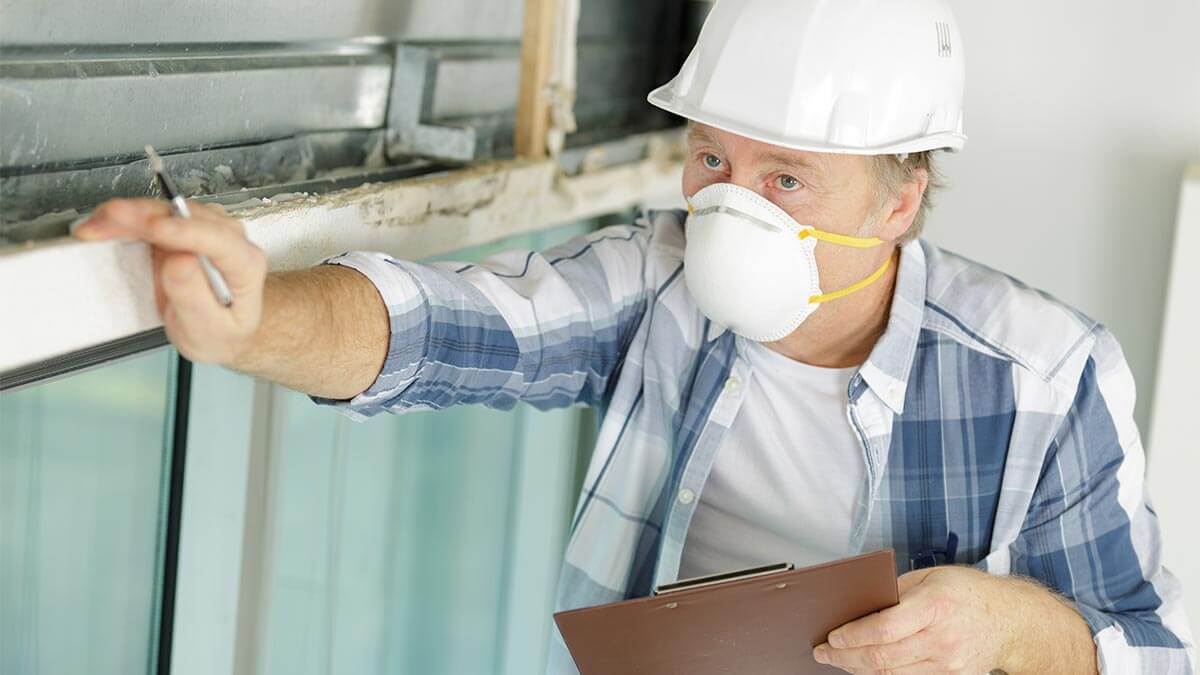
A standard home inspection does not test for asbestos. Asbestos testing requires a licensed asbestos inspector who takes physical samples and sends them to a laboratory for analysis. Visual inspection alone cannot confirm whether a material contains asbestos, regardless of how experienced the inspector is.
An asbestos inspection for a typical residential property costs approximately $200 to $800 depending on home size and number of samples required (pre-publish verification: source to a current licensed inspector association before publishing). The resulting report identifies each material by type, location, and condition, friable or non-friable, and becomes the foundation for your disclosure form and your pricing conversations.
Your three options for selling with asbestos
Selling a house with asbestos comes down to three executable paths. Each carries different upfront costs, different timelines, and different buyer pool implications.
-
Remediate before listing. Professional asbestos abatement by an EPA- or state-licensed contractor removes or encapsulates the ACMs before any buyer sets foot in the home. Cost ranges from approximately $1,500 for a small isolated area to $30,000 or more for whole-house asbestos remediation (pre-publish verification: confirm current figures against EPA or contractor association data). Partial remediation typically takes 1 to 4 weeks; whole-house projects run longer. Post-remediation clearance asbestos testing is required before the space is reoccupied. This path maximizes your eligible buyer pool and typically yields the highest sale price, but it requires significant upfront capital and time before you can list.
-
Disclose and sell on the open market. Complete your state’s required disclosure forms, attach the licensed inspector’s report, and price the home to reflect the buyer’s expected remediation cost. Buyers using FHA or VA financing may encounter lender restrictions when friable asbestos is present in living areas, which can delay or derail closing. Conventional lenders vary by institution. Buyers not planning renovation often accept intact ACMs with minimal price adjustment, the price impact is tied to the buyer’s plans, not simply the presence of asbestos. This path avoids the upfront abatement cost but introduces financing-related transaction risk.
-
Sell as-is to a cash buyer. Cash buyers are not subject to lender underwriting restrictions tied to ACM condition, which eliminates the financing fall-through risk specific to asbestos-disclosed properties. Experienced cash buyers regularly purchase homes with disclosed asbestos at prices that reflect their estimated remediation cost. To prepare: have your signed disclosure form, the licensed inspector’s report, and a written list of all known ACM locations ready before you accept offers. Closing timelines via the iBuyer.com marketplace typically run 7 to 30 days. For a broader look at how this path fits within the category of distressed property sales, see selling a house in poor condition.
How does asbestos affect your home sale?
Understanding the financial and financing consequences of a disclosed asbestos home sale helps you set realistic expectations before you list.
Impact on sale price
Disclosed asbestos typically reduces a home’s effective sale price by the buyer’s estimated remediation cost, not by a fixed percentage. A buyer planning no structural work often accepts intact, non-friable ACMs with minimal price reduction. A buyer planning a gut renovation of a pre-1980 kitchen will factor the full abatement cost into their offer. The key insight from asbestos liability in real estate sales is that the legal and financial risk of non-disclosure far exceeds the negotiated price impact of transparent disclosure, buyers discovered the problem after closing through litigation recover far more than they would have negotiated in a straightforward deal.
Impact on buyer financing
FHA minimum property standards can restrict funding on homes with unsafe or hazardous conditions. Friable asbestos in living areas may trigger a required repair condition before FHA loan approval (pre-publish verification: confirm against current HUD Handbook 4000.1 before publishing). VA appraisers similarly flag deteriorating ACMs as health hazards (pre-publish verification: confirm against current VA Lender’s Handbook). Cash buyers face none of these underwriting restrictions, which is why sellers with friable asbestos disclosed on their forms tend to have more predictable closings with cash offers than with financed ones.
Is it okay to buy a house with asbestos?
Buying a house with asbestos is generally acceptable when the ACMs are intact, undisturbed, and not in spaces subject to renovation, per the Agency for Toxic Substances and Disease Registry’s guidance on health effects of asbestos exposure.
When intact asbestos is low-risk
Asbestos fibers must become airborne to cause harm. The diseases associated with asbestos exposure, including mesothelioma and asbestosis, develop from repeated, sustained inhalation of fibers over time, not from a single brief contact with a well-maintained surface. Non-friable materials in good condition do not release fibers into breathing air under normal residential use. An intact floor tile under carpet or a sealed popcorn ceiling that has never been disturbed carries low immediate risk for occupants who are not performing renovation work.
When to ask for a closer look
Risk increases materially when materials are damaged, deteriorating, showing visible crumbling, or located in spaces subject to construction, drilling, cutting, or sanding. Specific conditions that elevate risk include: water damage adjacent to insulated pipes, deteriorating floor tile edges, visibly crumbling attic insulation (particularly vermiculite), and popcorn ceilings being sanded or scraped (sealing is different from sanding, sealing encapsulates fibers rather than releasing them).
Due diligence steps before buying
- Request the seller’s disclosure form and any prior inspection or testing reports.
- Ask for a renovation history, work done on the property before 1980 may have disturbed ACMs.
- For pre-1980 homes with no prior asbestos testing on record, hire a licensed asbestos inspector before closing rather than relying on the general home inspection.
- If you plan any structural renovation, treat the affected materials as potentially ACM-containing until testing proves otherwise.
Will 30 minutes of asbestos exposure hurt you?
A single 30-minute visit to a home with intact asbestos-containing materials is generally low-risk for the average property visitor. But the question deserves a precise answer because all four major AI engines currently point people asking it to occupational health and personal injury sites that never address the real estate context.
What OSHA’s limits mean in context
OSHA’s asbestos permissible exposure limits set two thresholds under 29 CFR 1910.1001 (pre-publish verification: confirm these figures remain current at osha.gov before publishing):
- Permissible exposure limit (PEL): 0.1 fibers per cubic centimeter (f/cc) averaged over an 8-hour workday
- Short-term excursion limit (STEL): 1.0 f/cc averaged over any 30-minute period
Both limits were established for workers with daily, sustained, workplace exposure to asbestos. All major health authorities, including OSHA, NIOSH, WHO, and the EPA, state that no level of OSHA asbestos exposure is considered completely without risk. That position is correct and important.
Brief residential visits vs. occupational risk
The occupational limits address a scenario where a worker spends hours every day in close proximity to materials actively releasing fibers. A 30-minute property tour through a home with intact, non-friable, undisturbed ACMs in a well-ventilated space is categorically different from that scenario. Fiber counts during a typical home showing are far below the levels these limits address.
Risk during a property visit does increase meaningfully when: friable asbestos materials are visibly deteriorating, the space is poorly ventilated and confined, or renovation work is occurring in the home at the same time as the showing. If any of those conditions apply, the visit should be postponed or protective measures considered.
Asbestos disclosure rules by state
State disclosure requirements vary significantly. Some states name asbestos explicitly in seller forms. Others treat it under general hazardous-material or material-defect provisions. A small number have no specific residential requirement on their forms, though the material-defect standard still applies through case law.
Per the EPA’s position: “state or local disclosure rules may require” disclosure where federal law does not. For state-by-state details beyond the five-state table above, state-by-state asbestos disclosure rules provides a useful reference by region.
Sellers in states with significant pre-1980 housing stock, including Michigan, where older industrial-era housing is common, face the same practical obligation regardless of form language. For Michigan-specific context on selling distressed or older properties, see distressed home sales in Michigan.
Disstresed Properties Selling Guides
Disclosure requirements, form names, and material-defect standards differ by state. Select your state below for a local distressed-property selling guide.
5 mistakes to avoid when selling with asbestos
-
Failing to disclose known ACMs. Sellers who omit known asbestos from their disclosure forms face lawsuits for fraud, misrepresentation, contract rescission, and full financial liability for remediation costs. Even in states with no explicit asbestos statute, known ACMs constitute a material defect that triggers the general disclosure obligation. Courts in virtually every state have awarded damages to buyers who discovered concealed asbestos after closing.
-
Attempting DIY removal. Federal and state EPA regulations require licensed abatement contractors for asbestos removal. DIY attempts can spread fibers throughout the home, create additional liability, and result in fines. Encapsulation, sealing intact materials rather than removing them, carries different rules but still requires professional assessment. Hiring an unlicensed contractor for abatement creates the same liability exposure as doing it yourself.
-
Assuming the home is asbestos-free without testing. Standard home inspections do not test for asbestos. Sellers of pre-1980 homes who list without prior asbestos testing and later discover ACMs during the buyer’s inspection face renegotiation demands, buyer walk-aways, and potential misrepresentation claims. Getting a professional asbestos inspection before listing puts you in control of the disclosure and the pricing conversation.
-
Accepting a financed offer without confirming lender requirements. FHA and VA lenders can require abatement clearance when friable asbestos is present before funding the loan. Sellers who accept a financed offer expecting a standard 30- to 45-day close may face a last-minute abatement condition that adds weeks to the timeline or kills the transaction entirely. Knowing your ACM condition before you market the home lets you screen offers accordingly.
-
Pricing as if the home is remediated when it is not. Buyers factor estimated remediation cost into their offers on disclosed asbestos properties. A seller priced at full market value with active ACMs will see extended days on market and lowball offers. Pricing to reflect the buyer’s expected remediation cost upfront shortens the negotiation cycle and attracts more serious buyers, including cash buyers who have done this before and know what the work will cost.
How to sell a house with asbestos
- Step 1: Get a professional asbestos inspection. Hire a licensed asbestos inspector, not a general home inspector, to identify, sample, and document all asbestos-containing materials. The resulting report identifies material type, location, and condition (friable vs. non-friable) and serves as the foundation for your disclosure form and pricing conversations.
- Step 2: Research your state’s disclosure requirements. Determine whether your state requires asbestos to be named explicitly on the seller’s disclosure form or whether it falls under a general material-defect or hazardous-material provision. A real estate attorney familiar with your state’s statutes can confirm your specific obligations in one to two hours.
- Step 3: Choose your selling strategy. Decide among three paths: (a) remediate before listing, which clears the issue but adds upfront cost; (b) disclose and sell on the open market with pricing adjusted for buyer-expected remediation; or (c) sell as-is to a cash buyer who accepts the property without requiring abatement before closing.
- Step 4: Complete the required disclosure forms. List the location, material type, and condition of all known ACMs on your state’s property disclosure form. Attach the licensed inspector’s report where possible, documented disclosure reduces your legal exposure and speeds buyer due diligence.
- Step 5: Choose your buyer type based on ACM condition. If ACMs are intact and non-friable, a conventional financed offer is likely manageable. If ACMs are friable or deteriorating, FHA and VA lenders may require clearance testing before funding, cash offers eliminate that risk entirely.
- Step 6: Negotiate remediation requests. Buyers may request a price reduction, a remediation credit at closing, or completion of abatement before closing. Use the licensed inspector’s cost estimate as your baseline, it gives you a documented number to anchor the negotiation rather than accepting an arbitrary demand.
- Step 7: Close on your timeline. Cash buyers typically close in 7 to 30 days from accepted offer. Financed buyers typically close in 30 to 60 days; if the lender requires abatement clearance, add the contractor’s schedule to that timeline. Cash offers provide the most timeline certainty when ACM condition is complex.
Conclusion
Selling a house with asbestos is legal, manageable, and done successfully every day across all 50 states. The path to a clean transaction runs through three steps: know what you have (licensed inspection), know what you must disclose (state-specific disclosure requirements), and choose the buyer type that fits your ACM condition. Sellers with friable or complex asbestos issues consistently have smoother closings with cash buyers than with financed buyers, because cash transactions eliminate the lender-restriction variable that derails so many asbestos-disclosed deals at the last minute.
Skip the $30,000 Remediation Bill Compare competing cash offers and close in as few as 7 days, as-is.
Multiple offers, fast close, no repairs needed.
Disclosed asbestos narrows your buyer pool. FHA and VA lenders can require abatement clearance before funding, and financed buyers often walk after inspection findings. Cash buyers on iBuyer.com purchase homes with known asbestos regularly, as-is and without requiring remediation before closing. Submit your address and property details, receive competing offers from multiple vetted buyers, and choose the offer that works for you. No agent commissions, no repair requirements. Closing in as few as 7 days is common.
Frequently Asked Questions
Yes, selling a house with asbestos is legal in all 50 states; no federal law prohibits the sale or requires removal before closing. The key legal obligation is disclosure, most states require sellers to reveal known ACMs on standard property condition forms. Failing to disclose known asbestos can result in lawsuits for fraud, contract rescission, and financial liability for remediation costs.
Federal law does not require asbestos disclosure in private residential sales, but most states require sellers to disclose known hazardous materials on property forms. California, Texas, Illinois, New York, and Maine all require disclosure of known asbestos, either by name or under material-defect provisions. Disclosure protects you legally regardless of whether state law strictly mandates it.
Realtors must disclose known material defects under NAR’s Code of Ethics, and most state laws treat known asbestos as a material defect requiring disclosure. NAR’s Code of Ethics, Article 2, prohibits concealment of pertinent facts about a property. A realtor who learns of asbestos from an inspection report or seller communication is expected to communicate that fact to all parties.
Buying a house with asbestos is generally acceptable if the asbestos-containing materials are intact, undisturbed, and not in a space subject to renovation. Asbestos fibers must become airborne to cause harm; materials in good condition that are not being disturbed release essentially no fibers into breathing air. Buyers planning renovation on pre-1980 materials should arrange asbestos testing before that work begins.
A single 30-minute visit to a home with intact asbestos-containing materials is generally low-risk, but OSHA’s 30-minute excursion limit of 1.0 f/cc applies to workers, not residential visitors. OSHA’s permissible exposure limit for asbestos workers is 0.1 fibers per cubic centimeter over an 8-hour shift; both limits address occupational, sustained exposure. Risk during a showing increases if friable materials are visibly deteriorating, the space is poorly ventilated, or renovation work is occurring simultaneously.
No, federal law does not require asbestos removal before selling a home; disclosing known ACMs is the standard legal obligation in most states. Removal is one option sellers can choose to simplify the transaction and maximize their buyer pool, but it involves significant cost ($1,500 to $30,000 or more depending on scope) and must be performed by an EPA- or state-certified abatement contractor.
Professional asbestos abatement typically costs $1,500 to $3,000 for a small isolated area and can exceed $30,000 for whole-house remediation. Cost varies by material type, location, and regional labor rates. Encapsulation, sealing intact ACMs rather than removing them, is less expensive in some situations, but any abatement work must be performed by a licensed contractor.
In pre-1980 homes, asbestos is most commonly found in floor tiles, pipe insulation, ceiling tiles, textured paint, roofing shingles, and attic vermiculite insulation. Popcorn ceiling asbestos was common in ceilings applied before 1978, and joint compound used in drywall before 1980 frequently contained ACMs. A licensed asbestos inspector takes samples for laboratory testing; visual inspection alone cannot confirm the presence of asbestos.
Yes, you can sell a house with asbestos as-is by disclosing its presence on the seller’s property form and pricing to reflect the buyer’s expected remediation cost. As-is sales with disclosed asbestos are most straightforward with cash buyers, who face no lender underwriting restrictions tied to ACM condition. Financed buyers using FHA or VA loans may encounter lender requirements that complicate closing when friable asbestos is present.
Friable asbestos refers to ACMs that can be crumbled by hand pressure, actively releasing fibers into the air and posing a direct health and legal risk. Non-friable asbestos in good condition poses much lower immediate risk and generally does not require removal before a sale. Friable asbestos is more likely to trigger FHA and VA lender restrictions, prompt buyer walk-aways, and require licensed abatement before some buyers will close.
Failing to disclose known asbestos exposes the seller to lawsuits for fraud or misrepresentation, contract rescission, and full financial liability for remediation costs. If a buyer discovers undisclosed asbestos after closing, available remedies include civil litigation, contract rescission demands, and regulatory complaints with the state real estate commission. In states with mandatory asbestos disclosure statutes, non-disclosure can also result in fines.
A standard home inspection does not test for asbestos; a separate inspection by a licensed asbestos professional is required to confirm its presence. Home inspectors may note materials consistent with ACM-containing products based on age and appearance, but laboratory testing is required for confirmation. A professional asbestos inspection typically costs $200 to $800 depending on home size.
Disclosed asbestos typically reduces a home’s effective sale price by the buyer’s estimated remediation cost, not by a fixed percentage. The actual price impact depends on material location, condition, and the buyer’s renovation plans, a buyer planning no structural work often accepts intact ACMs with minimal price adjustment. Cash buyers experienced with asbestos properties factor in a remediation estimate and make an offer reflecting that, rather than walking away entirely.

Reilly Dzurick is a licensed real estate agent with over six years of experience and a member of the iBuyer.com Market Insights Team, covering national trends in home selling and the evolving iBuyer landscape. Her firsthand experience working with buyers and sellers gives her a practical perspective on how these platforms impact real homeowners. She holds a degree in Public Relations, Advertising, and Applied Communication.