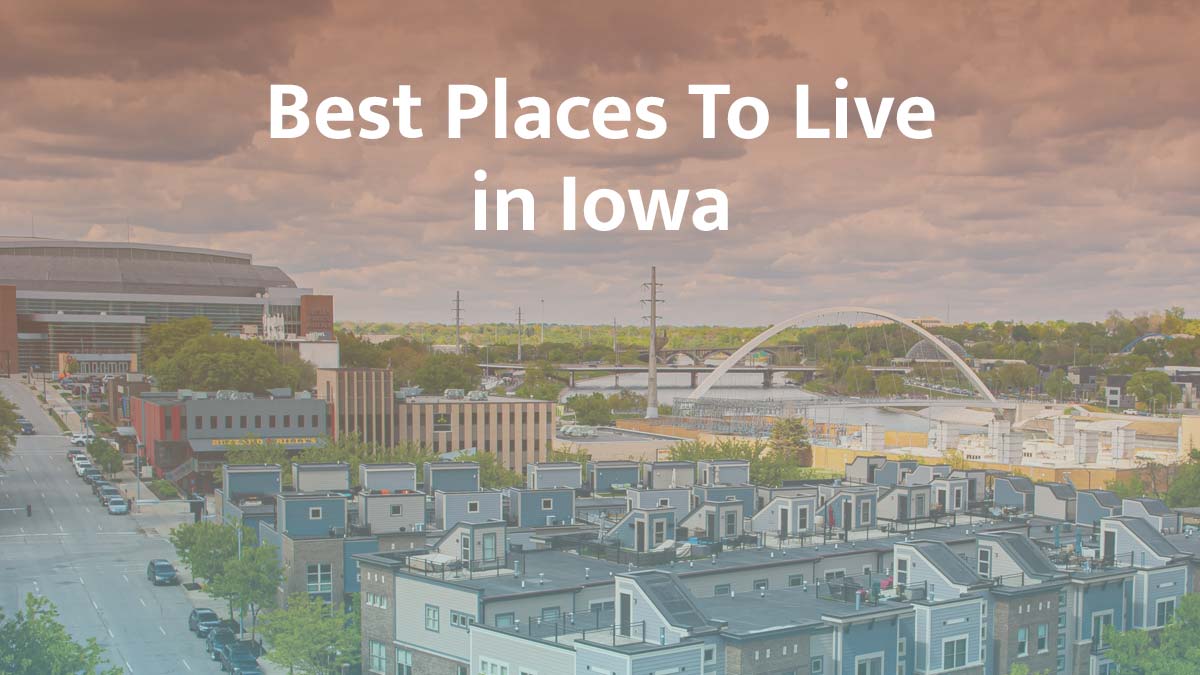
Iowa offers a strong mix of affordable housing, relatively low living costs, stable employment, college towns, growing suburbs, and smaller communities. In 2026, Des Moines is our best overall place to live in Iowa, while Ankeny stands out for families, Iowa City for culture and young professionals, and Davenport for affordable homeownership.
Iowa’s overall price level remains well below the national benchmark. The U.S. Bureau of Economic Analysis reports an Iowa Regional Price Parity of 87.8, compared with 100 nationally. Iowa cost of living data. If you’re comparing Iowa with other states, see our guide to the best places to live in the U.S..
Best Places to Live
- Key Takeaways
- Why Iowa Is One of the Best States to Live In
- Key Factors to Consider Before Moving to Iowa
- Top 10 Best Places to Live in Iowa in 2026
- Best Places to Live in Iowa Comparison
- Cost of Living in Iowa: What to Expect
- Best Places to Live in Iowa by Lifestyle
- Pros and Cons of Living in Iowa
- How to Choose the Best Place to Live in Iowa
- The Bottom Line
- Frequently Asked Questions
Key Takeaways
- Des Moines: Best overall for jobs, amenities, and attainable housing.
- Ankeny: Best for families and newer suburban development.
- Iowa City: Best for culture, healthcare, education, and young professionals.
- Cedar Rapids: Best balance of affordable housing and a diversified job base.
- Davenport: One of the lowest-cost housing options among Iowa’s larger cities.
- Pella: Best for small-town character, although its housing costs are higher than many Iowa cities.
Instant Valuation, Confidential Deals with a Certified iBuyer.com Specialist.
Sell Smart, Sell Fast, Get Sold. No Obligations.
Why Iowa Is One of the Best States to Live In
Affordability is one of Iowa’s biggest advantages. The state’s 2024 Regional Price Parity was 87.8, meaning overall prices were about 12% below the national price level. Iowa was among the lowest-cost states in the BEA’s latest comparison.
Housing remains relatively attainable as well. Iowa homes sold for a median $269,058 in June 2026, up 6.6% year over year. The typical home spent 38 days on the market, while statewide inventory increased 2.4%. Iowa housing market data
The labor market is another advantage. Iowa’s unemployment rate was 3.2% in July 2026, according to the Bureau of Labor Statistics. Iowa unemployment data
Residents can choose between larger employment centers such as Des Moines, university communities such as Ames and Iowa City, growing suburbs, river cities, and smaller towns. That variety makes Iowa suitable for buyers with very different budgets and lifestyles.
Key Factors to Consider Before Moving to Iowa
Housing costs: Iowa is inexpensive compared with many states, but prices vary sharply. Davenport and Des Moines remain relatively affordable, while Ankeny, West Des Moines, and Pella generally cost more.
Employment: Des Moines is strongest for finance, insurance, government, and healthcare. Iowa City and Ames benefit from major universities and healthcare or research employers. Cedar Rapids has a diversified manufacturing, food-processing, and healthcare economy.
Schools: School quality can change by district and neighborhood. Families should compare individual districts rather than relying on a citywide reputation.
Safety: Crime also varies significantly within cities. Check current local law-enforcement or FBI data for the specific neighborhood you are considering rather than assuming one citywide rating applies everywhere.
Weather: Iowa experiences cold winters, humid summers, thunderstorms, tornadoes, and flood risk in some areas. Property-specific flood exposure and drainage should be checked before buying. A professional inspection can also uncover property issues that are not obvious during a showing. Our guide to home inspection costs in Iowa explains what buyers should budget.
Top 10 Best Places to Live in Iowa in 2026
1. Des Moines: Best Overall
Des Moines offers Iowa’s strongest overall combination of jobs, entertainment, healthcare, restaurants, and housing affordability. Major industries include insurance, finance, state government, and healthcare, while attractions such as the Iowa State Capitol, Pappajohn Sculpture Park, and Iowa State Fair add to its lifestyle appeal.
The median sale price was $224,887 in July 2026, up 2.5% year over year. Homes sold in a median 24 days. That puts Des Moines well below many national metro markets while still providing the amenities of Iowa’s largest city.
2. Cedar Rapids: Best for Affordable City Living
Cedar Rapids works well for buyers who want city amenities without paying suburban Des Moines prices. Its employment base includes manufacturing, healthcare, food production, and professional services. Czech Village, NewBo, museums, and the Cedar River provide cultural and recreational options.
The median home sale price was $206,887 in June 2026, down 1.5% year over year, while homes were selling in about 10 days. Buyers of older properties should pay attention to flood history, basements, roofs, and mechanical systems.
3. Iowa City: Best for Culture and Young Professionals
Iowa City combines a major university, healthcare employment, restaurants, arts, sports, and a younger population. The University of Iowa and its healthcare system provide a stable economic anchor, while downtown offers one of the state’s stronger walkable entertainment districts.
Housing costs more than in Des Moines or Cedar Rapids. The median sale price reached $319,840 in July 2026, although that was 2.9% lower than a year earlier. Homes spent a median 23 days on the market.
4. Ames: Best for Education and Research
Ames is centered on Iowa State University, giving the city a strong education, research, engineering, and technology presence. Reiman Gardens, university athletics, parks, and campus events give residents more to do than the city’s size might suggest.
The median home sale price was $326,836 in July 2026, up 3.3% year over year. Homes sold in about 14 days. The trade-off is that university demand can influence both home prices and the rental market.
5. Davenport: Best for Affordable Homeownership
Davenport is one of the most affordable larger cities on this list. It also provides access to the broader Quad Cities economy, including manufacturing, logistics, healthcare, and employment across both Iowa and Illinois.
The median sale price was just $190,396 in June 2026, essentially flat from the previous year. Homes sold in a median 14 days. Riverfront recreation, the Figge Art Museum, and Quad Cities attractions add lifestyle value, although safety conditions vary by neighborhood.
6. Sioux City: Best for Low-Cost Regional Living
Sioux City serves as a regional economic center for northwest Iowa and nearby parts of Nebraska and South Dakota. Healthcare, manufacturing, agriculture-related businesses, and logistics support the local job market.
Its median sale price reached $227,836 in July 2026, up 6% year over year. Homes sold after a median 18 days. Housing remains affordable, but residents have fewer big-city career and entertainment options than in Des Moines.
7. Dubuque: Best for Scenic Living and Retirees
Dubuque stands out for its Mississippi River setting, historic architecture, healthcare access, and slower pace. The National Mississippi River Museum & Aquarium, riverfront, historic downtown, and Eagle Point Park also make tourism an important part of the local economy.
The median sale price was $247,376 in July 2026, up 3.1% year over year. Homes spent about 30 days on the market. Its hills and winter conditions are worth considering for buyers prioritizing easy mobility.
8. West Des Moines: Best for Suburban Amenities
West Des Moines is a strong choice for buyers who want suburban living while staying close to the Des Moines employment market. It offers newer housing, shopping, restaurants, parks, Valley Junction, and convenient access to major employers.
Housing is noticeably more expensive than in Des Moines itself. The median sale price was $344,812 in June 2026, up 1.4% year over year. Buyers should weigh those higher prices against newer neighborhoods and suburban amenities.
9. Ankeny: Best for Growing Families
Ankeny has expanded rapidly as the Des Moines metro grows north. Newer neighborhoods, schools, parks, retail, and convenient access to metro employment make it attractive to families.
The Census Bureau estimates Ankeny’s population at 77,833 in 2025, up 14.3% from its 2020 estimate base. The median home sale price was $337,816 in June 2026, down 2.1% year over year. Growth brings more amenities, but it also means higher housing costs and continued development.
10. Pella: Best Small Town
Pella offers one of Iowa’s most distinctive small-town lifestyles. Its Dutch heritage, historic downtown, Central College, local employers, and annual Tulip Time celebration give it a stronger cultural identity than many communities of similar size.
That desirability comes at a price. The median home sale price was $349,810 in June 2026, down 2.4% year over year. Pella is therefore a strong quality-of-life choice, but not necessarily one of Iowa’s cheapest places to buy.
Best Places to Live in Iowa Comparison
| City | Best For | Median Home Price | Cost of Living | Job Market | Safety | Lifestyle |
| Des Moines | Best overall | $224,887 | Low | Strong | Varies by neighborhood | Urban, active |
| Cedar Rapids | Affordable city living | $206,887 | Low | Strong | Varies by neighborhood | Community-focused |
| Iowa City | Culture and young professionals | $319,840 | Moderate | Strong | Varies by area | Academic, vibrant |
| Ames | Education and research | $326,836 | Moderate | Strong | Varies by area | College town |
| Davenport | Affordable homeownership | $190,396 | Low | Moderate | Varies by neighborhood | Riverfront urban |
| Sioux City | Low-cost regional living | $227,836 | Low | Moderate | Varies by neighborhood | Regional city |
| Dubuque | Retirees and scenery | $247,376 | Low to moderate | Moderate | Varies by area | Historic, scenic |
| West Des Moines | Suburban amenities | $344,812 | Moderate | Strong | Varies by neighborhood | Modern suburban |
| Ankeny | Families | $337,816 | Moderate | Strong | Varies by neighborhood | Growing suburban |
| Pella | Small-town living | $349,810 | Moderate | Moderate | Check local data | Historic, quiet |
Median prices are the latest Redfin median sale prices available during this September 2026 update. Data months vary between June and July 2026.
Cost of Living in Iowa: What to Expect
Iowa remains one of the country’s lower-cost states. The BEA’s 87.8 Regional Price Parity means prices overall were substantially below the U.S. benchmark in the latest official state comparison.
Housing is the biggest variable. The statewide median sale price was $269,058 in June 2026, but the cities in this guide ranged from about $190,000 in Davenport to roughly $350,000 in Pella.
Most households outside central city neighborhoods depend on a car, while Iowa winters can increase heating costs. Buyers should also budget for inspections, appraisals, property taxes, insurance, and maintenance. If you’re purchasing a home, see what a home appraisal costs in Iowa before finalizing your budget.
Best Places to Live in Iowa by Lifestyle
Best for young professionals: Des Moines. It offers the broadest employment market, nightlife, restaurants, and urban amenities. Iowa City is the strongest alternative for people who prefer a university-centered environment.
Best for families: Ankeny. Rapid population growth, newer neighborhoods, and metro access make it one of Iowa’s strongest suburban choices. West Des Moines is another good option for families with a larger housing budget.
Best for affordable homeownership: Davenport. Its roughly $190,000 median sale price is the lowest among the ten cities in this guide. Cedar Rapids and Sioux City are also relatively affordable.
Best college town: Iowa City. Ames is a close alternative, especially for buyers connected to Iowa State University, research, engineering, or agriculture.
Best for retirees: Dubuque. It combines healthcare, riverfront scenery, culture, and housing costs below several of Iowa’s fastest-growing suburbs.
Best small town: Pella. Its historic character and community identity stand out, although buyers should not expect bargain housing.
Pros and Cons of Living in Iowa
| Pros | Cons |
| Overall prices below the national level | Cold winters and humid summers |
| Relatively affordable housing in many cities | Tornado, storm, and flood exposure |
| 3.2% unemployment rate in July 2026 | Limited public transportation outside larger cities |
| Cities, suburbs, college towns, and small towns | Smaller specialized job markets outside major metros |
| Major universities and healthcare systems | Desirable suburbs can be significantly more expensive |
| Generally manageable commutes | Fewer large-city entertainment options |
How to Choose the Best Place to Live in Iowa
Start with your housing budget. A buyer who can comfortably purchase in Davenport or Des Moines may find Ankeny, West Des Moines, Ames, or Pella significantly more expensive. Before making an offer, compare the home’s likely market value and total monthly cost.
Next, match the city to your career. Des Moines has Iowa’s deepest corporate employment base, Iowa City is strong in healthcare and education, Ames centers on university and research jobs, while Cedar Rapids and the Quad Cities have large manufacturing and logistics sectors.
Research individual neighborhoods before deciding. Crime, school districts, flood risk, commute times, property taxes, and housing condition can change considerably within the same city.
If your relocation requires selling a current Iowa property first, review our guide to selling a house in Iowa. Sellers who want different options can also compare cash home buyers in Iowa, learn about selling a house as-is in Iowa, or check the best time to sell a house in Iowa.
Compare Cash Offers from Top Home Buyers. Delivered by Your Local iBuyer Certified Specialist.
One Expert, Multiple Offers, No Obligation.
Know Your Local Market Before You List
Pull the last 12 months of real sales and buyer activity for your neighborhood.
Get My Market ReportThe Bottom Line
Des Moines is the best overall place to live in Iowa in 2026 because it combines employment opportunities, city amenities, and housing costs that remain lower than many comparable U.S. metros. Ankeny is stronger for growing families, Iowa City and Ames suit university-centered lifestyles, Davenport offers the lowest housing price among our top ten, and Pella provides an appealing small-town alternative.
No Iowa community is best for everyone. Compare housing costs, employment, schools, safety, commute, and lifestyle before choosing. If your move begins with selling your current home, iBuyer.com can help you explore your selling options and connect with buyers rather than limiting you to a single path.
Frequently Asked Questions
Des Moines is the best overall place to live in Iowa for most people because it combines a large job market, relatively affordable housing, healthcare, restaurants, entertainment, and suburban options.
Among the ten places in this guide, Davenport has the lowest current median home sale price at about $190,396. Cedar Rapids, Des Moines, and Sioux City are also relatively affordable.
Ankeny is one of the strongest choices for families because of its newer neighborhoods, suburban amenities, parks, and access to the Des Moines employment market.
Safety varies by city and neighborhood, so there is no single answer that applies to every household. Compare current local crime data for the specific neighborhood you are considering before moving.
No. Iowa’s Regional Price Parity was 87.8 in the latest BEA data, compared with a national benchmark of 100, indicating that overall price levels are well below the U.S. average.
Des Moines has the broadest job market in Iowa, with major employment in insurance, finance, healthcare, government, and professional services.
Iowa can be a good place to retire because of its relatively low living costs and affordable housing. Dubuque stands out for retirees who want healthcare access, cultural attractions, and Mississippi River scenery.
Pella is one of Iowa’s strongest small-town choices because of its historic downtown, Dutch heritage, Central College, local employers, and community amenities.

Reilly Dzurick is a licensed real estate agent with over six years of experience and a member of the iBuyer.com Market Insights Team, covering national trends in home selling and the evolving iBuyer landscape. Her firsthand experience working with buyers and sellers gives her a practical perspective on how these platforms impact real homeowners. She holds a degree in Public Relations, Advertising, and Applied Communication.