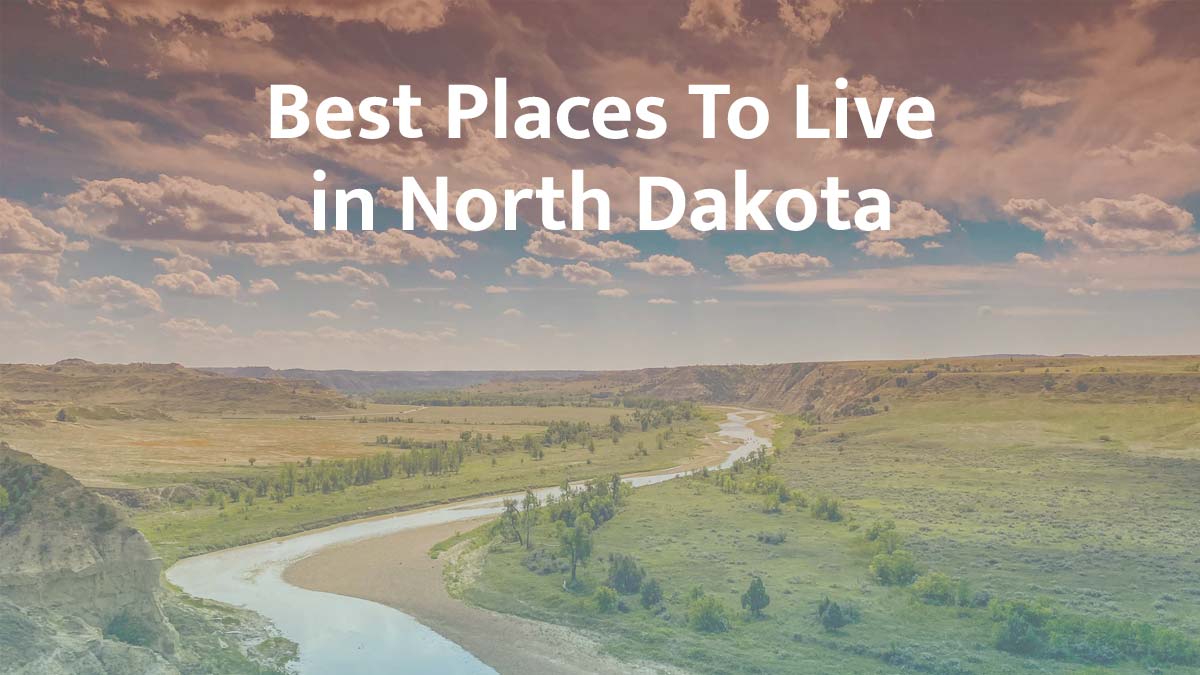
North Dakota offers affordable housing, strong employment, short commutes, and plenty of room to breathe. Fargo is our best overall place to live in North Dakota in 2026, while Bismarck stands out for families, West Fargo for suburban living, and Minot for buyers balancing affordability with job opportunities.
If you’re planning a move and need to sell first, understanding the cost of selling a house in North Dakota can help you build a realistic relocation budget.
Best Places to Live
- Key Takeaways
- Why North Dakota Is One of the Best States to Live In
- Key Factors to Consider Before Moving to North Dakota
- Top 10 Best Places to Live in North Dakota in 2026
- Best Places to Live in North Dakota Compared
- Cost of Living in North Dakota: What to Expect
- Best Places to Live in North Dakota by Lifestyle
- Pros and Cons of Living in North Dakota
- How to Choose the Best Place to Live in North Dakota
- Bottom Line
- Frequently Asked Questions
Key Takeaways
- Fargo is the best overall choice, combining a diverse job market, healthcare, higher education, restaurants, entertainment, and a median home sale price of about $319,840.
- Bismarck is particularly attractive for families, with a 1.9% metro unemployment rate in July 2026 and a stable government, healthcare, and services economy.
- West Fargo offers newer suburban living, but buyers should not assume it is cheaper than Fargo. Its recent median sale price was about $352,873.
- Minot and Jamestown stretch a housing budget further, with median sale prices around $290,055 and $249,775, respectively.
- Grand Forks is a strong choice for students and young professionals, thanks to the University of North Dakota and employment in healthcare, aviation, and education.
- Williston and Dickinson suit energy-sector workers, although their economies can be more sensitive to oil-market cycles.
Instant Valuation, Confidential Deals with a Certified iBuyer.com Specialist.
Sell Smart, Sell Fast, Get Sold. No Obligations.
Why North Dakota Is One of the Best States to Live In
North Dakota’s appeal starts with the combination of housing affordability and employment. The Bureau of Economic Analysis Regional Price Parities provide a useful benchmark for comparing state and metro price levels, while major North Dakota metros continue to post remarkably low unemployment.
According to the Bureau of Labor Statistics, July 2026 unemployment was 1.9% in Bismarck, 2.0% in Minot, 2.6% in Fargo, and 2.8% in Grand Forks.
North Dakota also works well for people who prefer less congestion and easy access to outdoor recreation. Fargo and Bismarck both have average commute times of roughly 15 to 16 minutes, according to U.S. Census Bureau data.
Outdoor recreation is another advantage. Fishing, hunting, boating, state parks, and the Badlands provide plenty to do beyond the state’s cities. North Dakota recorded 25.6 million visits and more than $3.4 billion in visitor spending in 2025, according to the North Dakota Department of Commerce.
Key Factors to Consider Before Moving to North Dakota
Housing Costs
Housing remains affordable compared with many parts of the country, but prices differ significantly by city. Recent median sale prices range from roughly $250,000 in Jamestown to more than $370,000 in Williston.
If you’re selling another property before moving, getting a current home value estimate can help determine how much equity you may have available for your next purchase.
Job Market
Where you live should partly depend on your career. Fargo has the most diversified large-city economy, while Bismarck benefits from government and healthcare employment. Grand Forks is strong in education and aviation. Minot has military, healthcare, and energy-related jobs, while Williston and Dickinson are closely connected to western North Dakota’s energy economy.
Weather
Winter is one of the biggest tradeoffs. North Dakota experiences long periods of cold weather, snow, and strong winds. Buyers should consider heating costs, insulation, snow removal, and winter driving when choosing both a city and a home.
Transportation
Most North Dakota communities are car-oriented. Public transportation exists in larger cities, but owning a vehicle is generally the most practical option.
Lifestyle
Fargo offers the state’s strongest urban experience. Bismarck balances city amenities with a quieter atmosphere, while West Fargo is more suburban. Grand Forks has a college-town character, and smaller communities such as Jamestown and Devils Lake offer slower-paced living.
Top 10 Best Places to Live in North Dakota in 2026
1. Fargo: Best Overall
Fargo is North Dakota’s largest city and the strongest all-around option for most movers. Its estimated population reached 136,275 in 2025, up 8.2% from its 2020 population base. Major employment sectors include healthcare, education, finance, manufacturing, and professional services.
The median home sale price was about $319,840 in July 2026, with homes spending around 23 days on the market. North Dakota State University, downtown restaurants, entertainment, healthcare facilities, and cultural attractions give Fargo amenities that smaller North Dakota communities cannot easily match.
Best for: Young professionals, families, graduates, and people wanting more urban amenities.
2. Bismarck: Best for Families and Stability
North Dakota’s capital combines a strong economy with manageable city size. Government, healthcare, education, and professional services provide a relatively diversified employment base. Metro unemployment was just 1.9% in July 2026.
Bismarck’s median home sale price was approximately $357,721, with homes spending around 29 days on the market. Missouri River recreation and nearby Fort Abraham Lincoln State Park add easy outdoor options.
Best for: Families and households prioritizing stable employment.
3. West Fargo: Best for Suburban Living
West Fargo has developed into one of the state’s most desirable suburban communities. Newer residential development, access to Fargo employers, and family-oriented neighborhoods are its biggest advantages.
The median sale price was about $352,873 in July 2026, and homes spent roughly 21 days on the market. That means buyers should not automatically assume West Fargo is a cheaper alternative to Fargo.
Best for: Families wanting suburban living with Fargo nearby.
4. Grand Forks: Best College Town
The University of North Dakota shapes much of Grand Forks’ economy and culture. Healthcare, education, aviation, defense, and public-sector employment broaden its job market, while metro unemployment stood at 2.8% in July 2026.
The city’s median home sale price was approximately $309,745, with homes spending about 19 days on the market. UND sports, the Greenway, and Red River recreation help give the city a more active lifestyle.
Best for: Students, university employees, aviation professionals, and young adults.
5. Minot: Best for Affordability and Jobs
Minot offers a useful middle ground between small-town affordability and regional-city employment. The median sale price was about $290,055 in July 2026, below Fargo, Bismarck, West Fargo, and Grand Forks.
Metro unemployment was only 2.0% in July 2026. Minot Air Force Base, healthcare, energy, retail, the North Dakota State Fair, and Scandinavian Heritage Park contribute to both its economy and lifestyle.
Best for: Buyers looking for affordable housing without giving up a regional job market.
6. Mandan: Best Alternative to Bismarck
Across the Missouri River from Bismarck, Mandan provides easy access to the same metro job market while maintaining a smaller-city atmosphere.
The median sale price was approximately $339,730 in July 2026, so the price gap with Bismarck is relatively modest. Residents benefit from Missouri River recreation and nearby Fort Abraham Lincoln State Park.
Best for: Buyers who want Bismarck-area employment with a smaller-community feel.
7. Dickinson: Best for Western North Dakota
Dickinson is a regional hub for western North Dakota, with employment connected to energy, healthcare, construction, retail, and other services.
Its median home sale price was approximately $329,835 in July 2026. Dickinson also works well for outdoor enthusiasts because of its proximity to the Badlands and Theodore Roosevelt National Park.
Best for: Energy workers and outdoor enthusiasts.
8. Williston: Best for Energy Careers
Williston remains one of North Dakota’s key energy centers. Oil, construction, transportation, and related industries can create attractive employment opportunities, although the local economy is more exposed to energy-market cycles.
The median sale price reached approximately $373,813 in July 2026, making Williston one of the more expensive markets in this comparison. Its population was estimated at 29,522 in 2025.
Best for: Energy, construction, and transportation professionals.
9. Jamestown: Best for Affordable Small-City Living
Jamestown is worth considering if home price matters more than big-city amenities. Its median sale price was approximately $249,775 in July 2026, among the lowest of the cities in this guide.
Healthcare, manufacturing, agriculture-related businesses, the National Buffalo Museum, and Frontier Village give the community a solid economic and recreational base. The tradeoff is a smaller job market and fewer entertainment options.
Best for: Budget-conscious buyers who prefer a quieter city.
10. Devils Lake: Best for Outdoor Recreation
Devils Lake is primarily attractive to people who value fishing, boating, hunting, and small-city living. Its housing market is much smaller than Fargo or Bismarck, so monthly price changes can be volatile.
Recent sales put the median around $260,000, but transaction volume is too low to treat short-term price movements as a reliable trend.
Best for: Anglers, hunters, outdoor enthusiasts, and people seeking quieter living.
Best Places to Live in North Dakota Compared
| City | Best For | Median Home Price | Cost of Living | Job Market | Safety | Lifestyle |
| Fargo | Best overall | $319,840 | Moderate for ND | Strong | Moderate | Urban, active |
| Bismarck | Families | $357,721 | Moderate | Very strong | Generally favorable | Family-oriented |
| West Fargo | Suburban living | $352,873 | Moderate | Strong | Generally favorable | Newer suburban |
| Grand Forks | College town | $309,745 | Moderate-low | Strong | Moderate | University, active |
| Minot | Affordability + jobs | $290,055 | Low-moderate | Strong | Moderate | Regional city |
| Mandan | Bismarck alternative | $339,730 | Moderate | Strong metro access | Generally favorable | Small-city/suburban |
| Dickinson | Western ND | $329,835 | Moderate | Energy-focused | Moderate | Outdoors, regional |
| Williston | Energy careers | $373,813 | Moderate-high for ND | Strong but cyclical | Moderate | Western, career-focused |
| Jamestown | Affordable small city | $249,775 | Low | Moderate | Generally favorable | Quiet |
| Devils Lake | Outdoor recreation | ~$260,000* | Low | Limited-moderate | Generally favorable | Fishing, outdoors |
*Devils Lake has a small number of monthly transactions, so its median price should be interpreted cautiously. Safety and cost-of-living descriptions are comparative editorial assessments rather than official ratings.
Cost of Living in North Dakota: What to Expect
North Dakota remains relatively affordable, particularly for housing, but there is no single cost that applies statewide. Jamestown and Minot offer considerably lower home prices than Bismarck, West Fargo, and Williston.
Transportation should also be part of the budget. Most residents depend on a car, although relatively short commutes help offset some of that expense. Winter brings another consideration: heating, snow removal, winter tires, and weather-related home maintenance can increase seasonal costs.
Buyers moving from another state should compare their income and housing budget against the specific city rather than relying solely on a statewide cost-of-living figure.
Best Places to Live in North Dakota by Lifestyle
Best overall: Fargo. It offers the state’s broadest mix of employment, education, healthcare, dining, and entertainment.
Best for families: Bismarck. Stable employment, strong household incomes, services, and recreation make it one of the state’s most balanced choices.
Best for young professionals: Fargo. The larger job market, NDSU, downtown, and entertainment scene provide more options for younger adults.
Best for suburban living: West Fargo. Newer residential development combines with easy access to Fargo.
Best college town: Grand Forks. UND gives the city a distinctive university atmosphere and supports jobs in education and aviation.
Best affordable larger city: Minot. Housing remains less expensive than in several other major North Dakota markets while unemployment is very low.
Best for energy careers: Williston. Employment opportunities remain closely connected to the Bakken and supporting industries.
Best for affordable small-city living: Jamestown. It has one of the lowest current median home prices in this guide.
Best for outdoor recreation: Devils Lake. Fishing, boating, and hunting are major lifestyle advantages.
Pros and Cons of Living in North Dakota
| Pros | Cons |
| Relatively affordable housing | Long, very cold winters |
| Low unemployment in major metros | Limited public transportation |
| Short average commutes | Fewer big-city amenities |
| Abundant outdoor recreation | Smaller rural job markets |
| Less congestion | Long distances between communities |
| Several stable regional economies | Western energy markets can be cyclical |
How to Choose the Best Place to Live in North Dakota
Start with your job and housing budget. Fargo and Bismarck have more diversified economies, Grand Forks stands out for education and aviation, and Williston and Dickinson make more sense for energy-sector careers.
Then consider city size and lifestyle. Fargo provides the most amenities, West Fargo offers suburban living, and Jamestown or Devils Lake may appeal more if you prefer a smaller community.
Families should compare schools, childcare, healthcare, commute times, and individual neighborhoods before deciding. Buyers should also check current listings because citywide median prices can hide substantial neighborhood-level differences.
If you’re relocating on a deadline, review your options for selling a house in North Dakota, including selling without a Realtor or selling a house as is in North Dakota. Homeowners considering a DIY sale can also review the North Dakota FSBO process.
Bottom Line
Fargo is the best overall place to live in North Dakota in 2026, particularly for people who value jobs, healthcare, education, and amenities. Bismarck is an excellent family choice, West Fargo provides suburban convenience, and Grand Forks and Minot combine reasonable housing costs with solid employment opportunities.
The right choice ultimately depends on your career, budget, and preferred lifestyle. If selling your current home is part of the move, you can explore options to sell your house fast or request a cash offer through iBuyer.com. iBuyer.com helps homeowners compare selling options rather than purchasing homes directly.
Compare Cash Offers from Top Home Buyers. Delivered by Your Local iBuyer Certified Specialist.
One Expert, Multiple Offers, No Obligation.
Know Your Local Market Before You List
Pull the last 12 months of real sales and buyer activity for your neighborhood.
Get My Market ReportFrequently Asked Questions
Fargo is the best overall choice for most people because it combines North Dakota’s broadest job market with healthcare, higher education, restaurants, entertainment, and relatively affordable housing.
Jamestown is one of the most affordable cities in this guide, with a median home sale price of about $249,775 in July 2026. Minot is another relatively affordable option with a larger employment base.
Yes. North Dakota can be a good choice for people seeking relatively affordable housing, low unemployment, short commutes, and outdoor recreation. The biggest tradeoffs are severe winters and limited big-city amenities outside Fargo.
Fargo is generally better for people who want a larger job market, university access, dining, and entertainment. Bismarck is particularly attractive to families and workers seeking a smaller city with a stable economy.
Bismarck is one of the best choices for families because of its stable employment base, services, recreation, and manageable size. West Fargo is another strong option for families who prefer suburban living.
Fargo is the strongest choice for young professionals because it has North Dakota’s largest concentration of employers, higher education, restaurants, nightlife, and other urban amenities.

Reilly Dzurick is a licensed real estate agent with over six years of experience and a member of the iBuyer.com Market Insights Team, covering national trends in home selling and the evolving iBuyer landscape. Her firsthand experience working with buyers and sellers gives her a practical perspective on how these platforms impact real homeowners. She holds a degree in Public Relations, Advertising, and Applied Communication.