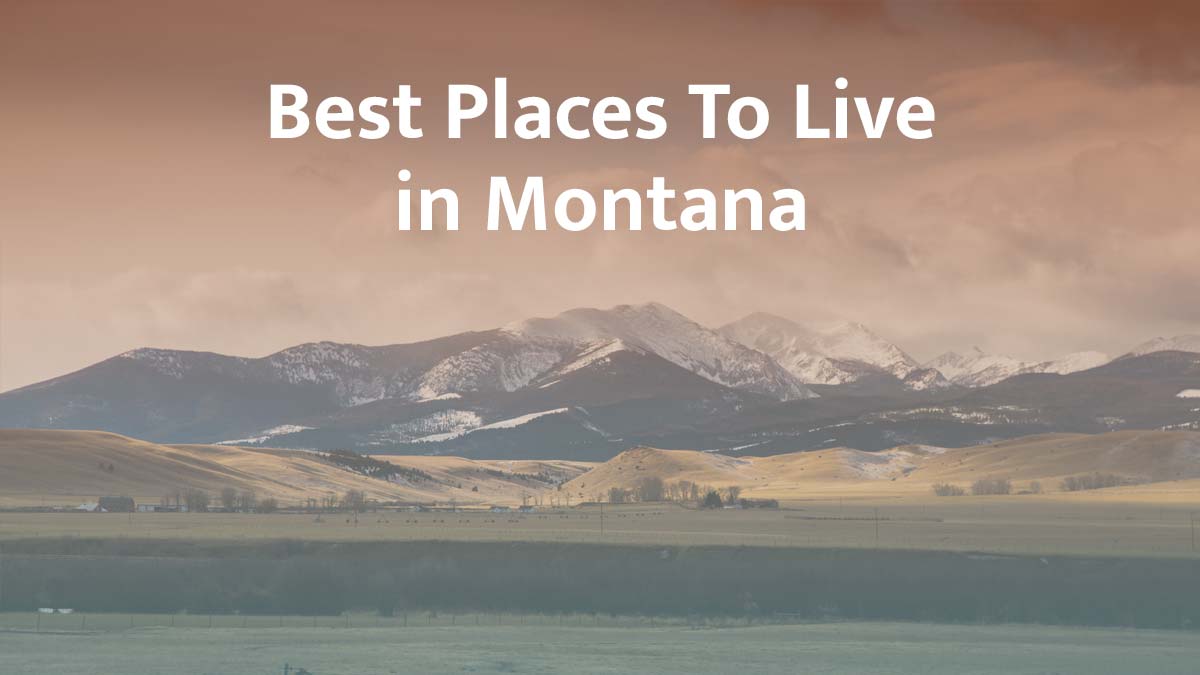
The best places to live in Montana in 2026 include Bozeman, Billings, Missoula, Helena, Great Falls, Butte, Kalispell, Whitefish, Livingston, and Belgrade.
Bozeman is our best overall choice for jobs, Montana State University, amenities, and outdoor recreation, but its housing market requires a large budget. Billings provides a more practical balance between employment and home prices, while Butte and Great Falls stand out for buyers prioritizing affordability.
Housing varies dramatically across the state. Median listing prices among our top 10 range from approximately $320,000 in Butte to nearly $1.29 million in Whitefish.
Key Takeaways
- Bozeman is our best overall choice for employment, amenities, university access, and outdoor recreation.
- Billings offers one of Montana’s strongest combinations of jobs, services, and relatively moderate housing costs.
- Butte and Great Falls are the strongest housing-value options among our top 10.
- Bozeman, Missoula, Kalispell, and Whitefish all carry substantial housing premiums.
- Montana’s statewide median listing price is approximately $647,000, so the state should not be considered uniformly affordable.
- Montana does not impose a general state sales tax, which is an important cost advantage.
Instant Valuation, Confidential Deals with a Certified iBuyer.com Specialist.
Sell Smart, Sell Fast, Get Sold. No Obligations.
Best Places to Live in MT
- Key Takeaways
- Why Montana Is One of the Best States to Live In
- Key Factors to Consider Before Moving to Montana
- 10 Best Places to Live in Montana
- 1. Bozeman: Best Overall
- 2. Billings: Best for Jobs and Practical City Living
- 3. Missoula: Best for Culture and Outdoor Lifestyle
- 4. Helena: Best for Stable Employment and Balance
- 5. Great Falls: Best for Affordability and Stability
- 6. Butte: Best for Home-Buying Value
- 7. Kalispell: Best for Glacier National Park Access
- 8. Whitefish: Best Luxury Mountain Lifestyle
- 9. Livingston: Best Small-Town Mountain Lifestyle
- 10. Belgrade: Best for Bozeman-Area Access
- Cost of Living in Montana: What to Expect
- Best Places to Live in Montana by Lifestyle
- Pros and Cons of Living in Montana
- How to Choose the Best Place to Live in Montana
- Final Thoughts on the Best Places to Live in Montana
- Frequently Asked Questions
Why Montana Is One of the Best States to Live In
Montana’s biggest attraction is access to the outdoors.
Residents have mountains, rivers, lakes, forests, ski areas, hiking, fishing, hunting, mountain biking, camping, and some of the country’s best-known national parks within reach.
Bozeman and Livingston provide access toward Yellowstone, while Kalispell and Whitefish are gateways to Glacier National Park and the Flathead Valley.
Montana also offers a lower-density lifestyle than most large metropolitan states. Even its largest communities feel small compared with major U.S. cities.
The state continues to grow. Montana’s population reached an estimated 1,144,694 in July 2025, up 5.6% from the April 2020 estimates base, according to the U.S. Census Bureau.
Employment varies considerably by region but includes healthcare, education, government, tourism, agriculture, energy, logistics, technology, construction, and professional services.
Montana’s seasonally adjusted unemployment rate was 3.2% in July 2026, below the 4.1% national rate, according to current Bureau of Labor Statistics data.
The main tradeoff is housing. Demand for places such as Bozeman, Missoula, Kalispell, and Whitefish has pushed typical asking prices well beyond what older descriptions of affordable Montana living suggest.
Key Factors to Consider Before Moving to Montana
Housing Costs
Montana’s current statewide median listing price is approximately $647,000, with median asking rent around $1,940 per month, according to the latest Montana housing market data.
Homes are spending a median of about 62 days on the market, and current statewide conditions favor buyers more than the pandemic-era market did.
Still, affordability depends heavily on location.
Butte’s median listing price is around $320,000 and Great Falls is about $389,675. Billings is approximately $461,814.
Compare those with $737,475 in Missoula, $863,000 in Bozeman, and $1,285,750 in Whitefish.
Buyers also need to account for transaction expenses. Montana buyer closing costs often run around 2% to 5% of the purchase price, depending on financing and property characteristics. See iBuyer’s closing costs in Montana guide for a complete breakdown.
Job Market
Montana’s statewide unemployment rate is relatively low, but job opportunities vary considerably by city.
Bozeman benefits from Montana State University, healthcare, technology, tourism, and professional services.
Billings has one of the state’s broadest regional economies, including healthcare, logistics, energy, retail, and professional services.
Helena is anchored by state government and healthcare, while Great Falls benefits from healthcare, government, education, and Malmstrom Air Force Base.
Missoula combines the University of Montana, healthcare, education, tourism, and regional services.
Career fit matters more than the statewide unemployment rate, particularly in smaller mountain and resort markets.
Taxes
Montana’s tax structure has one major advantage: there is no general state sales tax.
Current Montana tax information from Tax Foundation reports individual income-tax rates of 4.70% and 5.65% for 2026 and an effective property-tax rate of approximately 0.61% on owner-occupied housing value.
Montana also does not impose a state estate or inheritance tax.
Actual property-tax bills vary by county, assessed value, and property.
Winter and Travel
Montana winters can add meaningful ownership and transportation costs.
Buyers should budget for:
- Heating
- Snow removal
- Winter tires
- Vehicle maintenance
- Roof and ice management
- Longer winter travel times
Distance is another consideration. Montana communities can be separated by hours of driving, and smaller towns may have limited access to airports, specialists, and major services.
Rural Property Considerations
Rural Montana homes may require additional due diligence.
Private wells, septic systems, acreage, outbuildings, wildfire exposure, access roads, and long travel distances can all affect ownership costs.
A standard home inspection in Montana typically costs around $350 to $600, but larger, older, rural, or more complicated properties may cost more to inspect.
10 Best Places to Live in Montana
| Place | Best For | Median Listing Price | Main Tradeoff |
|---|---|---|---|
| Bozeman | Best overall | $863,000 | Expensive housing |
| Billings | Jobs + practical city living | $461,814 | Less mountain-town character |
| Missoula | Culture + outdoor lifestyle | $737,475 | High housing costs |
| Helena | Stable employment + balance | $571,250 | Smaller private-sector job market |
| Great Falls | Affordability + stability | $389,675 | Smaller professional market |
| Butte | Home-buying value | $320,000 | Fewer major employers |
| Kalispell | Glacier access | $723,675 | Premium housing |
| Whitefish | Luxury mountain lifestyle | $1,285,750 | Very high housing costs |
| Livingston | Small-town mountain lifestyle | $638,250 | Expensive for a small market |
| Belgrade | Bozeman-area access | $636,000 | Still expensive |
Prices are approximate 2026 median listing prices. Listing prices represent asking prices rather than completed sale prices.
1. Bozeman: Best Overall
Best for: Professionals, university access, and outdoor recreation
Bozeman is our best overall Montana choice because it combines a relatively diverse local economy with some of the state’s strongest outdoor access and amenities.
Montana State University is a major educational and economic anchor. Healthcare, technology, tourism, construction, professional services, and university-related employment broaden the job market.
Bozeman also has a walkable downtown, restaurants, breweries, trails, nearby skiing, and convenient access toward Yellowstone National Park.
Housing is the major drawback.
The current median listing price is approximately $863,000, while median asking rent is around $2,425 per month.
That makes Bozeman a premium Montana market.
It is best suited to households whose incomes and housing budgets can support the price in exchange for jobs, amenities, and outdoor access.
2. Billings: Best for Jobs and Practical City Living
Best for: Employment, healthcare, services, and housing value
Billings may be Montana’s strongest practical relocation choice.
It has a larger and more diverse employment base than most communities in the state, with healthcare, logistics, energy, retail, professional services, construction, and regional commerce all playing important roles.
Billings also provides an airport, major healthcare facilities, shopping, restaurants, and services that smaller Montana communities may lack.
The current median listing price is approximately $461,814, while median asking rent is around $1,600 per month.
That puts typical housing far below Bozeman, Missoula, Kalispell, and Whitefish.
The tradeoff is lifestyle. Billings does not offer the same immediate mountain-town atmosphere as Bozeman or Whitefish.
For households prioritizing employment and day-to-day practicality, however, it deserves serious consideration.
3. Missoula: Best for Culture and Outdoor Lifestyle
Best for: University life, arts, restaurants, and recreation
Missoula combines a college-town environment with one of Montana’s stronger cultural and outdoor lifestyles.
The University of Montana is a major employer, while healthcare, education, professional services, tourism, and regional businesses contribute to the economy.
Residents have access to the Clark Fork River, trails, hiking, skiing, restaurants, breweries, music, and arts.
The current median listing price is approximately $737,475, with median asking rent around $1,951 per month.
That makes Missoula more expensive than Montana’s already-high statewide median.
Housing affordability is therefore the main tradeoff.
Missoula works best for buyers who place a high value on university amenities, culture, and outdoor access and can comfortably handle the housing premium.
4. Helena: Best for Stable Employment and Balance
Best for: Government employees, healthcare workers, and smaller-city living
Helena offers a useful middle ground between Montana’s expensive mountain destinations and its lower-cost regional cities.
As the state capital, government provides an important source of stable employment. Healthcare and regional services add to the local economy.
Helena also has a historic downtown, trails, outdoor recreation, and a central Montana location.
The current median listing price is approximately $571,250, while median asking rent is about $1,650 per month.
That’s substantially lower than Bozeman, Missoula, Kalispell, or Whitefish, but it is not inexpensive.
Helena’s main drawback is a smaller private-sector employment market.
For households whose careers fit government, healthcare, or regional services, it offers one of Montana’s better combinations of stability and lifestyle.
5. Great Falls: Best for Affordability and Stability
Best for: Buyers seeking lower housing costs with established services
Great Falls is one of the more attainable substantial cities in Montana.
The local economy includes healthcare, government, education, regional services, and employment associated with Malmstrom Air Force Base.
Residents also have access to the Missouri River, trails, parks, shopping, and regional healthcare.
The current median listing price is approximately $389,675, with median asking rent around $1,699 per month.
That is dramatically below Bozeman, Missoula, Kalispell, and Whitefish.
The tradeoff is a smaller professional employment market and a climate that can be cold and windy.
Great Falls is strongest for households prioritizing manageable housing costs, stable regional employment, and practical services.
6. Butte: Best for Home-Buying Value
Best for: Buyers prioritizing purchase price
Butte has the lowest median listing price among the 10 places in this guide.
The current median is approximately $320,000, with median asking rent around $1,600 per month.
That makes Butte particularly notable in a state where the overall median listing price is about $647,000.
The city offers historic architecture, regional healthcare, government services, interstate access, and substantial outdoor recreation nearby.
Housing value is its biggest advantage.
The tradeoff is a smaller employment and amenity base than Billings, Bozeman, or Missoula.
For buyers who can work locally, remotely, or have flexible employment, Butte provides one of the strongest opportunities to buy a home without entering Montana’s premium markets.
7. Kalispell: Best for Glacier National Park Access
Best for: Flathead Valley living and outdoor recreation
Kalispell is one of the main population and service centers in northwestern Montana.
Its location provides access to Glacier National Park, Flathead Lake, skiing, hiking, boating, and other outdoor recreation.
Healthcare, tourism, construction, retail, and regional services support the local economy.
The current median listing price is approximately $723,675, with median asking rent around $1,850 per month.
The tradeoff is clear: the Flathead Valley’s popularity has made housing expensive.
Kalispell is therefore best for buyers who specifically value Glacier-region access and whose budgets can handle the premium.
It should not be considered a low-cost outdoor destination.
8. Whitefish: Best Luxury Mountain Lifestyle
Best for: High-budget buyers prioritizing skiing, lakes, and recreation
Whitefish sits firmly in Montana’s luxury housing category.
Residents have access to Whitefish Mountain Resort, Whitefish Lake, Glacier National Park, a walkable downtown, restaurants, skiing, hiking, mountain biking, boating, and a tourism-driven amenity base.
The current median listing price is approximately $1,285,750, while median asking rent is about $2,675 per month.
That is by far the highest housing price among our top 10.
Whitefish’s economy is also more dependent on tourism and hospitality than larger employment centers such as Billings or Bozeman.
Its appeal is lifestyle, not affordability.
For buyers with sufficient resources, Whitefish offers one of Montana’s strongest combinations of mountain and lake recreation.
9. Livingston: Best Small-Town Mountain Lifestyle
Best for: Smaller-town living and Yellowstone-region recreation
Livingston provides a small-town alternative within reach of Bozeman and Yellowstone-region recreation.
Its historic downtown, Yellowstone River, fishing, hiking, restaurants, and mountain setting create a distinctive lifestyle.
The city also benefits from proximity to the broader Bozeman economy.
Housing, however, is no longer inexpensive.
The current median listing price is approximately $638,250.
That puts Livingston close to Montana’s statewide median and well above Billings, Great Falls, or Butte.
Livingston is therefore best for buyers who specifically want its mountain-town environment rather than people searching for a cheap alternative to Bozeman.
10. Belgrade: Best for Bozeman-Area Access
Best for: Buyers who want Gallatin Valley access outside Bozeman
Belgrade has grown alongside the broader Gallatin Valley economy.
Its location provides convenient access to Bozeman employment, Bozeman Yellowstone International Airport, regional services, and outdoor recreation.
Residential development has expanded as the Bozeman area has grown.
The current median listing price is approximately $636,000, while median asking rent is around $2,600 per month.
Belgrade remains less expensive to buy in than Bozeman at the median listing level, but it is not a low-cost market.
Its strongest advantage is location.
For people who work in the Bozeman area but do not need to live directly in Bozeman, Belgrade can provide another option within the same regional economy.
Cost of Living in Montana: What to Expect
Montana’s cost of living is increasingly shaped by housing.
The current price spread illustrates the differences:
| Place | Approx. Median Listing Price |
|---|---|
| Whitefish | $1,285,750 |
| Bozeman | $863,000 |
| Missoula | $737,475 |
| Kalispell | $723,675 |
| Livingston | $638,250 |
| Belgrade | $636,000 |
| Helena | $571,250 |
| Billings | $461,814 |
| Great Falls | $389,675 |
| Butte | $320,000 |
The statewide median listing price is approximately $647,000, while median asking rent is around $1,940 per month.
That means Butte’s current median asking price is less than one-quarter of Whitefish’s.
Taxes can partly offset some other costs. Montana has no general state sales tax, while its effective residential property-tax rate is relatively modest compared with many states.
Transportation can increase household expenses.
Most Montana communities are car-dependent, and long distances between cities can increase fuel and vehicle costs. Winter tires, snow, road conditions, and limited public transportation should also be included in a relocation budget.
Financed buyers generally need an appraisal as part of the mortgage process. A typical home appraisal in Montana often costs about $500 to $900, while rural, acreage, or unusual properties may cost considerably more.
The best affordability comparison is therefore the complete cost of housing and daily life, not just the listing price.
Best Places to Live in Montana by Lifestyle
| Priority | Best Options |
|---|---|
| Best overall | Bozeman |
| Jobs + city services | Billings |
| More affordable housing | Butte, Great Falls |
| Government careers | Helena |
| College-town lifestyle | Bozeman, Missoula |
| Culture + outdoor recreation | Missoula |
| Glacier National Park access | Kalispell, Whitefish |
| Luxury mountain lifestyle | Whitefish |
| Small-town mountain living | Livingston |
| Bozeman-area access | Belgrade |
| Young professionals | Bozeman, Billings, Missoula |
| Retirement | Helena, Great Falls, Billings |
Budget is one of the easiest ways to narrow the options.
Buyers looking below $500,000 should focus more closely on Butte, Great Falls, and Billings.
Higher-budget lifestyle buyers have a very different set of choices, including Bozeman, Missoula, Kalispell, and Whitefish.
Healthcare also matters, particularly for retirees. Billings, Missoula, Great Falls, Helena, and Kalispell function as stronger regional healthcare centers than many smaller mountain communities.
Pros and Cons of Living in Montana
Pros
- Exceptional outdoor recreation
- Mountains, rivers, lakes, and public land
- No general state sales tax
- Relatively low statewide unemployment
- Lower-cost housing options in Butte and Great Falls
- Smaller-city and lower-density lifestyle
- Access to Glacier and Yellowstone regions
- Wide variety of mountain and regional communities
Cons
- High housing costs in western Montana
- Limited inventory in some desirable markets
- Cold winters
- Long driving distances
- Car dependence
- Smaller professional job markets
- Limited specialist healthcare in some areas
- Tourism pressure in resort communities
- Rural properties may require more maintenance and due diligence
How to Choose the Best Place to Live in Montana
Start with your housing budget. Before deciding whether to sell, calculate transaction expenses carefully. iBuyer also covers seller closing costs in Montana and current realtor fees in Montana.
Buyers comfortable with premium markets can consider Whitefish, Bozeman, Missoula, and Kalispell.
Livingston, Belgrade, and Helena occupy the middle of this comparison.
Billings, Great Falls, and Butte provide lower entry prices.
Next, match the location to your career.
Bozeman is strongest for education, technology, healthcare, and tourism. Billings has healthcare, logistics, energy, professional services, and regional commerce.
Missoula is centered more heavily on education, healthcare, and services, while Helena is especially relevant to government employees.
Great Falls combines healthcare, government, and military-related employment.
Then decide how important outdoor access is relative to everyday services.
Whitefish, Kalispell, Livingston, and Bozeman offer particularly strong recreation access, but they also carry some of the state’s highest housing costs.
Billings and Great Falls provide a more practical regional-city environment.
Finally, evaluate healthcare and transportation.
Living in Montana can mean long drives between communities. Airport access, specialist healthcare, winter road conditions, and proximity to essential services should all factor into the decision.
For the full transaction process, see iBuyer’s guide to selling a house in Montana.
Homeowners prioritizing speed can also compare cash home buyers in Montana or options to sell a house fast in Montana.
Final Thoughts on the Best Places to Live in Montana
The best place to live in Montana depends heavily on housing budget, career, outdoor priorities, healthcare needs, and tolerance for winter travel.
Bozeman offers the strongest overall combination of jobs, amenities, university access, and recreation but comes with a substantial housing premium. Billings is one of the strongest practical alternatives for buyers who want employment and services without Bozeman-level prices.
For affordability, Butte and Great Falls stand out. Helena provides a middle ground with government and healthcare employment.
Lifestyle buyers have very different options. Missoula combines culture with outdoor access, Kalispell provides a gateway to Glacier National Park, and Whitefish offers a luxury mountain lifestyle at by far the highest price in the top 10. Livingston and Belgrade provide access to the Bozeman and Yellowstone region but should no longer be considered cheap alternatives.
Montana’s lifestyle appeal is real, but so is the housing premium in its most desirable markets. Compare the complete cost of housing, employment, healthcare, transportation, taxes, and winter ownership before deciding where to move.
Frequently Asked Questions
Bozeman is our best overall choice because it combines employment, Montana State University, restaurants, services, and excellent access to outdoor recreation. The main drawback is its approximately $863,000 median listing price.
Butte has the lowest median listing price among our top 10 at approximately $320,000. Great Falls is another relatively attainable option at about $389,675.
Yes. Bozeman offers a strong combination of employment, university amenities, restaurants, healthcare, skiing, hiking, and Yellowstone-region access. Housing is the main drawback, with a current median listing price of approximately $863,000.
Housing can be expensive, particularly in western Montana. The statewide median listing price is approximately $647,000, while Whitefish, Bozeman, Missoula, and Kalispell are all premium markets. Butte, Great Falls, and Billings offer lower entry prices.
Bozeman, Billings, Helena, Great Falls, and other Montana communities are worth considering depending on housing budget, employment, healthcare, parks, services, commute, and the specific schools important to the household.
Bozeman, Billings, and Missoula are strong choices for young professionals. Bozeman offers university, technology, healthcare, and tourism employment, while Billings has a broad regional economy and Missoula combines education, healthcare, culture, and outdoor recreation.
Helena, Great Falls, and Billings can be practical retirement choices because they combine regional healthcare and services with lower housing costs than Montana’s premium mountain markets. Budget, winter conditions, healthcare needs, and proximity to family should all factor into the decision.
Butte, Great Falls, and Billings offer the strongest housing value among the cities in this guide. Their median listing prices are approximately $320,000, $389,675, and $461,814, respectively.
Billings has one of Montana’s broadest regional employment bases, including healthcare, logistics, energy, retail, and professional services. Bozeman is particularly strong for education, technology, healthcare, tourism, and professional employment.
Montana does not impose a general state sales tax. The state does have individual income taxes and property taxes, so buyers should consider the complete tax picture when comparing locations.
It can be if Montana’s outdoor recreation, smaller cities, employment opportunities, and lower-density lifestyle fit your priorities. Housing costs, winter weather, healthcare access, travel distances, and local job opportunities should all be compared before choosing a community.

Reilly Dzurick is a licensed real estate agent with over six years of experience and a member of the iBuyer.com Market Insights Team, covering national trends in home selling and the evolving iBuyer landscape. Her firsthand experience working with buyers and sellers gives her a practical perspective on how these platforms impact real homeowners. She holds a degree in Public Relations, Advertising, and Applied Communication.