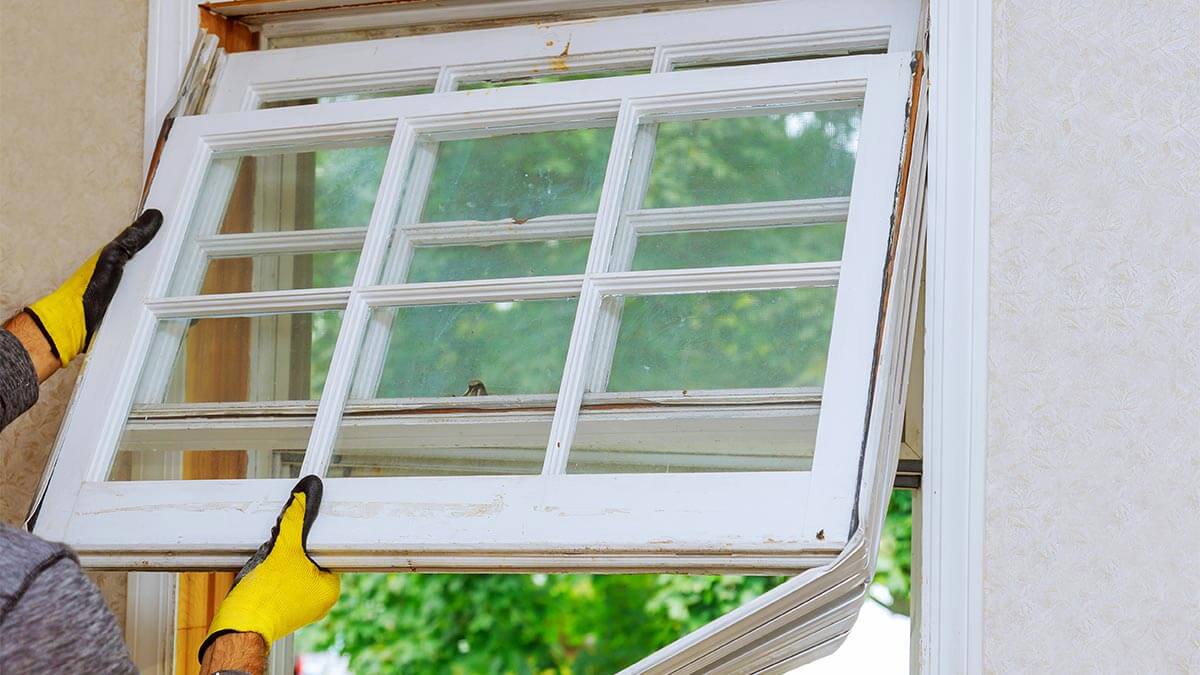
Yes, you can sell a house with old windows. New windows recoup only 60 to 74% of their cost at resale. That makes replacement rarely the right financial call. Whether to replace, offer a credit, or sell as-is depends on your windows’ condition, your market, and what a home inspector finds.
Selling with old windows is common. Most of these deals close successfully after some negotiation. According to an NAHB survey, 90% of homebuyers consider energy-efficient windows desirable. But desirable does not mean required. Old windows are a negotiating point in most transactions, not a legal barrier to closing.
This guide covers how old windows affect your sale, when replacement is worth the cost, what you must disclose, and how to move forward if you skip the upgrade.
Sell a House with Old Windows
- How Old Windows Affect a Home Sale
- Signs Your Windows Will Cost You at Closing
- When Replacing Windows Before Selling Is Worth It
- When to Skip Window Replacement
- How Much Value Do New Windows Add?
- Low-Cost Alternatives to Window Replacement
- What to Disclose About Old Windows
- What Devalues a House the Most?
- How to Sell a House with Old Windows As-Is
- Frequently Asked Questions
Old Windows? Sell Without Replacing Them Get competing cash offers on your home as-is, no upgrades required
No repairs, no agent fees, no obligations.
How Old Windows Affect a Home Sale
Old windows affect a transaction in two ways: what a home inspector writes in the report and how buyers react during showings. Neither one automatically kills a deal.
What buyers and inspectors flag
Inspectors check four basic things: the window opens, closes, and locks. There should be no broken glass, no failed seals, and no frame damage. The most common flags are condensation trapped between panes (a failed window seal), stuck sashes, missing hardware, and rotted wood frames. In cold climates, inspectors often note single-pane windows as an energy concern. That note is usually informational, not a required repair.
The NAHB buyer preferences data shows 90% of buyers want energy-efficient windows. That means buyers arrive at showings with expectations already set. Drafts or fogged glass during a walk-through reduce enthusiasm before the inspection report is written.
How window issues affect price negotiations
A flagged window gives buyers grounds to request a price cut, a seller credit, or a pre-closing repair. With financed buyers, lenders may require repairs before funding the loan. This is especially true when a bedroom window is stuck shut and blocks emergency egress. A buyer credit for repairs equal to 50 to 100% of replacement cost is a common ask in balanced and buyer’s markets. In competitive seller’s markets, buyers push less hard on window age.
The specific condition of your windows matters more than their age alone.
Signs Your Windows Will Cost You at Closing
Not every old window creates a problem. The checklist below helps you spot which windows are likely to trigger inspection flags or post-inspection negotiation.
Functional failures that trigger inspection flags
These conditions appear most often in inspection reports. They give buyers real negotiating leverage:
- The sash will not open, close, or lock.
- Glass is cracked or broken in any pane.
- Condensation is visible between panes (a failed seal, meaning the insulating gas has escaped).
- Wood frames show visible rot, or vinyl or aluminum frames are bent, warped, or structurally damaged.
- Drafts are detectable near the frame on a windy day.
- A bedroom window cannot open wide enough to serve as an emergency exit.
Windows in the 20-to-25-year range are where home inspection reports routinely start flagging problems. Age itself is not a defect. But seals, hardware, and frames all reach common failure points around that mark. The ENERGY STAR window standards define minimum energy performance benchmarks. Windows well below those standards may also show up in energy-audit notes attached to an inspection report.
Painted-shut windows deserve special attention. In bedrooms, a painted-shut sash blocks emergency egress. Inspectors treat that as a safety deficiency. It is also a seller disclosure trigger in many states.
Cosmetic and curb appeal issues
Cosmetic issues rarely trigger inspection flags. Dated frame color, style mismatch with a newer exterior, or single-pane appearance without actual drafts may narrow your buyer pool. They do not create direct negotiating leverage the way functional failures do.
If your windows have one or more problems from the list above, the next question is whether fixing them is worth the cost.
When Replacing Windows Before Selling Is Worth It
Window replacement before selling makes sense in specific situations. It is not a blanket pre-listing upgrade. Whether to replace depends on your windows’ condition and what your market demands.
Market conditions that justify the investment
According to NAR Remodeling Impact data, vinyl windows return roughly 74% of replacement cost at resale. Wood windows return roughly 71%. On a $10,000 project, that is $7,100 to $7,400 back. You do not recover the full cost. Replacement makes financial sense when you are selling in an upscale or move-in-ready market where buyers expect zero deferred maintenance, or when your energy bills are unusually high and you can document them.
Replace if:
- Frames are visibly rotted or structurally damaged.
- Seals have failed and condensation is trapped between panes.
- A bedroom window is stuck shut and blocks emergency egress.
- Your home targets a premium market where buyers expect move-in-ready condition.
- High energy bills are documentable and buyers will use them as a negotiating point.
When window replacement before selling pays
Replacement is justified when a failed window would either trigger a lender-required repair or hand buyers a negotiating advantage worth more than the fix costs. A single failed egress window in a bedroom falls into the first category. Five windows with failed seals across the house fall into the second. Buyers will request $3,500 to $5,000 in credits even if you have already priced those windows into the listing.
Per Angi window cost estimates, vinyl replacement windows run roughly $700 to $900 per window installed. Wood windows run $800 to $1,300. Replacing 10 windows costs $7,000 to $13,000 depending on material and regional labor rates. Vinyl returns more per dollar spent than wood, making it the cost-effective first choice for sellers who decide to replace.
The ROI data also tells you when not to replace. New windows recoup 63 to 74% of cost at best. A $10,000 job returns at most $7,400 in value.
When to Skip Window Replacement
If your windows are functional, skip the replacement. The numbers support that conclusion.
Windows that pass inspection as-is
A window that opens, closes, and locks, with no broken seals and no frame damage, will typically pass inspection without giving buyers leverage. Age alone is not a defect. A 30-year-old double-hung that works correctly is in a completely different category from a 10-year-old window with a failed window seal.
Selling with old windows that still function is a normal transaction in most markets. Just as replacing flooring first often does not pay back dollar for dollar, window replacement follows the same logic. Buyers in most price segments plan to personalize the home. Brand-new windows do not guarantee they will pay the full replacement cost back in the sale price.
Don’t replace if:
- Windows open, close, and lock without resistance.
- No glass is cracked or broken.
- No condensation is trapped between panes.
- Frames are intact with no rot, bowing, or structural damage.
- The home is priced below the area median, where buyers expect some deferred maintenance.
- The replacement cost ($7,000 to $15,000) would not be recovered at resale given the 60 to 74% recoup rate.
Lower-priced homes and seller’s markets
In seller’s markets with low inventory, buyers are less willing to walk away over window age or cosmetic condition. In lower-priced homes, buyers expect some deferred maintenance. They have usually priced it into their offer already. Sellers who have adjusted their list price to reflect window age gain nothing by replacing. The market discount is already built in.
Cosmetically dated but functional windows are generally not worth replacing unless the home is in a premium segment. The $7,000 to $15,000 spent on replacement is often better held as a closing credit. That gives the buyer control over the style they prefer.
Before you commit to either path, get the actual numbers: what replacement costs, what it adds in value, and whether the math works for your situation.
How Much Value Do New Windows Add?
Old windows home value impact is a two-variable question: how much does replacement cost, and how much does the market pay back?
ROI by window type: vinyl vs. wood
Two authoritative sources measure window replacement ROI. They produce slightly different figures. The NAR Remodeling Impact Report measures perceived value impact on list price: 74% for vinyl, 71% for wood. The Cost vs. Value annual report measures realized resale difference and shows 60 to 70% across materials. The two sources use different methods, not different data sets. Both confirm that replacement does not pay back dollar for dollar.
Total cost vs. resale value
The table below shows the full picture by window type.
| Window Type | Avg Installed Cost | % Recouped at Resale | Net Return on $10,000 Spend |
|---|---|---|---|
| Vinyl replacement | $700-$900 per window | 63-74% | $6,300-$7,400 |
| Wood replacement | $800-$1,300 per window | 65-71% | $6,500-$7,100 |
| Full house (10 windows) | $7,000-$13,000 total | 63-74% | $4,400-$9,600 |
Based on NAR Remodeling Impact Report and Remodeling Magazine Cost vs. Value 2026 data. Verify current figures before transacting.
On a $350,000 home, a full window replacement typically adds roughly $5,000 to $7,500 in resale value, not the $10,000 to $13,000 spent. The math rarely favors replacement as a speculative pre-listing investment.
If the ROI math does not work for full replacement, targeted low-cost repairs can handle the specific concerns buyers and inspectors raise.
Low-Cost Alternatives to Window Replacement
You do not have to choose between a $10,000 project and doing nothing. The repairs below cost $500 to $1,500 total. They address the same buyer and inspection concerns.
Weatherstripping and re-caulking
The EPA weatherization guidance identifies air sealing around windows as one of the highest-return weatherization moves for homeowners. For sellers, fixing drafts addresses what buyers feel during a showing and what inspectors note in a report.
Here are the most effective low-cost window improvements, in order of cost:
- Re-caulk exterior frames. Window caulking runs $50 to $150 DIY. It closes visible gaps, reduces drafts, and improves the impression at inspection.
- Replace weatherstripping on operable sashes. Weatherstripping costs $100 to $300. It fixes the drafty window complaint that leads to inspection flags and requires no work on the glass or frame.
- Replace latches and handles. Hardware runs $20 to $80 per window. It ensures windows open, close, and lock, which is the core test inspectors apply.
- Deep-clean glass and frames; repaint wood frames. This costs $50 to $200. It resolves cosmetic buyer concerns and makes aged windows look maintained rather than neglected.
Total cost for all of the above on a 10-window home: $500 to $1,500, versus $7,000 to $13,000 for full replacement.
Window film and frame cosmetics
Energy-efficient window film runs $2 to $8 per square foot applied, DIY or professional. It reduces visible heat transfer and improves the energy-efficiency signal buyers pick up during a showing. It does not fix a failed seal or broken glass. But it is a practical option on otherwise functional older windows.
Weatherstripping and re-caulking together are the cheapest moves available. If your windows pass every functional test but show visible gaps or drafts, these two repairs alone may be enough to neutralize buyer leverage.
Whatever condition your windows are in, you have a separate obligation: knowing what you must legally disclose before a buyer signs.
What to Disclose About Old Windows
Disclosure obligations for old windows are real. Ignoring them tends to cost more than the windows themselves. Sellers found to have hidden known defects face larger renegotiation demands and potential post-sale legal exposure.
Known defects you’re required to disclose
Most U.S. states require sellers to disclose known material defects that affect safety, habitability, or value. Windows are covered in most standard state seller disclosure forms. HUD disclosure guidance reinforces that sellers must communicate known material conditions to buyers.
Conditions that typically trigger the disclosure obligation include:
- Failed seals with condensation trapped between panes.
- Any window that does not open, close, or lock.
- Frame rot or structural damage the seller knows about.
- Drafts or moisture intrusion the seller has noticed or documented.
Sellers who disclose upfront keep more negotiating control. When a buyer finds an undisclosed defect after inspection, the demand is typically larger than the repair cost. At that point, buyers know they are dealing with a seller who withheld information.
Painted-shut and inoperable windows
Painted-shut windows require disclosure in many states when they impair normal use or safety. In a bedroom, a painted-shut sash blocks emergency egress. Inspectors treat that as a safety deficiency. The fix is fast: cutting the paint seal with a utility knife takes under an hour and costs nothing. But if you know the window is painted shut and do not disclose it, you face the same exposure as any other hidden defect.
State disclosure laws vary. Consult a local real estate attorney or agent for your state’s specific requirements before signing a listing agreement.
Disclosure aside, it helps to know where old windows rank against every other issue that can cut your home’s value.
What Devalues a House the Most?
Old windows reduce value, but they are not at the top of the list. Knowing where they rank helps you put pre-listing dollars toward repairs buyers and lenders care about most. For a complete picture of how overall condition affects your sale options, see selling in poor condition.
Ranked: top factors that cut home value
The devaluers below are ranked by buyer deterrence and average repair cost. Issues at the top cause financed deals to fall apart most often and prompt the sharpest cuts on cash offers.
- Foundation and structural issues ($10,000 to $100,000 or more to repair): the top buyer deterrent and the most common reason lenders decline to fund a loan.
- Roof damage and age ($8,000 to $20,000 to replace): flagged on nearly every inspection report; lenders often require a fix before funding. For sellers dealing with roof age specifically, selling with an old roof covers that scenario directly.
- HVAC failure or end of life ($5,000 to $15,000 to replace): buyers treat a failed or near-end HVAC as a direct subtraction from their offer.
- Water damage and mold ($2,000 to $30,000 depending on severity): a mandatory disclosure condition in virtually every state.
- Outdated plumbing and electrical ($5,000 to $20,000 to update): flagged at inspection and often required by lenders on financed sales.
- Old windows (full replacement) ($7,000 to $13,000): a mid-tier devaluer that creates buyer credit leverage, not a reason to walk away from a deal.
| Devaluer | Typical Repair Cost Range |
|---|---|
| Foundation/structural | $10,000-$100,000+ |
| Roof damage | $8,000-$20,000 |
| HVAC failure | $5,000-$15,000 |
| Water damage/mold | $2,000-$30,000 |
| Plumbing/electrical | $5,000-$20,000 |
| Old windows (full replacement) | $7,000-$13,000 |
| Kitchen/bathroom remodel | $10,000-$50,000 |
Figures represent typical U.S. repair cost ranges, 2026. Individual quotes will vary by region and project scope.
Where old windows rank on the list
Old windows rank below roof damage, HVAC failure, water damage, foundation issues, and plumbing problems. Buyers who raise window age typically request $700 to $1,000 per window in concessions. On a 10-window home, that is a $5,000 to $10,000 credit request. That is leverage. It is not a reason to walk away.
If old windows are in the picture but major structural issues are not, you have a workable situation. Here is how to move forward.
How to Sell a House with Old Windows As-Is
Selling with old windows is manageable. You have three main options. Each carries a different risk and net-proceeds profile.
Pricing your home to account for window age
Option 1: Price in a seller credit. List at or near comparable prices and offer a buyer credit for repairs at closing. A $7,500 credit lets buyers choose their own window style and keeps cash out of a renovation you will never use. Many buyers prefer this because it gives them full control over the product.
Option 2: Price at market and accept negotiation. List at full market rate and expect buyers to request $7,000 to $15,000 in concessions during the inspection period. This works well in seller’s markets. In balanced or buyer’s markets, it extends the negotiating timeline and can stall a deal close to closing.
Option 3: As-is home sale. An as-is sale removes the replacement decision entirely. You price the home to reflect its condition, accept no repair requests, and close on the stated terms. Window age alone rarely triggers lender-required repairs unless a bedroom window is inoperable and blocks egress.
Working with cash buyers and as-is offers
Cash home buyers buy homes without lender-mandated repair requirements. Old window age is priced into the cash offer upfront rather than renegotiated after inspection. That removes the post-inspection leverage window defects create in financed deals. Cash offers typically close in 7 to 30 days, well before window issues create extended negotiating friction.
Requesting multiple competing cash offers lets you compare net proceeds side by side. You do not have to accept the first below-market bid when several buyers are competing. Sellers who decide to skip repairs entirely will find that selling a fixer upper covers the full range of as-is sale options beyond a traditional listing.
Spending $10,000 on new windows to recover $7,400 at resale is rarely the right move. Going through inspection with financed buyers means window defects become a renegotiation point at the worst possible time. Cash buyers on iBuyer.com buy homes as-is, including houses with aging or dated windows, without requiring a dollar in upgrades first. You receive competing offers from multiple vetted buyers, compare your net proceeds side by side, and close in 7 to 30 days.
Skip the $10,000 Window Replacement Cash buyers close in 7-30 days on homes with old or dated windows
Multiple offers, zero repairs needed, close on your timeline.
Frequently Asked Questions
Yes, you can sell a house with old windows. Old windows are rarely a legal barrier to closing but often lead to buyer negotiations for price reductions or repair credits.
No, window replacement before selling is not legally required. Whether to replace depends on window condition, your market, and whether the ROI math works. Replacement recoups 63 to 74% of cost, so a $10,000 job returns at most $7,400 in value.
Old windows typically lead to $7,000 to $15,000 in buyer credit requests on a full-house replacement. The actual impact depends on market conditions, buyer type, and whether windows are flagged at inspection.
Home inspectors check that windows open, close, and lock, with no broken seals, cracked glass, or visible frame rot or damage. The most common flags are condensation trapped between panes, stuck sashes, and missing or damaged hardware.
Window replacement costs $700 to $1,000 per window installed, or $7,000 to $15,000 for a full replacement of 10 to 15 windows. Vinyl windows run $700 to $900 per window and wood windows run $800 to $1,300. Labor typically makes up 30 to 40% of total project cost.
Window replacement recoups roughly 63 to 74% of its cost at resale, recovering $6,300 to $7,400 on a $10,000 job. NAR’s Remodeling Impact Report puts vinyl window ROI at 74% and wood at 71%. Remodeling Magazine’s Cost vs. Value data shows 60 to 70%, reflecting a different measurement method.
Old windows do not automatically fail a home inspection, but inoperable or broken windows are commonly flagged as deficiencies buyers can act on. Home inspections have no pass/fail outcome. Inspectors note deficiencies and buyers decide how to respond.
You must disclose known material defects in most U.S. states, including failed seals, inoperable sashes, or windows that impair bedroom egress. Sellers who discover issues post-inspection without prior disclosure typically face larger renegotiation demands than those who disclose upfront.
The cheapest window improvements are re-caulking frames ($50 to $150), replacing weatherstripping ($100 to $300), and cleaning glass. All combined, the total is under $500 for a 10-window home. Replacing latches and handles ($20 to $80 per window) ensures windows meet the core inspection requirement of opening, closing, and locking.
Windows over 20 to 25 years old are more likely to be flagged, but age alone does not prevent a sale. A 30-year-old window that opens, closes, locks, and shows no seal failure or frame damage will typically pass inspection without triggering negotiation.
Roof damage, failing HVAC systems, water damage, and foundation issues devalue a house most. Buyers factor these directly into offers. Old windows rank below all of these because their per-window repair cost ($700 to $1,000) is modest compared to a $15,000 roof or $10,000 HVAC replacement.
Skip full kitchen or bathroom remodels, old but working appliances, minor cosmetic flaws, and window replacement if your windows are functional. These repairs tend to return less than their cost at resale, and buyers usually prefer to choose their own finishes anyway.
Painted-shut windows can affect a sale, especially in bedrooms where they block emergency egress, and may require disclosure in many states. The fix is simple: cutting the paint seal with a utility knife takes under an hour and costs nothing.
Offering a buyer credit often puts more money in your pocket than doing the replacement yourself. Replacing windows costs $10,000 and recovers roughly $6,300 to $7,400 in list price. A $7,500 closing credit lets the buyer choose their preferred window style and keeps the difference in your pocket.

Reilly Dzurick is a licensed real estate agent with over six years of experience and a member of the iBuyer.com Market Insights Team, covering national trends in home selling and the evolving iBuyer landscape. Her firsthand experience working with buyers and sellers gives her a practical perspective on how these platforms impact real homeowners. She holds a degree in Public Relations, Advertising, and Applied Communication.