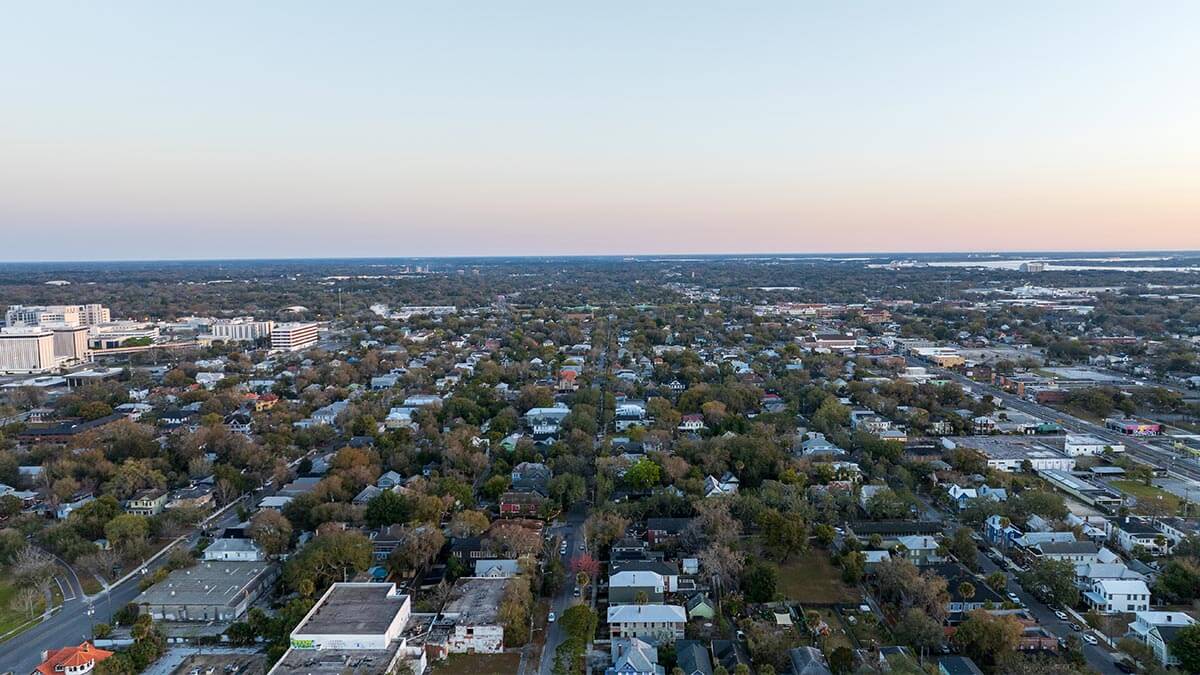
To sell an inherited house in Jacksonville, you must first complete Florida probate, a court-supervised process handled by the Fourth Judicial Circuit Court in Duval County that typically takes 3 to 6 months. Once the estate clears and title transfers to the heirs, a cash buyer can close in 7 to 30 days; a traditional agent listing takes 60 to 105 days.
Florida has no state inheritance tax and no state estate tax, so your main tax obligation is federal capital gains tax. Thanks to the stepped-up basis rule under IRC § 1014, many heirs selling an inherited house Jacksonville residents leave behind owe little or nothing in taxes when they sell close to the fair market value established at the date of death.
This guide covers the 5-step Jacksonville sale process, Duval County probate rules, how Florida’s tax structure works for selling inherited property in Florida, strategies to reduce capital gains tax inherited property Florida sellers face, the documents you need to close, a cash-versus-agent comparison, and the most common challenges heirs encounter.
Table of contents
- How to Sell an Inherited House in Jacksonville: 5 Steps
- Navigating Florida Probate in Duval County
- Do You Pay Taxes When Selling an Inherited House in Florida?
- How to Avoid Capital Gains Tax on Inherited Florida Property
- Documents Required to Sell an Inherited House in Florida
- Cash Sale vs. Listing with an Agent in Jacksonville
- Common Challenges Selling an Inherited Home in Jacksonville
- Frequently Asked Questions
Instant Valuation, Confidential Deals with a Certified iBuyer.com Specialist.
Sell Smart, Sell Fast, Get Sold. No Obligations.
How to Sell an Inherited House in Jacksonville: 5 Steps
To sell an inherited house in Jacksonville, start with the Duval County probate court, then move through appraisal, title clearance, sale method selection, and closing. The full process for an inherited house Jacksonville heirs manage typically spans 3 to 9 months from the date of death to the closing table, depending on estate complexity and whether any heirs contest the outcome.
Step 1: Confirm Whether Probate Is Required
Most estates in Jacksonville require probate before heirs can sell the property. Probate is filed with the Fourth Judicial Circuit Court in Duval County, and a straightforward case typically takes 3 to 6 months. Contested estates can take 12 months or longer.
Florida offers two tracks. Summary administration (Florida Statutes § 735.201) is available for estates under $75,000 in net value or when the decedent died more than 2 years ago; it can resolve in weeks. Formal administration under Chapter 733 is required for larger estates and takes considerably longer. The Florida probate overview on the Florida Courts website explains both tracks in plain terms.
Probate may not be required if the property was held in a living trust or as joint tenancy with right of survivorship. Consult a probate attorney before listing if you are uncertain about which track applies.
Step 2: Get a Professional Property Appraisal
Order a professional appraisal dated as close to the decedent’s date of death as possible. This appraisal establishes the fair market value for the stepped-up basis calculation, which determines how much capital gains tax inherited property Florida sellers may owe to the IRS. A second current-value appraisal is useful for pricing the listing itself.
Step 3: Clear Title and Resolve Heir Disputes
The personal representative named in the will, or appointed by the court, must hold letters testamentary before executing any sale. These letters are issued by the Fourth Judicial Circuit Court and are required by every title company in Jacksonville.
If heirs cannot agree on whether to sell, any co-owner can file a partition action under Florida Statutes § 64.011. The court can order a partition by sale if dividing the property physically is not practical. Partition actions add months and legal costs, so reaching agreement before filing is always cheaper.
Step 4: Choose Your Sale Method
You have three main options for a probate home sale Jacksonville heirs typically consider: a cash buyer, a traditional agent listing, or an auction. The comparison table in the “Cash Sale vs. Listing” section below covers the trade-offs in detail.
Cash buyers purchase as-is and can close in 7 to 30 days after title clears. Agent listings take 60 to 105 days on average but may produce a higher net price on move-in-ready homes.
Step 5: Close and Distribute Proceeds
At closing, the title company verifies the personal representative’s authority, pays off outstanding liens or mortgages, and distributes the remaining proceeds to heirs according to the estate plan or Florida intestate law. The personal representative files a final accounting with the Fourth Judicial Circuit Court before the estate can be formally closed.
Navigating Florida Probate in Duval County
Selling inherited property in Florida requires understanding which probate track your estate qualifies for. Choosing the wrong track can delay the sale by months and increase legal costs significantly.
What Is Summary Administration?
Summary administration is available under Florida Statutes § 735.201 when the estate’s net value is under $75,000, excluding exempt property, or when the decedent died more than 2 years ago. The process skips the full creditor-notification waiting period required in formal administration and can resolve in a matter of weeks.
Beneficiaries petition the court directly; no personal representative is appointed. Once the court issues an Order of Summary Administration, title transfers to the heirs and the sale can proceed.
What Is Formal Administration?
Formal administration is required for estates worth $75,000 or more and for deaths within the past 2 years. Under the Florida Probate Code Chapter 733, the court appoints a personal representative who must notify creditors and allow a minimum 90-day claim period under § 733.702 before the estate can be distributed or a sale approved.
Homestead property requires additional care. Under Florida Constitution Article X, § 4, homestead cannot be devised to persons other than a spouse or minor children in certain circumstances. If the inherited home was the decedent’s homestead, review this restriction with a probate attorney before listing.
Probate attorney fees in Florida are set by statute under § 733.6171 and typically run 2% to 3% of the gross estate value.
How to File with Duval County Probate Court
Probate petitions are filed with the Fourth Judicial Circuit Court at the Duval County Courthouse, 501 W. Adams Street, Jacksonville, FL 32202. You file a petition for administration (formal) or a petition for summary administration (expedited), along with a certified death certificate, the original will if one exists, and the required filing fee.
The personal representative must be appointed and receive letters testamentary before any real property sale can proceed. If the personal representative lives outside Florida, the court may require the appointment of a Florida-resident agent under Florida law.
Do You Pay Taxes When Selling an Inherited House in Florida?
Florida has no state inheritance tax and no state estate tax; you owe only federal capital gains tax on gains above the stepped-up basis. This is the foundational tax rule for selling inherited property in Florida, and it distinguishes Florida from states like Maryland and New Jersey that impose state-level inheritance taxes or estate taxes in addition to federal obligations.
Florida Has No State Inheritance Tax or Estate Tax
Florida’s constitution prohibits the legislature from imposing inheritance or estate taxes without a 60% voter-approved constitutional amendment, which has not occurred. There is no state capital gains tax in Florida. When you sell an inherited house in Jacksonville, your entire tax exposure is at the federal level.
| Tax Type | Florida | Federal | Applies at Sale? |
|---|---|---|---|
| State inheritance tax | None | N/A | No |
| State estate tax | None | Yes, for estates over $13.61M (2026) | No (estate pays before distribution) |
| State capital gains tax | None | N/A | No |
| Federal capital gains tax | N/A | 0%, 15%, or 20% | Yes, on gain above stepped-up basis |
Based on IRS and Florida statutory data, 2026. Verify current federal thresholds before transacting.
Federal Capital Gains Tax and the Stepped-Up Basis
Under IRC § 1014, the tax basis of inherited property resets to the fair market value at the decedent’s date of death. This is the stepped-up basis Florida heirs receive automatically, and it is the most powerful tax benefit available for inherited property sales. You do not pay capital gains tax on appreciation that occurred during the decedent’s lifetime.
Per IRS Publication 559, the stepped-up basis applies to property included in the decedent’s gross estate for federal estate tax purposes.
The key federal long-term capital gains rates for 2026 are 0%, 15%, and 20%, depending on your taxable income. Consult a tax professional to confirm your bracket before filing.
How to Calculate Your Tax Basis on an Inherited Property
Here is a concrete example of how the calculation works:
- Decedent’s original purchase price: $120,000
- Fair market value at date of death: $340,000
- Stepped-up basis (your new cost basis): $340,000
- Sale price: $355,000
- Taxable capital gain: $15,000 (not $235,000)
- Federal tax owed at the 15% rate: approximately $2,250
If you sell at or below the stepped-up basis, your taxable gain is zero. The capital gains tax inherited property Florida heirs owe is determined almost entirely by how much the home has appreciated since the date of death, not since the original purchase. Selling quickly after probate minimizes that appreciation window.
How to Avoid Capital Gains Tax on Inherited Florida Property
Florida heirs have five main strategies to reduce or eliminate capital gains tax on an inherited property sale. The stepped-up basis Florida sets at the date of death is the starting point for all of them.
Use the Stepped-Up Basis: Sell Before the Value Rises
When you sell at or below the stepped-up basis, your taxable gain is zero. If the estate settles quickly and the property has not appreciated since the date of death, you may owe nothing at all.
A fast probate home sale Jacksonville heirs complete through a cash buyer can close within 7 to 30 days of title clearance, limiting the window for additional post-death appreciation that would create a taxable gain.
The 2-Year Primary Residence Rule Under IRC § 121
Under IRC § 121, single filers can exclude $250,000 in capital gains and married couples filing jointly can exclude $500,000, provided the home was their primary residence for at least 2 of the last 5 years. This rule applies to inherited homes, but only if the heir actually moves in and occupies the property for the required period.
This strategy works best when an heir plans to live in the inherited home for at least 2 years before selling. It is not an option for heirs who want to sell immediately after probate.
Other Strategies: Installment Sales and 1031 Exchanges
Three additional strategies can reduce or defer capital gains tax inherited property Florida sellers face, though each requires professional planning:
- 1031 exchange: Defer capital gains by reinvesting sale proceeds into a like-kind replacement property. You have 45 days to identify the replacement and 180 days to close. Best for heirs who want to stay invested in real estate.
- Installment sale: Accept payment over multiple years rather than in a lump sum. Spreading gain recognition across tax years can keep you in a lower capital gains bracket each year.
- Qualified Opportunity Zone (QOZ) investment: Jacksonville has federally designated QOZ tracts. Reinvesting capital gains into a QOZ fund defers the tax and may reduce it if held for 5 to 10 years. None of the commonly cited resources on Florida inheritance taxes address this Jacksonville-specific option.
For complex situations, use the Florida Bar referral service to connect with a licensed probate or tax attorney before committing to any of these strategies.
| Strategy | Potential Tax Outcome | Time Required | Complexity |
|---|---|---|---|
| Sell at or below stepped-up basis | $0 capital gains tax owed | Immediate after probate clears | Low |
| Primary residence exclusion (IRC § 121) | Up to $500,000 excluded | 2 years of occupancy minimum | Medium |
| 1031 exchange | Full deferral of capital gain | 45/180-day closing deadlines | High |
| Installment sale | Gain spread across multiple years | Duration of payment note | Medium |
| QOZ fund investment | Deferral plus potential reduction | 5 to 10 years holding period | High |
Consult a licensed tax professional before implementing any strategy. 2026 IRS rules apply; verify current income brackets before filing.
Documents Required to Sell an Inherited House in Florida
Gathering these documents before you list prevents delays at closing. A single missing item can hold up the title transfer for weeks.
Legal Documents from the Probate Court
- Death certificate: A certified copy is required. Obtain from the Florida Bureau of Vital Statistics or the Duval County Health Department. Title companies typically request two to three certified copies.
- Letters testamentary or letters of administration: Issued by the Fourth Judicial Circuit Court. This document proves the personal representative’s authority to act on the estate’s behalf. Every buyer’s title company will request a current copy.
- Order of Summary Administration (if applicable): Used in place of letters testamentary for qualifying small estates under § 735.201.
- Personal representative’s deed: Transfers title from the estate to the buyer. Prepared by a Florida-licensed title attorney, not the personal representative.
Property and Title Documents
- Property deed: Original or certified copy. Obtain from Duval County records through the Clerk of Courts official records portal.
- Title search: Confirms no outstanding liens, unpaid property taxes, HOA claims, or code violations. The title company performs this as part of the closing process.
- Mortgage payoff statement: Required if any mortgage remains on the property. The title company contacts the lender directly.
- Homestead exemption release (if applicable): Filed with the Duval County Property Appraiser if the decedent held a homestead exemption. The exemption does not transfer to the buyer automatically.
Tax and Financial Records
- IRS Employer Identification Number (EIN) for the estate: Required if the estate earns income during administration, such as rental income. Apply via IRS Form SS-4.
- Date-of-death appraisal: Documents the stepped-up basis Florida heirs claim on the federal tax return. Retain this record for at least 7 years after the sale.
- Final property tax receipts: Confirms no delinquent taxes that could create a lien at closing.
Cash Sale vs. Listing with an Agent in Jacksonville
Selling inherited property in Florida forces a clear choice between speed and maximum sale price. The right answer depends on the property’s condition, how quickly heirs need proceeds, and whether the estate can carry holding costs through a longer listing period.
Side-by-Side Comparison
| Factor | Cash Sale | Agent-Listed Sale |
|---|---|---|
| Closing timeline | 7 to 30 days (post-probate, clear title) | 60 to 105 days (30-60 to contract, 30-45 to close) |
| Repairs required | None (sold as-is) | Possible, if lender appraisal requires repairs |
| Commission cost | None | 5% to 6% of sale price |
| Certainty of close | High (no financing contingency) | Lower (buyer financing can fall through) |
| Inspection contingency | Typically waived | Standard; buyer may renegotiate after inspection |
| As-is accepted | Always | Negotiable; financed buyers may require repairs |
Based on Jacksonville market norms, 2026. Commission rates are negotiable. Confirm timelines with your title company.
When a Cash Sale Makes More Sense
A probate home sale Jacksonville heirs want to close quickly makes the most sense through a cash buyer when the property needs significant repairs, when heirs live out of state and cannot manage a listing, or when the estate needs liquidity to pay creditors. Cash buyer offers in Jacksonville typically run 70% to 85% of fair market value, so the trade-off is a lower net price in exchange for speed and certainty of close.
To compare how Florida-based cash buyers structure their offers, Florida cash buyer reviews walks through the typical offer process. For heirs in other Florida cities facing similar timing pressure, a guide to sell fast in Gainesville covers comparable cash-sale strategies that apply across the state.
When Listing with an Agent Makes More Sense
If the property is in good condition or the heirs can fund targeted repairs, a traditional listing usually produces a higher net price despite the longer timeline. For current Jacksonville market data, the Brite N Team tracks median prices and days on market in Duval County. Agent commissions of 5% to 6% reduce net proceeds, but the higher sale price often more than compensates on a well-maintained home. Financed buyers, however, require a lender appraisal, and any flagged condition issues must be corrected before the loan can close.
Common Challenges Selling an Inherited Home in Jacksonville
Selling inherited property in Florida is rarely as straightforward as listing a property you already own outright. These four challenges are the most common in Jacksonville-area inherited home sales.
When Multiple Heirs Disagree on the Sale
When heirs cannot agree on whether to sell, any co-owner can file a partition action under Florida Statutes § 64.011. The Duval County Circuit Court can order a partition by sale, typically an auction, if dividing the property physically is not feasible. Partition actions add months and generate legal fees for all parties. Reaching agreement before filing is always the cheaper and faster path.
Deferred Maintenance and As-Is Condition
Inherited houses in Jacksonville are frequently vacant and deferred-maintenance properties. Financed buyers require a lender-mandated appraisal, and appraisers flag structural, safety, or code issues that must be corrected before the loan can close. Cash buyers have no appraisal contingency and accept the property as-is.
If you want to sell without making repairs, reviewing Florida as-is contract terms will help you understand which disclosure obligations still apply to sellers and what buyer protections remain under Florida’s as-is addendum.
Out-of-State Heirs and Remote Administration
A personal representative who lives outside Florida can still act on the estate’s behalf, but the Fourth Judicial Circuit Court may require the appointment of a Florida-resident agent under Florida law if the personal representative is non-resident. All court filings, creditor notifications, and final accountings must flow through the court regardless of where the personal representative lives. Remote administration adds coordination time but does not prevent the sale from completing.
Liens, Back Taxes, and Title Clouds
Title clouds from unpaid property taxes, HOA liens, or City of Jacksonville code violations must be resolved before a title company can issue a clear title policy. Jacksonville code violations are searchable through the City of Jacksonville’s Citizen Access Portal.
One Florida-specific risk: if the decedent received Medicaid long-term care benefits, the Florida Medicaid Estate Recovery Program can file claims against the estate. Heirs should check for MERP liens before listing. An inherited house Jacksonville MERP situation can delay a sale by 60 to 90 days while the claim is reviewed and resolved.
If you are managing an inherited house Jacksonville estate and want to skip repairs, open houses, and the uncertainty of a financed buyer, iBuyer.com connects heirs with verified cash buyers who purchase Florida properties as-is and close on your timeline. Most closings complete within 7 to 30 days after title clears, with no agent commission and no repair negotiations required. Submit the address and basic property details to receive offers from cash buyers who specialize in inherited and estate-sale homes across Duval County.
Compare Cash Offers from Top Home Buyers. Delivered by Your Local iBuyer Certified Specialist.
One Expert, Multiple Offers, No Obligation.
Know Your Local Market Before You List
Pull the last 12 months of real sales and buyer activity for your neighborhood.
Get My Market ReportFrequently Asked Questions
To sell an inherited house in Jacksonville, complete Florida probate through the Duval County court, obtain letters testamentary, clear title, and choose between a cash buyer or agent listing. The process typically takes 3 to 9 months from death to closing. Cash buyers can close in 7 to 30 days once title is clear; agent listings take 60 to 105 days on average.
Selling at or below the stepped-up basis Florida sets at the decedent’s date of death reduces your taxable gain to zero. Other options include the IRC § 121 primary residence exclusion, a 1031 exchange, an installment sale, or reinvesting gains into a Jacksonville Qualified Opportunity Zone fund.
To use the 2-year rule, you must live in the inherited home as your primary residence for 2 of the last 5 years before selling to exclude up to $500,000 in capital gains under IRC § 121. You must actually occupy the home; simply owning it does not qualify.
Florida imposes no state inheritance tax, no state estate tax, and no state capital gains tax on inherited home sales. You may owe federal capital gains tax inherited property Florida sellers report to the IRS, but only on gains above the stepped-up basis established at the date of death.
Florida heirs pay no state tax when selling inherited property in Florida. Federal capital gains tax applies only to gains above the stepped-up basis, and many heirs owe nothing if they sell quickly after probate while appreciation since the date of death is minimal.
The stepped-up basis resets your cost basis to the property’s fair market value at the date of death, per IRC § 1014. If the home was worth $340,000 at death and you sell for $355,000, you owe capital gains tax only on $15,000, not on the full appreciation from the original purchase price.
Straightforward formal administration in Duval County takes 3 to 6 months. Summary administration, for estates under $75,000 or where the decedent died more than 2 years ago, can close in weeks. Contested estates may take 12 months or longer.
Summary administration is an abbreviated Florida probate process available for estates under $75,000 net value or when the decedent died more than 2 years ago, under Florida Statutes § 735.201. It skips the personal representative appointment and the full creditor-claim waiting period, making it the fastest route to clear title.
Yes, any co-owner can petition the Duval County Circuit Court for a partition action under Florida Statutes § 64.011. If a physical division is not practical, the court can order a partition by sale, effectively forcing an auction of the property among the heirs.
You need a certified death certificate, letters testamentary from the Fourth Judicial Circuit Court, a personal representative’s deed, a clear title search, and a mortgage payoff statement if a lien exists. A date-of-death appraisal documenting the stepped-up basis is also essential for federal tax reporting.
Yes, cash buyers purchase inherited homes as-is with no repairs required and no lender appraisal contingency. If you accept a financed offer through an agent listing, the buyer’s lender may require repairs before the loan can close.
Florida law does not require a probate attorney for summary administration, but most formal administration cases require one to prepare and file documents with the Fourth Judicial Circuit Court. Attorney fees are set by statute at approximately 2% to 3% of the gross estate value.

Reilly Dzurick is a licensed real estate agent with over six years of experience and a member of the iBuyer.com Market Insights Team, covering national trends in home selling and the evolving iBuyer landscape. Her firsthand experience working with buyers and sellers gives her a practical perspective on how these platforms impact real homeowners. She holds a degree in Public Relations, Advertising, and Applied Communication.