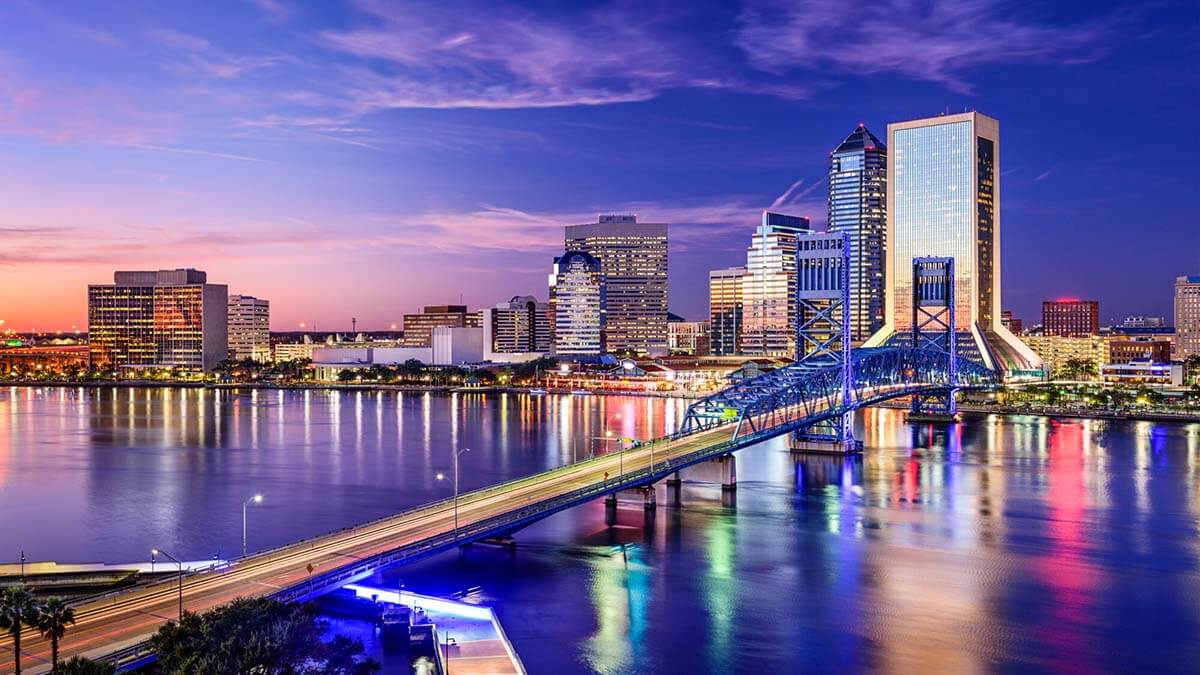
The Jacksonville, FL housing market is a buyer’s market in 2026, with a median home sale price of $300,000 and homes averaging 69 days on the market before going under contract. The average home value sits at $286,396, down 2.6% year-over-year per Zillow as of April 2026, placing Jacksonville 31% below the national median and last among the 40 largest U.S. metros for annual price change in late 2025.
That decline has specific causes. Florida homeowners insurance premiums escalated sharply between 2023 and 2025, a 2021 to 2022 construction boom flooded the market with new supply, and mortgage rates held above 6% through most of 2025, compressing the buyer pool. The good news: March 2026 data showed fewer price cuts and shrinking new listings, signaling the worst may be behind the jacksonville housing market 2026.
This guide covers current market metrics and a comparison to national benchmarks, the cause and extent of Jacksonville’s price decline, inventory and days-on-market data, neighborhood safety and price tiers, migration patterns, the 2026 forecast, and whether conditions favor buyers or sellers today.
Table of contents
- Jacksonville FL housing market overview 2026
- Are Jacksonville home prices going down?
- Jacksonville inventory and days on market
- Best and worst Jacksonville neighborhoods 2026
- Jacksonville migration and relocation trends
- Jacksonville housing market forecast for 2026
- Is it a good time to buy in Jacksonville?
- Is it a good time to sell in Jacksonville?
- Jacksonville rental market 2026
- Frequently Asked Questions
Jacksonville Sellers: Skip the 69-Day Wait Get competing cash offers and close in 7-30 days, no repairs or commissions needed
No repairs, no commissions, close on your schedule.
Jacksonville FL housing market overview 2026
The jacksonville real estate market is “somewhat competitive” in 2026, scoring 46 out of 100 on Redfin’s competition index. Buyers have strong selection and negotiating power; sellers who price accurately still move their homes within the market’s 69-day average.
Key market metrics at a glance
The table below shows where the jacksonville housing market 2026 stands relative to national averages as of early 2026.
| Metric | Jacksonville (2026) | U.S. Average |
|---|---|---|
| Median sale price | $300,000 | ~$433,000 |
| Average home value | $286,396 | ~$360,000 |
| YoY price change | -2.6% to flat | +2% to +3% |
| Active listings | 5,056+ | N/A |
| Avg. days on market | ~69 days | ~45 days |
| Competition score | 46/100 | N/A |
| Median rent | $1,700/mo | ~$2,000/mo |
Sources: Redfin’s Jacksonville market data, Zillow, Realtor.com, FRED House Price Index for Jacksonville-MSA. Figures reflect early 2026 snapshots; verify current data before transacting.
How competitive is the Jacksonville market?
A score of 46 out of 100 on Redfin’s competition scale means homes typically receive about two offers before going under contract. That is meaningfully different from Miami or Tampa, where popular listings attract five or more competing bids within days.
The FRED House Price Index for the Jacksonville MSA recorded 460.33 in Q4 2025, compared to 458.47 in Q3 2025 and a peak of 462.98 in Q2 2025. Quarter-over-quarter movement is essentially flat, which signals the year-over-year price decline is losing momentum rather than accelerating.
With 5,056 jacksonville fl homes for sale as of April 30, 2026, buyers have genuine selection across price points. That supply level limits sellers’ ability to hold firm on price when a home sits beyond the market’s 69-day average. The jacksonville real estate market is measurably softer than 2022 to 2023, but correctly priced homes are still selling.
Are Jacksonville home prices going down?
Jacksonville home prices declined year-over-year in 2026. The decline is measurable, among the sharpest recorded for a major U.S. metro, and visible across every primary data source. Here is what five sources show:
How far have prices fallen?
- Zillow (April 2026): The average home value at Zillow’s Jacksonville home value index is $286,396, down 2.6% year-over-year. Zillow’s estimate incorporates pending and off-market data, which explains why it diverges from Redfin’s closed-transaction figure.
- Redfin (March 2026): Median sale price of $300,000, essentially flat year-over-year (approximately +0.003%). Redfin counts only closed transactions.
- Realtor.com (April 2026): Median listing price of $290,897 to $295,000, down roughly 5.4% year-over-year. Listing prices reflect what sellers ask, not what buyers pay at close.
- News4Jax / Homes.com (October 2025): The median home price fell more than $16,000 year-over-year, giving Jacksonville the steepest price decline among the top 40 U.S. metros. That ranking placed Jacksonville last of 40 major metros for annual price change.
- FRED House Price Index: Q4 2025 came in at 460.33 versus Q3 2025 at 458.47, essentially flat quarter-over-quarter. The deceleration in the decline is visible at the aggregate level.
The divergence between Redfin’s $300,000 sale price and Zillow’s $286,396 estimate is a methodological difference, not a contradiction. The directional signal across the jacksonville real estate market is consistent: jacksonville home values fell in 2025 and are flat to slightly negative as of early 2026.
Why did Jacksonville prices drop?
Three structural forces combined to drive Jacksonville’s unusually sharp decline:
Homeowners insurance cost escalation. Florida insurers exited the state or raised premiums sharply from 2023 through 2025, driven by hurricane exposure and rising reinsurance costs. Higher premiums directly reduce how much a buyer can qualify for at any mortgage rate, shrinking the effective buyer pool.
2021 to 2022 construction oversupply. A wave of new construction that started during the pandemic-era demand spike added supply faster than population growth could absorb it. The northeast florida housing market has open land at a scale that makes large-scale subdivision development fast and practical. When demand cooled, that excess inventory weighed on prices across duval county real estate and surrounding communities.
Mortgage rates above 6%. Rates held above 6% through most of 2025, pricing a significant share of financed buyers out of the market. The combination of high rates, high insurance premiums, and peak 2022 to 2023 list prices created an affordability ceiling that local income demographics could not clear.
These are fundamental supply-and-demand shifts, not a speculative crash signal. Yahoo Finance’s April 2026 analysis noted that Jacksonville’s market quietly tightened in March 2026, with fewer new listings and fewer price cuts. That early signal suggests a floor may be forming.
Jacksonville inventory and days on market
Jacksonville inventory levels heading into mid-2026 reveal a market carrying more supply than most comparable Florida metros.
Active listings in Jacksonville 2026
Realtor.com’s Jacksonville active listing count tracked over 7,100 for-sale properties as of April 2026. Redfin counted 5,056 active listings as of April 30, 2026, up slightly from 4,980 in March. The gap reflects platform methodology: Redfin counts only active MLS entries, while Realtor.com includes contingent and under-contract status in some display modes.
The slight March-to-April inventory expansion (4,980 to 5,056 on Redfin) coexists with the broader tightening signal from March data. Fewer new listings entered in March, but existing inventory had not fully cleared. Both dynamics can coexist in a transitional market. Elevated jacksonville inventory levels benefit buyers through more selection, but also put downward pressure on prices and extend average selling time.
Jacksonville fl homes for sale span a wide price range across Duval County and adjacent northeast Florida communities, from under $150,000 in parts of the urban core to over $1 million in Ponte Vedra Beach and the Intracoastal corridor.
How long homes sit before selling
Days on market Jacksonville average approximately 69 days in 2026, roughly 20 to 25 days longer than the national average of 45 days. Yahoo Finance’s April 2026 analysis framed this as “about two months to sell” and advised sellers to price correctly from day one.
Sixty-nine days is enough time for buyers to do thorough due diligence, negotiate repairs, and compare competing listings without artificial urgency. Homes that receive offers average about two bids per listing, which shows demand exists but buyers are selective about price. Price per square foot declined approximately 1.1% year-over-year, indicating the softness is spread across the market rather than concentrated in one size segment.
Best and worst Jacksonville neighborhoods 2026
Jacksonville fl neighborhoods span a wide range in both safety and price. Understanding that range before committing to a purchase is critical, especially for buyers relocating from outside Florida.
Neighborhoods to consider in Jacksonville
The areas most consistently cited for livability, lower crime, and stable home values include:
- San Marco: Historic neighborhood south of downtown with walkable retail and established homes. Prices typically run above the city median.
- Avondale: Adjacent to Riverside, with craftsman bungalows and an active local business district. Popular with younger buyers seeking urban character.
- Riverside: One of Jacksonville’s oldest neighborhoods, walkable and close to downtown, with mixed price points.
- Ponte Vedra Beach: Commands a significant premium over the city median. Lower crime, coastal access, and highly rated schools make it one of the most desirable addresses in the northeast Florida housing market.
- Mandarin: Established suburban neighborhood in southwest Duval County, consistently in demand with families.
For buyers weighing neighborhood selection alongside natural disaster exposure, the Florida hurricane safety guide covers Atlantic and Gulf coast risk by county. Jacksonville sits on the Atlantic coast, and storm exposure affects homeowners insurance premiums across all Duval County neighborhoods. Verify current neighborhood median prices from Redfin neighborhood pages or Zillow before making an offer; these figures shift monthly in this market.
Areas with the highest crime rates
Jacksonville neighborhood crime grades from CrimeGrade.org show the highest-risk areas concentrated in the urban core and parts of the Northside and Westside.
| Neighborhood | Safety note | Typical price range |
|---|---|---|
| Ponte Vedra Beach | Low crime, coastal | $600,000+ |
| San Marco / Riverside | Below-average crime | $350,000 to $500,000 |
| Mandarin | Below-average crime | $290,000 to $380,000 |
| East Jacksonville | 88% above national crime avg. | $130,000 to $180,000 |
| Woodstock | ~7,226 per 100K crime rate | $120,000 to $165,000 |
| Moncrief Park / New Town | Elevated violent crime | $100,000 to $150,000 |
East Jacksonville records crime rates approximately 88% above the national average, consistently placing it among the most dangerous areas in the city. Woodstock records approximately 7,226 incidents per 100,000 residents versus a national average of 2,153 per 100,000. Additional high-risk areas flagged across multiple data sources include Hogan’s Creek, College Gardens, Fairfield, 29th and Chase, Allendale, Longbranch, and Lackawanna.
Crime boundaries shift at the block level. Always verify current data from CrimeGrade.org or local law enforcement records before purchasing in any unfamiliar area.
Editor note: Neighborhood price ranges require independent verification from Redfin neighborhood pages or Zillow neighborhood data. Crime statistics require direct verification from CrimeGrade.org or FBI UCR data before publication.
Jacksonville migration and relocation trends
Jacksonville migration trends reflect a steady inflow from higher-cost metros seeking Florida affordability, offset by outflows to other Southeast job centers. According to the NAR 2026 home sales forecast, domestic migration patterns remain a meaningful driver of Sun Belt housing demand even as elevated rates have slowed overall transaction volumes.
Where are people moving from to Jacksonville?
Jacksonville draws buyers primarily from high-cost metros in the Northeast and Mid-Atlantic. The city’s combination of no Florida state income tax, lower home prices than Miami or Orlando, and Atlantic coast amenities makes it a consistent migration destination. The table below reflects the typical inbound pattern based on Redfin migration data; pull current quarterly figures from Redfin’s Jacksonville migration page before publishing.
| Origin Metro | Primary migration driver |
|---|---|
| New York, NY | Affordability, no state income tax |
| Washington, DC | Remote work flexibility, cost-of-living |
| Boston, MA | Cost-of-living differential |
| Chicago, IL | Climate and tax environment |
| Miami, FL | Price differential within Florida |
Editor note: Pull live inbound figures from Redfin’s Jacksonville migration page and update this table before publishing. Data updates quarterly.
Buyers arriving from New York or Washington, DC see Jacksonville’s $286,000 to $300,000 price range as a significant value. That perspective supports a partial demand floor for the market even as insurance and rate pressures weigh on locally-anchored buyers.
Where do Jacksonville residents relocate to?
Residents who leave Jacksonville most commonly move to larger Florida metros or Southeast regional hubs. The table below reflects the typical outbound pattern based on Redfin migration data.
| Destination Metro | Primary migration driver |
|---|---|
| Orlando, FL | Employment growth, theme park economy |
| Tampa, FL | Gulf Coast amenities, job market |
| Savannah, GA | Lower costs, geographic proximity |
| Charlotte, NC | Employment expansion |
| Atlanta, GA | Regional economic hub |
Editor note: Verify outbound destinations against current Redfin migration data before publishing.
The net migration picture supports a modest demand floor for Jacksonville. Even with outflows, inbound buyers from higher-cost markets partially offset local demand softness. For an investor-level comparison of how migration patterns shape housing dynamics elsewhere in Florida, the Orlando investor market report covers Orlando’s 2026 supply, demand, and cap rate conditions alongside its own migration inflow data.
Jacksonville housing market forecast for 2026
The jacksonville housing forecast points clearly toward stabilization, not a recovery or a further sharp decline. The steepest part of the 2025 downturn appears to have passed, but flat-to-modest growth is the most realistic near-term expectation.
National 2026 forecast: boom or bust?
No major forecaster is projecting a national housing boom for 2026. According to the 2026 housing market forecast for major metros from Norada Real Estate, the dominant expectation is modest appreciation nationally with significant variation by metro. The full range of forecasts from named sources:
- Zillow: Home values up approximately 1.2% nationally in 2026; existing home sales up 4.3%.
- NAR: Lawrence Yun, chief economist, projects a 14% rise in national home sales for 2026.
- Redfin: National price increase of approximately 1%.
- Realtor.com: National price appreciation of approximately 2.2%.
- JP Morgan: Home prices at 0% to slightly negative nationally (the most cautious major forecast).
- Fannie Mae / NAR combined analysis: Approximately 4% national price appreciation.
The consensus is clear: 2026 is a stabilization year, not a boom year. Florida real estate market 2026 conditions vary significantly by metro, and Jacksonville is likely to underperform the national average given its steeper 2025 decline.
What the numbers mean for Jacksonville
The jacksonville housing market 2026 trajectory shows early signs of a floor forming, not a recovery in progress. The FRED HPI recorded 460.33 for Q4 2025 versus 458.47 for Q3 2025, essentially flat after declining from the Q2 2025 peak of 462.98. Yahoo Finance’s April 2026 report confirmed that March 2026 saw fewer price cuts, fewer new listings, and slightly shrinking inventory.
The jacksonville housing forecast for the remainder of 2026 points toward price stabilization in the $285,000 to $305,000 range, with modest upside if mortgage rates ease and insurance costs level off. A return to 2022 to 2023 peak pricing within 2026 is not supported by any major forecaster’s data.
Buyers and sellers benchmarking against the broader florida real estate market 2026 should note that Jacksonville has underperformed Tampa, Orlando, and Miami on price over the past 12 months. The stabilization signal is real, but near-term upside is limited. Sellers who can hold may find 2027 conditions more favorable than today’s.
Is it a good time to buy in Jacksonville?
Jacksonville is a practical entry point for long-term buyers in 2026, with prices 31% below the national median and genuine negotiating leverage on any property sitting beyond 30 days on market.
This analysis is for informational purposes. Consult a licensed real estate professional for advice specific to your situation.
Buyer advantages in today’s Jacksonville market
- Price: Jacksonville home prices in the $286,396 to $300,000 range sit well below the national median of approximately $433,000. Buyers relocating from high-cost metros bring real purchasing power to this market.
- Negotiating time: With 69 days as the average on-market period, buyers can inspect thoroughly, compare listings, and negotiate without losing a home to a competing bid. The jacksonville buyer’s market gives buyers leverage that most coastal markets do not offer in 2026.
- Selection: Over 5,000 active listings across duval county real estate and the broader metro mean buyers are not forced to compete for a narrow set of options.
- Payment vs. rent: Monthly principal and interest on a $286,000 purchase with 20% down at 6.3% runs approximately $1,400. That compares favorably to Jacksonville’s $1,700 median rent before taxes, insurance, and HOA fees are factored in.
- New construction comparison: Buyers weighing purchase vs. new construction should review Florida home building costs before committing. In some Jacksonville submarkets, new construction is priced competitively with existing homes, adding a meaningful third option to the decision.
Risks for buyers in 2026
Short-term equity risk. Jacksonville home values declined in 2025 and the 2026 forecast is flat to modestly positive. Buyers who need to sell within two to three years face the risk that the market has not recovered enough to cover transaction costs.
Homeowners insurance costs. Florida homeowners insurance is the most significant ongoing risk for Jacksonville buyers. Premiums are elevated due to hurricane exposure and the insurer market disruptions of 2022 through 2025. Insurance can add $200 to $400 or more monthly to total carrying costs, significantly narrowing the payment advantage over renting that the purchase price alone implies. (Editor note: Verify current Jacksonville insurance premium averages from the Florida Office of Insurance Regulation before publishing.)
Rate sensitivity. If mortgage rates rise above 7% in the second half of 2026, the buyer pool will shrink further and prices may face renewed downward pressure. The current environment is fragile.
Is it a good time to sell in Jacksonville?
Jacksonville sellers in 2026 are operating in a market that rewards accurate pricing and realistic expectations. You can sell, but the conditions require honesty about what to expect.
This analysis is for informational purposes. Consult a licensed real estate professional for advice specific to your situation.
How long will it take to sell in Jacksonville?
The current average is 69 days on market, and that is the baseline for correctly priced homes. Yahoo Finance’s April 2026 analysis was direct: price it right from day one. Sellers who enter at an optimistic list price and reduce after 30 to 45 days typically close at a lower final price than sellers who price accurately from the start.
The mild positive signal from March 2026 data (fewer new listings, fewer price cuts) suggests the market may be tightening at the margin. Sellers who held through the worst of 2025’s decline may find mid-to-late 2026 conditions modestly better than early 2026.
Cash vs. traditional sale in a soft market
In a market where homes average 69 days to sell and buyers have over 5,000 listings to browse, a traditional MLS listing is viable but carries real risk: extended days on market, potential price reductions, and the chance that a financed buyer’s deal falls through during underwriting.
Sellers who need certainty of timing or pricing have an alternative in cash buyers who close in 7 to 30 days without repair contingencies or lender delays. Understanding how a Florida as-is contract works is useful preparation for any seller weighing that path. Homes in this market reportedly sell for approximately 6% below asking price in some segments, so sellers entering with a cash-adjusted price may find net proceeds closer to the traditional path than expected, once agent commissions and carrying costs are subtracted from the MLS route.
Jacksonville rental market 2026
The Jacksonville rental market provides context for buyers deciding between owning and renting, and for investors evaluating cash flow potential in the current environment.
Average rent in Jacksonville FL
Per Realtor.com, the median rent in Jacksonville is approximately $1,700 per month as of 2026. This reflects the full metro; neighborhoods near downtown or the Intracoastal waterway run higher, while suburban areas generally run lower.
The median home price Jacksonville range of $286,396 to $300,000 is low enough that monthly mortgage payments can undercut rent for buyers who can manage the down payment. But the calculation is more nuanced than principal and interest alone. Jacksonville home prices are affordable relative to national norms, yet Florida carrying costs close the gap quickly.
Buy vs. rent in Jacksonville 2026
At a purchase price of $286,000 with 20% down ($57,200 down payment) and a 6.3% mortgage rate, principal and interest run approximately $1,400 per month. Compared to the $1,700 monthly median rent, the payment differential appears to favor buying by roughly $300 per month. Adding the full cost of ownership changes the picture:
- Property taxes: Duval County property taxes run approximately 1.0% to 1.2% of assessed value annually, adding $240 to $285 per month on a $286,000 home.
- Homeowners insurance: Florida homeowners insurance premiums in Jacksonville run well above the national average due to hurricane exposure. Insurance alone can add $200 to $400 or more monthly, depending on the home’s age, location, and construction type.
- HOA fees: Many Jacksonville communities carry HOA fees of $100 to $400 per month.
When taxes and insurance are included, total monthly carrying costs on a $286,000 purchase can reach $1,840 to $2,100-plus, which narrows or eliminates the payment advantage over renting for many buyers. Long-term equity building and rate-lock certainty still favor purchasing for buyers with a five-plus year horizon. Short-term buyers should run the full numbers before committing.
When a Jacksonville home is averaging 69 days on the market and prices are flat to declining, sitting on an MLS listing for two months carries a real cost in both time and pricing risk. iBuyer.com connects you with multiple vetted cash buyers who compete for your home, so you see real offers side-by-side instead of waiting on one financed buyer who may or may not close. No repairs, no agent commissions, and a close in 7 to 30 days on your timeline. Get competing cash offers for your Jacksonville home.
Lock In Your Jacksonville Sale Price Now Compare multiple cash buyers before prices dip further
No showings, no contingencies, sell on your timeline.
Frequently Asked Questions
The median home sale price in Jacksonville, FL is approximately $300,000 as of early 2026, about 31% below the national median. Zillow reports the average home value at $286,396, down 2.6% year-over-year as of April 2026, while Realtor.com shows a median listing price of $290,897. The gap between these figures reflects different methodologies; Redfin tracks closed transactions while Zillow incorporates pending and off-market data.
Yes, Jacksonville home prices declined year-over-year in 2026, with the average home value down 2.6% to $286,396 per Zillow as of April 2026. Jacksonville ranked last (40th of 40) among major U.S. metros for annual price change in late 2025, with the median falling more than $16,000 year-over-year per Homes.com data reported by News4Jax. March 2026 data showed fewer price cuts and shrinking new listings, suggesting the decline may be decelerating.
Jacksonville is a buyer’s market in 2026, with homes averaging 69 days on the market and over 5,000 active listings giving buyers strong negotiating leverage. Redfin scores the market at 46 out of 100, “somewhat competitive” but well below the 70-plus threshold that signals a strong seller’s market. Sellers who price correctly from day one still find buyers; overpriced homes face extended days on market and price reductions.
Homes in Jacksonville, FL sell in approximately 69 days on average in 2026, roughly 20 to 25 days longer than the national average of 45 days. Yahoo Finance’s April 2026 analysis advises pricing correctly from day one, noting that two months on market has become the baseline expectation. Homes that receive offers average about two bids per listing, showing demand exists but buyers are selective on price.
In Jacksonville, the neighborhoods with the highest crime rates include East Jacksonville, Woodstock, Hogan’s Creek, College Gardens, Fairfield, and Moncrief Park. East Jacksonville’s crime rate runs 88% above the national average, and Woodstock records approximately 7,226 incidents per 100,000 residents versus a national average of 2,153. Crime boundaries shift at the block level; always verify current data before purchasing in any unfamiliar area.
No, 2026 will not be a housing boom in Jacksonville; the jacksonville housing forecast points to flat to modest price growth, not a broad recovery. National forecasts range from JP Morgan’s 0% projection to NAR’s 4% appreciation estimate, and Jacksonville is likely to underperform the national average given its steeper 2025 decline. Inventory tightened modestly in March 2026, which is a stabilization signal, not a boom signal.
Jacksonville prices dropped due to homeowners insurance cost increases, a 2021 to 2022 construction oversupply, and mortgage rates above 6% limiting buyer demand through 2025. Florida insurers exited the market or raised premiums sharply, directly reducing how much buyers qualify for at any given rate. Combined with excess new construction supply and rate-driven demand suppression, Jacksonville ended up with a simultaneous supply surplus and demand deficit steeper than any other major U.S. metro in late 2025.
The Jacksonville neighborhoods most commonly cited for safety and stable home values include San Marco, Avondale, Riverside, Ponte Vedra Beach, and Mandarin. These areas offer lower crime rates than the urban core and relatively stable price histories. Ponte Vedra Beach commands a significant price premium over the city median; verify current neighborhood prices from Redfin or Zillow neighborhood pages before making an offer.
The median rent in Jacksonville, FL is approximately $1,700 per month as of 2026, per Realtor.com. At a $286,000 purchase price with 20% down and a 6.3% mortgage rate, principal and interest run roughly $1,400 per month before taxes, insurance, and HOA fees. Florida homeowners insurance in Jacksonville can add $200 to $400 or more monthly, narrowing the buy-vs.-rent payment advantage significantly.
Jacksonville’s median home price of $286,000 to $300,000 is significantly below Miami at $600,000-plus and comparable to Orlando’s mid-range, making it one of Florida’s most affordable major metros in 2026. Jacksonville’s year-over-year price decline contrasts with more stable performance in Orlando and Tampa. The affordability gap relative to South Florida drives consistent inbound migration that partially supports Jacksonville’s demand floor.
As of April 2026, there are over 5,000 active listings in Jacksonville, FL, with Realtor.com tracking 7,100-plus when including all for-sale statuses. Redfin’s count of 5,056 active listings reflects only active MLS entries, while Realtor.com includes contingent and under-contract properties. Both figures confirm that Jacksonville fl homes for sale remain elevated, giving buyers strong selection and keeping pricing pressure on sellers.
Jacksonville is a practical market for long-term buyers in 2026, with prices 31% below the national median and real negotiating leverage on a 69-day average market. Buyers planning to hold for five or more years benefit from below-median entry pricing and buyer-favorable conditions. Buyers planning to sell within two to three years should be cautious given the flat near-term price trajectory and elevated insurance costs in Florida.

Reilly Dzurick is a licensed real estate agent with over six years of experience and a member of the iBuyer.com Market Insights Team, covering national trends in home selling and the evolving iBuyer landscape. Her firsthand experience working with buyers and sellers gives her a practical perspective on how these platforms impact real homeowners. She holds a degree in Public Relations, Advertising, and Applied Communication.