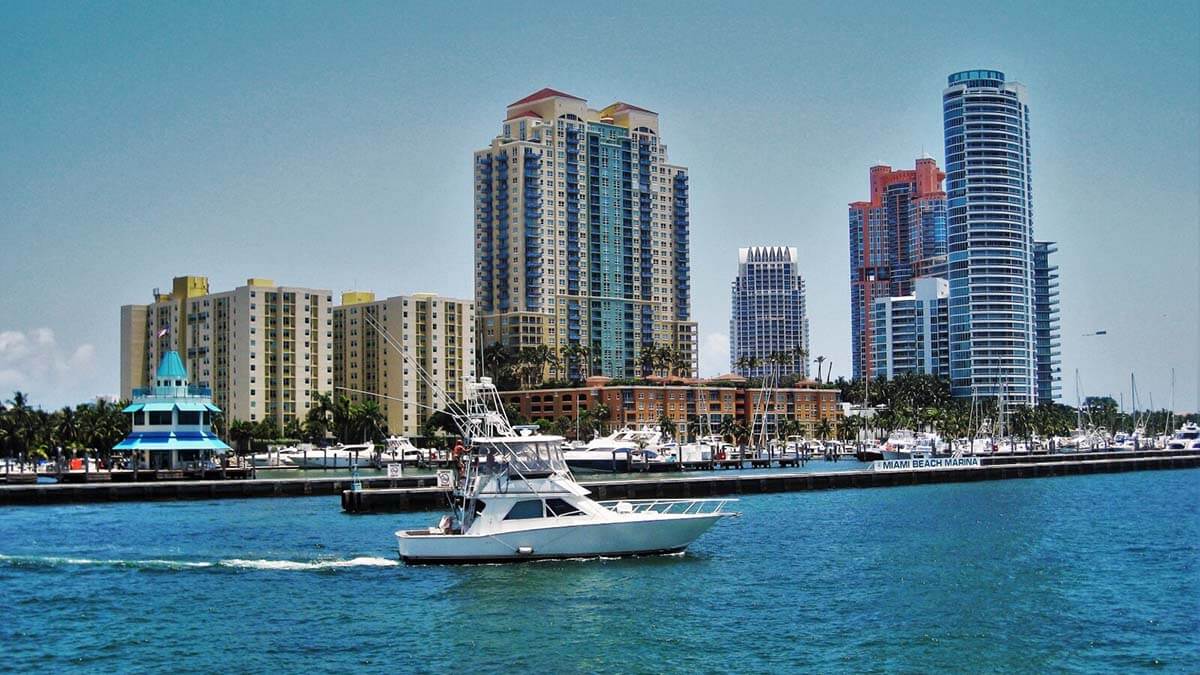
The Miami housing market is shifting into a buyer-friendly phase in 2026, with rising inventory, longer days on market, and a widening structural divide between single-family homes and condos. The median sale price sits at $680,000 as of March 2026, up 3.8% year over year (Redfin), while Zillow’s average home value of $580,996 is down 1.6%. Both figures are accurate. They measure different segments of the same market.
The gap between those two numbers is the defining story of the miami housing market 2026. Redfin’s median captures closed single-family transactions, where prices keep climbing. Zillow’s average home value pulls in the distressed condo inventory dragging metro values lower. Homes are averaging 108 days on market in Miami as of March 2026, up from 97 days the prior year. Redfin’s competitiveness score has fallen to just 7 out of 100. The miami housing market forecast for 2026 points to continued divergence, not a single direction.
This guide covers the single-family vs. condo structural split, why the data sources disagree, how days on market affect buyers and sellers right now, neighborhood-level miami home prices, the 2026 forecast, and practical guidance on whether to buy, sell, or wait.
Table of contents
- Miami housing market snapshot: 2026
- Single-family homes vs. condos in Miami
- Days on market and how competitive is Miami?
- Are Miami home prices going down?
- Why are people leaving Miami?
- Miami neighborhood price breakdown
- Miami housing market forecast 2026
- Will the Miami housing bubble burst?
- Is $60,000 enough to live in Miami?
- Should you buy, sell, or wait in Miami?
- Frequently Asked Questions
Miami's Market Is Shifting Against Sellers Skip 108 days on market — get competing cash offers in days, not months.
No repairs, no commissions, close in 7-30 days.
Miami housing market snapshot: 2026
The miami real estate market in 2026 is defined by a structural divide, not a single trend line. What you see in the data depends entirely on which metric you check and which property type you are measuring.
What the numbers actually say right now
The three most-cited data providers give meaningfully different figures for Miami right now:
| Source | Metric | Current Value | YoY Change | What It Measures |
|---|---|---|---|---|
| Redfin | Median sale price | $680,000 | +3.8% | Closed transactions, all home types |
| Zillow | Average home value | $580,996 | -1.6% | AVM across all residential properties |
| Realtor.com | Median listing price | $649,000 | N/A | Active listings, not closed sales |
| Miami Assoc. of Realtors | Single-family listings | 4,693 active | -16.6% vs. prior year | MLS inventory, Miami-Dade |
| Why it differs | Zillow’s AVM weights distressed condo inventory | Redfin reflects predominantly SF closings | Listing prices include unsold condos | Each source answers a different question |
Based on Miami Association of Realtors market data, Redfin (March 2026), Zillow (April 2026), and Realtor.com. Verify current figures before transacting.
Redfin’s median miami price per square foot sits at $532, down 4.1% year over year. The Miami-Fort Lauderdale-West Palm Beach metro average home value runs lower still, at approximately $476,603 (down 3.7%), because it includes suburban submarkets with heavier condo concentration. The FHFA house price index for Miami-Miami Beach-Kendall provides long-run context: Miami has sustained one of the strongest multi-decade appreciation curves among major U.S. metros, even as short-term segment dynamics now diverge.
Why Zillow and Redfin report different figures
Zillow calculates an automated valuation model across every residential property in the market, regardless of whether it has sold recently. That methodology includes every stalled condo listing and every distressed unit, which pulls the average down. Redfin’s median sale price is calculated from homes that actually closed during the measurement period, skewing toward single-family transactions where buyers are still paying elevated prices.
Neither number is wrong. They answer different questions. If you want to understand what the condo inventory glut is doing to overall market metrics, Zillow’s figure is more informative. If you want to know what buyers are actually paying for homes that sell, Redfin’s median is closer to the answer.
Single-family homes vs. condos in Miami
The south florida housing market in 2026 is running two separate housing economies under one metro label. Understanding the structural split is the only way to make sense of conflicting miami real estate trends.
Single-family: still appreciating
Single-family homes in Miami remain in appreciation territory. The median single-family sale price is $671,250, up 3.3% year over year, with 754 closed transactions in the most recent reported period, a 5.3% increase in sales year over year, according to Miami Association of Realtors data. Active single-family listings total 4,693, down 16.6% versus the prior year. Less supply is competing for buyers in this segment than at any point in recent memory.
Single-family prices have increased in 167 of the past 168 months, representing approximately a 145% cumulative gain since 2015. That streak reflects a persistent supply constraint. Limited land availability and zoning barriers in Miami-Dade have kept new single-family construction well below demand. For context on what it costs to add supply to this market, see building costs in Florida, which explains why developers consistently prefer multifamily over single-family construction in the region.
Miami condo market: inventory surge explained
The miami condo market tells a different story. Active condo listings are rising as owners rush to sell before steep HOA assessments take effect. The result is a supply surplus that suppresses miami condo prices and shifts negotiating leverage firmly toward buyers.
Florida’s SB 4-D legislation (2022), passed in direct response to the Surfside building collapse, requires condominium buildings to fund full structural reserves. For many buildings constructed before 1992, this means special assessments that can reach tens of thousands of dollars per unit. Sellers who list before their building’s assessment date are often accepting lower offers to avoid absorbing that cost. The florida real estate market broadly is watching Miami’s condo sector as a test case for how reserve legislation reshapes local inventory dynamics.
Miami-dade real estate data from the MLS confirms that condo sales volume has softened even as single-family transactions edged upward. Miami condo prices vary by building age and location, but the directional signal is consistent across submarkets: flat to declining, with days on market running longer than single-family.
HOA fees and special assessments: the hidden driver
Monthly HOA fees have risen across Miami’s condo inventory as aging buildings require maintenance, property insurance premiums climb, and reserve funding accelerates under new legal requirements. For a condo seller who also faces a pending special assessment, the incentive to sell quickly is significant.
Buyers are increasingly requesting as-is terms to limit their exposure to unknown HOA liabilities, and sellers under assessment pressure are often willing to accept those terms. Understanding Florida as-is contract terms is practical preparation for any condo seller navigating this environment.
Days on market and how competitive is Miami?
Miami’s market pace has shifted substantially from the frenzied conditions of 2021 to 2022. Buyers now have time to think, and sellers are adjusting expectations.
Average days on market by property type
Key pace metrics for the current Miami market:
- 108 days average days on market miami (Redfin, March 2026), up from 97 days the prior year
- 57 days median days to pending (Zillow), measuring only the time to an accepted offer, not to close
- 6,191 active listings across all residential types (Zillow)
- 4,693 active single-family listings (Miami Association of Realtors), down 16.6% year over year
- Sellers are receiving fewer offers than one year prior and are increasingly cutting asking prices to attract buyers
The divergence between 57 days to pending and 108 days to close reflects the time between offer acceptance and actual closing. Title work, inspections, financing approval, and HOA document reviews in the condo segment all add weeks to every transaction. For sellers, this means three to four months of carrying costs after listing, even after finding a buyer.
What a score of 7 out of 100 means for buyers
Redfin scores Miami at 7 out of 100 for competitiveness, classifying the market as “not very competitive.” A market scoring 70 or above typically sees homes sell in days with multiple above-asking offers. At 7, Miami buyers can expect sellers to negotiate on price, accept contingencies, and wait for the right offer.
This score confirms what the miami housing inventory data shows: Miami is a genuine miami buyer’s market in 2026. Buyers have more leverage than at any point since 2019. Sellers who overprice are sitting, not closing.
Are Miami home prices going down?
Miami home prices are going down in the condo segment and going up in the single-family segment, simultaneously. That is why you see contradictory headlines depending on the source.
Single-family prices: still rising
Single-family miami home prices are rising. The median is up 3.3% to 3.8% year over year, depending on the data source and measurement month. Sales volume is growing (up 5.3% year over year per Miami Association of Realtors), and supply is shrinking (down 16.6%). This combination of rising prices, rising sales, and falling inventory describes a segment under demand pressure, not one in correction.
The FHFA house price index for the Miami metro shows that single-family appreciation has been among the most sustained in the country over four decades, interrupted briefly during 2008 to 2012 and resuming sharply afterward. That long-run trajectory has not reversed.
Condo prices: a different story
Miami condo prices are flat to declining. Inventory is rising, days on market are extending, and sellers are cutting prices. The post-Surfside reserve legislation is forcing supply into the market faster than buyers are absorbing it. The buyer pool has enough leverage to negotiate meaningfully in this segment before committing.
What “76% of Miami homes lost value” actually means
An often-cited figure from Axios (December 2025), sourced from Zillow data, states that 76% of Miami metro homes lost value over the prior year. The number is accurate. It is also explainable.
The denominator includes all residential properties in the Miami metro, including the significant volume of distressed condo units sitting in active inventory with declining automated valuations. When the condo segment makes up a large share of total Miami residential inventory and declines in value, the percentage of “homes that lost value” across the metro can be very high even while single-family home values climb. The 76% figure does not mean 76% of single-family homeowners lost equity. It reflects the condo-weighted drag on a metro-wide metric that counts every residential unit equally.
This is the core reason miami home values appear contradictory in the data. Both the “prices are falling” and “prices are rising” statements are true at the same time, in different segments.
Why are people leaving Miami?
Miami-Dade saw a net loss of approximately 79,535 residents between 2020 and 2022 and ranked among the three largest population-declining counties in the United States in 2025, per Miami-Dade county population change data from the Census Bureau. Miami population decline has multiple causes that reinforce each other.
Five primary drivers behind the outflow:
- Housing cost imbalance. Miami’s cost of living runs 21% above the national average, with housing costs 58.7% more expensive than the U.S. median. Middle-income residents earning local wages cannot sustain that gap long-term.
- Rising property insurance premiums. Florida’s insurance market, stressed by hurricane exposure and litigation costs, has pushed annual property insurance premiums to levels that materially change the total cost of homeownership across Miami-Dade.
- Wage-to-rent mismatch. The median rent in the Miami area runs approximately $3,050 per month (down 7% from peak, per USNews data), which still absorbs a large share of a median local salary. Workers in healthcare, education, and service industries face the widest gap.
- Congestion and quality-of-life friction. Traffic congestion, limited public transit, and infrastructure strain are cited consistently as secondary relocation drivers among residents who can technically afford the housing but choose not to absorb the broader lifestyle costs.
- International migration slowdown. Miami has historically offset domestic outflows with strong international in-migration. That inflow declined sharply in 2025, removing a key population stabilizer.
Housing costs vs. local wages: the core imbalance
Miami affordability is the structural center of the outflow story. When rent absorbs 40% to 50% of gross income for a resident earning $60,000 to $80,000 per year, financial pressure builds quickly. Savings rates fall, emergency cushion disappears, and relocation to lower-cost metros becomes the rational choice. Miami cost of living comparisons are particularly stark for households weighing Tampa, Orlando, or Charlotte, which offer comparable job access at materially lower housing costs.
Climate risk and insurance costs
Climate risk is an accelerating factor in the outflow calculus. Rising sea levels, increasing hurricane intensity, and persistent flooding risk in low-lying Miami neighborhoods have pushed property insurance costs to record levels across South Florida. Some carriers have exited the Florida market entirely, leaving homeowners with Citizens Insurance or specialty markets at sharply higher premiums.
Buyers and current owners evaluating Florida locations with lower climate exposure can find a detailed breakdown at hurricane risk by Florida location.
Who is still arriving in Miami
Not everyone is leaving. Miami surpassed New York as the nation’s largest luxury inventory market, according to Realtor.com data. Ultra-high-net-worth buyers, international capital from Latin America and Europe, and finance and technology sector transplants continue to flow into Miami’s premium single-family and luxury condo tiers.
This bifurcation explains the paradox: middle-income residents are leaving, which should compress demand and prices, but single-family appreciation persists because the buyers sustaining that segment are far less sensitive to mortgage rates and insurance costs than median-income buyers.
Miami neighborhood price breakdown
Miami home prices vary significantly by neighborhood. The widest gaps separate coastal high-rise condo markets from inland and waterfront single-family areas. The table below reflects estimated price ranges from Redfin neighborhood data and Miami Association of Realtors reporting as of spring 2026. Verify current neighborhood-level figures at the Miami Association of Realtors before transacting, as these price points are among the fastest-shifting in the market.
| Neighborhood | Typical Price Range | YoY Trend | Buyer/Seller Signal |
|---|---|---|---|
| Brickell | $550,000 to $900,000 | Flat to -3% (condo-dominant) | Buyer-favorable; HOA assessment pressure active |
| Coconut Grove | $700,000 to $1,400,000 | +2% to +4% (mixed) | Competitive for single-family; condo inventory elevated |
| Edgewater | $400,000 to $750,000 | Flat to -2% (condo-heavy) | Buyer-favorable; significant inventory overhang |
| Coral Gables | $900,000 to $2,000,000+ | +3% to +5% (single-family) | Seller-favorable; premium supply-constrained market |
| Miami Gardens / Hialeah | $350,000 to $500,000 | Flat to +2% | Most affordable tier; limited entry-level inventory |
Price ranges estimated from Redfin neighborhood pages and Miami Association of Realtors data, spring 2026. Verify current figures before transacting.
For a deeper investor-focused breakdown of Miami submarkets, transaction volumes, and cash-buyer activity by neighborhood, see the Miami investor market report for detailed monthly data.
Miami housing market forecast 2026
The miami housing market forecast for the remainder of 2026 points to continued segment divergence, not a broad correction or broad recovery. The miami housing market 2026 trajectory is essentially two separate stories running on parallel tracks: single-family supply remains structurally constrained, and the miami condo market faces ongoing headwinds from reserve legislation and elevated inventory.
What national forecasters project
Three major institutional sources offer the following projections for 2026:
- Fannie Mae 2026 home price outlook: Average annual home price growth of 2.1% nationally in 2026. No national price decline projected.
- NAR: A 4% nationwide home price increase in 2026, based on current inventory levels and demand conditions.
- Zillow: A more modest 1.2% national home price rise in 2026.
- Mortgage rates: Expected to stabilize between 6.0% and 6.3% for a 30-year fixed loan, per current 30-year fixed mortgage rates from Bankrate. Rate stability, if it holds, reduces one layer of buyer uncertainty.
J.P. Morgan Global Research has characterized the U.S. housing environment as “not heading toward a housing crash,” describing current conditions as “a market correction defined by stability, not volatility.” That characterization applies broadly to the miami real estate market, with the caveat that Miami’s condo sector carries more concentrated downside risk than the national average.
Miami-specific risk factors to watch
Three factors specific to current miami real estate trends warrant monitoring through the end of 2026:
- Condo inventory normalization. If SB 4-D compliance deadlines trigger a second wave of condo listings, active inventory could rise further, extending days on market and adding downward pressure to miami condo prices in that segment.
- Insurance market stability. Florida’s property insurance crisis is partially driven by state-level policy, not just climate exposure. Further insurer exits or premium increases will reduce the buyer pool for Miami-Dade properties, particularly among financed buyers.
- International capital flows. A significant share of Miami’s luxury single-family demand comes from international buyers. Currency fluctuations, geopolitical instability, or U.S. visa policy changes could soften the top-end market that has sustained single-family appreciation.
Will the Miami housing bubble burst?
A broad Miami housing market crash is unlikely in 2026, but the miami housing bubble risk is real and formally documented. The UBS Global Real Estate Bubble Index, published October 2025, ranks South Florida as the highest-risk housing bubble market in the world. That ranking requires careful context.
UBS ranks Miami highest globally: what that means
UBS’s bubble index measures price-to-income ratios, price-to-rent ratios, and the pace of price growth relative to GDP. Miami’s price-to-income ratio is “one of the most stretched in the country,” meaning home prices have outrun local wages by a wide margin. A bubble-risk designation signals vulnerability to price correction if conditions shift. It does not represent a scheduled collapse. The index flags elevated probability of outsized downside, not a specific date.
The miami housing bubble conversation has been active since 2021, and the market has not crashed. What has happened is a sector-specific adjustment: condos correcting, single-family appreciating. That bifurcated outcome is consistent with a high-risk designation where correction plays out unevenly across segments rather than all at once.
Why 2026 is different from 2008
Three structural differences separate 2026 from the conditions that produced the 2008 collapse:
- No widespread subprime lending. Post-2010 mortgage standards eliminated the most aggressive lending products. Buyers holding Miami property today qualified under substantially tighter underwriting.
- Higher cash-buyer concentration. In 2006 to 2007, a large share of Miami condo purchases used minimal down payments and adjustable-rate mortgages. Current transactions include a significantly higher share of cash buyers, reducing the leverage-driven vulnerability that accelerated the 2008 decline.
- Single-family supply constraint. In 2006, new construction was overbuilding into speculative demand. Today, the single-family segment is supply-constrained, not oversupplied. That structural difference reduces the risk of a broad price collapse in the segment holding the most owner equity.
J.P. Morgan and Fannie Mae both project a stabilizing national market in 2026. The concentrated risk sits in the condo sector, not across the entire Miami market.
Is $60,000 enough to live in Miami?
A $60,000 annual salary is technically survivable in Miami but leaves very little financial margin, particularly for housing. Miami’s cost of living runs 21% above the national average, with housing specifically 58.7% more expensive than the U.S. median. Miami affordability is a persistent structural challenge that affects housing demand, population flows, and employer competitiveness across the metro.
What a $60K salary covers in Miami
Breaking down a $60,000 gross income in Miami:
- Rent burden. The average rent in Miami runs $2,186 per month, 33% above the national average, consuming roughly 44% of a $60,000 gross salary. Per the HUD definition of cost-burdened households, spending more than 30% of gross income on housing triggers cost-burdened status. At $60,000, any apartment above $1,500 per month crosses that threshold.
- Utilities and transportation. Miami’s car-dependent infrastructure makes vehicle ownership a practical necessity for most residents. Adding insurance, gas, and maintenance compresses an already thin budget further.
- Food costs. Groceries and dining in Miami run above the national average. A realistic single-adult food budget ranges from $400 to $600 per month.
- State tax advantage. Florida has no state income tax, which improves take-home pay compared to comparable high-cost states. The relief does not come close to offsetting the housing cost gap for earners at this income level.
- Net result. After rent at $2,186, taxes, transportation, and food, a $60,000 earner in Miami has little room for savings, emergency reserves, or retirement contributions.
The income most experts recommend
Most financial guidance puts the comfortable income for a single adult in Miami at $80,000 to $100,000 annually. The Miami-Dade living wage for a single adult covering basic necessities runs approximately $51,528 per year (based on Miami-Dade County government data; verify the current figure at the MIT Living Wage Calculator, as this figure updates annually).
According to Miami metropolitan area median household income data from the Bureau of Labor Statistics, median household income in the Miami metro runs well below what is required for comfortable housing at current rental prices. Rent in the $2,082 to $3,637 per month range, depending on unit type and location, makes this equation difficult for median earners.
Should you buy, sell, or wait in Miami?
The answer depends almost entirely on which segment you are in. Buyers and sellers in the condo market face a completely different situation from those in the single-family market.
For buyers: what the shift to 108 days means for you
Buyers have more negotiating leverage in Miami today than at any point since 2019. A market averaging 108 days on market is a market where sellers are waiting, not buyers. You can request inspections, negotiate repairs or price reductions, include financing contingencies, and take time to evaluate the full HOA reserve study on any condo you consider.
For condo buyers, this is the strongest buyer’s window in years. Miami condo prices are flat to declining, miami housing inventory is elevated, and many sellers are motivated by assessment pressure to close. Confirm the status of any outstanding or anticipated special assessments before making an offer, and understand what your monthly fees will be after any reserve-funding increase.
For single-family buyers, the market is more competitive. Supply is down 16.6% year over year, and prices are still appreciating. You have more time than in 2021 to 2022, but you have less pricing leverage than condo buyers in the current environment.
For sellers: timing in a softening condo market
Condo sellers in Miami face a time-sensitive decision. If your building is approaching an HOA assessment date, each month you delay listing potentially means absorbing part of that cost. The 108-day average means three to four months of market time before closing in a traditional sale.
Reviewing as-is contract terms in Florida is practical preparation. Buyers are requesting as-is terms more frequently to limit exposure to unknown HOA liabilities, and condo sellers under assessment pressure are often accepting those terms to move the transaction. Single-family sellers in supply-constrained Miami neighborhoods are in a stronger position: prices are rising, inventory is tight, and accurate pricing from day one remains the most important variable.
If you own a Miami home, particularly a condo, the market has shifted against waiting. The average seller waits 108 days to close today. A cash offer through iBuyer.com closes in 7 to 30 days. You submit your property, multiple vetted buyers compete for it, and you choose the offer that fits your timeline. No agent commission, no repair requests, no open houses. If you are weighing your options in a changing market, compare what cash buyers will offer before you decide.
Miami's Market Is Shifting Against Sellers Skip 108 days on market — get competing cash offers in days, not months.
No repairs, no commissions, close in 7-30 days.
Frequently Asked Questions
The miami median home price is $680,000 as of March 2026, up 3.8% year over year, according to Redfin. Zillow measures average home value at $580,996 (down 1.6%), which includes distressed condo inventory and pulls the figure lower. Realtor.com shows a median listing price of $649,000, reflecting active listings rather than closed sales.
Miami home prices are rising for single-family homes (up 3.3% to 3.8% YoY) but flat to declining in the condo segment. The 76% of Miami metro homes that lost value in 2025, per Axios and Zillow data, is driven by condo inventory oversupply, not a broad single-family decline. Single-family prices have increased in 167 of the past 168 months.
Miami is a buyer’s market in 2026, scoring 7 out of 100 for competitiveness on Redfin’s scale, with homes averaging 108 days on market. Rising inventory, longer days on market, and widespread price cuts give buyers negotiating leverage not seen since before 2020. The condo sector is especially buyer-favorable due to HOA fee pressure forcing motivated sellers to list.
People are leaving Miami primarily because housing costs have grown far beyond local wage levels, with the cost of living running 21% above the national average. Miami-Dade saw a net loss of approximately 79,535 residents from 2020 to 2022 and ranked third for population decline among U.S. counties in 2025. Rising insurance premiums and declining international migration have added further pressure.
A broad Miami housing crash is unlikely in 2026, though UBS ranks South Florida as the world’s highest-risk housing bubble market in its October 2025 global index. J.P. Morgan Global Research, Fannie Mae, and NAR all project modest national price growth rather than a significant decline. The concentrated miami housing bubble risk sits in the condo sector, not across the miami housing market 2026 broadly.
Homes in Miami are averaging 108 days on market as of March 2026, up from 97 days the prior year. Zillow measures 57 days to pending, which captures only the time to an accepted offer, not to close. Cash buyers can close in as few as 7 to 30 days, substantially faster than the financed-buyer average.
Miami condo prices are flat to declining in 2026, with active listings surging as owners list before HOA special assessments take effect. Florida’s SB 4-D reserve legislation is driving the miami condo market supply glut, giving buyers strong negotiating power. Buyers evaluating condos should request the full HOA reserve study and any outstanding assessments before making an offer.
Single-family Miami real estate continues to appreciate, while condos carry elevated risk from oversupply and rising ownership costs. Single-family homes in the miami real estate market have appreciated in 167 of 168 months, producing roughly a 145% cumulative gain since 2015. Investors should evaluate the two segments separately.
Miami’s median home sale price of $680,000 is roughly 2.5 times the U.S. median home price of approximately $270,000 to $300,000. Miami’s price-to-income ratio is “one of the most stretched in the country,” reflecting a persistent miami affordability gap. Cost of living runs 21% above the national average, with housing 58.7% more expensive.
A $60,000 annual salary is technically survivable in Miami but falls well short of the $80,000 to $100,000 that most financial guidance recommends for comfortable living. The average rent of $2,186 per month consumes roughly 44% of a $60,000 gross salary, well above HUD’s 30% cost-burdened threshold. Miami affordability remains one of the most persistent structural challenges in the market.
More affordable Miami neighborhoods include Miami Gardens and Hialeah, with median prices in the $350,000 to $500,000 range, well below Coconut Grove and Coral Gables. The miami price per square foot varies significantly by neighborhood, with condo-heavy Edgewater and Brickell showing the most pricing pressure. Verify current figures at the Miami Association of Realtors before transacting.
Zillow reports average home value ($580,996) across all properties using an automated valuation model, while Redfin reports median sale price ($680,000) from homes that actually closed. Zillow’s methodology weights distressed condo inventory heavily, pulling the average down. Redfin’s closed-sale median reflects predominantly single-family transactions where prices remain elevated.
Florida’s 2022 condominium reserve legislation has created time-sensitive pressure on condo sellers, driving miami housing inventory higher and depressing prices in that segment. Buildings constructed before 1992 must now fund full structural reserves, triggering assessments that can reach tens of thousands of dollars per unit. Buyers evaluating condos should request the full HOA reserve study and any outstanding or anticipated assessments before making an offer.

Reilly Dzurick is a licensed real estate agent with over six years of experience and a member of the iBuyer.com Market Insights Team, covering national trends in home selling and the evolving iBuyer landscape. Her firsthand experience working with buyers and sellers gives her a practical perspective on how these platforms impact real homeowners. She holds a degree in Public Relations, Advertising, and Applied Communication.