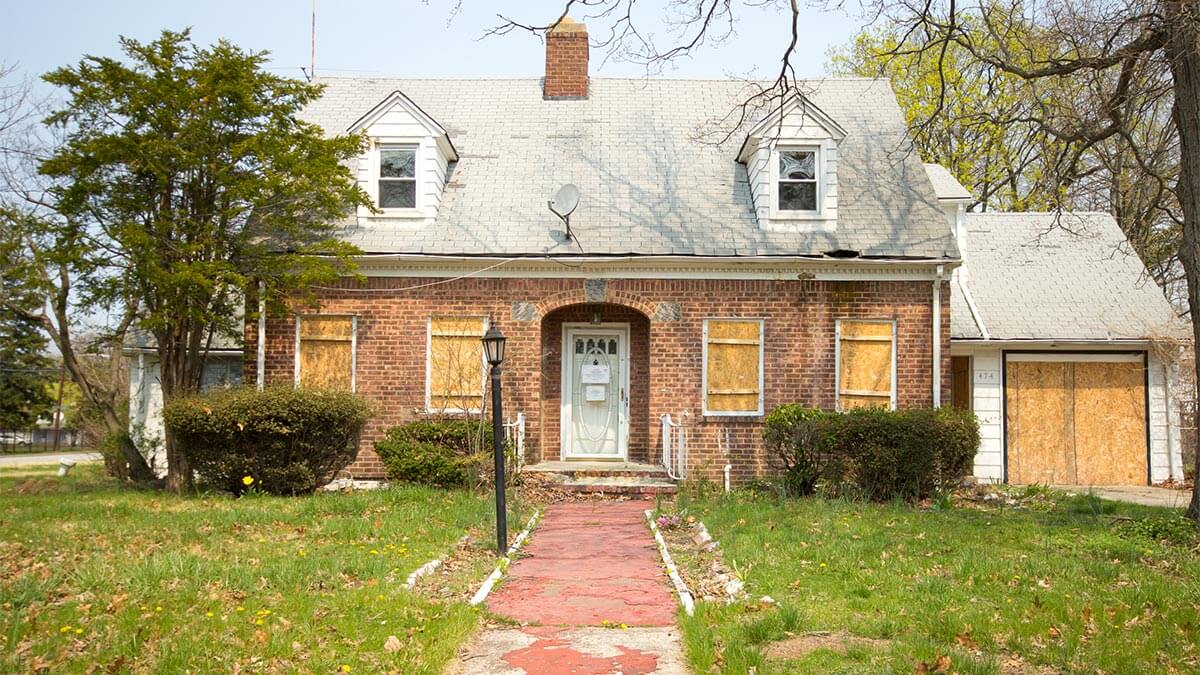
If your house isn’t selling, you have eight real exit options beyond the standard MLS listing. They range from selling to a cash buyer or iBuyer in as few as 7 days to demolishing the structure and selling the land. The right path depends on three variables: your equity level, how urgently you need to move, and your home’s current condition.
Whether you’ve searched “can’t sell my house” or spent months on market without a serious offer, carrying an unsellable property in 2026 is expensive. Days on market nationally averaged 38 to 51 days in 2025, up from 32 to 35 days the year before. A home sitting past 60 days attracts lowball offers. Past 90 days, the property develops a stigma that standard listing improvements rarely fix.
This guide covers why homes stop selling in 2026, how to fix a stalled listing, and seven alternatives to selling your home that require no MLS listing at all. It ends with a decision framework that maps your specific situation to the right exit strategy.
Stuck with a House You Can't Sell? Get competing cash offers in 48 hours, no repairs or listings required.
No repairs, no commission, close in as few as 7 days.
How to Sell a House
- Why your house won’t sell in 2026
- Fix the listing: price, photos, and staging
- Sell to a cash buyer or iBuyer
- Rent it out or offer a lease option
- Short sale, deed in lieu, or foreclosure
- Donate, gift, or transfer the property
- Can you legally demolish your own house?
- How to choose the right exit strategy
- Frequently asked questions
Why your house won’t sell in 2026
Most stuck listings trace back to one of three problems: the price is too high for what buyers will pay, the home’s condition is turning buyers away, or the marketing isn’t reaching the right people. Identifying which category applies is the first step toward choosing the right exit.
Overpricing and market mismatch
An overpriced home is the most common reason a house won’t sell. According to the latest existing-home sales data from the National Association of Realtors, U.S. existing home sales came in at 4.06 million in 2025, essentially flat year over year. With inventory rising in many metros, buyers have more choices and more negotiating power than they did in 2021 or 2022.
The average days on market nationally ran 38 to 51 days in 2025. Once a listing crosses 30 to 45 days without an offer, buyer agents start flagging it as a problem property. After 60 days, lowball offers become the norm. A price reduction of 3 to 5 percent in the first 30 days after a stall is the most reliable way to restart showing traffic, per agent consensus across the industry.
Condition and deferred maintenance
Deferred maintenance is the single biggest deal-killer for homes that can’t attract offers. A roof replacement runs $9,000 to $22,000 in 2026. Buyers typically discount a home by 1.5 to 2 times the actual repair cost because they factor in the inconvenience and risk of managing a renovation after closing. A $15,000 roof problem can translate into a $22,000 to $30,000 reduction at the negotiating table.
Distressed property condition issues that most often kill financed deals include a failing roof, aging HVAC, plumbing problems, water damage, foundation concerns, and unpermitted additions. Location-based devaluers, such as a poor school district or high-traffic roads, cannot be fixed and typically require a sharper price to compensate. If deferred maintenance is the core problem, selling as-is to a cash buyer is usually more efficient than spending money on repairs first.
Marketing and exposure gaps
Poor photos, vague listing descriptions, and limited syndication prevent buyers from ever seeing the property. Professional photography typically costs $150 to $400 and is one of the highest-return investments a seller can make before relisting. If your listing has no professional photos, restricted showing times, or reaches buyers through only one platform, exposure is the problem, not the property.
Once you identify which category applies, the exit options below divide accordingly.
Fix the listing: price, photos, and staging
If price or marketing is the issue, these steps address what to do when your house won’t sell on the MLS. This section is intentionally brief. If you’ve already worked through these fixes, the alternatives to selling your home in the sections below require no listing at all.
How to reprice after a market stall
Start with Redfin’s pricing guide and use only closings from the past 90 days within a half-mile radius of your property. Sales from six to twelve months ago may reflect a stronger market and will give you a false price ceiling. Top agents recommend a price reduction when a home receives fewer than two showings per week for 30 consecutive days.
A 3 to 5 percent cut typically restarts showing traffic. If you’ve already reduced and traffic hasn’t improved, the property may be priced above what any buyer will pay in its current condition. That is a signal to move to the exit strategies below.
Staging, curb appeal, and photo upgrades
Professional staging typically costs $1,500 to $4,000 depending on home size and whether the property is vacant or occupied. Fresh exterior paint, power washing, and updated landscaping address curb appeal problems at a fraction of that cost. If your listing photos are dark, crowded, or shot on a phone, replacing them with professional images is the fastest single fix available.
Listing refresh and relaunch checklist
When you’re working through what to do when your house won’t sell after weeks on market, a full listing reset often outperforms a price cut alone. Work through these steps before relaunching:
- Relist at a new price after a brief period off-market to reset the days-on-market counter.
- Replace all listing photos with professional wide-angle shots, including an exterior taken at golden hour.
- Declutter and depersonalize every room that will be photographed or shown.
- Address the top three visible maintenance items a buyer would flag in a showing.
- Expand showing windows to include evenings and weekend mornings.
- Refresh the listing description with specific, factual language about recent upgrades.
- Syndicate broadly beyond the MLS to major real estate platforms and social media.
If these steps don’t generate offers within 30 days, the exit strategies below require no listing at all.
Sell to a cash buyer or iBuyer
Selling to a cash buyer for house transactions that won’t qualify for traditional financing is the fastest way to get rid of a house you can’t sell. Most deals close in 7 to 30 days, with no repairs or agent commissions required. This is the primary solution for sellers dealing with condition issues, tight timelines, or properties that traditional lenders won’t finance.
How cash buyer offers work
A real estate investor or institutional cash buyer evaluates your home on its as-is value, not on what it could be worth after repairs. You submit basic details about the property, receive an offer within 24 to 48 hours, and choose a closing date that works for your timeline. There are no appraisal contingencies, no financing contingencies, and no mandatory repair requests from a lender.
Cash buyers purchase distressed property regularly. Condition issues that would cause a financed deal to collapse, such as a failing roof, foundation problems, or outdated electrical systems, are not barriers to a cash sale.
What to expect from an iBuyer
An iBuyer submits a data-driven offer based on your home’s address, size, condition, and comparable market data. The process is handled digitally, with a brief property assessment to confirm condition. Sellers dealing with poor-condition properties often find that a cash buyer or iBuyer is the only realistic path to closing without first investing in costly repairs. For the full process, see selling in poor condition and the fixer-upper home guide.
Sell a house as-is vs. the MLS
To sell a house as-is, you skip the repair and staging phase entirely. The trade-off is that cash offers typically run 5 to 15 percent below market value. But the net difference narrows quickly when you account for what a traditional sale actually costs.
On a $300,000 home sold traditionally with a 6 percent agent commission and $20,000 in negotiated repairs, you net roughly $262,000. A cash offer at 10 percent below market ($270,000) with no commissions or repairs nets $270,000, which is more. An as-is home sale also eliminates the risk of a financed deal falling through after weeks under contract.
| Factor | Cash buyer / iBuyer | Traditional MLS listing |
|---|---|---|
| Close timeline | 7 to 30 days | 38 to 51 days (current market) |
| Agent commission | None | 5 to 6% of sale price |
| Repair requirements | None (as-is) | Buyer-negotiated and lender-required |
| Financing contingency risk | None | Present in most offers |
| Certainty of close | High | Moderate |
| Offer turnaround | 24 to 48 hours | Days to weeks |
Based on NAR and MarketWatch data, 2025 to 2026. Verify current rates before transacting.
If you want to sell a house as-is and close on your own timeline, a cash buyer or iBuyer is the most reliable route.
Rent it out or offer a lease option
If you can carry the mortgage, renting the property is one of the strongest alternatives to selling your home when the market won’t support your price. Two strategies apply here: traditional renting and a lease option, which combines renting with a future purchase agreement.
Renting your house with an existing mortgage
Most conventional mortgages allow you to rent out your house, but you must notify your lender. The CFPB notes that FHA loan holders must typically occupy the property for at least 12 months before converting to a rental. VA loans carry similar owner-occupancy requirements. Converting to a rental also typically requires updating your homeowner’s insurance to a landlord policy, which costs 15 to 25 percent more than a standard policy.
When renting makes sense: Your mortgage payment is at or near market rent, you can manage the property or hire professional management, and you have time to wait for better conditions.
When it doesn’t: Your mortgage significantly exceeds market rent, the home needs costly repairs a tenant would accelerate, or you need a lump sum from the sale now.
How a lease option works
A lease option lets a tenant-buyer pay above-market rent plus an upfront option fee of 1 to 5 percent of the agreed purchase price. Both the option fee and the monthly rent premium apply toward the purchase price if the buyer exercises the option, typically after one to three years. This path works well for sellers in a “can’t sell my house” situation where buyer interest exists but financing is the consistent obstacle.
When a lease option makes sense: Buyer interest exists at your price but financing is the barrier, and you can wait 12 to 36 months for the tenant-buyer to qualify.
When it doesn’t: You need immediate cash from the sale, or the property needs repairs the tenant-buyer won’t maintain.
Short sale, deed in lieu, or foreclosure
If you owe more than the home is worth (an underwater mortgage) or can no longer make payments, these three paths address the distressed exit directly. Each has different credit, tax, and legal consequences. Consult a real estate attorney before proceeding with any of these options.
Short sale basics and credit impact
A short sale lets you sell your home for less than the remaining mortgage balance, with your lender agreeing to accept the reduced proceeds. Per canceled debt tax rules from the IRS, the forgiven balance may be taxable income depending on current law. Verify the 2026 status of any Mortgage Forgiveness Debt Relief Act extensions with a tax professional before closing.
A short sale typically reduces your credit score by 100 to 150 points (depending on your starting score and lender reporting) and stays on your credit report for seven years. The process takes 3 to 6 months because the lender must review and approve the terms. A short sale causes less credit damage than foreclosure in almost every scenario.
Deed in lieu of foreclosure
A deed in lieu of foreclosure lets you transfer your home’s title directly to your lender in exchange for release from the remaining mortgage debt. Per deed in lieu requirements from the CFPB, the lender must agree to this arrangement and may refuse if the property has junior liens or if a short sale would recover more of the balance.
A deed in lieu avoids the formal foreclosure process, reducing the credit impact compared to a completed foreclosure, though the hit is still significant. Not all states protect borrowers from a deficiency judgment after a deed in lieu. Consult a real estate attorney about your state’s specific rules before proceeding.
Strategic foreclosure as last resort
Foreclosure should be the last resort. Lenders typically begin the formal process after 120 days of missed payments, though timelines vary significantly by state (judicial foreclosure states take longer than non-judicial ones). The credit impact is typically 150 to 200 points, and the record stays on your report for seven years.
Before missing a payment, contact your servicer about forbearance, loan modification, or a deed in lieu. HUD foreclosure alternatives include free counseling from HUD-approved housing counselors who can walk you through every option at no cost. Foreclosure also eliminates any equity in the property, and some states allow deficiency judgments that let the lender pursue the remaining balance after taking the home.
Donate, gift, or transfer the property
If the property has no mortgage and no buyer at any price, donating or transferring ownership eliminates the obligation without a sale. This is one of the most overlooked alternatives to selling your home for properties with limited market appeal.
Donating a house to a qualified charity
Donating a home to a qualified 501(c)(3) organization lets you deduct the fair market value from your federal taxes. Per IRS Publication 561, property donations to public charities are generally deductible up to 30 percent of your adjusted gross income, with a five-year carryforward for amounts above that limit.
Organizations like Habitat for Humanity operate Home Donation programs, though condition requirements vary and acceptance is not guaranteed. The donation must be supported by a qualified appraisal. This path makes financial sense when the charitable deduction offsets more in taxes than the net proceeds you would receive after commissions and repairs in a traditional sale.
Gift deed or quitclaim to a family member
A gift deed transfers ownership to a family member without money changing hands. The recipient takes the property at your original cost basis, which creates a potential capital gains liability when they eventually sell. A quitclaim deed is the fastest transfer method but provides no title warranty and is typically reserved for family transfers, not charitable donations.
Neither option eliminates property taxes, HOA obligations, or ongoing maintenance costs. Those obligations transfer to the new owner, so make sure the recipient understands the full carrying cost before signing the deed.
Can you legally demolish your own house?
In the United States, you can legally demolish your own house, but nearly every jurisdiction requires a demolition permit and a hazardous-materials inspection before work begins. Demolition is a legitimate exit strategy when the structure has no market value but the land does.
Demolition permits and local requirements
A demolition permit is required in virtually all U.S. jurisdictions. Applications typically require proof of liability insurance and documentation of utility disconnection (water, gas, electric, and sewer) before the permit is approved.
If your home was built before 1978, EPA asbestos demolition rules require an asbestos and lead paint inspection before work can begin. If hazardous materials are found, abatement must be completed before any demolition proceeds. Permit fees vary by municipality but typically run $200 to $600.
If you have an active mortgage, your lender’s consent may also be required before demolition. Demolishing without that consent can violate your loan terms. For sellers dealing with severely fire-damaged structures, where demolition and land sale are the most common decisions, see selling fire-damaged homes for an analysis of when an as-is sale outperforms a full tear-down.
What house demolition costs in 2026
The average house demolition cost nationally is about $14,000, with most projects falling between $6,000 and $25,000, according to the Angi demolition cost guide. Asbestos or lead paint abatement adds $1,500 to $3,000 or more on top of the base cost. Permit fees are separate on top of both figures.
| Home size | Estimated demolition cost |
|---|---|
| Under 1,000 sq ft | $6,000 to $10,000 |
| 1,000 to 2,000 sq ft | $10,000 to $17,000 |
| 2,000 to 3,000 sq ft | $17,000 to $25,000 |
Based on Angi 2026 cost data. Add $1,500 to $3,000+ for asbestos or lead abatement on pre-1978 homes. Verify local rates before contracting.
Selling the land after demolition
Once the structure is removed, bare land is often significantly easier to price and sell than a distressed home. Land buyers, builders, and developers are not deterred by condition issues that stop retail buyers cold. You can sell the cleared lot, build a new structure, or donate it to a community land trust.
The total demolition and abatement expense is a one-time exit cost. Compare it against the ongoing carrying costs (property taxes, insurance, maintenance) you would keep paying while a distressed structure sat unsold.
How to choose the right exit strategy
The framework below answers what to do when your house won’t sell through any conventional method. Equity level, urgency, and condition determine which path produces the best outcome for your situation.
Decision framework by situation
| Seller situation | Recommended exit | Why it fits | Time to resolve |
|---|---|---|---|
| Underwater, facing missed payments | Short sale or deed in lieu | Avoids foreclosure; lender may release deficiency | 90 to 180 days |
| Has equity, home needs major repairs | Cash buyer or iBuyer | Closes as-is; no repair investment required | 7 to 30 days |
| Has equity, no urgency to sell | Traditional listing with price reduction | Maximizes proceeds; time allows market correction | 38 to 90 days |
| Relocated, needs cash flow | Rent it out or lease option | Covers mortgage while waiting for conditions to improve | 30 to 60 days to place tenant |
| No mortgage, poor or no buyer pool | Donate or gift deed | Eliminates carrying costs; possible tax benefit | 30 to 60 days for deed transfer |
| Hazardous or structurally unsound | Demolish and sell the land | Removes unsellable structure; land is marketable | 60 to 120 days |
Close timelines based on NAR, MarketWatch, and CFPB data, 2025 to 2026.
If you’re underwater on the mortgage
If you owe more than the home is worth, a cash buyer or traditional listing will not generate enough proceeds to pay off your loan at closing. A short sale or deed in lieu of foreclosure is the right starting point. Contact your mortgage servicer first to understand which options your lender will consider.
A short sale causes less credit damage than foreclosure (100 to 150 points vs. 150 to 200 points) and gives you more control over the timeline. A deed in lieu is faster but requires lender cooperation and may not protect you from a deficiency judgment in all states.
If the house needs major repairs
For a property with significant deferred maintenance, the fastest exit is usually a cash buyer or iBuyer. Sellers in specific markets can find local resources: the Houston distressed guide and the Florida distressed guide cover the as-is sale process in depth for those markets.
If the damage is structural and the land has value, demolition may outperform a cash sale. Compare the net land value after demolition costs to the best cash offer you can get before committing. A real estate investor who specializes in distressed properties may offer more than a standard iBuyer for homes with strong underlying land value.
For anyone stuck in a “can’t sell my house” situation regardless of what they’ve tried, the decision table above maps every common scenario to the most effective path forward.
Getting rid of a house you can’t sell doesn’t have to mean taking the first lowball offer. Through iBuyer.com’s marketplace, you can request competing cash offers from multiple vetted buyers at the same time, without listing on the MLS, hiring an agent, or completing any repairs. Most sellers get their initial offer within 24 to 48 hours. If the home is in poor condition, priced above what the retail market will bear, or if you need to close in under 30 days, compare your options here before committing to any one path.
Get Cash Offers Without Fixing a Thing Compare multiple buyers and choose your own closing date.
As-is condition, no obligation, no agent fees.
Frequently asked questions
If your house isn’t selling, you have eight exit options: price reduction, better presentation, cash buyer, rental, lease option, short sale, donation, or demolition. The right choice depends on your equity level, urgency, and home condition. A cash buyer or iBuyer is the fastest path when the home needs repairs. Renting or a lease option works if you can carry the mortgage temporarily.
Deferred maintenance, particularly a failing roof, aging HVAC, plumbing problems, or water damage, devalues a house more than any other single factor. Buyers typically price in repair costs at 1.5 to 2 times the actual cost because they factor in inconvenience and risk. Foundation issues, unpermitted work, and evidence of water intrusion trigger the steepest discounts and often kill financed deals entirely.
Without a traditional sale, you can rent the property, do a deed in lieu of foreclosure, donate to a qualified charity, transfer via gift deed, or demolish and sell the land. Each path has different financial and tax consequences. A deed in lieu works only if you owe more than the home is worth and your lender agrees to the arrangement.
Yes, you can legally demolish your own house in the U.S., but nearly every jurisdiction requires a permit and a hazardous-materials inspection before work begins. If the home was built before 1978, EPA rules require asbestos and lead paint testing before demolition proceeds. An active mortgage may also require your lender’s consent before any demolition work begins.
House demolition costs average $14,000 nationally in 2026, with most projects running $6,000 to $25,000 depending on home size and local rates. Asbestos or lead paint abatement adds $1,500 to $3,000 or more. Permit fees typically run $200 to $600 depending on the municipality.
Cash buyers typically offer 5 to 15 percent below market value, but the net difference often narrows when commissions and repair costs are factored in. On a $300,000 home, a cash offer at 10% below ($270,000) with no agent fees often nets more than a financed sale at full price with a 6% commission and $20,000 in repairs. The exact comparison depends on your home’s condition and local market.
In a short sale, your lender agrees to accept less than the full mortgage balance as final payment when you sell the home. A short sale typically drops your credit score by 100 to 150 points and stays on your report for seven years, compared to 150 to 200 points for a foreclosure. Short sales take 90 to 180 days because lender approval is required. The canceled debt may be taxable income, so consult a tax professional about current 2026 IRS rules.
A deed in lieu of foreclosure lets you transfer your home’s title to your lender in exchange for release from the remaining mortgage debt. It avoids the formal foreclosure process, which reduces the credit impact compared to a completed foreclosure, though the hit is still significant. The lender must agree and can refuse if the property has junior liens or if a short sale would recover more.
Yes, most conventional mortgages allow you to rent out your home, but you must notify your lender and may face owner-occupancy requirements. FHA loans require you to occupy the home for at least 12 months before renting. Converting to a rental also typically requires updating your homeowner’s insurance to a landlord policy, which costs 15 to 25 percent more than a standard policy.
Yes, you can donate a house to a qualified 501(c)(3) charity and deduct the fair market value on your federal taxes. Property donations to public charities are generally deductible up to 30 percent of your adjusted gross income, with a five-year carryforward for amounts above that limit, per IRS Publication 561. The donation must be supported by a qualified appraisal.
A home sitting unsold past 30 to 45 days starts attracting buyer suspicion about price or condition in most U.S. markets. The average days on market nationally runs 38 to 51 days in 2026. Beyond 60 days, buyer agents often recommend lowball offers. After 90 days, most sellers should move to one of the exit strategies covered in this article.
Stopping mortgage payments triggers foreclosure after roughly 120 days, dropping your credit score by 150 to 200 points for seven years. Before letting a property go to foreclosure, contact your servicer about forbearance, loan modification, or a deed in lieu, all of which cause less credit damage. Some states allow deficiency judgments that let the lender pursue the remaining balance even after taking the home.
Your home is likely priced too high if it receives fewer than two showings per week for 30 days or no offers within 21 days on the market. Request a new comparative market analysis using only sales closed in the past 90 days within a half-mile radius. If similar homes are selling and yours is not, price is almost always the first variable to adjust.
A cash sale triggers the same capital gains tax as any home sale, including the $250,000 primary residence exclusion ($500,000 for married filers) if you’ve lived in the home for at least two of the last five years. No special tax rules apply to cash buyer transactions specifically. Consult a tax professional for your specific situation.

Reilly Dzurick is a licensed real estate agent with over six years of experience and a member of the iBuyer.com Market Insights Team, covering national trends in home selling and the evolving iBuyer landscape. Her firsthand experience working with buyers and sellers gives her a practical perspective on how these platforms impact real homeowners. She holds a degree in Public Relations, Advertising, and Applied Communication.