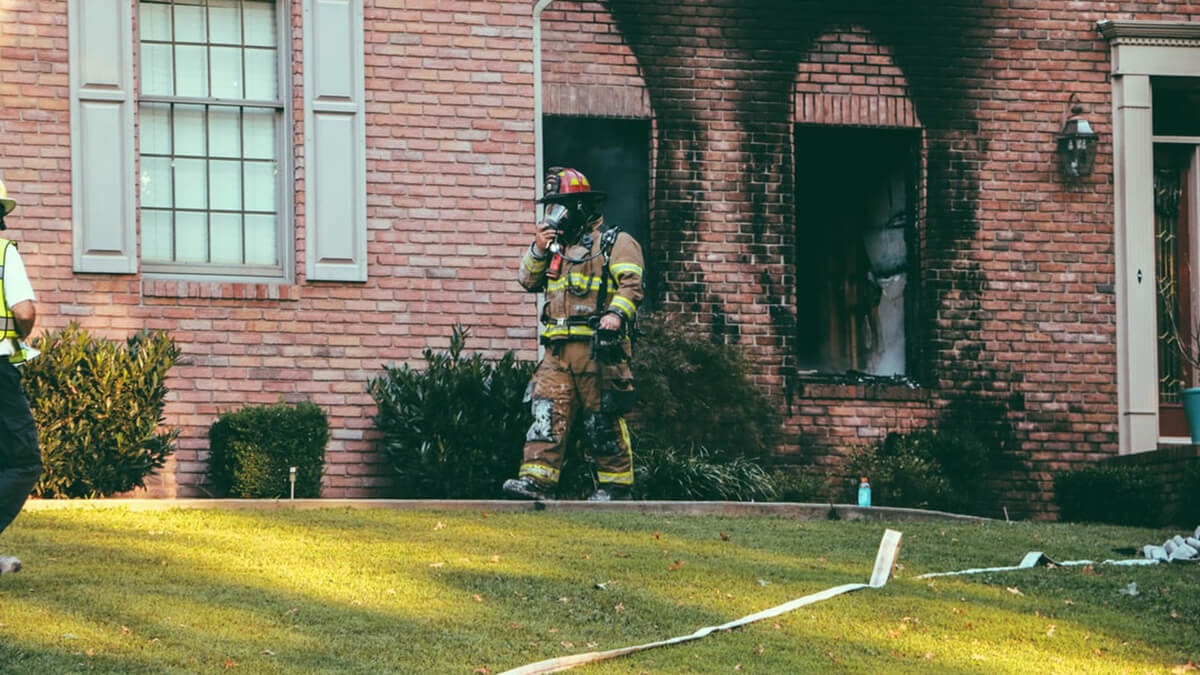
A fire-damaged house can be sold either as-is for 30% to 60% below pre-fire market value, or after repairs that average $27,091 nationally and can restore the home to near-market price. Both paths are legal in all 50 states, and neither requires you to forfeit your insurance settlement or skip disclosure.
The right choice depends on damage severity, available cash, and how quickly you need to close. Sellers with minor or single-room damage who can fund repairs typically net more through a traditional listing. Sellers facing significant structural damage, no repair budget, or a timeline under 60 days almost always come out ahead by targeting a cash buyer who purchases as-is.
This guide covers what to do immediately after a fire, how to decide between both paths, how to price a fire damaged house using a four-step methodology, the step-by-step process for each path, disclosure requirements, and which buyers actually purchase fire-damaged properties.
Table of contents
- What to Do Right After a House Fire
- Sell As-Is or Repair First? How to Decide
- How to Price a Fire Damaged House
- How to Sell a Fire Damaged House As-Is
- How to Sell After Repairing Fire Damage
- Fire Damage Disclosure: What Sellers Must Share
- Who Buys Fire Damaged Houses?
- Mistakes to Avoid When Selling a Fire Damaged Home
- Frequently Asked Questions
Instant Valuation, Confidential Deals with a Certified iBuyer.com Specialist.
Sell Smart, Sell Fast, Get Sold. No Obligations.
What to Do Right After a House Fire
The first step after a house fire is to contact your insurer and preserve documentation before making any repair or sale decisions. Acting in the wrong order can void coverage, complicate your insurance claim, or create disclosure gaps that expose you to legal liability after closing.
According to NFPA fire data, house fires range from minor surface scorching to total structural loss. Knowing which category your property falls into shapes every financial decision that follows.
Contact Your Insurer Before Anything Else
Call your homeowner’s insurance company before touching anything inside the property. Most homeowner policies cover fire damage, but starting unauthorized repairs before the adjuster inspects can void coverage for those specific costs.
When you call, request a claim number, an adjuster assignment, and confirmation of any emergency stabilization or board-up coverage. Insurance proceeds belong to you as the seller. They do not transfer to a buyer at closing and are not deducted from the sale price. The insurance settlement and the sale are two entirely separate financial transactions.
Get the Official Fire Department Report
Request the written fire department report as soon as it is available. This document is a public record. Buyers, their attorneys, and their lenders can retrieve it independently, which makes any attempt to conceal or minimize damage both counterproductive and legally risky.
The report establishes the cause of the fire, the areas affected, and any hazmat or condemnation determinations made at the scene. Keep a certified copy for your disclosure package.
Document Every Room With Photos and Video
Walk through the property and document every room with timestamped photos and video, including areas that appear unaffected. Water used by firefighters to suppress the fire travels into walls, subfloors, and below-grade plumbing, causing damage that is not visible from the surface. Fire and firefighting water can also compromise drainage systems; problems in that area carry their own disclosure obligations, as detailed in our guide on homes with sewer problems.
Documents to preserve before listing:
- Written fire department report
- Insurance adjuster’s report
- Timestamped photographs and video of all affected areas
- Any condemnation notice or occupancy-permit revocation
- Permits pulled for any partial emergency repairs
Sell As-Is or Repair First? How to Decide
Selling fire damaged property begins with a single decision: sell the home in its current condition or restore it before listing. Each path has a different timeline, a different buyer pool, and a very different effect on your net proceeds.
| Factor | Sell As-Is | Repair First |
|---|---|---|
| Typical timeline | 7-30 days | 3-6 months |
| Sale price vs. pre-fire value | 30-60% below | Near or at market |
| Upfront out-of-pocket cost | $0 | $3,098 to $51,243 |
| Buyer pool | Cash buyers, investors | Financed + cash buyers |
| Disclosure requirement | Full, priced in | Full, post-repair |
Based on national cost data from Homelight and FastExpert, 2025-2026. Verify current repair costs with licensed contractors before listing.
When Selling As-Is Makes Financial Sense
A fire damage as-is sale is the stronger financial choice when one or more of the following conditions apply:
- Repair costs exceed 30% of the home’s pre-fire market value
- You have no cash reserves to fund repairs before closing
- You need to close in under 60 days
- The insurance payout is insufficient to cover full restoration
When you sell fire damaged house as is under these conditions, the cost and time of repairs rarely produce enough additional sale price to justify the investment. A cash buyer eliminates the lender appraisal requirement, speeds up closing, and absorbs repair risk in exchange for a lower price.
When Repairing First Earns More Net Proceeds
Repairing the home first typically produces more net proceeds when:
- Damage is cosmetic or confined to a single room
- Total repair costs are under 50% of the home’s pre-fire value
- The post-repair after repair value meets or exceeds comparable sales in the area
- You can fund repairs upfront and wait 3 to 6 months for a traditional listing
Under these conditions, the larger buyer pool (financed plus cash buyers) and a near-market sale price can outpace the as-is discount by a meaningful margin.
Speed vs. Sale Price: The Core Trade-Off
The core trade-off in selling fire damaged property is time versus net proceeds. As noted in Realtor.com’s fire damage guide, the as-is path sacrifices price for speed; the repair path sacrifices speed for price. There is no version of a fire-damage transaction that delivers both maximum speed and maximum price simultaneously.
Use the four-step pricing methodology in the next section to calculate your specific numbers before committing to either path.
How to Price a Fire Damaged House
Understanding how to price a fire damaged house correctly is the step most sellers skip, and the one that costs them the most money. A standard comparable market analysis does not account for the buyer risk discount, which is the additional deduction buyers apply on top of full repair costs to compensate for the risk of hidden damage. Skipping this step produces a price floor higher than any serious buyer will pay.
Step 1: Find the Pre-Fire Market Value
Request a CMA (comparable market analysis) from a local real estate agent, or hire a licensed appraiser to establish the pre-fire market value. Online automated valuation models are insufficient for fire-damaged properties because they cannot account for damage condition. Use sales of comparable homes within 90 days and a half-mile radius as your baseline.
This number is your starting point for calculating fire damaged home value. Every other variable is subtracted from it.
Step 2: Get Itemized Contractor Estimates
Collect 2 to 3 itemized bids from licensed fire restoration contractors, not general contractors. Bundled estimates cannot be used for accurate pricing. Each bid should separate the following line items: smoke damage remediation, structural damage repair, water intrusion and drying, electrical system repair, and HVAC repair.
Per Angi cost data, fire damage repair cost ranges from $3,098 to $51,243 nationally, with a national average of $27,091. Kitchen fires and roof collapses run $14,600 to $41,300. Use the midpoint of your estimates, not the lowest bid, to arrive at a defensible repair figure.
Step 3: Apply the Buyer Risk Discount
The buyer risk discount is an additional 10% to 20% deduction applied on top of full repair costs. This line item represents the buyer’s perceived risk of hidden damage in subfloors, structural framing, wiring, and HVAC ductwork that cannot be verified until demolition begins.
This is the variable that competing pricing guides omit. Including it produces a realistic floor price. Leaving it out produces a number that investors will still negotiate down after their walkthrough.
Step 4: Set Your As-Is Price Floor
Use this formula to calculate fire damaged home value for an as-is sale:
As-Is Price Floor = Pre-Fire Market Value minus Full Repair Cost minus Buyer Risk Discount
Worked example: – Pre-fire market value: $300,000 – Full repair cost (from contractor estimates): $60,000 – Buyer risk discount at 15%: $36,000 (15% of $300,000) – As-Is Price Floor: $204,000
Investors use the after repair value to counter-price your home. As explained in Baselane’s ARV guide, investors typically offer 60% to 70% of ARV minus their estimated repair costs. Calculate your own ARV before entering negotiations so you can recognize a lowball offer before accepting it.
How to Sell a Fire Damaged House As-Is
When you decide to sell fire damaged house as is, work through the following steps in sequence. Skipping any of them creates documentation gaps that either kill deals or invite post-closing disputes.
Gather Your Documentation Package
Assemble the following before contacting any buyers:
- Fire department report (official written document, not a summary)
- Insurance claim documents and adjuster’s report
- 2 to 3 itemized contractor repair estimates
- Timestamped photographs and video of all damage
- Any permits pulled for partial emergency repairs
- Condemnation notice or occupancy-permit revocation, if applicable
This package is what serious buyers need to make a firm, non-contingent offer. Having it ready shortens the time from first contact to signed agreement.
Find Cash Buyers and Real Estate Investors
Target cash buyers, real estate investors, and iBuyer platforms that specialize in as-is properties. These buyers do not require lender appraisals or habitable condition at the time of purchase. For a broader look at buyers who focus on homes with major defects, see our guide on selling in poor condition.
Request offers from at least 3 to 5 buyers. Multiple competing offers give you a basis for comparison and typically produce a higher final price than accepting the first offer. Cash buyers and iBuyers typically close in 7 to 30 days after accepting an offer.
Negotiate With Full Disclosure
Allow buyers to conduct their own walkthrough inspection before they finalize a price. Blocking access kills deals. Be prepared for buyers to revise their offer after the inspection, and build this into your strategy by starting at or slightly above your calculated price floor.
Full disclosure of all known damage is both a legal obligation and a negotiating tool. When everything is disclosed and priced in, you are in a stronger position to hold firm.
Close and Transfer Liability
Work with a real estate attorney to confirm that your disclosure language covers all known damage before signing. Liability for the property’s condition transfers to the buyer at closing when disclosure is complete and accurate. You retain any insurance proceeds you have already received.
One tax note: if your insurance proceeds exceed your adjusted cost basis in the property, the excess may be taxable as a casualty gain. Per IRS Topic 515, consult a tax professional before closing to understand whether you owe tax on the settlement amount.
How to Sell After Repairing Fire Damage
The repair-first path produces higher net proceeds when the math supports it, but it requires careful attention to permit requirements. Unpermitted work creates disclosure problems that block financing and invite post-closing disputes.
Hire a Licensed Fire Restoration Contractor
Use a licensed fire restoration contractor, not a general contractor. Fire restoration contractors carry certifications for smoke remediation and structural fire damage that most general contractors do not hold. Work completed by uncertified contractors may fail a final building inspection or be challenged by a buyer’s inspector during due diligence.
Get at least two bids. If the repair ROI threshold is not met (total repair cost under 50% of pre-fire home value, with post-repair ARV meeting or exceeding comparable sales), stop here and move to the fire damage as-is sale path instead.
Pull Permits and Pass Inspections
Municipal permits are required for any structural, electrical, or HVAC work. Unpermitted repairs must be disclosed and can prevent buyer financing. If the property was condemned or had its occupancy permit revoked after the fire, you must obtain a new certificate of occupancy (or equivalent state clearance) before listing.
FHA and VA loans require move-in-ready condition. Any unresolved fire damage disqualifies the property for these loan types until all work is complete, permitted, and certified. Per the CFPB FHA overview, lenders must confirm habitability and structural soundness before approving financing. Some buyers may pursue a 203(k) loan to purchase and fund repairs simultaneously, but these loans require a participating lender and typically take 60 to 90 days to close.
Stage and List on the MLS
Once repairs are complete and all permits are closed out, list the home on the open market. Disclose the fire history in the listing and in any required state disclosure forms. Buyers will obtain the fire department report regardless, so proactive disclosure reduces the risk of deal failures during the inspection period.
Moderate damage repairs take 3 to 6 months. Fires that destroyed a kitchen or caused roof collapse can take 12 months or longer before the home is ready to show.
Fire Damage Disclosure: What Sellers Must Share
Every seller is legally required to disclose known fire damage in all 50 states, even when using a fire damage as-is sale structure. This is the most commonly misunderstood rule in selling fire damaged property.
What Specifically Must You Disclose?
Sellers must disclose all known material defects related to the fire. Per HUD disclosure requirements, material defects that affect value or habitability must be disclosed to buyers before closing.
Property disclosure for a fire-damaged home must include, at minimum:
- Cause of the fire, if known
- Extent of structural damage
- All repairs completed, with permit numbers
- Insurance claims filed and current claim status
- Any condemnation notice or permit revocation
- Smoke damage to walls, ceilings, HVAC, and contents
- Water intrusion from firefighting efforts, documented separately
Smoke damage and water damage must each be disclosed as separate conditions. Many sellers disclose the fire itself but omit the water intrusion that followed, which constitutes a material omission in most states.
How State Disclosure Laws Vary
All 50 states require material defect disclosure, but the required forms and procedures differ. California uses the Transfer Disclosure Statement. New York uses the Property Condition Disclosure Act. Some states allow sellers to complete the form directly; others require a licensed attorney to review it before signing.
When fire damage is severe enough to result in condemnation or permit revocation, the process changes significantly beyond a standard disclosure requirement. See our guide on how to sell a condemned house for that specific scenario.
What Happens If You Fail to Disclose?
Buyers who discover undisclosed fire damage after closing can pursue legal action for misrepresentation or fraud. In some states, courts have ordered rescission of the sale, which reverses the closing entirely and requires the seller to return the purchase price. Fire department reports are public records that any buyer, attorney, or lender can retrieve. Omissions will surface, and the legal exposure is significant.
Who Buys Fire Damaged Houses?
Fire-damaged homes attract a specific buyer pool. Understanding who those buyers are and how they price gives you the context to evaluate offers accurately.
Cash Buyers and Real Estate Investors
The primary buyers for fire-damaged homes are cash buyers and real estate investors. A real estate investor typically prices offers using this formula: 60% to 70% of ARV minus estimated repair costs. Knowing this formula before you receive an offer tells you immediately whether the number is fair or a lowball.
Requesting offers from multiple buyers before accepting any single offer is the most reliable way to find the upper end of what the market will pay.
House Flippers and Restoration Companies
House flippers buy fire-damaged properties to renovate and resell at ARV. A house flipper prices with precision because the spread between acquisition cost plus repairs and the resale ARV is their margin. Fire restoration companies occasionally purchase properties to use as project demonstrations or portfolio additions. Both buyer types are motivated by the same math, which means sellers who know their own ARV can negotiate more effectively.
Why Traditional Buyers Rarely Qualify
Most lenders will not underwrite a mortgage on a property with active or unresolved fire damage. The home must be habitable, structurally sound, and pass an appraisal before financing is approved. FHA and VA loans specifically require move-in-ready condition. Fire damage that destroys electrical systems compounds the barrier for financed buyers; those situations involve additional qualification issues described in our guide on selling without electricity.
Buyers who pursue a 203(k) loan can purchase and fund repairs simultaneously, but these loans require a participating lender and a 60 to 90-day close that most fire-damaged sellers cannot afford to wait for.
Mistakes to Avoid When Selling a Fire Damaged Home
These four mistakes appear consistently in fire-damage transactions that collapse or produce lower proceeds than the seller expected. All four are avoidable with the right preparation.
Skipping the Professional Damage Assessment
Without a professional damage assessment, you cannot price the property accurately or complete a legally sufficient disclosure. Buyers who do not receive this information will order their own inspection during due diligence and use the findings as leverage to renegotiate the price downward after you have an accepted offer. Getting an independent assessment first puts you in control of the pricing conversation from the start.
Pricing Too Low Without Getting Estimates
Sellers who accept cash offers without knowing actual repair costs have no baseline for evaluating whether an offer reflects fair market value or is a lowball. The four-step methodology in “How to Price a Fire Damaged House” gives you that baseline. Use it before accepting any offer.
Hiding or Under-Disclosing the Damage
Smoke damage, structural damage, and water intrusion must all be disclosed fully. Water used to suppress the fire soaks into subfloors and framing and can cause dry rot months after the event, a secondary damage type that sellers frequently omit from disclosures. For more on how post-fire water damage in framing affects your disclosure package, see our guide on selling with dry rot. Any undisclosed damage will surface, and the post-closing liability for misrepresentation is significant in every state.
Accepting the First Offer You Receive
Cash buyers often submit low initial offers knowing that fire-damaged sellers are under financial and time pressure. Getting competing offers from at least 3 to 5 buyers typically produces a final price that is 10% to 20% higher than the first offer received. Take time to solicit multiple offers before signing. The documentation package you assembled in the as-is checklist is the tool that makes buyers compete rather than pick you off individually.
A fire-damaged home is still an asset, and the difference between a prepared sale and a rushed one can be $20,000 to $60,000 or more depending on your market. iBuyer.com connects sellers of fire-damaged properties with multiple vetted cash buyers who compete for as-is homes, with no repair requirement and close times of 7 to 30 days. Enter your address to receive competing offers and see what your property is worth in its current condition.
Compare Cash Offers from Top Home Buyers. Delivered by Your Local iBuyer Certified Specialist.
One Expert, Multiple Offers, No Obligation.
Know Your Local Market Before You List
Pull the last 12 months of real sales and buyer activity for your neighborhood.
Get My Market ReportFrequently Asked Questions
Yes, you can sell a fire-damaged house either as-is to a cash buyer or after completing repairs and listing on the open market. Selling as-is is faster and requires no upfront capital but typically results in a 30% to 60% discount off pre-fire market value. Repairing first can bring the sale price close to market rate but requires 3 to 6 months and $3,098 to $51,243 in restoration costs.
Fire damage typically reduces a home’s value by 30% to 60% below pre-fire market value when sold as-is. The discount depends on damage severity, smoke and water intrusion extent, and local market conditions. Fully repaired and permitted homes can recover to near-market value, but that process requires upfront capital and several months of work.
Price a fire-damaged house by subtracting full repair costs and a buyer risk discount from the pre-fire market value. The buyer risk discount is an additional 10% to 20% reduction on top of repair costs that accounts for hidden structural or electrical damage. Example: a $300,000 pre-fire home with $60,000 in repairs and a 15% risk discount ($36,000) has an as-is floor price of $204,000.
Repairing fire damage before selling makes sense when repair costs are under 50% of the home’s pre-fire value and you can fund the work upfront. If repairs exceed that threshold, or if you cannot wait 3 to 6 months for a traditional listing, selling as-is to a cash buyer typically produces a faster and less financially risky outcome. Get itemized contractor estimates before committing to either path.
Yes, sellers are legally required to disclose known fire damage in all U.S. states, even when using a fire damage as-is sale structure. “Selling as-is” means you will not make repairs; it does not remove your obligation to disclose known conditions. Fire department reports are public records, so omissions will surface and can expose you to post-closing legal liability.
Yes, cash buyers and real estate investors regularly purchase fire-damaged homes as-is, typically closing in 7 to 30 days. Cash sales eliminate the lender appraisal and financing contingency barriers that prevent most financed buyers from purchasing fire-damaged properties. Requesting offers from multiple cash buyers produces a higher net price than accepting the first offer you receive.
Fire-damaged homes are primarily purchased by cash buyers, real estate investors, house flippers, and fire restoration companies. Traditional buyers using mortgage financing are largely excluded because most lenders will not approve a loan on a non-habitable property. Investors price offers at 60% to 70% of after repair value minus their estimated repair costs.
Selling a fire-damaged house as-is to a cash buyer typically takes 7 to 30 days; a repaired listing takes 3 to 6 months. The as-is timeline depends on how quickly you assemble your documentation package and how many competing offers you solicit. Structural reconstruction from a severe fire can extend the repair-first timeline to 12 months or longer.
Insurance proceeds belong to you and do not transfer to the buyer; you keep them regardless of how or when you sell. If the payout exceeds your adjusted cost basis in the property, the excess may be treated as a taxable gain under IRS Topic 515, so consult a tax professional before closing. The insurance settlement and the sale price are two separate financial events.
Selling a fire-damaged house is harder than a standard sale but entirely possible, especially when targeting cash buyers who purchase as-is. The main barriers are the reduced buyer pool, the pricing complexity created by the buyer risk discount, and disclosure liability. All three are manageable with a professional damage assessment, accurate pricing using the four-step methodology, and a complete property disclosure package.

Reilly Dzurick is a licensed real estate agent with over six years of experience and a member of the iBuyer.com Market Insights Team, covering national trends in home selling and the evolving iBuyer landscape. Her firsthand experience working with buyers and sellers gives her a practical perspective on how these platforms impact real homeowners. She holds a degree in Public Relations, Advertising, and Applied Communication.