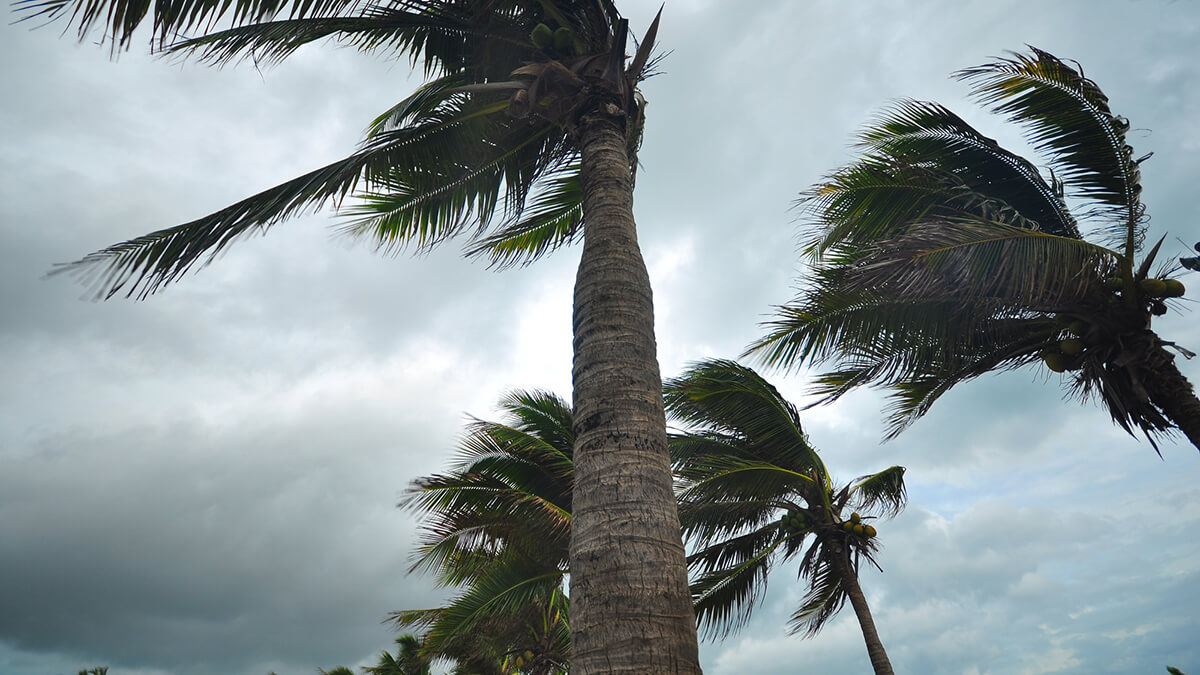
The safest places to live in Florida from hurricanes are inland areas in North and Central Florida, where cities like Ocala, Gainesville, and Lake City sit 50 to 200 feet above sea level and remain largely shielded from coastal storm surge. Ocala, widely regarded as the state’s top hurricane-safe city, rests approximately 100 feet above sea level in Marion County and carries some of the lowest homeowners insurance premiums in the state, routinely below the statewide average of $3,600 to $5,000 per year.
Florida receives approximately 40% of all U.S. hurricane landfalls, according to NOAA data, which means no location in the state is entirely risk-free. The difference between a coastal address and an inland one at elevation, however, can mean the difference between catastrophic storm surge and a manageable rainfall event.
This guide covers what makes a Florida location hurricane-safe, the 10 lowest-risk cities ranked with a comparison table, which areas carry the lowest flood risk, whether any Florida town is truly hurricane-proof, how to evaluate a specific address before you buy, and which regions carry the highest hurricane exposure.
Table of contents
- What Makes a Place in Florida Safe From Hurricanes?
- The 10 Safest Cities in Florida From Hurricanes (Ranked)
- Selling a Home in One of These Florida Cities?
- Are There Areas in Florida That Don’t Have Hurricanes?
- What Cities in Florida Have the Lowest Flood Risk?
- What Town in Florida Is Hurricane Proof?
- How to Evaluate Any Florida Address for Hurricane Risk Before You Buy
- The Most Hurricane-Prone Areas in Florida to Avoid
- Safest Large Cities in Florida From Hurricanes: A Practical Comparison
- Common Mistakes When Choosing a “Hurricane-Safe” Florida Home
- Frequently Asked Questions
Instant Valuation, Confidential Deals with a Certified iBuyer.com Specialist.
Sell Smart, Sell Fast, Get Sold. No Obligations.
What Makes a Place in Florida Safe From Hurricanes?
Three variables determine how protected a Florida location is from hurricanes: distance from the coast, elevation above sea level, and the construction quality of the home itself. A city that scores well on all three carries materially lower risk than any coastal community, regardless of its position on the map.
Distance from the coast and storm surge reach
Storm surge, not wind, causes the majority of hurricane fatalities and the most severe property losses. Surge is the ocean water pushed ashore by storm-force winds, and it only reaches so far inland before dissipating. Cities sitting 50 or more miles from the nearest coastline are effectively outside surge reach for most storm categories.
North and Central Florida’s inland band, running roughly from Ocala through Gainesville and Lake City, sits 60 to 100 miles from both the Gulf and Atlantic coasts. That distance is the primary reason these cities appear at the top of every credible hurricane-safety analysis.
Elevation: why 50 to 100+ feet above sea level matters
Elevation compounds the protection that inland distance provides. Even without direct coastal exposure, low-elevation terrain can flood from rainfall alone during a slow-moving or stalled hurricane. Properties above 50 feet are largely outside both surge reach and routine flood-plain risk.
Ocala sits at approximately 100 feet above sea level, Gainesville at roughly 120 feet, and Tallahassee at approximately 203 feet. Each of these elevations places the city well above any realistic flood scenario outside an extreme, stationary storm event.
FEMA flood zone classification (Zone X vs. Zone AE)
FEMA flood zones categorize properties by annual flood probability. Zone X indicates minimal flood hazard, placing the property outside the 500-year flood plain. Zone AE indicates a 1% annual chance of flooding (the “100-year flood zone”) and triggers mandatory flood insurance for federally backed mortgages.
Cities with predominantly Zone X classifications carry the lowest insurable flood risk. Coastal and canal-heavy cities like Cape Coral and Miami Beach contain large portions of Zone AE and Zone VE (coastal high-hazard with wave action), driving insurance costs significantly higher.
Construction standards: wind-zone ratings and impact-resistant builds
Florida adopted its statewide Building Code in 2001 following Hurricane Andrew’s catastrophic destruction. Homes built after 2002 under the updated code show measurably lower damage rates in comparable storms because the code introduced specific wind-load requirements tied to each county’s wind-zone designation.
Wind zones run from Wind Zone I (inland areas, up to 90 mph design wind speed) to Wind Zone IV (coastal areas, 150 mph or higher). A home built to Category 5 wind standards carries substantial structural margin above what most locations will ever demand of it.
The 10 Safest Cities in Florida From Hurricanes (Ranked)
The cities below rank as Florida’s lowest-risk hurricane locations based on elevation, distance from the coast, historical direct-landfall frequency, and predominant FEMA flood zone classification. According to historical hurricane landing data for Florida cities, inland North and Central Florida consistently records the fewest direct strikes and lowest cumulative wind damage in the state.
Ocala (Marion County)
Ocala holds the top position on virtually every credible hurricane-safety ranking. Located in Marion County at approximately 100 feet above sea level and roughly 60 miles from the Gulf Coast, Ocala consistently sees storms weaken before arrival. The practical result: homeowners insurance in the Ocala area runs materially below the statewide average.
Gainesville (Alachua County)
Gainesville, home to the University of Florida, sits at approximately 120 feet elevation in Alachua County and roughly 120 miles from both coasts. Its North-Central position places it outside the track of most Atlantic storms and well above surge reach from Gulf storms. Alachua County is predominantly FEMA Zone X.
Lake City (Columbia County)
Lake City in Columbia County sits at roughly 170 feet above sea level in North Florida, one of the highest elevations of any incorporated city in the state. The Columbia County area historically records fewer direct hurricane landfalls than any other region of comparable population. Gulf storms typically make landfall well to the south or west, and Atlantic storms curve north before arriving.
Babcock Ranch (Charlotte County)
Babcock Ranch is a purpose-built community in Charlotte County engineered specifically to withstand major hurricanes. Underground utilities, a community-scale solar grid, and homes built to Category 5 wind-load standards distinguish it from every other community in Southwest Florida.
During Hurricane Ian (2022), which struck near Fort Myers at approximately 150 mph, Babcock Ranch sustained minimal structural damage while surrounding communities experienced catastrophic losses. The community immediately opened its doors as a shelter for displaced residents from Cape Coral and Fort Myers.
The Villages (Sumter and Marion Counties)
The Villages, straddling Sumter and Marion Counties in Central Florida, sits at approximately 100 feet elevation and roughly 60 miles from both coasts. Much of the development falls within predominantly Zone X parcels, placing it in the same low-risk band as Ocala.
Orlando (Orange County)
Orlando sits more than 60 miles from both coasts in Orange County at approximately 96 feet above sea level. Category 4 and 5 storms making landfall on either coast typically weaken to Category 1 or below before reaching the metro. Buyers should verify individual parcel flood zones, as some lakefront areas in Orange County carry Zone AE designations.
Kissimmee (Osceola County)
Kissimmee in Osceola County sits at approximately 65 feet above sea level within the same Central Florida buffer zone as Orlando. Direct wind and surge risk remain low, though the slightly lower elevation compared to Ocala means inland flooding from prolonged rainfall warrants attention.
Sanford (Seminole County)
Sanford in Seminole County occupies a Central Florida position at roughly 46 feet above sea level, northeast of Orlando and well inland from both coasts. Historical wind damage records show Sanford sustaining measurably less structural damage than coastal Seminole County communities during the same storm events.
Palatka (Putnam County)
Palatka in Putnam County ranks as Florida’s safest city from hurricanes in several frequently cited analyses, due to its North Florida position and distance from Gulf storm tracks. The city sits at roughly 25 to 30 feet above sea level along the St. Johns River. Buyers should verify individual parcel flood zones, as the St. Johns River floodplain creates Zone AE areas near the riverbank.
Tallahassee (Leon County)
Tallahassee in Leon County sits at approximately 203 feet above sea level, the highest elevation of any major Florida city. Most Gulf storms make landfall well to the south, and Atlantic storms curve north before reaching the capital. Hurricane Hermine (2016, Category 1) made a direct hit on Tallahassee with limited structural damage, demonstrating the city’s resilience even under a direct strike.
Safest Florida Cities From Hurricanes: Comparison Table
| City | County | Approx. Elevation | FEMA Predominant Zone | Avg. Insurance Tier |
|---|---|---|---|---|
| Ocala | Marion | ~100 ft | Zone X | Low |
| Gainesville | Alachua | ~120 ft | Zone X | Low |
| Lake City | Columbia | ~170 ft | Zone X | Low to Moderate |
| Tallahassee | Leon | ~203 ft | Zone X | Low to Moderate |
| The Villages | Sumter/Marion | ~100 ft | Zone X | Low |
| Babcock Ranch | Charlotte | ~30 ft | Zone X (engineered) | Moderate |
| Orlando | Orange | ~96 ft | Zone X / Zone AE (portions) | Moderate |
| Kissimmee | Osceola | ~65 ft | Zone X / Zone AE (portions) | Moderate |
| Sanford | Seminole | ~46 ft | Zone X (predominantly) | Moderate |
| Palatka | Putnam | ~25 to 30 ft | Zone X / Zone AE (river areas) | Moderate |
Based on FEMA Flood Map Service Center data and Florida CFO insurance reporting. Verify current flood zone classifications and insurance rates before purchasing. Elevation figures are approximate city-center values.
Selling a Home in One of These Florida Cities?
If you’re relocating out of a high-risk area or into a safer one, compare cash offers before you move.
Know Your Local Market Before You List
Pull the last 12 months of real sales and buyer activity for your neighborhood.
Get My Market ReportAre There Areas in Florida That Don’t Have Hurricanes?
Why no Florida location is completely hurricane-free
No area in Florida is completely free from hurricanes or their effects. The state’s peninsula geography means any hurricane moving through the Gulf or Atlantic has some probability of affecting even the most inland locations with wind, rain, or tornado activity, a conclusion documented in hurricanesafetyprogram.org’s February 2026 analysis.
The meaningful question is not whether an area gets hurricanes, but what level of damage a specific location can expect from a direct hit or a near-miss. For inland cities at elevation, that answer looks fundamentally different from coastal communities.
The lowest-risk inland corridor: what the historical data shows
The inland North and Central Florida corridor running through Gainesville, Ocala, and Lake City has the lowest historical damage record per capita in the state. Storms making landfall on either coast lose wind energy crossing land, typically dropping one to two categories before reaching this corridor.
Historical Florida hurricane tracks from the National Hurricane Center confirm that inland North and Central Florida cities record far fewer direct landfalls than coastal and Panhandle communities, with the majority of storm paths curving away from the region before reaching peak inland penetration.
Tornadoes and inland flooding: the residual risks of “safe” areas
Inland does not mean risk-free. Hurricane Irma (2017) caused structural and flood damage more than 200 miles inland across North and Central Florida, including in Gainesville and Ocala. Tropical systems routinely spin off tornadoes as they cross land, and slow-moving storms dump enough rainfall to cause river flooding even at higher elevations.
The practical takeaway: inland cities face meaningfully lower wind and surge risk, but flood insurance evaluation remains relevant, particularly for properties near river systems or low-lying terrain.
What Cities in Florida Have the Lowest Flood Risk?
FEMA Zone X cities: what that classification means
FEMA Zone X designates areas with minimal flood hazard, placing the property outside both the 100-year and 500-year flood plains. Properties in Zone X are not required to carry flood insurance for federally backed mortgages, and many homeowners in these areas choose lower-cost or no flood coverage. That decision carries its own exposure from rainfall-driven flooding, but Zone X represents the lowest insurable flood hazard category FEMA assigns.
Florida cities with predominantly Zone X classifications offer the strongest protection against flood-related losses from hurricanes, combining elevation, inland position, and favorable drainage characteristics that limit both surge and rainfall-driven flooding.
High-elevation metros: Ocala, Gainesville, Tallahassee
Ocala (Marion County), Gainesville (Alachua County), and Tallahassee (Leon County) all carry predominantly Zone X classifications across their developed areas. Marion County FEMA maps show Zone X as the predominant designation across Ocala’s residential neighborhoods. Tallahassee’s 203-foot elevation makes Zone AE parcels rare outside low-lying creek corridors.
These three cities represent the lowest flood-risk major metros in Florida, and each carries documented insurance premium advantages that reflect their reduced risk profile.
Cities to approach carefully: Cape Coral, Fort Lauderdale, Miami Beach
Cape Coral in Lee County has extensive Zone AE designation due to its canal-grid geography. The city was developed around approximately 400 miles of navigable canals, and many parcels sit at or near sea level relative to the surrounding flood plain. A substantial share of Cape Coral homeowners carry federally required flood insurance.
Miami Beach, Fort Lauderdale, and the broader Miami-Dade, Broward, and Palm Beach county coastlines contain significant Zone AE and Zone VE parcels. Zone VE adds wave-action risk on top of tidal flooding probability, driving insurance costs well above Zone AE levels alone.
How to look up any address in Florida’s flood zone map
Enter the property address at FEMA’s Flood Map Service Center to pull the Flood Insurance Rate Map (FIRM) for the specific parcel. The tool returns the flood zone designation, showing whether the property falls in Zone X, Zone AE, Zone VE, or another classification. This lookup takes under two minutes and should be a standard step before making any offer on Florida real estate.
What Town in Florida Is Hurricane Proof?
Babcock Ranch: what “hurricane-resilient” actually means
No town in Florida is hurricane-proof. Babcock Ranch in Charlotte County comes closest, but “hurricane-resilient” is the accurate description. The community was engineered from the ground up with underground electrical and utility infrastructure, a community-scale solar power grid that maintains power during grid outages, and homes built to Florida Building Code requirements for Category 5 winds.
Underground utilities eliminate the downed-power-line damage that leaves most Florida communities without electricity for days to weeks after a major storm. That single design choice produces a measurable quality-of-life advantage during and after any significant weather event.
How Babcock Ranch performed during Hurricane Ian (Category 4, 2022)
Hurricane Ian made landfall near Fort Myers on September 28, 2022, at approximately 150 mph, making it one of the most powerful hurricanes to strike the continental United States in modern recorded history. According to Babcock Ranch’s design and hurricane performance, the community sustained minimal structural damage and maintained power throughout the storm, then opened its doors as a shelter for thousands of displaced residents from surrounding communities.
At the time of Ian, Babcock Ranch had approximately 2,000 residents. The community is master-planned to eventually house up to 50,000 people.
The limits of engineered resilience: what Babcock Ranch cannot protect against
Babcock Ranch sits approximately 12 miles northeast of Cape Coral in Charlotte County at roughly 30 feet above sea level. It is not deep inland. A storm tracking slightly differently than Ian could deliver more direct wind exposure, and its lower elevation means extreme rainfall events carry more flooding potential than in Ocala or Gainesville.
Babcock Ranch is the best available answer to “hurricane-proof” within Southwest Florida, but buyers prioritizing absolute lowest risk should compare it against inland cities on both elevation and distance metrics before deciding.
How to Evaluate Any Florida Address for Hurricane Risk Before You Buy
City-level rankings tell you which markets carry lower average risk. They do not tell you whether a specific parcel on a specific street sits in a flood zone, carries an elevation disadvantage, or was built to wind standards that actually match its location. These five steps give you address-level clarity before you commit.
Step 1: Check FEMA’s Flood Map Service Center for the specific parcel
Enter the property address at FEMA’s Flood Map Service Center (msc.fema.gov) to pull the Flood Insurance Rate Map for the parcel. Confirm whether the property is in Zone X (minimal hazard), Zone AE (1% annual flood chance), Zone VE (coastal high-hazard), or another designation. Zone AE triggers mandatory flood insurance for federally backed loans, and Zone VE triggers even higher required coverage, both of which add ongoing cost and signal elevated risk.
Step 2: Look up the Florida wind zone map (Florida Division of Emergency Management)
Cross-reference the property’s county against Florida’s wind zone map by county from the Florida Division of Emergency Management. Wind zones run from Zone I (interior, up to 90 mph design speed) to Zone IV (coastal, 150 mph or higher). Confirm the actual permitted wind zone for the specific property, since county averages can obscure meaningful variation within the same market.
Step 3: Request the elevation certificate from the seller
An elevation certificate, issued by a licensed land surveyor, records the structure’s elevation relative to the Base Flood Elevation (BFE) defined on the FEMA map. For properties in or near Zone AE, lenders require this document. Even in Zone X, an elevation certificate supports lower flood insurance rates if the buyer chooses to carry a policy. Sellers in Zone AE should have one on file; its absence is itself a flag worth investigating.
Step 4: Read the home’s wind mitigation report
A wind mitigation inspection (typically $75 to $150) documents six construction features that determine wind vulnerability: roof shape, roof-deck attachment, roof-to-wall connections, opening protection, roof covering type, and secondary water resistance. Insurers apply credits for favorable ratings that can reduce homeowners insurance premiums by 20% to 45%, according to Florida Office of Insurance Regulation data. The report is property-specific and transfers to the buyer, making it one of the highest-value documents in any Florida real estate transaction.
Step 5: Compare insurance quotes across carriers before closing
Request quotes from at least three carriers before your inspection contingency expires. In Florida’s current market, some carriers have exited specific counties entirely, limiting competition and driving up pricing. A uniformly high quote set across every carrier is a risk signal about the property or its location, not just a paperwork step.
According to Florida Department of Financial Services guidance at myfloridacfo.com, buyers have the right to compare multiple quotes, and the spread between the cheapest available premium in Ocala versus the cheapest in Cape Coral for a comparable home often quantifies the risk difference more precisely than any flood map alone.
The Most Hurricane-Prone Areas in Florida to Avoid
Northwest Florida and the Panhandle: most hurricane-prone region
Northwest Florida and the Panhandle records more direct landfalls per mile of coastline than any other region in the state. The Gulf of Mexico’s warm, shallow water maintains storm intensity close to the Panhandle coast, giving storms less time to weaken before landfall compared to storms approaching from further south.
Hurricane Michael (2018) struck near Mexico Beach at Category 5 intensity with sustained winds of approximately 160 mph, leveling entire neighborhoods and serving as the defining benchmark for Panhandle wind risk. If you are weighing a relocation away from the Panhandle, review your sale timeline through cash home buyers in Pensacola and surrounding markets.
Southwest Florida: the Cape Coral and Fort Myers corridor
Southwest Florida, particularly the Cape Coral and Fort Myers corridor in Lee County, suffered the worst hurricane destruction in modern Florida history. Hurricane Ian (2022) produced an estimated $112 billion in damage, according to NOAA’s costliest U.S. hurricanes on record, making it one of the most expensive natural disasters ever recorded in the United States.
Lee County’s combination of low elevation, extensive canal geography, and direct Gulf Coast exposure creates compounded risk: direct wind damage and catastrophic storm surge arrive together in a direct-strike scenario. Sellers in Lee County considering a relocation can review buyer options through cash home buyers in Cape Coral.
Southeast Florida: Miami-Dade, Broward, and Palm Beach exposure
Southeast Florida faces significant hurricane risk from Atlantic storms, particularly late-season systems that develop close to the coast and leave limited preparation time. Miami-Dade, Broward, and Palm Beach counties sit at low elevation with extensive Zone AE and Zone VE FEMA designations throughout their coastal areas.
Fort Lauderdale, Miami, Miami Beach, St. Petersburg, and Clearwater all face sustained flood risk from storm surge and tidal flooding. Population density amplifies both damage potential and evacuation complexity, and insurance costs in Zone AE and Zone VE parcels in these counties reflect that risk directly.
Why the Keys face a category of risk apart from the mainland
Monroe County (the Florida Keys) operates under a different risk calculus than any mainland Florida region. The Keys are designated entirely as mandatory evacuation Zone A, the highest-priority evacuation tier in the state. Most land in Monroe County sits just two to five feet above sea level.
A direct major hurricane strike on the Keys combines storm surge, wave action, and near-total structural damage potential in a way no other Florida region faces. Bradenton, Lehigh Acres, and other communities in the broader Southwest Florida region carry substantially lower base risk than the Keys but still warrant careful flood zone and elevation review before purchasing.
Safest Large Cities in Florida From Hurricanes: A Practical Comparison
Most people relocating for hurricane safety cannot move to Lake City or Palatka. Jobs, airport access, healthcare infrastructure, and major amenities require a metro. These four large cities offer the best combination of hurricane safety and practical livability for most buyers.
Orlando: Central Florida’s hurricane buffer advantage
Orlando sits more than 60 miles from both coasts in Orange County at approximately 96 feet above sea level. Most Atlantic storms curve north before reaching Central Florida, and Gulf storms crossing the peninsula weaken significantly before arriving. Category 4 or 5 storms making landfall on either coast typically reach Orlando at Category 1 or below.
The primary risk for Orlando buyers is inland flooding from slow-moving systems and tornado spin-off activity, not direct wind damage. Buyers should verify individual parcel flood zones in lakefront areas, where some Orange and Osceola County properties carry Zone AE designations.
Jacksonville: Northeast Florida’s track record
Jacksonville benefits from its northeast Florida position, placing it outside the typical path of Gulf storms (which track north or northeast through the interior) and Atlantic storms (which often curve north before reaching Northeast Florida). The city has no documented direct major hurricane strike in modern recorded history.
The St. Johns River creates flood-zone complexity in low-lying Jacksonville neighborhoods, so buyers near the waterway should verify individual parcel classifications before purchasing. Jacksonville’s size and full metro infrastructure make it one of the most practical hurricane-safer options for buyers requiring a large market.
Tampa: elevated risk vs. common perception
Tampa carries a risk profile that does not match its perception. Despite sitting on the Gulf Coast, Tampa has not experienced a direct major hurricane strike since 1921, a streak that has led many residents to underestimate the city’s true exposure.
A direct major hit on Tampa Bay could produce 10 to 15 feet of storm surge in low-lying areas, according to storm surge risk modeling for Tampa Bay from the National Weather Service. The bay’s funnel shape amplifies surge height for storms tracking from the southwest, one of the most common Gulf storm approach angles. Buyers evaluating the Tampa area and weighing a relocation decision can review their options through cash buyers in Tampa.
Tallahassee: state capital, 200 ft elevation, North Florida position
Tallahassee in Leon County sits at approximately 203 feet above sea level, the highest elevation of any major Florida city. Gulf storms typically make landfall well to the south, and Atlantic storms curve north before reaching the capital. Hermine (2016, Category 1) struck Tallahassee directly and produced primarily tree and power-line damage with limited structural losses.
For buyers connected to state government, Florida State University, or Florida A&M University, Tallahassee combines the highest elevation in the state’s major-city set with a North Florida position that keeps most storm tracks at a meaningful distance.
Common Mistakes When Choosing a “Hurricane-Safe” Florida Home
-
Assuming “inland” means safe from flooding. Inland areas still flood from rainfall. Hurricane Harvey (2017) caused $125 billion in damage primarily from inland flooding rather than wind, and the same dynamic applies in Florida when slow-moving storms stall over the interior.
-
Buying in a low-elevation area without checking the elevation certificate. An inland address does not guarantee Zone X status. Riverine and lakefront properties in inland areas carry Zone AE designations based on rainfall-driven flood probability, independent of any storm surge risk.
-
Trusting listing photos over wind mitigation reports. Photos show condition, not construction quality. A wind mitigation report documents the specific structural features that determine insurance cost and resilience. Request it during the inspection period, not after closing.
-
Ignoring the insurance quote until after contract. Use insurance quotes as a pre-offer filter. If every carrier quotes materially above your budget for a specific property, that signals a risk issue with the property or its location. Review Florida homeowners insurance guidance and carrier data from the Florida Department of Financial Services before making offers in any challenging insurance market.
-
Overlooking HOA hurricane preparedness rules and assessments. Florida HOAs governed under Florida Statute Chapter 720 have authority to levy special assessments for hurricane damage repair to common areas. An HOA with thin reserves and aging shared infrastructure can generate a five-figure post-storm assessment, regardless of your individual unit’s condition.
-
Assuming post-2002 construction is automatically safe without verifying permit history. The Florida Building Code applies only to permitted construction. Unpermitted additions, roof replacements without permits, and grandfathered older structures may not meet current wind standards even in newer subdivisions. Request the full permit history from the county building department before closing.
Relocating to a safer part of Florida means your current home sale has a deadline. A traditional listing can take 60 to 90 days with no guaranteed close date, which creates real timing risk when you are moving toward a specific community on a set schedule. Cash home buyers in Florida through iBuyer.com compete for your property, with closes in as few as 7 days. Compare offers, pick your timeline, and move when you are ready rather than when the market decides. [Get competing cash offers on your Florida home →]
Compare Cash Offers from Top Home Buyers. Delivered by Your Local iBuyer Certified Specialist.
One Expert, Multiple Offers, No Obligation.
Frequently Asked Questions
The safest places in Florida from hurricanes are inland cities like Ocala, Gainesville, and Lake City in North and Central Florida. These areas sit 50 to 200 feet above sea level, are far from coastal storm surge zones, and historically see hurricanes weaken significantly before arrival.
Inland North and Central Florida, particularly Marion, Alachua, and Columbia counties, experiences the fewest direct hurricane landfalls and lowest storm surge exposure. Ocala in Marion County sits approximately 100 feet above sea level, reducing both wind and flood risk compared to any coastal city.
No town in Florida is hurricane-proof, but Babcock Ranch in Charlotte County comes closest, engineered to Category 5 wind standards with underground utilities. During Hurricane Ian (2022, approximately 150 mph), Babcock Ranch suffered minimal structural damage while surrounding Southwest Florida communities sustained catastrophic losses.
No area in Florida is completely free from hurricanes or their effects. Inland North and Central Florida cities like Ocala and Gainesville face dramatically lower risk but still experience tropical-storm-force winds, heavy rainfall, and tornado spin-offs during active hurricane seasons.
Florida cities with the lowest flood risk include Ocala, Gainesville, Tallahassee, and The Villages, all predominantly FEMA Zone X (minimal flood hazard). Coastal and canal-heavy cities like Cape Coral, Miami Beach, and Fort Lauderdale contain significant FEMA Zone AE and Zone VE parcels.
Ocala is one of the safest Florida cities from hurricanes due to its inland position in Marion County at approximately 100 feet elevation. Storms consistently weaken before reaching Ocala, and the city carries some of the lowest homeowners insurance premiums in the state as a direct result.
Gainesville is one of Florida’s safer cities from hurricanes, sitting roughly 120 miles from both coasts at approximately 120 feet elevation. Its North-Central position limits wind exposure from most storm tracks and places it well above storm surge reach from Gulf storms.
Northwest Florida and the Panhandle is the most hurricane-prone region in the state, with more landfalls per mile of coastline than anywhere else. Hurricane Michael (2018) struck the Panhandle at Category 5 intensity near Mexico Beach at approximately 160 mph.
Enter the property address at FEMA’s Flood Map Service Center (msc.fema.gov) to identify its flood zone classification. Then request the seller’s wind mitigation report and elevation certificate, which together quantify storm risk in terms that translate directly to insurance costs.
Home insurance premiums in low-risk inland cities like Ocala run materially lower than the Florida statewide average of $3,600 to $5,000 per year. A wind mitigation inspection, typically $75 to $150, can document construction features that reduce premiums by 20% to 45% regardless of location.
Central Florida offers lower hurricane risk than coastal areas because it sits 60 or more miles from both coasts, meaning most storms weaken significantly before arrival. Orlando, Kissimmee, and Sanford all fall in this lower-risk inland band, though they are not immune to tropical storm conditions or inland flooding.
Tampa Bay carries significant storm surge risk: a major direct hit could produce 10 to 15 feet of surge in low-lying areas around the bay. Tampa has not taken a direct major hurricane hit since 1921, but its funnel-shaped bay geography makes it one of the higher-risk large metros in the state.
There is no single safe elevation threshold, but properties above the Base Flood Elevation on FEMA maps carry minimal flood hazard classification (Zone X). In practical terms, elevations above 50 feet in Florida place a property outside storm surge reach for all but the most extreme Category 5 scenarios.
Babcock Ranch homeowners generally pay lower premiums than comparable Cape Coral or Fort Myers properties, owing to the community’s Category 5 construction standards. Underground utilities, impact-resistant windows, and wind-code roofs reduce insurer risk, though specific premium comparisons require individual quotes since carrier pricing varies.

Reilly Dzurick is a licensed real estate agent with over six years of experience and a member of the iBuyer.com Market Insights Team, covering national trends in home selling and the evolving iBuyer landscape. Her firsthand experience working with buyers and sellers gives her a practical perspective on how these platforms impact real homeowners. She holds a degree in Public Relations, Advertising, and Applied Communication.