Estimate your Wyoming seller closing costs instantly
Many sellers focus on the final sale price, but what really matters is how much you actually walk away with. Between agent commissions, title fees, and taxes, closing costs can take a meaningful bite out of your proceeds. And for many sellers, those numbers only become clear at the very end, when there’s little room to adjust.
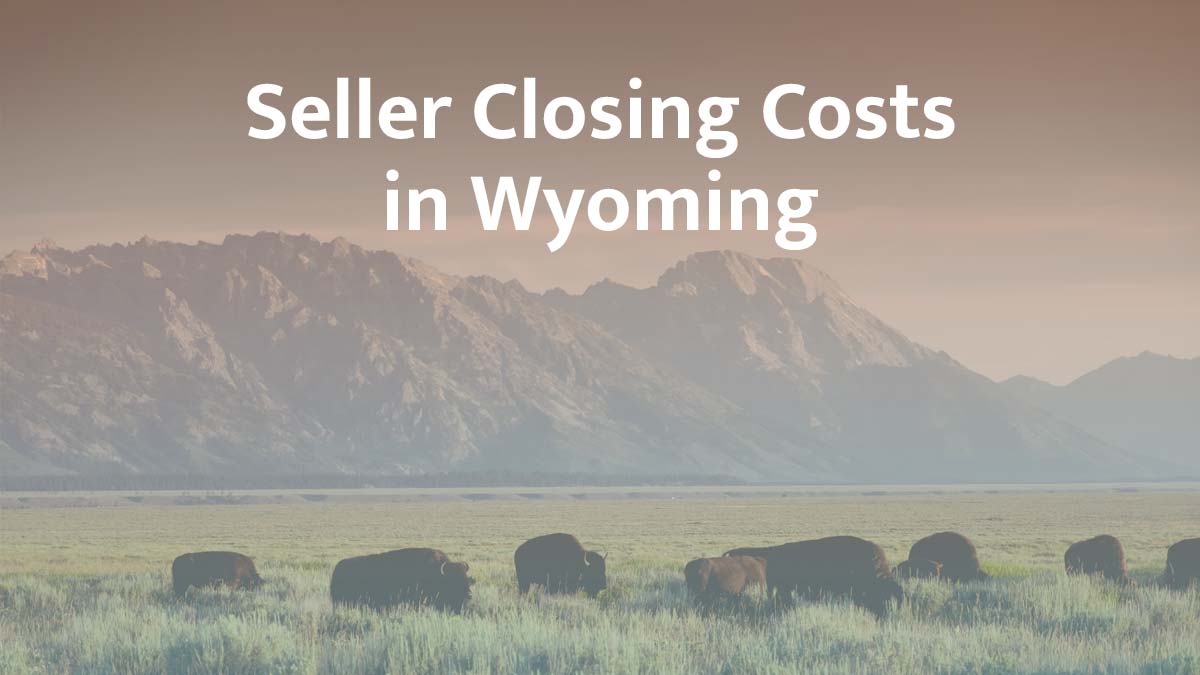
In Wyoming, seller closing costs typically range from about 6% to 10% of the home’s sale price, with the majority made up by real estate agent commissions. Additional closing‑related fees usually add another 2% to 3% for title, escrow, recording, and related administrative charges.
A Wyoming seller’s closing costs calculator helps you estimate this total early. By entering your expected sale price, mortgage balance, and typical commission rate, you can see a rough breakdown of your net proceeds before you list.
Instant Valuation, Confidential Deals with a Certified iBuyer.com Specialist.
Sell Smart, Sell Fast, Get Sold. No Obligations.
Seller Closing Costs
- Estimate your Wyoming seller closing costs instantly
- How much are seller closing costs in Wyoming?
- What are seller closing costs in Wyoming?
- Wyoming seller closing costs breakdown
- Example seller closing costs in Wyoming
- How to calculate your net proceeds
- What remains is your final profit.
- How the Wyoming closing cost calculator works
- What affects your seller closing costs in Wyoming?
- Who pays closing costs in Wyoming?
- When are seller closing costs paid?
- How to reduce seller closing costs in Wyoming
- Wyoming vs other states: how closing costs compare
- Frequently Asked Questions
How much are seller closing costs in Wyoming?
On average, sellers in Wyoming pay roughly 6% to 10% of the home’s sale price in total selling‑side costs once commissions and closing‑related fees are included. Real estate commissions in Wyoming average around 5.5% to 6% of the sale price, typically split between the listing agent and the buyer’s agent.
Closing costs beyond commission (title, escrow, recording, and some administrative fees) usually run about 2% to 3% of the sale price. This makes Wyoming’s seller‑side cost structure similar in percentage to many other states, but simpler in some respects because Wyoming has no state‑level transfer tax.
What are seller closing costs in Wyoming?
Seller closing costs refer to all the fees and expenses you must pay to finalize the sale of your home. These costs are not paid upfront. Instead, they are deducted from your sale proceeds at closing, meaning they directly impact how much money you take home.
These expenses cover everything required to legally transfer ownership of the property, compensate real estate professionals, and settle any outstanding financial obligations tied to the home.
While some of these costs are fixed or standard by local practice, others can be negotiated depending on the market and the terms of your deal. Understanding what’s included is the first step to managing and reducing your total expenses.
Wyoming seller closing costs breakdown
Seller closing costs in Wyoming include a mix of major and minor expenses, with a few key categories making up the bulk of the total.
The largest cost is almost always the real estate agent commission. This fee is typically split between the listing agent and the buyer’s agent and is calculated as a percentage of the sale price. For most sellers, this represents the single biggest expense in the transaction.
Another major cost is title‑ and escrow‑related services. Sellers in Wyoming typically pay for title searches, title transfer, and escrow or closing services, which often add 2% to 3% of the sale price.
Wyoming does not have a state transfer tax, which can save sellers money compared with states that impose a deed or transfer tax. However, there may still be local recording fees or small county‑level charges to document the deed transfer.
Property taxes are prorated at closing, meaning you will pay your portion based on how long you owned the home during the tax year. Wyoming’s property tax rates are relatively low, but proration can still be a noticeable line item depending on the time of year you close.
In addition, sellers may pay HOA transfer or document‑prep fees, outstanding dues, or negotiated seller concessions such as buyer‑closing‑cost credits or repair credits. These concessions can push total seller‑side costs higher if offered liberally.
Finally, if you still have a mortgage on the property, the remaining balance must be paid off at closing. Depending on your loan terms, there may also be minor fees associated with early payoff, though these are typically small compared to other costs.
Example seller closing costs in Wyoming
To put these costs into perspective, it helps to look at a few realistic scenarios.
For a home sold at 250,000, total seller‑side costs (including about 6% in commission and 2%–3% in title and recording fees) may come out to roughly 20,000–22,500. At a 400,000 sale price, that total can rise to about 32,000–40,000. For higher‑value homes such as 750,000, total seller costs can reach around 60,000–75,000.
These figures show how quickly closing costs scale with the price of the home. Remember that these numbers do not include your mortgage payoff, which will further reduce your final proceeds.
How to calculate your net proceeds
Understanding your net proceeds is the most important part of the selling process. This is the amount you actually receive after all expenses are deducted.
Start with your home’s sale price, then subtract your real estate commissions and all closing costs. After that, subtract your remaining mortgage balance.
What remains is your final profit.
For example, if you sell your home for 400,000 and pay 24,000 in commission and 8,000 in other costs, you’re left with 368,000. If your mortgage balance is 250,000, your net proceeds would be approximately 118,000.
This is exactly why using a closing cost calculator is so valuable. It helps you estimate this number quickly and plan ahead.
How the Wyoming closing cost calculator works
A Wyoming seller’s closing costs calculator uses a few simple inputs to estimate your final outcome. These typically include your expected sale price, your remaining mortgage balance, and an estimate of your commission rate and Wyoming‑specific fees such as title, escrow, and recording charges.
Once these values are entered, the calculator provides a breakdown of your total expenses and shows how much you are likely to walk away with after the sale. While it won’t be exact, it gives a reliable estimate that helps you make more informed decisions before listing your home.
What affects your seller closing costs in Wyoming?
Not every seller pays the same amount in closing costs. Several factors can influence your final total.
The most obvious factor is your home’s sale price, since many costs, especially commissions, are calculated as a percentage. The terms you negotiate with the buyer can also have a significant impact. Agreeing to cover buyer closing costs or offering repair credits can increase your expenses.
Market conditions play a role as well. In a competitive seller’s market, you may be able to limit concessions and keep more of your profit. In a slower market, you might need to offer incentives to attract buyers.
The type of sale you choose can also affect your costs. Traditional sales with full‑service agents tend to have higher commissions, while alternative options like discount brokers or cash buyers may reduce some expenses.
Who pays closing costs in Wyoming?
Closing costs in Wyoming are typically shared between the buyer and the seller, but sellers usually pay the larger portion.
Sellers are generally responsible for agent commissions, title‑related fees, recording fees, and their share of prorated property taxes. Buyers typically cover most loan‑related costs, lender fees, and their own portion of title and escrow fees.
However, there is no strict rule dictating who pays what. The final arrangement is negotiated as part of the purchase agreement. Depending on the market, sellers may agree to cover more costs to make their home more appealing, or buyers may take on a greater share if demand is high.
When are seller closing costs paid?
Seller closing costs in Wyoming are paid at closing, not in advance. In most cases, these costs are deducted directly from your sale proceeds.
The title company or closing agent handles the distribution of funds, ensuring that all fees and obligations are paid before you receive your final amount. As long as your sale price covers your expenses and mortgage payoff, you typically won’t need to bring additional cash to the closing table.
How to reduce seller closing costs in Wyoming
While closing costs are unavoidable, there are several ways to minimize them and keep more of your profit.
One of the most effective strategies is to negotiate your real estate commission. Even a small reduction in percentage can result in significant savings, particularly given Wyoming’s relatively high commission‑based cost structure. Some sellers also choose alternative listing options, such as flat‑fee or discount‑rate brokerages, to lower costs.
Shopping around for titles and closing‑service providers can also make a difference. Fees can vary between providers, and comparing quotes may help you secure a better rate.
Being mindful of concessions is equally important. Offering too much to the buyer‑closing‑cost credits or repair incentives can quickly increase your expenses, so it’s important to strike the right balance during negotiations.
Timing your closing can also influence your costs, particularly when it comes to property taxes. Since taxes are prorated, the time of year you sell will affect how much you owe.
Finally, some sellers consider working with cash buyers to simplify the process. While this may involve accepting a slightly lower price, it can reduce fees and eliminate certain costs associated with traditional, lender‑financed sales.
Wyoming vs other states: how closing costs compare
Compared to many other states, Wyoming offers a relatively favorable environment for sellers because there is no state transfer tax.
On the positive side, the absence of a state‑level transfer tax helps keep total seller‑side costs somewhat lower than in states with heavy deed‑tax structures, even though commissions remain similar to the national average. Additionally, Wyoming’s property tax rates are relatively low, which can reduce the seller’s prorated‑tax liability at closing.
Overall, while Wyoming’s total seller‑side cost percentage (around 6%–10%) is still significant, the lack of a state transfer tax and modest property taxes make it a relatively straightforward and predictable cost structure for sellers.
Compare Cash Offers from Top Home Buyers. Delivered by Your Local iBuyer Certified Specialist.
One Expert, Multiple Offers, No Obligation.
Know Your Local Market Before You List
Pull the last 12 months of real sales and buyer activity for your neighborhood.
Get My Market ReportFrequently Asked Questions
Most sellers pay roughly 6% to 10% of the home’s sale price in total selling‑side costs, once commissions and title‑related fees are combined.
Yes, many costs are negotiable, particularly agent commissions, seller concessions, and in some cases which party covers specific title or recording fees.
No, closing costs are shared, but sellers typically pay the majority, including commissions and title‑related fees.
Some selling expenses may be tax deductible, and Wyoming sellers may also qualify for federal capital‑gains‑sale exclusions if the home is a primary residence. However, it’s best to consult a tax professional for specific guidance.
Closing costs cannot be eliminated entirely, but they can be reduced through negotiation, careful planning, and choosing alternative sale structures.

Reilly Dzurick is a licensed real estate agent with over six years of experience and a member of the iBuyer.com Market Insights Team, covering national trends in home selling and the evolving iBuyer landscape. Her firsthand experience working with buyers and sellers gives her a practical perspective on how these platforms impact real homeowners. She holds a degree in Public Relations, Advertising, and Applied Communication.