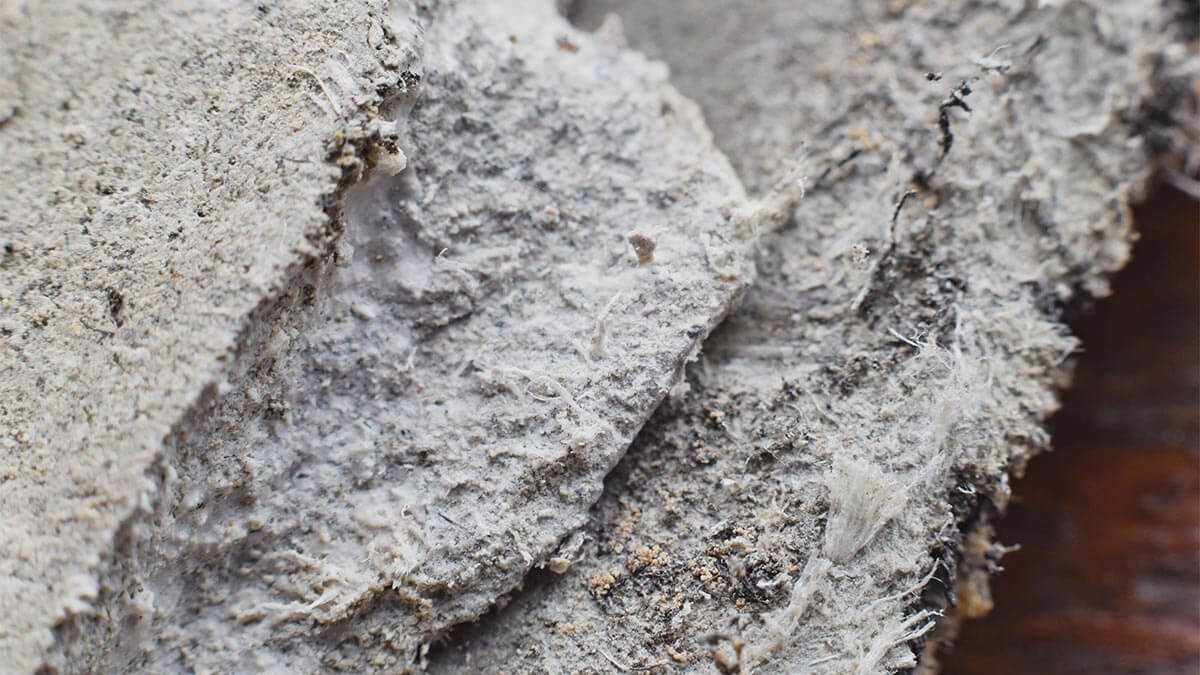
Federal law does not require a home seller to disclose asbestos to a potential buyer, but that federal silence does not mean sellers are free to hide it. Most states require asbestos disclosure as part of a standard seller disclosure form, and the obligation is triggered by knowledge, not by testing. According to the EPA’s position on asbestos seller disclosure, “state and local disclosure laws may require it” even when federal law does not.
The practical risk for sellers is not owning a home with asbestos. It is knowing about it and failing to say so on a legally required form. Professional abatement costs run $2 to $20 per square foot depending on material and method, and whole-home remediation commonly reaches $20,000 to $30,000. Buyers who discover undisclosed asbestos after closing can sue for those costs plus damages.
This guide covers what federal and state law actually require, the “constructive knowledge” doctrine that defines when prior records create a disclosure obligation, a 10-state comparison table with statutory citations, the consequences of non-disclosure, and a step-by-step walkthrough for selling a house with asbestos in 2026.
Disclose Asbestos
- What federal law says about asbestos disclosure
- When asbestos disclosure becomes required
- Asbestos disclosure requirements by state
- What happens if a seller doesn’t disclose asbestos
- Is it illegal to sell a house with asbestos
- Do you have to remove asbestos before selling
- How to sell a house with asbestos
- Get a cash offer on a home with asbestos
- Frequently Asked Questions
Asbestos Disclosed. Cash Offer Still Stands. Cash buyers skip the contingencies that kill deals after disclosure.
No repairs required, no financing risk, no obligations.
What federal law says about asbestos disclosure
No federal disclosure mandate for home sales
Federal law does not require sellers to disclose asbestos when selling a residential property. This surprises many sellers because federal law does require disclosure of lead-based paint in pre-1978 homes. Asbestos is treated differently. The EPA states directly that no federal statute requires a seller to disclose to a potential buyer that a home contains asbestos or vermiculite.
The confusion is understandable. Both hazards appear in older homes, both create health risks, and both show up on state disclosure forms. But the federal treatment is not the same.
What the EPA actually requires
The EPA’s guidance on asbestos seller disclosure is brief: federal law does not require disclosure, but state and local disclosure laws may. That’s the entire federal framework. There is no federal form to complete, no federal agency to notify, and no federal fine for selling without disclosing.
What the EPA does regulate is asbestos handling during renovation and abatement. Once a home is being disturbed, contractors must follow the National Emission Standards for Hazardous Air Pollutants (NESHAP) rules on removal and disposal. But that regulation applies to the work, not the sale.
How the TSCA fits into asbestos rules
The Toxic Substances Control Act (TSCA) governs asbestos as a hazardous chemical substance. It sets rules on manufacturing, processing, distribution, use, and disposal of asbestos-containing materials. It does not govern residential sale disclosure. TSCA Title IV does impose a federal disclosure mandate, but that title covers lead-based paint, not asbestos.
This distinction matters when sellers research the topic and encounter TSCA references. The act applies to workers, renovators, and abatement contractors. For asbestos disclosure in a home sale, TSCA does not create a federal obligation. State law does.
When asbestos disclosure becomes required
The “known asbestos” standard in state laws
Nearly every state frames its seller disclosure asbestos obligation around actual knowledge. The phrase “known material defect” appears in most state disclosure statutes. A seller who has never tested, never renovated, and has received no documentation referencing asbestos-containing materials generally has no disclosure obligation on that basis.
The trigger is knowledge, not suspicion. A seller who purchased a 1965 ranch home is not required by law to suspect asbestos simply because the home is old. Age of the home alone does not create a legal duty to investigate. According to state-level seller disclosure obligations for known hazards, disclosure duties arise when the seller has actual awareness of the condition, not constructive awareness based solely on property age.
Constructive knowledge: what prior records create
Constructive knowledge is the legal doctrine courts use when a seller argues “I didn’t know” but the evidence suggests otherwise. Several types of documentation can establish constructive knowledge even without a formal asbestos test:
- Inspection reports from a prior purchase or refinance that reference asbestos-containing materials
- Renovation permits pulled before 1980 for work involving drywall, floor tiles, pipe insulation, or roofing
- Contractor invoices or estimates that mention asbestos materials in the scope of work
- Water damage or insurance claims where a mitigation team noted ACMs (this exact scenario appears in Reddit organic result #3 and is a real discovery pattern)
- Environmental reports from a prior sale of the property
A seller who received a contractor’s written estimate referencing “asbestos pipe insulation in the basement” likely has constructive knowledge. Courts have found that a seller cannot ignore documentation in their possession and then certify on a disclosure form that no hazards are known. The safer position is to review all prior records before completing any disclosure form.
You are not required to test for asbestos
No state currently requires sellers to conduct asbestos testing before listing or closing a residential property. Asbestos testing is voluntary. The disclosure obligation is triggered by what you already know, not by what a test might reveal.
This creates a choice sellers face honestly. A seller who has no documentation and no reason to suspect asbestos has no current obligation. A seller who suspects asbestos but does not test occupies an ambiguous middle ground. Testing eliminates that ambiguity: if the test comes back clear, disclosure is simple; if it comes back positive, the seller now has documented knowledge and a clear disclosure duty. A certified industrial hygienist or licensed asbestos inspector typically charges $250 to $850 for a whole-home assessment.
Asbestos disclosure requirements by state
States with explicit asbestos disclosure laws
Asbestos disclosure requirements by state vary in specificity. Some states name asbestos explicitly in the disclosure form. Others fold it under “known material defects” or “environmental hazards.” The table below covers 10 states by statutory reference and disclosure trigger.
| State | Disclosure Required? | Disclosure Trigger | Key Statute or Form Language |
|---|---|---|---|
| Illinois | Yes | Known unsafe concentrations or conditions | 765 ILCS 77/ (Illinois Residential Real Property Disclosure Act), “unsafe concentrations of or unsafe conditions relating to asbestos” |
| Texas | Yes | Known environmental hazards | TREC Seller’s Disclosure Notice (Form OP-H), environmental hazards section |
| California | Yes | Known material defects | Transfer Disclosure Statement (TDS); Natural Hazard Disclosure also required |
| Maryland | Yes | Known material defects and hazardous substances | Maryland real estate disclosure statute, asbestos classified as material defect |
| Pennsylvania | Yes | Known material defects and hazardous substances | 68 Pa. C.S. § 7101 et seq., asbestos classified as a material defect |
| New York | Yes | Known material defects | Property Condition Disclosure Act; attorney-closing requirements interact with obligation |
| Florida | Yes | Known material defects | Florida Statute § 689.261, sellers disclose known facts materially affecting value |
| Ohio | Yes | Known defects | Ohio Residential Property Disclosure Form, hazardous materials section |
| Georgia | Yes | Known material defects | Georgia Seller’s Property Disclosure Statement |
| Washington | Yes | Known material defects | Washington Seller Disclosure Act (RCW 64.06), known defects and environmental conditions |
Based on state statutes current as of 2026. Verify current form language before transacting; statute amendments and updated form versions occur annually.
No state in this table requires sellers to remediate before disclosing. The obligation is disclosure, not removal.
Illinois: the unsafe-conditions test (765 ILCS 77/)
The Illinois Residential Real Property Disclosure Act, codified at 765 ILCS 77/, uses a specific threshold that differs from other states. The statutory form asks: “Are you aware of unsafe concentrations of or unsafe conditions relating to asbestos on the premises?”
This matters because Illinois does not require disclosure of asbestos simply because it is present. The seller must know of unsafe concentrations or unsafe conditions. Intact, undisturbed asbestos in floor tiles that poses no immediate hazard may not trigger the Illinois form question. Friable, crumbling asbestos in a utility room almost certainly does. For a detailed breakdown of how Illinois environmental inspectors interpret this threshold, see Illinois asbestos disclosure requirements in detail.
The Illinois law applies to residential properties with one to four dwelling units, including single-family homes, condominiums, townhomes, and co-ops. Sellers in Illinois dealing with these requirements alongside a distressed-property situation can find additional context at our guide to selling a distressed home in Illinois.
Texas: four-year statute of limitations
Texas does not have an asbestos-specific residential disclosure statute. Instead, the Seller’s Disclosure Notice (TREC Form OP-H) requires disclosure of known environmental hazards, and asbestos falls under that category. The practical consequence that distinguishes Texas from other states is the statute of limitations: buyers have four years from the date of sale to file a claim for non-disclosure, per Texas statute of limitations for asbestos non-disclosure.
Knowingly concealing asbestos on the TREC form can be characterized as fraudulent misrepresentation under Texas law, opening the seller to both compensatory and potentially punitive damages. The four-year window is among the longer limitation periods in the country for this type of claim.
California, Maryland, Pennsylvania, and more
California requires sellers to complete a Transfer Disclosure Statement (TDS) that covers known material defects, and asbestos falls within that category. Some California counties impose additional local disclosure requirements. A Natural Hazard Disclosure (NHD) report is also required and may reference relevant environmental conditions.
In Maryland, asbestos is classified as a known material defect and hazardous substance under state disclosure law. Pennsylvania’s residential real property disclosure requirements are codified at 68 Pa. C.S. § 7101 et seq., where asbestos is explicitly treated as both a material defect and a hazardous substance requiring disclosure. New York’s attorney-closing requirement adds a layer: because all closings involve an attorney reviewing documents, undisclosed conditions are harder to overlook and the legal exposure is higher. New York sellers navigating disclosed conditions alongside distressed-sale dynamics can find regional context at selling a distressed home in New York.
What happens if a seller doesn’t disclose asbestos
Lawsuits for fraud and misrepresentation
A seller who knowingly conceals asbestos on a state-mandated disclosure form exposes themselves to lawsuits based on fraudulent misrepresentation. The legal basis is that the seller made a false statement on a required legal document about a known material defect. Most state courts allow buyers to pursue both compensatory damages (what the remediation actually costs) and punitive damages when intentional concealment is shown.
Real estate agents who knew about the asbestos and failed to advise disclosure can also face personal liability. This applies whether the agent represented the seller or the buyer. In states with mandatory disclosure forms, an agent’s signature on transaction documents can be treated as an acknowledgment of the form’s accuracy.
Contract rescission and sale reversal
Beyond damages, buyers have the option to seek contract rescission in many states. Rescission unwinds the transaction: the buyer returns the property, and the seller returns the purchase price. In practice, rescission is harder to obtain than damages after a sale has closed and both parties have moved on, but courts have granted it in cases of deliberate concealment. The likelihood of rescission increases significantly when the seller had written documentation (contractor invoices, prior inspection reports) showing knowledge of asbestos-containing materials.
Financial liability: abatement and damages
The financial liability a seller faces if non-disclosure is proven includes professional abatement costs at $2 to $6 per square foot for encapsulation of intact materials, and $5 to $20 per square foot for full removal. Whole-home remediation commonly reaches $20,000 to $30,000 for older properties. Courts may also award diminished property value beyond abatement, medical monitoring costs if exposure occurred, and attorney fees under consumer protection statutes in some states.
One distinction that favors buyers is the discovery rule. Many states start the statute of limitations clock from the date the buyer discovers the asbestos, not from the closing date. A seller who closed five years ago may still face liability if the buyer found asbestos last month during a renovation. Consult a local real estate attorney to evaluate your state’s specific limitations period and whether the discovery rule applies.
Is it illegal to sell a house with asbestos
Legal to sell, required to disclose
No, it is not illegal to sell a house with asbestos in the United States. No federal statute prohibits selling a residential property that contains asbestos. The legal obligation is disclosure, not removal or prohibition of sale.
Three points that apply across all 50 states:
- Federal law: The EPA confirms no federal statute prohibits selling a home with asbestos in the United States.
- State law: Most states require disclosure if the presence is known, but none prohibit the sale itself.
- Exception: Some local jurisdictions may impose remediation requirements before closing on specific property types, such as commercial conversions or multi-unit properties. Verify with a local attorney before proceeding.
Per NAR guidance on seller disclosure obligations, sellers must complete disclosure forms honestly, but the obligation is informational, not remedial.
Undisturbed asbestos and non-friable conditions
Non-friable asbestos describes asbestos bound within a solid material such as floor tiles, roofing shingles, or pipe insulation that is intact and in good condition. Non-friable materials do not release fibers under normal conditions and do not typically trigger any local prohibition on sale. Millions of American homes built before 1980 contain non-friable asbestos-containing materials and are sold routinely every year.
Friable asbestos describes materials that crumble, break, or deteriorate easily. Friable conditions release airborne fibers and carry the health risks associated with asbestos exposure. According to health risks of friable vs. non-friable asbestos from the CDC NIOSH, undisturbed asbestos in good condition poses a much lower immediate risk than disturbed or degraded material.
When asbestos affects your ability to sell
The practical obstacle is not the law. It is financing. FHA and VA loan appraisers may flag visible deteriorating asbestos as a health and safety concern that affects appraised value. A property with friable asbestos in poor condition may fail FHA appraisal, which effectively limits the buyer pool to cash buyers or buyers willing to fund remediation before closing.
Conventional loans through Fannie Mae and Freddie Mac do not have explicit asbestos appraisal standards, but appraisers who note visible deteriorating materials can still flag them as value-affecting conditions. The tighter the buyer’s financing constraints, the more friction asbestos disclosure creates during the contract period.
Do you have to remove asbestos before selling
Remediation vs. disclosure: two different rules
No federal or state law requires sellers to remove or remediate asbestos before listing or closing a home. The legal obligation in every state that addresses asbestos disclosure in a home sale is informational: disclose what you know. The decision to remediate before listing is a market and pricing choice, not a legal one.
These are two separate frameworks that sellers frequently conflate. Seller disclosure asbestos rules govern what you must tell a buyer. Asbestos abatement regulations govern how licensed contractors must handle removal. Only the second framework applies to the physical material itself, and it applies to contractors and renovators, not to property owners selling as-is.
What abatement costs and encapsulation involve
Asbestos abatement cost ranges in 2026 run from $2 to $6 per square foot for encapsulation, which seals intact asbestos-containing materials with a binding compound, to $5 to $20 per square foot for full removal depending on material type, accessibility, and local disposal regulations. Whole-home remediation on a pre-1980 property is commonly cited in the $20,000 to $30,000 range, though properties with extensive ACMs in hard-to-access areas can exceed that. Verify current contractor-market rates at publish, as labor and disposal costs shift.
Encapsulation is generally the less expensive option for non-friable materials in good condition. Full removal is required when materials are friable, have been disturbed, or when local regulations specify it. A certified industrial hygienist assessing the property will specify which approach applies to each ACM location.
Selling as-is with asbestos: what buyers expect
Buyers making offers on a disclosed asbestos property factor the estimated remediation cost into their offer price. The typical discount structure is: estimated abatement cost plus a 10 to 20 percent risk premium above that cost. A property worth $300,000 with an estimated $20,000 abatement need might receive offers in the $275,000 to $283,000 range from buyers who intend to remediate themselves.
Sellers who disclose upfront and price to reflect the condition routinely close without having to remediate. Cash buyers are the most frictionless path for this scenario, since they are not subject to FHA or VA appraisal contingencies and are generally comfortable accepting disclosed conditions when the pricing is appropriate. Sellers in North Carolina navigating the as-is path can find regional context at our guide to selling a distressed home in North Carolina.
How to sell a house with asbestos
- Step 1: Gather all prior documentation. Collect inspection reports, renovation permits from pre-1980 work, contractor invoices, and insurance claims referencing asbestos-containing materials. These records establish the scope of what you legally “know” for disclosure purposes before you fill out any state form.
- Step 2: Get a certified asbestos inspection if uncertain. Hire a certified industrial hygienist or state-licensed asbestos inspector, typically $250 to $850 for a whole-home assessment, to identify whether ACMs are present and whether they are friable or non-friable. Testing is voluntary in all 50 states but eliminates ambiguity about what to disclose.
- Step 3: Complete your state’s disclosure form accurately. Most state seller disclosure forms include a yes/no question about known hazardous materials or unsafe conditions. Answer based on your documented knowledge. A false answer on this form, not the presence of asbestos, is the liability trigger courts act on. Per material defect disclosure laws by state, the standard is actual knowledge at the time of disclosure.
- Step 4: Price to reflect the disclosed condition. Factor the estimated asbestos abatement cost ($2 to $20 per sq ft depending on material and scope) plus a 10 to 20 percent risk premium into your list price. A property worth $300,000 in market terms with a $20,000 remediation need may need to list at $275,000 to $283,000 to attract buyers who accept the condition without requiring seller remediation.
- Step 5: Choose the right buyer type. Cash buyers are not subject to FHA or VA financing contingencies and are less likely to walk after an inspection confirms disclosed asbestos. If your property has friable asbestos, prioritizing buyers who do not require government-backed loans significantly reduces deal-failure risk. Asbestos is one of several condition issues that make a cash-buyer channel preferable to a traditional listing; see our full overview of selling a house in poor condition for context on how buyers evaluate these properties.
Get a cash offer on a home with asbestos
If your home has disclosed asbestos and you are concerned about a financed buyer’s contingencies derailing the sale, a cash offer removes the single biggest obstacle. Cash buyers skip the FHA and VA financing requirements that can cause appraisal failures on asbestos-affected properties, and they are far less likely to walk when an inspection confirms what you have already disclosed. Through iBuyer.com, you can compare competing cash offers from vetted buyers and close in as few as 7 days, without making repairs or negotiating remediation credits.
Sell Your House With Asbestos As-Is Compare cash offers from buyers who already price in the condition.
Disclosed upfront, priced fairly, closed on your timeline.
Know Your Local Market Before You List
Pull the last 12 months of real sales and buyer activity for your neighborhood.
Get My Market ReportFrequently Asked Questions
Federal law does not require asbestos disclosure when selling a home, but most states require it if you know the asbestos is present. The EPA states explicitly that no federal statute mandates disclosure to a potential buyer. However, nearly every state includes asbestos as a known material defect on the seller disclosure form, and failing to answer that form honestly once you have knowledge is where legal exposure begins.
A seller who conceals known asbestos can face lawsuits for fraud, contract rescission, and financial liability covering abatement costs and related damages. Buyers may seek to reverse the sale entirely or sue for remediation costs, diminished property value, and in some states medical monitoring expenses. Real estate agents who knew and failed to advise disclosure can also face personal liability. The statute of limitations varies by state: Texas gives buyers four years from the sale date, while other states use two to six years, often starting from the date of discovery rather than closing.
No, selling a house with asbestos is not illegal in the United States, but state disclosure laws apply in most states if you know it is present. No federal statute prohibits selling a residential property that contains asbestos. The legal risk is not the presence of asbestos but knowingly concealing it on a state-mandated disclosure form. Homes with intact, non-friable asbestos in floor tiles or roofing are sold routinely across all 50 states.
At the federal level, sellers are not legally required to inform buyers about asbestos, but most states require disclosure of known hazards including asbestos. The Toxic Substances Control Act governs asbestos handling and disposal, not residential sale disclosure. States fill that gap: California, Illinois, Texas, Maryland, Pennsylvania, and most others include asbestos on standard seller disclosure forms as a “known material defect” question.
Yes, Illinois requires sellers to disclose known asbestos under the Illinois Residential Real Property Disclosure Act, 765 ILCS 77/. The statutory form asks: “Are you aware of unsafe concentrations of or unsafe conditions relating to asbestos on the premises?” Mere presence of asbestos does not trigger disclosure under this standard. The “unsafe” threshold is what matters, and the law applies to residential properties with one to four dwelling units.
Texas requires sellers to disclose known environmental hazards, including asbestos, on the Seller’s Disclosure Notice (TREC Form OP-H). Texas has a four-year statute of limitations for buyers to file a claim for non-disclosure, measured from the sale date. Knowingly concealing asbestos on the TREC form can be characterized as fraudulent misrepresentation under Texas law, opening the seller to both compensatory and potentially punitive damages.
No state currently requires sellers to test for asbestos before selling a residential property; testing is voluntary. The disclosure obligation is triggered by knowledge, not by testing results. A seller who has never tested and has no documented reason to suspect asbestos has no disclosure obligation on that basis. However, if prior inspection reports, renovation records, or contractor notes reference ACMs, that documentation creates constructive knowledge and the disclosure duty follows.
No federal or state law requires sellers to remove or remediate asbestos before selling; disclosure where required by state law is the legal obligation, not removal. Sellers may choose to remediate to widen their buyer pool, particularly for buyers using FHA or VA financing. Professional abatement costs range from $2 to $6 per sq ft for encapsulation to $5 to $20 per sq ft for full removal. Intact, non-friable asbestos in floor tiles, pipe insulation, or roofing is legal to sell with as long as the presence is disclosed where state law requires.
Yes, you can sell a house with asbestos as-is in every U.S. state, provided you disclose the known condition where your state’s disclosure law requires it. Selling as-is means the buyer accepts the property without remediation by the seller. Cash buyers are the most likely buyer type for as-is asbestos-affected properties because they are not subject to FHA or VA appraisal contingencies. Expect buyers to factor the estimated abatement cost plus a 10 to 20 percent risk premium into their offer.
Yes, a buyer can sue for undisclosed asbestos after closing if the seller knew about it and failed to disclose it as required by state law. Claims can be filed under fraud, misrepresentation, breach of contract, or state consumer protection statutes. The discovery rule applies in many jurisdictions, meaning the statute of limitations starts from when the buyer finds the asbestos, not the closing date. Sellers with prior inspection records, renovation permits, or contractor notes referencing asbestos face the strongest liability exposure under this standard.
Yes, friable asbestos in poor condition can cause FHA and VA loan appraisals to fail, effectively limiting the buyer pool to cash buyers or those willing to remediate first. Conventional loans do not have explicit asbestos appraisal standards, but appraisers who note visible deteriorating asbestos can flag it as a health and safety concern that affects value. Sellers whose buyers require government-backed financing may need to either remediate before closing or focus on cash buyers.
Friable asbestos crumbles or breaks apart easily and releases airborne fibers; non-friable asbestos is bound in solid materials and poses lower immediate health risk. For disclosure purposes, both types typically require disclosure if you know they are present under state material-defect standards. The distinction matters practically because courts and regulators treat friable asbestos as an active health hazard, while intact non-friable asbestos in undisturbed floor tiles or roofing has been present in millions of sold homes without triggering remediation demands.
If you discovered undisclosed asbestos after closing, you may have grounds to sue the seller for fraud, seek contract rescission, or claim damages covering remediation costs. Document the discovery immediately with a certified inspector’s written report. Consult a real estate attorney to evaluate your state’s statute of limitations and whether the discovery rule extends your filing window. Potential remedies include the full cost of abatement, diminished property value, and in some jurisdictions attorney fees and punitive damages if the concealment was intentional.

Reilly Dzurick is a licensed real estate agent with over six years of experience and a member of the iBuyer.com Market Insights Team, covering national trends in home selling and the evolving iBuyer landscape. Her firsthand experience working with buyers and sellers gives her a practical perspective on how these platforms impact real homeowners. She holds a degree in Public Relations, Advertising, and Applied Communication.