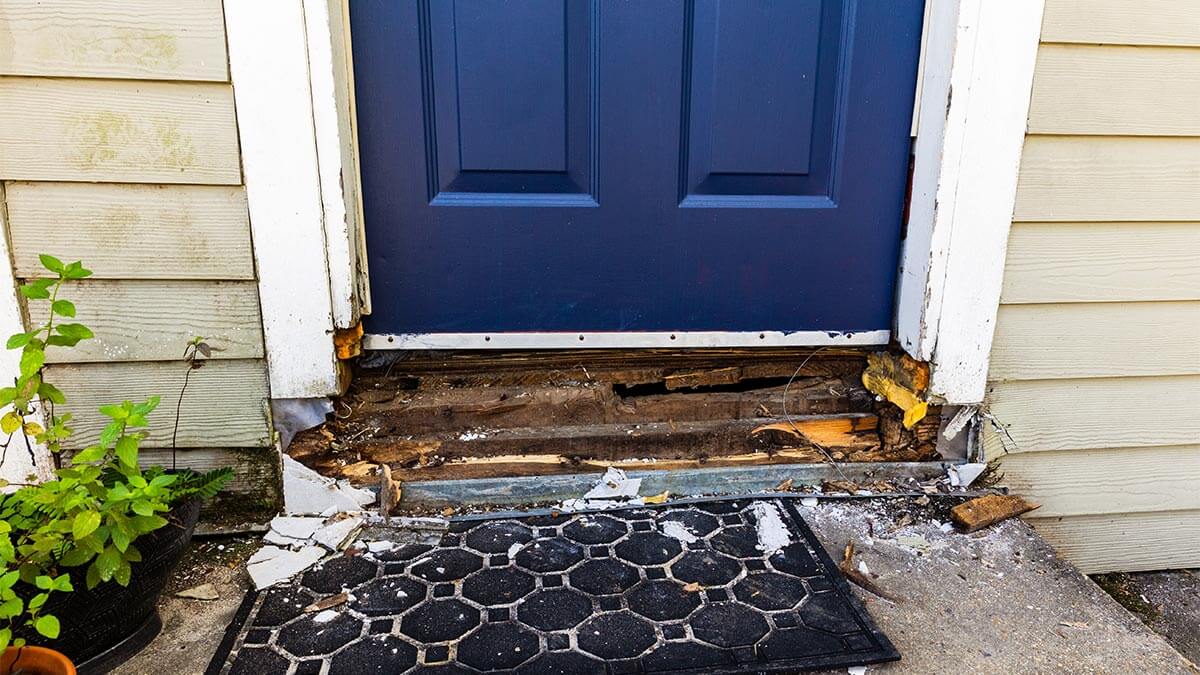
Dry rot is a fungal decay that degrades structural timber in a home, and selling a property with dry rot typically requires disclosure in all 50 states, can reduce appraised value by 20 to 40%, and forces one central decision: repair before listing or pursue an as-is sale.
If you have dry rot in a house for sale, here are the five steps most sellers work through:
- Get a specialist inspection to determine structural vs. cosmetic scope.
- Confirm your state’s disclosure requirements for material defects.
- Obtain 2 to 3 contractor repair quotes.
- Run the repair-vs.-as-is math against your target price.
- Choose your sale path: repaired MLS listing, as-is MLS, or direct cash buyer.
This guide covers what dry rot is and how it spreads, how it affects your appraised value and buyer financing, what you are required to disclose, dry rot repair costs for 2026, and how to decide whether to fix it or take the as-is path.
Dry Rot Doesn't Have to Derail Your Sale Get competing cash offers on your home without making a single repair
No repairs required, no agent commissions, no financing contingencies.
Selling with Dry Rot
- What Is Dry Rot and Why Does It Matter?
- How Dry Rot Affects Your Home’s Sale Price
- Dry Rot Disclosure: What Sellers Must Tell Buyers
- How Much Does Dry Rot Repair Cost in 2026?
- Repair vs. Sell As-Is: Which Option Makes Sense?
- What Not to Fix When Selling with Dry Rot
- Should You Buy a House with Dry Rot?
- How to Sell a House with Dry Rot Fast
- Selling with Dry Rot: Bottom Line
- Frequently Asked Questions
What Is Dry Rot and Why Does It Matter?
Dry rot is one of the most feared structural defects in residential real estate, partly because it spreads through building materials invisibly and partly because its visible damage typically understates the actual scope. Understanding the biology helps you anticipate how an inspector, appraiser, and buyer will each respond to the condition.
Dry rot vs. wet rot: key differences
Dry rot is caused by the fungus Serpula lacrymans, which breaks down the cellulose in timber and can spread through brick, mortar, and masonry to reach new wood. Wet rot is localized fungal decay that stops spreading when the moisture source is removed. This distinction defines every wood rot home sale: wet rot is typically cheaper to fix ($150 to $800) and easier to contain, while dry rot may have traveled far beyond the visible damage. A standard home inspection cannot reliably determine which condition is present or how far it has spread.
How dry rot spreads through a structure
Dry rot spreads through fungal hyphae, thin thread-like strands that travel through non-wood materials including brick and concrete to colonize new timber sections. According to EPA guidance on moisture control and wood decay, wood moisture content above 20% creates the conditions for decay fungi to establish. Once established, dry rot hyphae continue growing even after the original moisture source is corrected. Removing the water source slows the condition but does not stop an active infestation. That is what separates dry rot from a straightforward deferred maintenance issue a seller might fix with a simple leak repair.
Signs of dry rot to check before listing
Look for these indicators before going to market:
- Cuboidal cracking on timber surfaces (wood breaks into brick-like chunks along two axes)
- Dusty red or orange spore powder near affected areas
- White cottony mycelium sheets on joists, framing, or inside wall cavities
- Musty, mushroom-like smell in crawl spaces, basements, or enclosed structural voids
- Soft or spongy wood that compresses under finger pressure
Any of these signs warrants a specialist inspection before listing. A general home inspection is not sufficient to confirm the full scope when structural spread is possible.
How Dry Rot Affects Your Home’s Sale Price
In a wood rot home sale, dry rot creates friction at every stage of the transaction. Appraisers are required to document it, lenders may condition their approval on remediation, and buyers use it as price negotiation leverage. Understanding each of those dynamics before you list helps you set realistic expectations.
Value reduction: what to expect
Untreated dry rot reduces house value by 20 to 40% according to property market data. Buyers fear dry rot more than almost any other structural problem because they know it can spread through masonry invisibly, and the reported damage area is frequently an underestimate. The table below maps damage scope to typical repair cost and probable price impact.
| Damage Scope | Typical Repair Cost | Likely Price Impact |
|---|---|---|
| Cosmetic only (trim, window sill) | $150 to $500 | Minimal if disclosed |
| Siding or decking | $1,000 to $2,500 | 5 to 10% reduction unfixed |
| Structural (floor joists, framing) | $4,000 to $12,000 | 15 to 30% reduction unfixed |
| Extensive (multiple systems) | $12,000 or more | 30 to 40%+ reduction unfixed |
Based on HomeAdvisor, Angi, and Homewyse 2026 data. Verify current rates before transacting.
How appraisers handle dry rot
Appraisers who identify dry rot during a walkthrough are required to document it as a material defect and reduce their estimated value accordingly. Per NAR guidance on how appraisers assess structural defects, appraisers note conditions that affect habitability and marketability, so a dry rot flag in the appraisal report creates a permanent record that follows the transaction. Even on a home priced to reflect the condition, a low appraisal can reopen price negotiations before closing.
Mortgage complications for buyers
Lenders can delay or deny mortgage approval when a home inspection identifies structural dry rot, because the condition signals compromised habitability. FHA and VA loans apply stricter minimum property standards than conventional loans, and structural dry rot typically fails both programs. When a buyer’s lender refuses to fund, the seller must either remediate the damage or restart the sale with a new buyer. Sellers who discover this dynamic mid-transaction often end up targeting cash buyers regardless, so accounting for it at the start saves time and carrying costs.
Dry Rot Disclosure: What Sellers Must Tell Buyers
Sellers are legally required to disclose known material defects in writing before or at contract in most U.S. states, and dry rot qualifies as a material defect in all 50 states. The obligation to disclose dry rot when selling exists regardless of whether you know the full extent of the damage. “I didn’t know how severe it was” is not a reliable defense when a pre-listing specialist inspection was reasonably available.
Which states require dry rot disclosure
Most U.S. states require written property disclosure of all known material defects before closing. State property disclosure requirements vary in specific language and form, but the underlying standard is consistent: if you know the condition exists, you must disclose it. California’s Transfer Disclosure Statement includes an explicit timber pest and wood-destroying organism section. Florida’s disclosure statute covers all conditions that materially affect value or habitability. For Florida sellers specifically, see this guide on distressed Florida home sales for state-level disclosure context and as-is sale structures.
A pre-listing specialist inspection creates a paper trail that documents the condition, demonstrates good faith, and strengthens your position if a post-closing dispute arises.
What happens if you don’t disclose
Failing to disclose dry rot when selling can result in lawsuits for misrepresentation or fraud. In some states, buyers can rescind the contract after closing if non-disclosure is proven. These kinds of inspection disclosure issues follow a consistent pattern across different property defects: undisclosed conditions discovered by buyers after closing almost always result in litigation or demands for compensation. The cost of defending a misrepresentation claim typically exceeds the cost of disclosing the condition and pricing accordingly from the start.
How to document dry rot before selling
Obtain a written specialist’s inspection report and attach it directly to your seller’s disclosure form. A specialist (a licensed contractor with experience in timber and fungal decay, not a general home inspector) can confirm whether the condition is active or dormant, assess the structural scope, and provide documentation you can share with buyers. This converts an uncertain liability into a defined, disclosed condition, which is a stronger negotiating position than leaving buyers to discover the extent on their own.
How Much Does Dry Rot Repair Cost in 2026?
Dry rot repair costs average $1,400 nationally, with a range from $150 for minor surface patches to $20,000 or more for full structural remediation across multiple systems. The tier of damage determines whether DIY approaches are practical and whether repair makes financial sense before listing.
Minor and cosmetic dry rot repairs
Localized damage to trim, window sills, or small exterior boards is the most manageable category of dry rot repair cost. An epoxy wood filler patch combined with a borate treatment applied to surrounding timber runs $150 to $500 professionally. Experienced DIYers can handle this scope using borate treatment kits from hardware stores, making minor repairs the most likely tier to pencil out as a pre-listing fix. Borate treatment saturates the wood with a mineral salt that inhibits ongoing fungal decay without requiring full board removal.
Structural dry rot: floor joists and framing
Once dry rot reaches floor joists, wall framing, or structural beams, the dry rot repair cost rises significantly. Per dry rot repair cost averages by project type from Angi, deck boards and joists typically run $2,500 to $6,500 professionally; floor joists and structural framing run $4,000 to $12,000 or more. At this scope, structural damage is extensive enough that lenders typically require a remediation certificate before funding. When structural rot also triggers mold remediation (common in high-moisture crawl spaces), total project costs can exceed $15,000 before finish work is factored in.
What drives cost up: hidden damage and access
The 2026 repair cost calculator at Homewyse baselines basic dry rot repair at $592 to $896 before scope additions. Three factors push costs above that baseline: basement or attic access requirements, permit requirements for structural work (typically 10 to 20% added cost in jurisdictions that require them), and simultaneous mold remediation. The table below summarizes all cost tiers.
| Damage Type | DIY Feasible? | Professional Cost Range |
|---|---|---|
| Localized trim or window sill (epoxy patch) | Yes, with borate treatment kit | $150 to $500 |
| Siding panels | Borderline | $1,000 to $2,500 |
| Deck boards and joists | No | $2,500 to $6,500 |
| Floor joists and structural framing | No | $4,000 to $12,000 |
| Extensive multi-system damage | No | $12,000 to $20,000+ |
Based on Angi, Homewyse 2026 calculator, and HomeAdvisor data. Verify current rates before transacting.
Repair vs. Sell As-Is: Which Option Makes Sense?
The repair-vs.-as-is decision is a math problem with a qualitative layer. The math tells you whether repair costs clear a break-even threshold; the qualitative factors include your timeline, risk tolerance, and ability to carry the property through a 60 to 120-day repair and listing cycle. For the full range of poor condition options, including scenarios beyond dry rot, the cornerstone guide on distressed sales covers every path from full repair to direct cash sale.
When repairing before sale makes financial sense
Repair before listing makes financial sense when the repair cost is under $2,000 and the expected price increase is at least 1.5 times the repair cost. Minor cosmetic rot ($150 to $500) almost always meets this threshold in a competitive market. Siding rot in a neutral market ($1,000 to $2,500) may clear the bar if comparable repaired homes are trading $3,000 to $5,000 above as-is comparables. Repair also removes inspection contingency risk, which reduces days on market and eliminates the disruption of restarting a failed transaction.
When selling as-is protects your net proceeds
Selling house as is with dry rot makes more financial sense when structural framing is involved. A structural remediation running $4,000 to $12,000 does not guarantee a price increase that covers the investment, particularly when buyers are already discounting their offers based on risk. A typical as-is cash buyer discount for structural dry rot is 10 to 20% off market value, which is often less than the repair bill when framing is affected. The as-is path also eliminates the risk that mid-remediation discoveries inflate costs above the original contractor quote.
The break-even calculation
Break-even rule: repair makes sense when (repair cost × 1.5) is less than the expected price increase. A $3,000 repair that adds $6,000 to your sale price clears the threshold. A $10,000 structural remediation that adds $12,000 does not; that is a net loss of $3,000 compared to an as-is sale at a 10% discount. Run this calculation with real contractor quotes and real comparable sales data from your market before committing to a repair project.
| Scenario | Repair Cost | Expected Price Lift | Recommended Path |
|---|---|---|---|
| Cosmetic rot, strong market | $150 to $500 | $2,000 to $5,000 | Repair before listing |
| Siding rot, neutral market | $1,000 to $2,500 | $3,000 to $5,000 | Repair if equity allows |
| Structural rot, any market | $4,000 to $12,000 | Uncertain | Sell as-is or to cash buyer |
| Extensive damage, tight timeline | $12,000 or more | Offset by discount | Cash buyer or as-is only |
Decision matrix based on break-even framework. Individual market conditions will vary.
What Not to Fix When Selling with Dry Rot
When dry rot is the primary buyer concern, spending repair budget on cosmetic upgrades wastes capital that could instead offset the as-is price discount. Buyers and their lenders are focused on the structural condition, not the kitchen finishes or the landscaping.
Repairs that rarely recoup their cost
Skip these when structural dry rot is present:
- Full kitchen or bathroom remodels. NAR’s 2025 Remodeling Impact Report shows homeowners recover only 60% of kitchen renovation costs and 50% of bathroom renovation costs at resale. A buyer negotiating on structural damage will request a structural repair credit regardless of how updated the kitchen looks.
- New flooring over a sound subfloor. Finish flooring does not address the underlying defect. If the subfloor itself has rot, that is a separate repair that must be disclosed.
- Fresh paint throughout. Paint improves presentation but does not affect a structural repair credit request.
- Exterior landscaping overhauls. Curb appeal improvements do not offset a structural defect on the inspection report.
- New appliances. Buyers negotiating on structural damage are not influenced by appliance quality.
What you must address before selling
Some conditions require action regardless of sale path:
- Structural dry rot affecting load-bearing members. This is a material defect in every U.S. state. You can sell as-is, but you must include it in your property disclosure.
- Active moisture sources. Fixing the leak that caused the rot stops further spread and demonstrates that the condition is contained rather than actively growing. Buyers and lenders both respond better to a dry rot disclosure paired with a documented moisture fix.
- Safety hazards. Rotted stair treads, deck boards, and floor sections that create a fall risk generate direct liability. Address these regardless of which sale path you choose.
Per what lenders require in home condition reports, documented safety hazards in an inspection report can create a financing barrier for every buyer who is not paying cash. Removing active hazards before listing protects both your liability exposure and your buyer pool.
Should You Buy a House with Dry Rot?
Buying a house with dry rot is viable if you approach it with full information and a realistic repair budget. Here are five steps to take before making an offer:
- Hire a specialist (a licensed timber or structural contractor, not a general home inspector) to assess the full scope of the fungal decay.
- Get 2 to 3 contractor repair quotes before finalizing your offer price.
- Use the median quote as the basis for your price reduction request.
- Confirm your financing structure before making an offer. Conventional lenders may require remediation certificates before funding, so clarify whether cash or hard-money financing is needed.
- Budget for simultaneous mold remediation, which frequently accompanies dry rot in high-moisture areas.
Getting the right inspection
Serpula lacrymans fungal hyphae travel through masonry and mortar, which means the timber damage visible to a general home inspector is often just the surface expression of a wider infestation. A specialist timber inspection costs $150 to $500 and should be treated as required, not optional, when dry rot is suspected or disclosed. Buyers who rely on a standard home inspection and close without a specialist assessment frequently discover the true scope after closing, at a cost that far exceeds the inspection fee.
Negotiating price for dry rot damage
Request any specialist inspection reports the seller has commissioned before making an offer. If none exist, make your offer contingent on a specialist inspection. Once you have contractor quotes in hand, use the median as your price reduction request. Sellers respond better to a data-supported negotiation than to a demand anchored to a worst-case estimate. Structural damage is real leverage when it is documented specifically.
Mortgage and insurance implications
Per HUD minimum property standards for structural integrity, FHA loans require that properties meet minimum habitability standards, and structural dry rot typically fails those requirements without remediation. VA loans apply similar criteria. Standard homeowners insurance classifies dry rot as gradual deterioration rather than sudden accidental damage, so repair costs are not claimable under a standard policy. A mortgage denied outcome from dry rot findings pushes many buyers toward cash or hard-money financing, which bypasses lender habitability requirements entirely.
How to Sell a House with Dry Rot Fast
Once you know the damage scope, you have three operational paths to a completed sale. Sellers who discover dry rot mid-listing and feel trapped should first review options for homes that won’t sell before making a reactive decision.
Option 1: Repair then list on the MLS
Remediate the dry rot, obtain a written contractor warranty or remediation certificate, and list on the open market. Timeline: 60 to 120 days, including remediation. This path yields the highest net proceeds when repair cost is under $2,000 and the market is competitive. For structural repairs in the $4,000 to $12,000 range, the timeline and cost risk both increase, and mid-project discoveries can inflate the final bill above the original quote.
Option 2: List as-is with full disclosure
Disclose the dry rot condition in your property disclosure, price to reflect the as-is condition, and list on the MLS. When selling house as is with dry rot, expect 5 to 20% below comparable repaired homes, with days on market ranging from 30 to 90 days. Financed buyers may still walk after their lender reviews the inspection report, and a mortgage denied outcome from the buyer’s financing forces a restart. Targeting buyers experienced with distressed properties reduces that risk but does not eliminate it.
Option 3: Sell to a cash buyer
A cash buyer accepts dry rot in house for sale conditions as-is, prices the repair risk into their offer, and closes in 7 to 30 days without a lender’s repair condition. For sellers who cannot fund structural remediation or do not want to carry the property through a 90-day listing cycle, this is the fastest and most certain path. See fixer-upper sale options for how sellers in comparable situations navigate competing cash offers without making repairs.
Selling with Dry Rot: Bottom Line
Dry rot is a serious material defect, but it does not have to stop a sale. The two decisions that shape your outcome are whether to repair or sell as-is, and which sale channel fits your timeline and financial position. For cosmetic damage, repair almost always pencils out. For structural damage in the $4,000 to $12,000 range, the as-is path through a cash buyer marketplace typically preserves more net proceeds than repair followed by a traditional listing.
Get a specialist inspection before committing to either path. With a written damage assessment and real contractor quotes in hand, you make the repair-vs.-as-is decision from defined facts rather than uncertain estimates, and that is a significantly stronger negotiating position regardless of which path you choose.
If dry rot repair quotes are running $4,000 or more, the math often does not favor fixing before listing. Cash buyers who purchase as-is price the repair into their offer and close without a lender’s repair condition or an inspection contingency. On iBuyer.com, you submit your address and condition details once and receive competing offers from multiple vetted cash buyers, so you compare rather than accept whatever a single buyer proposes. No agent commissions, no repair obligations, no waiting 90 days for a financed deal to survive underwriting.
Dry Rot Doesn't Have to Derail Your Sale Get competing cash offers on your home without making a single repair
No repairs required, no agent commissions, no financing contingencies.
Frequently Asked Questions
Yes, most U.S. states require written disclosure of all known material defects, and dry rot qualifies as a material defect in all 50 states. Failure to disclose can result in lawsuits for misrepresentation or fraud, and some states allow buyers to rescind after closing if non-disclosure is proven. Attach a specialist’s written inspection report to your disclosure form to document good faith.
Dry rot repair costs average $1,400 nationally, ranging from $150 for minor surface patches to $12,000 or more for structural framing replacement. Minor epoxy filler patches on trim or sills run $150 to $500 and are sometimes DIY-feasible with borate treatment. Once rot reaches floor joists or framing, professional costs run $4,000 to $12,000. The Homewyse 2026 baseline for basic repairs is $592 to $896 before scope additions.
Yes, untreated dry rot typically lowers appraised value by 20 to 40% because appraisers must document structural defects as material conditions. Lenders often require remediation before funding, and a low appraisal can trigger price renegotiation even on a home already priced to reflect the condition.
A lender can delay or deny mortgage approval when a home inspection identifies structural dry rot, because it signals compromised habitability. FHA and VA loans have stricter minimum property standards, and structural dry rot almost always fails both programs. Cash buyers bypass the lender condition entirely, which is why as-is cash sales close faster on dry rot properties.
Dry rot is caused by Serpula lacrymans and spreads through masonry; wet rot is localized wood decay that stops when the moisture source is removed. This distinction shapes every wood rot home sale: wet rot is typically cheaper ($150 to $800) and easier to contain, while dry rot may have spread far beyond the visible area. A specialist inspection is the only reliable way to confirm which condition is present.
A buyer’s inspector who finds dry rot will note it in the report, giving the buyer grounds to renegotiate price, request repairs, or exit under an inspection contingency. Sellers who disclose dry rot in house for sale conditions upfront remove the inspection surprise and reduce the likelihood of a buyer walkaway. Pre-listing disclosure is consistently the lower-risk approach.
Repairing before listing makes sense when the repair cost is under $2,000 and the expected price gain is at least 1.5 times the cost. For structural damage ($4,000 to $12,000), the as-is cash buyer discount is often smaller than the repair bill, making the as-is path the better net-proceeds option. Run the break-even calculation with real contractor quotes before committing.
You can buy a house with dry rot if a specialist confirms the full damage scope and your offer price accounts for the repair cost. A standard home inspection may understate the spread because dry rot fungal hyphae travel through masonry. Budget $150 to $500 for a specialist timber inspection before making any offer.
Standard homeowners insurance does not cover dry rot because insurers classify it as gradual deterioration, not sudden accidental damage. Most policies explicitly exclude rot, fungi, and decay from covered perils. Sellers cannot claim dry rot repair costs against a standard homeowners policy.
Skip full kitchen and bathroom remodels, new flooring, fresh paint, and landscaping when structural dry rot is the buyer’s primary concern. NAR’s 2025 Remodeling Impact Report shows homeowners recover only 60% of kitchen renovation costs and 50% of bathroom renovation costs at resale. Put repair budget toward the structural damage, not cosmetics.
Structural problems including dry rot, foundation issues, and water damage devalue homes most because they trigger financing barriers and signal hidden risk to buyers. Dry rot is particularly feared because it spreads invisibly through masonry and framing, making visible damage an underestimate of actual scope. Location factors are the only category that rivals structural damage in value impact, and location cannot be corrected.
Yes, dry rot fungal spores travel through air and across masonry, and an untreated infestation can spread beyond the affected building’s walls. In attached homes, townhouses, and condos, untreated dry rot creates direct liability to adjacent owners. Some jurisdictions require disclosure to neighboring owners in attached structures, not only to the buyer.
Cash buyers close on dry rot properties in 7 to 30 days without requiring repairs; traditional MLS listings take 60 to 120 days and may require remediation first. The speed difference comes from financing requirements: a conventional lender may require a remediation certificate before funding, while a cash buyer prices the risk into the offer and closes without that condition.
Selling house as is with dry rot is a realistic and often financially smart option when structural repair costs exceed $4,000. Cash buyers and experienced investors regularly purchase properties with disclosed dry rot, pricing the condition into their offer rather than using it as a walkaway condition. Competing offers through a marketplace let you compare bids rather than accepting a single lowball number.

Reilly Dzurick is a licensed real estate agent with over six years of experience and a member of the iBuyer.com Market Insights Team, covering national trends in home selling and the evolving iBuyer landscape. Her firsthand experience working with buyers and sellers gives her a practical perspective on how these platforms impact real homeowners. She holds a degree in Public Relations, Advertising, and Applied Communication.