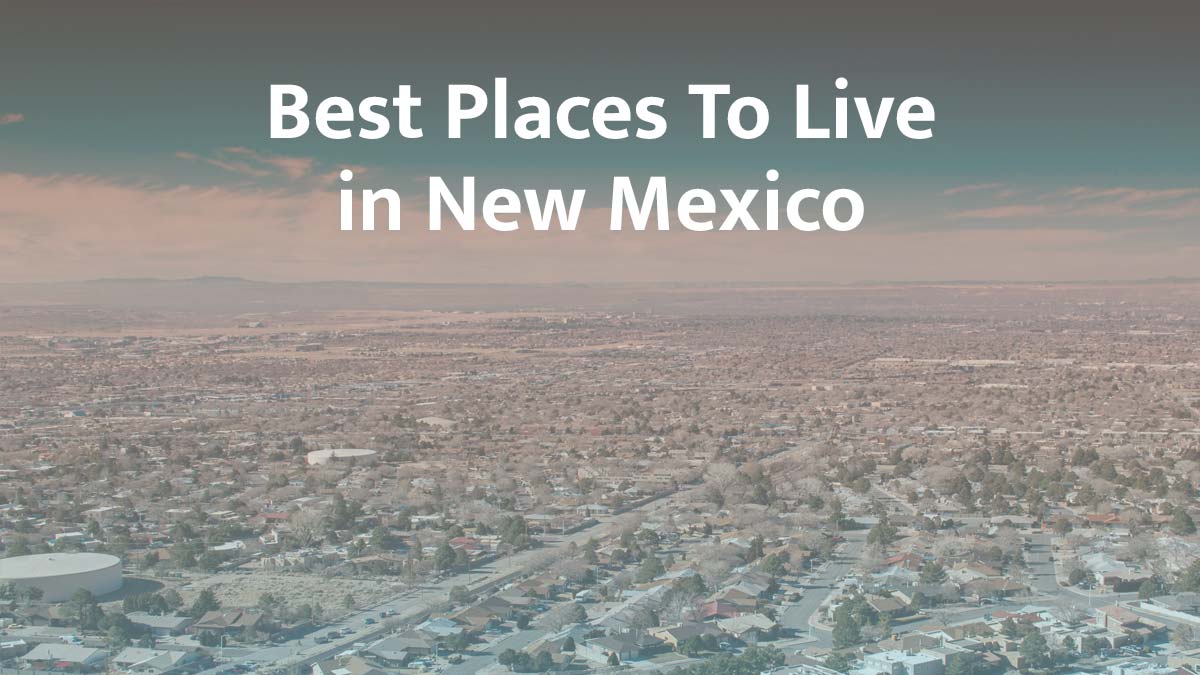
New Mexico offers an unusual mix of relatively affordable housing, major employment centers, mountain towns, desert landscapes, and culturally rich communities. The best places to live in New Mexico in 2026 include Albuquerque, Santa Fe, Las Cruces, Rio Rancho, Los Alamos, Silver City, Taos, Corrales, Farmington, and Roswell.
Albuquerque is our best overall choice because it combines jobs, healthcare, entertainment, and housing options. Rio Rancho stands out for suburban living, Los Alamos for science careers, Las Cruces for affordability and retirement, and Santa Fe for arts and culture.
If you’re considering a move, start by comparing your budget with current New Mexico housing market conditions. Homeowners planning to sell before relocating can also get a home value estimate to better understand their available equity.
Best Places to Live
- Key Takeaways
- Why New Mexico Is One of the Best States to Live In
- Key Factors to Consider Before Moving to New Mexico
- Top 10 Best Places to Live in New Mexico in 2026
- Best Places to Live in New Mexico Comparison
- Cost of Living in New Mexico: What to Expect
- Best Places to Live in New Mexico by Lifestyle
- Pros and Cons of Living in New Mexico
- How to Choose the Best Place to Live in New Mexico
- Bottom Line: Where Should You Live in New Mexico?
- Frequently Asked Questions
Key Takeaways
- Albuquerque is the best overall place to live in New Mexico for its combination of employment, healthcare, amenities, and housing choices.
- New Mexico’s typical home value was $320,106 in July 2026, but housing costs vary significantly by city.
- Roswell, Silver City, Las Cruces, and Farmington offer some of the lowest home prices among the places on our list.
- Rio Rancho is a strong suburban option for families, while Los Alamos stands out for science careers and schools.
- Santa Fe, Taos, and Corrales offer distinctive lifestyles but require larger housing budgets.
- New Mexico’s unemployment rate was 4.8% in July 2026, making local job conditions important when choosing where to move.
Instant Valuation, Confidential Deals with a Certified iBuyer.com Specialist.
Sell Smart, Sell Fast, Get Sold. No Obligations.
Why New Mexico Is One of the Best States to Live In
New Mexico can offer more attainable housing than many high-cost Western markets. Zillow reported a statewide typical home value of $320,106 in July 2026 and a median sale price of $346,490 in June 2026. Housing costs vary considerably, however. Santa Fe, Los Alamos, Taos, and Corrales are much more expensive than Roswell, Silver City, or Las Cruces.
Lifestyle is another major advantage. Residents have access to desert landscapes, mountains, national forests, skiing, hiking, and year-round outdoor recreation. Native American, Hispanic, and Southwestern influences also give the state a cultural identity that differs significantly from other parts of the Southwest.
The economy includes government, healthcare, education, scientific research, tourism, and technology. According to New Mexico employment data, the state had about 895,500 nonfarm jobs in July 2026. Tourism is important too. The New Mexico Tourism Department reported that its New Mexico True campaign influenced nearly 1.2 million trips and $2.3 billion in visitor spending during 2025.
Key Factors to Consider Before Moving to New Mexico
Housing costs: New Mexico is not uniformly inexpensive. Your housing budget will produce very different options in Roswell or Las Cruces than in Santa Fe or Corrales.
Jobs: Albuquerque has the broadest employment base. Los Alamos is particularly strong for scientific and research careers, while Santa Fe has significant government, healthcare, tourism, and service employment.
Safety: Crime varies substantially between cities and neighborhoods. Compare current local crime statistics instead of relying only on statewide averages.
Schools: Families should evaluate individual school districts. Los Alamos and Rio Rancho deserve particular consideration, but school quality can vary within metro areas.
Climate: Southern New Mexico is generally hotter, while Santa Fe, Taos, and Los Alamos have colder winters because of their higher elevations.
Healthcare and transportation: Specialized healthcare is easier to access in larger population centers. Most New Mexico communities are car-dependent, particularly outside Albuquerque.
Top 10 Best Places to Live in New Mexico in 2026
1. Albuquerque: Best Overall
Albuquerque provides the broadest combination of employment, healthcare, education, entertainment, restaurants, and housing choices in New Mexico. Residents also have quick access to the Sandia Mountains, while attractions such as Old Town and the Albuquerque International Balloon Fiesta contribute to the city’s tourism economy.
The typical Albuquerque home value was $348,417 in July 2026, up 1.4% year over year. The median sale price was $358,833 in June, while average rent was $1,473 in July. Homes went pending in a median 12 days.
Safety varies significantly by neighborhood, so buyers should research specific areas rather than judging the entire city by a single crime statistic. Homeowners preparing to leave the metro can also review options from cash home buyers in Albuquerque.
2. Santa Fe: Best for Culture and Arts
Santa Fe is a strong choice for residents who prioritize art, historic architecture, restaurants, museums, and mountain access. Government, tourism, healthcare, education, and services contribute significantly to the local economy.
The tradeoff is price. Santa Fe’s typical home value was $591,316 in July 2026, up 0.6% from a year earlier. Its median sale price was $619,583 in June, and average rent reached $1,882 in July. Homes took a median 31 days to go pending.
Santa Fe is therefore better suited to households with larger housing budgets than buyers whose main priority is affordability.
3. Las Cruces: Best for Affordability and Retirement
Las Cruces combines relatively affordable housing with a warm climate, slower pace, New Mexico State University, and access to the Organ Mountains. Those qualities make it appealing to retirees, students, and buyers looking for a less expensive alternative to Albuquerque or Santa Fe.
The typical home value was $291,232 in July 2026, with a median sale price of $297,100 and average rent of $1,435. Home values were down 0.5% year over year.
Employment opportunities are less diverse than in Albuquerque, so buyers who are not retired or working remotely should evaluate their career options before moving.
4. Rio Rancho: Best for Families and Suburban Living
Rio Rancho offers newer suburban development, residential neighborhoods, and access to the wider Albuquerque employment market. It works particularly well for households that want suburban living without being far from a major New Mexico metro.
The typical home value was $364,155 in July 2026, up 0.5% year over year. The median sale price was $359,500, average rent was $1,875, and homes took a median 17 days to go pending.
Families should compare individual neighborhoods, schools, commute times, and property costs before choosing between Rio Rancho and Albuquerque.
5. Los Alamos: Best for Schools and Science Careers
Los Alamos is one of New Mexico’s most distinctive employment markets. Los Alamos National Laboratory and related scientific work make the community particularly attractive to researchers, engineers, scientists, and other highly skilled professionals.
That specialized economy comes with expensive housing. The typical home value was $588,106 in July 2026, while the median sale price was $629,167. Average rent reached $2,749. Limited housing supply can also make finding the right property more difficult.
The community adds strong outdoor access, mountain scenery, and proximity to Bandelier National Monument, making it a good fit for residents who can comfortably manage the higher housing costs.
6. Silver City: Best for Small-Town Living and Nature
Silver City combines a small-town atmosphere with an arts scene, Western New Mexico University, and easy access to the Gila National Forest. It can work well for retirees, remote workers, and people who prefer nature and a slower pace over big-city amenities.
The typical home value was $221,430 in July 2026, down 6.2% from a year earlier. Average rent was $1,463. A comparable current median sale price was not available, so the typical home value is the more useful current benchmark.
The main tradeoff is a smaller employment base and greater distance from major healthcare, shopping, and metropolitan services.
7. Taos: Best for Outdoor and Mountain Living
Taos is one of New Mexico’s strongest choices for people who prioritize skiing, hiking, mountains, arts, and a distinctive cultural environment. Tourism, recreation, hospitality, and creative industries are important parts of the local economy.
Housing is relatively expensive for a small market. The typical home value was $436,273 in July 2026, down 0.9% year over year. Average rent was $2,013, while the median list price was $566,000.
Taos works best for buyers whose income is not dependent on a large traditional job market and who place a high value on recreation and lifestyle.
8. Corrales: Best for Upscale Rural Living
Corrales provides a semi-rural lifestyle close to Albuquerque and Rio Rancho. Large lots, privacy, equestrian properties, and a quieter residential environment make it very different from nearby suburban communities.
That lifestyle carries the highest housing cost on our list. The typical Corrales home value was $705,668 in July 2026, up 2.3% year over year. The median list price was approximately $897,163.
Corrales is best for buyers with substantial housing budgets who want space and privacy without giving up access to Albuquerque-area employment and amenities.
9. Farmington: Best for Regional Affordability
Farmington is a regional center for northwestern New Mexico and offers considerably lower housing costs than Santa Fe, Los Alamos, or Corrales. Outdoor recreation is another advantage, with easy access to the landscapes of the Four Corners region.
The typical home value was $286,908 in July 2026, up 6.4% year over year. The median sale price was $333,500, average rent was $1,304, and homes went pending in a median 10 days.
The local employment market is smaller than Albuquerque’s, so job availability should be considered alongside the city’s housing affordability.
10. Roswell: Best for Low-Cost Homeownership
Roswell has the lowest typical home value among the 10 communities in this guide. That makes it especially relevant for buyers whose priority is keeping their home purchase price low.
The typical home value was $177,920 in July 2026, up 1% year over year. The median sale price was $211,667 in June, while homes went pending in a median 35 days.
Roswell also serves as a regional center for healthcare, education, agriculture, and services. Its well-known tourism identity contributes to the local economy, but affordable housing is the stronger reason to consider living there.
Best Places to Live in New Mexico Comparison
| City | Best For | Median Home Price* | Cost of Living | Job Market | Safety | Lifestyle |
| Albuquerque | Best overall | $358,833 | Moderate | Strongest overall | Varies by neighborhood | Urban, outdoors |
| Santa Fe | Culture and arts | $619,583 | High | Moderate | Varies by area | Historic, artistic |
| Las Cruces | Affordability, retirees | $297,100 | Lower | Moderate | Varies by area | Relaxed, sunny |
| Rio Rancho | Families, suburbs | $359,500 | Moderate | Strong metro access | Generally favorable | Suburban |
| Los Alamos | Schools, science careers | $629,167 | High | Strong, specialized | Generally favorable | Academic, outdoors |
| Silver City | Small-town nature | $221,430** | Lower | Limited | Varies by area | Creative, outdoors |
| Taos | Mountain lifestyle | $436,273** | Above average | Tourism-driven | Varies by area | Skiing, arts |
| Corrales | Upscale rural living | $705,668** | High | Metro access | Generally favorable | Rural, private |
| Farmington | Regional affordability | $333,500 | Lower | Moderate | Varies by area | Regional, outdoors |
| Roswell | Low-cost homeownership | $211,667 | Lower | Moderate | Varies by area | Quiet, affordable |
*Median sale price is used where current data is available.
**Typical home value is shown where a comparable current median sale price was unavailable.
Cost of Living in New Mexico: What to Expect
Housing is one of the biggest factors determining whether New Mexico feels affordable. The statewide typical home value was $320,106 in July 2026, while the median sale price was $346,490 in June.
The differences within the state are substantial. Typical home values among our selected communities ranged from $177,920 in Roswell to $705,668 in Corrales. Albuquerque sat near the middle at $348,417. Buyers should therefore compare specific cities rather than relying on a statewide affordability label.
Rent also varies. July 2026 averages included $1,304 in Farmington, $1,435 in Las Cruces, $1,473 in Albuquerque, $1,875 in Rio Rancho, $1,882 in Santa Fe, $2,013 in Taos, and $2,749 in Los Alamos. For comparison, Zillow reported a national average rent of $1,962 that month.
Homebuyers should budget for expenses beyond the purchase price, including taxes, insurance, maintenance, and buyer closing costs in New Mexico. Transportation also matters because much of the state is car-dependent.
Best Places to Live in New Mexico by Lifestyle
Best overall: Albuquerque. It offers the state’s broadest combination of employment, healthcare, housing, entertainment, and urban amenities.
Best for families: Rio Rancho. Its suburban environment and Albuquerque metro access make it a practical option for households seeking more residential surroundings.
Best for science careers: Los Alamos. Specialized research employment sets it apart, although housing is expensive.
Best for retirees: Las Cruces. Relatively affordable housing, warm weather, and a slower pace make it particularly attractive for retirement.
Best for culture: Santa Fe. Few New Mexico communities can match its combination of art, architecture, restaurants, history, and cultural attractions.
Best for outdoor enthusiasts: Taos. Skiing, hiking, mountains, and recreation are central to the lifestyle.
Best for small-town living: Silver City. It combines lower housing costs with an arts scene and access to the Gila National Forest.
Best for upscale rural living: Corrales. Buyers get more space and privacy while remaining close to the Albuquerque metro.
Best for affordable homeownership: Roswell. It has the lowest typical home value among the places included here.
Best in northwestern New Mexico: Farmington. It combines regional services, affordable housing, and access to Four Corners recreation.
Pros and Cons of Living in New Mexico
Pros
- Several cities still offer relatively attainable home prices.
- Outdoor recreation ranges from desert hiking to mountain skiing.
- The state has a distinctive cultural and culinary identity.
- Residents can choose between urban, suburban, small-town, and rural lifestyles.
- Government, healthcare, research, education, and tourism provide important employment opportunities.
- Las Cruces, Roswell, Silver City, and Farmington provide lower-cost alternatives to Santa Fe and other expensive Western markets.
Cons
- Job opportunities vary substantially between communities.
- New Mexico’s seasonally adjusted unemployment rate was 4.8% in July 2026, according to the U.S. Bureau of Labor Statistics.
- Crime can be a concern in some communities and neighborhoods.
- Rural areas may have fewer healthcare and employment options.
- Public school performance varies by district.
- Most communities are car-dependent.
- Santa Fe, Los Alamos, Taos, and Corrales can be expensive despite New Mexico’s broader reputation for affordability.
How to Choose the Best Place to Live in New Mexico
Start with your housing budget. A household that can comfortably buy in Roswell or Las Cruces may face a very different financial picture in Santa Fe, Los Alamos, or Corrales. If you’re purchasing a home, factor in both the sale price and the additional costs of ownership.
Next, consider employment. Albuquerque provides the broadest job market, while Los Alamos is unusually strong for scientific careers. Santa Fe has government and tourism employment, and Las Cruces benefits from education, healthcare, and regional services.
Families should compare individual schools, neighborhoods, commute times, and local crime data. Retirees may put greater weight on healthcare access, climate, taxes, and housing costs.
Finally, decide what kind of lifestyle you actually want. Albuquerque provides city amenities, Rio Rancho offers suburban living, Santa Fe emphasizes culture, Taos focuses on mountains and recreation, and Silver City offers a smaller-town experience.
For a broader comparison beyond New Mexico, see our guide to the best places to live in the US.
Bottom Line: Where Should You Live in New Mexico?
Albuquerque is the strongest all-around choice for most people because it combines employment, housing options, healthcare, and amenities. Rio Rancho is worth considering for suburban living, Los Alamos for specialized careers, Las Cruces and Roswell for affordability, and Santa Fe or Taos for buyers willing to spend more for culture and lifestyle.
Moving can also mean selling a property you already own. If that’s part of your plan, learn more about selling a house in New Mexico or compare options from cash home buyers in New Mexico. You can also explore a cash offer or options to sell your house fast. iBuyer.com helps homeowners compare selling options and connect with a Certified iBuyer.com Specialist.
Compare Cash Offers from Top Home Buyers. Delivered by Your Local iBuyer Certified Specialist.
One Expert, Multiple Offers, No Obligation.
Know Your Local Market Before You List
Pull the last 12 months of real sales and buyer activity for your neighborhood.
Get My Market ReportFrequently Asked Questions
Albuquerque is the best overall place to live in New Mexico for its combination of jobs, healthcare, housing options, entertainment, and outdoor access. Rio Rancho, Los Alamos, and Las Cruces may be better depending on your budget and lifestyle.
Roswell is the most affordable community in our Top 10 based on current housing values. Its typical home value was $177,920 in July 2026.
Rio Rancho is one of the best choices for families because of its suburban setting and access to the Albuquerque metro. Los Alamos is another strong option, particularly for households working in science and research.
New Mexico can be relatively affordable, but costs vary widely. The statewide typical home value was $320,106 in July 2026, while typical values among the places in this guide ranged from $177,920 in Roswell to $705,668 in Corrales.
Albuquerque has the broadest job market in New Mexico, with employment across healthcare, government, education, technology, services, and other industries. Los Alamos has an especially strong but specialized science and research economy.
New Mexico can be a good place to retire for people who value a dry climate, outdoor recreation, and a range of housing costs. Las Cruces stands out for affordability, while Santa Fe offers more cultural amenities at a substantially higher housing cost.
Rio Rancho and Los Alamos are commonly considered among the stronger choices for safety, but crime rates can change and vary within communities. Check current local crime data for the specific neighborhood you are considering.

Reilly Dzurick is a licensed real estate agent with over six years of experience and a member of the iBuyer.com Market Insights Team, covering national trends in home selling and the evolving iBuyer landscape. Her firsthand experience working with buyers and sellers gives her a practical perspective on how these platforms impact real homeowners. She holds a degree in Public Relations, Advertising, and Applied Communication.