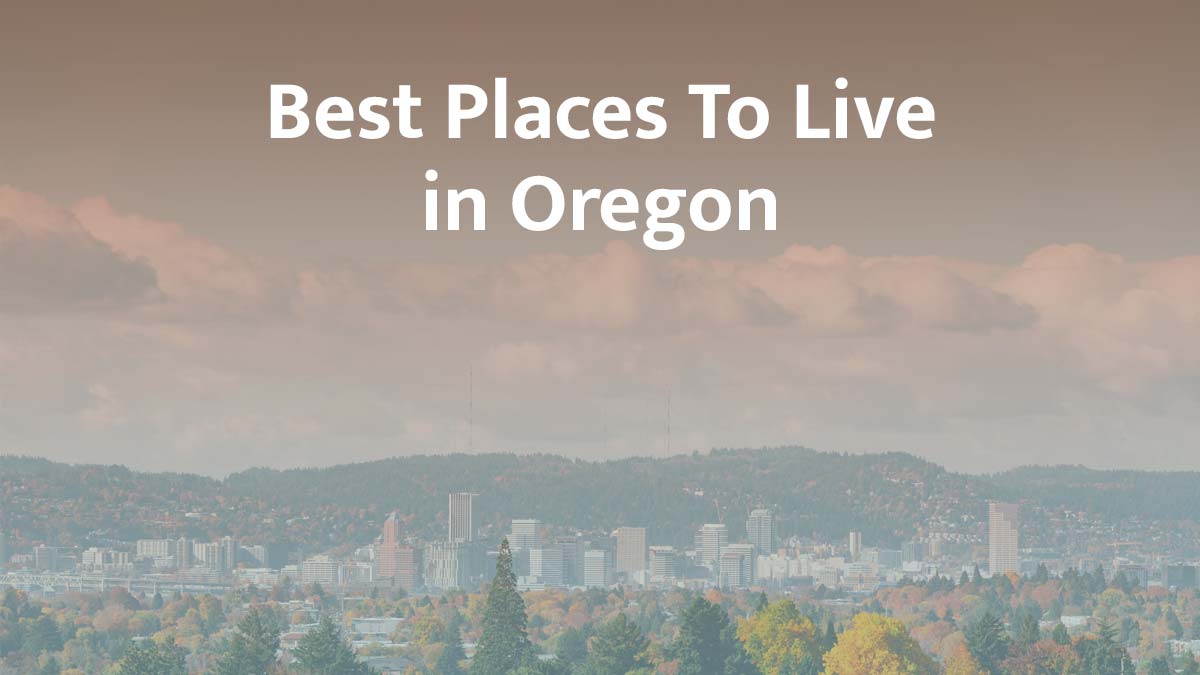
Oregon continues to rank among the most desirable states to live in the U.S., attracting new residents with its natural beauty, strong lifestyle appeal, and mix of urban opportunity and outdoor access. In recent years, Oregon has remained especially appealing to remote workers, families, retirees, and professionals looking for a better balance between career opportunities and quality of life. While affordability has become a growing concern in some parts of the state, Oregon still offers a broad range of living options, from vibrant cities like Portland and Bend to family-oriented communities such as Beaverton and West Linn.
From tech-driven suburbs in the Portland metro area to scenic mountain towns and coastal communities, Oregon offers something for nearly every type of resident. However, not every city is the right fit. Some locations are better for job opportunities, while others stand out for affordability, safety, retirement appeal, or access to nature.
In this guide, you’ll discover the best places to live in Oregon in 2026, including the top cities for families, young professionals, retirees, and budget-conscious movers, along with key insights on cost of living, housing, and how to choose the right place for your needs.
Instant Valuation, Confidential Deals with a Certified iBuyer.com Specialist.
Sell Smart, Sell Fast, Get Sold. No Obligations.
Best Places to Live
- Why Oregon Is One of the Best States to Live In
- Key Factors to Consider Before Moving to Oregon
- Top 10 Best Places to Live in Oregon in 2026
- Comparison Table
- Cost of Living in Oregon: What to Expect
- Best Places to Live in Oregon by Lifestyle
- Pros and Cons of Living in Oregon
- How to Choose the Best Place to Live in Oregon
- Conclusion
- Frequently Asked Questions
Why Oregon Is One of the Best States to Live In
Oregon stands out as one of the best states to live in because it combines high quality of life with environmental beauty, lifestyle flexibility, and a steadily evolving economy. The state has developed a strong reputation for offering residents access to mountains, forests, coastline, rivers, and vibrant communities, all within a relatively compact geographic area. Major population centers such as Portland, Bend, Eugene, and Salem continue to attract people who want the benefits of city living without giving up access to the outdoors.
In recent years, Oregon has become particularly attractive to people relocating from larger, more crowded, or more expensive states. Many incoming residents are drawn by the Pacific Northwest lifestyle, a culture centered around sustainability, wellness, local businesses, and outdoor recreation. Portland remains the state’s primary economic engine, especially for technology, healthcare, logistics, and creative industries, while cities like Hillsboro and Beaverton benefit from their roles in the Silicon Forest. Bend has also emerged as a major destination for remote workers and lifestyle-driven movers who want sunshine, recreation, and a growing professional community.
One of the most important financial advantages of living in Oregon is the absence of a state sales tax. This allows residents to save money on everyday purchases as well as larger expenses such as vehicles, appliances, and electronics. At the same time, Oregon’s housing market is more expensive than many other states, particularly in desirable metro and recreation-focused areas. Even so, many people still view Oregon as a strong value compared to neighboring parts of California or Washington, especially when measured against quality of life.
Beyond economics, Oregon offers a level of lifestyle diversity that few states can match. Residents can choose between walkable urban districts, highly rated suburban communities, college towns with strong civic identity, and smaller scenic towns that provide a slower pace of life. Whether your priority is career growth, family stability, retirement comfort, or daily access to hiking, biking, skiing, and coastal escapes, Oregon offers a location that can align with your goals.
Another important advantage is the state’s environmental character and public access to recreation. Oregon’s coastline is open to the public, its park system is extensive, and many communities are built around access to trails, rivers, and outdoor spaces. While issues such as wildfire smoke, gray winters, and rising housing costs should be considered, the overall combination of natural beauty, cultural identity, and lifestyle quality continues to make Oregon one of the most attractive places to live in the United States.
Key Factors to Consider Before Moving to Oregon
Before choosing where to live in Oregon, it’s essential to evaluate several key factors that can directly affect your lifestyle, budget, and long-term satisfaction. While Oregon isknown for its quality of life and most beautiful places in Oregon, conditions vary significantly between regions, cities, and neighborhoods.
One of the most important considerations is the cost of living in Oregon, which differs widely depending on location. Cities such as Portland and Bend have seen strong housing demand in recent years, resulting in higher home prices and rental costs. Bend in particular has become one of the most expensive housing markets in the state due to its popularity with remote workers and outdoor enthusiasts. By contrast, cities such as Salem, Medford, and Klamath Falls tend to offer more affordable housing and lower overall living expenses. Understanding how home prices, rent, utilities, and transportation costs vary across the state is crucial when deciding where you can realistically afford to live.
The job market is another important factor, especially for those relocating for employment or career growth. Oregon has a diversified economy, but opportunities are concentrated in specific areas. Portland remains the top market for jobs in technology, healthcare, logistics, design, and professional services. Hillsboro is a major center for semiconductor and advanced manufacturing jobs, while Beaverton benefits from corporate, retail, and sportswear employment. Eugene and Corvallis have economies influenced by higher education and research institutions, while Southern Oregon and coastal areas tend to have smaller job markets centered around healthcare, tourism, and local services. Choosing a city that aligns with your industry can have a major impact on both your earnings and future opportunities.
For families, safety and education are often among the most important considerations. Communities such as West Linn, Lake Oswego, Sherwood, and parts of Beaverton are widely known for strong public schools, family-oriented amenities, and relatively low crime rates. These areas also offer parks, youth activities, and established neighborhood infrastructure that appeal to households with children. In contrast, larger urban areas may provide greater job access and cultural amenities but can vary more significantly by neighborhood in terms of school quality and safety.
Climate is another defining factor that many people underestimate when moving to Oregon. The state has two very different climate zones divided by the Cascade Mountains. Western Oregon features mild, wet winters and dry summers, while Central and Eastern Oregon experience a high-desert climate with colder winters, hotter summers, and significantly more sunshine. Southern Oregon tends to be warmer and drier than the Willamette Valley. Wildfire smoke has also become an important seasonal issue in many parts of the state, especially during late summer and early fall.
In addition to these practical factors, lifestyle preferences matter greatly. Some people want a walkable neighborhood with restaurants, breweries, and cultural events, which makes Portland or Eugene appealing. Others may prioritize suburban stability, larger homes, and strong schools in places like Beaverton or West Linn. Still others may want mountain access, open space, or a slower pace of life in Bend, Ashland, Florence, or Hood River. Commute times, proximity to nature, healthcare access, and overall community feel can all shape your daily experience.
Taking the time to evaluate these factors, cost of living, job opportunities, safety, climate, and lifestyle, will help you make a more informed decision and choose the best place to live in Oregon based on your personal priorities.
Top 10 Best Places to Live in Oregon in 2026
Portland – Best Overall City in Oregon
Portland is widely considered one of the best places to live in Oregon, particularly for young professionals, creatives, and people who value walkability, culture, and access to urban amenities. As Oregon’s largest city, Portland remains the center of the state’s economy and cultural identity, with strong industries in healthcare, technology, logistics, design, food, and creative services.
This economic and cultural significance supports a strong job market, but it also contributes to a relatively high cost of living. Median home prices in Portland remain above the state average, and rents are among the highest in Oregon. Even so, Portland continues to attract residents because of its distinct neighborhoods, public transit, dining scene, bike culture, and easy access to the coast and mountains.
Portland is best suited for those who prioritize lifestyle, job diversity, and urban convenience, even at a higher price point.
Bend – Best for Outdoor Lifestyle and Remote Workers
Bend is one of the most sought-after places to live in Oregon for people who prioritize recreation, sunshine, and a high quality of life. Located in Central Oregon, Bend has transformed into a major destination for remote workers, outdoor enthusiasts, and professionals looking for a more lifestyle-driven environment.
The city’s popularity has had a major impact on housing. Bend now has some of the highest home prices in Oregon, with median home values significantly above the state average. Despite these costs, residents are drawn by access to skiing, hiking, mountain biking, paddling, and the city’s vibrant brewery and recreation-focused culture.
Bend is best suited for those who value outdoor living, mild sunshine-filled seasons, and a strong sense of community, and who are prepared for a more expensive housing market.
Eugene – Best for Community and Education
Eugene offers a strong balance of affordability, culture, and livability, making it one of the best places to live in Oregon for families, students, and professionals connected to education or healthcare. Home to the University of Oregon, Eugene combines college-town energy with a relaxed pace of life and strong neighborhood identity, making living in Eugene appealing for those who value community, outdoor access, and a laid-back lifestyle. Family-friendly neighborhoods such as South Eugene, Friendly Area, Harlow, and Bethel are especially popular for their schools, parks, and community atmosphere.
Housing costs in Eugene are generally lower than in Portland or Bend, although prices have risen in recent years. The local economy is supported by education, healthcare, public services, and small business activity. Residents often appreciate Eugene for its bike-friendly design, arts scene, farmers markets, and extensive riverfront trails.
Eugene is best suited for those seeking a strong sense of community, moderate affordability, and a lifestyle centered around education, wellness, and the outdoors.
Corvallis – Best for Safety and Education
Corvallis is one of the most desirable small cities in Oregon, especially for families, academics, and professionals who value safety, education, and a calm environment. As the home of Oregon State University, Corvallis benefits from a highly educated population, stable local economy, and strong civic infrastructure.
The housing market in Corvallis can be competitive due to limited inventory, and home prices are relatively high for a city of its size. However, many residents see this as a worthwhile trade-off for the city’s strong schools, low crime rates, bike-friendly layout, and overall quality of life.
Corvallis is best for those seeking long-term stability, educational opportunity, and a quieter, highly livable environment.
Hillsboro – Best for Tech Professionals
Hillsboro is one of the strongest job-market cities in Oregon and a major anchor of the Silicon Forest. It is home to large technology employers, semiconductor manufacturing, and supporting industries, making it one of the best places in the state for engineers, IT professionals, and those in advanced manufacturing.
Housing costs in Hillsboro are elevated but still often more accessible than in some premium suburban communities closer to Portland. The overall cost of living in Hillsboro is moderately high compared to the national average, driven largely by housing and transportation, but it remains more affordable than many major West Coast tech hubs. The city offers modern suburban development, diverse communities, expanding infrastructure, and good access to the broader Portland metro area.
Hillsboro is ideal for professionals who prioritize career opportunities, stable earnings, and access to one of Oregon’s strongest employment corridors.
Beaverton – Best for Families and Career Balance
Beaverton consistently ranks among the best places to live in Oregon for families and professionals who want a suburban environment with strong amenities. Located west of Portland, Beaverton offers access to major employers, diverse neighborhoods, excellent parks, and convenient transit connections.
The housing market reflects the city’s popularity, with home prices above the state average but often more attainable than nearby luxury suburbs. Beaverton is known for its multicultural food scene, family-oriented infrastructure, and proximity to both downtown Portland and large employment centers including Nike and tech campuses.
Beaverton is best for those looking for a balanced lifestyle with career access, suburban comfort, and strong family appeal.
Ashland – Best for Retirees and Arts Lovers
Ashland is one of Oregon’s most distinctive places to live, offering a mix of cultural sophistication, walkability, and scenic beauty. Known for the Oregon Shakespeare Festival and its charming downtown, Ashland is especially popular with retirees, professionals seeking a quieter lifestyle, and people who value the arts.
Housing prices in Ashland are relatively high for Southern Oregon, reflecting its desirability and limited inventory. The city’s appeal lies in its mild climate, vibrant local culture, and strong community atmosphere. However, its distance from major metro areas and exposure to wildfire smoke are important considerations.
Ashland is best suited for those who want a cultured small-town lifestyle with strong retirement appeal and a unique identity.
Salem – Best for Affordability and Central Location
Salem offers one of the best combinations of affordability and practicality among Oregon’s larger cities. As the state capital, Salem provides stable employment opportunities in government, healthcare, education, and local services, while maintaining housing costs that are typically lower than Portland and many nearby suburbs. Moving to Salem is an attractive option for those seeking a balance between affordability, job stability, and access to essential services without the higher costs of larger metro areas.
The city’s central location in the Willamette Valley makes it convenient for reaching Portland, the Oregon Coast, and wine country. Although Salem may feel quieter and less dynamic than Portland or Eugene, many residents appreciate its manageable pace of life and comparatively lower cost of living.
Salem is best for those looking for a budget-friendlier city with full amenities, stable employment, and convenient access to other parts of the state.
Lake Oswego – Best for Luxury Living and Top Schools
Lake Oswego is one of the most affluent and desirable communities in Oregon. Known for its excellent schools, high safety levels, and polished suburban environment, it is a top choice for families and professionals seeking premium living close to Portland.
Home prices in Lake Oswego are among the highest in the state, reflecting the area’s strong reputation, quality of housing, and limited supply. Residents are drawn to its clean neighborhoods, lake-centered identity, attractive parks, and upscale retail and dining options.
Lake Oswego is best suited for those who prioritize safety, education, and long-term residential quality, and who have the budget for a higher-end market.
Medford – Best for Warmer Climate and Lower Costs
Medford offers a more affordable entry point into Oregon compared to many cities in the north and central parts of the state. Located in Southern Oregon, it serves as a regional hub for healthcare, shopping, and services, while also offering easier access to warmer weather and outdoor destinations like the Rogue River and nearby wine country.
Housing costs in Medford are generally more manageable than in Portland, Bend, or Ashland, making it appealing to retirees, families, and budget-conscious movers, although recent data shows that buyers still need a stable income to comfortably afford a home in the area. The trade-off is that the local job market is smaller and less diverse than in larger metro areas.
Medford is best for those seeking lower living costs, warmer weather, and a practical base in Southern Oregon.
Comparison Table
| City | Best For | Median Home Price | Cost of Living | Job Market | Safety | Lifestyle |
| Portland | Young professionals & culture | ~$585K | High | Excellent | Medium | Vibrant, urban |
| Bend | Outdoor lifestyle & remote work | ~$775K | High | Moderate | Good | Active, scenic |
| Eugene | Community & education | ~$495K | Medium | Moderate | Good | Creative, relaxed |
| Corvallis | Safety & schools | ~$550K | Medium | Moderate | Very High | Quiet, academic |
| Hillsboro | Tech careers | ~$565K | Medium-High | Strong | Good | Suburban, career-focused |
| Beaverton | Families & balance | ~$610K | Medium-High | Strong | Good | Diverse, family-oriented |
| Ashland | Retirees & arts | ~$630K | Medium-High | Moderate | Good | Cultural, walkable |
| Salem | Affordability & convenience | ~$450K | Medium | Moderate | Medium-Good | Practical, central |
| Lake Oswego | Luxury & top schools | ~$950K | High | Strong | Very High | Upscale, suburban |
| Medford | Lower costs & warmer climate | ~$415K | Medium | Moderate | Medium | Sunny, relaxed |
As shown above, Portland and Hillsboro offer some of the strongest job opportunities, while Salem and Medford provide more affordable entry points for people who want to live in Oregon without paying premium metro prices.
Cost of Living in Oregon: What to Expect
The cost of living in Oregon is one of the biggest factors people consider before relocating, and it is important to understand that affordability varies significantly depending on the city and region. Overall, Oregon is generally more expensive than the national average, especially when it comes to housing. However, compared with some nearby West Coast markets, many people still consider Oregon a better value relative to the lifestyle it offers.
Housing is the single largest expense for most residents and plays the biggest role in determining whether a city feels affordable. In recent years, places like Portland, Bend, and Lake Oswego have maintained some of the highest home prices in the state due to continued demand and limited inventory. Bend in particular has become a premium market because of lifestyle migration and limited supply. By contrast, cities such as Salem, Medford, and Klamath Falls remain more budget-friendly, with lower median home prices and somewhat more accessible rental markets.
One of the biggest financial advantages of living in Oregon is the absence of a state sales tax. This can create meaningful savings over time, especially for households making larger purchases. However, this advantage is offset in part by Oregon’s relatively high state income tax structure. For many residents, the balance between no sales tax and higher income taxes is an important part of the overall affordability picture. Property taxes are generally more moderate than in some other states, though they still vary by county and home value.
Beyond housing and taxes, utilities, groceries, and transportation are also important considerations. Utility costs are often manageable, especially due to the state’s access to hydroelectric power, although heating bills can rise during wet western winters or colder periods east of the Cascades. Transportation costs vary depending on where you live. Portland offers the strongest public transit network in the state, while most other Oregon cities are far more car-dependent. Fuel prices can be relatively high, and commuting patterns should be factored into your monthly budget.
It is also important to recognize that affordability in Oregon often involves trade-offs. Cities with the strongest job markets and most amenities tend to have higher housing costs, while lower-cost areas may have fewer employment opportunities or less infrastructure. Smaller towns and inland cities can provide a more affordable lifestyle, but they may not offer the same level of earnings, services, or entertainment.
Overall, Oregon offers a higher-than-average cost of living, but many residents feel the trade-off is justified by the state’s scenery, environmental quality, recreation, and lifestyle appeal. By comparing housing, taxes, utilities, and transportation costs across different areas, you can get a more realistic picture of what living in Oregon will actually cost and choose a place that matches your financial goals.
Best Places to Live in Oregon by Lifestyle
Different cities in Oregon cater to different lifestyles, so choosing the right place depends heavily on your goals and preferences. Young professionals are often drawn to Portland, Hillsboro, and Bend due to job opportunities, social activity, and access to modern amenities.
Families tend to prefer places like Beaverton, West Linn, and Corvallis, where school quality, safety, parks, and community infrastructure are major advantages. Retirees often find strong appeal in Ashland, Medford, and Florence, where the pace of life is slower and daily living can feel more comfortable and scenic.
For those seeking affordability, Salem, Klamath Falls, and Coos Bay offer lower housing costs compared to many of Oregon’s more in-demand markets. Meanwhile, lifestyle-driven towns such as Hood River, Sisters, and Bend appeal to people who prioritize recreation, environment, and community character over pure affordability.
Pros and Cons of Living in Oregon
Living in Oregon offers several major advantages. The state provides exceptional access to nature, strong lifestyle appeal, and a culture that values sustainability, wellness, and local community. The lack of a state sales tax can also create meaningful financial benefits, especially over time.
However, there are also disadvantages to consider. Housing costs are high in many desirable parts of the state, especially around Portland and Bend. Western Oregon’s long gray winters can be difficult for some residents, and wildfire smoke has become a recurring concern in many regions during late summer.
Understanding both the benefits and the drawbacks is essential when deciding whether Oregon is the right place for you.
How to Choose the Best Place to Live in Oregon
Choosing the best place to live in Oregon requires a clear understanding of your priorities. If career growth is your main objective, Portland, Hillsboro, and Beaverton typically offer the strongest job markets and the widest range of opportunities.
If affordability matters more, cities such as Salem, Medford, or Klamath Falls may be more realistic options. These locations generally offer lower housing costs and a more manageable cost of living, and are often considered among the cheapest places to live in Oregon, although job options may be more limited than in the Portland metro.
For families, safety and education should be major priorities. Communities like West Linn, Lake Oswego, Beaverton, and Corvallis are widely considered among the best places in Oregon for raising children because of their strong schools and residential stability.
Lifestyle preferences are equally important. Some people prefer the energy and convenience of urban neighborhoods, while others want open space, mountain access, or a quieter retirement setting. Coastal towns, college communities, and Central Oregon recreation hubs all provide very different experiences.
Ultimately, the best place to live in Oregon is the one that fits your budget, career plans, climate preferences, and day-to-day lifestyle.
Conclusion
Oregon offers a unique combination of natural beauty, lifestyle quality, and community diversity that continues to attract new residents each year. Whether you’re moving for career opportunities, family life, retirement, or access to the outdoors, Oregon remains one of the most appealing states to live in. The key is choosing a city that aligns with your long-term goals and financial reality.
By understanding the differences between Oregon’s major cities, suburbs, and smaller towns, and by focusing on what matters most to you, you can confidently choose the best place to live in Oregon in 2026.
Compare Cash Offers from Top Home Buyers. Delivered by Your Local iBuyer Certified Specialist.
One Expert, Multiple Offers, No Obligation.
Frequently Asked Questions
Portland is often considered the best overall because of its job market, culture, and amenities. Bend is ideal for outdoor lifestyle, while Beaverton and Corvallis are better for families.
Klamath Falls, Coos Bay, and Medford are among the more affordable places to live, with lower housing costs than Portland, Bend, or Lake Oswego.
Yes, especially in communities like Beaverton, West Linn, and Corvallis, which offer strong schools, safer neighborhoods, and family-friendly amenities.
Oregon is generally more expensive than the national average, especially for housing. However, the state has no sales tax, which helps offset some expenses.
Portland and Hillsboro typically offer the strongest job markets, especially in technology, healthcare, logistics, and advanced manufacturing.
West Linn, Lake Oswego, and Corvallis are often considered among the safest places to live in Oregon.
It depends on the city. Some areas like Portland and Bend are expensive, while Salem, Medford, and Klamath Falls are more budget-friendly.
Bend and nearby Redmond continue to be among the fastest-growing areas in Oregon due to lifestyle appeal, remote work migration, and housing demand.
Oregon is a strong option for people seeking lifestyle quality, outdoor access, and community-oriented living, but the right choice depends on your career goals, budget, and climate preferences.

Reilly Dzurick is a licensed real estate agent with over six years of experience and a member of the iBuyer.com Market Insights Team, covering national trends in home selling and the evolving iBuyer landscape. Her firsthand experience working with buyers and sellers gives her a practical perspective on how these platforms impact real homeowners. She holds a degree in Public Relations, Advertising, and Applied Communication.