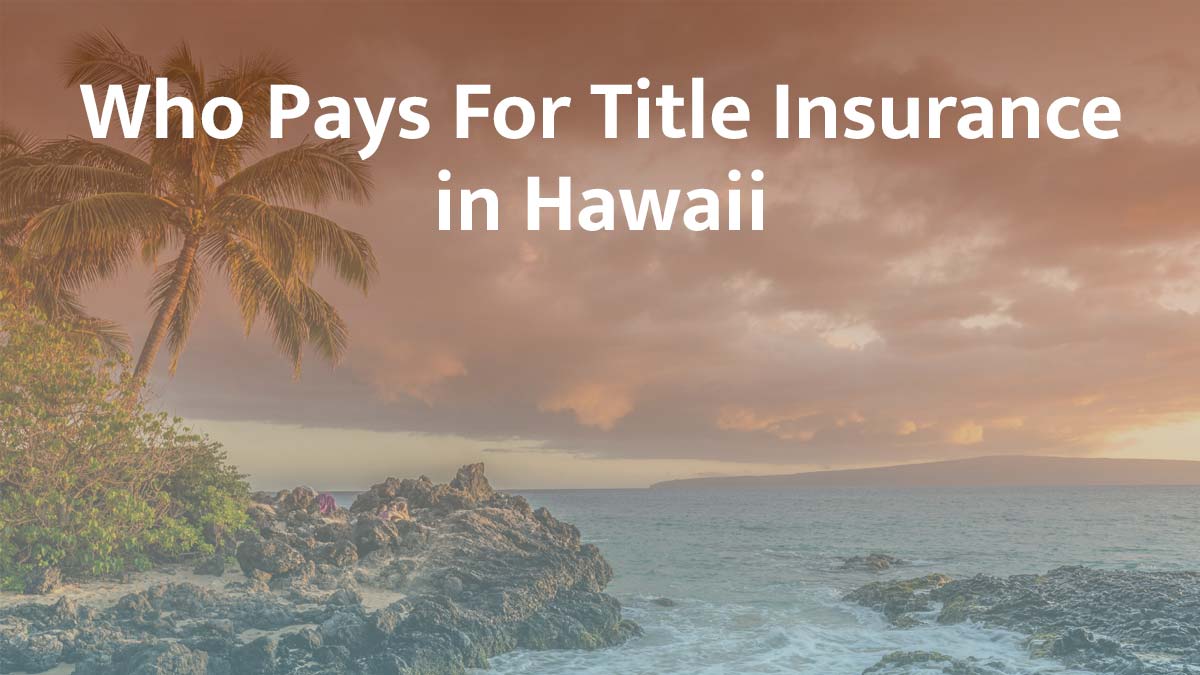
In most Hawaii home sales, the seller commonly pays for the owner’s title insurance policy while the buyer usually pays for the lender’s title insurance policy. However, these costs are negotiable. Either party can agree to pay more or less depending on the purchase contract, local customs, and market conditions.
Title insurance protects against hidden problems connected to a property’s ownership history, including unpaid liens, forged deeds, recording mistakes, or ownership disputes that may not appear during a title search. Unlike some states with regulated pricing, Hawaii title insurance premiums can vary between title companies.
This guide explains who typically pays for title insurance in Hawaii, what each policy covers, how much title insurance costs, and what buyers and sellers should know before closing.
Instant Valuation, Confidential Deals with a Certified iBuyer.com Specialist.
Sell Smart, Sell Fast, Get Sold. No Obligations.
Who Pays for Title Insurance
Who Pays for Title Insurance in Hawaii?
Sellers Usually Pay for the Owner’s Policy
In many Hawaii real estate transactions, the seller pays for the owner’s title insurance policy. This is common in major markets including Honolulu, Maui, Kauai, and the Big Island.
The owner’s policy protects the buyer after closing. If a title issue appears later, such as an undiscovered lien or ownership dispute, the policy may help cover legal fees and financial losses.
Although the seller often pays for this policy, the protection benefits the buyer. Many first-time buyers assume they are responsible for purchasing their own protection, but Hawaii customs frequently place this expense on the seller.
The purchase contract determines who pays. This is negotiated during the offer process and is not mandated by Hawaii law.
Buyers Usually Pay for the Lender’s Policy
If the buyer is financing a home that is sold with a mortgage, the lender will usually require a lender’s title insurance policy. The buyer generally pays for this policy as part of their closing costs.
The lender’s policy protects the mortgage lender, not the buyer. It remains active until the mortgage is paid off or refinanced.
For example: if a buyer purchases a $900,000 home with a $720,000 mortgage, the lender’s policy covers the $720,000 loan amount. The owner’s policy covers the full $900,000 purchase price.
Who Pays What, Quick Summary
| Policy | Who Typically Pays | Who It Protects | How Long It Lasts |
| Owner’s title insurance | Seller | The buyer | As long as the buyer or heirs own the home |
| Lender’s title insurance | Buyer | The mortgage lender | Until the loan is paid off |
Title Insurance Costs Are Negotiable
Who pays for title insurance in Hawaii is negotiable and determined by the purchase agreement. Either party may agree to pay more or less depending on the structure of the transaction.
How market conditions affect who pays:
- Seller’s market: Buyers may offer to cover additional closing costs, including title fees, to make their offers more competitive.
- Buyer’s market: Sellers may agree to pay for the owner’s policy and other closing costs to attract buyers.
- Luxury and resort properties: Negotiations may differ in high-end markets such as Maui resort communities or beachfront Honolulu properties.
- Cash purchases: Cash buyers do not need a lender’s policy, but many still purchase an owner’s policy for protection.
Who Pays for Title Insurance by County in Hawaii?
Local customs can vary slightly across Hawaii counties. Here is how title insurance is commonly handled in major areas:
| Hawaii County | Common Practice |
| Honolulu County (Oahu) | Seller often pays for the owner’s policy |
| Maui County | Seller commonly pays |
| Hawaii County (Big Island) | Often negotiated between buyer and seller |
| Kauai County | Seller traditionally pays |
| Kalawao County | Typically negotiated case-by-case |
These are local customs, not legal requirements. Always review the purchase contract carefully to confirm who is responsible for title-related costs.
What Does Each Policy Cover?
Owner’s Title Insurance
The owner’s title insurance policy protects the buyer’s ownership rights. It covers title issues that existed before closing but were not identified during the title search.
It may help cover:
- Unpaid property taxes from previous owners
- Mechanic’s liens from contractors
- Forged signatures on deeds
- Unknown heirs claiming ownership
- Errors in public records
- Boundary or easement disputes
- Fraud involving past property transfers
The owner’s policy lasts as long as the buyer, or their heirs, owns the property. It requires a one-time premium payment at closing with no monthly fees.
Lender’s Title Insurance
The lender’s title insurance policy protects the mortgage lender. If a title issue threatens the validity of the mortgage, the lender’s policy may help cover financial losses.
This policy does not protect the buyer personally. If the buyer suffers financial harm from a title problem and only has a lender’s policy, the buyer may still be responsible for legal expenses and losses.
That is why many Hawaii buyers choose to purchase both policies at closing, even though only the lender’s policy is typically required for financed purchases.
What Title Insurance Does Not Cover
Title insurance does not cover every possible issue. Standard Hawaii title insurance policies generally do not cover:
- Zoning or land-use violations
- Environmental hazards
- Physical property damage
- Problems that arise after closing
- Known defects disclosed before purchase
- Government actions such as eminent domain
Before closing, the title company issues a title commitment or preliminary title report. This document lists exceptions and exclusions that the policy will not cover. Buyers should review it carefully before finalizing the transaction.
How Much Does Title Insurance Cost in Hawaii?
Rates Are Not Set by the State
Hawaii does not regulate title insurance premiums statewide. Title companies set their own pricing, so rates can vary depending on the property value, location, and provider.
Because premiums are not fixed by law, buyers and sellers can compare title companies based on pricing, service quality, responsiveness, and ancillary fees.
Owner’s Title Insurance Premium by Home Price
| Home Purchase Price | Estimated Owner’s Policy Premium | Estimated Rate (%) |
| $300,000 | $1,950 | 0.65% |
| $500,000 | $3,050 | 0.61% |
| $750,000 | $4,325 | 0.58% |
| $1,000,000 | $5,500 | 0.55% |
| $1,500,000 | $7,850 | 0.52% |
| $3,000,000 | $14,850 | 0.50% |
Source: Estimated values based on Hawaii title insurance market averages, island-specific escrow and title pricing practices, and common owner’s policy premium structures for 2026.
What Else Is Included in Title Costs?
The title insurance premium is only one part of the total title-related closing costs. Buyers and sellers may also pay for:
- Title search fees
- Escrow fees or settlement fees
- Recording fees
- Wire transfer fees
- Policy endorsements
- Document preparation fees
The Closing Disclosure issued before closing will outline all title-related charges. Review it carefully before signing final documents.
Ask About the Reissue Rate
Some Hawaii buyers may qualify for a discounted title insurance premium called a reissue rate. This discount may apply if a prior title insurance policy was recently issued on the property.
Ask the title company early in the transaction whether the property qualifies for a reissue rate. It may help lower overall closing costs.
Common Mistakes Buyers and Sellers Make
Skipping the owner’s policy to save money. Owner’s title insurance is optional in Hawaii, but title disputes can become extremely expensive. Most real estate professionals strongly recommend purchasing coverage.
Assuming the lender’s policy protects the buyer. It does not. The lender’s policy only protects the mortgage company. Buyers without an owner’s policy may face significant out-of-pocket legal costs.
Not reviewing the preliminary title report. This document explains what the policy excludes from coverage. Buyers who ignore it may encounter unexpected issues after closing.
Choosing a title company based only on price. Since Hawaii premiums are not regulated statewide, pricing can vary. But service quality and efficiency are also important during closing.
Thinking local customs are mandatory. Sellers commonly pay for the owner’s policy in Hawaii, but nothing requires this by law. Always confirm who pays for each expense in the purchase agreement.
Selling Your Hawaii Home?
iBuyer.com connects Hawaii homeowners with cash buyers who can close quickly and on your preferred timeline. No listing commissions, no open houses, and no repair negotiations. Get a free cash offer in 24-48 hours and review your estimated proceeds before deciding.
Compare Cash Offers from Top Home Buyers. Delivered by Your Local iBuyer Certified Specialist.
One Expert, Multiple Offers, No Obligation.
Know Your Local Market Before You List
Pull the last 12 months of real sales and buyer activity for your neighborhood.
Get My Market ReportFrequently Asked Questions
In many Hawaii real estate transactions, the seller traditionally pays for the owner’s title insurance policy, while the buyer typically pays for the lender’s title insurance policy associated with the mortgage loan. However, these costs are negotiable and can be allocated differently depending on the terms agreed upon in the purchase contract.
Title insurance costs in Hawaii vary based on factors such as the property’s purchase price, loan amount, location, and the title company selected. Owner’s title insurance premiums commonly range from approximately $1,800 to more than $10,000 for luxury or high-value properties. Additional escrow, settlement, and recording fees may also apply.
Owner’s title insurance is not legally required in Hawaii, but it is strongly recommended because it protects homeowners from hidden title defects and ownership disputes. Lender’s title insurance is generally required by mortgage lenders before financing can be approved and finalized.
An owner’s title insurance policy generally remains in effect for as long as the owner or their heirs maintain an ownership interest in the property. A lender’s title insurance policy stays active until the mortgage loan is fully paid off, refinanced, or otherwise satisfied.
Yes. Buyers and sellers in Hawaii can negotiate how title insurance premiums and other closing costs are divided during the transaction process. While local customs often provide a starting point for negotiations, there is no legal requirement dictating which party must pay specific title-related expenses.
Cash buyers are not required to purchase a lender’s title insurance policy because there is no mortgage lender involved in the transaction. However, many cash buyers still choose to purchase an owner’s title insurance policy to protect themselves against hidden title defects, unpaid liens, fraud, recording errors, boundary disputes, or ownership claims that may surface after closing.
Title insurance helps protect homeowners and lenders from financial losses related to title defects that may have existed before the property purchase. Coverage may include unpaid liens, ownership disputes, forged deeds or signatures, recording mistakes, undisclosed heirs, fraud, easement issues, and boundary disputes tied to prior property transfers.
Yes. Buyers and sellers in Hawaii can negotiate which title company will handle the title search, escrow, settlement, and closing process. In some transactions, lenders, developers, or builders may recommend preferred providers, but the choice can often be negotiated between the parties.
A reissue rate is a discounted title insurance premium that may be available when a prior title insurance policy was recently issued on the same property. This discount can help reduce closing costs for buyers or refinancing homeowners. Eligibility requirements and discount amounts depend on the title company and the timing of the previous policy issuance.
Yes. Hawaii does not regulate title insurance premiums statewide, which means rates, escrow fees, and ancillary closing charges can vary among title companies. Buyers and sellers are encouraged to compare providers, review detailed fee estimates, and shop around to potentially reduce overall closing costs.

Reilly Dzurick is a licensed real estate agent with over six years of experience and a member of the iBuyer.com Market Insights Team, covering national trends in home selling and the evolving iBuyer landscape. Her firsthand experience working with buyers and sellers gives her a practical perspective on how these platforms impact real homeowners. She holds a degree in Public Relations, Advertising, and Applied Communication.