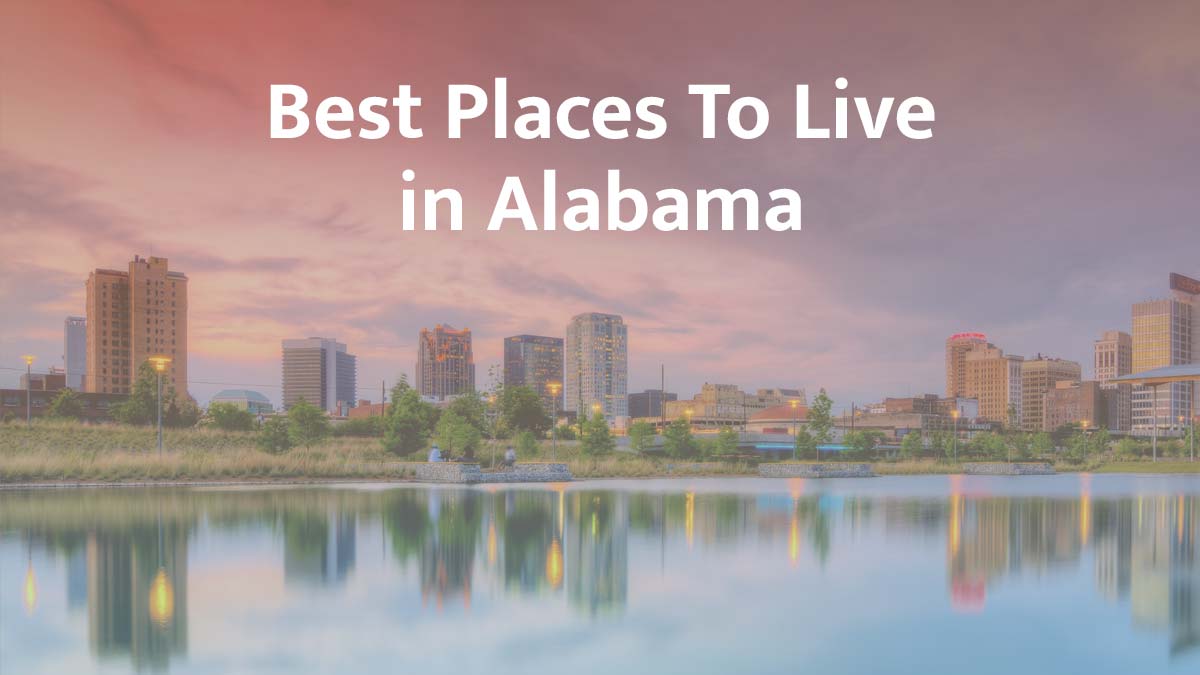
Huntsville is one of the best places to live in Alabama in 2026 for its combination of job opportunities, relatively affordable housing, and quality of life. Madison and Hoover stand out for families, Birmingham offers big-city amenities at accessible prices, while Fairhope and Daphne are strong choices for people who want a Gulf Coast lifestyle.
Alabama remains relatively affordable for homeowners. The statewide median sale price was about $287,750 in July 2026, according to Alabama Association of Realtors, although prices vary significantly depending on where you choose to live.
Best Places to Live
- Key Takeaways
- Why Alabama Is One of the Best States to Live In
- Key Factors to Consider Before Moving to Alabama
- Top 10 Best Places to Live in Alabama in 2026
- Best Places to Live in Alabama: Comparison
- Cost of Living in Alabama: What to Expect
- Best Places to Live in Alabama by Lifestyle
- Pros and Cons of Living in Alabama
- How to Choose the Best Place to Live in Alabama
- Bottom Line: Where Should You Live in Alabama?
- Frequently Asked Questions
Key Takeaways
- Huntsville: Best overall for its combination of jobs, housing, and amenities.
- Madison: Best for families who want suburban living near Huntsville.
- Birmingham: Best for big-city amenities and relatively affordable housing.
- Hoover: Best for suburban living near Birmingham.
- Auburn: Best for a college-town lifestyle.
- Fairhope: Best for coastal living, but it has some of the highest home prices on this list.
- Mobile: Best for more affordable Gulf Coast city living.
- Tuscaloosa: Best for university culture and college sports.
- Montgomery: Best for affordable homeownership among the major cities covered.
- Daphne: Best for suburban Eastern Shore living.
Instant Valuation, Confidential Deals with a Certified iBuyer.com Specialist.
Sell Smart, Sell Fast, Get Sold. No Obligations.
If you’re considering a move and need to sell your current property first, getting a home value estimate can help you understand how much equity you may have available for your next home.
Why Alabama Is One of the Best States to Live In
Alabama combines relatively accessible housing with growing employment centers, major universities, outdoor recreation, and Gulf Coast communities. You can choose between a technology-focused city such as Huntsville, a larger metro like Birmingham, college towns such as Auburn and Tuscaloosa, or coastal communities around Mobile Bay.
The state’s population reached an estimated 5.19 million in July 2025, about 3.3% above its 2020 population base, according to the U.S. Census Bureau. Census data also puts median household income at $63,999 for 2020 through 2024.
Alabama’s labor market remains another advantage. The statewide unemployment rate was 3.4% in July 2026, according to the Bureau of Labor Statistics. Aerospace, defense, healthcare, manufacturing, education, logistics, government, and technology provide different employment opportunities across the state.
Housing remains relatively affordable overall, but location matters. Fairhope, Hoover, and Auburn are considerably more expensive than Montgomery, Birmingham, or Mobile.
Key Factors to Consider Before Moving to Alabama
Housing costs: Alabama’s statewide median sale price was about $269,900 in June 2026, but prices among the places in this guide ranged from about $173,000 in Montgomery to more than $515,000 in Fairhope.
Jobs: Huntsville is particularly attractive for aerospace, defense, engineering, and technology. Birmingham has a larger and more diverse employment base, while Montgomery has substantial government employment. Mobile benefits from its port, manufacturing, logistics, and healthcare sectors.
Safety: Crime can differ significantly between neighborhoods, even within the same city. Compare recent local police data for the specific neighborhoods you’re considering instead of relying solely on citywide rankings.
Schools: Families should compare individual school zones rather than assuming an entire city provides the same experience. Madison and Hoover are particularly attractive starting points for family-oriented suburban living.
Lifestyle: Consider whether you want an urban center, quiet suburb, college town, or coastal community. Alabama offers all four, but transportation, housing prices, weather exposure, and amenities vary.
Weather: Hot and humid summers are common. Tornadoes and severe thunderstorms are important considerations across the state, while Mobile Bay and Gulf Coast communities also face hurricane and flood risks.
Top 10 Best Places to Live in Alabama in 2026
1. Huntsville: Best Overall
Huntsville offers one of Alabama’s strongest combinations of employment and housing. The median sale price was about $304,000 in June 2026, while the typical home value was about $290,453. Its job market is anchored by aerospace, defense, engineering, and technology, including NASA’s Marshall Space Flight Center and Redstone Arsenal.
The Huntsville metro unemployment rate was 3.3% in July 2026, while nonfarm employment increased 1.7% year over year, according to the BLS. Residents also have access to the U.S. Space & Rocket Center, Monte Sano State Park, and a growing downtown. The tradeoff is growth itself, which has contributed to higher housing costs, development, and traffic.
2. Madison: Best for Families
Madison provides suburban living while keeping residents close to Huntsville’s employment market. Its median sale price was about $387,782 in June 2026, making it noticeably more expensive than Huntsville and Alabama overall.
Families are drawn to Madison for its residential character and proximity to jobs, shopping, recreation, and Huntsville amenities. The primary drawback is housing affordability. Buyers pay a significant premium compared with many other Alabama communities.
3. Birmingham: Best for Big-City Amenities
Birmingham combines healthcare, finance, education, restaurants, sports, and cultural attractions with relatively accessible housing. Its median sale price was approximately $196,500 in June 2026, although prices differ dramatically by neighborhood.
The wider Birmingham-Hoover metro had about 569,800 nonfarm jobs in July 2026. Railroad Park, the Birmingham Museum of Art, restaurants, and nearby outdoor recreation give the city one of Alabama’s strongest urban lifestyles. Safety and neighborhood conditions vary, so researching specific areas is especially important.
Homeowners preparing to leave the area can also compare options for cash home buyers in Birmingham if a traditional listing does not suit their timeline.
4. Hoover: Best Birmingham Suburb
Hoover is a strong choice for households that want suburban living while remaining connected to Birmingham’s employment market. The median sale price was approximately $439,233 in June 2026, making Hoover one of the more expensive places on this list.
Residents get convenient access to shopping, parks, schools, and Birmingham-area employers without living in the urban core. The biggest consideration is cost. Buyers looking primarily for affordability will find considerably cheaper options elsewhere in Alabama.
5. Auburn: Best College Town
Auburn combines a major university with restaurants, sports, outdoor recreation, and a lively downtown. Auburn University provides an important economic and cultural anchor, while Chewacla State Park adds easy access to outdoor recreation.
That lifestyle comes at a price. The median sale price was approximately $401,000 in June 2026, well above the Alabama median, while average rent was around $1,755. University events and football weekends can also bring significant traffic.
6. Fairhope: Best for Coastal Lifestyle
Fairhope offers one of Alabama’s most desirable small-city coastal lifestyles, with Mobile Bay, a walkable downtown, restaurants, arts, and convenient access to other Gulf Coast destinations.
It is also expensive by Alabama standards. Fairhope’s median sale price reached approximately $515,500 in June 2026, the highest among the ten places covered here. Buyers should also budget for insurance and consider hurricane, flood, and tropical-weather exposure.
7. Mobile: Best for Affordable Gulf Coast City Living
Mobile provides a more affordable way to live near the Gulf Coast. Its median sale price was about $224,050 in June 2026, substantially below Fairhope and Daphne.
The local economy includes the Port of Mobile, manufacturing, logistics, and healthcare. Residents also get historic neighborhoods, Mardi Gras traditions, museums, restaurants, and Gulf Coast access. The Mobile metro unemployment rate was 4.5% in July 2026, however, and homeowners should account for hurricane, flood, and insurance risks.
8. Tuscaloosa: Best for University Energy
Tuscaloosa is closely tied to the University of Alabama, giving the city a strong college-sports culture, restaurants, entertainment, and university-related employment. The Riverwalk and campus attractions add recreational options.
The median sale price was approximately $259,467 in June 2026, close to the Alabama statewide median. The Tuscaloosa metro unemployment rate was 4.4% in July 2026, while payroll employment was growing year over year. Game days bring energy to the city, but they also mean congestion and large crowds.
9. Montgomery: Best for Affordable Homeownership
Montgomery is one of the most affordable major Alabama cities for buyers. Its median sale price was approximately $173,167 in June 2026, the lowest among the ten places in this guide.
As the state capital, Montgomery has a substantial government employment base alongside Maxwell Air Force Base, healthcare, and regional manufacturing. Civil Rights landmarks and museums add cultural significance. Its job market has been less dynamic than Huntsville’s, and neighborhood conditions vary considerably.
10. Daphne: Best Eastern Shore Alternative
Daphne is a good alternative for people who like Fairhope and the Eastern Shore but want another suburban option. Its median sale price was approximately $338,317 in June 2026, making it more affordable than Fairhope while still considerably more expensive than Alabama overall.
Residents get Mobile Bay access, parks, suburban neighborhoods, and proximity to both Fairhope and Mobile. Like other coastal communities, Daphne carries additional hurricane, flood, and insurance considerations.
Best Places to Live in Alabama: Comparison
| City | Best For | Median Home Price | Cost of Living | Job Market | Safety | Lifestyle |
| Huntsville | Best overall | $304,000 | Moderate | Strong | Moderate to Good | Tech, outdoors, growing city |
| Madison | Families | $387,782 | Above average | Strong | Good | Quiet, suburban |
| Birmingham | Big-city amenities | $196,500 | Low to Moderate | Strong | Varies by area | Urban, food, culture |
| Hoover | Birmingham suburbs | $439,233 | Above average | Strong | Good | Suburban, convenient |
| Auburn | College-town living | $401,000 | Above average | Good | Good | University, sports, outdoors |
| Fairhope | Coastal lifestyle | $515,500 | High | Moderate | Good | Waterfront, arts, retirement |
| Mobile | Affordable Gulf Coast city | $224,050 | Low to Moderate | Moderate | Varies by area | Historic, coastal, urban |
| Tuscaloosa | University lifestyle | $259,467 | Moderate | Moderate | Moderate | College sports, riverfront |
| Montgomery | Affordable homeownership | $173,167 | Low | Moderate | Varies by area | History, government |
| Daphne | Eastern Shore living | $338,317 | Moderate to High | Moderate | Good | Suburban, coastal |
Median home prices are Zillow median sale prices for June 2026. Cost of living, job market, and safety labels are comparative editorial categories based on housing costs, current employment conditions, and available local safety information, rather than official numerical scores.
Cost of Living in Alabama: What to Expect
Housing remains one of Alabama’s biggest affordability advantages. Zillow reported a statewide median sale price of $269,900 in June 2026 and a typical home value of $241,009 in July.
The statewide figure does not tell the whole story. Montgomery’s median sale price was around $173,167 and Birmingham’s was $196,500, compared with $401,000 in Auburn, $439,233 in Hoover, and $515,500 in Fairhope.
Taxes should also be part of your budget. Alabama has individual income tax rates ranging from 2% to 5%, according to the Alabama Department of Revenue. Coastal homeowners should additionally investigate homeowners insurance, wind coverage, and flood risk before purchasing.
If moving to Alabama requires selling another property, compare your expected sale proceeds with your new housing budget. Sellers who prioritize speed can also review the differences between a traditional listing and options designed to sell a house fast.
Best Places to Live in Alabama by Lifestyle
For families: Madison and Hoover provide suburban environments with access to the Huntsville and Birmingham employment markets.
For young professionals: Huntsville stands out for technology, aerospace, defense, and engineering opportunities. Birmingham offers healthcare, finance, restaurants, entertainment, and a larger urban environment.
For retirees: Fairhope and Daphne combine warmer weather with Mobile Bay recreation and a slower suburban or small-city lifestyle. Housing and coastal insurance costs need to be part of the decision.
For affordable living: Montgomery has the lowest median sale price among our ten choices, followed by Birmingham and Mobile.
For college-town living: Auburn provides a polished university-centered environment, while Tuscaloosa offers a more affordable alternative centered around the University of Alabama.
For coastal living: Fairhope is the premium small-city option, Daphne provides suburban Eastern Shore living, and Mobile offers a larger city at a lower median home price.
Pros and Cons of Living in Alabama
Pros
- Housing remains affordable compared with many higher-cost U.S. markets.
- Huntsville, Birmingham, Mobile, and Montgomery provide distinct employment centers.
- Residents can choose between urban, suburban, college-town, and coastal lifestyles.
- The state has major universities and strong college-sports culture.
- Mountains, lakes, state parks, Mobile Bay, and Gulf Coast destinations provide varied outdoor recreation.
Cons
- Summers are hot and humid.
- Tornadoes and severe thunderstorms are recurring risks.
- Coastal areas face hurricane, flood, and insurance concerns.
- Public transportation is limited in many communities.
- Many areas are car-dependent.
- Employment opportunities and neighborhood conditions vary significantly by location.
How to Choose the Best Place to Live in Alabama
Start with your housing budget. A buyer who can comfortably afford Montgomery or Mobile may find Fairhope, Hoover, or Auburn considerably more expensive.
Next, consider employment and commuting. Huntsville makes sense for many aerospace and technology workers, while Birmingham has a broader urban employment base. Montgomery works well for government-related careers, and Mobile has advantages for logistics, port, and manufacturing employment.
Then compare lifestyle and risk. Coastal living brings access to Mobile Bay and the Gulf but also greater storm and insurance considerations. College towns provide entertainment and university resources but can experience event-related congestion.
Finally, research individual neighborhoods before buying. School options, crime, flood exposure, commute times, and housing costs can vary significantly within the same city.
Bottom Line: Where Should You Live in Alabama?
Huntsville is our best overall place to live in Alabama in 2026, but the right choice depends on your priorities. Madison and Hoover are strong suburban choices, Birmingham offers big-city amenities, Auburn and Tuscaloosa deliver college-town living, Montgomery provides affordable homeownership, and Fairhope, Daphne, and Mobile offer three different approaches to coastal life.
If you’re moving and need to sell your current home, iBuyer.com can help you explore your options. You can learn more about cash home buyers, review options to sell your house fast in Alabama, or explore cash home buyers in Alabama. iBuyer.com is a marketplace that helps sellers compare options rather than purchasing homes directly.
You can also request a cash offer or read our guide on how to sell your house before deciding which approach works for your move.
Compare Cash Offers from Top Home Buyers. Delivered by Your Local iBuyer Certified Specialist.
One Expert, Multiple Offers, No Obligation.
Know Your Local Market Before You List
Pull the last 12 months of real sales and buyer activity for your neighborhood.
Get My Market ReportFrequently Asked Questions
Huntsville is our best overall place to live in Alabama in 2026 because it combines a strong job market, relatively affordable housing, outdoor recreation, and growing amenities.
Madison, Hoover, Fairhope, and Daphne are among the stronger choices for safety on this list, but crime varies by neighborhood. Check current local police data for any area you are considering.
Montgomery is the most affordable among the ten places in this guide based on housing, with a median sale price of about $173,167 in June 2026. Birmingham and Mobile are also relatively affordable options.
Madison and Hoover are two of the best Alabama choices for families seeking suburban living with access to major employment centers and everyday amenities.
Alabama can be a good retirement destination for people seeking relatively affordable housing, warm weather, and coastal recreation. Fairhope and Daphne stand out, although coastal insurance and storm risks should be considered.

Reilly Dzurick is a licensed real estate agent with over six years of experience and a member of the iBuyer.com Market Insights Team, covering national trends in home selling and the evolving iBuyer landscape. Her firsthand experience working with buyers and sellers gives her a practical perspective on how these platforms impact real homeowners. She holds a degree in Public Relations, Advertising, and Applied Communication.