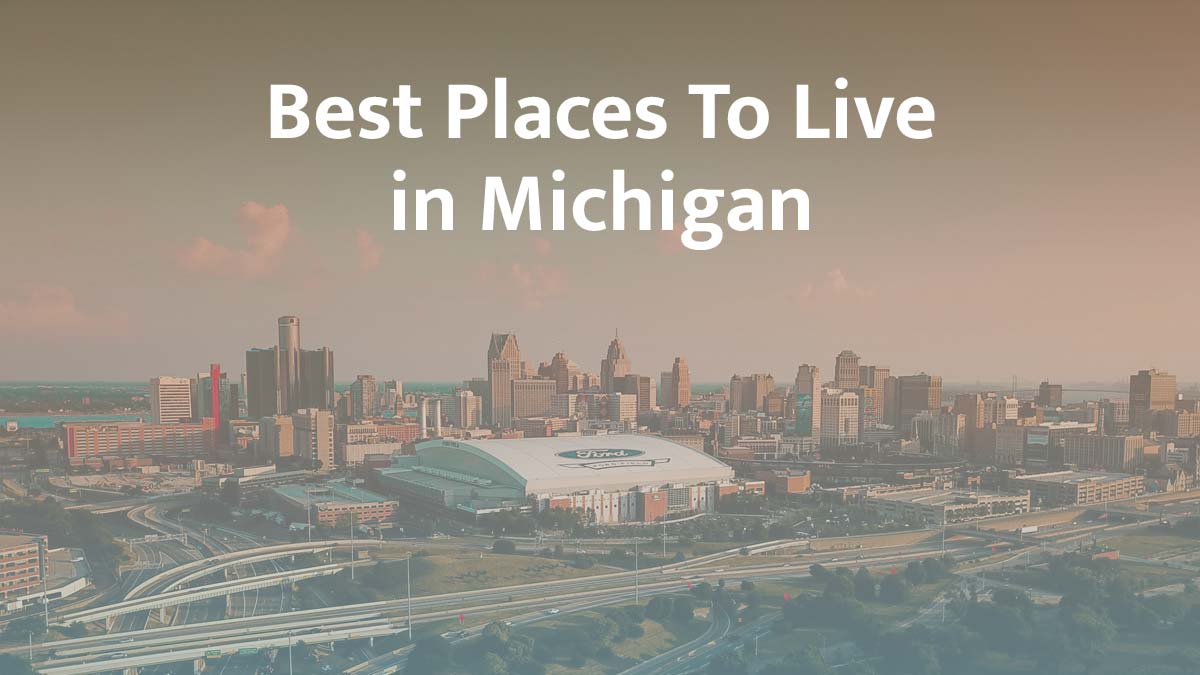
The best places to live in Michigan in 2026 include Ann Arbor, Grand Rapids, Detroit, Traverse City, Rochester Hills, Novi, Holland, Kalamazoo, Lansing, and Marquette.
Ann Arbor is our best overall choice for its combination of healthcare, education, research, restaurants, and walkability. Grand Rapids provides a strong balance of jobs and housing costs, while Detroit and Lansing offer some of the lowest median listing prices among Michigan’s major cities.
Michigan remains relatively attainable overall, but prices vary dramatically. Median listing prices among our top 10 range from about $100,000 in Detroit to $591,450 in Traverse City.
Key Takeaways
- Ann Arbor is our best overall place to live in Michigan for healthcare, education, research, and city amenities.
- Grand Rapids offers one of the strongest combinations of career opportunities and housing value.
- Detroit and Lansing have the lowest median listing prices among our top 10.
- Traverse City, Ann Arbor, Marquette, Novi, and Rochester Hills all have median listing prices near or above $500,000.
- Michigan’s statewide median listing price is $310,000, but local housing costs vary significantly.
- Career opportunities differ by region, so employment should be considered alongside housing costs.
Instant Valuation, Confidential Deals with a Certified iBuyer.com Specialist.
Sell Smart, Sell Fast, Get Sold. No Obligations.
Best Places to Live in MI
- Key Takeaways
- Why Michigan Is One of the Best States to Live In
- Key Factors to Consider Before Moving to Michigan
- 10 Best Places to Live in Michigan
- 1. Ann Arbor: Best Overall
- 2. Grand Rapids: Best for Career Growth and Balance
- 3. Detroit: Best for Urban Value and Opportunity
- 4. Traverse City: Best for Lifestyle and Natural Beauty
- 5. Rochester Hills: Best for Premium Suburban Living
- 6. Novi: Best for Suburban Convenience
- 7. Holland: Best for Lake Michigan Community Living
- 8. Kalamazoo: Best for Education and Affordability
- 9. Lansing: Best for Affordability and Stable Employment
- 10. Marquette: Best for Upper Peninsula Outdoor Living
- Cost of Living in Michigan: What to Expect
- Best Places to Live in Michigan by Lifestyle
- Pros and Cons of Living in Michigan
- How to Choose the Best Place to Live in Michigan
- Final Thoughts on the Best Places to Live in Michigan
- Frequently Asked Questions
Why Michigan Is One of the Best States to Live In
Michigan combines relatively attainable statewide housing with major employment centers, universities, healthcare systems, and access to the Great Lakes.
The state has an estimated 10,127,884 residents as of July 2025, according to the U.S. Census Bureau. That represents growth of about 0.5% from the April 2020 estimates base.
Michigan’s economy extends well beyond its automotive history. Major industries include advanced manufacturing, mobility, healthcare, education, research, technology, insurance, government, tourism, and life sciences.
Universities are another major advantage. The University of Michigan anchors Ann Arbor’s research and healthcare economy, Michigan State University plays a major role in the Lansing region, and Western Michigan University contributes to Kalamazoo’s economy.
Then there is the lifestyle.
Michigan borders four of the five Great Lakes and offers beaches, boating, inland lakes, hiking, skiing, fishing, camping, and extensive outdoor recreation.
The tradeoffs include cold winters, car dependence in many communities, uneven regional job markets, and housing prices that have risen substantially in several of the state’s most desirable cities.
Key Factors to Consider Before Moving to Michigan
Housing Costs
Michigan’s statewide median listing price is approximately $310,000, while median asking rent is around $1,500 per month, according to current Michigan housing market data.
That statewide number hides enormous local differences.
Detroit’s citywide median listing price is approximately $100,000 and Lansing’s is $161,725. Kalamazoo sits at $282,500.
At the other end, Ann Arbor is approximately $544,000 and Traverse City $591,450.
Buyers should also account for transaction expenses. In Michigan, buyer closing costs commonly range from 2% to 5% of the purchase price, as explained in iBuyer’s guide to closing costs in Michigan.
Employment
Michigan’s seasonally adjusted unemployment rate was 4.9% in July 2026, compared with 4.1% nationally, according to current Michigan employment data.
The statewide rate doesn’t tell you whether a particular city is a good fit for your career.
Ann Arbor is particularly strong in healthcare, education, research, and technology. Grand Rapids has healthcare, manufacturing, finance, and professional services.
Detroit remains important for automotive, advanced manufacturing, mobility, healthcare, and technology. Lansing has government, insurance, healthcare, and education.
Climate
Michigan winters vary considerably by location.
Communities near Lake Michigan and in the Upper Peninsula can receive substantial lake-effect snow. Marquette has a much more demanding winter climate than Detroit or Ann Arbor.
Buyers should budget for heating, snow removal, winter driving, and home maintenance.
The condition of the property also matters. A typical home inspection in Michigan generally costs around $350 to $600, with additional testing potentially increasing the total.
Taxes
Michigan has a flat 4.25% individual income-tax rate and a 6.00% state sales-tax rate.
Current Michigan tax data from Tax Foundation reports an effective property-tax rate of approximately 1.19% on owner-occupied housing value. Some Michigan municipalities also impose local income taxes.
Actual property-tax bills vary by municipality and property.
10 Best Places to Live in Michigan
| City | Best For | Median Listing Price | Main Tradeoff |
|---|---|---|---|
| Ann Arbor | Best overall | $544,000 | Expensive housing |
| Grand Rapids | Career growth and balance | $338,500 | Housing costs have increased |
| Detroit | Urban value and opportunity | $100,000 | Neighborhood conditions vary |
| Traverse City | Lifestyle and natural beauty | $591,450 | Premium housing costs |
| Rochester Hills | Premium suburban living | $499,900 | High purchase price |
| Novi | Suburban convenience | $512,875 | Expensive housing and rent |
| Holland | Lake Michigan community living | $459,925 | Higher prices for a smaller city |
| Kalamazoo | Education and affordability | $282,500 | Smaller job market |
| Lansing | Affordability and stable employment | $161,725 | Fewer big-city amenities |
| Marquette | Upper Peninsula outdoor living | $525,000 | Expensive housing and long winters |
Prices are approximate 2026 median listing prices. Listing prices represent asking prices rather than completed sale prices.
1. Ann Arbor: Best Overall
Best for: Healthcare, education, research, professionals, and walkability
Ann Arbor is our best overall place to live in Michigan because it combines a strong employment base with amenities that are uncommon for a city of its size.
The University of Michigan and Michigan Medicine anchor the local economy, supporting employment in healthcare, research, education, technology, and life sciences.
Downtown Ann Arbor adds restaurants, shops, entertainment, cultural institutions, and walkable neighborhoods.
The main drawback is housing.
The current median listing price is approximately $544,000, well above Michigan’s $310,000 statewide median. Median asking rent is also around $2,400 per month.
Ann Arbor makes the most sense for buyers who value its professional opportunities, university environment, healthcare access, and walkability enough to accept the housing premium.
2. Grand Rapids: Best for Career Growth and Balance
Best for: Professionals and people seeking a balanced city lifestyle
Grand Rapids offers one of Michigan’s strongest combinations of employment, city amenities, and relatively attainable housing.
Healthcare is a major part of the regional economy, alongside manufacturing, finance, professional services, design, and other industries.
Downtown Grand Rapids offers restaurants, breweries, entertainment, museums, and cultural venues, while Lake Michigan communities are accessible for day trips.
The current median listing price is approximately $338,500.
That’s only moderately above the statewide median and roughly $205,000 below Ann Arbor.
Housing costs have risen significantly over time, so Grand Rapids is no longer the inexpensive city it was once considered. Still, its combination of jobs and housing value makes it one of the strongest all-around options in Michigan.
3. Detroit: Best for Urban Value and Opportunity
Best for: Buyers seeking low entry prices and big-city amenities
Detroit has one of the lowest citywide median listing prices among major Michigan cities at approximately $100,000.
That creates opportunities for buyers who want urban living at an entry price that would be difficult to find in many other major U.S. cities.
Detroit also has major employment in automotive and mobility, healthcare, advanced manufacturing, technology, professional services, and other industries.
Residents have access to professional sports, restaurants, music, arts, cultural institutions, and ongoing downtown and neighborhood redevelopment.
But Detroit should not simply be described as cheap.
Housing prices, property conditions, taxes, and neighborhood characteristics vary dramatically. Buyers should investigate the specific property and surrounding area rather than relying on the citywide median.
For buyers comfortable doing that research, Detroit can offer considerable urban value.
4. Traverse City: Best for Lifestyle and Natural Beauty
Best for: Outdoor enthusiasts and higher-budget lifestyle buyers
Traverse City combines Grand Traverse Bay, beaches, boating, restaurants, wineries, trails, and access to northern Michigan recreation.
Healthcare is an important employer, while tourism, hospitality, retail, and local businesses contribute heavily to the economy.
The lifestyle comes at a substantial price.
Traverse City’s current median listing price is approximately $591,450, the highest among our top 10.
That puts it well above Michigan’s statewide median and even above Ann Arbor.
Seasonal tourism also affects traffic and activity levels.
Traverse City works best for buyers who prioritize northern Michigan lifestyle and natural beauty and have the budget to absorb the housing premium.
5. Rochester Hills: Best for Premium Suburban Living
Best for: Higher-budget buyers seeking Detroit metro access
Rochester Hills offers a suburban environment with parks, residential neighborhoods, shopping, services, and access to employment throughout Oakland County and the wider Detroit metro.
Its location makes it practical for professionals who work across the northern Detroit suburbs.
The current median listing price is approximately $499,900.
That places Rochester Hills firmly in Michigan’s premium suburban category.
Buyers considering the city should compare the full monthly ownership cost, including mortgage, property taxes, insurance, commuting, and maintenance.
Its main appeal is suburban convenience and Detroit-area access rather than affordability.
6. Novi: Best for Suburban Convenience
Best for: Detroit metro professionals and buyers prioritizing suburban amenities
Novi is well positioned for access to major highways, business centers, healthcare, shopping, and employment throughout the Detroit metropolitan area.
Its suburban development pattern offers a different lifestyle from Detroit, Ann Arbor, or Grand Rapids.
The current median listing price is approximately $512,875.
Housing and rent are both expensive compared with Michigan overall, so Novi should not be positioned as a value market.
Its advantage is convenience.
For households whose careers and daily activities are spread across the western Detroit suburbs, Novi’s location can make it a practical choice despite the housing premium.
7. Holland: Best for Lake Michigan Community Living
Best for: Small-city living with Lake Michigan access
Holland combines a traditional downtown with manufacturing employment, tourism, recreation, and proximity to Lake Michigan.
The city is known for its Dutch heritage, but its appeal extends beyond tourism. Residents have access to local employers, restaurants, shops, parks, and nearby beaches.
The current median listing price is approximately $459,925.
That is substantially higher than Michigan’s statewide median and well above Kalamazoo, Lansing, Detroit, and Grand Rapids.
Holland therefore isn’t a low-cost small city.
It works best for buyers who place a premium on West Michigan community living and Lake Michigan access.
8. Kalamazoo: Best for Education and Affordability
Best for: University employees, healthcare workers, and value-conscious buyers
Kalamazoo combines relatively attainable housing with education, healthcare, life sciences, manufacturing, and a recognizable college-town influence.
Western Michigan University is a major presence, while healthcare systems and regional employers broaden the local economy.
The current median listing price is approximately $282,500, below Michigan’s statewide median.
That makes Kalamazoo one of the stronger value choices in the top 10.
The tradeoff is employment scale. Kalamazoo does not have the breadth of professional opportunities found in Detroit, Grand Rapids, or Ann Arbor.
For buyers whose careers fit the local economy, however, it offers an attractive balance between housing cost and amenities.
9. Lansing: Best for Affordability and Stable Employment
Best for: Government employees and budget-conscious buyers
Lansing combines one of the lowest housing prices on this list with employment anchored by state government, healthcare, insurance, education, and regional services.
Nearby East Lansing and Michigan State University add another major education and employment center to the region.
The current Lansing median listing price is approximately $161,725.
That’s about half Michigan’s statewide median and less than one-third of Ann Arbor’s current median.
The tradeoff is that Lansing offers fewer major-city amenities and private-sector career options than Detroit or Grand Rapids.
For buyers prioritizing affordability and access to relatively stable employment sectors, Lansing is one of Michigan’s strongest options.
10. Marquette: Best for Upper Peninsula Outdoor Living
Best for: Outdoor enthusiasts and people seeking a smaller regional center
Marquette provides a lifestyle unlike the other cities on this list.
Located on Lake Superior, it offers hiking, mountain biking, skiing, beaches, trails, and extensive access to Upper Peninsula recreation.
Northern Michigan University, healthcare, education, government, tourism, and regional services support the local economy.
Housing, however, is no longer inexpensive.
The current median listing price is approximately $525,000, putting Marquette above Novi, Rochester Hills, Holland, Grand Rapids, Kalamazoo, Lansing, and Detroit.
Winter is another major consideration. Snowfall, heating requirements, winter driving, and travel distances can add cost and inconvenience.
Marquette is best for buyers who actively want the Upper Peninsula lifestyle rather than buyers simply looking for inexpensive Michigan housing.
Cost of Living in Michigan: What to Expect
Michigan remains relatively attainable at the statewide housing level, but the city you choose makes an enormous difference.
| City | Approx. Median Listing Price |
|---|---|
| Traverse City | $591,450 |
| Ann Arbor | $544,000 |
| Marquette | $525,000 |
| Novi | $512,875 |
| Rochester Hills | $499,900 |
| Holland | $459,925 |
| Grand Rapids | $338,500 |
| Kalamazoo | $282,500 |
| Lansing | $161,725 |
| Detroit | $100,000 |
The statewide median listing price is approximately $310,000.
That means buyers shouldn’t assume every Michigan market is inexpensive just because the statewide figure looks attractive.
Taxes also affect the calculation. Michigan has a 4.25% state individual income tax, although some municipalities levy local income taxes. Property taxes vary by location and property.
Winter operating costs matter as well.
Heating, snow removal, winter vehicle expenses, road salt exposure, roof maintenance, and insulation can increase the cost of owning a Michigan home. These expenses become especially important in northern Michigan and the Upper Peninsula.
Financed buyers should also account for valuation expenses. A standard home appraisal in Michigan generally costs about $400 to $700, while rural, waterfront, acreage, or unusual properties can cost more.
The best affordability comparison therefore includes the mortgage, taxes, insurance, heating, transportation, maintenance, and transaction costs rather than the listing price alone.
Best Places to Live in Michigan by Lifestyle
| Priority | Best Options |
|---|---|
| Best overall | Ann Arbor |
| Career growth | Grand Rapids, Ann Arbor |
| Urban value | Detroit |
| More affordable housing | Detroit, Lansing, Kalamazoo |
| Premium suburban living | Novi, Rochester Hills |
| Great Lakes lifestyle | Holland, Traverse City, Marquette |
| College-town environment | Ann Arbor, Kalamazoo |
| Government careers | Lansing |
| Outdoor lifestyle | Traverse City, Marquette |
| Young professionals | Ann Arbor, Grand Rapids, Detroit |
Ann Arbor and Grand Rapids offer two of the strongest combinations of employment and amenities.
Detroit makes more sense for buyers who want a major-city environment at a lower entry price, while Lansing and Kalamazoo stand out for affordability.
Lifestyle buyers have a different set of options. Traverse City offers northern Lower Peninsula recreation, Holland provides Lake Michigan access, and Marquette delivers a true Upper Peninsula environment.
Pros and Cons of Living in Michigan
Pros
- Relatively attainable statewide housing
- Large and diverse economy
- Major universities
- Strong healthcare systems
- Great Lakes access
- Extensive outdoor recreation
- Mix of cities, suburbs, and smaller communities
- Major manufacturing and mobility industries
Cons
- Cold winters
- Lake-effect snow in some regions
- Car dependence in many communities
- Uneven regional job markets
- Premium housing in several desirable markets
- Aging housing stock in some cities
- Winter home and vehicle maintenance
- Infrastructure quality varies by location
How to Choose the Best Place to Live in Michigan
Start with your housing budget. Sellers should also calculate their potential net proceeds carefully. iBuyer covers current seller closing costs in Michigan and realtor fees in Michigan in separate guides.
Buyers with larger budgets can consider Traverse City, Ann Arbor, Marquette, Novi, and Rochester Hills.
Grand Rapids, Holland, and Kalamazoo occupy the middle of this comparison, while Lansing and Detroit offer much lower citywide median listing prices.
Next, match the location to your career.
Ann Arbor stands out for healthcare, education, research, and technology. Grand Rapids has a diversified regional economy. Detroit remains the center of Michigan’s automotive and mobility industries, while Lansing is particularly relevant for government employees.
Then decide what lifestyle you actually want.
Detroit, Grand Rapids, and Ann Arbor provide more urban amenities. Novi and Rochester Hills offer suburban living. Traverse City, Holland, and Marquette place greater emphasis on water and outdoor recreation.
Winter tolerance also matters. A Marquette winter is substantially different from one in Detroit.
Finally, compare the complete cost of ownership. Include the mortgage, property taxes, insurance, utilities, heating, transportation, snow removal, and maintenance.
If you’re moving from a property you already own, timing may affect the sale. Late spring through early summer is generally Michigan’s strongest traditional selling window, as explained in iBuyer’s guide to the best time to sell a house in Michigan.
For the complete transaction process, see selling a house in Michigan.
Homeowners who prioritize speed can also compare cash home buyers in Michigan and different ways to sell without following a traditional listing process.
Final Thoughts on the Best Places to Live in Michigan
The best place to live in Michigan depends on your budget, career, preferred lifestyle, and tolerance for winter weather.
Ann Arbor is our strongest overall choice, while Grand Rapids offers an attractive balance of employment and housing costs. Detroit and Lansing stand out for lower median listing prices, although Detroit requires particularly careful neighborhood-level research.
For suburban living, Novi and Rochester Hills provide convenient access to the Detroit metro at premium prices. Kalamazoo offers a compelling combination of education, healthcare, and affordability.
Lifestyle buyers have several distinct choices. Traverse City provides northern Michigan recreation, Holland offers Lake Michigan community living, and Marquette delivers an Upper Peninsula lifestyle unlike anywhere else on the list.
Michigan remains relatively attainable statewide, but it is not one housing market. Compare the complete cost of housing, employment opportunities, taxes, transportation, and winter expenses before deciding where to move.
Frequently Asked Questions
Ann Arbor is our best overall choice because it combines healthcare, education, research, professional employment, restaurants, cultural amenities, and walkability. The main drawback is its approximately $544,000 median listing price.
Detroit has the lowest citywide median listing price among our top 10 at approximately $100,000, followed by Lansing at approximately $161,725. Detroit property prices and conditions vary substantially by neighborhood.
Yes. Ann Arbor is a strong choice for people who prioritize healthcare, education, research, restaurants, cultural amenities, and walkability. Its main disadvantage is housing cost, with a current median listing price of approximately $544,000.
Detroit can be a good choice for buyers seeking major-city amenities and relatively low entry prices. The city offers employment, sports, restaurants, arts, and redevelopment, but housing conditions and prices vary substantially between neighborhoods.
Ann Arbor, Rochester Hills, Novi, Grand Rapids, and other Michigan communities are worth considering depending on housing budget, employment, commute, parks, services, and the specific schools important to the household.
Ann Arbor, Grand Rapids, and Detroit are strong choices for young professionals. Ann Arbor offers research and healthcare employment, Grand Rapids has a diversified regional economy, and Detroit provides big-city amenities and employment across several major industries.
Traverse City, Holland, and Marquette can appeal to retirees who prioritize Great Lakes access and outdoor recreation, while Kalamazoo and Lansing offer lower typical home prices. Healthcare, winter weather, taxes, and proximity to family should also factor into the decision.
Michigan remains relatively attainable at the statewide housing level, with a median listing price of approximately $310,000. However, Traverse City, Ann Arbor, Marquette, Novi, and Rochester Hills all have median listing prices near or above $500,000.
There is no single best city for every industry. Ann Arbor is particularly strong in healthcare, education, and research, while Grand Rapids has a diversified regional economy and Detroit remains important for automotive, mobility, healthcare, manufacturing, and technology.
Tax Foundation reports an effective Michigan property-tax rate of approximately 1.19% on owner-occupied housing value. Actual property-tax bills vary by municipality, taxable value, exemptions, and the individual property.
It can be if Michigan’s housing options, employment centers, universities, Great Lakes access, and outdoor recreation fit your priorities. Compare housing costs, jobs, taxes, transportation, and winter climate before choosing a location.

Reilly Dzurick is a licensed real estate agent with over six years of experience and a member of the iBuyer.com Market Insights Team, covering national trends in home selling and the evolving iBuyer landscape. Her firsthand experience working with buyers and sellers gives her a practical perspective on how these platforms impact real homeowners. She holds a degree in Public Relations, Advertising, and Applied Communication.