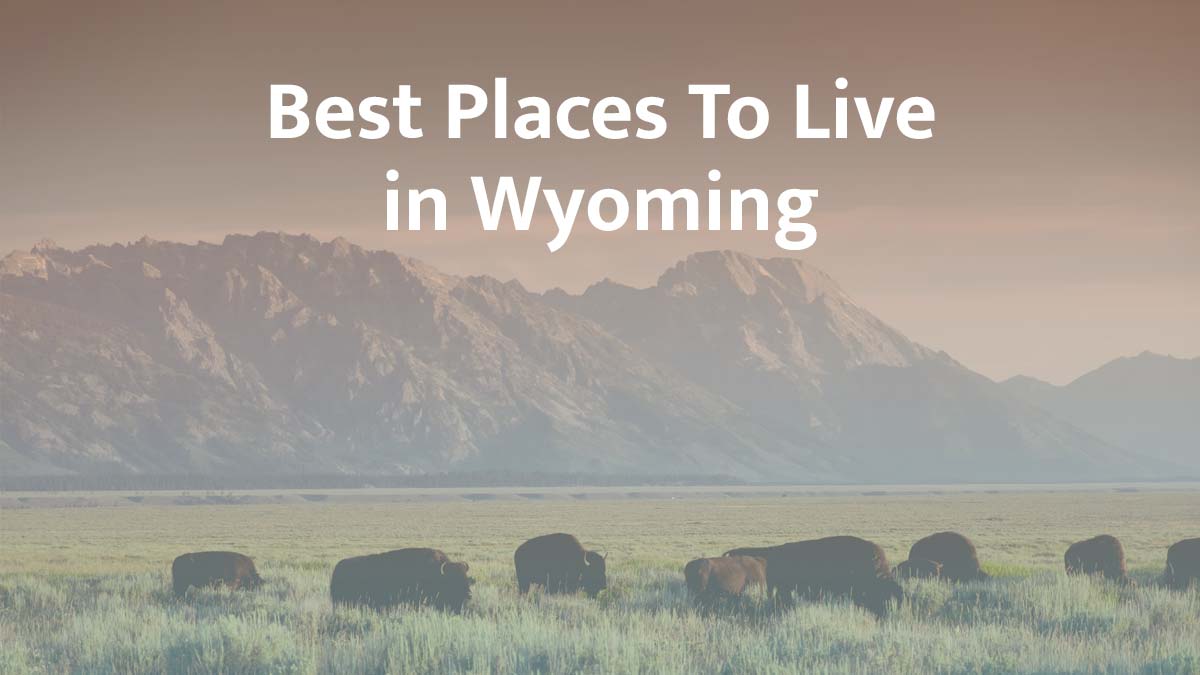
The best places to live in Wyoming in 2026 include Cheyenne, Casper, Laramie, Sheridan, Jackson, Cody, Gillette, Buffalo, Lander, and Rock Springs.
Cheyenne is our best overall choice for careers and convenience. Casper offers a strong combination of employment, outdoor access, and housing value, while Laramie stands out for university life. Jackson offers world-class mountain access but comes with an extreme housing premium.
Housing costs vary dramatically across the state. The median listing price among our top 10 ranges from approximately $317,000 in Rock Springs to $4,072,500 in Jackson, compared with a statewide median of $501,225.
Buyers should budget beyond the purchase price. Expenses such as inspections, appraisals, title services, insurance, and other buyer closing costs in Wyoming can materially affect the amount needed to complete a purchase.
Key Takeaways
- Cheyenne is our best overall choice for careers, transportation, and access to services.
- Rock Springs, Gillette, and Casper are among the lower-priced markets in our top 10.
- Jackson is in a separate luxury category, with a median listing price above $4 million.
- Wyoming’s statewide median listing price is approximately $501,225, with homes spending a median 57 days on market.
- Wyoming’s seasonally adjusted unemployment rate was 3.0% in July 2026, down from 3.3% a year earlier.
- Wyoming has no individual state income tax and an effective property-tax rate of about 0.53%.
Instant Valuation, Confidential Deals with a Certified iBuyer.com Specialist.
Sell Smart, Sell Fast, Get Sold. No Obligations.
Best Places to Live in WY
- Key Takeaways
- Why Wyoming Is a Good Place to Live
- Wyoming Housing Market in 2026
- Key Factors to Consider Before Moving to Wyoming
- Cheyenne vs. Casper
- 10 Best Places to Live in Wyoming
- 6. Cody: Best for Western Heritage and Yellowstone Access
- 7. Gillette: Best for Lower-Cost Housing and Energy Careers
- 8. Buffalo: Best for Quiet Bighorn Mountain Living
- 9. Lander: Best for Outdoor Culture and Recreation
- 10. Rock Springs: Best for Budget-Conscious Buyers
- Best Places to Live in Wyoming Compared
- Cost of Living in Wyoming
- Best Places to Live in Wyoming by Lifestyle
- Southeast Wyoming
- Central Wyoming
- Northeast Wyoming
- Northwest and Western Wyoming
- Southwest Wyoming
- Pros and Cons of Living in Wyoming
- How to Choose the Best Place to Live in Wyoming
- Final Thoughts on the Best Places to Live in Wyoming
- Frequently Asked Questions
Why Wyoming Is a Good Place to Live
Wyoming offers a combination that is difficult to find in many other states: no individual state income tax, relatively low property taxes, a small population, major outdoor recreation, and several cities where housing remains below the statewide median.
The state’s estimated population reached 588,753 in July 2025, up about 2.1% from the April 2020 estimates base.
Wyoming also has a relatively tight labor market. The seasonally adjusted unemployment rate was 3.0% in July 2026, compared with 4.1% nationally at the time. The state’s labor force included approximately 285,230 people, with about 8,643 unemployed.
Employment opportunities vary significantly by location. Government and military-related employment are important in Cheyenne. Casper has healthcare, energy, and regional services. Laramie benefits from the University of Wyoming, while Gillette and Rock Springs have stronger ties to energy and industrial employment.
The lifestyle advantages are equally varied. Residents can choose between the Bighorn Mountains, Grand Teton region, Yellowstone gateway communities, high plains, college-town living, and regional cities.
The main tradeoffs are long winters, strong winds, travel distances, small local labor markets, and expensive housing in some mountain destinations.
Wyoming Housing Market in 2026
Wyoming’s statewide median listing price is approximately $501,225.
Current housing data shows:
- Median listing price: $501,225
- Median sold price: $366,277
- Median rent: $1,250 per month
- Active listings: 5,908
- Median days on market: 57 days
- Active inventory: down 2.81% year over year
- Median listing price: up 1.07% year over year
- Median sold price: up 3.56% year over year
- Sale-to-list ratio: approximately 97%
- Statewide classification: buyer’s market
Homes sold for about 2.88% below asking price on average in August 2026.
That provides some negotiating room, but statewide numbers only tell part of the story.
Wyoming is not one uniform housing market.
Rock Springs has a median listing price of approximately $317,000. Gillette is at $389,950 and Casper is at $415,000.
At the other extreme, Cody is around $711,750 and Jackson is above $4 million.
The gap between those markets is one of the most important considerations for anyone planning a move to Wyoming.
Key Factors to Consider Before Moving to Wyoming
Housing Costs
Here is how our 10 choices compare using current median listing prices:
| City | Median Listing Price |
|---|---|
| Rock Springs | $317,000 |
| Gillette | $389,950 |
| Casper | $415,000 |
| Laramie | $436,250 |
| Lander | $497,000 |
| Buffalo | $510,000 |
| Cheyenne | $524,394 |
| Sheridan | $553,425 |
| Cody | $711,750 |
| Jackson | $4,072,500 |
The statewide median is $501,225.
This creates several distinct housing tiers rather than one statewide affordability level.
Job Market
Wyoming’s unemployment rate fell to 3.0% in July 2026, according to the Wyoming Department of Workforce Services.
The state’s employment base includes:
- Government
- Healthcare
- Energy
- Mining
- Construction
- Education
- Tourism
- Transportation
- Logistics
- Regional services
The important issue is location.
A worker in state government may find Cheyenne particularly attractive. Someone working in higher education may prefer Laramie. Energy and industrial workers may find Casper, Gillette, or Rock Springs more practical.
Jackson and Cody rely more heavily on tourism and service-related industries.
Moving first and searching for work afterward can therefore be riskier in Wyoming than in a large metropolitan state with multiple employment centers close together.
Taxes
Wyoming is one of the country’s most tax-friendly states.
Residents pay:
- 0% individual state income tax
- 4.00% state sales tax
- Approximately 5.36% average combined state and local sales tax
- About 0.53% effective property tax on owner-occupied housing
Wyoming also has no state estate or inheritance tax.
The lack of individual income tax can be particularly attractive to retirees, higher-income households, and some remote workers.
That does not make Wyoming tax-free. Sales taxes, property taxes, federal taxes, and other costs still apply.
Weather and Homeownership
Weather deserves serious consideration before buying in Wyoming.
Depending on the location, homeowners may deal with:
- Long winters
- Snow
- Strong winds
- Blizzards
- Hail
- High elevation
- Wildfire exposure
- Freeze-thaw cycles
- Winter driving
- Higher heating needs
Before purchasing, check the condition of the roof, insulation, heating equipment, windows, foundation, drainage, and other weather-exposed components.
A standard home inspection in Wyoming generally costs about $450 to $850, with many typical single-family inspections falling around $500 to $650. Rural properties, private wells, septic systems, and additional structures may require separate evaluations.
Cheyenne vs. Casper
Cheyenne and Casper are two of the strongest choices for people who want city amenities without moving into Wyoming’s premium mountain markets.
| Factor | Cheyenne | Casper |
|---|---|---|
| Median listing price | $524,394 | $415,000 |
| Best for | Careers + convenience | Value + regional careers |
| Economy | Government, military, logistics, healthcare | Healthcare, energy, services |
| Lifestyle | Capital city + Colorado access | City amenities + outdoor access |
| Housing | Above statewide median | Below statewide median |
| Main tradeoff | Higher housing cost | Smaller government/professional base |
Cheyenne is stronger for state government, military-related employment, transportation access, and proximity to Colorado.
Casper offers significantly better housing value.
The difference in median listing price is more than $109,000.
For buyers primarily concerned with housing cost, Casper has a clear advantage. For government careers and access to the Front Range, Cheyenne may justify the premium.
10 Best Places to Live in Wyoming
1. Cheyenne: Best Overall for Careers and Convenience
Median listing price: $524,394
Cheyenne earns our top spot because it provides one of Wyoming’s strongest combinations of employment, transportation, healthcare, and everyday services.
As the state capital, government is a major employer. Military-related employment, logistics, healthcare, retail, and regional services also contribute to the economy.
Cheyenne’s location is another advantage. Interstate 25 and Interstate 80 provide important regional connections, while northern Colorado is within practical driving distance.
The median listing price is approximately $524,394, slightly above Wyoming’s statewide median.
Median rent is around $1,375 per month.
Cheyenne is not the cheapest choice on this list, but buyers are paying for a broader employment base and better regional connectivity.
The main tradeoffs include strong winds, winter weather, and higher housing prices than Casper, Laramie, Gillette, or Rock Springs.
2. Casper: Best for Careers, Value, and Outdoor Access
Median listing price: $415,000
Casper is one of Wyoming’s strongest value propositions.
Its median listing price of approximately $415,000 is about $86,000 below the statewide median and more than $109,000 below Cheyenne.
Healthcare, energy, retail, construction, and regional services support the local economy.
Residents also have access to Casper Mountain and the North Platte River, giving the city a useful combination of employment and outdoor recreation.
Median rent is around $1,250 per month.
Casper works particularly well for households that want more services than a small Wyoming town provides without paying the premiums found in Sheridan, Cody, or Jackson.
3. Laramie: Best for University Life and Young Professionals
Median listing price: $436,250
Laramie is home to the University of Wyoming, which gives the city a different economy and atmosphere from most of the state.
Education, research, university-related employment, healthcare, and services provide much of the local economic base.
The university also supports restaurants, cultural events, athletics, and a younger population than many small Wyoming communities.
The median listing price is approximately $436,250, below the statewide median.
Median rent is around $1,500 per month.
Laramie’s location along Interstate 80 also provides access toward Cheyenne and northern Colorado.
The main drawbacks are strong wind, high elevation, winter conditions, and an employment market heavily influenced by the university.
4. Sheridan: Best for Scenic Small-City Living
Median listing price: $553,425
Sheridan combines a historic downtown with access to the Bighorn Mountains.
Healthcare, regional services, tourism, retail, and local businesses support the economy.
The location is the primary attraction. Hiking, fishing, hunting, camping, and mountain recreation are accessible without living in a full resort market.
The current median listing price is approximately $553,425, placing Sheridan above the Wyoming statewide median.
Median rent is around $1,299 per month.
Sheridan works best for households willing to pay a moderate housing premium for a smaller city with strong mountain access.
5. Jackson: Best for Luxury Mountain Living
Median listing price: $4,072,500
Jackson operates in a completely different housing category from every other city on this list.
Its current median listing price is approximately $4.07 million, reflecting an unusually high-end inventory mix.
That is roughly eight times Wyoming’s statewide median listing price.
The appeal is easy to understand.
Jackson provides access to Grand Teton National Park, skiing, hiking, mountain recreation, restaurants, tourism, and one of the country’s most recognizable mountain settings.
Tourism, hospitality, recreation, construction, and services support much of the economy.
The challenge is housing affordability.
Even households with strong incomes can face limited options, and the area’s extreme property values can affect workforce housing.
Jackson makes sense for buyers with a large housing budget who specifically want its mountain and resort lifestyle. It is not a practical affordability choice for most Wyoming buyers.
6. Cody: Best for Western Heritage and Yellowstone Access
Median listing price: $711,750
Cody combines Western heritage with access to the Yellowstone region.
Tourism is an important part of the local economy, along with healthcare, retail, hospitality, and regional services.
Residents have access to fishing, hiking, hunting, public lands, and mountain recreation.
The median listing price is approximately $711,750, substantially above Wyoming’s $501,225 statewide median.
Median rent is around $1,650 per month.
That makes Cody a premium market rather than a low-cost small-town option.
For buyers who specifically want Western Wyoming, Yellowstone access, and a smaller community, the higher housing cost may be worthwhile.
7. Gillette: Best for Lower-Cost Housing and Energy Careers
Median listing price: $389,950
Gillette provides one of the lower median listing prices among Wyoming’s larger employment centers.
At approximately $389,950, its median listing price is more than $111,000 below the statewide figure.
Mining, energy, industrial activity, construction, and regional services have traditionally played major roles in the local economy.
That makes Gillette particularly relevant for workers whose careers align with those sectors.
The tradeoff is economic concentration.
Energy and commodity cycles can affect employment and local housing demand more directly than in a more diversified government or university market.
For buyers who prioritize purchase price and have employment aligned with the regional economy, Gillette remains one of Wyoming’s strongest relative-value choices.
8. Buffalo: Best for Quiet Bighorn Mountain Living
Median listing price: $510,000
Buffalo offers small-town living near the Bighorn Mountains.
Its historic character and outdoor access distinguish it from Wyoming’s larger employment centers.
The current median listing price is approximately $510,000, close to the statewide median.
Homes spend a median 89 days on market, which is considerably longer than Wyoming’s statewide 57-day figure.
Buffalo works best for households that prioritize a slower pace and mountain access over job-market depth.
The local employment base and housing inventory are smaller than in Cheyenne or Casper, so buyers moving for work should research opportunities before relocating.
9. Lander: Best for Outdoor Culture and Recreation
Median listing price: $497,000
Lander has developed a strong identity around outdoor recreation.
Sinks Canyon, climbing, hiking, camping, and access to public lands make it particularly attractive to people who want recreation integrated into everyday life.
The current median listing price is approximately $497,000, just below Wyoming’s statewide median.
Homes spend a median 54 days on market.
Lander’s housing market has also softened compared with a year earlier, with the median listing price down about 15.65% year over year as of August 2026.
The main tradeoff is employment scale.
Lander does not have the same breadth of jobs as Cheyenne or Casper, so buyers should make sure their employment situation works before choosing the city primarily for lifestyle.
10. Rock Springs: Best for Budget-Conscious Buyers
Median listing price: $317,000
Rock Springs has the lowest median listing price among our top 10.
At approximately $317,000, it is more than $184,000 below Wyoming’s statewide median.
The median rent is approximately $995 per month.
Energy, mining, transportation, industrial activity, and regional services contribute to the economy. Interstate 80 also gives Rock Springs an important transportation connection across southern Wyoming.
Outdoor recreation is available around the wider Sweetwater County area, including access toward Flaming Gorge.
The local housing market is also buyer-friendly. Homes spend a median 57 days on market and sold for about 98% of asking price in August 2026.
Rock Springs is particularly compelling for buyers focused on purchase price, but employment can be more sensitive to energy and industrial cycles.
Best Places to Live in Wyoming Compared
| City | Best For | Median Listing Price | Cost Level | Job Market | Lifestyle |
|---|---|---|---|---|---|
| Cheyenne | Best overall | $524,394 | Moderate | Broad | Capital city |
| Casper | Careers + value | $415,000 | Relative value | Regional | City + outdoors |
| Laramie | University life | $436,250 | Relative value | Education/research | College town |
| Sheridan | Scenic small city | $553,425 | Higher | Regional | Mountain access |
| Jackson | Luxury mountains | $4,072,500 | Extreme premium | Tourism/services | Resort/mountain |
| Cody | Yellowstone gateway | $711,750 | Premium | Tourism/services | Western/outdoor |
| Gillette | Energy careers | $389,950 | Lower | Energy/industrial | Practical |
| Buffalo | Bighorn living | $510,000 | Around statewide | Smaller | Small town |
| Lander | Outdoor culture | $497,000 | Around statewide | Smaller/regional | Outdoor |
| Rock Springs | Budget buyers | $317,000 | Lower | Energy/industrial | Practical/outdoor |
Cost of Living in Wyoming
Wyoming’s tax structure can make the state attractive, but housing costs vary enough that location can completely change a household budget.
Lower-Cost Markets
- Rock Springs: $317,000
- Gillette: $389,950
- Casper: $415,000
- Laramie: $436,250
Around the Statewide Median
- Lander: $497,000
- Buffalo: $510,000
- Cheyenne: $524,394
- Sheridan: $553,425
Premium Market
- Cody: $711,750
Extreme Luxury Market
- Jackson: $4,072,500
Statewide, the median listing price is $501,225.
Taxes are favorable, particularly because Wyoming does not levy individual state income tax and has relatively low effective property taxes.
However, housing is only one expense.
Buyers should also consider:
- Heating
- Electricity
- Transportation
- Fuel
- Homeowners insurance
- Snow removal
- Property maintenance
- Rural travel
- Well and septic maintenance where applicable
Financed buyers may also need an appraisal, while most buyers benefit from an inspection. These costs should be included alongside other closing costs in Wyoming when setting a purchase budget.
Best Places to Live in Wyoming by Lifestyle
| Priority | Best Options |
|---|---|
| Best overall | Cheyenne |
| Housing value | Rock Springs, Gillette, Casper |
| University life | Laramie |
| Mountain lifestyle | Jackson, Sheridan |
| Yellowstone access | Cody |
| Bighorn Mountains | Sheridan, Buffalo |
| Outdoor culture | Lander |
| Energy careers | Gillette, Casper, Rock Springs |
| Government careers | Cheyenne |
| Luxury living | Jackson |
The right choice depends heavily on what brings you to Wyoming.
A remote worker may have more flexibility to choose primarily by lifestyle. Someone relying on the local labor market should give employment opportunities more weight.
Southeast Wyoming
Cheyenne and Laramie are the main choices in southeastern Wyoming.
Cheyenne offers state government, military-related employment, logistics, healthcare, and access toward Colorado.
Laramie provides the University of Wyoming, research, education, and a college-town environment.
Both locations can experience strong winds and difficult winter driving.
Central Wyoming
Casper and Lander provide two very different versions of Central Wyoming living.
Casper offers a larger regional employment and service base.
Lander is smaller and more outdoor-oriented.
Buyers prioritizing employment depth may prefer Casper, while those prioritizing climbing, hiking, and a smaller community may prefer Lander.
Northeast Wyoming
Gillette, Sheridan, and Buffalo represent the northeastern portion of the list.
Gillette provides lower-cost housing and an economy tied more closely to energy and industry.
Sheridan and Buffalo offer stronger Bighorn Mountain access but have higher housing prices.
Northwest and Western Wyoming
Jackson and Cody offer some of Wyoming’s strongest access to nationally known landscapes.
They also come with substantial housing premiums.
Jackson is the luxury extreme, while Cody provides Yellowstone access at a much lower price than Jackson but still well above the statewide median.
Southwest Wyoming
Rock Springs is the main southwestern Wyoming choice on this list.
Its $317,000 median listing price makes it particularly attractive to budget-conscious buyers.
Energy, industry, transportation, and Interstate 80 shape much of the local economy.
Pros and Cons of Living in Wyoming
Pros
- No individual state income tax
- Low effective property taxes
- 3.0% unemployment in July 2026
- Extensive outdoor recreation
- Open space
- Lower-cost housing markets still exist
- Government employment in Cheyenne
- University employment in Laramie
- Energy and industrial careers in several cities
- Statewide buyer’s market in August 2026
Cons
- Long, cold winters
- Strong winds
- Snow and winter driving
- Small local labor markets
- Industry concentration
- Long travel distances
- Limited housing inventory in some communities
- Premium prices in Cody
- Extreme housing costs in Jackson
- Wildfire exposure in some areas
How to Choose the Best Place to Live in Wyoming
Start with housing budget. Homeowners considering a faster sale can compare traditional listing options with cash home buyers in Wyoming and evaluate the tradeoff between speed, convenience, and expected proceeds.
If keeping the purchase price low is the priority, Rock Springs, Gillette, and Casper deserve the closest look.
Laramie is also below the statewide median while providing a university-centered economy.
Cheyenne, Buffalo, and Sheridan require somewhat larger budgets.
Cody is a premium market, while Jackson should be treated separately as a luxury destination.
Next, match the location to your career.
Choose Cheyenne for state government, military-related employment, logistics, and regional services.
Consider Casper for healthcare, energy, and regional employment.
Choose Laramie for university and research careers.
Look at Gillette or Rock Springs for energy and industrial employment.
Jackson and Cody make more sense for people working in tourism, hospitality, recreation, and related services.
Then consider lifestyle.
Jackson offers the strongest luxury mountain environment. Sheridan and Buffalo provide Bighorn access. Lander is particularly attractive for climbing and outdoor culture.
Finally, account for winter ownership costs.
Heating, roof condition, insulation, wind exposure, snow removal, winter commuting, and insurance can materially change the cost of owning a Wyoming home.
If you’re selling before relocating, the complete guide to selling a house in Wyoming covers preparation, pricing, offers, disclosures, and closing.
Sellers should also understand who pays closing costs in Wyoming before calculating expected net proceeds.
Final Thoughts on the Best Places to Live in Wyoming
Wyoming offers very different choices depending on budget and lifestyle.
Cheyenne provides the strongest overall combination of careers, transportation, and services. Casper delivers better housing value while retaining a substantial regional employment base.
For buyers prioritizing affordability, Rock Springs and Gillette deserve particular attention. Laramie is the standout university community, while Sheridan, Buffalo, and Lander offer different versions of smaller-city outdoor living.
Cody carries a substantial premium for its Yellowstone-area location, while Jackson operates in an entirely different luxury housing market.
Wyoming’s lack of individual state income tax and low effective property taxes are meaningful advantages, but housing, employment, winter weather, and travel distances should ultimately determine which community fits your needs.
Compare Cash Offers from Top Home Buyers. Delivered by Your Local iBuyer Certified Specialist.
One Expert, Multiple Offers, No Obligation.
Know Your Local Market Before You List
Pull the last 12 months of real sales and buyer activity for your neighborhood.
Get My Market ReportFrequently Asked Questions
Cheyenne is our best overall place to live in Wyoming because it combines state government, military-related employment, healthcare, logistics, regional services, transportation access, and proximity to Colorado.
Rock Springs has the lowest current median listing price among our top 10 at approximately $317,000. Gillette follows at about $389,950, while Casper is approximately $415,000.
Yes. Cheyenne offers one of Wyoming’s broadest combinations of employment, healthcare, transportation, government services, and regional access. Its median listing price is approximately $524,394, slightly above the statewide median.
Casper can be a strong choice for buyers who want regional employment, healthcare, energy jobs, city services, and outdoor recreation without paying Cheyenne or mountain-market housing prices. Its median listing price is approximately $415,000.
Cheyenne is generally stronger for government employment, transportation, and access toward Colorado, while Casper offers better housing value and strong regional services. Casper’s current median listing price is more than $109,000 lower than Cheyenne’s.
Cheyenne, Casper, and Laramie are strong options for young professionals depending on career field. Cheyenne has a broad employment base, Casper combines regional jobs with lower housing costs, and Laramie offers a university-centered environment.
Jackson, Sheridan, Buffalo, Cody, and Lander stand out for outdoor access. Jackson offers Grand Teton and mountain recreation, Sheridan and Buffalo provide Bighorn Mountain access, Cody is a Yellowstone gateway, and Lander has a strong climbing and hiking culture.
Housing costs vary dramatically. Wyoming’s statewide median listing price is approximately $501,225, but Rock Springs is around $317,000 while Jackson exceeds $4 million. Taxes are relatively favorable because Wyoming has no individual state income tax and comparatively low effective property taxes.
No. Wyoming does not impose an individual state income tax. Residents still pay other taxes, including a 4.00% state sales tax and local property taxes.
Wyoming can be worth considering for its no individual state income tax, low effective property taxes, 3.0% unemployment rate, outdoor recreation, and lower-cost housing markets such as Rock Springs, Gillette, and Casper. Winter weather, travel distances, small job markets, and expensive mountain communities should also factor into the decision.

Reilly Dzurick is a licensed real estate agent with over six years of experience and a member of the iBuyer.com Market Insights Team, covering national trends in home selling and the evolving iBuyer landscape. Her firsthand experience working with buyers and sellers gives her a practical perspective on how these platforms impact real homeowners. She holds a degree in Public Relations, Advertising, and Applied Communication.