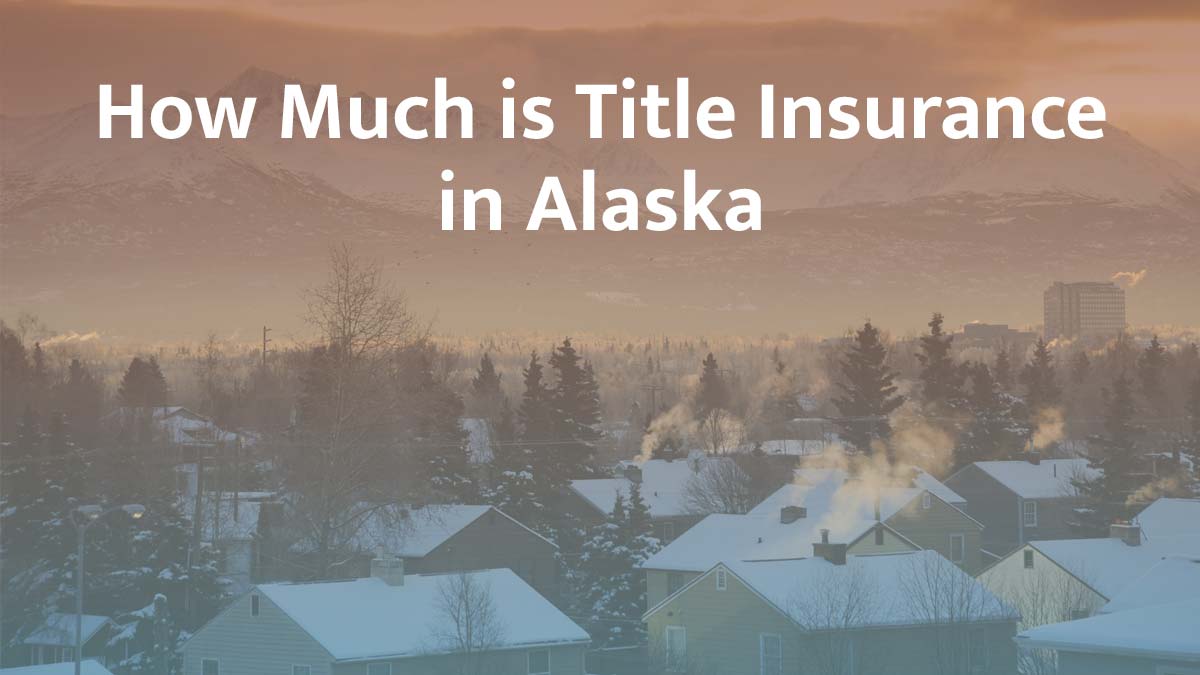
In Alaska, title insurance costs about $400 for a $100,000 home under common 2026 filed rates. For a $1 million home, it costs around $3,000. Unlike Texas, Alaska does not use one statewide title insurance rate chart. Title insurers file their own premium schedules with the Alaska Division of Insurance, so pricing can vary by company, property type, and location.
If you’re getting a mortgage, you’ll also pay for a lender’s title policy. In many Alaska closings, the lender’s policy costs less when issued at the same time as the owner’s policy under a simultaneous issue rate.
Total title-related closing costs in Alaska usually run $2,000 to $5,500. That includes title insurance, escrow or settlement fees, recording charges, endorsements, title search costs, and sometimes survey or municipal lien fees.
This guide explains how Alaska title insurance pricing works, what the policies cover, who usually pays, and how to lower your closing costs.
Key Takeaways
- Alaska title insurance rates are filed by insurers, not fixed by one statewide pricing chart.
- Under common 2026 filed rates, an owner’s policy costs about $400 on a $100,000 home and around $3,000 on a $1 million home.
- Buyers usually pay for the lender’s title policy and most loan-related title charges.
- Owner’s title insurance payment is negotiable and depends on local custom and contract terms.
- Reissue and refinance credits may reduce the premium on qualifying transactions.
- You pay for title insurance once at closing. An owner’s policy usually lasts as long as you own the property.
Instant Valuation, Confidential Deals with a Certified iBuyer.com Specialist.
Sell Smart, Sell Fast, Get Sold. No Obligations.
How Much Is Title Insurance
- Key Takeaways
- How Much Does Title Insurance Cost in Alaska?
- What Is Title Insurance in Alaska?
- What Does Title Insurance Cover in Alaska?
- Who Pays for Title Insurance in Alaska?
- Other Alaska Title Insurance Costs and Endorsements
- Alaska Title Insurance vs. Other States
- Can You Shop for Title Insurance in Alaska?
- Is Owner’s Title Insurance Worth It in Alaska?
- Bottom Line
- Frequently Asked Questions
How Much Does Title Insurance Cost in Alaska?
Alaska title insurance prices depend on:
- The purchase price
- The loan amount
- The title insurer’s filed rate manual
- Whether the property is residential, commercial, or vacant land
- Whether prior title insurance exists for reissue discounts
Unlike Texas, Alaska does not require every title company to charge the exact same premium. Most Alaska title insurers use tiered pricing schedules filed with the Alaska Division of Insurance.
For many residential transactions, title insurance premiums are calculated using a per-thousand-dollar formula that decreases at higher value tiers.
Alaska Title Insurance Rate Chart (Effective March 1, 2026)
Here’s what an owner’s title insurance policy typically costs at common home prices in Alaska. Since Alaska is a filed-rate state, premiums can vary slightly by title insurer and transaction structure. The figures below reflect common market estimates for residential real estate transactions in 2026.
| Home Purchase Price | Owner’s Policy (Estimated) | Lender’s Policy (Same Closing) | Estimated Total Title Premium |
| $100,000 | $425 | $125 | $550 |
| $200,000 | $780 | $150 | $930 |
| $300,000 | $1,120 | $175 | $1,295 |
| $400,000 | $1,430 | $200 | $1,630 |
| $500,000 | $1,760 | $225 | $1,985 |
| $750,000 | $2,620 | $300 | $2,920 |
| $1,000,000 | $3,480 | $375 | $3,855 |
Data methodology: These estimates are derived from 2026 rate filings and fee calculators published by major title insurance underwriters and agents serving Alaska, including First American Title, Fidelity National Title, Old Republic Title, and Stewart Title.
Values assume a standard residential purchase transaction with an owner’s policy issued simultaneously with a lender’s policy, which typically reduces the lender’s policy premium through a simultaneous-issue discount.
How Alaska Figures Out Title Insurance Prices
Most Alaska title insurers use declining-rate brackets. A simplified example might look like this:
- Charge a higher rate on the first portion of coverage
- Apply lower rates to higher value tiers
- Add endorsement or settlement charges separately
Example: A $450,000 Alaska home
- First $100,000 charged at a higher base rate
- Remaining amount charged at lower incremental rates
- Final premium lands around $1,350–$1,450 depending on insurer
There is no single public formula used by every company statewide.
Simultaneous Issue Savings in Alaska
When the owner’s and lender’s title policies are issued together at the same closing, Alaska title insurers often apply a simultaneous issue rate.
This means the lender’s policy costs much less than purchasing a separate stand-alone lender’s policy later.
For example:
- A stand-alone lender’s policy on a $400,000 mortgage might cost $900 or more
- But when issued simultaneously with the owner’s policy, it may cost only about $350
This saves buyers hundreds of dollars at closing.
To qualify, the owner’s and lender’s policies must usually:
- Cover the same property
- Be issued at the same closing
- Use the same title insurer or issuing agent
Refinance Savings (Rate Rule R-8)
Many Alaska title insurers offer reissue or refinance discounts when prior title insurance exists on the property.
Common reissue situations include:
- Refinancing the same property
- Seller already has a recent owner’s policy
- Existing lender’s policy is being replaced with a new loan policy
Discounts may range from 10% to 40% depending on:
- The age of the prior policy
- Filed manual from the insurance underwriters
- Whether the prior policy was issued by the same insurer
- Whether the insured amount increased
To receive the discount, you usually must provide a copy of the prior title policy before closing.
What Is Title Insurance in Alaska?
Title insurance protects buyers and lenders against ownership problems tied to the property’s past.
If a covered title issue appears after closing, the title insurance company may:
- Pay legal defense costs
- Resolve covered claims
- Reimburse covered losses up to the policy limit
In Alaska, two policies are common in residential real estate closings:
- Owner’s Title Insurance Policy — protects the buyer’s ownership rights
- Lender’s Title Insurance Policy — protects the mortgage lender’s lien position
The owner’s policy protects your equity and ownership interest. The lender’s policy protects the bank. Even if the buyer pays for both policies, the lender’s policy only protects the lender.
Alaska title policies are typically issued using national ALTA policy forms combined with insurer-specific endorsements and filed rates. You pay for title insurance once at closing. There is no annual premium or renewal fee.
What Does Title Insurance Cover in Alaska?
Alaska title insurance covers defects in the chain of title that existed before the policy date but were not discovered or resolved during the title search process. If a covered issue appears later, the insurer may defend the claim or compensate the insured party.
Owner’s Policy, What It Covers for You
| Covered Problem | Example |
| Ownership disputes | A prior heir claims the seller lacked authority to transfer the property |
| Recording mistakes | A deed or mortgage was improperly indexed |
| Forgery or fraud | A forged signature appears in the chain of title |
| Undisclosed liens | A prior creditor claims an unpaid lien |
| Boundary disputes | Neighbor claims part of the driveway or structure crosses property lines |
| Unknown easements | Utility or access easements affect property use |
| Probate defects | Estate transfer paperwork was incomplete |
| Missing releases | Old mortgage was paid but never released |
The owner’s policy usually lasts as long as you or your heirs own the property.
Lender’s Policy, What It Covers for the Lender
The lender’s policy protects the lender’s mortgage interest. Mortgage lenders in Alaska almost always require title insurance before funding the loan.
The policy protects against:
- Invalid mortgage liens
- Prior undisclosed liens
- Recording defects
- Ownership defects affecting foreclosure rights
- Title problems impacting lien priority
Coverage ends when the mortgage is paid off, refinanced, or otherwise released. This is important: the lender’s policy does not protect the homeowner’s equity or ownership rights.
Schedule B, What’s NOT Covered
Before closing, the title company issues a title commitment. Schedule B lists exceptions to coverage.
Common Alaska Schedule B exceptions include:
- Property taxes not yet due
- Easements and utility rights
- HOA declarations and restrictions
- Mineral or subsurface rights
- Survey and boundary matters
- Rights of parties in possession
- Native land or federal land issues in some regions
Anything listed as an exception is excluded from coverage unless modified or removed before closing.
Other Things Title Insurance Doesn’t Cover
Title insurance also usually does not cover:
- Problems created after the policy date
- Zoning violations
- Environmental hazards
- Building condition defects
- Flood damage
- Known defects not disclosed to the insurer
- Government regulations affecting land use
- Issues arising from the owner’s future actions
Who Pays for Title Insurance in Alaska?
In Alaska, who pays for title insurance is negotiable. The purchase agreement spells it out. Alaska does not use the Texas TREC One to Four Family Residential Contract (Resale).
Instead, buyers and sellers usually use brokerage or regional real estate contract forms. The contract covers title insurance and closing costs. Local custom often decides how those costs get divided between the buyer and seller.
Typical Cost Split in Alaska
| Closing Cost | Who Usually Pays |
| Owner’s title insurance policy | Seller or negotiable |
| Lender’s title insurance policy | Buyer |
| Escrow / settlement fee | Split or negotiable |
| Recording fees | Buyer for loan documents |
| Survey | Negotiable |
| HOA transfer fees | Seller |
| Loan endorsements | Buyer |
| Wire fees | Party sending funds |
These customs vary across Anchorage, Fairbanks, Juneau, Wasilla, and smaller Alaska markets.
Why Sellers Often Pay the Owner’s Policy
Many Alaska sellers pay for the owner’s title policy because the seller is expected to deliver marketable titles to the buyer. The owner’s policy helps protect the buyer against ownership defects tied to the seller’s period of ownership. In competitive markets, sellers sometimes cover additional title-related costs to make offers more attractive.
Why Buyers Pay Loan-Related Title Costs
The lender’s title policy exists because the buyer is borrowing money. As a result, buyers usually pay for:
- Lender’s title insurance
- Loan endorsements
- Recording fees for mortgages
- Wire charges tied to funding
- Settlement services required by the lender
These costs appear on the buyer’s Closing Disclosure and that’s why reading it is considered to be an important step at closing.
Title Insurance Costs Are Negotiable
Title insurance costs can be negotiated through the purchase contract. Common Alaska negotiations include:
- Seller paying the owner’s policy
- Buyer covering all title costs in exchange for price concessions
- Builders offering paid title insurance incentives
- Parties splitting escrow fees
- Seller paying for reissue credits or surveys
The final allocation is determined before closing, not afterward.
Other Alaska Title Insurance Costs and Endorsements
The base title insurance premium is only one part of the total closing costs in Alaska. Most real estate transactions also include endorsements, settlement fees, recording charges, and title search expenses.
Endorsements are optional or lender-required additions that expand or modify policy coverage. In Alaska, many lenders require several endorsements before they will fund the mortgage.
Common Alaska Title Endorsements
Here are some of the most common title endorsements used in Alaska residential transactions:
- ALTA 9 (Restrictions, Encroachments, Minerals): Provides added protection related to covenants, encroachments, and mineral rights.
- ALTA 8.1 (Environmental Protection Lien): Protects against certain environmental lien risks recorded against the property.
- ALTA 4.1 (Condominium Endorsement): Used for condo purchases to insure against issues affecting condominium ownership.
- ALTA 5 (Planned Unit Development Endorsement): Common in planned residential communities and developments.
- Access Endorsements: Confirm legal vehicular and pedestrian access to the property.
- Survey Endorsements: May provide additional protection against certain boundary or encroachment issues when a current survey is available.
- Gap Coverage Endorsements: Protect against title defects recorded between the title search date and the recording of closing documents.
Some endorsement fees are flat charges, while others are based on the amount of insurance coverage.
Other Title-Related Closing Costs
In addition to the title premium, Alaska buyers and sellers may see these title-related fees:
- Escrow or settlement fee: $400–$1,000
- Recording fees: $50–$300 depending on county and number of documents
- Title search and examination fees: $150–$600
- Survey costs: $500–$1,200 in some Alaska markets
- Wire transfer fees: $20–$60 per wire
- Courier or overnight delivery charges
- Mobile notary fees in remote areas
- HOA transfer or resale fees
- Municipal lien or tax certificate searches
- Remote online notarization fees when available
For a financed Alaska home purchase around $450,000, total title-related charges often range from $2,500 to $5,000, depending on the location and complexity of the transaction.
Remote and rural Alaska properties can sometimes involve higher closing costs because of travel, recording logistics, or specialized land issues.
Alaska Title Insurance vs. Other States
Alaska’s title insurance system works differently from highly regulated states like Texas and Florida. Instead of one statewide rate chart, Alaska insurers file their own rates and underwriting rules with the state.
| State | How Rates Are Set | Owner’s Policy on $400K Home (Approx.) | Who Usually Pays Owner’s Policy |
| Alaska | Filed insurer rates | $1,250 | Seller or negotiable |
| Texas | State-set rates | $2,262 | Seller |
| Florida | State-set rates | $2,075 | Negotiable |
| California | Competitive company rates | $1,200–$2,500 | Regional custom varies |
| New York | State-regulated rates | $2,500+ | Buyer |
| Iowa | State guaranty system | Lower, varies | Buyer |
Approximate figures only. Actual pricing varies by insurer, property type, endorsements, and local practice.
What this means for Alaska buyers:
- Shopping title companies may save money
- Service quality varies more between providers
- Settlement fees and endorsement pricing can differ significantly
- Rural property transactions may involve additional underwriting review
How to Read an Alaska Title Commitment
Before closing, the title company issues a title commitment. This document explains the conditions under which the insurer agrees to issue the final title policy. Every Alaska title commitment contains several important sections.
- Schedule A, The basics: Names of the buyer and seller, the proposed insured parties, the policy and loan amounts, the property’s legal description, and the commitment effective date. Always verify that the legal description matches the property you intend to buy.
- Schedule B-I, Items to fix before closing: Things that must be completed before the title insurer issues the final policy. Examples: paying off existing mortgages, recording the new deed, clearing liens or judgments, obtaining missing signatures, and resolving probate or estate issues.
- Schedule B-II, Exceptions: Common Alaska exceptions include easements, utility access rights, survey matters, mineral reservations, HOA restrictions, public access easements, Native corporation land issues in some areas, and taxes or assessments.
Review exceptions carefully before closing. Some exceptions may be modified or removed depending on the title company’s requirements and available endorsements.
Can You Shop for Title Insurance in Alaska?
Yes. Alaska buyers can shop for title insurance providers, settlement companies, and closing services. Things that commonly differ between Alaska title companies include:
- Settlement or escrow fees
- Search and examination charges
- Endorsement pricing
- Customer service quality
- Remote closing availability
- Wire and processing fees
- Experience with rural or Native land issues
- Turnaround time for clearing title defects
Comparing estimates from two or three providers before signing the contract can help reduce total closing costs.
Federal law under RESPA also protects buyers from being forced to use a specific title company in many transactions.
Is Owner’s Title Insurance Worth It in Alaska?
Owner’s title insurance is not legally required in Alaska. But most real estate professionals strongly recommend it. Why? Because title problems can become extremely expensive without coverage.
Here’s an example: a prior owner transferred property without properly resolving probate or inheritance issues, and two years after you buy the home, another heir claims ownership rights. Without owner’s title insurance, you may need to hire an attorney, defend your ownership in court, pay legal or settlement costs yourself, and risk losing property value or marketability. With owner’s title insurance, the title insurer may provide a legal defense, pay covered losses up to the policy amount, and help resolve or settle the claim. The one-time premium is usually much smaller than the cost of a major title dispute.
Owner’s title insurance may also protect against forged deeds, unknown heirs, recording mistakes, undisclosed liens, boundary or survey disputes, fraud in earlier transactions, and probate-related title defects. Unlike homeowners insurance, an owner’s title policy generally remains in effect for as long as you or your heirs own the property.
Bottom Line
Alaska title insurance is less standardized than title insurance in highly regulated states like Texas.
Premiums depend on the title insurer, underwriting rules, endorsements, and local settlement costs.
On a typical $400,000 financed Alaska home purchase:
- The owner’s policy may cost around $1,250
- The lender’s policy issued simultaneously may cost around $350
- Additional title-related closing costs can add several hundred to several thousand dollars
Shopping providers, comparing settlement fees, and checking for reissue discounts can help lower your overall closing costs.
The premium itself is typically a one-time payment at closing. The owner’s policy usually lasts for as long as you own the home.
Compare Cash Offers from Top Home Buyers. Delivered by Your Local iBuyer Certified Specialist.
One Expert, Multiple Offers, No Obligation.
Know Your Local Market Before You List
Pull the last 12 months of real sales and buyer activity for your neighborhood.
Get My Market ReportFrequently Asked Questions
A standard owner’s title insurance policy on a $400,000 Alaska home typically costs about $1,250 under common 2026 market rates. Additional endorsement and settlement fees are separate.
A $300,000 Alaska home may have an owner’s title insurance premium around $950, depending on the insurer and policy type.
The payment is negotiable. In many Alaska transactions, the seller pays the owner’s policy, but practices vary by market and contract terms.
A lender’s title policy is required by most mortgage lenders. Owner’s title insurance is usually optional but strongly recommended.
An owner’s policy protects the buyer’s ownership rights and equity. A lender’s policy protects the lender’s mortgage lien interest.
Yes. Many Alaska title insurers offer refinance or reissue discounts when prior title insurance exists on the property.
Simultaneous issue pricing reduces the cost of the lender’s title policy when it is issued together with the owner’s policy at the same closing.
A lender’s policy is not required in a cash transaction because there is no lender. But many buyers still purchase owner’s title insurance for protection against hidden title defects.
An owner’s title insurance policy usually lasts as long as you or your heirs own the property. The lender’s policy ends when the mortgage is paid off or refinanced.
Yes, title insurance in Alaska is often cheaper than in California and can also be lower than Florida, depending on the home price and title company. Alaska averages about $4.50 per $1,000 of coverage, while California commonly ranges from $5.70–$11.20 and Florida uses regulated rates around $5.00–$5.75 per $1,000.

Reilly Dzurick is a licensed real estate agent with over six years of experience and a member of the iBuyer.com Market Insights Team, covering national trends in home selling and the evolving iBuyer landscape. Her firsthand experience working with buyers and sellers gives her a practical perspective on how these platforms impact real homeowners. She holds a degree in Public Relations, Advertising, and Applied Communication.