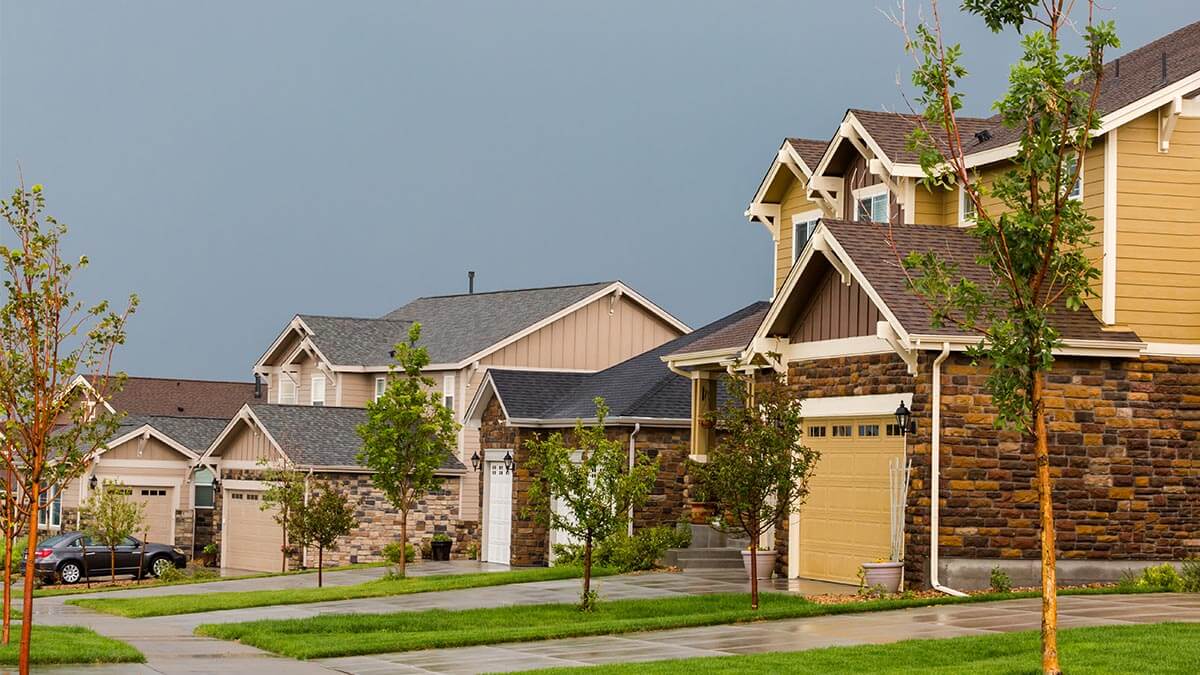
Denver homes sold at a $635,000 median sale price in 2026 and spent an average of 18 days on market before going under contract, according to Redfin Denver market data. That pace still beats most U.S. cities, but the Denver housing market 2026 has shifted toward balance: inventory is rising and 63% of sellers in the Denver metro offered concessions to buyers in Q1 2026.
Selling a house in Denver now means choosing between three distinct paths. You can list with an agent at a typical 5-6% commission, sell without an agent as a For Sale By Owner (FSBO) to save the listing-side fee, or sell directly to a cash buyer for speed and certainty at a below-market price.
This guide covers the current Denver market conditions, a 7-step selling process, a full breakdown of the cost to sell a house in Denver, a three-way comparison of selling options, seasonal timing guidance, Colorado FSBO legal requirements, and how to get competing cash offers on your home.
Get Competing Cash Offers on Your Denver Home Skip the listing, the showings, and the agent commission
No repairs, no fees, no obligation
Sell Your House in Denver
- Denver housing market in 2026
- How to sell your house in Denver: step by step
- How much does it cost to sell a house in Denver?
- Agent, FSBO, or cash buyer: how to choose
- Best and worst times to sell in Denver
- Can you sell without a realtor in Colorado?
- How to sell your Denver home fast for cash
- Mistakes Denver sellers make in 2026
- Selling in a Specific Denver Neighborhood?
- Frequently Asked Questions
Denver housing market in 2026
What the numbers say right now
The Denver housing market 2026 presents a mixed picture for sellers. Redfin Denver market data shows a $635,000 median sale price, up 2.5% year over year through May 2026. Zillow’s Denver home value index sits at $539,666, down 4.3% over the same period. The gap between these figures is methodological: Redfin tracks actual closed-sale medians while Zillow models estimated home values, so both are accurate for what they measure.
The days on market Denver average is 18 days before a home goes under contract, with buyers submitting roughly 2 offers per listing. Per Colorado Realtors market data from Q1 2026, the Colorado Association of Realtors describes current conditions as a “balanced market” and reports that 63% of sellers in the seven-county metro offered concessions to buyers. That rate signals buyers now have enough options to push back on price, condition, or timeline.
The Denver median home price for single-family homes sits above the overall city-wide median. Sellers in the $500,000 to $700,000 range are finding the most active buyer pools in 2026.
Single-family homes vs. condos in Denver
Single-family homes are moving faster than the condo and townhome segment in the Denver metro. Colorado Association of Realtors Q1 2026 data confirms the condo and townhome segment averages longer days on market than single-family homes. (Writer flag: insert the exact condo DOM figure from the Q1 2026 CAR report before publishing.)
If you are selling a condo or townhome, budget for a longer marketing period. Buyers and lenders scrutinize HOA reserves, financials, and pending special assessments, which adds negotiation complexity that single-family transactions typically avoid.
How to Sell Your House in Denver: Step by Step
-
Research prices and get a CMA
Pull recent closed sales of comparable Denver homes from your local MLS, or hire a local agent to prepare a free comparative market analysis. Cross-reference Redfin’s closed-sale median ($635,000) against Zillow’s estimate ($539,666) and weight your MLS comps most heavily for your specific address, size, and condition. A CMA gives you a defensible price range built on what buyers actually paid, not algorithmic estimates.
-
Choose your selling method
Decide whether to hire a listing agent (5–6% commission with full marketing support), sell FSBO (save the listing-side commission but manage the transaction yourself), or sell to a cash buyer (typically a faster closing but often below market value). This decision influences pricing, marketing, negotiations, and the overall selling process.
-
Prepare and stage your home
Declutter, deep-clean, and complete cosmetic repairs before the first showing. A pre-listing inspection can uncover issues before buyers do, while professional staging and high-quality listing photos can help your home stand out in online searches and MLS listings.
-
List and market your property
An MLS listing gives your property the broadest exposure by syndicating it to major real estate websites. If you’re selling FSBO, consider a flat-fee MLS service. Set a competitive asking price based on comparable sales, market conditions, and your home’s condition.
-
Review offers and negotiate
Compare offers based on net proceeds, financing terms, contingencies, earnest money, inspection requests, and closing timelines—not just the purchase price. Counteroffers are common, and negotiating repairs or seller concessions is often part of the process.
-
Complete disclosures and inspections
Complete the required Colorado seller disclosure forms honestly and provide any applicable federal lead-based paint disclosures for homes built before 1978. Respond to inspection findings by negotiating repairs, credits, or other mutually agreed solutions before closing.
-
Close with a Colorado title company
The title company coordinates the title search, settlement statement, deed preparation, fund collection, and recording of the transaction. Review your closing documents carefully, sign the required paperwork, and receive your sale proceeds once the transaction is funded.
How much does it cost to sell a house in Denver?
The total cost to sell a house in Denver typically runs 6-9% of the sale price when you combine agent commission and seller closing costs. On a $635,000 home, that works out to approximately $38,000 to $57,000 before concessions. Use the Colorado net proceeds calculator to model your specific situation based on your expected sale price and mortgage payoff.
Agent commission in Denver
Agent commission is the largest single line item in any cost to sell a house in Denver calculation. Listing agents in Denver typically charge 5-6% of the sale price, according to the Colorado Association of Realtors. On a $635,000 home, that commission ranges from $31,750 to $38,100.
The 5-6% typically splits between the listing agent and the buyer’s agent. Following the 2024 NAR settlement, buyer-agent compensation is no longer mandated through MLS listings, but Denver sellers still commonly offer it to attract the widest pool of represented buyers. The Colorado listing agent average sits at approximately 2.98%, which is the amount you save by going FSBO on the listing side.
Closing costs sellers pay in Colorado
Closing costs Colorado sellers pay typically run 1-3% of the sale price on top of commission. Key line items include:
- Title insurance and escrow fees (county conventions on who pays vary; see title insurance in Colorado for your specific county)
- Colorado documentary fee: $0.01 per $100 of sale price (very low compared to most states)
- Prorated property taxes through the closing date
- HOA transfer fees and resale certificate costs if applicable
- Wire and recording charges
On a $635,000 sale, 1-3% in closing costs adds $6,350 to $19,050. Combined with commission, total outgoing costs reach $38,000 to $57,000 before factoring in any concessions.
Seller concessions in 2026
Seller concessions Denver are a budget line item you should plan for before listing. The Colorado Association of Realtors reports 63% of Denver metro sellers offered concessions to buyers in Q1 2026. Common concessions include closing cost credits, repair allowances, and mortgage rate buydowns.
Budget 1-2% of your expected sale price for concessions as a realistic base case. On a $635,000 home, that adds $6,350 to $12,700 to your net selling cost. Model your numbers with and without a concession scenario before setting your list price.
Agent, FSBO, or cash buyer: how to choose
Selling a house in Denver in 2026 gives you three primary paths. The table below compares them on timeline, cost, certainty, and effort.
| Method | Timeline | Typical seller cost | Certainty of close | Effort required |
|---|---|---|---|---|
| Agent | 30 to 60 days | 5-6% commission + 1-3% closing costs | High if priced correctly | High (showings, staging, negotiation) |
| FSBO | 30 to 90 days | 0-3% (buyer agent only) + 1-3% closing costs | Lower (no MLS agent network) | Highest; you manage every step |
| Cash buyer / iBuyer | 7 to 30 days | 0-2% fees + 1-3% closing costs | Highest; no financing or appraisal contingency | Low (no showings, no repairs required) |
Based on Colorado Association of Realtors 2026 data and iBuyer.com transaction data. Verify current costs before transacting.
Selling with an agent in Denver
Hiring a listing agent gives you MLS access, professional marketing, and an experienced negotiator. In Denver’s 2026 balanced market, that expertise has measurable value: a skilled agent can justify your price against a buyer’s agent in ways most sellers cannot manage independently.
The starting point is a comparative market analysis from your listing agent. Denver’s data gap (Redfin’s $635K closed median vs. Zillow’s $539,666 estimate) makes MLS-based comps more reliable than any public index for your specific address.
Selling FSBO in Denver
FSBO Colorado means handling pricing, marketing, showings, negotiations, and paperwork entirely on your own. You save the listing-side commission (approximately 2.98% in Colorado), which on a $635,000 home amounts to roughly $18,900.
According to FSBO completion rates tracked by Zillow, only about 7% of U.S. home sellers complete a full FSBO without ever engaging an agent, and an additional 21% attempt FSBO then hire an agent partway through. Sellers who choose to sell house without realtor Colorado do best when they have a buyer already identified or have prior real estate transaction experience.
You must still complete the Seller’s Property Disclosure form even without an agent. Colorado FSBO legal requirements are covered in detail in the section below.
Selling to a cash buyer in Denver
Cash home buyers Denver offer speed and certainty in exchange for a discount to market value. A typical cash offer comes in 10-15% below what an agent-listed home might fetch on the open market. The trade-off is concrete: no appraisal contingency, no financing fall-through risk, no showings, and a close in 7 to 30 days.
In Denver’s 2026 balanced market, traditional buyers have more negotiating leverage than they did in 2021-22. That shift makes the certainty of a cash sale relatively more valuable now. Getting multiple competing cash offers is the key move to avoid accepting a single lowball bid.
Best and worst times to sell in Denver
Best months to list in Denver
May and June are the most profitable months to list a Denver home. Buyer activity peaks in spring, and sellers who list in May historically capture premiums above list price. Denver’s spring market activates in March, builds through April, and peaks in May and June before summer schedules slow activity.
If you have timing flexibility, aim to have your home active on the MLS by early May. Use February through April to prepare, stage, and photograph the property.
What is the hardest month to sell a house?
January is the hardest month to sell a house in Denver and across most U.S. markets. Buyer activity drops sharply after the holiday period, days on market lengthen, and price reductions are most frequent in January. According to seasonal selling data from The Close, December and January produce the lowest seller premiums of any months in the calendar year.
In Denver, January’s difficulty compounds because of weather. Snow, shorter daylight hours, and harder photography conditions make homes show less effectively than in spring. If you must sell in January, price aggressively from day one rather than testing high and cutting later.
Does Denver’s timing differ from national trends?
Denver’s seasonal pattern tracks closely with national trends. One distinction: Denver’s spring market activates slightly earlier than in northern markets because of Colorado’s milder late-winter weather. March can be productive in Denver in a way it is not in Minnesota or Wisconsin.
The November through January window is the weakest seller period in Denver, consistent with The Close’s analysis of national ATTOM-based seasonal data showing winter produces the lowest seller premiums of the year. If you can hold until February or March, the trajectory moves strongly upward through June.
Can you sell without a realtor in Colorado?
Yes, you can sell your house in Colorado without a realtor. FSBO is fully legal under state law and requires no agent involvement in a residential sale.
What Colorado law requires for FSBO sellers
FSBO Colorado sellers must follow the same state disclosure rules as agent-assisted sellers. The Colorado Real Estate Commission requires the Seller’s Property Disclosure form for every residential sale, regardless of whether an agent is involved. For homes built before 1978, federal law also requires a lead-based paint disclosure, per HUD lead paint disclosure requirements.
Colorado uses title companies (not attorneys) to close real estate transactions. When you sell house without realtor Colorado, you work directly with the title company to handle closing documents, the deed transfer, and fund disbursement. You do not need a real estate attorney to close in Colorado, though you may choose to hire one for added protection.
Required paperwork for FSBO in Colorado
FSBO sellers in Colorado are responsible for assembling all closing documents. These include:
- Seller’s Property Disclosure form (mandatory; covers structural issues, water damage, roof condition, environmental hazards, HOA status, and neighborhood disputes)
- Lead-based paint disclosure (required for homes built before 1978)
- Contract of sale (the Colorado Real Estate Commission provides standardized forms)
- Deed (prepared by the title company at closing)
- Title commitment from the title company
- HOA disclosures and resale certificate if the property is in a homeowners association
- Closing settlement statement from the title company
Per Colorado disclosure rules, standardized forms are available through the Colorado Division of Real Estate. Failing to disclose a known material defect can expose you to legal liability after closing.
When selling without an agent makes sense
Sell house without realtor Colorado works best in three situations: you already have a buyer identified, you have prior real estate transaction experience, or the commission savings are financially essential to making the sale work. The listing-side savings amount to approximately 2.98% of your sale price (roughly $18,900 on a $635,000 Denver home), which is meaningful but comes with real time and effort costs.
Sellers who choose to sell house without realtor Colorado primarily to save money but underestimate the process often end up hiring an agent mid-transaction. That path can cost more in time and carrying costs than simply hiring an agent from the start.
How to sell your Denver home fast for cash
If you want to sell my house fast in Denver, a cash buyer sale is the most direct path. Cash sales in Denver typically close in 7 to 30 days total, compared to the 50 to 65-day average (18 days on market plus 30 to 45 days to fund) for a traditional agent sale. There are no showings to schedule, no lender approval to wait on, and no appraisal to clear.
What cash buyers look for in Denver
Cash home buyers Denver (including iBuyers and investor buyers) assess properties on condition, location, and resale potential. They typically do not require repairs, staging, or showings. Because no mortgage is involved, there is no appraisal contingency and no financing fall-through risk to manage.
The trade-off is price. Cash offers for Denver homes typically come in 10-15% below what a comparable home would fetch through a traditional listing. On a $635,000 home, that discount is $63,500 to $95,250. Whether it is worth accepting depends on your timeline, carrying costs (mortgage, taxes, insurance, HOA), and how cleanly your property is likely to finance for a traditional buyer.
Denver’s balanced 2026 market gives buyers more negotiating leverage than the 2021-22 frenzy allowed. That shift makes the certainty of a cash sale relatively more valuable now than during those peak years.
How to compare cash offers without leaving money
Know Your Local Market Before You List
Pull the last 12 months of real sales and buyer activity for your neighborhood.
Get My Market ReportThe most important step when you want to sell my house fast in Denver is not accepting the first offer you receive. Getting multiple competing cash offers is the single most effective way to ensure you are not leaving money on the table.
For a full overview of vetted cash buyer options across Colorado, see cash home buyers Colorado. For a broader look at fast-sale options regardless of your specific zip code, the sell fast in Colorado guide covers every path available statewide.
Mistakes Denver sellers make in 2026
Selling in the Denver housing market 2026 requires a different approach than 2021. The four mistakes below are costing Denver sellers time and money this year.
1. Overpricing in a market with rising inventory. Denver’s data split (Redfin’s $635K closed median vs. Zillow’s $539,666 estimate) causes many sellers to price too high. If your home needs updates or sits in a softer submarket, pricing to the closed-sale median without running your own comps will produce price reductions and extended days on market. Start at a price your CMA supports, not the highest figure you have seen cited online.
2. Skipping the pre-listing inspection. A pre-listing inspection costs $300 to $500 and surfaces issues before buyers discover them during their own inspection. A buyer who finds a problem post-contract has full leverage to demand repairs or credits. A seller who uncovers the same issue before listing can fix it cheaply, disclose it proactively, or price it in from the start.
3. Not budgeting for seller concessions. Colorado Association of Realtors Q1 2026 data shows 63% of Denver metro sellers offered concessions. Budget 1-2% of your sale price as a base-case concession or you will face a surprise at closing.
4. Underestimating listing photo quality. Professional photos are not optional in 2026. Most buyers filter homes on Zillow and Redfin before scheduling a single showing. Weak photos cost you buyer inquiries. Home staging Denver professionals and real estate photographers typically charge $150 to $400 for a full shoot, a cost recovered quickly in additional buyer attention.
For sellers dealing with deferred maintenance or structural issues, an as-is sale is a valid alternative to costly repairs. See distressed home sales Colorado for a Colorado-specific walkthrough of that option.
Selling in a Specific Denver Neighborhood?
Denver’s neighborhoods each carry their own pricing dynamics and buyer pools. See the local breakdown for your zip code below.
If you are weighing a cash sale against a traditional listing, the most important thing to avoid is accepting the first offer you receive. iBuyer.com connects Denver sellers with multiple vetted cash buyers so you can compare offers side by side, with no agent commission, no showings, and no repair requirements. Most sellers receive an initial offer within 24 hours and can choose a closing date in as few as 7 days. Submit your address to see what competing buyers will pay for your Denver home.
Get Competing Cash Offers on Your Denver Home Skip the listing, the showings, and the agent commission
No repairs, no fees, no obligation
Frequently Asked Questions
Denver homes take about 18 days to sell in 2026, plus 30 to 45 more days to close after an accepted offer. Total time from listing to funded close typically runs 50 to 65 days through a traditional agent sale. Cash buyer transactions close in 7 to 30 days total. Homes priced above market in the current balanced environment sit longer than the 18-day average.
Denver’s 2026 market is reasonable but not peak-optimal: Redfin shows prices up 2.5% while Zillow shows values down 4.3%. The market has shifted from the 2021-22 seller frenzy to a balanced environment with rising inventory. The Colorado Association of Realtors reports 63% of Denver metro sellers offered concessions in Q1 2026. Well-priced single-family homes still attract multiple offers; the condo and townhome segment averages longer days on market than single-family homes.
January is the hardest month to sell a house in Denver, with the lowest buyer activity and largest price reductions of any month. The winter slowdown runs from mid-November through February. May and June produce the highest seller premiums nationally, with Denver’s spring market activating from March onward. Sellers who must list in January should price aggressively from day one to compensate for reduced demand.
Yes, selling your house without a realtor in Colorado is fully legal and is called For Sale By Owner (FSBO). Colorado does not require a licensed agent to sell residential property. You must still provide the Seller’s Property Disclosure form and, for homes built before 1978, a federal lead-based paint disclosure. Colorado uses title companies rather than attorneys to close, and the title company handles most closing paperwork.
Colorado sellers must complete a Seller’s Property Disclosure form, a contract of sale, and a lead-based paint disclosure for homes built before 1978. The Colorado Real Estate Commission provides standardized contract forms that FSBO sellers can use without an agent. Additional documents include the deed, a title commitment, any HOA disclosures, and the closing settlement statement. Sellers without an agent are responsible for obtaining all of these documents independently.
Selling a Denver house typically costs 6-9% of the sale price, combining a 5-6% agent commission and 1-3% in seller closing costs. On a $635,000 home, that works out to approximately $38,000 to $57,000 before factoring in concessions. In Q1 2026, 63% of Denver metro sellers also offered buyer concessions, which add to net selling costs. FSBO eliminates the listing-side commission (approximately 2.98%) but requires you to manage all marketing and negotiations yourself.
The 3-3-3 rule is an informal buyer guideline covering 3 months of emergency savings, 3 months of mortgage reserves, and comparing at least 3 properties before buying. This rule applies to buyers, not sellers. As a Denver seller, it is relevant because buyers who follow the 3-3-3 rule tend to be more financially stable and less likely to fall out of contract, which lowers your closing risk. It is not a Colorado law or regulation.
Denver sellers who qualify under IRS Section 121 rules can exclude up to $250,000 (single filer) or $500,000 (married filing jointly) of home sale gains from federal taxes. To claim the capital gains exclusion home sale benefit, you must have lived in the home for at least 2 of the past 5 years. Gains above those thresholds are taxed at federal capital gains rates (typically 0-20% depending on income), plus Colorado state income tax at 4.4% (2026 rate). Consult a tax professional for advice specific to your situation.
No, Denver sellers are not required to make repairs before selling, but disclosed issues give buyers grounds to negotiate a lower price or request repair credits. You have three paths: fix issues before listing, offer a price reduction that reflects known conditions, or sell as-is to a cash buyer who waives inspection contingencies. Denver’s 2026 balanced market gives buyers more negotiating power than in prior years, so unrepaired issues carry more price risk than they did in 2021-22.
Price your Denver home using a comparative market analysis of recent closed sales, weighted by size, condition, location, and features from your local MLS. Denver’s 2026 market has a notable data split: Redfin’s closed-sale median is $635,000 while Zillow’s estimated value index is $539,666. These measure different things, so a CMA from a licensed agent using your local MLS comps is more reliable than either public figure alone for setting your list price.
Yes, you can sell your Denver home as-is, meaning you disclose all known defects but make no repairs before closing. Cash buyers and investor buyers are the most likely purchasers for as-is properties because they do not require lender-mandated repairs. Expect a price 5-15% below a comparable renovated home in most Denver neighborhoods. As-is sales are common when a seller lacks time, funds, or desire to renovate before listing.
The Colorado Seller’s Property Disclosure form is a state-mandated document requiring sellers to report all known material defects and conditions that affect the property. The form covers structural issues, water damage, roof condition, environmental hazards, HOA status, and neighborhood disputes, among other categories. It is required regardless of whether you use an agent or sell FSBO. Failing to disclose a known defect can expose you to legal liability after closing.
A cash buyer sale is the fastest way to sell in Denver, closing in 7 to 30 days without repairs, showings, or lender delays. If you want to sell my house fast in Denver, getting multiple competing cash offers prevents you from accepting a single lowball bid. Traditional agent-listed homes in Denver close in 50 to 65 days total. FSBO adds additional marketing time on top of that standard timeline.

Jordan Wagner is an iBuyer Certified Specialist who helps Denver-area homeowners navigate today’s fast-changing housing market with clarity and confidence. With years of local expertise and a deep understanding of iBuyer programs, cash offers, and traditional sales, Jordan provides straightforward guidance tailored to each client’s situation. Whether you’re exploring the fastest way to sell, weighing multiple offers, or planning your next move, Jordan brings a data-driven, client-first approach that ensures you make informed decisions. Known for his dedication and local market insight, Jordan has earned a reputation as one of Denver’s most trusted housing advisors.