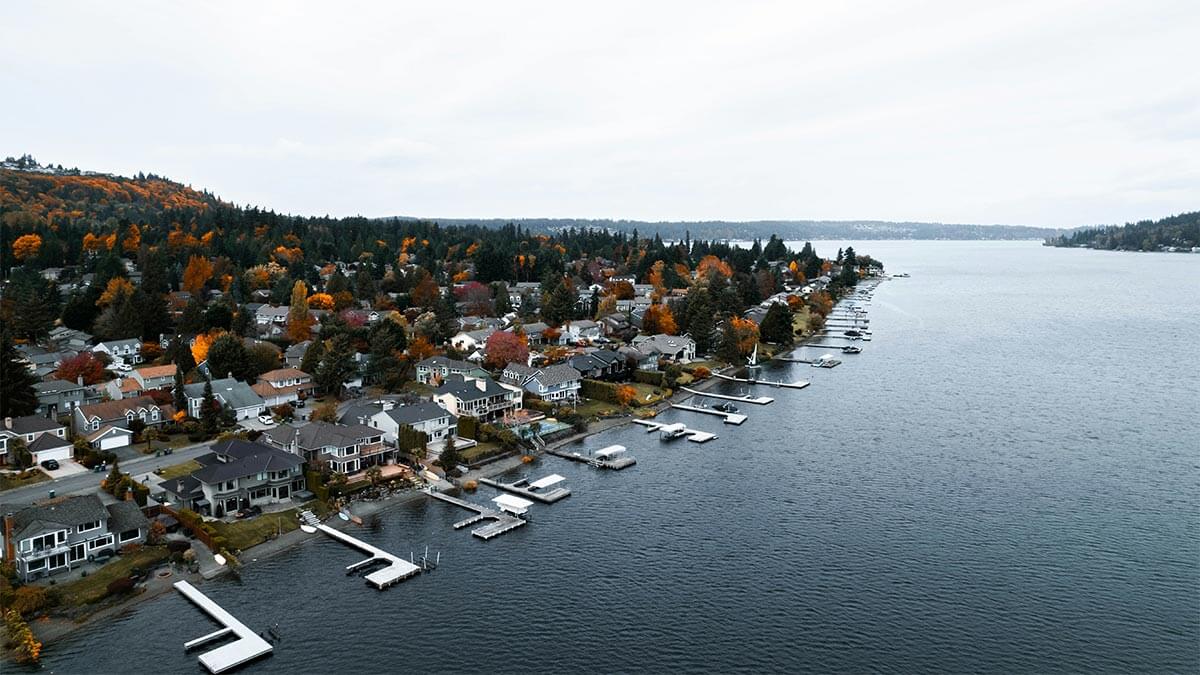
The safest places to live in Washington state include small-town communities like Sedro-Woolley and Snoqualmie alongside affluent suburban cities like Sammamish, Camas, and Mercer Island. Violent crime in the top-ranked cities falls as low as 0.2 per 1,000 residents in 2026, and Sammamish residents face roughly a 1-in-4,070 chance of violent victimization compared to 1-in-245 nationally. Washington crime rates swing sharply by city type: Seattle clocks 1,063 violent crimes per 100,000 residents, while Sammamish registers just 567 total crimes per 100,000, a figure 79% below the national average. This guide covers the 10 safest cities in Washington ranked by crime rate alongside median home price, the statewide crime context, lifestyle-based city picks for families, retirees, and young adults, a regional comparison of the best and safest parts of the state, the outmigration trends reshaping Washington in 2026, and a step-by-step method for verifying crime rates in any Washington city before you move.
Moving to a Safer Washington City? Sell your current home in 7-30 days with competing cash offers — no repairs, no commissions
Multiple offers, no obligations, close on your timeline.
Live in Washington
- Safest Cities in Washington for 2026, Ranked
- Washington Crime Rates: Context and What to Expect
- Which City in Washington Has the Lowest Crime Rate?
- Safest Washington Cities by Lifestyle Type
- Which Part of Washington State Is Best to Live In?
- Why Are People Moving Away From Washington State?
- How to Research Crime in Any Washington City
- Frequently Asked Questions About Safe Places in Washington
Safest Cities in Washington for 2026, Ranked
The safest cities in Washington for 2026 emerge from SafeWise’s 2026 analysis of 2024 FBI data, ranking communities by violent and property crime rates per 1,000 residents. Small-town picks like Sedro-Woolley sit alongside pricey Seattle Eastside suburbs like Sammamish and Mercer Island, which means the safest city and the most affordable city on this list are not the same. The comparison table below places each city’s crime data directly alongside its approximate median home price, a pairing no other current source provides in a single view.
| City | Violent Crime per 1,000 | Property Crime per 1,000 | Approx. Median Home Price | Population |
|---|---|---|---|---|
| Sedro-Woolley | 0.2 | 6.9 | ~$450,000 | ~12,000 |
| Sammamish | 0.3 | 6.2 | ~$1,100,000 | ~65,000 |
| Camas | ~0.4 | ~8.0 | ~$575,000 | ~30,000 |
| Bainbridge Island | ~0.5 | ~7.5 | ~$900,000 | ~25,000 |
| Snoqualmie | ~0.2 | ~9.0 | ~$750,000 | ~15,000 |
| Mercer Island | ~0.6 | ~7.0 | ~$1,500,000 | ~25,000 |
| Kenmore | ~0.7 | ~10.0 | ~$750,000 | ~22,000 |
| Brier | ~0.2 | ~4.0 | ~$700,000 | ~7,500 |
| Liberty Lake | ~0.5 | ~9.0 | ~$450,000 | 10,758 |
| Snohomish | ~0.8 | ~11.0 | ~$600,000 | ~10,500 |
Crime rates are from SafeWise’s 2026 analysis of FBI Uniform Crime Reporting data. Confirmed per-1,000 figures are available for Sedro-Woolley and Sammamish; rates for other cities are approximate from the same source and should be verified before a relocation decision. Median home prices are approximate market estimates as of mid-2026; verify current values before transacting.
Sedro-Woolley
Sedro-Woolley Washington ranks first among all Washington cities in SafeWise’s 2026 report, with a violent crime rate of 0.2 per 1,000 residents and a property crime rate of 6.9 per 1,000. The city is the only one in Washington reporting zero aggravated assaults in the most recent data year. Property crime fell 72% over three consecutive years and violent crime dropped 85% over two years, though the FBI source data does not specify what drove the decline. Located in Skagit County near the North Cascades foothills, Sedro-Woolley also has the lowest median home prices among the top-10 safe cities, well below the Seattle metro range.
Sammamish
Sammamish Washington has a violent crime rate of 0.3 per 1,000 residents and a property crime rate of 6.2 per 1,000, giving residents roughly a 1-in-4,070 chance of violent victimization versus 1-in-245 nationally. Its overall crime rate of 567 per 100,000 sits 79% below the national average. With a population of approximately 65,000, Sammamish consistently ranks among the safest cities in the United States. The trade-off is price: median home values approach $1.1 million, reflecting the safety-and-schools premium and proximity to Redmond and Bellevue employers.
Camas
Camas Washington consistently makes Washington’s top-10 safety list, pairing low violent and property crime with strong Clark County schools and direct access to Portland’s metro job market. The city sits on the Columbia River directly across from Portland, Oregon, giving residents Washington’s no-income-tax advantage while tapping Oregon’s employment base. Its population of approximately 30,000 supports a tight community feel and a well-funded local school district. Median home prices around $575,000 make Camas one of the more accessible cities on this list given the safety and school quality it delivers.
Bainbridge Island
Bainbridge Island pairs low crime rates with ferry access to downtown Seattle, making it a popular pick for commuters who want quieter suburban living without Seattle prices. The island has a population of approximately 25,000 and highly rated schools. Its ferry connection to Seattle’s waterfront sets it apart from Mercer Island, which uses the I-90 bridge and is not ferry-served. Median home prices run around $900,000, elevated but below Mercer Island’s level.
Snoqualmie
Snoqualmie records near-zero violent crime per SafeWise’s 2026 rankings and offers a scenic mountain community east of Seattle along the I-90 corridor. The city draws families who value outdoor recreation proximity alongside low crime. Median prices hover around $750,000, making Snoqualmie pricier than Sedro-Woolley but more accessible than Sammamish or Mercer Island. Strong school ratings and a small-city scale make it a natural fit for families relocating from denser areas.
Mercer Island
Mercer Island is an island community in Lake Washington, connected to Seattle via the I-90 bridge. A common misconception describes Mercer Island as ferry-served; that distinction belongs to Bainbridge Island, which uses the Washington State Ferry from Seattle’s downtown waterfront. Mercer Island has a population of approximately 25,000, the highest median home prices on this list (commonly above $1.5 million), low violent crime, and highly rated schools. Bridge access to both Seattle and Bellevue makes it one of the most convenient safe communities in the state.
Kenmore
Kenmore sits at the north end of Lake Washington, offering lakefront living at a lower price point than Sammamish or Mercer Island. Its violent crime rate is low relative to surrounding King County cities, and its location gives residents easy access to both Bothell and Seattle. Population is approximately 22,000. Kenmore is a practical alternative for buyers who want low crime and lakefront suburban character but find Sammamish pricing out of reach.
Brier
Brier records approximately 15.6 violent crimes per 100,000 residents on an absolute-count basis per FBI 2024 UCR data, equivalent to roughly 0.16 per 1,000 residents. Total crime sits at approximately 420 per 100,000, which is 94% lower than Washington’s statewide average. Located in Snohomish County with a population of roughly 7,500, Brier is the smallest city on this list. Its affordability relative to King County neighbors makes it a practical option for buyers who want very low crime without the Sammamish price premium, with median homes around $700,000.
Liberty Lake
Liberty Lake is a suburban growth community near the Idaho border in eastern Washington, with a population of 10,758. It ranks among the safest cities in the state on areavibes.com’s statewide ranking and offers substantially lower housing costs than western Washington safe cities, with median prices around $450,000. Its location near Spokane provides access to a regional job market while keeping costs well below the Seattle corridor. Eastern Washington’s affordability advantage is a primary draw for Washington state relocation seekers who find the Seattle metro price range out of reach.
Snohomish
Snohomish is a historic small city in Snohomish County with a population of approximately 10,500, rounding out the top 10 with property crime rates still well below Washington’s urban averages. Its location between Seattle and Everett gives residents access to both employment centers without Seattle prices. Median homes around $600,000 sit below the Sammamish-area range. The city’s walkable historic downtown and outdoor recreation access add lifestyle value beyond the safety profile alone.
Washington Crime Rates: Context and What to Expect
Washington crime rates vary dramatically by city type, and the statewide average understates the safety available in suburban communities while obscuring genuine risk in urban cores. The state’s largest cities account for a disproportionate share of reported crime, per Washington State Patrol crime statistics. Understanding the statewide baseline shows exactly how much safer the top-10 cities on this list are relative to what most Washington residents experience.
Property Crime in Washington: Fear vs. Reality
Property crime rate data across Washington tells a more layered story than headlines suggest. Property crime concentrates heavily in dense urban centers and near transit corridors, while suburban and rural communities across Washington track consistently below national averages. In Sammamish, the property crime rate of 6.2 per 1,000 compares favorably even against the national property crime average. Vehicle break-ins near transit hubs remain the most common concern in low-crime Washington suburbs, so parking awareness in high-traffic spots matters even when a city’s overall rating is excellent.
Violent Crime in Washington: What the Data Shows
Seattle’s violent crime rate of 1,063 per 100,000 residents sits well above the national average and ranks among the highest figures for major West Coast cities, per 2024 FBI crime statistics. Tacoma has the highest violent crime rate among Washington’s major cities. The gap between Seattle or Tacoma and the top-10 safe cities on this list is wide: Sammamish’s violent crime rate of 0.3 per 1,000 (30 per 100,000) represents a 97% reduction from Seattle’s figure. That gap is why the specific city you choose in Washington matters far more to your daily safety than the state average.
Which City in Washington Has the Lowest Crime Rate?
Sedro-Woolley has the lowest crime rate in Washington for 2026, with a violent crime rate of 0.2 per 1,000 residents and a property crime rate of 6.9 per 1,000, based on SafeWise’s analysis of 2024 FBI Uniform Crime Reporting data. That places it ahead of Sammamish and Snoqualmie, which also record extremely low violent crime but slightly higher property crime. Understanding which city holds the lowest crime rate in Washington requires one important clarification: rankings shift depending on whether you measure per-1,000 or per-100,000 and whether you combine violent and property crime or evaluate them separately.
Why Sedro-Woolley’s Crime Rate Dropped So Sharply
Sedro-Woolley’s violent crime fell 85% over two years and property crime dropped 72% over three consecutive years, making it the only Washington city reporting zero aggravated assaults in the most recent data year. Sharp drops of this magnitude can reflect genuine policing improvements, population shifts into the city, changes in agency reporting scope, or changes in crime classification under FBI UCR methodology. The underlying FBI data does not specify the mechanism. It is accurate to report the measured rate as low; treating the two-year decline as a permanent structural shift requires watching 2025 data when it publishes in late 2026.
How Brier and Black Diamond Compare
Brier records 15.6 violent crimes per 100,000 residents per FBI 2024 UCR, equivalent to roughly 0.16 per 1,000 residents, and total crime of approximately 420 per 100,000, which is 94% below Washington’s statewide average. Black Diamond records 27.3 violent crimes per 100,000 per the same data set. Both cities are safe on an absolute basis, and their rankings shift relative to Sedro-Woolley depending on which metric you apply. That is exactly why SafeWise, Niche, and areavibes produce different ranked lists from the same FBI source data.
Safest Washington Cities by Lifestyle Type
Safety numbers are one input in a relocation decision, but the right city also depends on your daily priorities. The best places to live in Washington state balance crime rates with school quality, commute access, and cost of living. The three segments below draw on SafeWise rankings, Niche community ratings for Washington, and Census Bureau city population data to match each type of buyer to a focused short list.
Safest Cities for Families in Washington
Safe neighborhoods for families in Washington concentrate in three communities above all others: Sammamish, Camas, and Snoqualmie. Sammamish earns a Niche A+ community rating, posts a violent crime rate of 0.3 per 1,000, and sits within commuting distance of Microsoft’s Redmond campus and Bellevue’s tech corridor. Camas combines strong Clark County schools with Portland metro job access and Washington’s no-income-tax advantage over Oregon. Snoqualmie adds mountain community character and near-zero violent crime, making it the natural pick for families who want outdoor proximity alongside safety. All three are among the safest cities in Washington and earn higher school ratings than most Seattle metro alternatives at comparable or lower crime levels.
Safest Cities to Retire in Washington
Retirees typically weigh walkability, community scale, medical access, and housing affordability relative to income. Bainbridge Island fits that profile well: a population of approximately 25,000 per U.S. Census Bureau estimates, a walkable waterfront, ferry access to Seattle for medical and cultural amenities without Seattle living costs, and crime rates well below the state average. Kenmore offers a quieter alternative for retirees who want lakefront character without the ferry commute and at a lower price point. Both cities have tight community identities, low crime, and a scale of living that suits retirement more than the density of Bellevue or Redmond.
Safest Cities for Young Adults in Washington
Young adults typically prioritize career access and cost of entry alongside safety. Redmond, home to Microsoft’s headquarters, has a relatively low violent crime rate for a city of 70,000-plus residents and sits in the heart of the Seattle Eastside suburbs tech corridor. Liberty Lake in eastern Washington offers a lower-cost entry point (median homes around $450,000) for young adults who work remotely or can access Spokane’s regional job market. Bellevue provides urban density with crime rates substantially below Seattle’s, though housing costs are among the highest in the state. These three cities serve different cost-of-entry needs while staying well above Washington’s urban safety baseline.
Which Part of Washington State Is Best to Live In?
Identifying the best places to live in Washington state depends on what you are optimizing for: low crime, job access, housing cost, or outdoor amenity. Safety correlates strongly with suburb type and regional geography across the state. For a broader view of Washington’s livability factors beyond crime, the best places in Washington guide covers schools, amenities, and cost alongside safety data.
The regional comparison below captures the major trade-offs:
| Region | Safety Profile | Job Market | Median Home Range | Best For |
|---|---|---|---|---|
| Western WA (Seattle Eastside) | Violent crime a fraction of Seattle’s rate | Strong tech and professional employment | $750K to $1.5M+ | Families, career-stage buyers |
| Eastern WA (Liberty Lake, Spokane Valley) | Lower crime than Spokane city; affordable | Regional and remote-work employment | $350K to $500K | Budget buyers, retirees, remote workers |
| Island and Coastal (Bainbridge, Mercer Island) | Among state’s lowest violent crime | Ferry or bridge Seattle access | $900K to $1.5M+ | Small-community feel with city proximity |
Based on available 2024 to 2026 market and crime data. Verify current figures before transacting.
Western Washington: Safety, Jobs, and Cost
The Seattle Eastside corridor (Sammamish, Bellevue, Redmond, Kirkland) combines the lowest violent crime rates in the state with top-rated schools and access to one of the strongest regional job markets in the country. BLS regional wage data shows the Pacific Northwest tech corridor consistently among the nation’s highest in median wages. The Seattle housing market reflects that employment strength in its pricing: Seattle’s median home sits around $750,000, with Sammamish and Bellevue running higher still. Sammamish, Bellevue, and Kirkland consistently appear in U.S. News national top-20 best-places-to-live rankings. If cost is your limiting factor, western Washington’s safety profile carries a steep price premium.
Eastern Washington: Affordability and Space
Eastern Washington offers a different value proposition: lower crime than Spokane city proper, substantially more affordable housing, and more physical space per household. Liberty Lake (population 10,758) and Spokane Valley are the primary eastern Washington entries on statewide safe-city lists. The Idaho border proximity creates a migration dynamic worth noting: some residents pursuing affordability ultimately cross into northern Idaho rather than staying in Washington. If you can work remotely, eastern Washington competes well on price in the $350,000 to $500,000 range without giving up a solid safety profile relative to the national average.
Island and Coastal Communities in Washington
Bainbridge Island and Mercer Island both rank near the top of Washington’s statewide safety lists but function differently in practice. Bainbridge Island is ferry-served from Seattle’s downtown waterfront (approximately a 35-minute crossing), popular with commuters who want rural character alongside city access. Mercer Island uses the I-90 bridge for direct vehicle access to Seattle and Bellevue and is not a ferry community. Both islands have populations of approximately 25,000, top-rated schools, and high median home prices ranging from $900,000 to more than $1.5 million. The island premium reflects both the safety profile and the constrained housing supply that comes with fixed geography.
Why Are People Moving Away From Washington State?
Washington had a net loss of more than 20,000 residents to other states between 2020 and 2024, per the Spokesman-Review 2026 migration analysis. Idaho is the top destination for departing Washington residents. That migration pattern reflects specific, measurable pressures on the cost of living in Washington rather than a general dissatisfaction with the state’s quality of life.
The Cost of Living Reality in Washington
Seattle’s median home price sits around $750,000, and average rents statewide exceed $2,200 per month. According to Washington Policy Center outmigration research, Washington state outmigration is driven primarily by housing costs that have outpaced wage growth for most occupations outside the tech-industry bracket. Approximately 80% of Seattle’s residential land was historically zoned single-family, restricting density and keeping prices elevated. Sellers planning to leave Washington who want to maximize what they keep from a home sale should review selling without a realtor in Washington options, since standard agent commissions on a $750,000 sale can reach $22,500 to $45,000.
Tax and Regulatory Pressure
Washington introduced several tax changes in recent years that affect household budgets, including a gas tax increase and higher business and occupation tax rates. A capital gains tax on gains above $250,000 also took effect for certain investment transactions. A House Republican caucus estimate placed added annual household expense at approximately $2,000 from recent tax changes (note: this is a partisan estimate; verify against a neutral source such as the Tax Foundation or state Office of Financial Management before citing as settled fact). The cumulative effect of housing costs and tax increases has pushed the effective cost of living in Washington above what many middle-income households can sustain over the long term. The full picture of transaction costs for sellers exiting the state is covered in the cost to sell in Washington guide.
Where Former Washingtonians Are Going
Idaho receives the largest share of Washington’s outmigrants, with the 2020 to 2024 period showing consistent net outflows from the Puget Sound region into northern Idaho, per the Spokesman-Review’s May 2026 reporting. The PODS Moving Trends 2025 report also listed Seattle and surrounding areas among the top regions Americans are leaving. Families frequently cite Coeur d’Alene and Spokane-adjacent Idaho suburbs as common landing points. The pattern reflects a straightforward cost calculation: Idaho’s lower housing prices and no-income-tax structure offer a comparable Pacific Northwest lifestyle at a substantially lower ongoing cost.
How to Research Crime in Any Washington City
Ranking lists are a starting point, not a final answer. Before you commit to a neighborhood, verify the underlying numbers directly rather than relying on a third-party aggregation. This section walks you through pulling FBI crime data directly, converting raw totals to per-capita rates, and cross-checking with school ratings. For the move itself, cash home buyers in Washington can simplify your current-home sale if you need to close on a precise date to coordinate with a move-in timeline.
Using FBI Crime Data for Washington Cities
The FBI Crime Data Explorer (cde.fbi.gov) is searchable by state and reporting agency. Washington has dozens of individual law enforcement agencies submitting data to the Uniform Crime Reporting program. Select Washington, locate the target city’s agency, and pull “Offenses Known to Law Enforcement” for the most recent complete year (2024). Before using any figure, confirm the agency submitted data for all 12 months. Partial-year submissions appear in the database and produce artificially low totals that skew the per 1,000 residents rate downward.
What School Ratings Reveal About a Neighborhood
School ratings from Niche correlate with neighborhood stability in ways that extend beyond educational quality. A Niche A or A+ grade typically signals a community with engaged residents, maintained property values, and strong social capital, all factors that support low crime over time. For Washington specifically, Sammamish and Camas both earn top Niche ratings, and their crime figures track with what you would expect from high-engagement communities. School data is not a substitute for crime data, but it is a consistent cross-check.
Beyond Crime Rates: What Else to Check Before Moving
Before finalizing a Washington state relocation decision, check proximity to fire stations and hospitals (response times affect safety outcomes and homeowners insurance costs), the presence of active neighborhood watch programs, street lighting on the specific block, and walkability score. Local police department annual reports in cities like Sammamish, Camas, and Sedro-Woolley publish neighborhood-level data more granular than the FBI aggregates. Search “[city name] police department annual crime report” to find them.
title: How to Research Crime Rates in Any Washington City Before You Move steps: – name: Find the city’s FBI reporting agency. text: Go to the FBI Crime Data Explorer at cde.fbi.gov and select Washington state. Search for the city name. Most Washington cities have their own law enforcement agency that submits data to the Uniform Crime Reporting program. Note the agency name. You will use it to pull data in the next step. – name: Download the 2024 crime totals and verify completeness. text: Select the agency, choose “Offenses Known to Law Enforcement,” and filter to the most recent full year (2024). Before using any figure, confirm the agency submitted data for all 12 months. Partial-year submissions produce artificially low totals that skew per-capita rates downward and are common in smaller jurisdictions. – name: Calculate the per-1,000 crime rate. text: Divide the raw violent crime total by the city’s population (use Census.gov for the most current estimate), then multiply by 1,000. For example, 20 violent crimes in a city of 65,000 residents equals 0.31 violent crimes per 1,000 residents. Repeat for property crime. Both rates together give you the full safety picture. – name: Compare your city’s rate to Washington state and national averages. text: The FBI publishes state-level crime summaries. Pull Washington’s statewide violent and property crime rates alongside the national rates. A city below the state average is safer than most of Washington; a city below the national average is notably safe by any standard. – name: Cross-check with Niche and the local police department’s annual report. text: Niche.com assigns A+ through F safety grades using the same FBI data plus community survey inputs, making it a useful accessibility layer if the raw FBI tables feel complicated. Most Washington city police departments also publish annual crime reports with neighborhood-level breakdowns more granular than anything in the FBI aggregate data. Search “[city name] police department annual crime report” to find them.
Found your target city on this list? The next step is selling your current home on a timeline you control. iBuyer.com connects you with multiple vetted cash buyers who compete for your property. No MLS listing, no agent commission, and no repair requirements. You review competing offers and choose your closing date, anywhere from 7 to 30 days out. That predictable window lets you plan your move to Sammamish, Sedro-Woolley, or any other target city without a contingent sale stalling the whole process.
Sell Fast. Move on Your Schedule. Get competing cash offers and close in 7-30 days so your new city does not wait
No repairs, no agent fees, no open houses. Just offers.
Frequently Asked Questions About Safe Places in Washington
Sedro-Woolley has the lowest crime rate in Washington for 2026, with a violent crime rate of 0.2 per 1,000 residents. SafeWise’s 2026 analysis of 2024 FBI data ranks Sedro-Woolley first statewide. The city is also the only one in Washington reporting zero aggravated assaults in the most recent data year. Property crime fell 72% over three consecutive years and violent crime fell 85% over two years, though the FBI source data does not specify what caused the decline.
Washington state has elevated property crime in its urban centers but substantially lower crime in its suburban and small-town communities. Seattle’s violent crime rate (1,063 per 100,000 residents) sits well above the national average, while Sammamish registers an overall crime rate of 567 per 100,000, which is 79% below the national figure. The statewide average falls between these two extremes. City selection matters more in Washington than in states with smaller intra-state variation.
The Seattle Eastside suburbs, including Sammamish, Bellevue, Kenmore, and Kirkland, are the safest region in Washington state by violent crime rate. Western Washington’s affluent suburban ring combines low violent crime with top-rated schools and strong tech-sector employment. Eastern Washington communities like Liberty Lake and Spokane Valley offer safer conditions than Spokane city proper at significantly lower housing costs. These communities consistently rank among the best places to live in Washington state in national livability assessments.
Sammamish has a violent crime rate of 0.3 per 1,000 residents, giving residents roughly a 1-in-4,070 chance of violent victimization, compared to 1-in-245 nationally. With approximately 65,000 residents, Sammamish consistently ranks among the safest cities in the United States. Its overall crime rate of 567 per 100,000 sits 79% below the national average. The trade-off is housing cost: median home values in Sammamish approach $1.1 million, reflecting the safety-and-schools premium.
Sedro-Woolley is a small Skagit County city, population roughly 12,000, with the lowest measured crime rate in Washington and affordable housing well below the Seattle metro. Located near the North Cascades foothills, it offers outdoor recreation access and a lower entry price than any other city in Washington’s top-10 safe list. Its crime drop is recent and sharp, which may reflect policing improvements, population changes, or shifts in agency reporting scope rather than a single cause.
Camas ranks in Washington’s top 10 for safety due to low crime, strong Clark County schools, and access to Portland’s job market from across the Columbia River. Camas sits in Clark County, giving residents Portland metro employment access while living under Washington’s no-income-tax structure. Strong community cohesion and a population of approximately 30,000 support its long-running safety profile. Camas appears on both SafeWise and Niche best-places lists in most recent years.
The safest cities in Washington fall into two tiers: Sedro-Woolley and Liberty Lake are affordable, while Sammamish, Mercer Island, and Bainbridge Island carry premium prices. Mercer Island and Sammamish median home prices can exceed $1 million in many neighborhoods, reflecting the safety-and-proximity premium. Sedro-Woolley is both the statewide safety leader and among the most affordable cities in the top 10. Liberty Lake in eastern Washington also provides a lower-cost entry point with a strong safety profile.
Washington state’s violent crime rate is near the national average, but property crime concentrated in Seattle and Tacoma runs above it. The property crime gap is not statewide: suburban and small cities across Washington track consistently below both state and national property crime averages. Tacoma has the highest violent crime rate among Washington’s major cities. The state’s wide intra-city variation makes city selection far more important to personal safety than state selection alone.
People are leaving Washington primarily because of high housing costs, rising taxes, and a cost of living that has outpaced wages for most occupations. Washington had a net loss of more than 20,000 residents to other states between 2020 and 2024, per the Spokesman-Review’s 2026 analysis, with Idaho gaining the most. Seattle’s median home price (approximately $750,000) and average rents above $2,200 per month are the primary cited drivers. Tax increases including a gas tax hike and higher business and occupation taxes added further household budget pressure.
SafeWise’s 2026 ranking, based on 2024 FBI data, names Shawangunk, New York, as the safest city in the United States. Rankings vary by methodology: Forbes and MoneyGeek named Ramapo Town, New York, for 2025; U.S. News named Johns Creek, Georgia, for 2026. No single methodology produces a universal answer because definitions of “safest” differ across violent-crime-only, total-crime, and cost-of-crime models. For Washington state specifically, Sedro-Woolley holds the top spot in most 2026 state-level rankings.
To research any Washington city’s crime rate, visit cde.fbi.gov, find the local agency’s 2024 offense data, and divide the crime count by city population to get a per-capita rate. Verify the reporting agency submitted a full 12-month data set first, since partial-year submissions produce artificially low rates. Niche.com translates the same FBI data into letter grades and adds community survey inputs as a useful secondary check.
Mercer Island is one of Washington’s safest communities, with low violent crime, top-rated schools, and island living connected to Seattle by the I-90 bridge. Mercer Island sits in Lake Washington and is bridge-connected, not ferry-served (the Washington State Ferry route serves Bainbridge Island, not Mercer Island). Median home prices are among the highest in the state, reflecting the safety premium and proximity to Seattle’s job centers. The island has a population of approximately 25,000.
Bainbridge Island consistently ranks among Washington’s safest communities, with crime rates well below state and national averages and a population of approximately 25,000. Bainbridge is accessible via the Washington State Ferries route from Seattle’s downtown waterfront, making it popular with commuters who want quieter suburban living. It is regularly cited alongside Mercer Island and Sammamish as one of the premium-safety communities in the Puget Sound region. Housing is expensive but typically less so than Mercer Island.
Violent crime rate measures force-based offenses (assault, robbery, murder, rape) per 1,000 residents; property crime rate measures theft, burglary, and vehicle theft per 1,000 residents. Both are expressed per capita so cities with different population sizes can be compared directly. A city can have low violent crime and moderate property crime, or vice versa, so checking both figures separately gives a more accurate picture than any single composite score. In Washington’s suburban communities, vehicle break-ins near transit hubs tend to be the most common concern even in cities with very low violent crime rates.

Reilly Dzurick is a licensed real estate agent with over six years of experience and a member of the iBuyer.com Market Insights Team, covering national trends in home selling and the evolving iBuyer landscape. Her firsthand experience working with buyers and sellers gives her a practical perspective on how these platforms impact real homeowners. She holds a degree in Public Relations, Advertising, and Applied Communication.