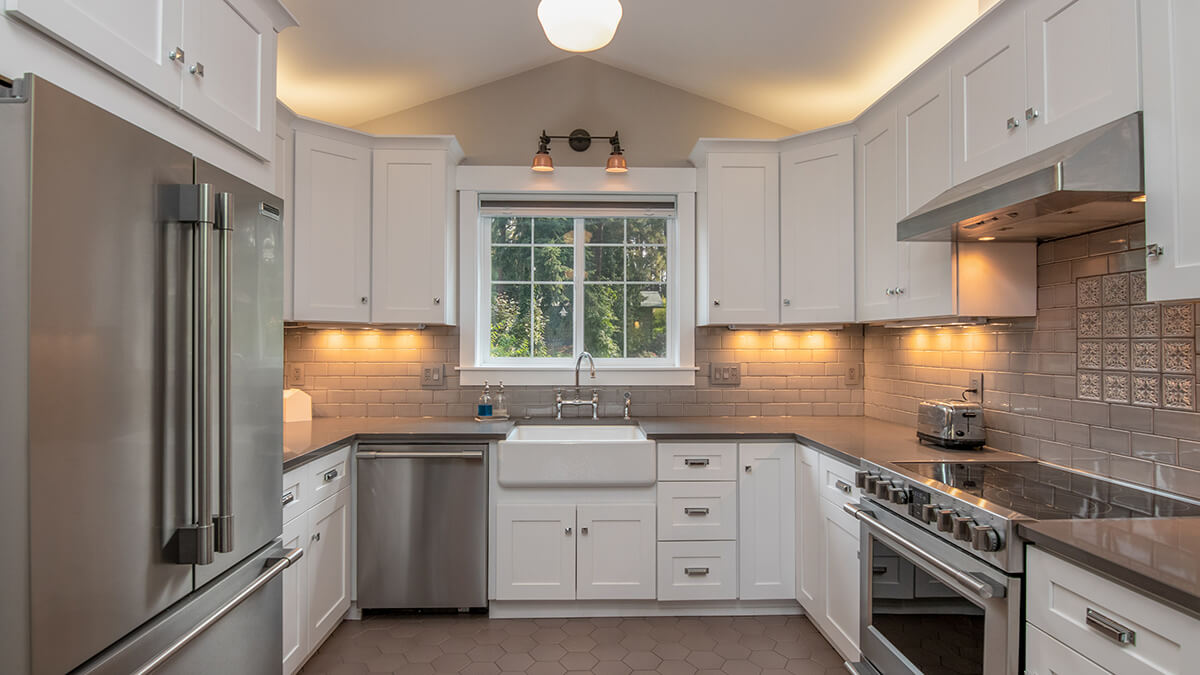
You don’t need a full renovation to sell your home for top dollar. Major overhauls rarely recoup 100% of their cost, and a targeted set of repairs and cosmetic updates almost always delivers a better net return than a gut remodel. A minor kitchen remodel returns approximately 113% of cost while a major upscale kitchen renovation returns only about 51%, per the 2025 Cost vs. Value Report. In a strong seller’s market, buyers often accept homes as-is. In competitive or luxury markets, move-in ready is the expectation.
Knowing which side of that line you’re on before you remodel before selling can save you tens of thousands of dollars. Spending the wrong $30,000 on pre-sale home improvements can actually cost you money at closing.
This guide covers what the renovation data actually shows, which repairs are non-negotiable before you list, what to fix before selling a house, which high-ROI updates pay back, what not to fix when selling a house, the 30% rule as a budget ceiling, what devalues a home most, how to reach a $50,000 value gain, and when selling as-is beats remodeling.
Remodel Before Selling
- Should you remodel before selling?
- Essential repairs worth making before you list
- High-ROI updates worth the investment
- What not to fix when selling a house
- What is the 30% rule in remodeling?
- What devalues a house the most?
- How to increase home value by $50,000
- Selling as-is vs. remodeling: how to decide
- How to decide what to fix before selling
- Frequently Asked Questions
Sell Without Making a Single Repair Get competing cash offers on your home exactly as it sits today
No repairs, no commissions, close in 7 to 30 days. No obligations.
Should you remodel before selling?
Most sellers don’t need to remodel before selling. Strategic repairs and high-impact cosmetic updates give you the best chance of a fast, profitable sale without over-investing. Full renovations are the exception, not the rule.
What the data says about renovation ROI
Home renovation ROI varies sharply by project type. According to the NAR Remodeling Impact Report, real estate agents most commonly recommend painting and a roof inspection as the first two pre-sale priorities. Major kitchen renovations recover roughly 60% of cost. Full bathroom renovations recover only about 50%. Minor cosmetic updates like fresh paint and a deep clean before selling cost a fraction of a renovation and reliably improve buyer perception.
The cost vs. value report data is consistent across market cycles: buyers pay for cleanliness, condition, and curb appeal more than for renovation choices.
When your market changes the math
A seller’s market with low inventory shifts the calculation significantly. Buyers in competitive markets often accept homes as-is rather than lose a deal to another buyer. In luxury or highly competitive markets, move-in ready is the expectation, and failing to meet that standard costs you both time and price.
In a balanced or buyer’s market, targeted repairs and cosmetic updates help your home compete when buyers have more choices. Your local market condition is the most important variable in the remodel before selling decision.
Essential repairs worth making before you list
The repairs worth making before you sell fall into three categories: items that will fail a home inspection, safety hazards that block FHA financing, and curb appeal fixes that improve first impressions. Knowing what to fix before selling a house in each category prevents costly surprises after you go live.
Repairs that fail home inspections
Leaky roofs, broken HVAC systems, and outdated electrical panels are the home inspection repair failures that most commonly kill deals. Lenders won’t finance a property with a failing roof or fire-hazard wiring. A pre-listing inspection costing $300 to $500 identifies every item in these categories before buyers see the property.
Plumbing leaks, foundation cracks, and drainage problems also fall here. Sellers with multiple systemic failures may be dealing with a distressed-property situation. How distressed homes sell walks through the specific path those homes take when the repair list is extensive.
Safety hazards that block FHA financing
Peeling paint, rotten wood, and exposed wiring can cause FHA loans to fall through at appraisal. FHA Minimum Property Standards require paint to be in good condition on FHA-insured properties. Since a significant share of buyers use FHA financing, ignoring these hazards shrinks your buyer pool directly.
Fix rotten wood and exposed wiring before any showing. Buyers’ inspectors document these items in writing, and buyers use that documentation as leverage for steep price cuts or cancellation.
Curb appeal fixes with the best return
Power-washing the driveway, trimming hedges, mulching flowerbeds, and replacing a worn mailbox form a low-cost curb appeal package that consistently improves first impressions. Garage door replacement is one of the highest-ROI curb appeal investments available, ranking near the top of the 2025 Cost vs. Value Report. Landscaping improvements can boost value 15 to 20% in some markets, though this varies by region. Confirm the range with a local agent before planning your budget.
| Repair Category | Why It’s Non-Negotiable |
|---|---|
| Roof Leaks | Fails home inspections; lenders won’t finance |
| HVAC Failure | Buyers treat it as a major cost to negotiate down |
| Outdated Electrical | Fire hazard; flagged by every inspector |
| Peeling Paint | Blocks FHA loan approval at appraisal |
| Rotten Wood | Safety and moisture damage signal to buyers |
| Exposed Wiring | Immediate safety hazard; must be corrected |
| Drainage Issues | Foundation risk; requires disclosure and repair |
Based on common home inspection standards and HUD Minimum Property Standards for FHA-insured loans. Verify current FHA requirements with a licensed inspector before listing.
High-ROI updates worth the investment
The best home improvements before selling are the projects the 2025 Cost vs. Value Report tracks year over year. Small cosmetic updates consistently outperform major renovations for home renovation ROI. Here is how the key projects compare.
| Project | Estimated Cost | Estimated Return | ROI % |
|---|---|---|---|
| Minor kitchen remodel | $28,458 | $32,141 | ~113% |
| Major upscale kitchen remodel | $154,483 | ~$78,800 | ~51% |
| Midrange bathroom refresh | $26,138 | ~$20,910 | ~80% |
| Full bathroom renovation | ~$47,000 | ~$23,500 | ~50% |
| Interior paint | $1,900, $4,500 | High relative return | Top tier |
| Exterior paint | $3,000, $6,000 | High relative return | Top tier |
| Garage door replacement | $4,513 | $8,751 | ~194% |
| Landscaping package | $5,000, $10,000 | $7,500, $15,000+ | ~75, 150% |
Based on 2025 Cost vs. Value Report data from remodeling.hw.net. Verify current figures before transacting.
Minor kitchen updates that pay back
A minor kitchen remodel costing around $28,458 returns approximately $32,141, a 113% ROI. That makes it one of the few home improvements before selling where you recoup more than you spend. The word “minor” matters: new cabinet fronts, updated hardware, a fresh faucet, and paint on dated cabinets. A full gut renovation with custom cabinets can exceed $150,000 and returns barely half of that cost at sale.
Bathroom refreshes buyers notice
A midrange bathroom refresh returning approximately 80% of cost is a worthwhile investment when the bathroom is visibly dated. New fixtures, a vanity update, fresh caulk, and improved lighting accomplish the bathroom refresh without gutting the floor plan. A full bathroom renovation recovers only about 50% of cost. On a $47,000 renovation, that gap costs you roughly $23,500.
Fresh paint: highest return per dollar
Fresh interior and exterior paint are the highest return-per-dollar pre-sale home improvements available to sellers. NAR cites painting as one of the two most recommended pre-sale projects. Neutral colors remove personalization from the space, which broadens the buyer pool. Both can be completed in one to two weeks, fitting any pre-listing timeline.
Energy upgrades buyers pay more for
Energy Star-rated HVAC systems, new windows, and smart thermostats attract buyers who factor utility costs into offers. These buyers actively filter for energy efficiency when searching. Energy upgrades recover roughly 50% of cost, so they work best as a tie-breaker against competing homes rather than a primary home renovation ROI driver.
What not to fix when selling a house
Skipping the wrong projects is as important as completing the right ones. What not to fix when selling a house falls into three clear categories: major renovations, highly personal upgrades, and partial fixes that highlight old features.
Major remodels that rarely recoup cost
Major Structural Changes like room additions or attic conversions rarely recoup cost on a short sale timeline. Major kitchen renovations return only about 60% of cost on average. Major bathroom renovations return only about 50%, per the NAR Remodeling Impact Report. According to what sellers should skip before listing, partial upgrades often backfire by directing a buyer’s eye to the features you didn’t update. New countertops on old cabinets highlight the dated cabinets rather than the new surface.
For sellers who have decided to skip repairs, as-is pricing in Austin shows what an as-is sale looks like on the ground.
Full System Replacements like swapping old but functional appliances rank low on return. Buyers plan their own upgrades and don’t want to pay a premium for your selections.
Highly personal upgrades buyers will change
Highly Personalized Renovations include custom wallpaper, luxury tile in a specific aesthetic, and high-end custom cabinetry. Buyers will want to replace these immediately and won’t pay extra for the privilege of doing so. Garage or basement conversions also fall here. Removing parking or usable storage narrows your buyer pool significantly.
Partial fixes that highlight old features
Cosmetic Flaws like light scratches on hardwood or a single cracked tile are better left alone. Buyers plan to personalize these surfaces themselves. A partial fix draws attention to the feature and raises questions about what else has been patched.
Summary of what not to fix when selling a house:
- Major kitchen or bathroom gut renovations
- Garage or basement conversions
- Luxury custom finishes and personal-aesthetic tile
- Old but functional appliances
- Partial cosmetic fixes that highlight adjacent dated features
What is the 30% rule in remodeling?
The 30% rule in remodeling is a widely used budgeting guideline: don’t spend more than 30% of your home’s current market value on renovation projects, all-in. Its purpose is to prevent overcapitalization, which means spending more than the market can return to you at resale.
How to calculate your renovation ceiling
The calculation is straightforward:
- $300,000 home: maximum renovation budget = $90,000
- $400,000 home: maximum renovation budget = $120,000
- $500,000 home: maximum renovation budget = $150,000
The 30% ceiling covers all-in costs: labor, materials, permits, and a 10 to 15% contingency buffer for overruns. Most renovation projects run over initial estimates. The contingency is not optional.
Pre-sale home improvements require applying this ceiling more conservatively than in a long-term hold scenario. When you’re listing on a fixed timeline, you cannot wait for market appreciation to catch up to renovation spend.
What happens when you exceed 30%
When you exceed the 30% ceiling, appraisal limits become the binding constraint. Even if a buyer loves your renovations, your home won’t appraise above the neighborhood’s comparable sales. The buyer’s lender won’t finance above appraised value, the deal falls through, and you’ve spent money you can’t recover.
According to how overcapitalization affects resale value, the most common trap is renovating the best house in the neighborhood. Your improvements may be real and visible. But appraised value is capped by what comparable homes sold for, not by what you spent. Pre-sale, this ceiling is more binding than in any other context precisely because you have a fixed closing date.
What devalues a house the most?
Deferred maintenance on major systems devalues a house more than any renovation or aesthetic decision. According to pre-sale renovation ROI by project type, buyers can overlook cosmetic preferences they dislike but cannot look past systems that need immediate replacement.
Deferred maintenance: the single biggest drag
Roof failure, HVAC breakdown, outdated electrical panels, and active water damage are the four deferred maintenance categories that most consistently destroy buyer confidence. Buyers who see deferred maintenance assume there is more they haven’t found yet. That assumption drives price reductions far larger than the actual repair cost.
A new roof costs $10,000 to $20,000 depending on size and material. Buyers who spot a failing roof during a showing routinely demand $30,000 to $40,000 in price reductions or walk away entirely.
Poor DIY work and unpermitted renovations
Unpermitted renovations signal hidden problems. Inspectors flag unlicensed work in their written reports. Lenders sometimes require permitted work to be inspected and brought to code before financing closes. The buyer assumes the worst about the rest of the home when they find unpermitted additions or amateur electrical work.
Poor-quality DIY work is visible in the details: uneven tile, corners that don’t meet cleanly, or paint that doesn’t cover trim properly. These details don’t say “minor flaw.” They say “what else did the seller miss?”
Over-customization that shrinks your buyer pool
Highly specific aesthetic choices reduce competitive bidding by reducing the number of buyers who can picture themselves in the space. Fewer competing buyers means less upward price pressure at offers. Over-customization is the most common form of value destruction that sellers create intentionally, usually without realizing it.
| Factor | Impact on Value |
|---|---|
| Deferred major system maintenance | Largest single deduction; drives buyer walk-aways |
| Unpermitted work | Requires lender remediation; signals hidden problems |
| Over-customized finishes | Shrinks buyer pool; reduces competitive offers |
| Bedroom removal | Reduces comp eligibility; lowers appraised value |
| Storage elimination | Loses broad buyer appeal; perceived as a trade-down |
| Poor curb appeal | Reduces buyer interest before they enter |
| Location factors | Cannot be changed; must be priced in |
Based on common appraisal and buyer perception factors. Consult a local agent for market-specific impact.
How to increase home value by $50,000
Reaching a $50,000 value gain before selling requires stacking high-ROI projects rather than doing one large renovation. Here are five projects ranked by realistic dollar return:
- Minor kitchen remodel (~$28,458 cost, ~$32,141 return): the highest home renovation ROI project at approximately 113%, making it the most reliable path to a large value gain.
- Midrange bathroom refresh (~$26,138 cost, ~$20,910 return): combined with a kitchen update, these two projects together can approach or exceed $50,000 in added value at a positive net return.
- Curb appeal package (garage door replacement + steel entry door + landscaping, roughly $8,000 to $15,000 cost, $15,000 to $20,000+ return): high collective ROI and fast to complete.
- Exterior and interior paint ($5,000 to $10,500 combined): the highest return-per-dollar update, extending the visual impact of kitchen and bath improvements.
- Basement finishing: one of the few single projects that can approach a $40,000 to $50,000 value gain depending on the local market and comparable sales, though ROI varies more than the other categories.
The ROI table in the High-ROI Updates section provides the underlying cost and return data for each project. Cross-reference it before finalizing your pre-sale budget.
The highest-ROI projects by dollar return
A minor kitchen remodel plus a midrange bathroom refresh together cost roughly $54,000 to $55,000 and return approximately $53,000, nearly breaking even while adding substantial buyer appeal. Adding the curb appeal package and paint brings combined return potential to $60,000 to $70,000 on a total spend of $90,000 to $100,000.
Energy-efficient upgrades buyers notice recover roughly 50% of cost and are best used to close the gap on competing homes rather than as a primary value-add strategy.
Finishing unused space for the biggest gains
An unfinished basement is one of the few single projects that can add $40,000 to $50,000 in value in markets where finished square footage drives comparable sales pricing. Check comparable sales with your agent before committing. If three of the five most recent comparable sales include finished basements, adding one makes sense. If none do, the appraisal may not credit the investment.
Selling as-is vs. remodeling: how to decide
The decision to remodel before selling comes down to three variables: local market conditions, your renovation budget ceiling, and your timeline. All three must point toward renovation before it makes financial sense.
When a seller’s market makes renovations unnecessary
In a strong seller’s market with low inventory, buyers compete for available homes and often accept properties as-is rather than lose a deal. In that condition, extensive home improvements before selling are frequently unnecessary. Selling in a down market covers how market conditions shift the as-is vs. renovate decision at the extremes.
Even in a seller’s market, fix inspection failures and safety hazards. These aren’t cosmetic choices. They derail financing regardless of how competitive the market is.
When your timeline forces the decision
Major projects almost always take longer than expected. If your closing timeline is under 60 days, skip any project that takes more than two weeks from start to completion. A thorough deep clean before selling, curb appeal fixes, and a fresh coat of paint are the right scope. Any project involving permits or structural work is off the table.
If your timeline is under 30 days, the cosmetic-only path or an as-is sale is the only realistic option. Starting a bathroom refresh in the same window you’re showing the home creates a poor buyer experience and typically results in incomplete work that buyers use against you.
The as-is cash-offer option
Cash buyers purchase homes in any condition, skip inspection contingencies, and close in 7 to 30 days. No agent commission, no repair requirement, no appraisal risk. If the renovation math doesn’t work for your timeline or budget, a cash offer removes the decision entirely.
iBuyer.com connects sellers with vetted cash buyer options. You receive multiple competing offers, so you aren’t locked into a single buyer’s lowball. Sellers who price their home’s condition honestly often find cash offer ranges narrower than they expected.
| Scenario | Recommended Path | Why |
|---|---|---|
| Strong seller’s market, low inventory | Cosmetic-only or sell house as-is | Buyers compete regardless; major renovation ROI is poor |
| Balanced or buyer’s market | Strategic repairs + cosmetic updates | Buyers have options; condition affects shortlist position |
| Urgent timeline under 60 days | Cosmetic-only or as-is cash offer | Major projects won’t complete in time |
Based on NAR market condition guidance and AIO framework. Individual market conditions vary.
How to decide what to fix before selling
These six steps apply what to fix before selling a house to your specific situation, from the first agent walkthrough through the final pricing decision.
name: How to decide what to fix before selling your house steps: – name: Get a pre-listing walkthrough from a local agent text: Ask specifically for an as-is market analysis and a prioritized list of improvements likely to change buyer perception in your neighborhood. You want a targeted fix list, not a general renovation wish list. – name: Order a pre-listing inspection ($300 to $500) text: Identify every item that would fail a standard buyer’s inspection, focusing on roof, HVAC, electrical panels, plumbing, and structural elements. Addressing these before listing removes the buyer’s biggest negotiating tools. – name: Apply the 30% rule as your hard budget ceiling text: Multiply your home’s current market value by 0.30. That number is the maximum you should spend on all improvements combined. Include labor, materials, permits, and a 10 to 15% contingency buffer in that total. – name: Prioritize by ROI tier text: Fix inspection failures and safety hazards first. These are non-negotiable. Add cosmetic updates such as paint, hardware, and curb appeal second. Stop before any major kitchen or bathroom overhaul unless your agent identifies it as the single reason buyers are discounting your home. – name: Check your timeline text: If you need to close within 60 days, skip any project that takes more than two weeks to complete. Cosmetic-only updates or an as-is sale are the right paths when time is constrained. – name: Price remaining condition into your list price or explore a cash offer text: If you choose not to fix something, work with your agent to reflect that condition in the asking price. Or request competing cash offers from buyers who purchase homes as-is to skip the repair-and-negotiation process entirely.
If the renovation math doesn’t work for your timeline or budget, you have a concrete alternative. iBuyer.com connects you with multiple vetted cash buyers who purchase homes in any condition, with no repairs required, no showings, and no agent commission. You receive competing offers, so you’re not locked into a single lowball. Most sellers close in 7 to 30 days. Enter your address to see what your home is worth to cash buyers in your market today.
Skip the Renovation Decision Compare vetted cash offers without fixing a thing before you sell
Fast offers, no agent fees, sell on your schedule. No obligations.
Frequently Asked Questions
You don’t need to remodel before selling; strategic repairs and cosmetic updates like fresh paint typically deliver better returns than full renovations. NAR data shows major overhauls rarely recoup 100% of cost. Focus on fixing items that would fail inspection, safety hazards, and curb appeal. A local agent can give you an as-is market analysis before you spend a dollar.
Fix items that will fail a home inspection: leaky roofs, broken HVAC systems, outdated electrical, and peeling paint that can block FHA loan approval. These repairs are non-negotiable because they prevent buyer financing or give buyers leverage for steep price reductions. Curb appeal fixes like power-washing and mulching complement structural repairs at a fraction of the cost.
Skip major kitchen and bathroom overhauls, highly personalized upgrades like custom wallpaper, and garage or basement conversions. Major kitchen renovation returns only about 60% of cost on average; major bathroom renovation returns only 50%, per the NAR Remodeling Impact Report. Partial upgrades like new countertops on old cabinets highlight the dated features around them rather than improving overall appeal.
The 30% rule says you should not spend more than 30% of your home’s current market value on renovations, to avoid overcapitalization. For a $400,000 home, the ceiling is $120,000 total across all projects including labor, materials, permits, and a contingency buffer. Pre-sale, this ceiling is even harder to exceed safely because you have a fixed transaction date and can’t wait for the market to catch up.
Deferred maintenance on major systems, including roof, HVAC, electrical, and water damage, devalues a house more than any renovation choice. Buyers can overlook cosmetic preferences but not systems needing immediate replacement. Unpermitted renovations and over-customized finishes follow closely, as both shrink the buyer pool and reduce competitive offers.
A minor kitchen remodel returns approximately 113% of cost; a major upscale kitchen overhaul returns only about 51%. The 2025 Cost vs. Value Report puts minor kitchen remodel cost at approximately $28,458 with a return near $32,141. In most markets, buyers prefer to customize a kitchen themselves rather than pay a premium for the seller’s choices.
Fresh interior and exterior paint is one of the highest return-per-dollar improvements a seller can make, consistently recommended by agents as a first pre-sale step. NAR cites painting as one of the two most recommended pre-sale projects. Neutral colors maximize appeal by removing personalization from the space and broadening the buyer pool.
In a strong seller’s market with low inventory, selling as-is often produces a better net return; in a buyer’s market, targeted repairs and cosmetic updates help your home compete. Appraisal limits apply regardless: renovations priced above neighborhood comparable sales cannot be recouped even if buyers want them. An as-is cash sale sidesteps the renovation decision entirely and can close in 7 to 30 days without inspection contingencies.
A pre-listing inspection costing $300 to $500 identifies what inspectors flag before buyers see the property. Structural issues, electrical panels, HVAC systems, and plumbing are the most common home inspection repair categories. Addressing these before listing eliminates the risk of buyers using them to renegotiate price or walk away from the deal.
A minor kitchen remodel, midrange bathroom refresh, and curb appeal package can collectively add $40,000 to $60,000 in value at well above break-even ROI. Minor kitchen remodels return approximately 113% of cost per the 2025 Cost vs. Value Report. Finishing an unfinished basement is one of the few single projects that can approach a $50,000 value gain, depending on market and local comparable sales.
Landscaping improvements can boost home value 15 to 20% in some markets and rank among the highest-return curb appeal investments a seller can make. Power-washing the driveway, trimming hedges, mulching flowerbeds, and replacing a mailbox are low-cost, high-visibility updates. First impressions set the tone for how buyers interpret the interior before they enter.
A pre-listing inspection costing $300 to $500 lets you address problems on your terms rather than letting buyers use them as negotiating leverage. Sellers who complete pre-listing inspections reduce the risk of deal-killing surprises during the buyer’s inspection phase. Agents in competitive markets often recommend them to justify asking price after targeted repairs, or to price accurately as-is.
Fresh paint, updated cabinet hardware, a deep clean before selling, and power-washed exterior surfaces are the cosmetic updates that consistently improve buyer perception without over-investing. These updates signal the home has been well-maintained without triggering the concern that makes buyers wonder what’s hidden underneath. Each can typically be completed in one to two weeks.
Yes, you can sell a house that needs major repairs; the two paths are pricing the condition into the list price or selling to a cash buyer who accepts the property as-is. Cash buyers on platforms like iBuyer.com purchase homes in any condition without requiring repairs before closing. Priced correctly as-is, homes with deferred maintenance still attract investors and renovation buyers who have a specific purchase plan.

Reilly Dzurick is a licensed real estate agent with over six years of experience and a member of the iBuyer.com Market Insights Team, covering national trends in home selling and the evolving iBuyer landscape. Her firsthand experience working with buyers and sellers gives her a practical perspective on how these platforms impact real homeowners. She holds a degree in Public Relations, Advertising, and Applied Communication.