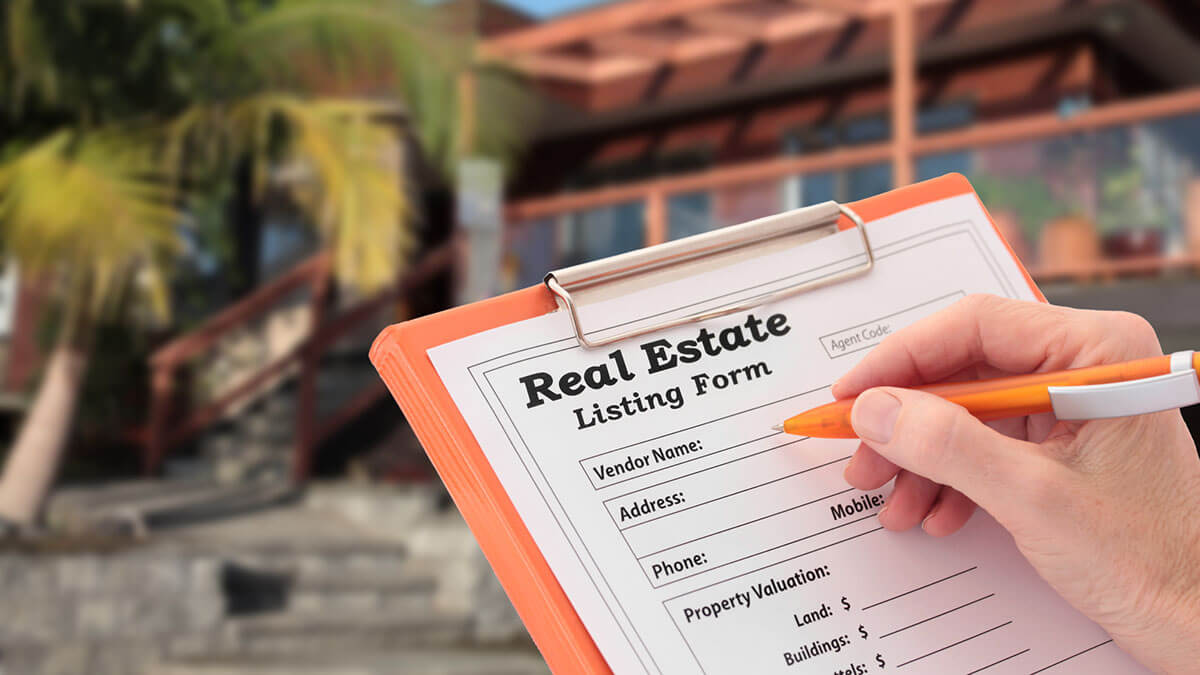
A listing agent, also known as a seller’s agent, is a licensed real estate professional who represents the homeowner in selling their property and owes the seller a fiduciary duty throughout the transaction. The standard listing agent commission runs 2.5% to 3% of the sale price, deducted from the seller’s proceeds at closing. On a $300,000 home, that is $7,500 to $9,000 before any buyer-side compensation is factored in.
That math changed in August 2024. The NAR settlement eliminated the MLS rule requiring sellers to offer buyer-side compensation, meaning total commission exposure on a $300,000 sale could drop from $15,000 to $9,000 if the buyer pays their own agent directly. The listing agent’s fee is unchanged. The buyer-side fee is now a separate negotiation.
This guide covers what a listing agent does, how the listing agent vs selling agent distinction works, how listing agent commission breaks down on a $300,000 home in 2026, the benefits of hiring one, and the specific scenarios where skipping one makes financial sense.
Listing Agent
- What is a listing agent?
- What does a listing agent do?
- Listing agent vs. selling agent
- Listing agent vs. Realtor: what’s the difference?
- How much does a listing agent cost?
- Benefits of working with a listing agent
- Do you need a listing agent to sell your home?
- How to find and hire a listing agent in 2026
- Frequently asked questions
Skip the Listing Agent Fee Compare cash offers from vetted buyers, no 2.5–3% commission due at closing
No commissions, no repairs, no showings. Close in 7–30 days.
Know Your Local Market Before You List
Pull the last 12 months of real sales and buyer activity for your neighborhood.
Get My Market ReportWhat is a listing agent?
A listing agent, also known as a seller’s agent, is a licensed real estate professional who represents the homeowner in selling their property and owes the seller a fiduciary duty throughout the entire transaction. The terms “seller’s agent” and “seller’s representative” are direct synonyms used interchangeably across contracts, MLS systems, and state licensing boards.
A listing agent’s fiduciary duty
A listing agent’s fiduciary duty is a legal obligation to act in the seller’s best financial interests throughout the sale. Per seller’s rights in real estate representation (CFPB), the duty covers five specific obligations:
- Loyalty: no actions that benefit the agent at the seller’s expense
- Full disclosure: sharing all material facts that affect the transaction
- Confidentiality: protecting the seller’s negotiating position from the buyer
- Obedience: following the seller’s lawful instructions
- Reasonable care: executing all transaction tasks with professional competence
Violating fiduciary duty exposes the listing agent to license suspension, civil liability, or both. This legal standard is what separates formal seller representation from informal pricing advice or self-service listing platforms.
Core responsibilities at a glance
A listing agent’s core responsibilities span the entire sale process:
- Pricing: conducting a comparative market analysis (CMA) to set a competitive asking price
- MLS listing: submitting the property to the Multiple Listing Service so it reaches the full buyer pool
- Marketing: coordinating professional photography, staging advice, and digital promotion
- Showings: scheduling and managing open houses and private tours
- Offer negotiation: evaluating and countering offers on the seller’s behalf
- Closing coordination: managing paperwork, timelines, and communication through closing
What does a listing agent do?
What does a listing agent do from list date to closing day? The role covers six distinct responsibilities, each of which directly affects the seller’s final proceeds.
-
Pricing. The agent conducts a comparative market analysis to determine the right asking price. Pricing too high extends days on market and invites lowball offers. Pricing too low leaves money behind.
-
Staging. The agent advises on repairs, decluttering, and staging to maximize the home’s visual appeal before photos are taken. Presentation quality directly affects how quickly buyers schedule a showing.
-
MLS listing and marketing. The agent submits the property to the MLS, which feeds to major real estate portals and reaches 90% or more of active buyers through the broker network. The listing also includes professional photography, virtual tours, and paid digital promotion.
-
Showings and open houses. The agent schedules and hosts private showings and open houses, collects buyer feedback, and adjusts pricing or marketing strategy if traffic is low or feedback is consistent.
-
Offer negotiation. When offers arrive, the agent presents them, explains their terms, and negotiates price, contingencies, and closing timeline on the seller’s behalf. Since the NAR settlement, the agent also advises sellers on whether to offer buyer-side compensation and how to structure it, a new advisory responsibility absent from most competitor articles.
-
Closing coordination. The agent tracks contingency deadlines, coordinates with title, escrow, and lenders, and manages the full paperwork stack from accepted offer through final close.
Pricing and comparative market analysis
The comparative market analysis is the primary pricing tool. The agent pulls recent comparable sales within the same neighborhood, similar square footage, and comparable condition, then adjusts for differences in features and condition. A well-executed CMA typically comes within 3% to 5% of the eventual appraised value and sets the foundation for every pricing and negotiation decision that follows.
MLS listing and marketing the property
Once the listing price is set, the agent prepares the MLS submission. Per how a listing agreement works (Investopedia), the listing agreement that authorizes this MLS submission typically runs 3 to 6 months and includes an exclusivity clause preventing the seller from marketing the home through other agents during that period. The MLS feed drives the majority of buyer exposure for any actively listed property.
Negotiating offers and managing closing
Offer negotiation requires weighing price against contingency risk. A higher offer with a financing contingency carries more uncertainty than a slightly lower cash offer with a shorter inspection period. Agents who handle competitive markets regularly know how to structure counteroffers that protect price, contingencies, and timeline simultaneously, which is the core skill the listing agent fee is paying for.
Listing agent vs. selling agent
The listing agent vs selling agent distinction is one of the most misunderstood terms in residential real estate. The listing agent represents the home seller and is legally obligated to act in the seller’s best interests. The selling agent, also called the buyer’s agent, represents the person buying the home.
Despite the name, a “selling agent” does not sell the home on behalf of the seller. The listing agent vs selling agent difference matters because each owes fiduciary duties to a different party, and since August 2024, each is paid through a separate negotiation.
| Attribute | Listing Agent | Selling Agent (Buyer’s Agent) |
|---|---|---|
| Represents | Seller | Buyer |
| Primary goal | Highest price and best terms for seller | Best property and lowest price for buyer |
| Also called | Seller’s agent | Buyer’s agent |
| Paid by | Seller (from closing proceeds) | Negotiated separately since August 2024 |
| Key tasks | Price, list, market, negotiate for seller | Search, show, negotiate for buyer |
Based on NAR transaction guidelines and post-August 2024 commission rules. Verify current regional practices before transacting.
Post-NAR settlement change: Before August 2024, sellers routinely covered the buyer’s agent commission (2.5% to 3%) through an MLS co-op offer, pushing total seller costs to 5% to 6%. Since August 2024, buyers must sign a written buyer broker agreement directly with their agent before touring homes. Buyer-side compensation is now negotiated independently of the listing agent’s fee. Per HUD guidance on seller representation, sellers retain the right to full representation that places their interests first throughout this restructured process.
Dual agency occurs when one agent represents both buyer and seller in the same transaction. It creates a direct conflict of interest because the agent cannot fully advocate for either party simultaneously. Dual agency is illegal in several states, including Colorado, Florida, and Maryland. Verify your state’s current rule with the state real estate commission before proceeding, as this list changes as states update licensing law. Where it is permitted, both parties must sign written consent acknowledging the arrangement.
Listing agent vs. Realtor: what’s the difference?
The listing agent vs Realtor question comes down to role versus membership. Here is the four-part breakdown:
-
Listing agent. A transactional role, not a credential. Any licensed real estate agent representing a seller is acting as a listing agent for that transaction. The term describes what they do in a specific deal, not their professional designation.
-
Real estate agent. A license category. A real estate agent holds a state-issued license allowing them to represent buyers or sellers in transactions. Agents must work under a licensed real estate broker.
-
Real estate broker. A higher license level. Brokers complete additional education and testing beyond the agent license. A broker can open their own firm and supervise other agents. Agents cannot operate independently without broker oversight.
-
Realtor. A trademarked membership title. A Realtor is a licensed agent or broker who is also a member of the National Association of Realtors (NAR). Per NAR membership requirements and Code of Ethics, membership requires adherence to a 17-article Code of Ethics governing professional conduct. NAR membership stood at approximately 1.5 million members as of 2024. Verify the current count at nar.realtor before citing it, as membership has shifted following the 2024 settlement.
All Realtors are licensed real estate agents or brokers. Not all licensed agents are Realtors. The listing agent vs realtor distinction is straightforward: “listing agent” is a transaction role; “Realtor” is a professional membership designation.
How much does a listing agent cost?
A listing agent typically charges 2.5% to 3% of the home’s sale price. The listing agent commission is typically the largest single component of a seller’s closing costs, deducted from proceeds when the transaction closes. According to average real estate agent commission rates in 2026 (Bankrate), the national average total real estate commission runs approximately 5.7% combined across both sides. That total has been restructured since August 2024: the listing agent commission is unchanged, but buyer-side compensation is now a separate negotiation.
Commission on a $300,000 home
On a $300,000 sale, the listing agent’s gross commission is typically $7,500 to $9,000 before sharing a portion with their brokerage. After a typical 70/30 agent-broker split, the individual listing agent keeps approximately $5,250 to $6,300 before taxes, licensing fees, and marketing expenses.
At the 5.7% national average total commission, the full real estate commission on a $300,000 home is $17,100, split roughly between the listing side and the buyer’s side. Per median real estate agent annual earnings (BLS), the median annual wage for real estate sales agents is approximately $54,300. Verify this figure at bls.gov before publication, as BLS updates earnings data annually.
Post-NAR settlement impact: If the buyer negotiates and pays their own agent (now handled via buyer broker agreement), the seller on a $300,000 sale could pay only $7,500 to $9,000 total rather than $15,000 to $17,100. That structural shift is absent from most listing agent commission analyses written before 2025.
How the 2024 NAR settlement changed fees
Before August 2024, the seller’s listing agreement typically included a co-op offer of buyer-side compensation (2.5% to 3%) published in the MLS. The NAR settlement eliminated that MLS requirement, decoupling listing agent commission from buyer’s agent compensation for the first time in decades.
Sellers now negotiate the listing agent’s fee separately from any compensation they choose to offer the buyer’s agent. In competitive markets, some sellers still offer buyer-side compensation to attract more buyer interest. In slower markets, many sellers pay nothing to the buyer’s side and price the home accordingly.
Can you negotiate the listing agent’s fee?
Yes. Listing agent commission rates are negotiable. Agents are most likely to reduce their rate on higher-priced properties (since the dollar amount is larger even at a lower percentage), on simpler listings in active markets, or when the seller has a ready buyer. Asking for 2.5% instead of 3% on a $400,000 home saves $2,000 at closing. Interviewing at least three agents gives you real leverage to compare rates alongside track records.
Benefits of working with a listing agent
Hiring a listing agent comes with measurable advantages:
- Higher sale price. According to NAR’s annual home buyer and seller survey, agent-assisted homes sold at a median price of $435,000 versus $380,000 for for sale by owner (FSBO) properties in NAR’s 2024 data. Verify against the most current report year before publication.
- MLS access. Only licensed agents can list directly on the MLS, which drives the majority of buyer exposure. Homes with full MLS access typically sell faster and closer to asking price than those marketed through FSBO platforms alone.
- Staging and presentation guidance. Agents advise on repairs, decluttering, and staging based on what buyers in your specific price range are responding to, not generic rules of thumb.
- Transaction protection. Listing agents carry Errors and Omissions (E&O) insurance that protects sellers from financial liability caused by documentation errors during the transaction.
- Negotiation expertise. Agents who regularly work competitive markets can structure counteroffers that protect price, contingencies, and timeline simultaneously, a skill set that takes years of active transactions to develop.
Do you need a listing agent to sell your home?
No rule requires you to hire a listing agent. Whether the listing agent commission is worth it depends on your market, your experience level, and whether speed or maximum price is the priority.
When a listing agent is worth the cost
A listing agent adds the clearest value in these situations:
- Fast-moving competitive markets. In a market where days on market directly affects final price, a pricing error of 2% to 3% can cost more than the agent’s fee. Selling in a recession covers how market conditions shift that calculus when buyer demand softens.
- Complex or inherited properties. Inherited homes, properties with title complications, or homes requiring extensive disclosure coordination benefit from an agent’s transaction experience and legal network.
- Sellers unfamiliar with contract law. A purchase contract contains contingencies, representations, and deadlines that carry legal weight. An agent provides a layer of protection against inadvertent violations.
- Sellers who prioritize maximum price. If the goal is the highest possible offer rather than a fast close, a listing agent’s MLS access and negotiation expertise directly support that outcome.
Alternatives to hiring a listing agent
Three alternatives are worth understanding before you decide:
- For sale by owner (FSBO). You handle all pricing, marketing, showings, and negotiations without a listing agent. No listing agent commission is owed, though a buyer’s agent may still expect compensation from the transaction. Guides on California FSBO process and New Jersey FSBO guide show how the path varies by state. California is agent-dominant; New Jersey requires an attorney close, which changes the risk profile for sellers going it alone.
- Flat-fee MLS services. You pay a flat fee (typically $200 to $500) to list your home on the MLS without a full-service listing agreement. You handle showings, negotiations, and paperwork yourself. This option captures MLS exposure while avoiding the percentage-based listing agent commission.
- Cash buyer marketplaces. Services connecting sellers with cash home buying companies allow you to receive competing offers without an MLS listing, staging, showings, or a listing agent commission. Sellers typically close in 7 to 30 days.
How to find and hire a listing agent in 2026
- Step 1: Get referrals and build a candidate list. Ask neighbors, friends, or coworkers who have sold recently in your area for agent recommendations. Check online reviews filtered to your zip code and price range. Aim for a starting list of 5 to 7 names before contacting anyone.
- Step 2: Verify credentials and local experience. Confirm the agent holds an active state license through your state’s real estate commission website. Per real estate license requirements by state (KapRE), requirements vary by state, so check the authority where your property is located. Look for recent sales within 2 miles of your property in the past 12 months. Confirm whether the agent holds Realtor membership, which adds a Code of Ethics accountability layer.
- Step 3: Interview at least three agents. Ask each agent for their list-to-sale price ratio (closer to 100% is better), their average days on market versus the local median, and their specific marketing plan for your home. Ask directly what commission they charge and whether it is negotiable.
- Step 4: Review and negotiate the listing agreement. Before signing, confirm the contract term (request 60 to 90 days for flexibility if possible), the exclusivity clause, and the cancellation policy. A 0.5% reduction on a $400,000 home saves $2,000 at closing. Read the protection clause, which may entitle the agent to commission even after the agreement expires if they introduced the eventual buyer.
- Step 5: Set communication expectations upfront. Agree on how often the agent will update you on showings, buyer feedback, and market conditions. A weekly written summary is a reasonable standard. If the agent declines to commit to a communication schedule before the listing agreement is signed, keep interviewing.
Questions to ask before signing
Before committing to a listing agreement, ask each candidate:
- What is your list-to-sale price ratio for the past 12 months?
- What is your average days on market versus the local median?
- How many active listings are you managing right now?
- What does your marketing plan include beyond MLS?
- What is your commission rate, and is it negotiable?
- What are the cancellation terms if I am not satisfied?
- Can you provide references from sellers in my price range who closed in the last 90 days?
A listing agent’s 2.5% to 3% commission adds up fast. On a $400,000 home, that is $10,000 to $12,000 in closing costs going to agent fees before you see a dollar of your equity. If you want to know what your home would sell for without paying a listing agent, iBuyer.com connects you with multiple vetted cash buyers who compete for your property directly. You receive competing offers, choose your close date (typically 7 to 30 days), and pay no listing commission. Enter your address to see what cash buyers will offer.
Skip the Listing Agent Fee Compare cash offers from vetted buyers, no 2.5–3% commission due at closing
No commissions, no repairs, no showings. Close in 7–30 days.
Frequently asked questions
A listing agent is a licensed real estate professional who represents the homeowner and owes the seller a fiduciary duty throughout the sale. The term is interchangeable with “seller’s agent” and “seller’s representative.” The listing agent’s obligations cover loyalty, disclosure, confidentiality, and acting in the seller’s best financial interests, which distinguishes formal seller representation from informal pricing advice or self-service listing platforms.
A listing agent represents the home seller; a selling agent, also called a buyer’s agent, represents the person buying the property. Despite the name, a “selling agent” does not sell the home on behalf of the seller. The listing agent vs selling agent distinction carries new financial weight since August 2024, when the NAR settlement required buyer-side compensation to be negotiated separately rather than automatically covered by the seller through MLS.
A listing agent is a role (representing the seller); a Realtor is a trademarked title for licensed agents who are members of NAR. All Realtors are licensed real estate agents or brokers, but not all licensed agents are Realtors. NAR membership requires adherence to a 17-article Code of Ethics. The listing agent vs realtor distinction is simply role versus professional membership.
A listing agent handles pricing, MLS marketing, showings, offer negotiation, and closing paperwork with the goal of selling your home for the most money possible. What does a listing agent do beyond the basics? Post-2024, they also advise on whether to offer buyer-side compensation and how to structure it in a buyer broker agreement, an advisory layer that did not exist before the NAR settlement.
A listing agent typically charges 2.5% to 3% of the home’s sale price, deducted from the seller’s proceeds at closing. On a $400,000 home, that amounts to $10,000 to $12,000. No cash is due upfront. Listing agent commission rates are negotiable, and some agents will accept a lower percentage on higher-priced properties.
On a $300,000 home, the listing agent’s gross commission is typically $7,500 to $9,000 before sharing a portion with their brokerage. At the national average rate of 5.7% (Bankrate), the total real estate commission on a $300,000 sale is $17,100, split roughly between the listing side and the buyer’s side. After a typical 70/30 agent-broker split, the individual listing agent keeps approximately $5,250 to $6,300 before taxes and business expenses.
Yes, the seller pays the listing agent’s commission from the sale proceeds at closing, typically 2.5% to 3% of the final sale price. The payment comes from the closing disbursement, not from cash the seller brings to the table. Since the August 2024 NAR settlement, the seller is no longer required to cover the buyer’s agent fee through MLS. That is now a separate negotiation between the buyer and their agent.
A listing agent’s fiduciary duty is a legal obligation to put the seller’s financial interests first throughout the entire transaction. The duty covers loyalty, full disclosure, confidentiality, obedience, and reasonable care in executing all transaction tasks. Violating fiduciary duty can expose the listing agent to license suspension, civil liability, or both.
Yes, this arrangement is called dual agency, but it creates a direct conflict of interest and is illegal in several states. States that prohibit dual agency include Colorado, Florida, and Maryland (verify the complete current list with your state licensing board, as this changes as states update licensing law). Where dual agency is legal, both parties must sign written consent acknowledging the arrangement.
No, you can sell your home as a for-sale-by-owner (FSBO) or through a cash buyer marketplace without hiring a listing agent. FSBO sellers avoid the listing agent commission but handle all pricing, marketing, and negotiation themselves. Cash buyer marketplaces connect sellers with vetted buyers in days, with no MLS listing, no staging, and no listing agent commission required.
Yes, listing agent commissions are negotiable, and interviewing multiple agents gives you leverage to request a lower rate. Agents are more likely to negotiate on higher-priced properties, simpler listings, or in slower markets where competition for listings is higher. Asking for 2.5% instead of 3% on a $500,000 home saves $2,500 at closing.
The 2024 NAR settlement, effective August 2024, eliminated the MLS rule requiring sellers to offer any compensation to the buyer’s agent. Before the settlement, sellers typically paid buyer-side commission (2.5% to 3%) through an MLS co-op offer, pushing total seller costs to 5% to 6%. Now, buyer-side compensation is handled through a separate buyer broker agreement between buyer and agent. The listing agent’s fee is unchanged, but sellers’ total outlay may be significantly lower.
A listing agreement is a contract authorizing the listing agent to market and sell your home, typically running 3 to 6 months with an exclusivity clause. The agreement specifies the listing price, commission rate, contract term, and the agent’s marketing obligations. Review the cancellation and protection clause terms before signing. Some agreements entitle the agent to commission even after expiration if they introduced the eventual buyer.
Ask about their list-to-sale price ratio, average days on market, commission rate, marketing plan, and recent comparable sales in your neighborhood. Also ask how many active listings they are currently managing, whether they use professional photography, and how they handle multiple offers. Request references from sellers whose homes closed in the last 90 days in your price range.

Reilly Dzurick is a licensed real estate agent with over six years of experience and a member of the iBuyer.com Market Insights Team, covering national trends in home selling and the evolving iBuyer landscape. Her firsthand experience working with buyers and sellers gives her a practical perspective on how these platforms impact real homeowners. She holds a degree in Public Relations, Advertising, and Applied Communication.