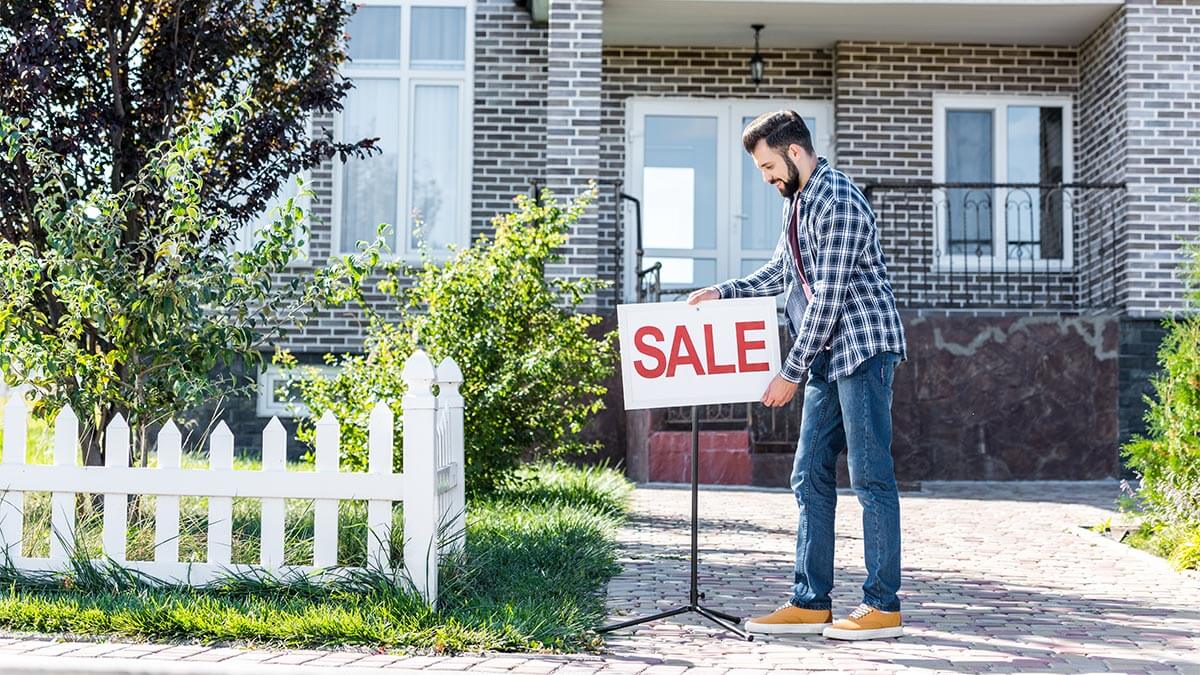
Selling a house means choosing one of three paths: listing with an agent, selling by owner, or taking a cash offer. Each path follows a set sequence from pricing through closing. The process takes 30 to 110 days depending on which method you pick.
Sellers who list with an agent receive a median sale price of $425,000 versus $360,000 for FSBO sellers, per NAR’s 2025 Profile of Home Buyers and Sellers. Cash buyers close in as little as 7 to 30 days with minimal effort on your part. Knowing the trade-offs before you commit is the most important decision in the home selling process.
This guide covers how to choose a selling method, the 8 steps to selling a house from preparing your home through closing day, what each path costs, the taxes you may owe, common mistakes to avoid, and how long each method takes.
How to Sell a House
Skip the Listing. Get Competing Cash Offers. Multiple vetted buyers bid on your home — you pick the best offer.
No repairs, no commissions, close in 7-30 days.
How to Sell a House: 3 Methods to Choose From
Selling a house starts with picking the right path for your timeline and budget. The three methods differ in cost, effort, and how fast you reach closing.
Selling with a real estate agent
A listing agent markets your home on the MLS listing, coordinates showings, negotiates offers, and manages paperwork through closing. According to NAR’s 2025 Profile of Home Buyers and Sellers, 90% of sellers used a real estate agent in 2024. The median sale price for agent-listed homes was $425,000.
Real estate agent commission on the listing side runs about 2.5 to 3% of the sale price under the post-August 2024 NAR settlement. Buyer-agent compensation is now negotiated separately by the buyer. Total seller-side commission often runs 5 to 6% when both sides are represented, though this varies by market.
Selling by owner (FSBO)
Selling a house by owner (also called for sale by owner, or FSBO) means handling pricing, marketing, showings, and contracts yourself. FSBO sellers avoid the listing commission (roughly 3%), but NAR’s 2025 data shows they sold for a median of $360,000 versus $425,000 for agent-listed homes. That $65,000 gap usually outweighs the commission savings.
FSBO works best for sellers with real estate experience, a pre-identified buyer, or a home in high demand. For FSBO mechanics and closing paperwork, the FSBO step-by-step process and closing costs from Chase is a useful reference. State rules vary widely, so see how to sell without a realtor in California as one example of how local rules can differ.
Selling to a cash buyer or iBuyer
A cash buyer or iBuyer buys your home directly. There are no repair requirements, no open houses, and the timeline runs 7 to 30 days from offer to close. Seller fees run 0 to 3% as a service fee rather than a commission. The purchase price typically falls below open-market value. But after subtracting agent commissions, carrying costs, and repair credits from a traditional sale, the net gap often narrows.
For a vetted list of cash buyer types and their typical offer ranges, see what cash buyers actually pay for homes.
Side-by-side comparison: all three methods
The table below puts all three selling methods in one place so you can compare cost, timeline, median price, and effort before deciding.
| Method | Timeline | Seller fees | Median sale price | Effort |
|---|---|---|---|---|
| Agent-listed | 60 to 90 days | 5 to 6% total commission | $425,000 (NAR, 2025) | Low to medium |
| FSBO | Varies; often longer | ~3% (buyer agent only) | $360,000 (NAR, 2025) | High |
| Cash buyer/iBuyer | 7 to 30 days | 0 to 3% service fee | Below market (varies) | Low |
Based on NAR’s 2025 seller data and iBuyer.com marketplace data. Verify current commission rates before transacting.
Steps to Selling a House in 2026
The steps to selling a house follow the same core sequence for all three methods. Who handles each step shifts by method, but the order stays the same. The step-by-step home selling timeline from Ramsey Solutions covers the agent-assisted path in full detail. The eight steps below address all three methods.
"How to Sell a House"
- Step 1: Set your timeline and financial goals
Set your timeline before listing. It determines which selling method makes financial sense. An agent-listed sale closes in an average of 60 to 90 days. A cash buyer closes in 7 to 30 days. Calculate your expected net proceeds for each path before choosing. Subtract the mortgage payoff, commissions, repairs, and closing costs from the expected sale price.
If you are buying another home contingent on this sale, your list date must align with the new purchase contract deadline. Sellers weighing current market conditions should review when selling during a down market makes sense before committing to a timeline.
- Step 2: Prepare your home for sale
Preparing your home means decluttering, deep cleaning, making high-priority repairs, and staging to appeal to the broadest buyer pool. A pre-listing inspection costs $300 to $500 and surfaces problems before the buyer’s inspector finds them. That removes their negotiating leverage.
Home staging runs $500 to $2,500 for partial staging of key rooms. A fully vacant property costs $2,000 to $5,000 or more. Give curb appeal early attention. Buyers form a first impression in under 10 seconds. Landscaping and exterior improvements typically return more than 100% of their cost at resale.
- Step 3: Price your home correctly
Pricing starts with a comparative market analysis (CMA). It compares your property to similar homes sold nearby in the last 90 days. Homes priced more than 10% above comparable sales typically get 30 to 50% fewer showings in the first week.
Set your listing price at or just below the median comparable to maximize early activity. Listings that need a price cut after the first week sell for an average of 4 to 8% less than correctly-priced homes. Getting the price right on day one beats starting high and cutting later.
- Step 4: List and market your home
Listing starts with professional photography and a complete MLS entry. According to NAR’s 2024 data, 97% of buyers begin their home search online. Photo quality and MLS placement are the two most important marketing decisions in the home selling process.
Your listing agent handles the MLS entry and automatic syndication to major portals. FSBO sellers can access the MLS through a flat-fee service (typically $100 to $400). For a cash offer sale, submit your address and property condition details directly to the buyer’s platform.
- Step 5: Schedule and run showings
The first 7 to 10 days on market generate the most buyer activity. Blocking showings during this period cuts your offer count and negotiating leverage. Keep the home show-ready throughout the listing period: neutral decor, minimal personal items, and clean surfaces throughout.
Agents coordinate showing requests through scheduling apps. FSBO sellers handle all coordination themselves. Cash buyer and iBuyer transactions skip the showing stage entirely in most cases.
- Step 6: Review and negotiate offers
Evaluating an offer means looking at price, contingencies, earnest money, and closing date together. Contingencies include financing, home inspection, and appraisal. You can counter on price, timeline, or seller concessions such as closing cost credits or repair allowances.
In a competitive market, ask buyers for their highest and best after the first 7 to 10 days. In a slower market, respond to each offer on its own. A financed offer closes in 30 to 45 days. A cash offer closes in 7 to 14 days.
- Step 7: Navigate inspection and appraisal
The buyer’s home inspection typically delivers a written report within 3 to 7 business days. That report drives repair requests or price credits. You can agree to the items, offer a cash credit instead of repairs, counter with a smaller credit, or decline individual requests.
If the buyer is using a lender, the lender orders an appraisal within 5 to 10 days of contract signing. A low appraisal requires renegotiating the price, the buyer covering the gap out of pocket, or the deal falling through if no agreement is reached.
- Step 8: Close the sale
Closing takes 30 to 45 days from the accepted offer for financed buyers and 7 to 14 days for cash buyers. At closing, you sign the closing disclosure and deed transfer documents. Your mortgage is paid off from sale proceeds, commissions are disbursed, and your net balance is wired to your account.
The escrow officer or closing attorney coordinates the title transfer and fund disbursement. The CFPB’s guide on what to expect at closing explains every line item on the closing disclosure and walks you through closing day.
What Does It Cost to Sell a House?
Selling a house typically costs 8 to 10% of the sale price in total. That covers commissions, closing costs, and pre-sale expenses. On a $425,000 home, that is $34,000 to $42,500 before your mortgage payoff.
Real estate agent commission
The listing agent’s commission runs 2.5 to 3% of the sale price under the post-August 2024 NAR settlement. Before that ruling, a bundled 5 to 6% commission covered both sides. Now the buyer negotiates their agent’s fee separately. On a $425,000 sale, your listing-side commission alone is roughly $10,625 to $12,750.
FSBO sellers skip this commission but, per NAR’s 2025 data, typically net $65,000 less at sale. The effective savings on commission are often negative once the price gap is factored in.
Seller closing costs
Seller closing costs add 1 to 3% of the sale price. These cover title fees, state and county transfer taxes, attorney fees (required in some states), and prorated property taxes. On a $425,000 home, that is $4,250 to $12,750 on top of commission. The seller closing cost breakdown from Bankrate details which fees are set by state law and which are negotiable.
Combined with the listing commission, total seller-side costs run $14,875 to $25,500 on a $425,000 home before repairs and staging.
Repair and staging expenses
Pre-sale repairs average $5,000 to $10,000 for a mid-range home. Home staging runs $500 to $2,500 for partial staging and $2,000 to $5,000 or more for a vacant property. Skipping these costs typically reduces your final offer by more than you saved.
For sellers whose homes need significant work, selling as-is to a cash buyer avoids repair costs entirely. See selling a distressed home in Houston as a model for weighing the as-is sale versus repair-and-list decision.
Net proceeds calculator overview
To estimate your net proceeds, start with your expected sale price. Then subtract: listing commission (2.5 to 3%), any buyer-agent commission you agreed to cover, seller closing costs (1 to 3%), pre-sale repair and staging costs, and your remaining mortgage balance. Run this calculation for each of the three selling methods before you commit. It shows which path actually puts the most money in your pocket.
What Taxes Do You Pay When Selling a House?
Tax rules vary by individual situation and state. Consult a tax professional before relying on this information for your specific sale.
When you sell a house, you may owe capital gains tax on your profit, real estate transfer taxes to your state or county, and depreciation recapture if the home was ever used as a rental. Most primary-residence sellers owe no federal capital gains tax due to a substantial exclusion in federal tax law.
Capital gains tax on a home sale
Capital gains tax applies to the profit from your sale. Profit is your sale price minus your purchase price and the cost of capital improvements. Long-term gains (home held more than one year) are taxed at 0%, 15%, or 20% depending on your taxable income. Short-term gains (held one year or less) are taxed at your ordinary income rate, which runs 10% to 37%.
Per IRS rules for the primary residence exclusion, most sellers who lived in the home for the required period owe little or nothing in federal capital gains tax.
The primary residence exclusion
The primary residence exclusion lets single filers exclude up to $250,000 of home-sale profit from capital gains tax. Married couples filing jointly can exclude up to $500,000. To qualify, you must have owned and used the home as your primary residence for at least 2 of the 5 years before the sale date.
These thresholds have stayed at $250,000 and $500,000 since 1997 with no inflation adjustment. Verify that no legislative change has taken effect before relying on these figures. For a full explanation of capital gains tax types and rates on a home sale, including depreciation recapture and state tax treatment, Jackson Hewitt’s guide covers the full rate schedule.
Short-term vs. long-term capital gains
The long-term rate applies when you have owned the home for more than one year. Most sellers fall into the 0% or 15% bracket. Short-term gains are taxed at your full ordinary income rate, which can reach 22% to 37%. If you are close to the one-year mark, waiting until you cross it typically saves thousands in federal taxes.
Real estate transfer taxes by state
Real estate transfer taxes are assessed by the state, county, or municipality at closing. They are separate from federal capital gains tax. Rates range from 0% in states such as Texas to as high as 2.65% of the sale price in New York City. Your closing disclosure will list this cost. Transfer taxes are generally treated as a selling expense that reduces your taxable capital gain for federal purposes.
What Not to Do Before Selling a House
Avoiding common seller mistakes is as important as any single step in the process. The items below are the errors most likely to cost you money, delay your close, or kill a deal entirely.
-
Do not overprice your home. Listings priced more than 10% above comparable sales get 30 to 50% fewer showings in the first week. They also sell for 4 to 8% less than correctly-priced homes after a price cut. Overpricing is the most expensive mistake a seller makes.
-
Do not skip pre-listing repairs on major systems. Roof, HVAC, foundation, or plumbing problems found during a buyer’s inspection typically produce 1 to 3% price reduction requests or outright deal cancellation. A pre-listing inspection ($300 to $500) lets you fix known issues before buyers arrive.
-
Do not fail to declutter and depersonalize. Excess personal items are the top reason buyers say they can’t picture themselves in a home. Remove family photos, cut furniture to essentials, and create open, neutral spaces throughout.
-
Do not neglect curb appeal. Buyers form a first impression in under 10 seconds. Fresh landscaping, exterior paint touch-ups, and a clean front entry typically return more than 100% of their cost at sale. They cost far less than a price reduction later.
-
Do not block showings in the first 7 to 10 days. Peak buyer demand hits in the opening week on market. Every showing request you turn away during this window is a potential offer you will never receive.
-
Do not hire an agent based on commission rate alone. Ninety percent of homes sell through an agent. Agents who win listings by inflating the suggested price, then recommend reductions, cost sellers an estimated 2 to 3% of sale price on average. Review closed-sale data and seller reviews before signing any listing agreement.
-
Do not over-improve before selling. Kitchen renovations recoup about 67% of their cost at resale. Bathroom additions recoup about 54%. Focus on high-visibility, low-cost improvements instead.
-
Do not ignore mandatory disclosure requirements. Most states require a written seller disclosure form covering known material defects. Non-disclosure creates legal liability after closing. Consult a real estate attorney if you are unsure what must be disclosed.
-
Do not accept the first offer too quickly in a balanced market. Waiting at least 7 days for competing offers in a balanced market raises the final sale price by an average of 2%, as buyers bid against each other.
-
Do not accept an offer without verifying buyer financing. Financed offers fall through at a rate of 15 to 20% versus roughly 5% for cash offers. Require a current pre-approval letter from a reputable lender before signing a purchase contract. Experian’s guide to common seller mistakes covers additional errors worth reviewing before you list.
How Long Does It Take to Sell a House?
How long it takes to sell a house depends almost entirely on the method you choose. The ranges below are national averages. Your market, season, and price point will shift these figures.
Selling with an agent: typical timeline
An agent-listed home spends a national average of 44 to 65 days on market before going under contract. It then needs 30 to 45 days for a financed buyer to close. Total time from listing to close typically runs 75 to 110 days. Homes listed March through May tend to sell about 18% faster on average than homes listed November through January.
Selling by owner: what to expect
Selling by owner typically takes 10 to 15% longer to find a buyer than an agent-listed home. The main reason is limited marketing reach without a full MLS listing. Once under contract, the closing timeline runs the same as an agent sale: 30 to 45 days for a financed buyer. A flat-fee MLS service shortens the front-end exposure gap significantly.
Selling to a cash buyer: fastest path
A cash buyer delivers an initial offer within 24 to 48 hours of receiving your property details. An inspection and review period runs 5 to 7 days. Close typically happens in 7 to 30 days total from first contact. This path removes the financing contingency that causes 15 to 20% of traditional sale fall-throughs. It also gives you a firm, predictable closing date from the start.
Sell Your House in Your State
Home-selling rules, disclosure requirements, and closing customs vary by state. Transfer taxes, attorney requirements, and agent licensing rules all differ. Select your state below for a local breakdown.
Select your state for a local guide covering required seller disclosures, transfer taxes, attorney requirements, and agent rules specific to your market.
If you want to test the cash offer path, iBuyer.com connects you with multiple vetted cash buyers who compete for your home. You get several offers, compare them side by side, and pick the one that fits your timeline and net proceeds goal. No open houses, no agent commission, and no repair requirements. Closings typically happen in 7 to 30 days. Submit your address to see what competing cash buyers will pay.
Skip the Listing. Get Competing Cash Offers. Multiple vetted buyers bid on your home — you pick the best offer.
No repairs, no commissions, close in 7-30 days.
Frequently Asked Questions
Selling a house follows 8 steps: set your timeline, prepare your home, price it, list it, show it, negotiate offers, complete the inspection, and close. The full process takes 30 to 110 days depending on whether you use an agent, go FSBO, or accept a cash offer. Each step has its own timeline and cost, and skipping any one of them typically costs sellers money at closing.
You may owe capital gains tax on your profit, real estate transfer taxes to your state, and depreciation recapture if the home was ever used as a rental. Most primary-residence sellers owe no federal capital gains tax. The IRS excludes up to $250,000 of profit for single filers and $500,000 for married filing jointly, provided you lived in the home for at least 2 of the last 5 years. Gains above those thresholds are taxed at long-term rates of 0%, 15%, or 20% if you owned the home for more than one year.
Before listing, avoid overpricing, skipping major repairs, blocking showings, making low-return renovations, and accepting offers without verifying buyer financing. Overpricing is the most damaging mistake. Homes priced more than 10% above comparable sales typically need at least one price reduction and sell for 4 to 8% less than correctly-priced homes. Structural issues left unaddressed typically produce 1 to 3% price reduction demands or deal cancellation during the buyer’s inspection.
For most sellers, using a realtor produces a higher net price despite the commission. A cash buyer is a fast third option. NAR’s 2025 data shows FSBO homes sold for a median of $360,000 versus $425,000 for agent sales. That $65,000 gap typically outweighs the 3% listing commission saved. Selling by owner works best when you have real estate experience, a pre-identified buyer, or a home in unusually high demand. Cash buyers offer speed and certainty at a price below market, but often above what a poorly priced FSBO nets.
Selling a house typically costs 8 to 10% of the sale price when you add agent commissions, closing costs, and pre-sale repairs. On a $425,000 home, that is $34,000 to $42,500 in total selling costs. The largest line item is real estate agent commission (2.5 to 3% listing side; buyer-agent commission is now separately negotiated following the August 2024 NAR settlement). Seller closing costs add another 1 to 3%, covering title fees, transfer taxes, and prorated property taxes.
A house sold with an agent takes 75 to 110 days from listing to close. Cash buyers close in 7 to 30 days. The agent-listed path includes 44 to 65 days on market (national average) plus 30 to 45 days to close for a financed buyer. FSBO homes typically take 10 to 15% longer to find a buyer due to limited marketing reach, but follow the same closing timeline once under contract.
No state legally requires you to use a real estate agent. You can sell by owner (FSBO) or directly to a cash buyer. However, FSBO sellers in 2025 accepted a median $65,000 less than agent-assisted sellers per NAR data. That gap comes partly from weaker pricing and limited MLS exposure. FSBO works best for sellers with real estate experience or a pre-identified buyer. Cash buyer platforms remove the need for an agent while still connecting you with competing offers.
To sell a house, you need the deed, property tax records, seller disclosure forms, HOA documents if applicable, and a purchase contract. Your agent or title company prepares most paperwork, including the listing agreement, purchase and sale agreement, and closing disclosure. State-mandated disclosure forms vary. Some states require specific lead paint, flood zone, or material defect disclosures. FSBO sellers must source and complete all required forms themselves.
At closing, you sign the deed transfer, pay off your mortgage and closing costs, and receive your net proceeds, typically within 1 to 2 hours. The escrow officer or closing attorney coordinates fund disbursement. They pay your lender the mortgage payoff amount, disburse agent commissions, and wire the remaining balance to you. For a cash sale, this process often takes under an hour and can happen at a title company or remotely via electronic signing.
Yes, you can sell a house with an active mortgage. The remaining loan balance is paid off from the sale proceeds at closing. This is the standard scenario for most sellers. Your lender provides a payoff amount (slightly above the current balance due to accrued interest), and the title company pays the lender directly at closing. If your home is worth less than you owe, you will need lender approval for a short sale.
A comparative market analysis (CMA) compares your home to similar properties sold nearby in the last 90 days to set a fair listing price. CMAs are typically prepared by your listing agent at no charge. They account for square footage, bedroom and bathroom count, condition, lot size, and location. Online automated valuation models carry a median error rate of 2 to 5%, making a professional CMA the more reliable starting point.
Prioritize repairs that affect safety, major systems (roof, HVAC, foundation), and buyer-visible defects before listing. A pre-listing inspection ($300 to $500) identifies issues before buyers find them. That removes their negotiating leverage and cuts fall-through risk. High-ROI improvements include fresh interior paint, updated fixtures, and landscaping. Full kitchen and bathroom renovations return only 54 to 67 cents per dollar spent, so gut renovations before selling rarely make financial sense.
Escrow is a neutral third-party account that holds the buyer’s deposit and coordinates fund disbursement between buyer, seller, and lender at closing. After the purchase contract is signed, the buyer deposits earnest money (typically 1 to 3% of the sale price) into the escrow account. During the escrow period (30 to 45 days for financed sales), the buyer completes their inspection and secures financing. The lender also orders an appraisal during this time. Escrow closes when all conditions are met and all funds are disbursed.
Price your house at or just below the most recent comparable sales in your area to attract immediate buyer interest. Homes priced 2 to 5% below comparable sales get more showings in the first week. They often receive competing offers above list price, which can net more than overpricing followed by a reduction. Your listing agent’s CMA should anchor the decision. Also review homes that recently went under contract (not just closed) for the most current price signal in your market.

Reilly Dzurick is a licensed real estate agent with over six years of experience and a member of the iBuyer.com Market Insights Team, covering national trends in home selling and the evolving iBuyer landscape. Her firsthand experience working with buyers and sellers gives her a practical perspective on how these platforms impact real homeowners. She holds a degree in Public Relations, Advertising, and Applied Communication.