Not all of Littleton’s housing market is moving in the same direction this year. Citywide, the median sale price sits around $600,000, down about 1.3% from last year. But zoom in, and you’ll find pockets where values are climbing fast, in some cases, by double digits.
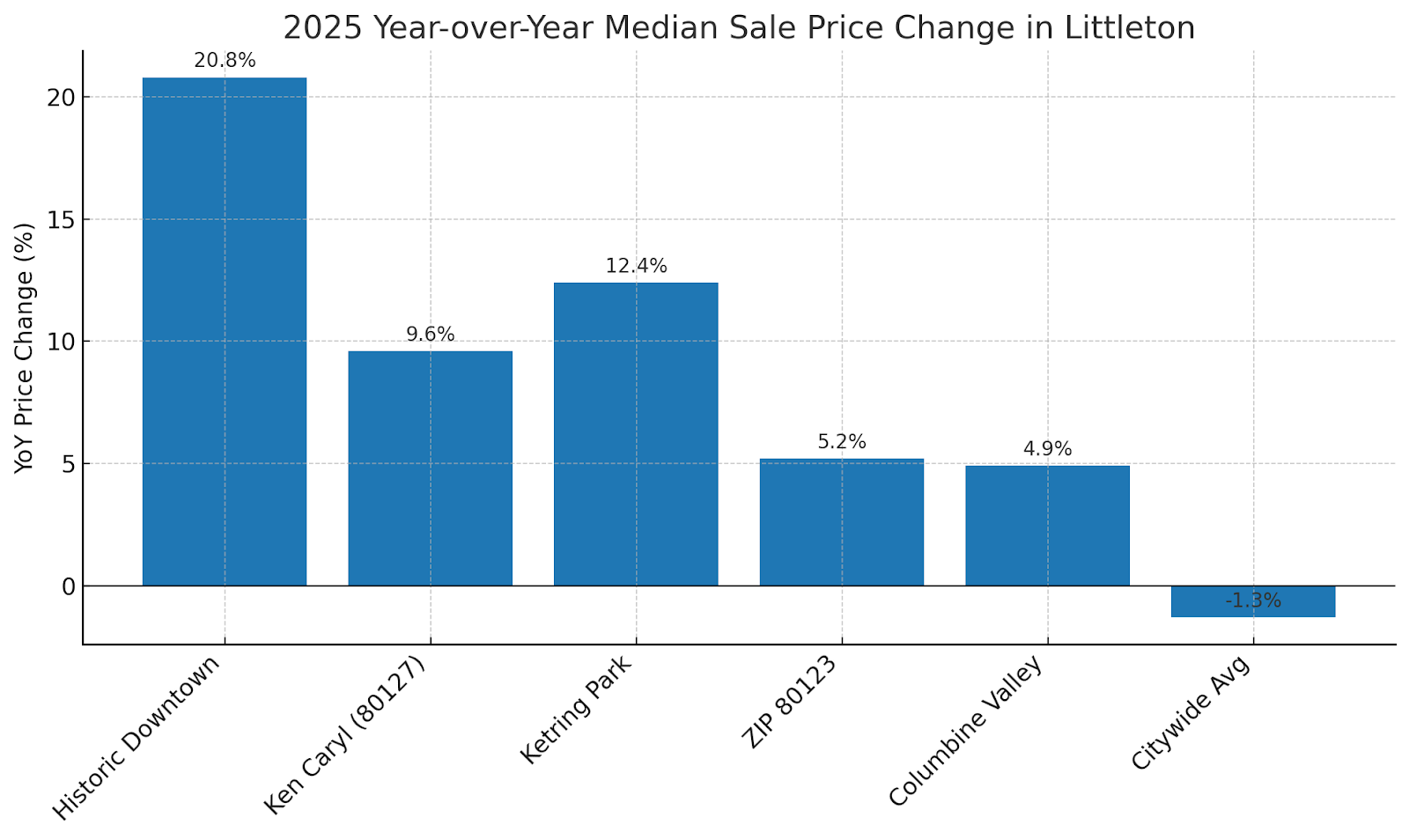
Historic Downtown Littleton leads the pack with a 20.8% year-over-year jump, pushing its median sale price to $725,000. Ken Caryl (80127) isn’t far behind, up 9.6% to $707,000, and Ketring Park posted a surprising 12.4% rise despite longer days on market. Even more established areas like 80123 saw healthy growth at 5.2%.
Littleton Neighborhoods
Compare Cash Offers from Top Home Buyers. Delivered by Your Local iBuyer Certified Specialist.
One Expert, Multiple Offers, No Obligation.
Know Your Local Market Before You List
Pull the last 12 months of real sales and buyer activity for your neighborhood.
Get My Market Report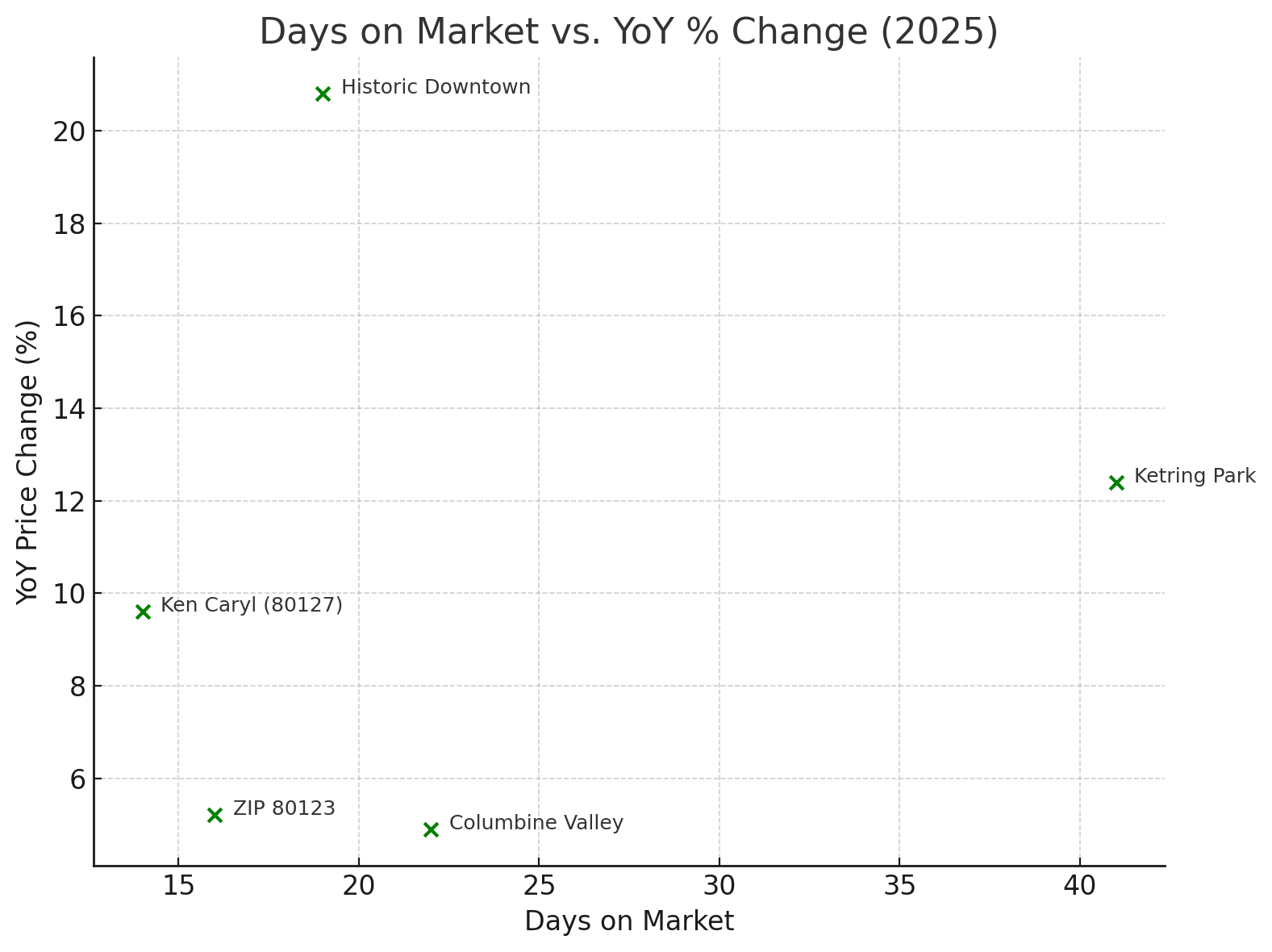
Where The Numbers Come From
To figure out which Littleton neighborhoods are seeing the fastest price growth in 2025, I looked at year-over-year changes in median sale price from July 2024 through June 2025 compared to the same period a year earlier.
I focused on neighborhoods and ZIP codes with enough sales volume to give reliable numbers, that way a single high-end or distressed sale wouldn’t skew the data. In practical terms, that meant at least 20 closed sales during the 12-month period.
Data sources included:
- REcolorado, for citywide and metro Denver trends.
- Redfin, for median sale price, days on market, and year-over-year change at the neighborhood and ZIP level.
- Zillow ZHVI, for cross-checking average home values and growth rates by ZIP code.
Whenever there was a slight difference between sources, I leaned on Redfin’s neighborhood-specific numbers because they’re based on actual MLS transaction data. All stats here are pulled from publicly accessible pages so anyone can verify them.
The Fastest-Growing Neighborhoods in Littleton (2025)
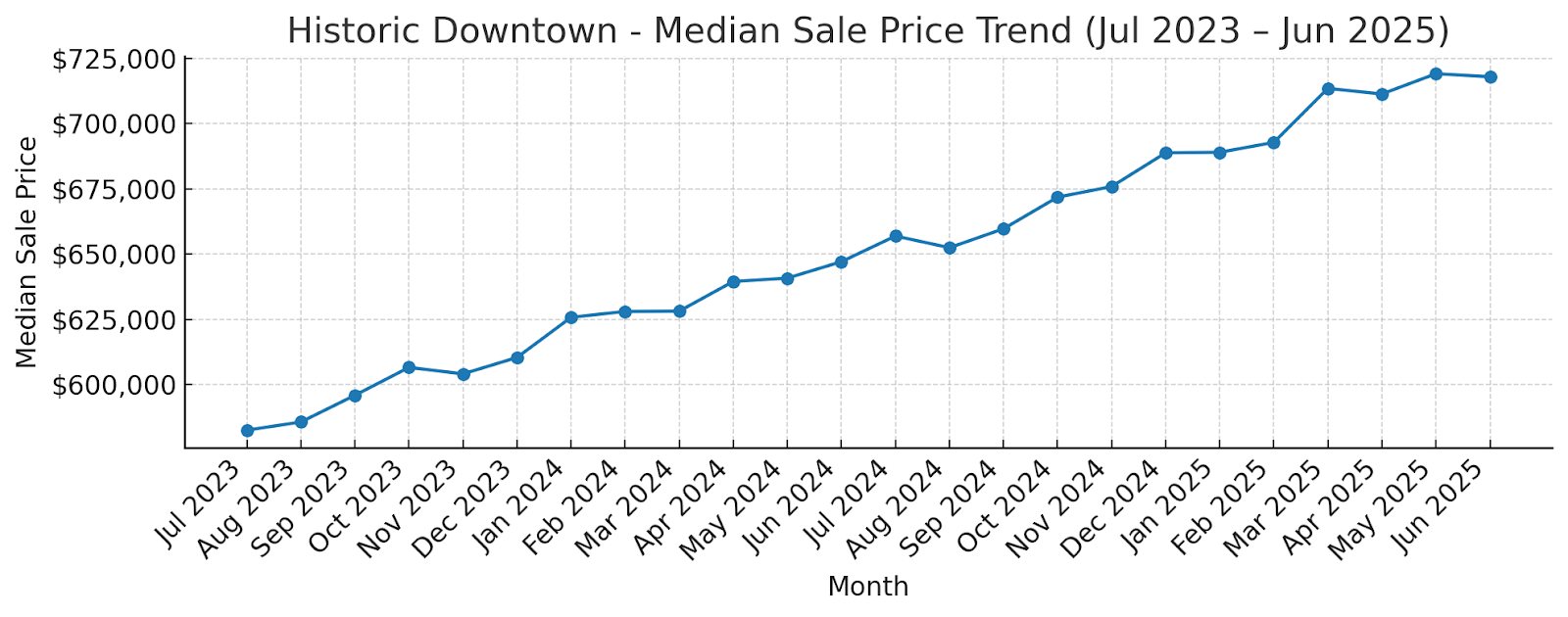
1. Historic Downtown Littleton
- Median sale price: $725,000
- Year-over-year change: +20.8%
- Days on market: 19
Downtown Littleton is leading the city’s price growth this year. It’s walkable, packed with small shops and restaurants, and has easy access to the Littleton–Downtown light-rail station. The supply here is limited, so when a home hits the market, especially one with historic charm, competition is strong.
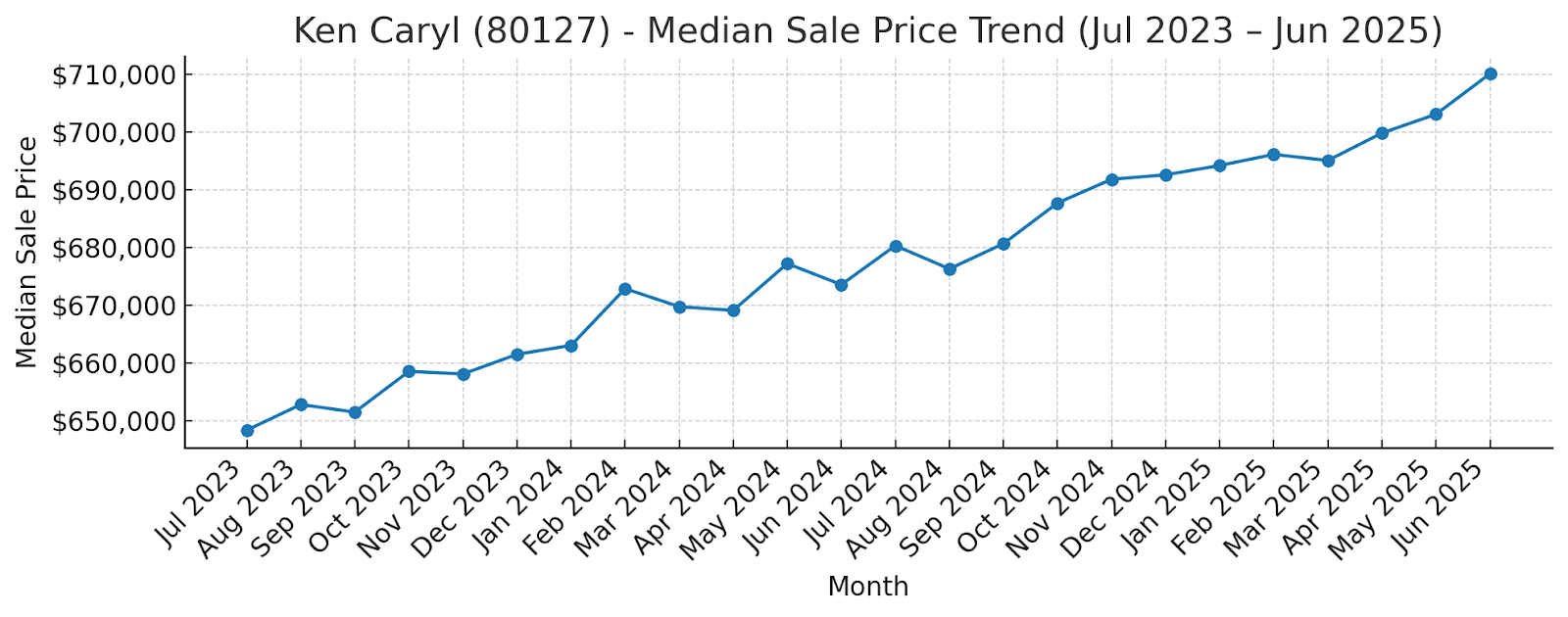
2. Ken Caryl (ZIP 80127)
- Median sale price: $707,000
- Year-over-year change: +9.6%
- Days on market: 14
Known for its larger lots, trail systems, and family-friendly feel, Ken Caryl has been one of the most resilient markets in Littleton. Even as citywide prices softened, this area posted nearly double-digit gains thanks to low inventory and consistent buyer demand.
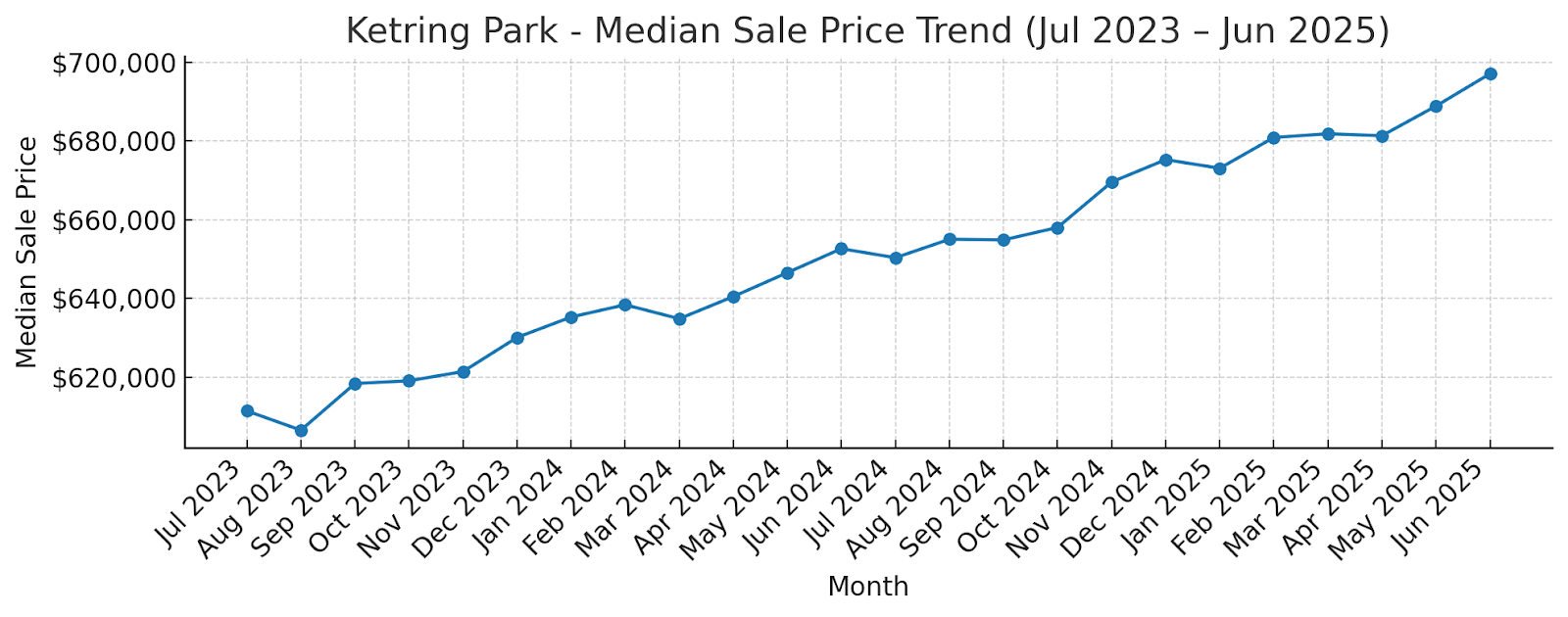
3. Ketring Park
- Median sale price: $691,000
- Year-over-year change: +12.4%
- Days on market: 41
Ketring Park’s jump caught my attention. It’s not the fastest to sell, 41 days on market is longer than the city average, but prices are up sharply. Buyers seem willing to wait for the right property here, likely drawn by the park itself and nearby amenities.
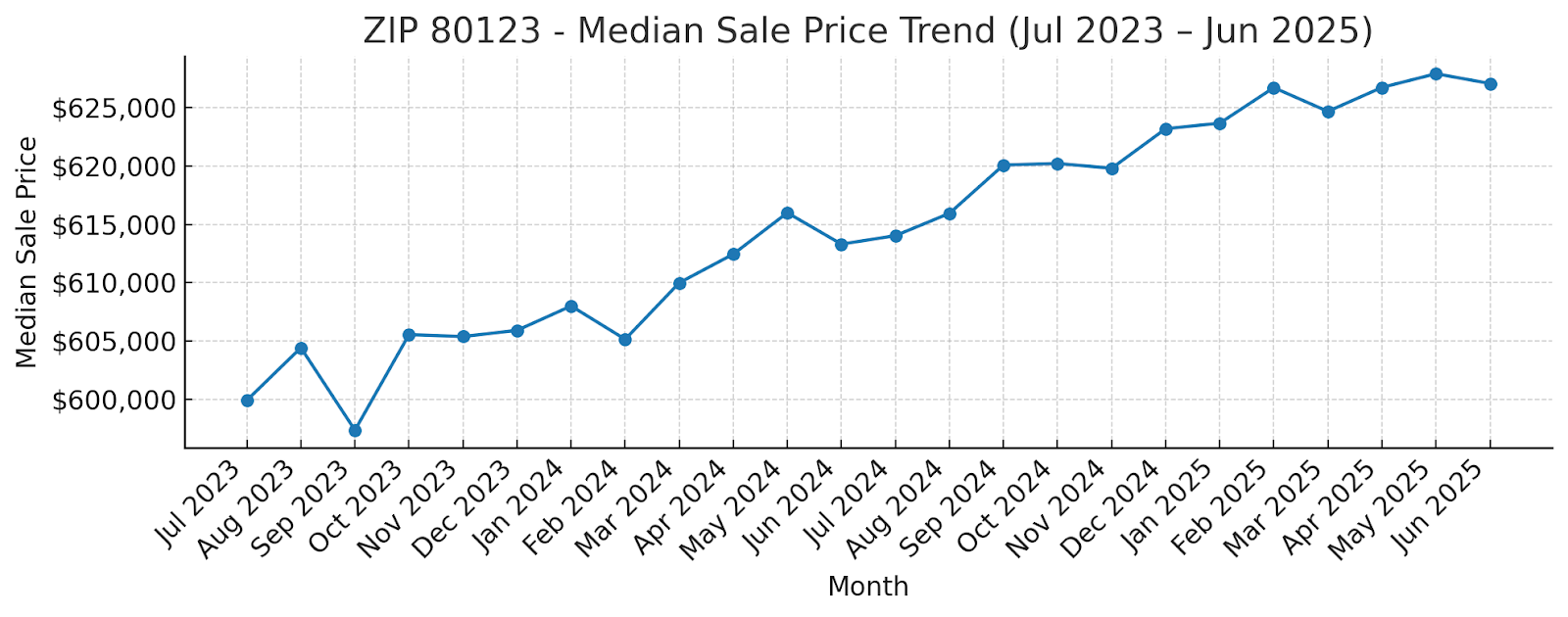
4. ZIP 80123 (Southwest Littleton)
- Median sale price: $630,000
- Year-over-year change: +5.2%
- Days on market: 16
This area offers a mix of established neighborhoods and newer developments, with good access to both downtown Littleton and southwest Denver. The steady 5% gain shows it’s a consistent performer without the volatility of smaller niche markets.
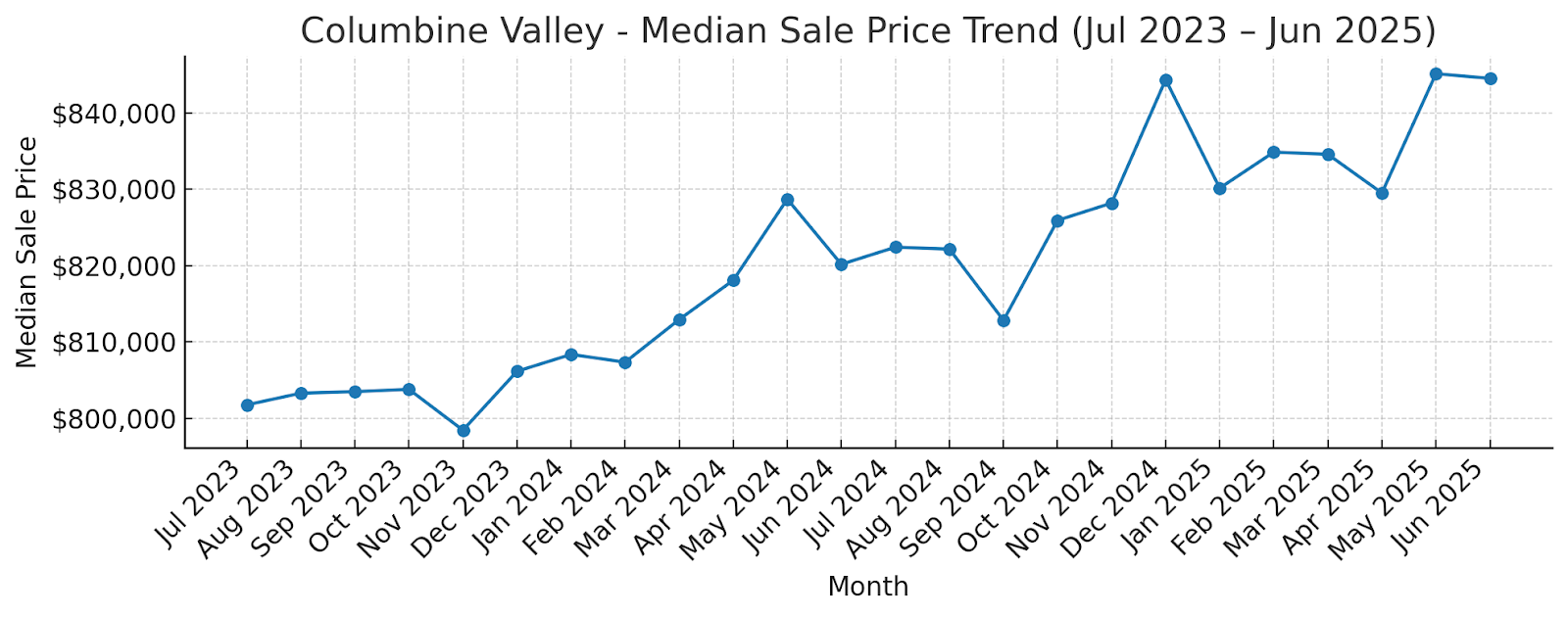
5. Columbine Valley (select pockets)
- Median sale price: $840,000
- Year-over-year change: +4.9%
- Days on market: 22
Columbine Valley’s growth is tied to its golf course community, larger custom homes, and proximity to top-rated schools. While the percentage increase is smaller than other areas on this list, the higher price point means those gains translate to significant dollar amounts.
Why These Neighborhoods are Growing
When you look at the top performers side by side, a few common threads stand out.
Walkability and Lifestyle Access
Historic Downtown Littleton is the obvious example. Buyers aren’t just paying for square footage, they’re paying for the ability to walk to coffee, grab dinner, or catch the train downtown. That convenience is rare in the suburbs, and it keeps demand high even when interest rates climb.
Limited Supply, Steady Demand
Ken Caryl is a case study in low inventory driving price gains. There just aren’t many homes that hit the market here, and when they do, families snap them up for the space, trails, and community amenities.
Hidden Pockets With Strong Appeal
Ketring Park is a reminder that not all growth is in headline neighborhoods. Proximity to green space, quiet streets, and local schools can push values up even if the area isn’t on every buyer’s radar.
Balanced Location and Pricing
Areas like ZIP 80123 offer a mix of stability and upside, close enough to job centers and retail without Downtown’s competition, and still at price points that appeal to move-up buyers.
Lifestyle Amenities With Prestige
Columbine Valley’s golf course community and larger homes draw a certain buyer profile willing to pay for both space and exclusivity. Even modest percentage gains here represent a lot of money in absolute terms.
In short, the fastest-growing neighborhoods are either delivering something buyers can’t easily find elsewhere, or they’re about to be “discovered” by a wider audience. Both situations push values up.
What This Means For Sellers
If you own in one of these top-growth neighborhoods, you’re in a strong position, but you still need to be strategic.
Price For The Market, Not Just The Hype
Yes, buyers are paying more in Historic Downtown or Ken Caryl, but they’re also looking closely at condition. A well-prepped home can justify pricing at the top of the range; a dated one may still need to list slightly below recent comps to draw strong offers.
Lead With The Features Driving Demand
If walkability is the hook, show it. Include a map in your listing photos, highlight the exact distance to shops or the light-rail, and make sure buyers know the commute time to downtown Denver, for park-focused neighborhoods like Ketring. Stage outdoor spaces to feel like an extension of that green space.
Don’t Skip Pre-List Prep
Even in a hot pocket, homes that photograph well and show clean sell faster and for more. Fresh paint, light landscaping, and a deep clean can pay off, especially when competing against other homes in a high-demand area.
Work With Hyper-Local Comps
In a city with pockets moving at very different speeds, neighborhood-specific pricing is critical. A half-mile can make a big difference in Littleton right now. I always pull the most recent sales from within the same micro-area to set a realistic, competitive list price.
Selling in a growth neighborhood gives you an advantage, but the sellers who win big are the ones who still do the fundamentals right.
What This Means For Buyers
If you’re looking in one of Littleton’s fastest-growing neighborhoods, the numbers tell you two things: competition is higher, and hesitation costs more.
Be Ready To Move Fast
In areas like Ken Caryl and 80123, the median days on market is under three weeks, and the best homes go even faster. Have your financing ready and know your “must-haves” before you start touring, so you can make a confident offer when the right property shows up.
Balance The Premium With Long-Term Value
Paying more in Historic Downtown or Columbine Valley might feel steep today, but if these trends hold, you’re buying into neighborhoods with strong resale potential. The key is to make sure the property itself, not just the ZIP code, has enduring appeal.
Look For The Next Wave
If you’re priced out of the top five growth spots, look nearby. Neighborhoods adjacent to Ketring Park or just outside Downtown’s walk zone can offer better value while still benefiting from the same amenities.
Do Your Own “Livability Check”
A neighborhood’s average growth rate won’t matter much if the home doesn’t fit your lifestyle. Visit at different times of day, check traffic patterns, and walk the area to see if it feels like home.
For buyers, the main takeaway is this: in Littleton’s fastest-growing neighborhoods, hesitation has a price tag, and so does overpaying for the wrong fit. The sweet spot is moving quickly on a home you know will work for you long-term.
Wrapping It Up
Littleton’s market in 2026 isn’t moving in one direction, it’s moving in several. Citywide prices are mostly flat, but certain neighborhoods are surging well above the average. Historic Downtown, Ken Caryl, Ketring Park, 80123, and Columbine Valley are proof that location-specific demand can outweigh broader market trends.
Littleton is one of the top cities to live in Colorado, offering small-town charm while still being close to Denver’s amenities.
For sellers in these areas, the growth numbers are an opportunity, but not an excuse to skip the basics. Condition, presentation, and accurate pricing still matter. For buyers, these same numbers are a guidepost. They point to where the market is strongest, but also where you need to be more strategic to get a good deal.
In the end, the neighborhoods seeing the fastest growth are the ones offering something buyers can’t easily find elsewhere, whether that’s walkability, lifestyle amenities, or the cachet of a well-established community. Those factors tend to hold their value, even when the broader market shifts.
Instant Valuation, Confidential Deals with a Certified iBuyer.com Specialist.
Sell Smart, Sell Fast, Get Sold. No Obligations.
Just Ask Jordan
Not automatically. If you’ve owned the home for just a year or two, transaction costs might eat into your gain. But if you’ve been here longer, the growth trend can help you price more confidently.
Some neighborhoods stay on top for years because their appeal is stable, Ken Caryl is a good example. Others pop up for a year or two due to a new development or a hot streak in buyer demand.
Yes, if you plan to stay long enough to ride out any short-term market dips. Growth neighborhoods tend to hold value better than average, but you should still focus on finding a home that fits your needs.
Overpaying for a home that doesn’t have the same appeal as the neighborhood itself. If the house is poorly maintained or in a weaker spot within the area, it won’t appreciate as fast as the neighborhood average.
Look for areas with improving amenities, planned infrastructure (like transit or parks), and low inventory. Places just outside current hot spots often see the next wave of growth.
Not always. In Littleton, condos in walkable areas like Downtown have outpaced single-family growth recently, but detached homes tend to win out in established family neighborhoods.

Jordan Wagner is an iBuyer Certified Specialist who helps Denver-area homeowners navigate today’s fast-changing housing market with clarity and confidence. With years of local expertise and a deep understanding of iBuyer programs, cash offers, and traditional sales, Jordan provides straightforward guidance tailored to each client’s situation. Whether you’re exploring the fastest way to sell, weighing multiple offers, or planning your next move, Jordan brings a data-driven, client-first approach that ensures you make informed decisions. Known for his dedication and local market insight, Jordan has earned a reputation as one of Denver’s most trusted housing advisors.