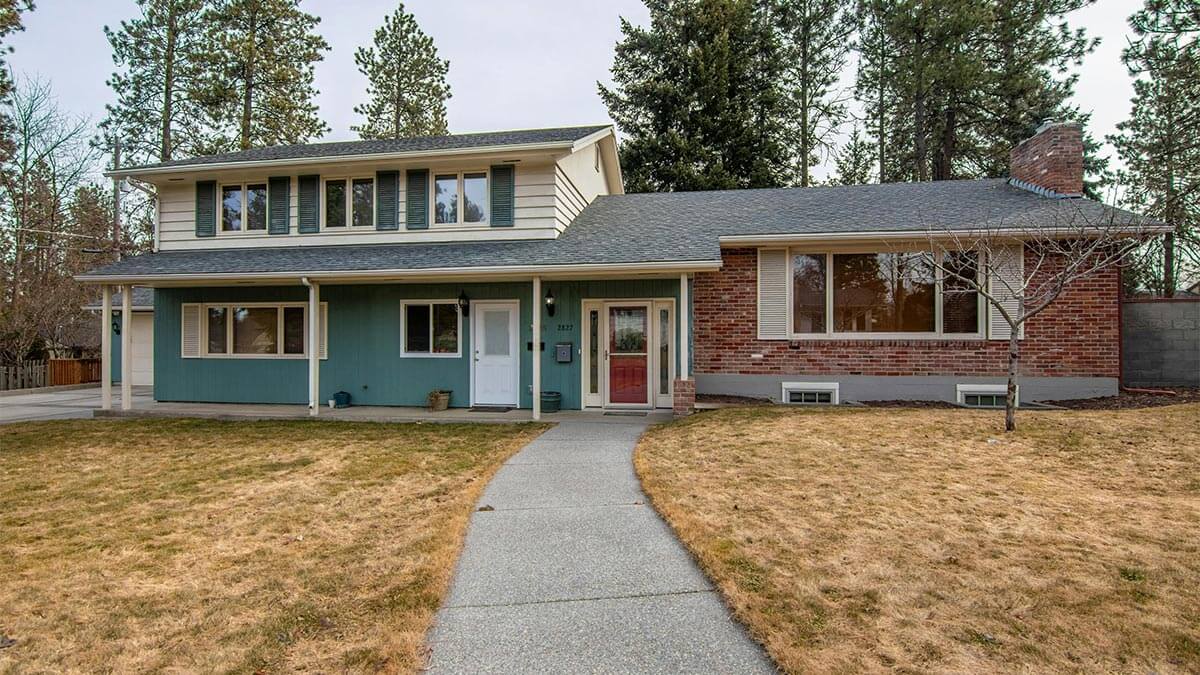
A 4-bedroom home typically sells for more than a 3-bedroom home, but the premium ranges from as little as $500 to more than $90,000, and square footage drives that gap more than bedroom count itself. Nationally, the $20,000 to $90,000 range applies primarily because 4-bedroom homes tend to be larger overall, not because the extra room commands a standalone price bump.
| Median price premium | Typical buyer pool | Days on market tendency | Best market conditions | |
|---|---|---|---|---|
| 3-Bedroom | Baseline | Widest (couples, small families, downsizers) | Faster in urban and walkability markets | Urban, mixed-use, any price range |
| 4-Bedroom | $20,000, $90,000 above | Family buyers, multigenerational households | Faster in family-demand suburbs | Suburban, school districts rated 7+ out of 10 |
Agent-tracked data from Portland shows 3-bedroom homes at a median sale price of $600,000 versus $600,500 for 4-bedroom homes in similar size ranges, a $500 difference. A separate agent dataset found that in same-square-footage comparisons, 3-bedroom homes sold for a median of 6.8% more than 4-bedroom homes in certain markets. The common assumption about 4 bedroom vs 3 bedroom home value overstates the bedroom’s independent contribution when square footage is identical.
This guide covers when 4-bedroom homes command the biggest premium, how much value does an extra bedroom add in practice, which bedroom transition delivers the best return, when the 4th bedroom fails to add value, what devalues a house the most, how to reach $50,000 in added home resale value, and which bedroom count is right for your specific resale situation.
3-Bedroom vs. 4-Bedroom
- Do 4-bedroom homes sell for more than 3-bedroom homes?
- How much value does an extra bedroom add?
- Which bedroom transition adds the most value?
- When does a 4th bedroom not add value?
- What matters more than bedroom count?
- What devalues a house the most?
- How to increase home value by $50,000
- 3-bedroom vs. 4-bedroom: which is right for resale?
- Frequently Asked Questions
What Will Buyers Pay for Your Home? Get competing cash offers based on your home's actual layout and condition
No listing required, no repairs needed, close in 7-30 days
Do 4-bedroom homes sell for more than 3-bedroom homes?
4-bedroom homes generally sell for more than 3-bedroom homes, but when similar-sized homes are compared, the price gap can shrink to almost nothing. Many sellers ask: do 4 bedroom homes sell better than 3 bedroom homes as a universal rule? On price, 4-bedroom homes usually win. On speed and breadth of buyer interest, 3-bedroom homes often have the edge, particularly in urban and walkability-focused markets.
Per NAR multigenerational home data, the median list price for multigenerational 4-bedroom homes reached $709,000 in 2026, compared to a standard median home price of $429,900. That gap reflects size, location, and features as much as bedroom count. Broader economic cycles also affect buyer demand for larger homes; stock market and home values move together in ways that can widen or compress the 4-bedroom premium depending on the economic environment.
When 4-bedroom homes command the biggest premium
4 bedroom vs 3 bedroom home value differences are largest in family-demand suburbs with school districts rated 8 or above out of 10, where homes in the 1,800 to 2,500 square-foot range dominate the comparable sales pool. Buyers in these markets actively filter by bedroom count, and family-sized homes with four bedrooms command a clear premium over three-bedroom alternatives. The premium widens further when the 4th bedroom genuinely serves as a home office, guest suite, or multigenerational living space that buyers are willing to pay for.
When a 3-bedroom home sells for more
When square footage is held constant, 3-bedroom homes can actually outsell 4-bedroom homes because the extra room adds nothing buyers value. According to Portland bedroom comp data tracking 415 local sales, 3-bedroom homes had a median of $600,000 versus $600,500 for 4-bedroom homes in similar size ranges. A 4th bedroom carved from the same square footage produces a cramped room that buyers discount rather than reward. In those conditions, do 4 bedroom homes sell better than 3 bedroom homes? The comp data says no.
How much value does an extra bedroom add?
Adding a bedroom typically increases a home’s resale value by $20,000 to $50,000, or roughly 5% to 15% of its market price, depending on the local buyer pool, legal compliance, and whether the added bedroom increases livable square footage. How much value does an extra bedroom add when square footage stays constant? Close to zero in most markets. Bedroom addition resale value is highest when the room is fully permitted, meets legal bedroom requirements, and genuinely expands the home’s usable area rather than subdividing existing space.
Table 1: Bedroom Transition Value Add
| Going from | Typical value add | Key reason |
|---|---|---|
| 1BR to 2BR | $15,000, $30,000 | Opens buyer pool beyond singles |
| 2BR to 3BR | $30,000, $60,000 | Largest U.S. buyer pool; family-ready |
| 3BR to 4BR | $20,000, $50,000 | Strongest absolute dollar return |
| 4BR to 5BR | $10,000, $25,000 | Diminishing returns; narrows buyer pool |
Based on NAR, NAHB, and agent-tracked comparable sales data. Verify against current local comps before transacting.
The 3-to-4 bedroom jump: strongest absolute dollar return
The 3-to-4 transition delivers the strongest absolute dollar return of any single bedroom step-up in mid-range markets ($200,000 to $600,000). Adding a 4th bedroom to serve as a home office, guest suite, or dedicated multigenerational living space taps a buyer pool willing to pay for that function. Bedroom addition resale value in this tier can reach the top of the $20,000 to $50,000 range when the market has strong family buyer demand and a clear pricing gap between 3- and 4-bedroom comparable sales.
According to NAHB addition cost data, a legal bedroom addition costs $35,000 to $100,000 depending on scope. A garage conversion typically runs $15,000 to $30,000. Home addition ROI ranges from 50% to over 100% based on local housing market conditions and whether comparable sales support a 4-bedroom price point.
What it actually costs to add a bedroom
The cost to add a bedroom ranges from $35,000 for a modest room addition with standard finishes to over $100,000 for a full addition with a dedicated bathroom. How much value does an extra bedroom add relative to that cost depends entirely on local comparable sales. If the 3-to-4 bedroom price gap in your neighborhood is $30,000 and the addition costs $50,000, the project does not pay back. If the gap is $60,000 and the addition costs $40,000, home addition ROI is positive.
Build quality matters for bedroom addition resale value. A permitted addition with a proper egress window, closet, heat source, and correct ceiling height will appraise higher and attract more buyers than an unpermitted conversion.
Which bedroom transition adds the most value?
The 2-bedroom to 3-bedroom transition often delivers the strongest percentage return, while the 3-bedroom to 4-bedroom jump delivers the strongest absolute dollar return in mid-range markets. Which matters more depends on your home’s price point and local buyer demand for family-sized homes.
NAHB buyer preference data tracks how buyer demand shifts across bedroom counts. Demand for 3-bedroom homes spans the widest demographic range in the U.S., which powers the percentage return on the 2BR-to-3BR transition. The 3BR-to-4BR jump targets a narrower, higher-income buyer segment willing to pay a larger absolute premium.
Why 2BR-to-3BR often outperforms 3BR-to-4BR
The 2BR-to-3BR jump typically increases value by $30,000 to $60,000 in absolute terms and can represent a 20% to 30% percentage gain, because it crosses into the most competitive U.S. buyer tier. A 2-bedroom home competing against 3-bedroom homes attracts fewer buyers and tends to sit longer on the market. Adding the third bedroom opens the home to young families, couples planning children, and remote workers who need a dedicated workspace. That broad buyer demand typically drives a stronger percentage return than the 3-to-4 transition delivers.
When the 3-to-4 jump delivers the biggest ROI
The 3-to-4 bedroom transition delivers its best home addition ROI in suburban markets with strong school districts and median home prices between $300,000 and $700,000. Nearly 4 million American homes now house multigenerational living arrangements according to NAR’s 2026 report, and those buyers specifically seek 4-bedroom floor plans. Where that demand is concentrated, the absolute dollar return can reach $50,000 or more. In markets where the median home price falls below $250,000, the bedroom count premium compresses significantly.
When does a 4th bedroom not add value?
A 4th bedroom fails to add value when it does not meet legal bedroom requirements, when it results from subdividing existing space rather than adding square footage, or when the renovation cost exceeds what comparable sales in the neighborhood can support. Three conditions remove the bedroom premium almost entirely.
What legally qualifies as a bedroom?
A legal bedroom must meet minimum size, light, ventilation, and exit requirements under local building codes. The International Residential Code (IRC) sets a 70 square foot minimum floor area, but many states and municipalities require 80 to 120 square feet. An egress window providing at least 5.7 square feet net clear opening is required under IRC Section R310. The room also needs a heat source and, in most jurisdictions, a closet.
Per HUD bedroom housing standards, rooms failing size and egress requirements cannot be counted as bedrooms in a bedroom count home appraisal or in comparable sales data. A room marketed as a bedroom that does not meet local code can trigger buyer objections, appraisal discounts, or permit problems that kill a sale.
The 30% rule: don’t over-improve for your area
The 30% rule in remodeling holds that total renovation costs should not exceed 30% of the home’s current value. On a $350,000 home, that means a $105,000 total renovation budget. A bedroom addition costing $80,000 on a $250,000 home likely pushes the intended value above what comparable sales in the neighborhood can support. Bedroom addition resale value is always capped by the neighborhood’s price ceiling, not by the quality of the work.
A bedroom count home appraisal compares the subject property against similar nearby homes. If 4-bedroom homes in your neighborhood sell for $30,000 more than 3-bedroom homes and your addition costs $75,000, the project loses money regardless of craftsmanship.
When subdividing rooms hurts, not helps
Converting a large room into two smaller rooms increases bedroom count without adding price per square foot. The 4th bedroom ends up undersized, the functional layout feels cramped, and buyers notice. Because square footage stays constant, the change contributes zero livable area and can reduce buyer demand when rooms feel disconnected from the rest of the home.
Buyer demand for functional layout consistently outweighs raw room count in both buyer surveys and appraisal practice. A 3-bedroom home with a proportional, open floor plan can outsell a 4-bedroom home with a chopped-up plan in the same neighborhood at the same price point.
What matters more than bedroom count?
Appraisers use comparable sales to determine a home’s value, not a per-bedroom multiplier. A 4-bedroom home with poor functional layout or deferred maintenance will not appraise above well-maintained 3-bedroom comps in the same neighborhood. Several factors consistently outweigh bedroom count in both appraisals and buyer decisions.
When a home is not moving after a price cut, the cause is often functional layout or bedroom count relative to comparable sales rather than just the asking price. A stalled listing guide covers the specific conditions behind this mismatch and what changes actually move stalled listings.
How appraisers actually value bedrooms
Appraisers measure bedroom count against comparable sales in the local market. A bedroom count home appraisal does not assign a fixed dollar value per bedroom. Instead, it notes how the subject property differs from comps and adjusts value up or down based on paired sales nearby. If no 4-bedroom comparable sales exist in the immediate area, an appraiser may be unable to justify a 4-bedroom price point even on a home with a legal, well-built addition.
Price per square foot is the more stable appraisal metric across bedroom counts. A home adding 200 square feet of livable area through a bedroom addition will generally see a proportional value increase based on the neighborhood’s price per square foot, separate from whether that space is labeled a bedroom, office, or flex room.
Location, school districts, and buyer demand
School district ratings can add 5% to 10% to a home’s value, according to Redfin research on what drives buyer demand in residential markets. A 4-bedroom home in a top-rated district captures a larger premium than the same home in a lower-rated district, because buyer demand for family-sized homes ties directly to school quality in most suburban markets. Housing market conditions amplify this relationship: in a low-inventory seller’s market, the bedroom premium grows; in a high-inventory buyer’s market, it compresses.
Functional layout vs. raw room count
Buyers in 2025 and 2026 consistently prefer homes with adaptable spaces over raw room count, particularly as remote work has made home office functionality a purchase priority. A 3-bedroom home with a dedicated home office alcove, open kitchen, and clean sight lines can attract stronger buyer demand than a cramped 4-bedroom home at the same square footage. Functional layout is the underlying variable that determines whether bedroom count translates into home resale value or simply adds a number to a floor plan.
What devalues a house the most?
Structural defects and deferred maintenance devalue a house more than any renovation decision, because buyers discount heavily for problems they cannot estimate the full repair cost of. Knowing what devalues a house the most matters whether you are buying for resale, evaluating a bedroom conversion, or preparing to list. The five factors below account for the largest consistent value reductions across U.S. markets, per property devaluation factors analyzed by Redfin.
- Structural and foundation issues: reduces value by 10% to 25%; buyers fear uncertain repair costs and lenders restrict financing on structurally compromised properties
- Deferred maintenance: aging HVAC, roof wear, and outdated electrical signal future expense; lowers perceived value by 5% to 15% and raises red flags in inspections
- Location-based factors: proximity to industrial sites, flood zones, or heavy traffic; largely beyond seller control and permanently reflected in comparable sales
- Removing or converting a bedroom: loss of a bedroom reduces home resale value by 5% to 15% in most markets; appraisers and buyers notice immediately, and it drops the bedroom count used in comparable sales analysis
- Unpermitted work or over-customization: DIY additions without permits, highly personal finishes, or structural modifications without inspections can reduce value by 3% to 15% and delay or kill a sale
Table 2: Devaluation Factors and Estimated Impact
| Devaluation factor | Estimated value impact |
|---|---|
| Foundation / structural issues | -10% to -25% |
| Deferred maintenance | -5% to -15% |
| Removing a bedroom | -5% to -15% |
| Poor location (noise, flood, industrial) | -5% to -20% |
| Unpermitted additions | -5% to -15% |
| Outdated HVAC / electrical / roof | -3% to -10% |
| Over-customization | -3% to -10% |
| DIY cosmetic work (low quality) | -2% to -8% |
| Clutter / poor curb appeal | -2% to -5% |
Estimated ranges based on industry data synthesis. Actual impact varies by market severity and current housing market conditions. Verify with a local appraiser before listing.
Does removing a bedroom devalue your home?
Yes. Converting a bedroom to a home gym, expanded closet, or bathroom typically reduces home resale value in most markets. The room disappears from comparable sales data, and buyers searching by bedroom count will filter out the listing. The value loss is steepest in markets where the difference between 3-bedroom and 2-bedroom is a meaningful buyer pool divider.
What devalues a house the most in a bedroom-specific context is the combination of losing a bedroom and failing to add equivalent livable value. An expanded bathroom costing $20,000 that removes a bedroom worth $40,000 in local comparable sales produces a net loss. Pull comp data before converting any bedroom to another use.
Unpermitted work and over-customization
Unpermitted additions are among the most preventable devaluation factors. A bedroom addition built without permits may not meet legal bedroom requirements, will not be counted by an appraiser, and can trigger renegotiations or failed sales when the permit history surfaces in due diligence. This risk is highest when modifications involve structural work, electrical, or plumbing.
Over-customization reduces buyer demand without adding appraised value. The cost vs value report principle applies here: improvements with broad appeal recover more of their cost at resale than improvements that reflect personal taste or narrow buyer preferences.
How to increase home value by $50,000
Reaching $50,000 in added home value typically requires one major project combined with condition-focused improvements and strong curb appeal. Adding a bedroom is one path, but it carries higher cost and more execution risk than the alternatives. The five projects below have the most reliable track records in mid-range U.S. markets.
- Minor kitchen remodel: average cost approximately $28,000; average resale gain approximately $32,000 (113% ROI); the highest-ROI kitchen spend in the Cost vs Value Report for 2025 to 2026
- Midrange bathroom remodel: average cost approximately $26,000; returns about 80% at resale; ROI drops for luxury finishes that exceed neighborhood norms
- Adding a legal bedroom: $35,000 to $100,000 in cost; value add of $20,000 to $50,000 (50% to 100% home addition ROI depending on market); only worthwhile when comparable sales confirm a 4-bedroom price point exists in the neighborhood
- Exterior improvements (curb appeal and siding): garage door replacement leads the Cost vs Value Report at over 190% ROI in some markets; fresh exterior paint costs $3,000 to $6,000 with a 50% to 100% typical return
- Energy efficiency upgrades: insulation, windows, and smart thermostat attract buyers and reduce inspection flags; $10,000 to $25,000 in cost with variable returns by local market
Table 3: Home Improvement ROI
| Project | Avg. cost | Avg. value add | Approx. ROI |
|---|---|---|---|
| Garage door replacement | $4,500 | $8,700+ | 190%+ |
| Minor kitchen remodel | $28,000 | $32,000 | 113% |
| Midrange bathroom remodel | $26,000 | ~$21,000 | 80% |
| Bedroom addition (legal) | $50,000, $100,000 | $20,000, $50,000 | 50, 100% |
| Landscaping / curb appeal | $5,000, $15,000 | $10,000, $25,000 | 75, 125% |
Source: 2025, 2026 Cost vs Value Report and NAHB cost benchmarks. Verify current figures before committing to a project.
Is adding a bedroom the best way to add $50,000?
Adding a bedroom reaches $50,000 in added value only when neighborhood comparable sales show a clear 3-to-4 bedroom price gap that exceeds the addition cost, and the result is a legal, permitted room with correct egress and minimum square footage. In most markets, a combination of kitchen, bathroom, and curb appeal improvements delivers a more predictable home addition ROI than a bedroom addition alone.
For sellers who want to avoid upfront improvement costs entirely, a buy-back sale option lets you sell at market value and potentially repurchase the home later without investing in renovations first.
High-ROI improvements by cost and return
The garage door example illustrates the core principle: improvements with universal buyer appeal recover a higher percentage of cost than improvements with narrow appeal. Bedroom addition resale value is highest when the neighborhood has limited supply of 4-bedroom homes in the relevant price range and buyer demand for family-sized homes is confirmed by recent comparable sales. When those conditions exist, a bedroom addition can approach the top of its ROI range. When they do not, kitchen or bathroom updates deliver more reliable results with less execution risk.
3-bedroom vs. 4-bedroom: which is right for resale?
Choosing between 3-bedroom and 4-bedroom for resale is a market-specific question. The data points that matter are your neighborhood’s comparable sales, the price gap between bedroom counts in your specific zip code, and the buyer profile most active in your price range. No national rule applies uniformly.
If you’re selling a 3-bedroom home and considering adding a room before listing, how long before selling also determines whether the investment has enough time to pay back before you close.
When to choose 4 bedrooms for maximum resale
A 4-bedroom configuration maximizes home resale value when the following conditions apply:
- You’re in a family-demand suburb with school districts rated 7 or higher out of 10
- The majority of comparable sales in your neighborhood are 4-bedroom homes
- Your target buyer pool includes multigenerational households (nearly 4 million U.S. homes per NAR’s 2026 report)
- The 4th bedroom adds square footage, not just a room number
- 4 bedroom vs 3 bedroom home value differences in your area exceed $30,000 based on recent comparable sales
When 3 bedrooms is the smarter buy
A 3-bedroom home may hold its value just as well, and sometimes better, when:
- The neighborhood’s price ceiling limits the 4-bedroom premium to $10,000 to $20,000
- Similar-sized 4-bedroom homes in the area sell for only marginally more
- The market is urban or walkability-focused, where buyer demand prioritizes location and square footage over bedroom count
- Adding the 4th bedroom would require subdividing existing space and keeping price per square foot flat
Housing market conditions shift which scenario applies. In a contracting market, the broader buyer pool for 3-bedroom homes becomes an advantage. In a strong family-oriented suburban market, the 4-bedroom premium widens and the bedroom addition resale value case improves.
If you’re trying to decide whether your current bedroom count is working for or against you at the time of sale, the fastest reality check is a real offer. On iBuyer.com, vetted cash buyers compete for homes regardless of bedroom count, condition, or whether you’ve made any upgrades. You see actual numbers, not estimates. If the offers confirm your home’s value, you have your answer. If they come in lower than expected, you’ll know what’s driving the gap before you invest in changes.
See Competing Cash Offers Before Deciding Bedroom count affects your offer, so find out your home's real market value
Multiple cash offers, no obligations, close on your schedule
Frequently Asked Questions
4-bedroom homes generally sell for more money than 3-bedroom homes, but they do not necessarily sell faster or attract fewer contingencies. In most U.S. markets, the 4-bedroom premium ranges from $20,000 to over $90,000, largely because 4-bedroom homes tend to be larger overall. Sellers asking do 4 bedroom homes sell better than 3 bedroom homes will find the answer depends on whether “better” means price or speed: 3-bedroom homes often attract a broader buyer pool in urban markets.
A 4th bedroom typically adds $20,000 to $50,000 in resale value, or 5% to 15% of the home’s price. This assumes the new bedroom meets legal requirements and adds livable square footage rather than subdividing existing space. The 3-to-4 bedroom transition delivers the strongest absolute dollar return of any single bedroom step-up in mid-range markets.
Structural and foundation problems devalue a house the most, reducing value by 10% to 25% because buyers fear unpredictable repair costs. Deferred maintenance and location-based factors follow as the next largest value drivers. Removing a bedroom typically cuts value by 5% to 15%, and unpermitted additions can reduce value by 3% to 15%.
Reaching $50,000 in added value typically requires a major kitchen or bathroom remodel combined with curb appeal improvements matched to your neighborhood’s price ceiling. A minor kitchen remodel costs roughly $28,000 and returns approximately $32,000 at resale (113% ROI per the Cost vs Value Report). Adding a bedroom only beats those returns when neighborhood comparable sales already support a 4-bedroom price point.
Adding a bedroom increases home value by $20,000 to $50,000 in most mid-range markets when the room meets legal requirements and adds net square footage. Converting an existing room without adding square footage delivers little to no value premium. Legal bedroom requirements typically include a 70 to 80 sq ft minimum, an egress window, and a heat source, but vary by jurisdiction.
3-bedroom homes are generally easier to sell because they attract a broader buyer pool, including couples, small families, and downsizers, while 4-bedroom homes target a narrower segment. In suburban markets with high family buyer demand, 4-bedroom homes can move as quickly as 3-bedroom homes. Days-on-market varies significantly by metro and reflects local housing market conditions rather than a national rule.
A legal bedroom typically requires at least 70 square feet, an egress window meeting code, and a heat source, though legal bedroom requirements vary by state and municipality. The IRC sets 70 sq ft as the floor, with many states requiring 80 to 120 sq ft. An egress window must provide at least 5.7 sq ft net clear opening, and rooms failing local code can cause appraisal issues or kill a sale.
Converting a room to a 4th bedroom pays off only when the neighborhood price gap between 3-bedroom and 4-bedroom homes exceeds the conversion cost. If the local price difference is $30,000 and the conversion costs $8,000 to $12,000, the math works. If adding square footage costs $50,000 or more and the neighborhood premium is $25,000, it does not.
A 4-bedroom home may not outsell a 3-bedroom when both have the same square footage and the 4th room is undersized or unpermitted. Portland, Oregon comp data shows 3-bedroom and 4-bedroom homes in similar size ranges at a median gap of only $500. Same-square-footage 3-bedroom homes have sold for 6.8% more than comparable 4-bedrooms in certain markets.
Converting a garage to a bedroom rarely adds net value because removing parking and storage costs more in resale than the extra bedroom gains. A garage conversion costs $15,000 to $30,000 but eliminates parking and storage that suburban buyers actively seek. In dense urban markets where garages are uncommon, the trade-off may differ.
Most buyers and appraisers consider 2,000 to 2,500 square feet an ideal size for a 4-bedroom home, providing roughly 150 to 200 sq ft per bedroom plus shared living space. Below 1,800 sq ft, four bedrooms tend to feel cramped and may reduce resale appeal compared to a well-laid-out 3-bedroom at the same size. Above 2,500 sq ft, buyer demand broadens significantly for multigenerational living households.
No. In some markets, 3-bedroom homes in the same size range sell for more than 4-bedroom homes because buyers prioritize usable space over room count. This is most common in urban markets where walkability and square footage matter more than bedroom count. Local comparable sales analysis is the only reliable way to determine which applies in a specific zip code.

Reilly Dzurick is a licensed real estate agent with over six years of experience and a member of the iBuyer.com Market Insights Team, covering national trends in home selling and the evolving iBuyer landscape. Her firsthand experience working with buyers and sellers gives her a practical perspective on how these platforms impact real homeowners. She holds a degree in Public Relations, Advertising, and Applied Communication.