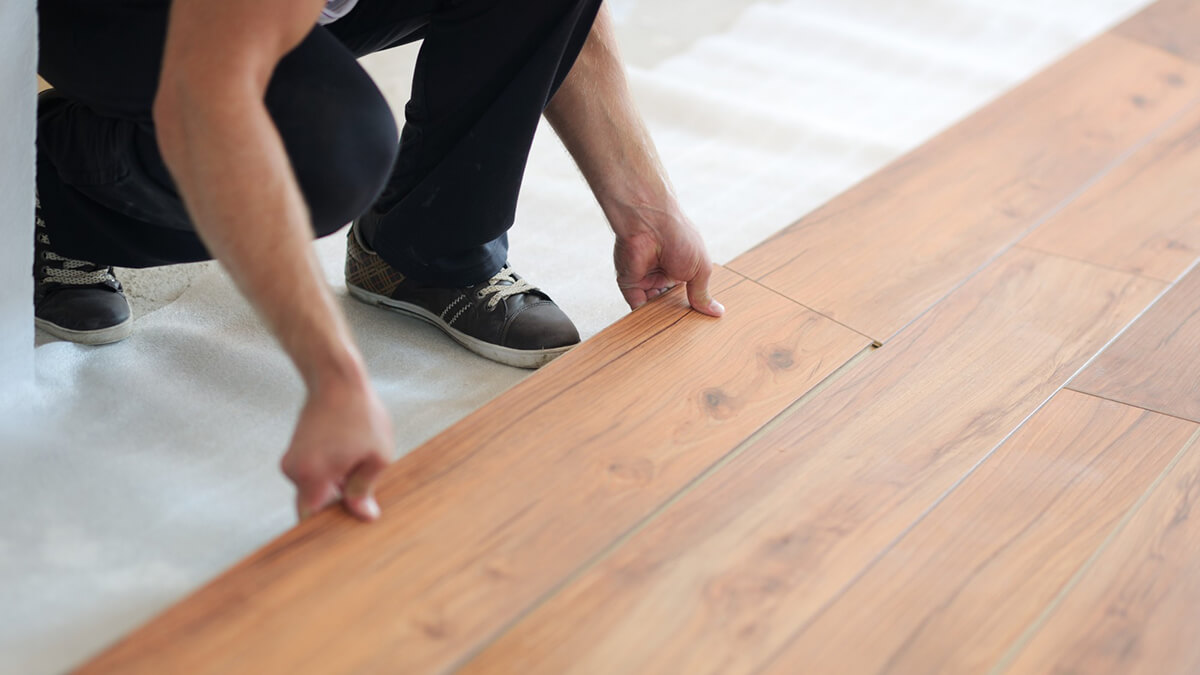
Flooring shapes buyer first impressions and can increase your home’s sale price by 2% to 5% compared to similar homes with worn or outdated floors. On a $300,000 home, that range equals $6,000 to $15,000 in additional proceeds.
The influence of flooring when selling a house extends well beyond aesthetics. Buyers who notice scratched hardwood, smelly carpets, or cracked tiles don’t just estimate the repair cost. They read damaged floors as evidence of deferred maintenance throughout the property, which suppresses offers and lengthens time on market.
This guide covers which flooring types deliver the strongest resale returns, a condition-based decision framework for when to clean, refinish, replace, or pursue an as-is home sale, which rooms to prioritize on a tight budget, current flooring installation cost ranges by material, and the repairs that rarely pay back at closing.
Table of contents
- How important is flooring when selling a house?
- Does flooring affect resale value?
- What types of flooring help sell a home?
- What types of flooring hurt home sales?
- Should you replace flooring before selling?
- Which rooms matter most for flooring?
- How much does new flooring cost before selling?
- What not to fix before selling a house?
- What devalues a house the most?
- Frequently asked questions about flooring when selling
Sell Without Replacing the Floors Cash buyers purchase as-is — no flooring repairs required before closing.
No repairs, no commissions, no guessing.
How important is flooring when selling a house?
Flooring covers more square footage than any other interior surface, appears in every listing photo, and is the first material a buyer physically touches during a showing. Those three factors make floor condition one of the highest-leverage variables in any home sale.
Why buyers treat floors as a maintenance signal
A single bad buyer first impression triggered by worn or damaged floors can reset the entire showing. When a buyer spots gouged hardwood, stained carpet, or cracked tile in an entryway, the reaction extends beyond the floor itself. Buyers assume deferred maintenance applies throughout the property, specifically the HVAC, roof, plumbing, and electrical systems. Real estate agents consistently rank damaged or dated flooring among the top deal-deterrents during showings because that spillover assumption is so predictable.
This buyer psychology loop explains why flooring ROI outperforms many more expensive renovations. Floors are not just an aesthetic feature. They serve as a proxy for the overall care of the home.
The numbers: 2% to 5% value increase
Homes with updated flooring sell for approximately 2% to 5% more than comparable homes with worn or outdated floors. On a $250,000 home, 2% equals $5,000. On a $500,000 home, 5% equals $25,000. These figures make flooring when selling a house one of the few pre-listing improvements where the value lift regularly exceeds the cost of the work, particularly when refinishing is an option.
Hardwood floor refinishing returns an estimated 147% ROI. New hardwood installation returns approximately 118% ROI. Both figures come from the NAR Remodeling Impact Report, the most widely cited source for flooring ROI data across buyer and broker research.
Does flooring affect resale value?
Yes. Updated flooring increases resale value by 2% to 5%, while visibly damaged floors reduce offers and extend days on market. Does flooring affect resale value in every region and price tier? The short answer is yes, though the magnitude varies by local market conditions.
Five key findings from buyer and broker research:
- Hardwood floor refinishing returns 147% ROI on average.
- New hardwood floor installation returns 118% ROI.
- Updated flooring can boost a sale price by up to 2.5% above comparable homes.
- Buyers recover approximately 70% to 80% of hardwood installation cost at closing.
- 79% of brokers report gray and neutral floor tones as buyer-preferred in current surveys.
Refinishing vs. replacing: ROI compared
The single highest-return flooring action for sellers is refinishing existing hardwood, not replacing it. According to NAR Remodeling Impact data, refinishing returns 147% ROI at an average cost of $1,000 to $2,500 for a typical main floor. New hardwood installation returns 118% ROI at a cost of $4,000 to $10,000. Refinishing produces results that photograph as new hardwood at roughly 25% of the replacement cost.
Luxury vinyl plank and engineered hardwood each return approximately 70% to 80% of their installed cost, making them strong options for sellers without refinishable hardwood. Carpet replacement before selling returns approximately 50% to 60%.
| Flooring Action | Avg. Cost | Estimated ROI | Value Added | Buyer Reaction |
|---|---|---|---|---|
| Refinish existing hardwood | $1,000 to $2,500 | 147% | High | Very positive |
| Install new hardwood | $4,000 to $10,000 | 118% | High | Very positive |
| Install luxury vinyl plank | $2,000 to $6,000 | 75 to 80% | Moderate to high | Positive |
| Install engineered hardwood | $3,000 to $8,000 | 70 to 80% | Moderate to high | Positive |
| Replace carpet (neutral) | $1,500 to $4,000 | 50 to 60% | Moderate | Neutral to positive |
| Deep clean and repair existing | $200 to $800 | Very high | Low to moderate | Neutral |
| Leave damaged floors | $0 | Negative | Reduces value | Negative |
Based on NAR 2025 Remodeling Impact Report data and industry cost estimates. Verify current rates before transacting.
Which rooms drive the biggest value lift
Flooring ROI is highest in the living room and entryway, followed by the kitchen, and lowest in secondary bedrooms and utility spaces. The full room-by-room breakdown with specific dollar thresholds appears in the rooms section below.
What types of flooring help sell a home?
Floor type and condition both influence how buyers respond during a showing and how appraisers treat the property at closing. The materials below consistently perform best for resale in most markets.
Hardwood floors resale value
Hardwood floors resale value is the strongest of any flooring category in most U.S. markets. Solid hardwood is buyer-preferred across virtually every region and price tier, returning 118% ROI on new installation and 147% ROI when existing floors are refinished rather than replaced. Neutral tones, including light oak and gray-washed finishes, are the buyer-preferred floor colors in 2026. Dark espresso and red-toned cherry finishes read as dated and are worth avoiding when selecting replacement hardwood before listing.
When you evaluate hardwood floors resale value against other flooring types, hardwood consistently leads in buyer preference surveys and appraiser condition adjustments.
Luxury vinyl plank: the budget alternative
Luxury vinyl plank (LVP) is waterproof, durable, and costs $2 to $6 per square foot installed, making it the most cost-effective hard-surface flooring option for sellers. LVP returns approximately 75% to 80% of its cost at resale and has strong buyer acceptance in mid-tier and entry-level markets. According to flooring types for resale, LVP consistently outperforms dated vinyl and old linoleum in buyer perception, and buyers increasingly accept it as a substitute for hardwood in main living areas. It installs quickly and photographs well, both of which matter for listing photos.
Neutral flooring colors, specifically light oak tones and warm grays, are the top-performing LVP options in buyer preference surveys. Avoid cool dark tones in smaller rooms, where they reduce perceived space in listing photos.
Engineered hardwood: the middle path
Engineered hardwood uses a real wood veneer over a plywood core, delivering the visual appeal of solid hardwood at roughly 30% lower flooring installation cost. It performs well in climates where solid hardwood expands and contracts seasonally and returns approximately 70% to 80% of its installed cost at resale. For sellers choosing between solid and engineered options before listing, hardwood flooring options provides a side-by-side performance and cost comparison.
Tile: where it works and where it doesn’t
Neutral large-format tile (12×24 or 24×24 inches) adds perceived value in bathrooms and kitchens, where moisture resistance is a functional expectation. Avoid patterned, small-format, or visually dated tile in main living areas. Outside of warm-climate markets where tile is the regional norm, buyers in living rooms and bedrooms strongly prefer hardwood, LVP, or engineered hardwood. Tile in those rooms signals a dated aesthetic and is rarely buyer-preferred in northern and mid-Atlantic markets.
What types of flooring hurt home sales?
Certain flooring conditions actively reduce buyer interest, trigger price negotiations, and sometimes cause buyers to pass before making an offer. Knowing which floors function as deal-deterrents is as important as knowing which ones help.
Carpet: the biggest buyer deterrent
Wall-to-wall carpet, especially patterned, pet-stained, or odorous carpet, is the most frequently cited flooring negative in buyer psychology research. According to Houzz on buyer psychology, buyers encountering worn or smelly carpet extend the deferred maintenance signal to the entire home, not just the floor they are standing on.
Worn carpet implies pet odor, allergens, and neglect. Buyers typically deduct the full carpet replacement before selling cost from any offer, then add a contingency buffer on top. A carpet that costs $2,000 to replace may prompt a $4,000 to $5,000 reduction in an offer. Neutral, clean carpet in bedrooms is still acceptable and sometimes preferred. The problem is almost always condition, not the material itself.
Damaged hardwood: when scratches become deal-breakers
Light surface scratches on hardwood are generally acceptable when floors are otherwise in good structural condition. Deep gouges, warped boards, or buckling are a different category. These conditions signal water damage or subfloor problems, which trigger inspection contingencies and immediate price negotiations. Hardwood floors resale value drops sharply when structural damage is visible. This is one scenario where should you replace flooring before selling has a clear answer: yes, or price the damage explicitly into the asking price.
Outdated tile and old vinyl
Old vinyl or linoleum carries nearly the same buyer perception as dirty carpet: strongly dated, associated with deferred maintenance. Cracked tiles, even a single cracked tile in a high-visibility area like the entry or kitchen, invite buyers to scrutinize everything else more carefully. Re-grouting or replacing isolated cracked tiles costs $200 to $600 and is almost always worth doing before listing.
Should you replace flooring before selling?
For a deeper look at the replacement decision specifically, see the flooring replacement guide. The four-tier framework below maps floor condition to the right action, giving you a specific threshold to apply without calling a contractor first.
When to clean and stage (good condition)
If floors are structurally sound, free of pet odors, and present well in photos, cleaning and minor repair is the right choice. Professional cleaning costs $200 to $500. No visible stains, no structural damage, and repair costs under $500: this is a clean-and-stage situation, not a replace-or-refinish one. Home staging in this condition tier produces better results than floor replacement, and most “good but not perfect” floors qualify here.
When to refinish (moderate wear)
Existing hardwood with surface scratches, minor dulling, or color fading, but no structural damage, is the strongest candidate for refinishing. When you refinish hardwood floors, the process takes two to three days and costs $1,000 to $2,500 for a typical main floor, returning 147% ROI. That makes it the highest flooring ROI action available to sellers and almost always the better financial choice over full replacement when the wood is structurally sound.
When to replace (severe damage)
Replace flooring when you have: carpet with pet stains or persistent odor; hardwood with deep gouges, buckling, or warping; tile with multiple cracks; or vinyl that is visibly peeling or yellowing. Before committing, benchmark the replacement cost against the value lift. On a $300,000 home, a 2% increase equals $6,000. A $4,500 LVP installation for the living room and entryway likely pays. A $16,000 whole-house hardwood replacement probably does not.
When to sell as-is and price down
Sell as-is when replacement cost exceeds the projected value lift, when the home’s price point cannot support the investment, or when the listing timeline does not allow for contractor work. Disclose the floor condition, adjust your asking price to reflect the replacement cost, and note in the listing that buyers can select their own flooring. Sellers at this threshold are often selling in poor condition, and the as-is path, including cash buyers who skip pre-listing repairs entirely, is frequently the better financial outcome.
- name: How to Decide Whether to Replace Flooring Before Selling
- Step 1: Walk all floors with a critical eye. Start with the entryway and move room by room. Look for visible stains, pet odors, cracked tiles, warped boards, or flooring that photographs poorly. What you notice in the first 15 seconds is what buyers will notice during a showing.
- Step 2: Categorize the damage level. Sort each room into one of four categories: (a) good condition, (b) cosmetic wear only, (c) visible damage or staining, (d) structural damage or odor. Each category maps to a different action: clean, refinish, replace, or price down and disclose.
- Step 3: Get at least two contractor estimates. For any room in category (c) or (d), get quotes before deciding. Ask specifically: can this floor be refinished rather than replaced, and what is the per-square-foot replacement cost if refinishing is not an option?
- Step 4: Run the ROI math against your home's value. Take 2% of your expected sale price as your minimum value-lift target. If the flooring quote falls below that number, replacement likely pays. If it exceeds that number, refinishing or pricing down may produce better net proceeds.
- Step 5: Decide by room, not by the whole house. Prioritize the entryway and living room. Let bedrooms with acceptable carpet remain. Concentrating budget in high-traffic, high-photo rooms produces better results than spreading it thinly across every space.
- Step 6: If cost or timeline prevents replacement, disclose and price accordingly. Buyers in traditional transactions will negotiate a reduction. Cash buyers in as-is transactions may not require any repair at all. Setting expectations in the listing description is more effective than surprising buyers at the showing.
Which rooms matter most for flooring?
Flooring budgets are almost always limited. Concentrating spending in the highest-impact rooms produces better buyer response than spreading it thinly across every space in the house.
Living room and entryway: highest priority
The entryway and living room are the first rooms buyers see and the spaces that dominate listing photos. Flooring condition here shapes the entire showing impression. A move-in ready living room with updated floors signals to buyers that the home has been well maintained, even when other rooms are less polished. Prioritize these two spaces above all others when your flooring budget is limited.
Kitchen and dining area
Hard-surface flooring, specifically LVP, tile, or hardwood, is strongly preferred in kitchens and dining areas. Worn vinyl is the most common kitchen flooring negative and a frequent point of negotiation. Replacing old vinyl with neutral LVP or tile costs $1,500 to $3,000 for an average kitchen and produces a strong buyer reaction relative to the investment.
Bedrooms: where carpet is still acceptable
Buyers understand that bedrooms commonly have carpet and accept neutral, clean carpet without objection. The problem is condition: stained or pet-odor carpet anywhere, including bedrooms, creates a significant deal risk. According to NAHB buyer preferences, carpet remains the most commonly installed flooring type in bedrooms nationally, and buyers in most markets still expect it.
Bathrooms: tile matters more than you think
In bathrooms, grout condition matters more than tile age or style. Yellowed, cracked, or moldy grout reads as deferred maintenance even when tile is structurally sound. Re-grouting costs $200 to $400 for an average bathroom and dramatically improves perceived freshness during both the showing and the home appraisal. Full tile replacement is rarely necessary before listing unless tiles are cracked or severely dated in a higher-tier market.
How much does new flooring cost before selling?
Flooring installation cost varies by material, square footage, and local labor rates. The ranges below are national averages. Get at least two local quotes before finalizing any budget.
Cost by flooring type (per square foot)
| Flooring Type | Installed Cost (per sq ft) | 1,000 Sq Ft Total | Best Use Case |
|---|---|---|---|
| Hardwood (solid) | $6 to $12 | $6,000 to $12,000 | Living room, entry, main floor |
| Engineered hardwood | $4 to $9 | $4,000 to $9,000 | Living room, bedrooms, variable climates |
| Luxury vinyl plank | $2 to $6 | $2,000 to $6,000 | Kitchen, entry, whole-house budget option |
| Carpet (neutral) | $2 to $5 | $2,000 to $5,000 | Bedrooms, stairs |
| Hardwood refinishing | $3 to $5 | $1,500 to $3,500 | Existing hardwood with surface wear |
| Tile re-grout only | Per area | $200 to $600 total | Bathrooms, kitchens |
Per flooring installation costs from Angi, these figures reflect national averages as of 2026. Material costs and labor rates fluctuate; verify locally before committing to any project.
Cost by project scope
Sellers planning pre-listing repairs should also budget by project scope:
- Single room (200 to 300 sq ft): $400 to $3,600 depending on material
- Main floor only (800 to 1,200 sq ft): $1,600 to $14,400 depending on material
- Whole house (1,500 to 2,500 sq ft): $3,000 to $30,000 depending on material
- Hardwood refinishing, main floor: $1,000 to $2,500 in most markets
- Tile re-grout, one bathroom: $200 to $400
Estimating your ROI before you spend
Always calculate flooring ROI before committing to any project. On a $350,000 home, a 2% value lift equals $7,000. If an LVP installation for the main floor is quoted at $5,000, the math supports the investment. If a whole-house hardwood replacement comes in at $18,000, it almost certainly does not. Start with your home’s value-lift number, then compare it to the lowest-cost option that eliminates the buyer deterrent.
What not to fix before selling a house?
Knowing which pre-listing repairs not to make is as valuable as knowing which ones to make. Many repairs carry real cost, consume contractor time, and do not pay back at closing. The following categories are generally not worth addressing before listing.
Cosmetic flaws that buyers typically overlook
- Light surface scratches on hardwood that are not visible in listing photos. Minor scratches rarely produce meaningful negotiating leverage.
- A single cracked tile in a low-traffic area. One cracked tile outside the entryway or kitchen rarely justifies full-room replacement.
- Minor carpet wear in rooms staged with heavy furniture. If a rug or sofa covers the worn section during showings, it is not a deal factor.
- Grout discoloration in secondary bathrooms. When the primary bathroom is fresh and clean, secondary bathrooms receive far less scrutiny.
- Small vinyl chips or scuffs in the laundry room or garage. Buyers expect utility spaces to show wear.
- Textured or popcorn ceiling finish. Cosmetic only; buyers rarely request removal as a condition of sale.
Upgrades that rarely pay back at closing
Major kitchen remodels recoup approximately 60% of their cost at resale, and full bathroom remodels recoup approximately 50%, per NAR data on renovation returns. Neither is a recommended pre-sale investment. Buyers in mid-tier markets frequently prefer to customize kitchens and bathrooms themselves, which means your renovation budget may generate no incremental value in those spaces.
The same logic applies to flooring in low-visibility rooms. Replacing floors in a home office, guest room, or staged second bedroom rarely changes buyer behavior or offer price.
The flooring work not worth doing
These six pre-listing repairs on flooring are rarely worth the cost:
- Basement floors in unfinished spaces. Buyers expect bare concrete or utility-grade flooring in unfinished basements and do not factor value into that surface.
- Laundry rooms and garages. These are utility spaces; buyers do not price flooring quality into their offer there.
- Rooms buyers will likely renovate themselves. If a room has dated cabinets, fixtures, or layout, new flooring may be demolished within six months of closing.
- Full hardwood replacement when refinishing is an option. If refinishing achieves the same visual result for 25% of the cost, replacement is not justified.
- High-end material upgrades in below-median homes. Premium hardwood in a $160,000 home does not produce the same value lift as it does in a $600,000 home; the market ceiling absorbs the investment.
- Layering new material over functional existing floors. Adding new material over sound existing floors creates height transitions and often costs more than repairing the existing surface.
Sellers deciding not to address flooring are often better served by a faster closing path. The guide on selling a fixer-upper covers the options available when completing repairs before listing is not feasible.
What devalues a house the most?
Flooring is one of several significant value-killers in residential real estate. Understanding where it ranks relative to other devaluation factors helps sellers prioritize repair budgets and set realistic price expectations for any as-is home sale.
The top value-killers: a ranked overview
Deferred maintenance on structural systems is what devalues a house the most. Failing roofs, aging HVAC, deteriorating plumbing, and foundation issues reduce value by 5% to 15% or more and can trigger inspection contingencies that kill financed transactions entirely. Unpermitted renovations follow, with value impacts ranging from 5% to 25% in markets with strong permit enforcement. Flooring falls in the middle tier at 2% to 7%.
| Devaluation Factor | Typical Value Impact | Notes |
|---|---|---|
| Deferred maintenance (roof, HVAC, plumbing) | 5% to 15% or more | Structural and safety issues trigger inspection contingencies |
| Unpermitted renovations | 5% to 25% | Requires disclosure; may require reversal before closing |
| Damaged or outdated flooring | 2% to 7% | Buyers deduct replacement cost and negotiate further |
| Poor curb appeal | 3% to 7% | Affects listing photo click-through and first impressions |
| Pet odor or visible pet damage | 3% to 10% | Often triggers a pass before any offer is made |
| Outdated kitchen or bath (functional) | 2% to 5% | Cosmetic issue; buyers negotiate, rarely walk |
| Neighborhood and location factors | Varies | Cannot be fixed; priced in at listing |
Value impact ranges vary by market and price tier. Treat these as general guidance, not precise predictions for any individual home.
Where flooring fits in the devaluation list
Flooring sits in the second tier of value-killers: significant enough to affect offers, but addressable without major structural work. According to what features sell homes, buyers consistently factor floor condition into both their offer price and their decision to make an offer at all. The 2% to 7% range translates to $6,000 to $21,000 on a $300,000 home. That is meaningful, but well below the potential 15% or more loss from deferred structural maintenance.
For sellers facing multiple value-killers beyond flooring, the guide on homes you can’t sell covers options when repair costs outpace the home’s recovery potential.
If your flooring replacement quote is larger than the value lift it would generate, or if your timeline does not allow for contractor work before listing, you have an alternative. Cash buyers purchase homes as-is, damaged floors, worn carpet, and all, without requiring repairs as a condition of closing. Through iBuyer.com, you can request competing cash offers from multiple vetted buyers and compare what each will pay for your home in its current condition. No repairs, no agent commissions, and a closing timeline you control.
Sell Without Replacing the Floors Cash buyers purchase as-is — no flooring repairs required before closing.
No repairs, no commissions, no guessing.
Frequently asked questions about flooring when selling
Replace flooring before selling only when floors are visibly damaged, stained, or structurally compromised. Good-condition floors need only cleaning and minor repairs. The decision hinges on damage level and price point. On a $350,000 home, a 2% value lift equals $7,000: benchmark that against your flooring quote before committing. Home staging and pricing strategy can often substitute for replacement when floors are functional but dated.
Yes, updated flooring increases home value by approximately 2% to 5%, while visibly damaged floors typically reduce offers and extend time on market. Hardwood floor refinishing returns 147% ROI and new hardwood installation returns 118%, according to the NAR 2025 Remodeling Impact Report. Luxury vinyl plank returns approximately 75% to 80% of its cost at resale, making it the most cost-effective hard-surface option for budget-conscious sellers.
Deferred maintenance, including failing roofs, HVAC problems, and plumbing issues, devalues a house the most, often reducing value by 5% to 15% or more. Flooring damage falls in the 2% to 7% devaluation range, which is significant but addressable. Unpermitted renovations can devalue a home 5% to 25% and may require disclosure or reversal. Location and neighborhood factors cannot be corrected and are priced in at listing.
Skip major kitchen and bathroom remodels before selling, as they recoup only about 50% to 60% of their cost at closing. Light surface scratches on hardwood, a single cracked tile in a low-traffic area, and flooring in rooms staged with heavy furniture are also generally not worth addressing. Focus your repair budget on visible, high-traffic areas: the entryway, living room, and main kitchen floor.
Hardwood flooring delivers the highest resale return, with approximately 118% ROI on new installation and 147% ROI on refinishing existing hardwood. Luxury vinyl plank is the best budget alternative, returning approximately 75% to 80% of its cost at resale and satisfying buyers in mid-tier and entry-level markets. Neutral flooring colors, specifically light oak, warm gray, and beige, consistently outperform dark or patterned options in buyer preference surveys.
Yes, refinishing existing hardwood before selling returns an estimated 147% ROI, the single highest-return flooring action available to sellers. Refinishing costs $1,000 to $2,500 for a typical main floor, removes surface scratches, restores color uniformity, and produces listing photos that read as new hardwood at roughly 25% of the cost of full replacement. Skip refinishing only if the wood has structural damage such as warping, buckling, or subflooring problems.
Worn, stained, or pet-odor carpet is one of the strongest buyer deterrents in home sales. Buyers frequently deduct the full replacement cost from any offer, then add a contingency buffer on top. Neutral, clean carpet in bedrooms is still acceptable and sometimes preferred by buyers. The problem is nearly always condition, not the material: fresh neutral carpet in a bedroom rarely deters buyers, while stained or odorous carpet anywhere in the home is a deal risk. Replacing bedroom carpet costs $1,500 to $3,000 and returns approximately 50% to 60% of cost at resale.
Neutral tones, including light oak, warm gray, and beige, are the buyer-preferred floor colors in 2026. Gray remains the most frequently cited preference in broker surveys, with 79% of brokers reporting it as buyer-preferred. Light oak and whitewashed tones also perform strongly. Avoid cool dark tones in small rooms, where they read as dated and make spaces feel smaller in listing photos.
Yes, appraisers factor flooring condition and type into a home’s value assessment, particularly when comparing to recently sold comparable properties. Severely damaged flooring appears as a condition adjustment against comparable homes with updated floors. New hardwood or LVP in good condition is noted as a positive condition factor. Cosmetic wear on otherwise functional floors typically has minimal impact on the home appraisal outcome.
Yes, you can sell a house with damaged flooring by disclosing the condition, adjusting your asking price, or selling as-is to a cash buyer. Buyers in traditional financed transactions will typically negotiate a price reduction equal to the replacement cost plus a buffer. Cash buyers often purchase homes as-is, eliminating any need to repair or negotiate on flooring. Disclosure requirements vary by state; consult a real estate attorney if the damage is structural.
New flooring increases home value by approximately 2% to 5%, with the exact increase depending on flooring type, the condition of what it replaces, and your local market. On a $300,000 home, 2% equals $6,000; on a $500,000 home, 5% equals $25,000. Hardwood delivers the top end of this range in most markets. Luxury vinyl plank delivers the lower to mid range but at significantly lower installation cost, often producing better net ROI for budget-conscious sellers.
Prioritize the entryway and living room first, as these are the rooms buyers see first and that appear most prominently in listing photos. Kitchen flooring ranks second in buyer impact. Bedrooms with neutral carpet are generally acceptable. Bathrooms matter less for flooring type but heavily for grout condition: re-grouting tile costs $200 to $400 and dramatically improves perceived freshness.
If you have hardwood under carpet, removing the carpet and refinishing the hardwood almost always delivers better resale value than new carpet. Hardwood refinishing costs $1,000 to $2,500 and returns 147% ROI; new carpet returns approximately 50% to 60%. Many older homes have hardwood beneath carpet installed in the 1970s through 1990s. A contractor can check the condition with a small test lift before committing to the full project.
Luxury vinyl plank is the least expensive hard-surface option that consistently satisfies buyers, at $2 to $6 per square foot installed and returning approximately 75% to 80% of its cost at resale. LVP is waterproof, durable, and photographs well, making it effective for kitchens and main living areas where buyer expectations are highest. Deep-cleaning and repairing existing flooring is cheaper still: professional cleaning runs $200 to $500 and can eliminate the need for any replacement if floors are structurally sound.

Reilly Dzurick is a licensed real estate agent with over six years of experience and a member of the iBuyer.com Market Insights Team, covering national trends in home selling and the evolving iBuyer landscape. Her firsthand experience working with buyers and sellers gives her a practical perspective on how these platforms impact real homeowners. She holds a degree in Public Relations, Advertising, and Applied Communication.