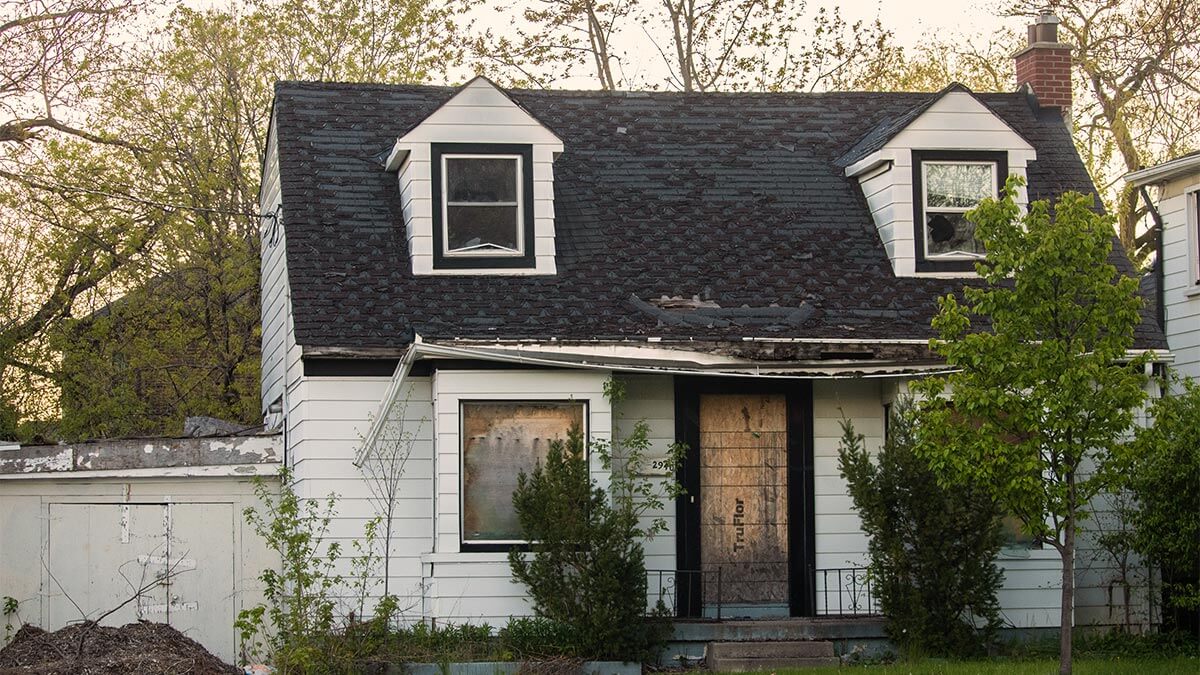
A condemned house is a property a local government has officially declared unfit for occupancy, and yes, you can still sell one. Most condemned properties sell at 40% to 70% below what a comparable habitable home would fetch, with the exact discount driven by demolition costs ($10,000 to $50,000), lot value, and whether hazardous materials are present. The buyer pool is almost entirely cash buyers and real estate investors, since conventional lenders will not finance a property that fails minimum habitability standards.
Selling a condemned house is legal in most U.S. jurisdictions. The owner retains property rights after a condemnation order unless the government separately pursues eminent domain. What changes is who can buy it and how you price it.
This guide covers what condemned status means, whether you can sell, a 5-step process, how to calculate condemned house value, your three selling options, disclosure requirements, what happens during and after condemnation, and the most common mistakes to avoid.
Sell Condemned House
- What Is a Condemned House?
- Can You Sell a Condemned House?
- How to Sell a Condemned House: 5 Steps
- How Much Is a Condemned House Worth?
- Selling Options for a Condemned Property
- Disclosure Requirements for Condemned Properties
- What Happens When a House Is Condemned?
- Can You Legally Live in a Condemned House?
- Common Reasons a House Gets Condemned
- Mistakes to Avoid When Selling Condemned
- Selling a Distressed Home in Your State
- Frequently Asked Questions
Sell Your Condemned House for Cash Get competing offers with no repairs, no listing, no agent fees.
No repairs required, no commissions, no obligation.
What Is a Condemned House?
A condemned house is a property that a local government has officially declared unfit for human occupancy due to safety violations, structural damage, or hazardous conditions. The declaration is a formal government order, not a lender’s opinion or landlord’s characterization. It is backed by a written condemnation notice that specifies the exact violations, required remediation, and compliance deadline.
Per federal housing and condemnation standards from HUD, housing must meet minimum safety thresholds to be considered habitable. When a property falls below those thresholds and a government authority has documented the failure, the property is condemned.
Condemnation vs. uninhabitable: the key difference
“Uninhabitable” is a characterization a lender or landlord can apply for their own purposes. It carries no legal order, no vacate requirement, and no formal notice document. A condemned property is different. It has been officially inspected, found to violate specific code sections, and issued a formal order requiring occupants to leave.
The distinction matters for selling. A lender-deemed uninhabitable property can still be financed with the right loan product. A formally condemned property cannot be financed by any conventional lender until the condemnation order is lifted.
Who has authority to condemn a property?
Authority varies by jurisdiction. City housing inspection departments, county building officials, and state health agencies can all issue condemnation notices depending on the type of violation and the local regulatory structure. A building code violation typically falls under the city or county building department. A health-code violation (mold, sewage, contamination) may fall under the local health department. A fire-code failure may involve the fire marshal’s office.
The condemnation notice names the issuing agency, the violated code sections, and the deadline for compliance, typically 30 to 90 days.
Can You Sell a Condemned House?
Yes. Selling a condemned house is legal in most U.S. jurisdictions. A condemnation order does not transfer ownership to the government. You retain the deed, the liability, and the right to sell.
A small number of municipalities do require repairs before title can transfer. Before listing, check with your local building department to confirm whether your jurisdiction allows a condemned property sale in as-is condition. For sellers whose property qualifies as distressed but may not have reached formal condemnation, the options covered in our guide to selling a house in poor condition apply at the milder end of the same spectrum.
The condemned status must be disclosed in writing to any prospective buyer in all 50 states. Concealment exposes the seller to fraud claims and sale voidance. According to seller disclosure rules for distressed properties from realtor.com, material facts that affect property value, and a condemnation order is universally considered material, must be disclosed.
Why traditional buyers can’t get financing
Conventional mortgage programs (including FHA and VA loans) require the property to meet minimum safety and habitability standards before a loan can be issued. A condemned property fails those standards by definition. No appraisal will support the loan, and no underwriter will approve it. This eliminates the majority of the buyer pool immediately.
Who actually buys condemned properties
The realistic buyer pool for a condemned property sale consists of three groups: real estate investors who plan to repair and flip, developers who want the lot, and cash buyers who specialize in distressed acquisitions. All three groups buy without lender financing and price their offers to account for repair or demolition costs upfront.
How to Sell a Condemned House: 5 Steps
-
Step 1: Review the official condemnation notice, Read the notice in full before taking any other action. Identify the exact code violations cited, the remediation required, any compliance deadlines, and whether your jurisdiction restricts sale before repairs are complete. This document controls every decision that follows. If you have lost the notice, contact the issuing agency to obtain a copy.
-
Step 2: Clear title issues and outstanding liens, Order a title search ($300 to $600) before marketing the property to anyone. Condemned properties frequently carry municipal liens for code-enforcement fees, unpaid property taxes, or demolition cost assessments from prior inspections. A property lien or municipal lien that is not resolved before closing can block the transaction entirely. Lien payoffs must be negotiated or paid; some buyers will absorb them in exchange for a lower purchase price.
-
Step 3: Evaluate repair vs. as-is sale, If repair costs exceed 60% to 70% of the post-repair market value, an as-is cash sale or demolish-and-sell-land approach is typically the better financial outcome. Get at least one licensed contractor estimate before committing to the repair path. For major structural damage, get two. The estimates give you a real number to compare against cash offers.
-
Step 4: Disclose fully to all prospective buyers, Draft a written disclosure package that includes the condemnation notice (or a direct reference to it), all known code violations, existing liens, and any known hazardous materials. Verbal disclosure alone is insufficient to protect the seller legally in any U.S. jurisdiction. Have a real estate attorney review the package before sharing it with any buyer.
-
Step 5: Target cash buyers or real estate investors and compare offers, Market the property directly to cash buyers and investors rather than the standard MLS, which requires habitable status in most markets. Get at least 2 to 3 competing offers. A cash home buyer or real estate investor will typically walk the property once, factor in repair or demolition costs, and deliver an all-in offer within 24 to 48 hours. Comparing multiple offers is the most reliable way to establish the true market price for the lot.
A condemned property cash sale typically closes in 7 to 30 days from offer acceptance. The repair-then-list path takes a minimum of 90 to 180 days once permits are pulled, and that assumes no permit backlog, no contractor delays, and no failed re-inspections. During that entire window, property taxes, any outstanding mortgage, and insurance continue to accrue. For sellers with a time constraint or limited capital, the sell condemned property as-is path almost always produces a faster net result.
How Much Is a Condemned House Worth?
A condemned house is typically worth 40% to 70% less than a comparable habitable home, with the exact condemned house value driven by demolition costs, lot quality, location, and whether hazardous materials are present. The structure itself is priced at zero or negative value in most transactions. The offer reflects the land.
Demolition costs run $10,000 to $50,000 depending on structure size and materials. Hazmat cleanup (mold, asbestos, hoarding bio-contamination) can add up to $20,000 on top of that. A buyer’s opening offer on a condemned property is essentially: lot value minus the cost to clear the site minus a profit margin.
What pushes the discount toward 40% vs. 70%
The 40% end of the range applies when the property has mitigating factors: desirable location, large lot, simple demolition, no hazmat, and low municipal lien exposure. A property in a competitive urban market with a valuable lot can still command a meaningful price even with full condemnation.
The 70% end (or steeper) applies when the property is in a declining market, sits on a small lot, has structural collapse risk, involves hazmat remediation, or carries multiple municipal liens. In some cases, particularly where demolition and cleanup costs approach or exceed lot value, sellers receive offers near land value with essentially nothing attributed to the structure.
Land value vs. structure value
In almost every condemned property transaction, the structure contributes zero or negative value. The buyer is purchasing the land and the zoning rights. In high-cost markets, this still produces a significant sale price. In New York and similar metros, for example, condemned properties in desirable neighborhoods can command lot prices that reflect the underlying land value even after clearing costs, as our distressed home guide for New York illustrates for state-specific dynamics.
In moderate or declining markets, the lot value may be modest enough that demolition and cleanup costs consume most of it. Understanding your lot’s standalone value (based on neighborhood land sales, zoning, and square footage) gives you a floor price to negotiate from.
Eminent domain and “just compensation”
Eminent domain is a separate legal track from code-enforcement condemnation. When the government wants to acquire a property for public use, it must pay the owner “just compensation” under the 5th Amendment, which is defined as fair market value as determined by appraisal.
Per IRS Tax Topic 515 on the tax treatment of eminent domain proceeds, involuntary conversions through condemnation can have specific tax consequences. If your property is subject to an eminent domain action rather than a standard code-enforcement condemnation, consult a real estate attorney immediately. You have the right to contest the government’s appraisal and seek higher compensation through the courts. The process and timeline are entirely different from a voluntary condemned property sale.
Selling Options for a Condemned Property
Three paths exist for a condemned property sale. The right choice depends on your financial situation, timeline, and the scope of violations.
| Option | Typical Timeline | Upfront Cost to Seller | Likely Sale Price | Best For |
|---|---|---|---|---|
| Cash buyer or investor (as-is) | 7 to 30 days | $0 | 40% to 70% of habitable market value | Sellers who need speed, limited capital for repairs, or multiple liens |
| Repair to lift condemnation, then list | 90 to 180+ days | $5,000 to $200,000+ depending on violations | Near full market value if fully remediated | Sellers with capital, minor-to-moderate violations, and time |
| Demolish and sell the land | 30 to 90 days (permitting + execution) | $10,000 to $50,000 (demolition) | Land value minus site-prep costs | Sellers whose lot value significantly exceeds structure value |
Based on industry data from cash-buyer transactions and contractor cost ranges, 2026. Verify current demolition and repair estimates with local contractors before deciding.
Cash buyer or investor sale (as-is)
This is the most common path for selling a condemned house. No repairs, no MLS listing, no agent commission. The buyer prices in all costs upfront. Closing timelines of 7 to 30 days are standard. The tradeoff is price: you accept a discount in exchange for certainty and speed.
Getting competing offers is critical. A single cash offer gives you no price discovery. Two or three competing offers reveal the true market, and the difference between the lowest and highest offer on the same condemned property is often $20,000 to $50,000. Sellers in states with active cash-buyer markets, like North Carolina, can access detailed local guidance on how these transactions work through our distressed home guide for North Carolina.
Repair to lift condemnation, then list
This path requires completing every repair listed in the condemnation notice, passing a re-inspection, and obtaining a written clearance from the issuing authority. Only after the condemnation is officially lifted can the property be listed on the MLS in most jurisdictions.
Repair costs vary widely: minor violations (cosmetic, mechanical) run $5,000 to $20,000. Major structural repairs run $50,000 to $200,000 or more. Properties built before 1980 frequently involve asbestos and lead paint, and pre-1978 construction commonly contains lead-based materials, as documented by the EPA’s guidance on asbestos and lead paint in pre-1980 housing. Hazmat remediation adds cost and timeline.
This path only makes financial sense when repair costs are substantially lower than the gap between condemned-price and habitable-market-value.
Demolish and sell the land
When the structure has no salvage value and the lot is worth enough to absorb demolition costs, selling land after demolition can produce a better net than an as-is sale. Demolition requires permits (add 2 to 6 weeks in most municipalities), a licensed demolition contractor ($10,000 to $50,000), and lender consent if there is an outstanding mortgage.
After demolition, the property is marketed as a vacant lot to builders and developers. This path works best in markets where lot values are high and builder demand is strong.
Disclosure Requirements for Condemned Properties
Every seller of a condemned property has a legal obligation to disclose the property’s status in writing. This is not optional and it is not jurisdiction-specific. A condemnation order is a material fact in all 50 states.
What you must disclose in writing
The disclosure package for a condemned property sale must include:
- A copy of or direct reference to the official condemnation notice
- All known code violations listed in the notice and any subsequent inspection reports
- Any existing property lien or municipal lien on the property
- Known hazardous materials (mold, asbestos, lead paint, bio-contamination)
- Any prior repair attempts and their outcomes
Verbal disclosure alone does not protect the seller. The disclosure must be a signed, written document. Failure to disclose gives the buyer grounds to void the sale and seek damages for fraud.
A real estate attorney is strongly recommended for any condemned property transaction. The disclosure package for a distressed sale involves more legal exposure than a standard transaction.
State-specific disclosure rules
California and New York require specific forms for code violations in addition to the general property condition disclosure statement. Most other states use a general disclosure form that covers material facts broadly.
Per property disclosure laws by state from Nolo, state-level disclosure requirements vary in format but not in fundamental obligation: material defects must be disclosed. Consult a real estate attorney in your state to confirm the correct form and process before sharing disclosure documents with any buyer.
What Happens When a House Is Condemned?
When a house is condemned, the process follows a defined sequence: code complaint or routine inspection triggers a violation notice, a repair deadline is set, and if violations are not resolved, a formal condemnation order is issued. The condemnation notice gives occupants a deadline to vacate.
The condemnation process: step by step
- A code complaint is filed or a routine inspection reveals violations.
- The issuing authority sends a violation notice identifying specific building code failures and setting a repair deadline (typically 30 to 90 days per municipal code).
- If the deadline passes without resolution, the authority issues a formal condemnation order.
- Occupants receive a notice to vacate.
- Utilities (water, electricity, gas) are typically disconnected by the utility provider once the condemnation order is in place.
- If the owner does not take action, the municipality may pursue demolition and bill the owner for the demolition cost, attaching a municipal lien to the property.
The owner retains the deed throughout this process. Condemnation does not transfer ownership to the city or municipality unless eminent domain is separately pursued.
Your rights as the property owner
In most jurisdictions, property owners have the right to request a hearing before the formal condemnation order is finalized. This is the legal window to contest violations, present evidence of completed repairs, or negotiate an extended compliance deadline. After the formal order is issued, the appeal window narrows considerably.
Property taxes continue to accrue regardless of condemned status. You remain liable for taxes, any outstanding mortgage, and code-enforcement fees for as long as you hold the deed.
What happens to your mortgage
Your mortgage does not disappear when the house is condemned. You remain liable for the full loan balance. Most mortgage agreements include a clause requiring borrowers to maintain the property in compliance with local codes. A condemnation notice can trigger a loan review by your lender.
Per mortgage obligations on condemned properties from the CFPB, if the structure is demolished, the lender holds a lien on the land value only. Consult your lender immediately after receiving a condemnation notice, particularly if you cannot afford the required repairs.
For state-specific dynamics on lender and municipality interactions, the distressed home guide for Michigan covers how cities with high code-enforcement activity (Detroit in particular) handle condemned property mortgages at the local level.
Can You Legally Live in a Condemned House?
No. You generally cannot legally live in a condemned house in the United States. A formal condemnation order declares the property unfit for human habitation, and occupants receive a notice to vacate. Staying after that notice takes effect is illegal in most jurisdictions.
Penalties for occupying condemned property
Penalties for remaining in a condemned property after a vacate order vary by jurisdiction. Some treat it as trespassing or squatting. Others impose escalating daily fines. Per trespassing and occupancy laws for condemned homes from Nolo, the legal exposure for remaining in a condemned property is real and jurisdiction-specific.
Utilities are typically disconnected as a safety measure once the condemnation order is issued. In practice, the absence of water, electricity, and gas makes the structure unlivable regardless of the legal status.
A narrow exception exists in some jurisdictions: owners may be permitted to remain briefly during a hearing or appeal period. After that window closes, occupancy is illegal until the condemnation is fully lifted.
How to get the condemnation lifted
To lift a condemnation, complete every repair listed in the condemnation notice, request a re-inspection from the issuing authority, pass that inspection, and obtain a written clearance document. Every listed violation must be resolved. A partial repair that misses one item results in a failed re-inspection and resets the timeline.
Once cleared, the formal lifting document is filed with the local housing department, and the property reverts to habitable status. The timeline ranges from a few weeks (minor violations) to several months (structural or hazmat work), depending on contractor availability, permit processing times, and the inspection backlog at the local agency.
Common Reasons a House Gets Condemned
Structural damage and safety violations
Structural failure is the most common trigger for a formal condemnation order. Foundation failure, roof collapse risk, and compromised load-bearing walls create immediate safety hazards that housing inspectors are required to act on. Partial fire damage that leaves structural risk is also a frequent cause. Once a structure is deemed unable to safely support occupancy, condemnation follows.
Health hazards: mold, asbestos, lead paint
Extensive water intrusion that produces widespread mold, asbestos in deteriorated condition (common in pre-1980 construction), lead paint in a condition that creates exposure risk (common in pre-1978 construction), and hoarding situations that produce bio-contamination are all documented triggers for condemnation notices. The EPA’s guidance on asbestos and lead paint in pre-1980 housing outlines the standards that trigger government action.
Neglect, utilities failure, and code violations
Properties without functioning water, sewer, or electricity for extended periods are considered uninhabitable and subject to condemnation. Unpermitted additions that create fire hazards (non-compliant electrical, missing egress) are a growing category in jurisdictions with active code enforcement. In Illinois, Chicago’s building department issues some of the highest volumes of condemnation-related code violation notices of any metro in the country. The distressed home guide for Illinois covers local enforcement dynamics for sellers in that market.
Mistakes to Avoid When Selling Condemned
-
Not pulling a title search before listing. Municipal liens for code-enforcement fees and unpaid property taxes can block closing entirely. Know what encumbrances exist before you talk to any buyer.
-
Accepting the first cash offer without comparison. Investors who buy condemned properties know that most sellers have no baseline for price. Getting two or three competing offers is the single most effective way to avoid underselling. The spread between offers on the same condemned property is often significant.
-
Attempting to lift the condemnation without verifying all violations are resolved. Partial repairs that miss one listed code violation result in a failed re-inspection and a reset compliance deadline. Confirm with the issuing authority that every item has been addressed before scheduling a re-inspection.
-
Listing on the MLS before the condemnation order is lifted. Most listing agreements and MLS rules prohibit marketing an officially condemned property. Some states attach penalties to MLS listings that misrepresent a property’s legal status. The condemnation must be officially cleared before any MLS listing.
Relying on verbal disclosure. Verbal disclosure alone is legally insufficient everywhere in the U.S. The disclosure requirement for a condemned property sale is a signed, written document. Per legal steps to sell a distressed property from Avvo, sellers who skip written disclosure face fraud exposure and potential sale voidance. A real estate attorney should review the disclosure package before it goes to any buyer.
-
Demolishing without verifying lender consent. If there is an outstanding mortgage on the property, demolishing the structure without lender sign-off may trigger a loan default clause. The lender has a security interest in the structure. Contact your lender before any demolition work begins.
Selling a condemned property means your buyer is almost certainly a cash buyer or investor. The difference between one offer and three competing offers can be tens of thousands of dollars on the same property. iBuyer.com connects you with multiple vetted cash buyers who purchase condemned and distressed homes without requiring repairs, agent commissions, or MLS listings. You can close in as few as 7 days. Enter your property address to see competing cash offers with no obligation to accept.
Sell Your Condemned House for Cash Get competing offers with no repairs, no listing, no agent fees.
No repairs required, no commissions, no obligation.
Selling a Distressed Home in Your State
Condemned and distressed property rules vary by state, code enforcement timelines, disclosure requirements, and cash-buyer markets all differ. Pick your state for a local breakdown.
Frequently Asked Questions
Yes, you can sell a condemned house in the U.S., the owner retains property rights even after a condemnation order is issued. The sale is restricted in a few jurisdictions that require repairs before title transfer, but most states allow a condemned property sale in as-is condition with full written disclosure. The buyer pool is almost always limited to cash buyers and real estate investors, because conventional mortgage lenders will not finance a property that fails minimum habitability standards.
In Ohio, a condemned house is declared unfit for occupancy and the owner must vacate, correct violations, or face escalating fines and potential demolition. The process begins with a code inspection, followed by a violation notice setting a 30 to 90-day repair deadline. A formal condemnation order is issued if violations go unaddressed. The owner keeps the deed but cannot legally occupy or rent the property until the condemnation is lifted after a successful re-inspection. Property taxes and any outstanding mortgage continue to accrue regardless.
A condemned house is typically worth 40% to 70% less than a comparable habitable home, with the exact discount driven by demolition costs, lot value, and location. Demolition runs $10,000 to $50,000 depending on structure size and materials; hazmat cleanup can add up to $20,000. In desirable markets, strong lot value softens the discount toward the 40% end. In declining markets with small lots, the effective discount can exceed 70%, with the structure priced at zero or negative value.
No, you generally cannot legally live in a condemned house, local authorities issue a notice to vacate once a condemnation order is in effect. Staying after a vacate order can result in trespassing or squatting charges depending on jurisdiction. Utilities are typically disconnected as a safety measure. A narrow exception exists during a hearing or appeal window in some jurisdictions; after that closes, occupancy is illegal until repairs are complete and the condemnation is officially lifted.
Yes, sellers are legally required to disclose a condemned property’s status in writing to all prospective buyers in all 50 states. The disclosure must include a copy of the condemnation notice, all known code violations, any existing municipal liens, and known hazardous materials. Failure to disclose gives the buyer grounds to void the sale and potentially sue for fraud. A real estate attorney is recommended to draft the disclosure package for any condemned property sale.
No, conventional lenders including FHA, VA, and conforming loan programs will not issue a mortgage on a condemned property because it fails minimum property standards. This is the primary reason condemned property sales are almost exclusively cash transactions. A buyer wanting to finance a purchase and rehabilitation would need a hard-money loan or a 203(k) rehab loan contingent on the condemnation being lifted after repairs, which involves a separate process and lender approval.
An uninhabitable property is a lender or landlord characterization; a condemned property is a formal government order backed by a written notice with legal consequences. “Uninhabitable” has no universal legal definition and carries no vacate requirement. A condemned property has been officially inspected, found to violate specific code sections, and issued a formal order. The distinction matters for disclosure obligations, sale restrictions, and owner liability.
To lift a condemnation, complete all repairs listed in the condemnation notice, pass a re-inspection, and obtain written clearance from the issuing authority. Every violation listed must be resolved. A partial repair that misses one item results in a failed re-inspection and resets the timeline. Once cleared, the formal lifting document is filed with the local housing department and the property reverts to habitable status.
The most common reasons include structural failure, extensive fire or water damage, hazardous materials (mold, asbestos, lead paint), and extended utility disconnection. Structural causes, foundation failure, roof collapse risk, compromised load-bearing walls, are the most frequent trigger for formal condemnation orders. Hoarding situations that create bio-contamination or block egress are a growing category. Unpermitted additions that create fire or electrical hazards also generate condemnation notices in jurisdictions with active code enforcement.
Condemned houses are purchased almost exclusively by real estate investors, cash buyers, and developers who can absorb repair or demolition costs without lender financing. Investors look at lot value plus the cost to clear the site versus post-redevelopment value. In desirable markets, developers buy condemned properties for land value and demolish the structure entirely. Getting competing offers from multiple cash buyers is the most effective way to avoid underselling the lot.
Your mortgage does not disappear when your house is condemned, you remain liable for the full loan balance regardless of the property’s habitability status. Most mortgage agreements require borrowers to maintain the property in compliance with local codes, and a condemnation notice may trigger a loan review. If the structure is demolished, the lender holds a lien on the land value only. Contact your lender immediately after receiving a condemnation notice.
Yes, if all violations are fully remediated and the condemnation is officially lifted after re-inspection, the property can be listed and sold at market value. This path is financially viable only when repair costs are substantially lower than the gap between condemned-price and habitable-market-value. Major structural repairs ($50,000 to $200,000 or more) rarely pencil out compared to an as-is cash sale, particularly in moderate-price markets where the post-repair value gain is limited.
The government can take your condemned house through eminent domain, but it must pay you “just compensation”, fair market value as determined by appraisal. Code-enforcement condemnation, the most common type, does not transfer ownership. Eminent domain is a separate legal process under the 5th Amendment, used when the government wants the land for public use. If your property is subject to an eminent domain action, you have the right to contest the government’s appraisal in court.
Yes, a cash buyer sale typically closes in 7 to 30 days; repairing a condemned property to re-list it on the MLS takes a minimum of 90 to 180 days once permits are pulled. Minor violations can be resolved in 4 to 8 weeks; structural issues may take 6 to 18 months. During that entire period, property taxes, mortgage payments, and insurance continue to accrue. For sellers with a time constraint or limited capital, the cash-buyer path almost always produces a faster net result.

Reilly Dzurick is a licensed real estate agent with over six years of experience and a member of the iBuyer.com Market Insights Team, covering national trends in home selling and the evolving iBuyer landscape. Her firsthand experience working with buyers and sellers gives her a practical perspective on how these platforms impact real homeowners. She holds a degree in Public Relations, Advertising, and Applied Communication.