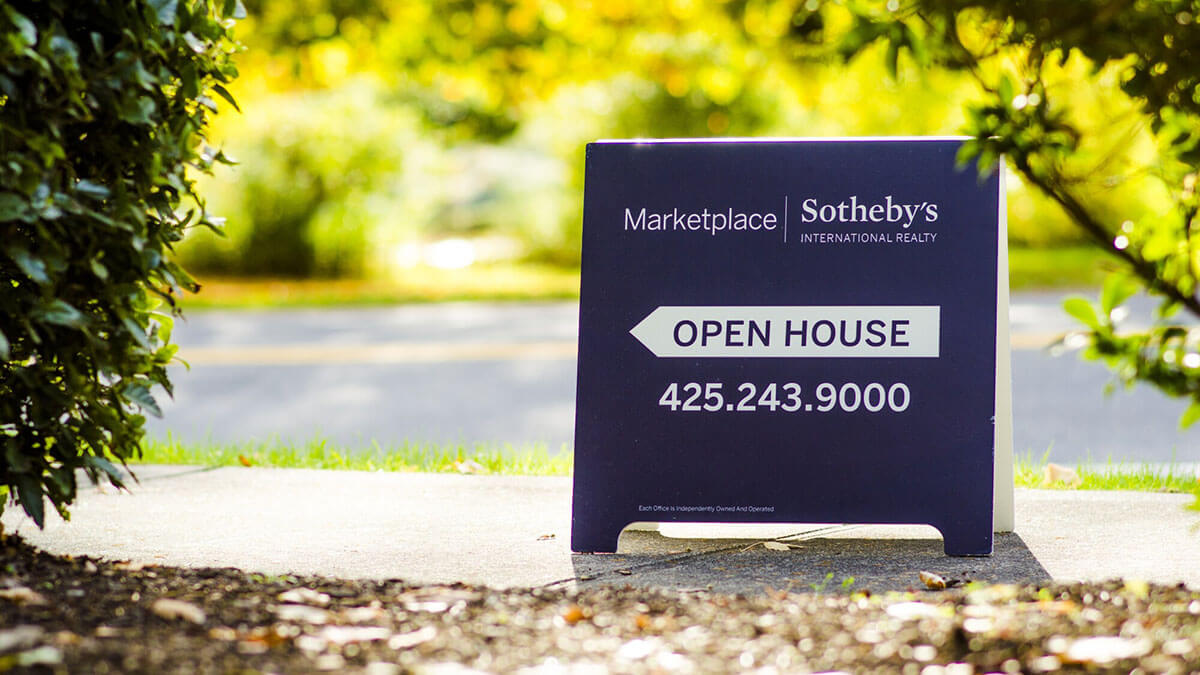
An open house is a scheduled event, typically 1 to 3 hours on a weekend, when a home for sale is open to the public with no appointment required. The seller’s listing agent hosts the event, greets visitors, and answers questions while buyers tour at their own pace. Any member of the public can walk in during the scheduled window. No appointment or buyer’s agent is needed.
Open houses are one of the most widely used tools in real estate marketing. For sellers, they concentrate buyer exposure into a single predictable window. For buyers, they offer a low-pressure way to view a home without scheduling a private showing.
This guide covers what an open house means in real estate and beyond, what the purpose of an open house is for buyers and sellers, how open houses work step by step, how open house vs. private showing formats compare, how to prepare for each, the pros and cons of the format, and what the evidence says about whether open houses actually drive sales.
Prefer Offers Over Open Houses? Get competing cash offers in 24 hours, no showings or staging required
No commissions, no showings, no repairs. Just competing cash offers.
What Is an Open House
What is an open house?
An open house in real estate is a set block of time when a listed property is open to any interested buyer. No prior contact with the listing agent is needed. The event is promoted through the MLS, yard signs, and real estate portals in the days before it takes place.
The listing agent stays on site throughout the event. They answer questions and collect visitor contact information. Buyers arrive when they choose, tour the rooms at their own pace, and leave without any obligation to comment or decide.
What does ‘open house’ mean outside real estate?
The term appears in several contexts beyond home sales. Merriam-Webster’s open house definition covers three main usages: real estate viewings, social gatherings, and institutional tours.
Social events: In casual usage, an open house describes a drop-in gathering. Guests arrive and leave freely within a set time window. There is no fixed schedule, no RSVP, and no assigned seating. The term signals a relaxed atmosphere rather than a structured occasion.
Schools and institutions: When a school or college holds an open house, it invites prospective students and families to tour its facilities and meet staff. These events are more structured than social gatherings but share the same drop-in format.
All three uses share one defining trait: a time-bounded window when people may come and go freely without a personal invitation.
What does an open house invitation mean?
An open house invitation is a general public notice, not a personal summons. When a listing says “open house Saturday 11 a.m. to 2 p.m.,” any interested buyer may attend. No RSVP, no prior relationship with the agent, and no buyer’s agent is required.
You can arrive at any point during the window. Stay as long or as briefly as you like. Leave without ceremony. The listing agent may ask you to sign in, but this is standard courtesy rather than a condition of entry.
What is the purpose of an open house?
An open house serves five distinct purposes for sellers, buyers, and agents.
-
Maximum exposure in a single window. The main goal is to bring as many potential buyers through the home as possible in one session. A 2-hour open house can draw more visitors than a full week of individual private showings.
-
Creating urgency through visible demand. When buyers see other buyers touring the same home, they recognize that competition exists. This can shorten offer timelines and encourage stronger pricing.
-
A no-commitment first look for buyers. Many buyers are not ready to schedule a private showing for every home they like. An open house lowers that barrier. Buyers can rule properties in or out before committing to an appointment.
-
Real-time feedback for the listing agent. In a single session, the agent hears buyer reactions to price, condition, layout, and finishes from multiple people at once. This speeds up pricing and preparation decisions.
-
Reaching buyers who would not otherwise schedule a showing. Buyers who spot a yard sign can walk in on impulse. Neighbors who attend can refer the property to family members who are actively searching.
According to NAR’s annual Profile of Home Buyers and Sellers, a large share of recent buyers attended at least one open house during their search. Open houses remain a meaningful in-person discovery channel alongside private showings.
For sellers: exposure and competitive demand
For a seller, the purpose of an open house comes down to one practical outcome: compressing buyer activity into a predictable window. Instead of coordinating separate showings across five or six days, the seller vacates once. The agent manages the full event. Multiple buyers evaluate the home at the same time.
When foot traffic is strong, the listing agent can share that signal with buyers who follow up. This supports competitive offers and can cut days on market. Buyers who are genuinely interested tend to ask direct questions and engage with the agent on site, helping the agent identify the most serious prospects.
For buyers: low-pressure property exploration
For a buyer, the open house format removes the social friction of a private showing. There is no obligation to say anything positive. There is no pressure to decide on the spot. You can check room sizes, open closets, and examine finishes on your own timeline.
Open houses are especially useful early in a home search. At that stage, buyers are still figuring out what features and neighborhoods fit their needs. You can attend several open houses on a single Saturday morning with no scheduling coordination and no cost.
How do open houses work?
A typical public open house follows a predictable sequence. The listing agent schedules and promotes the event, prepares the home with the seller, and hosts visitors during the window. Knowing how open houses work helps both buyers and sellers arrive prepared.
Who hosts an open house?
In most cases, the seller’s listing agent hosts the open house. The agent greets visitors at the door, answers questions, manages the sign-in process, and follows up with attendees afterward.
In for sale by owner (FSBO) transactions, the homeowner hosts their own open house without agent representation. Some listing agents send a colleague to host on their behalf when scheduling conflicts arise.
The host’s job includes managing foot traffic, preventing unaccompanied access to private areas, collecting visitor contact information, and following up after the event ends.
How long does an open house last?
A standard public open house runs 1 to 3 hours, most often on a Saturday or Sunday between 11 a.m. and 3 p.m. This window captures buyers who are free on weekends and may be touring multiple homes the same day.
Some markets see midweek evening open houses, typically running 5 p.m. to 7 p.m. These suit working buyers who cannot attend weekend events. They appear more often in competitive urban markets.
Visitors sign in at the door as standard practice, providing their name and contact information. This is conventional courtesy rather than a legal requirement.
Broker’s open house vs. public open house
A broker’s open house (also called a broker’s tour) is an invitation-only weekday preview held before the public open house. It is open only to licensed real estate agents, particularly buyer’s agents who work with active buyers in the area.
Investopedia’s open house guide distinguishes the two clearly: a broker’s open targets agents who can then recommend the listing to their clients, while a public open house is accessible to any buyer with no appointment required. Getting local buyer’s agents familiar with a listing before the weekend event can drive both attendance and offer volume.
Broker’s opens typically run 1 to 2 hours on a Tuesday, Wednesday, or Thursday morning, often between 10 a.m. and noon. Light refreshments are common and help encourage agent attendance.
A virtual open house lets buyers tour a listed home via live video stream or pre-recorded walkthrough without visiting in person. Virtual open houses expanded during 2020 and remain useful for out-of-area buyers who want a first look before traveling. They are typically offered alongside a standard in-person event, not instead of one.
Open houses vs. private showings
Knowing the open house vs. private showing difference helps buyers pick the right format for their stage of the search. It also helps sellers plan their listing strategy. The two formats serve different needs.
| Feature | Open House | Private Showing |
|---|---|---|
| Who can attend | Any interested buyer (public) | One buyer party, by appointment only |
| Scheduling | Set time window, 1 to 3 hours, typically weekends | Flexible, scheduled with listing agent in advance |
| Agent interaction | Agent present but managing multiple visitors | Agent or seller present one-on-one |
| Buyer pressure level | Low, no obligation to comment or decide | Moderate, direct engagement expected |
| Best for | Early-stage buyers exploring options | Buyers ready to evaluate seriously |
| Privacy for seller | Lower, multiple unknown visitors at once | Higher, vetted single buyer party |
Based on standard residential real estate practice. Verify local customs with your listing agent before transacting.
The open house vs. private showing decision often depends on where a buyer is in their search. Open houses suit buyers still forming preferences. Private showings suit buyers who have narrowed their criteria and want a focused, uninterrupted visit.
For sellers, the two formats typically work in sequence rather than in place of each other. Open houses in the first week generate broad awareness. Interested buyers then request private showings as their next step toward making an offer.
How to prepare for an open house as a buyer
Buyers who arrive prepared get more value from an open house visit. They are also better positioned to act quickly if a property fits their needs. Open house etiquette starts before you walk through the door.
What to bring to an open house
Use this open house checklist before attending any public event:
- Listing research. Pull the MLS or portal listing to review the asking price, days on market, any prior price reductions, and nearby comparable sales. Knowing the price context before you walk in sharpens every question you ask.
- A pre-approval letter. You do not need to present it, but having one makes the follow-up easier if you want to move to a private showing.
- A printed or phone-based evaluation checklist. Per Bankrate’s home tour guide, a systematic review of ceiling condition, HVAC age, water pressure, exterior drainage, and window condition prevents you from missing important details in a short visit.
- Note-taking tools. If you tour multiple homes the same day, written notes and photos prevent you from mixing up listings.
- A prepared question list for the listing agent. Prepared questions get more concrete answers than improvised conversation.
You do not need your own buyer’s agent to attend a public open house. If you have representation, let your agent know you attended and share your impressions. They can pull disclosure documents and schedule a private showing if the home interests you.
Questions to ask the listing agent
Arrive with direct questions that yield factual answers:
- How long has this home been on the market?
- Have there been any prior offers, and why did they fall through?
- Has the price been reduced since the original listing?
- Why is the seller moving?
- What repairs or upgrades have been made in the past five years?
- What are the seller’s preferred close date and terms?
- Are there known issues disclosed in the seller’s disclosure statement?
These questions help you assess seller motivation and property condition before committing to a second visit or a formal offer.
How to Prepare for an Open House as a Buyer
How to prepare for an open house as a seller
Seller preparation is the most time-intensive part of hosting a public open house. The home must be cleaned, staged, depersonalized, and secured before the first visitor arrives.
Cleaning, staging, and depersonalizing
Deep-cleaning is the starting point. Buyers form their first impression within 30 seconds of entering. A professionally cleaned home signals consistent maintenance. Pay particular attention to bathrooms, the kitchen, and the entry area.
Home staging follows cleaning. Remove excess furniture so rooms read as larger. Stage each room for its intended purpose: a home office should look like a home office, not overflow storage. Undefined spaces with mismatched furniture raise doubts about how the square footage functions.
Depersonalizing means removing personal photographs, children’s artwork, monogrammed items, and strong personal or political displays. Buyers need a visual blank canvas to picture their own occupancy. This step consistently appears in buyer feedback as one of the most influential factors in first impressions.
Open all curtains and blinds to maximize natural light. Replace burned-out bulbs. Set the thermostat to 68 to 72 degrees Fahrenheit so visitors experience the home as comfortable.
Sellers preparing for a first open house should also consider how long before selling their ownership timeline affects net proceeds, since the timing of when you list influences how much to invest in preparation.
Should you leave during an open house?
Yes. Sellers should leave the home for the full duration of the open house, plus at least 30 minutes after the scheduled close. Buyers speak more candidly when the owner is not present. When sellers stay, buyers suppress honest reactions. That limits the listing agent’s ability to gauge real interest and address objections.
Arrange for pets to leave with you. Some buyers have allergies or discomfort around animals. Pet presence also distracts from the property itself.
What to remove before visitors arrive
Remove these items before any visitor enters the home:
- Prescription medications from bathroom cabinets and countertops
- Jewelry, small electronics, and personal valuables from open areas
- Financial documents including bank statements, tax returns, and account information
- Spare keys to the home, vehicles, and any outbuildings
- Identity documents including passports and Social Security cards
Per Nolo’s home seller guide, sellers should understand the practical risks of allowing public access to their property. Listing agents manage foot traffic but cannot monitor every room at all times.
Sellers and agents must also comply with the Fair Housing Act. Per HUD’s fair housing overview, access to an open house cannot be restricted based on race, color, religion, sex, national origin, disability, or familial status. All visitors must be treated equally throughout the event.
How to Prepare for an Open House as a Seller
Pros and cons of open houses
Open houses work well in specific market conditions and for certain property types. They also carry real drawbacks that sellers should weigh before committing to the format.
Advantages of open houses
- Wide exposure in a predictable window. Multiple potential buyers view the home at once. That generates more impressions per unit of the seller’s time than individual appointments spread across several days.
- Competitive urgency. Buyers who see other buyers at a property sense demand. This shared awareness can shorten offer timelines and support stronger pricing, especially in low-inventory markets.
- Low-barrier entry for buyers. No appointment means casually interested buyers can attend and become serious ones. A buyer who passes a yard sign on a Saturday and walks in may become the eventual purchaser.
- Immediate feedback for the listing agent. Hearing reactions from multiple buyers in one session helps the agent identify pricing and preparation adjustments faster.
Risks and drawbacks to consider
- Security risk. Unscreened visitors have access to the full interior of the home. Medications, small valuables, financial documents, and spare keys left in place are at elevated risk during a public event.
- Unqualified visitor volume. Open house traffic includes curious neighbors, window shoppers, and buyers far from a purchase decision. Not all foot traffic represents genuine buyer interest.
- Significant preparation burden. Deep-cleaning, staging, and vacating the home for a 2 to 3 hour window requires planning and often professional cleaning costs. This burden repeats with each additional event.
- Limited effectiveness in some conditions. In a strong seller’s market where a home draws multiple offers within 48 hours, an open house may be redundant. In the luxury segment, private showings are the standard format and open house attendance is much lower.
Do open houses actually sell homes?
Open houses generate foot traffic and buyer interest. But most homes sell through online listings and private showings, not directly through open house visits. Understanding how open houses work as a marketing tool, versus as a direct sales driver, helps sellers set realistic expectations.
What NAR’s data says about open house results
NAR’s research on how buyers find homes consistently shows that online search is the primary discovery channel for today’s buyers. Agent referral is the second most common path. Open house attendance registers as a meaningful in-person discovery method, particularly for first-time buyers in the early stages of their search. A large share of buyers attended at least one open house during their search, so the format still reaches a significant portion of the active buyer pool.
The practical implication for sellers is important. An open house rarely produces the buyer who ultimately closes. The more common sequence is this: a buyer attends an open house, requests a private showing, and then submits an offer. The open house was the first step in that chain, not the direct transaction driver.
When an open house is worth it (and when it isn’t)
Open houses perform best under these conditions:
- Low-inventory seller’s markets. When buyer demand outpaces supply, simultaneous open house traffic creates visible urgency. Multiple buyers in the same rooms can speed up offer timelines and raise final prices.
- Entry-level and mid-market price points. Buyers in these segments are more likely to use open houses as part of their search. Luxury buyers typically expect pre-screened private access.
- First week of the listing. Days on market is a visible signal to buyers. Open houses scheduled in the first seven to ten days capitalize on peak interest before the property starts to feel stale.
- Properties with strong neighborhood foot traffic. Homes on active streets or in walkable areas attract more drive-by interest, which open house signs can convert into visitors.
Open houses are less effective in slower markets where extended days on market are common. Concentrated foot traffic alone does not generate offers in those conditions. Sellers facing that situation can learn more about when listings stall and what factors drive buyer decisions when open house momentum has slowed.
Open house effectiveness also shifts with broader economic conditions. How markets affect demand covers how interest rate movements and inventory levels influence buyer urgency and, by extension, how much concentrated open house traffic adds in a given environment.
In markets with strong investor activity, open house foot traffic sometimes produces cash offer inquiries alongside conventional financed offers. Sellers who receive both types can compare offer structures directly before deciding which path to pursue.
If hosting an open house sounds like more preparation than your timeline allows, there is a direct alternative. iBuyer.com connects sellers with multiple vetted cash buyers competing for the same property. You receive real offers within 24 to 48 hours, compare them side by side, and close in as little as 7 days. No listing, no agent coordination, no open house events, and no strangers walking through your rooms. See what competing cash offers look like for your home.
Skip the Open House Process Entirely Multiple vetted cash buyers compete for your home, close in 7 to 30 days
No listings, no strangers in your home, no obligations.
Frequently Asked Questions
An open house is a scheduled 1 to 3 hour event, typically on a weekend, where a home for sale is open to the public without an appointment. The seller’s listing agent hosts the event, greets visitors, and answers questions throughout the window. Any potential buyer can walk in with no prior arrangement required. Open houses are one of the most common real estate marketing tools used in residential property sales.
An open house’s primary purpose is to expose a home to as many potential buyers as possible in one concentrated time window. For sellers, simultaneous buyer traffic creates a sense of demand that can speed up offer decisions and support competitive pricing. For buyers, it provides a no-obligation first look without the friction of scheduling a private appointment. It also gives the listing agent real-time feedback on buyer reactions to price and condition.
Being invited to an open house means the home is publicly accessible during the scheduled hours, with no personal RSVP or appointment required. Open house invitations are general notices published via MLS listings, yard signs, and social media rather than personal communications. You can arrive at any point during the window, tour at your own pace, and leave without obligation. The listing agent may ask you to sign in, but declining does not prevent entry.
For a social gathering, “open house” means a casual drop-in event where guests arrive and leave freely within a set time window. Unlike a dinner party with a fixed start time, an open house party lets guests come and go as they please over a two to four hour span. No strict schedule, no assigned seating, and no RSVP is typically required. The format signals an informal, welcoming atmosphere rather than a structured event.
No, a public open house requires no appointment. You can walk in at any point during the scheduled time window. This is the key difference in any open house vs. private showing comparison: a private showing requires scheduling with the listing agent in advance, while an open house does not. Signing in with your name and contact information is common practice, but declining to sign in does not prevent entry.
A real estate open house is typically hosted by the seller’s listing agent, who greets visitors, answers questions, and collects contact information. In for-sale-by-owner transactions, the homeowner hosts without agent representation. The host manages foot traffic, prevents unaccompanied access to private areas, and follows up with interested visitors after the event concludes.
Yes, sellers should leave the home during an open house because buyers speak more candidly when the owner is not present. When sellers stay, buyers suppress honest reactions. That limits the listing agent’s ability to gauge interest and address objections. Arrange for pets to leave with you, since some buyers have allergies or discomfort around animals.
A broker’s open house is a weekday preview event open only to real estate agents, held before the property’s public open house. The goal is to get buyer’s agents familiar with the listing so they can recommend it to their clients. Broker’s opens typically run one to two hours on a Tuesday, Wednesday, or Thursday morning and often include light refreshments to encourage agent attendance.
Open houses generate buyer interest and foot traffic, but most homes sell through online listings and private showings rather than directly from open house visits. NAR’s annual Profile of Home Buyers and Sellers shows that online search is the primary discovery channel for most buyers. Open houses work best in low-inventory seller’s markets where visible buyer traffic creates urgency. In slower markets and at higher price points, private showings typically drive more serious buyer engagement.
Sellers should deep-clean, declutter, depersonalize the home, remove valuables and medications, and leave the property during the event. Remove personal photographs so buyers can picture themselves in the space. Secure prescription medications, jewelry, financial documents, and spare keys before any visitors arrive. Open all curtains, replace burned-out bulbs, and set the thermostat to 68 to 72 degrees Fahrenheit before leaving.

Reilly Dzurick is a licensed real estate agent with over six years of experience and a member of the iBuyer.com Market Insights Team, covering national trends in home selling and the evolving iBuyer landscape. Her firsthand experience working with buyers and sellers gives her a practical perspective on how these platforms impact real homeowners. She holds a degree in Public Relations, Advertising, and Applied Communication.