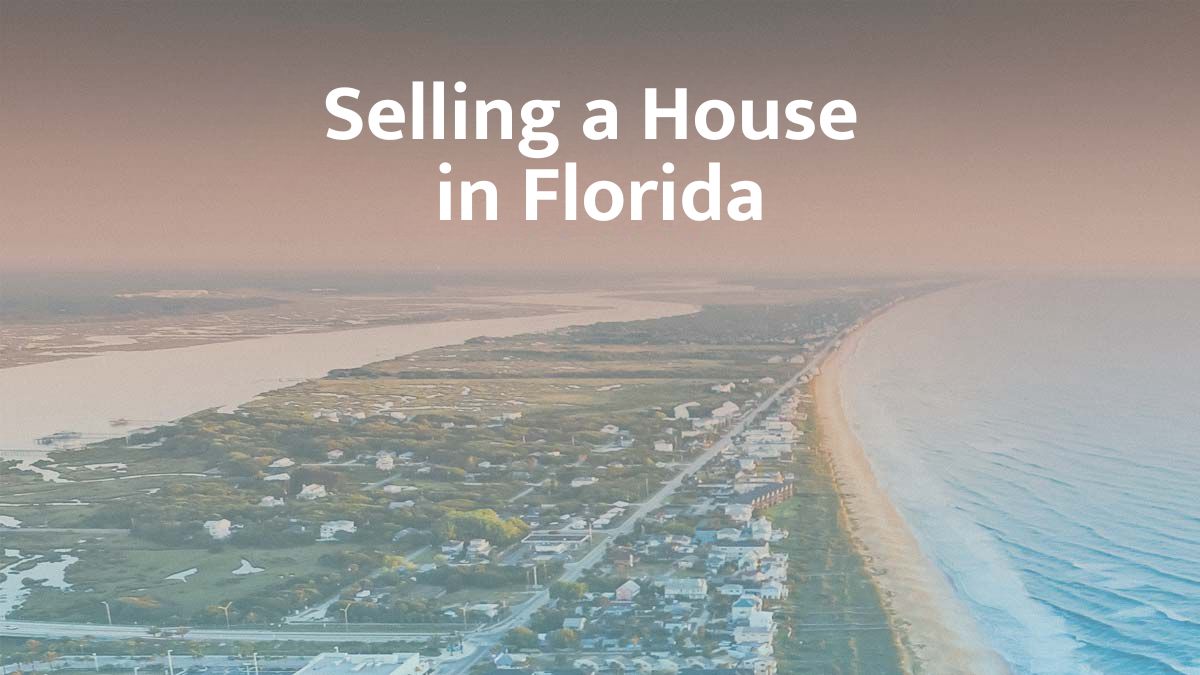
Selling a house in Florida typically involves several stages: preparing the property, setting a price, listing and marketing the home, reviewing offers, completing required disclosures and inspections, and closing the sale. The exact timeline can vary depending on the property, local market conditions, buyer financing, and other factors.
Florida sellers may encounter costs such as real estate commissions, title-related fees, taxes, concessions, and other closing expenses. The total cost of selling can vary based on the location, sale price, and terms of the transaction.
This guide explains each stage of selling a house in Florida, including preparation, pricing, marketing, negotiations, disclosures, inspections, and closing considerations that may apply within the state.
Instant Valuation, Confidential Deals with a Certified iBuyer.com Specialist.
Sell Smart, Sell Fast, Get Sold. No Obligations.
Selling a House
- Florida Housing Market in 2026
- Your Options for Selling a House in Florida
- Prepare Your Florida Home for Sale
- Set the Right Asking Price
- Market Your Property Effectively
- Review Offers and Negotiate
- Florida Seller Disclosure Requirements
- Inspections, Appraisals, and Contingencies
- Closing the Sale in Florida
- After Closing: What to Do Next
- Want to Skip the Process Entirely?
- Frequently Asked Questions
Florida Housing Market in 2026
The Florida housing market in 2026 is more balanced than it was during the pandemic boom. Inventory has increased across many markets, buyers have more choices, and homes are taking longer to sell. Sellers who price correctly and present their homes well are still selling successfully.
| Market Indicator | Florida (2026) |
| Median Home Price | $410,000 to $430,000 |
| Average Days on Market | 60 to 75 days |
| Inventory Trend | Increasing |
| Market Conditions | Balanced to buyer-friendly in many markets |
| Mortgage Rate Environment | Elevated compared to pre-2022 levels |
Source: Florida REALTORS® Housing Data and Market Statistics, Realtor.com Florida Housing Market Trends, and Redfin Florida Housing Market Data (2026).
Conditions vary significantly across the state. Miami, Tampa, Orlando, and Jacksonville each operate differently. Some coastal markets have seen inventory grow faster than inland areas. Central Florida continues to benefit from population growth and relocation demand. Check local data for your specific market rather than relying only on statewide averages.
Spring and early summer are traditionally among the most active selling seasons in Florida. But with high mortgage rates keeping some buyers on the sidelines, well-priced homes in any season are moving. Overpriced homes are sitting much longer than they would have in 2021 or 2022.
Your Options for Selling a House in Florida
Before preparing the property for sale, it helps to decide which selling method best matches your goals, timeline, and level of involvement. Different approaches involve different trade-offs between speed, convenience, and potential sale price.
| Method | How It Works | Typical Timeline | Best For |
| Traditional agent | A licensed real estate agent helps with pricing, marketing, negotiations, and closing coordination | Often several weeks to several months | Sellers focused on broad market exposure and professional guidance |
| Cash home buyer | An investor or company purchases the property directly, often in its current condition | Often days to a few weeks | Sellers who need a faster sale |
| iBuyer | A technology-driven company makes an offer based on market data and property information | Often a few weeks | Sellers looking for a more streamlined process |
| FSBO (For Sale By Owner) | The homeowner manages pricing, marketing, negotiations, and paperwork independently | Varies | Sellers comfortable handling the process themselves |
| Sell as-is | The property is marketed without making repairs or improvements before sale | Varies | Homes that may need repairs or updates |
Buyer-agent compensation practices can vary by transaction and market conditions. Compensation arrangements are negotiated between the parties involved and should be reviewed carefully when evaluating offers. Sellers may choose to offer buyer-agent compensation, negotiate different terms, or structure the transaction in other ways depending on the circumstances.
Prepare Your Florida Home for Sale
The goal of preparation is to present the property as clean, well-maintained, and ready for buyers to evaluate. Homes that show well often attract more interest and may spend less time on the market. Focus on improvements that help buyers understand the condition and functionality of the property.
Declutter and Depersonalize
Remove excess furniture, personal photographs, and unnecessary items from living spaces. A less crowded environment can make rooms appear larger and help buyers focus on the home’s features rather than personal belongings.
Make Targeted Repairs
Address visible maintenance issues before listing. Common examples include leaky faucets, damaged flooring, cracked tiles, loose fixtures, and peeling paint. Buyers often notice small problems during showings and may view them as indicators of deferred maintenance elsewhere in the home.
Florida-specific areas to review before listing include:
- Roof condition. Florida homes are regularly exposed to strong sun, heavy rain, tropical storms, and hurricanes. If the roof has known damage or ongoing issues, consider addressing them before listing.
- HVAC performance. Air conditioning is an important feature in Florida homes. Buyers may pay close attention to the age, condition, and performance of cooling systems.
- Water intrusion and moisture issues. High humidity and frequent rainfall can contribute to moisture-related concerns. Check for signs of leaks, water damage, mold, or drainage problems.
- Windows and storm protection features. Buyers may ask about impact-resistant windows, storm shutters, or other features designed to help protect the property during severe weather events.
Enhance Curb Appeal
First impressions can influence buyer interest. Consider maintaining the lawn, trimming landscaping, cleaning walkways, and ensuring the front entry is in good condition. Exterior maintenance can help buyers feel more confident about the overall condition of the property.
Consider a Pre-Listing Inspection
Some sellers choose to obtain a professional inspection before listing the property. A pre-listing inspection can identify potential issues before buyers conduct their own inspections, allowing sellers to address concerns or prepare for questions that may arise during negotiations.
Stage Key Areas
Arrange furniture and décor so each room has a clear purpose. Professional staging may be helpful in some situations, particularly for vacant homes or properties with unusual layouts. Even without professional staging, reducing clutter and creating a clean, organized appearance can improve how the home is presented in photos and showings.
Set the Right Asking Price
Pricing is one of the most important decisions when selling a house in Florida. A price that is too high may reduce buyer interest and extend the time a property spends on the market.
A price that is too low may result in accepting less than buyers may have been willing to pay. Setting a realistic price from the beginning can help attract qualified buyers and support a smoother selling process.
Research Recent Comparable Sales
Review homes that sold recently in your area and are similar in size, age, condition, and features. Recent comparable sales provide insight into what buyers have been willing to pay under current market conditions. A real estate professional can prepare a Comparative Market Analysis (CMA) to help evaluate these sales systematically.
Account for Your Home’s Specific Condition
Property condition can influence value. Features such as recent renovations, updated systems, or major improvements may support a higher asking price compared to similar homes. Conversely, homes that require repairs or updates may need pricing adjustments to reflect their condition.
Price Strategically From Day One
New listings often receive the greatest level of attention during their first few weeks on the market. Buyers typically compare newly listed properties with other available options and recent sales. Pricing appropriately from the start can help generate interest during this initial period.
| Pricing Mistake | Potential Impact |
| Overpricing from the start | Fewer showings, longer time on market, and possible future price reductions |
| Pricing based on personal financial goals | Buyers generally focus on current market value rather than the seller’s financial situation |
| Ignoring competing listings | Similar properties may attract buyers if they offer stronger value |
| Making multiple price reductions | Buyers may view the listing as stale or question why the property has not sold |
Market Your Property Effectively
Most buyers begin their home search online. The quality of your listing, photos, and marketing materials can influence how many buyers view the property and decide to schedule a showing.
Professional Photography Is Important
High-quality listing photos help buyers evaluate a property before deciding whether to visit in person. Professional photography can present rooms, lighting, and property features more clearly than standard smartphone images.
Because online listings are often a buyer’s first introduction to a home, photos can play a significant role in generating interest.
List on the MLS
The Multiple Listing Service (MLS) is one of the primary ways homes are marketed to buyers and real estate professionals. Listings entered into the MLS are often distributed to major real estate websites, increasing visibility to potential buyers. Access to the MLS typically requires working with a licensed real estate professional or an approved listing service.
Use Virtual Tours for Remote Buyers
Florida attracts buyers from other parts of the country as well as international markets. Some buyers begin evaluating properties remotely before scheduling an in-person visit. Virtual tours, video walkthroughs, and interactive floor plans can help these buyers better understand the property’s layout and condition.
Keep Showings Easy and the Home Ready
Responding promptly to showing requests can help maximize buyer interest. During the listing period, keep the home clean, organized, and ready for visitors whenever possible. A well-prepared property allows buyers to focus on the home’s features rather than distractions or maintenance concerns.
Review Offers and Negotiate
The highest offer is not always the strongest offer. When reviewing offers, consider the full terms of the transaction, including financing, contingencies, requested concessions, closing timeline, and the buyer’s ability to complete the purchase.
Evaluate the Buyer’s Financing
The type of financing can affect the likelihood and timing of closing. Cash buyers generally do not require lender approval, while financed buyers must satisfy their lender’s requirements before closing. Different loan programs may also involve different appraisal or property-condition requirements.
Compare Offers by Net Proceeds
The purchase price is only one part of an offer. Seller concessions, repair credits, closing cost assistance, and other negotiated terms can affect the amount the seller ultimately receives. Reviewing estimated net proceeds for each offer can provide a clearer comparison between competing offers.
Know Your Bottom Line Before Negotiations Start
Before responding to offers, consider the minimum terms that would be acceptable. This may include a preferred sale price, closing date, contingency limits, or other priorities. Having clear objectives can make negotiations more straightforward and reduce pressure when decisions need to be made quickly.
Common Buyer Requests in Florida
| Buyer Request | What It Means for You |
| Repair requests | The buyer asks for specific repairs or improvements before closing |
| Closing cost credit | The buyer requests financial assistance toward their closing costs, reducing the seller’s net proceeds |
| Home warranty | The buyer asks the seller to pay for a home warranty policy after closing |
| Extended inspection period | The buyer requests additional time to complete inspections or evaluate the property |
| Price reduction after inspection | The buyer seeks a lower purchase price based on issues identified during inspections |
Florida Seller Disclosure Requirements
Florida law requires sellers to disclose certain known facts about a property that could materially affect its value and that may not be readily observable by a buyer. Providing accurate disclosures helps buyers make informed decisions and can reduce the risk of disputes after closing.
Complete the Seller’s Disclosure Notice
Florida sellers are generally expected to disclose known material defects that are not easily visible to buyers and could affect the property’s value. Examples may include known structural issues, recurring water intrusion, significant system failures, or other conditions that could influence a buyer’s decision to purchase the home.
Disclosures should be based on the seller’s actual knowledge. Sellers are generally not expected to perform new investigations solely to discover unknown defects. However, known issues should not be intentionally concealed or misrepresented.
Disclose Lead-Based Paint for Older Homes
If the property was built before 1978, federal law requires sellers to disclose any known lead-based paint hazards and provide buyers with the required federal lead-based paint information. This requirement applies throughout the United States.
Buyers Often Conduct Their Own Inspections
Many buyers choose to obtain professional inspections as part of the purchase process. While inspections can help identify issues, seller disclosure obligations and buyer inspections serve different purposes. Providing complete and accurate disclosures remains important even when the buyer intends to conduct independent inspections.
Common Disclosure Items in Florida
| Item | Must Disclose if Known |
| Roof leaks or roof damage | Yes |
| Water intrusion or flooding history | Yes |
| Structural issues | Yes |
| HVAC, plumbing, or electrical defects | Yes |
| Termite or pest damage | Yes |
| Previous major repairs | Yes |
| Lead-based paint hazards (homes built before 1978) | Yes (federal law) |
| HOA obligations and pending assessments | Yes, if applicable |
Inspections, Appraisals, and Contingencies
After an offer is accepted, the transaction typically moves into a due diligence period. During this stage, buyers may conduct inspections, complete financing requirements, and evaluate whether the property meets their expectations. The timing and specific contingencies can vary based on the purchase agreement.
Home Inspection
A professional home inspection allows buyers to evaluate the condition of the property. Inspectors commonly review major systems and components, including the roof, structure, plumbing, electrical systems, HVAC equipment, and visible signs of water intrusion or damage.
If issues are identified, buyers may request repairs, ask for a credit, seek a price adjustment, or choose to proceed without changes, depending on the terms of the contract and the nature of the findings.
Appraisal
When a buyer is obtaining financing, the lender will typically require an appraisal. The appraiser evaluates the property and compares it with recent sales of similar homes to determine an opinion of value.
The appraisal helps the lender confirm that the property’s value supports the loan amount. Property condition, location, features, and recent comparable sales may all influence the appraisal outcome.
If the Appraisal Comes in Below the Contract Price
| Option | What Happens |
| Reduce the price | The seller agrees to lower the purchase price |
| Buyer covers the gap | The buyer contributes additional funds to bridge the difference |
| Split the difference | Buyer and seller negotiate a shared solution |
| Request a reconsideration | Additional comparable sales or information may be submitted for review |
| Cancel the contract | The transaction may end if permitted by the contract terms |
Final Walk-Through
Shortly before closing, buyers often complete a final walk-through of the property. The purpose is to verify that the home remains in substantially the same condition as when the contract was signed and that any agreed-upon repairs or obligations have been completed.
The property should generally be clean and prepared according to the terms outlined in the purchase agreement.
Closing the Sale in Florida
Florida residential real estate closings are typically coordinated through a title company, closing agent, attorney, or another authorized settlement professional, depending on the transaction and local practices. The closing process involves verifying title information, preparing documents, collecting and disbursing funds, and transferring ownership to the buyer.
Florida Closing Timeline
| Stage | Typical Timeframe |
| Offer accepted | Day 1 |
| Inspection and due diligence period | Varies by contract |
| Appraisal and loan approval | Often several weeks |
| Final walk-through | Typically shortly before closing |
| Closing and funding | Commonly 30 to 60 days after contract acceptance for financed purchases |
Cash transactions may close more quickly than financed purchases because they do not require lender approval. Actual timelines vary based on the parties involved, financing requirements, title issues, inspections, and other transaction-specific factors.
What Sellers Do at Closing
At closing, sellers typically review and sign documents required to transfer ownership of the property. Depending on the transaction, these documents may include the deed, settlement statement, affidavits, tax-related forms, and other closing paperwork.
Once all required documents have been signed and closing conditions have been satisfied, ownership is transferred according to applicable procedures and the terms of the transaction.
Typical Seller Closing Costs in Florida
| Expense | Typical Cost |
| Real estate agent commission | Negotiable and varies by transaction |
| Title-related fees | Vary based on the property and transaction details |
| Escrow or settlement fees | Vary by provider and location |
| Property tax prorations | Based on the closing date and local tax obligations |
| HOA transfer or disclosure fees | If applicable |
| Repair credits or seller concessions | Based on negotiated terms |
| Recording and document-related fees | Vary by transaction |
Total selling costs can vary significantly based on the property’s value, location, negotiated terms, and the professionals involved in the transaction.
Capital Gains Taxes
Florida does not have a state income tax, so there is no separate Florida state capital gains tax on the sale of a home. However, federal capital gains tax rules may apply in some situations.
Certain homeowners may qualify for federal exclusions based on factors such as ownership and occupancy history. Tax rules vary by individual circumstances, so sellers should consult a qualified tax professional for guidance specific to their situation.
Estimated Net Proceeds Example
| Item | Amount |
| Sale Price | $400,000 |
| Mortgage Payoff | -$250,000 |
| Commission and Closing Costs | -$28,000 |
| Seller Concessions | -$5,000 |
| Estimated Net Proceeds | $117,000 |
This example is for illustration purposes only. Actual proceeds depend on the property’s sale price, outstanding loan balances, closing costs, concessions, taxes, and other transaction-specific factors.
After Closing: What to Do Next
Closing completes the sale, but there are still several administrative tasks that can help prevent future issues. Taking care of these items shortly after closing can make the transition smoother and help ensure records remain accurate.
| Task | Notes |
| Transfer or cancel utilities | Schedule utility transfers or cancellations based on the closing date and move-out plans |
| Submit mail forwarding | Arrange mail forwarding through the appropriate postal service to avoid missed correspondence |
| Notify banks and service providers | Update your address with financial institutions, employers, insurance providers, and subscription services |
| Keep all closing documents | Retain settlement statements, closing documents, disclosures, and other transaction records for future reference |
| Contact your insurance provider | Cancel or update homeowner’s insurance coverage as appropriate after the sale |
| Consult a tax professional | Consider professional guidance if the property was a rental, inherited property, or if there are questions about potential tax consequences |
Want to Skip the Process Entirely?
iBuyer.com connects Florida homeowners with cash buyers who close in days without commissions, open houses, or repair negotiations. Get a free cash offer in 24 to 48 hours and see exactly what you would net before committing to anything.
Compare Cash Offers from Top Home Buyers. Delivered by Your Local iBuyer Certified Specialist.
One Expert, Multiple Offers, No Obligation.
Know Your Local Market Before You List
Pull the last 12 months of real sales and buyer activity for your neighborhood.
Get My Market ReportFrequently Asked Questions
The timeline can vary based on market conditions, property type, location, pricing, and buyer financing. Financed transactions often take several weeks from accepted offer to closing, while cash sales may close more quickly. Some homes sell faster than others depending on buyer demand and local market conditions.
Florida sellers are generally required to disclose known material defects that could affect the property’s value and may not be readily observable by a buyer. Additional federal disclosure requirements may apply to homes built before 1978 that contain known lead-based paint hazards.
Seller closing costs vary depending on the property’s sale price, negotiated terms, commission arrangements, title-related expenses, taxes, and other transaction-specific costs. The exact amount will differ from one transaction to another.
No. Homeowners may choose to work with a real estate agent, sell independently as a For Sale By Owner (FSBO), sell to a cash buyer, or explore other selling methods. Each option involves different levels of support, responsibility, cost, and market exposure.
Yes. A property can generally be sold as-is, meaning the seller does not agree to make repairs before closing. However, applicable disclosure obligations still apply, and known material defects should be disclosed as required.
Many sellers consider cash buyers when speed is a priority because cash transactions do not require mortgage approval. Closing timelines vary, and sellers should compare offers carefully to understand any trade-offs involving price, terms, or convenience.
The best time to sell depends on local market conditions, buyer demand, inventory levels, and personal circumstances. Some Florida markets experience stronger activity during certain seasons, but well-priced and well-presented homes can attract buyers throughout the year.
A common starting point is reviewing recent comparable sales of similar homes in the local area. Factors such as location, size, condition, upgrades, and current market conditions can influence pricing decisions. Many sellers also seek a Comparative Market Analysis (CMA) from a real estate professional.
Taxes and fees associated with real estate transactions can vary depending on the circumstances and applicable laws at the time of sale. Sellers should review current requirements with a qualified real estate professional, closing agent, attorney, or tax advisor when evaluating transaction costs.
During closing, the parties complete the required documents, funds are collected and distributed, and ownership of the property is transferred to the buyer. The specific process may vary depending on the transaction, the closing professional involved, and local practices.

Reilly Dzurick is a licensed real estate agent with over six years of experience and a member of the iBuyer.com Market Insights Team, covering national trends in home selling and the evolving iBuyer landscape. Her firsthand experience working with buyers and sellers gives her a practical perspective on how these platforms impact real homeowners. She holds a degree in Public Relations, Advertising, and Applied Communication.