Yes, you can sell a house with hail damage, but you are legally required to disclose all known damage and either repair it or price the home to reflect what repairs will cost. Unrepaired hail damage typically cuts resale value by 5 to 15%, which on a $400,000 home equals $20,000 to $60,000 in lost proceeds. The average residential hail damage claim runs $13,511, according to insurance.com, and hail accounts for more than $15 billion in insured losses annually across the U.S., per U.S. severe hail storm frequency data from NOAA.
You have three paths forward: repair the damage through insurance, sell the house as-is with adjusted pricing, or assign your insurance proceeds to the buyer at closing. Each path has a different cost, timeline, and buyer pool. This guide covers how to assess damage, meet your disclosure obligations, choose between repair and as-is sale, understand how hail affects value, file a claim, and close fast.
Sell Your Hail-Damaged Home As-Is Get competing cash offers. No roof repairs, no agent fees, close in 7 to 30 days.
No repairs needed, no commissions, no obligations.
House with Hail Damage
- Can You Sell a House with Hail Damage?
- How to Assess Hail Damage Before You List
- Hail Damage Disclosure: What You Must Tell Buyers
- Repair vs. Sell As-Is with Hail Damage
- How Much Does Hail Damage Affect Resale Value?
- Filing an Insurance Claim Before You Sell
- Average Insurance Payout for Hail Roof Damage
- How Long Are You Liable After Selling?
- Will a Hail Claim Raise Your Insurance Rates?
- How to Sell a Hail-Damaged House Fast
- Conclusion
- Frequently Asked Questions
Can You Sell a House with Hail Damage?
Yes, you can sell a house with hail damage. Sellers are legally obligated to disclose any known damage and either repair it or price the home to reflect its condition. Choosing to sell hail damaged house as-is does not remove your disclosure duty, it only removes your obligation to fix what you have disclosed.
What qualifies as material hail damage
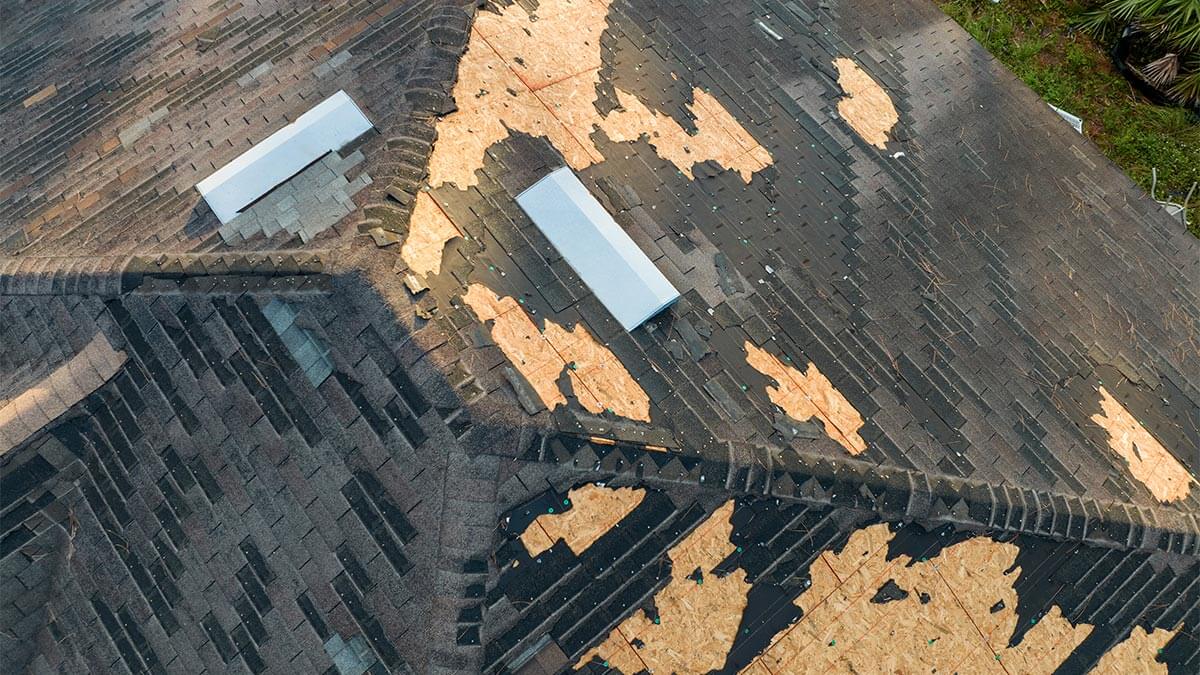
Material hail damage is any storm-caused deterioration that affects the property’s value, structural integrity, or habitability. Cosmetic dents on gutters may not meet the threshold in every state. But cracked or missing shingles, compromised siding, broken windows, and leaking areas almost always qualify as material defects that trigger written disclosure requirements.
Hail damage that is invisible from the street can still surface during a buyer’s inspection. Roof hail damage, in particular, is frequently discovered only when a licensed inspector gets on the roof. Buyers who find undisclosed damage during home inspection hail damage reviews can cancel contracts, demand credits, or pursue legal claims after closing.
Four immediate steps after a hail storm
Take these steps before listing:
- Document everything. Photograph and video every affected surface, including the roof, siding, gutters, and windows, on the day of the storm or as soon as it is safe.
- Get a professional inspection. A licensed roofer or public adjuster will produce a written report with repair cost estimates. This document protects you legally and anchors your pricing.
- Contact your insurance company. Open a homeowners insurance hail claim immediately. Most policies require you to report damage promptly; delayed filings can reduce or void your payout.
- Decide on your selling path. Use your repair cost estimate to compare net proceeds across all three options before you list.
How to Assess Hail Damage Before You List
Accurate damage documentation is the foundation of every seller decision that follows. It determines your insurance payout, protects you from post-sale liability, and gives buyers the written evidence they need to move forward without demanding additional concessions.
Roof, siding, windows, and gutters: what to document
A comprehensive hail storm damage assessment covers four surfaces:
- Roof: Missing granules, cracked or displaced shingles, exposed underlayment, and dents on flashing or vents
- Siding: Circular impact dents, cracked panels, paint chipping along impact points
- Windows: Cracked glass, damaged frames, broken seals in double-pane units
- Gutters: Dents, separation from fascia, downspout damage
Comprehensive damage across all four areas typically totals $15,000 to $28,000 in unrepaired repair costs. Roof-only damage generally falls in the $9,000 to $15,000 range. Photograph each surface with a date-stamped image and store copies in a cloud folder you can share with buyers, adjusters, and attorneys if needed.
Hiring a public adjuster vs. a roofing contractor
A licensed roofing contractor provides repair cost estimates and can speak to scope of work. A public adjuster advocates for you during the insurance claim process and often secures higher payouts than homeowners negotiate on their own. For damage totaling more than $10,000, hiring a public adjuster typically pays for itself.
Buyers and their lenders require a professional inspection report plus written repair estimates before proceeding, especially on financed offers. Having that documentation ready before you list removes a common reason deals stall.
Getting repair cost estimates in writing
Get at least two contractor bids in writing before you price the home. Written estimates serve three purposes: they support your insurance claim, justify your list price if you sell as-is, and demonstrate good-faith disclosure to buyers. Verbal estimates carry no weight in a post-sale dispute.
Hail Damage Disclosure: What You Must Tell Buyers
Sellers in most U.S. states are legally required to disclose known hail damage because it is a material defect. This is not a best practice. It is a legal requirement, and the consequences of ignoring it extend years beyond closing.
State-by-state disclosure requirements
Seller disclosure requirements vary by state, but the core rule is consistent across nearly all jurisdictions: disclose any known defect that would affect a reasonable buyer’s decision. Per seller disclosure obligations by state at nolo.com, sellers who conceal known defects can face fraud and misrepresentation claims regardless of how the sale was structured.
State-specific rules add layers on top of that baseline. Iowa sellers, for example, face disclosure rules shaped by the state’s position in a high-frequency hail corridor. If you are in Iowa and selling a storm-affected property, the selling a distressed home in Iowa guide covers the state-level process in detail.
Selling as-is does not waive disclosure
“As-is” means you will not make repairs. It does not mean you can withhold what you know. A seller who markets a home as-is and omits known hail damage from the written disclosure form is exposed to the same fraud and misrepresentation liability as any other seller who conceals a defect. The as-is designation affects only the repair obligation, not the inform obligation.
What happens when a buyer finds undisclosed damage
When a buyer’s inspector discovers hail damage that was not disclosed, the buyer typically has three options within the inspection contingency window: cancel the contract, request a repair credit or price reduction, or ask the seller to complete repairs before closing.
The Wisconsin Realtors Association (WRA) example illustrates how state law structures this: once a buyer delivers a notice of defects regarding hail damage, the seller has 10 days to elect to cure, make the offer null, or negotiate. Other states use different timeframes, but the pattern is consistent. Undisclosed damage discovered during a home inspection hail damage review almost always triggers renegotiation or cancellation.
Failure to disclose known material defects exposes sellers to fraud and misrepresentation claims for 2 to 10 years post-closing, depending on state statutes. The clock in many states starts at discovery of the defect, not at the closing date.
Repair vs. Sell As-Is with Hail Damage
You have three paths when selling a house with hail damage: repair through insurance, sell as-is with a price reduction, or assign insurance proceeds to the buyer. Here is how each works.
| Option | Out-of-pocket cost | Timeline | Best for |
|---|---|---|---|
| Repair through insurance | $0 to $3,000 deductible | 4 to 8 weeks to complete | Sellers maximizing list price |
| Sell as-is | 5 to 15% price reduction | Can list immediately | Sellers who need speed |
| Assign insurance proceeds | Varies by claim status | Can close in days with a cash buyer | Sellers mid-claim at listing time |
Based on industry-standard repair cost and payout data, 2026. Verify deductibles and current repair costs with your contractor and insurer before pricing.
Option A: complete repairs through insurance
If your homeowners insurance hail claim covers the repair cost, your only out-of-pocket expense is your deductible, typically $1,000 to $3,000. Completing repairs before listing restores curb appeal, removes the damage from your disclosure as an active condition (you still disclose it occurred and was repaired), and eliminates lender appraisal flags that can block financed offers.
The trade-off is time. Roofing and siding contractors in high-hail markets (Texas, Colorado, the Plains states) are frequently booked 4 to 8 weeks out after major storms. If speed matters, repairs may not be realistic.
Option B: sell as-is with adjusted pricing
A sell house as-is hail damage approach skips the repair timeline entirely. You disclose the damage, price accordingly, and let buyers factor repair costs into their offers. According to Claude and Gemini research synthesis, as-is sales typically attract 5 to 15% lower offers because buyers anticipate repair costs and demand a buffer for uncertainty.
Use this pricing formula: fair market value minus the repair cost estimate, minus a 5 to 10% buyer inconvenience discount. On a $350,000 home with $12,000 in roof damage and a 7% inconvenience discount, a reasonable as-is price is approximately $313,500.
Hail also affects windows and other exterior surfaces. Before deciding whether to repair or sell as-is, reviewing whether replacing windows before selling is worth the cost can help you weigh the return on that specific component.
Per buyer repair request options and credits at realtor.com, buyers can request: a seller repair before closing, a closing credit equal to the repair cost estimate, or a price reduction. Plan for at least one of these asks if you go the as-is route with a financed buyer.
Option C: assign insurance proceeds at closing
If you have an open hail damage insurance claim when you list, you can assign those proceeds to the buyer at closing. The buyer accepts the property in its damaged condition and receives the insurance payout at or after closing, often with a seller credit built into the settlement statement. This structure lets you move quickly without waiting for repair completion or taking the full as-is price hit.
Confirm with your insurer in writing that assignment is permitted under your policy before accepting an offer structured this way. Not all policies allow it without approval.
How Much Does Hail Damage Affect Resale Value?
Hail damage home value impact depends directly on whether the damage has been repaired and documented. Unrepaired damage has a measurably larger effect than repaired damage with a documented paper trail.
Repaired and documented: minimal value impact
When hail damage is repaired before listing and documentation is available (inspection report, contractor invoices, insurance settlement), the appraisal impact is typically 1 to 3%. Buyers and their lenders treat a repaired home similarly to one that never sustained damage, provided the repair quality is verifiable.
Unrepaired damage: 5 to 15% reduction
Unrepaired hail damage reduces resale value on a sliding scale tied to severity:
- Cosmetic only (minor dents, no structural compromise): 3 to 7% reduction
- Moderate damage (roof and siding affected): 5 to 15% reduction
- Comprehensive damage (roof, siding, windows, and gutters): 10 to 15% reduction
These ranges come from synthesis across multiple sources including triplediamondok.com, Claude research, and Gemini research. Comprehensive damage totaling $15,000 to $28,000 in deferred repairs consistently pushes buyers toward the higher end of that range.
Dollar impact on a sample home value
On a $400,000 home, a 5 to 15% reduction equals $20,000 to $60,000 in lost proceeds. That range illustrates why the repair-vs.-sell-as-is calculation matters. If insurance covers most of the repair cost, net proceeds from a repaired listing almost always exceed net proceeds from an as-is sale, once you account for the deductible, carrying costs, and repair timeline.
Lenders may also require repairs before approving a mortgage on a home with visible roof hail damage. That requirement effectively filters out most financed buyers until repairs are complete, leaving only cash buyers and investors in your pool.
Filing an Insurance Claim Before You Sell
You can file a homeowners insurance hail claim before listing, during escrow, or leave a pending claim for the buyer to receive through an assignment of proceeds. Each path has different timing implications for the sale.
Timing: when to file relative to listing
Filing before listing gives you the most flexibility. You will know your payout amount, can make an informed repair decision, and can document the full claim history in your disclosure. Filing during escrow introduces uncertainty, because the claim may not resolve before the closing date.
Leaving the claim open for the buyer to receive through assignment is viable but requires buyer agreement and insurer approval. Per candysdirt.com (organic result #10), a common structure is for the seller to accept the property in its damaged condition with an assignment of the insurance proceeds and a credit from the seller for the amount of the deductible.
According to biggerpockets.com community discussion, if a seller cannot identify when the hail storm damage occurred and the damage looks old, buyers will almost always ask for a full roof replacement before closing.
What your insurer needs from you
Your insurance company will require:
- The date of the storm (or a range, if you are uncertain)
- Your roof inspection report from a licensed contractor or adjuster
- Photographs and video documentation of all damage
- Written repair cost estimates from licensed contractors
Average U.S. hail insurance claim data from the Insurance Information Institute provides national context for claim volumes and average costs if you need benchmarks when evaluating your adjuster’s initial offer.
Transferring or assigning a pending claim
An insurance payout hail damage roof claim can be assigned to a buyer in most states, but the mechanism must be spelled out in the purchase agreement and confirmed with your insurer. The assignment transfers your right to the insurance proceeds to the buyer in exchange for the buyer accepting the home in its current damaged condition. A real estate attorney should review this structure before you sign anything, particularly in states with anti-assignment statutes for insurance contracts.
Average Insurance Payout for Hail Roof Damage
The average hail damage insurance claim for a residential roof ranges from $9,000 to $15,000, with a common midpoint around $12,000, according to average hail roof claim payout ranges at stormlawpartners.com. State Farm reported an average homeowner hail claim of approximately $17,000 in 2023, up from $16,000 in 2022. Across all residential hail claims (not roof-only), insurance.com via ChatGPT research puts the average at $13,511.
Roof-specific claims: $9,000 to $15,000 range
Roof-only hail damage claims concentrate in the $9,000 to $15,000 band because most affected roofs are standard asphalt shingle installations on single-family homes. Larger homes, premium roofing materials, and widespread storm damage that strains contractor capacity all push claims toward the upper end of that range and above.
What drives the payout up or down
Factors that increase your insurance payout include:
- Larger roof footprint (more squares of shingles to replace)
- Premium materials: tile, slate, or impact-resistant shingles
- A well-documented storm date that confirms a qualifying event
- Newer installation that commands higher replacement cost
Factors that reduce your payout include an aging roof (depreciation reduces actual cash value significantly), deferred maintenance that pre-dates the storm, and policy exclusions for cosmetic damage.
ACV vs. replacement cost value policies
Your policy type is the single largest variable in your final payout. Actual cash value (ACV) policies pay the market value of your roof minus depreciation. A 15-year-old roof on an ACV policy may receive only 40 to 50% of the replacement cost. Replacement cost value policies pay the full cost to replace the roof with equivalent materials, with no depreciation deduction.
The gap between an ACV payout and a replacement cost value payout on a 15-year-old roof can be $3,000 to $8,000. Review your declarations page before filing a claim so you know which basis applies. If you are on an ACV policy and the roof is older, factor the depreciation gap into your as-is pricing calculation.
How Long Are You Liable After Selling?
Sellers can remain legally liable for undisclosed hail damage for 2 to 10 years after closing, depending on the state and the type of claim a buyer pursues. The clock in many states starts at discovery of the defect, not at the closing date.
Statutes of limitations by claim type
| Claim type | Typical statute of limitations | Clock starts |
|---|---|---|
| Nondisclosure (failure to disclose) | 2 to 6 years | Date defect discovered |
| Contract breach | 3 to 10 years | Date of closing |
| Fraud or intentional concealment | 3 to 10 years | Date fraud discovered |
Ranges are general guidelines based on Gemini and Claude research synthesis. State-specific rules vary. Consult a real estate attorney for your jurisdiction.
Per seller liability timeframes after closing at redfin.com, sellers are generally not liable for repairs after closing unless they failed to disclose a known defect or committed fraud.
Why as-is sales do not eliminate liability
An as-is clause limits your obligation to make repairs. It does not protect you if you knew about hail damage and withheld that information from the disclosure form. Courts have consistently held that “as-is” language does not shield sellers from fraud claims when the seller had actual knowledge of a defect.
The seller liability exposure is highest in cases where inspection photographs show damage patterns consistent with a storm that occurred before the listing date, and the seller’s disclosure form shows no mention of hail damage.
Protecting yourself with a paper trail
Keep copies of all disclosure forms, inspection reports, contractor bids, insurance claim documents, and repair receipts for at least 10 years after closing. This documentation is your primary defense against post-sale liability claims. If a buyer later claims you concealed hail damage, a complete paper trail showing you disclosed and documented everything is far more persuasive than testimony alone.
Will a Hail Claim Raise Your Insurance Rates?
Filing a hail damage claim typically raises homeowner insurance premiums by 10 to 30% at renewal. Multiple claims within two to three years can trigger increases of 25 to 55%, according to Claude research synthesis drawing on dicklawfirm.com and refinedroofingtx.com. A single weather claim averages a 16% premium increase nationally, per insurance.com data.
Single-claim impact: 10 to 30% rate increase
A single hail claim is classified as a weather-related event by most insurers. The insurance premium increase is applied at renewal and is based on your claims history, your insurer’s loss experience in your ZIP code, and state regulations. Filing a claim may also trigger the loss of a claim-free discount, which can add another 5 to 10% to your effective rate change.
If you are selling the home shortly after filing, the premium increase matters less than if you are staying. But if you are on the fence about filing a small claim (under $3,000 to $5,000), the premium math often favors paying out of pocket rather than triggering an insurance record entry.
Multiple claims: 25 to 55% increase range
Two or more claims within a 36-month window signal elevated risk to insurers. Some carriers will non-renew a policy after two weather claims in quick succession, even if both were legitimate act-of-God events. The 25 to 55% range from ChatGPT research synthesis reflects the compounding effect of multiple claims on rate calculation models.
States with act-of-God protections
Texas and Florida have laws that limit or prohibit raising an individual policyholder’s premium solely because of a single act-of-God weather event. However, insurers in both states can still raise area-wide rates after widespread storm losses, and they frequently do. The individual protection does not prevent carriers from adjusting base rates for the entire region.
Check your state’s insurance commissioner website for current rules before assuming act-of-God protections apply to you. Per weather claim premium increases and homeowner rates at insurance.com, the interaction between individual claim history and area-wide loss experience varies significantly by carrier and state.
How to Sell a Hail-Damaged House Fast
If your priority is speed over maximum proceeds, cash buyers and investors are the most reliable path to a fast close on a hail-damaged home. Cash home buyers are not subject to lender appraisal requirements, and a damaged roof that kills a financed deal rarely stops a cash transaction.
Targeting cash buyers and investors
Cash home buyers purchase hail-damaged homes as-is. They price in the repair costs and build their margin into the offer, which is why cash offers on damaged properties come in below market value. The trade-off is certainty and speed. Financed buyers can lose their loan approval when a lender’s appraiser flags an unrepaired roof, turning a negotiated deal into a failed closing. Cash buyers close with no appraisal contingency.
Investor buyers are particularly active in hail-corridor states: Texas, Colorado, Kansas, Nebraska, Oklahoma, and the Carolinas. North Carolina sellers dealing with storm damage from Appalachian-region storms can find details on the distressed-sale path in the selling a distressed home in North Carolina guide.
What to expect from a cash offer timeline
Cash transactions on hail-damaged homes typically close in 7 to 30 days. A traditional financed listing requiring renegotiation after home inspection hail damage findings can extend to 45 to 90 days, with no guarantee of reaching closing. For a seller who needs certainty, the speed difference alone often justifies accepting a modestly lower cash offer.
Pricing a hail-damaged house for a fast close
Use this formula for a sell hail damaged house as-is listing:
(Fair market value) minus (repair cost estimate) minus (5 to 10% buyer inconvenience discount) = as-is list price
On a $350,000 home with $12,000 in documented roof damage and an 8% inconvenience discount, the as-is list price is approximately $310,000. Present the contractor bids alongside the listing to remove uncertainty and speed up buyer decision-making.
For sellers weighing all their options on a property that has seen better days, the fast and fair options for selling in poor condition guide covers the full trade-off framework that applies to hail-damaged homes and other distressed-condition situations.
How to Sell a House with Hail Damage
Step 1: Document all damage. Photograph and video the roof, siding, gutters, windows, and any other storm damage immediately after the hailstorm. Hire a licensed roofing contractor or public adjuster to prepare a written inspection report with repair cost estimates.
Step 2: File a homeowners insurance claim. Contact your insurance company to open a claim. Provide the date of the storm, your photos and videos, and the contractor’s inspection report. Confirm whether your policy pays Actual Cash Value (ACV) or Replacement Cost Value (RCV), as this can significantly affect your insurance payout.
Step 3: Decide whether to repair the damage or sell as-is. Compare your available equity, timeline, and target buyer pool before listing the property. You can repair the damage before selling, sell the home as-is with full disclosure, or, where permitted, assign insurance proceeds to the buyer as part of the transaction.
Step 4: Price the home according to its condition. If selling as-is, reduce the asking price to reflect the estimated repair costs and an appropriate buyer inconvenience discount. If repairs have been completed, price the home based on current market value and keep documentation of the completed work available for buyers.
Step 5: Disclose all known hail damage. Complete your state’s seller disclosure form accurately and attach the inspection report, repair estimates, and insurance claim documentation. Provide these documents to prospective buyers before they submit an offer.
Step 6: Negotiate repair credits or insurance proceeds. Buyers may request a price reduction, a seller credit toward repairs, or an assignment of insurance proceeds where allowed. Before agreeing to assign insurance benefits, confirm with your insurance carrier that the assignment is permitted under your policy.
Step 7: Complete the closing. Ensure any agreed repairs have been finished or that negotiated credits appear correctly on the final settlement statement. Keep copies of all disclosures, inspection reports, repair invoices, and insurance documents with your transaction records after closing.
Conclusion
Selling a house with hail damage is straightforward when you follow the sequence: document, disclose, decide on your path, and price accordingly. The sellers who run into trouble are the ones who skip the disclosure step or price without getting written estimates. Whether you repair through insurance, sell house as-is hail damage included, or assign proceeds to the buyer, a clear paper trail protects you from the liability window that stays open for years after closing.
Sell Your Hail-Damaged Home As-Is Get competing cash offers. No roof repairs, no agent fees, close in 7 to 30 days.
No repairs needed, no commissions, no obligations.
Frequently Asked Questions
Yes, you can sell a house with hail damage, but you must disclose all known damage and either repair it or price the home to reflect repair costs. Most U.S. states treat hail damage as a material defect requiring written disclosure. Buyers who discover undisclosed damage during inspection can cancel contracts, renegotiate, or pursue legal claims after closing.
Yes, sellers are legally required to disclose known hail damage in most U.S. states because it is a material defect that affects the property’s value. Selling as-is limits your repair obligation but does not waive the disclosure requirement. Failure to disclose can expose you to fraud and misrepresentation claims for 2 to 10 years after closing, depending on your state.
Unrepaired hail damage typically reduces a home’s resale value by 5 to 15%; properly repaired and documented damage limits the impact to 1 to 3%. On a $400,000 home, a 5 to 15% reduction equals $20,000 to $60,000 in lost proceeds. Comprehensive damage across roof, siding, windows, and gutters totaling $15,000 to $28,000 in deferred repairs can push the reduction toward 10 to 15%.
The average homeowner insurance payout for hail roof damage ranges from $9,000 to $15,000, with a common midpoint around $12,000. State Farm reported an average hail claim of approximately $17,000 in 2023, up from $16,000 the prior year. The final payout depends on roof size, materials, age, and whether your policy covers replacement cost value or actual cash value.
Repairing before listing typically preserves full market value and widens your buyer pool, but selling as-is attracts cash buyers and avoids repair delays of 4 to 8 weeks. If your insurance claim covers repair costs minus your deductible ($1,000 to $3,000 typically), repairing first usually nets more proceeds than taking an as-is discount. Sellers on a tight timeline or targeting investor buyers often find the as-is path faster.
Yes, you can sell as-is after hail damage, but you must still disclose the damage in writing and price the home to reflect the repair costs buyers will face. Cash buyers and investors regularly purchase hail-damaged homes as-is; they are not bound by lender appraisal requirements that can stall or kill financed offers. Expect to price 5 to 15% below comparable repaired homes to attract offers quickly.
Filing a hail damage claim typically raises homeowner insurance premiums by 10 to 30% at renewal; multiple claims within two to three years can trigger increases of 25 to 55%. A single weather claim averages a 16% rate increase nationally. Texas and Florida have laws that limit raising an individual policyholder’s premium solely for a single act-of-God weather event, though insurers can still raise area-wide rates after widespread storm losses.
Sellers can remain legally liable for undisclosed hail damage for 2 to 10 years after closing, depending on the state’s statute of limitations for nondisclosure or fraud. The clock typically starts when the buyer discovers the defect, not at the closing date. Selling as-is does not eliminate liability if you knew about the damage and failed to disclose it.
Yes, a buyer can cancel the contract if hail damage discovered during inspection was not disclosed, typically within the inspection contingency window. Buyers can also respond to newly discovered damage by requesting a repair credit, a price reduction, or a seller-paid replacement before closing. If the seller previously disclosed the damage, the buyer’s cancellation right depends on what the purchase agreement specifically allows.
An open hail insurance claim can transfer to the buyer at closing through an assignment of proceeds, or the seller can receive the payout and credit it to the buyer. A common structure is for the seller to accept the property in its damaged condition, with the insurance proceeds assigned to the buyer and a credit applied at closing. Confirm with your insurer that assignment is permissible under your policy terms before listing.
Yes, cash buyers routinely purchase hail-damaged homes as-is and are not subject to lender appraisal requirements that can block financed sales on damaged properties. Cash transactions close faster (typically 7 to 30 days), removing the risk that a lender’s appraiser flags the unrepaired roof and kills the deal. Sellers who receive a cash offer should compare net proceeds after any as-is discount against net proceeds from a repaired listing, accounting for repair time and carrying costs.
Price a hail-damaged home by subtracting the repair cost estimate (typically $9,000 to $15,000 for roof damage) plus a 5 to 10% buyer inconvenience discount from fair market value. For example, on a $350,000 home with $12,000 in roof damage and a 7% inconvenience discount, a reasonable as-is price is approximately $313,500. Getting two or three contractor bids before pricing tightens this estimate and demonstrates good-faith hail damage disclosure to buyers.

Reilly Dzurick is a licensed real estate agent with over six years of experience and a member of the iBuyer.com Market Insights Team, covering national trends in home selling and the evolving iBuyer landscape. Her firsthand experience working with buyers and sellers gives her a practical perspective on how these platforms impact real homeowners. She holds a degree in Public Relations, Advertising, and Applied Communication.